
Latest Sectors News

In Massachusetts, a groundbreaking approach has emerged as two cranberry bogs have implemented solar panels above their crops. This eco-friendly strategy not only cuts farming expenses but also creates extra revenue through solar energy production. The initiative fosters healthier soil and revives forgotten bog areas, ensuring ongoing agricultural yield. Supported by state policies, this dual use of land is paving the way for agrivoltaics and sustainable farming practices. View More

In County Cork, Sean Keating, a dedicated dairy farmer, has innovatively transformed a portion of his land into a solar farm. This eco-friendly venture enables him to harvest renewable energy while still allowing sheep to graze comfortably beneath the solar installations. Expected to power about 150 households annually, this project showcases the critical support from the government and could potentially motivate other farmers to explore similar sustainable energy alternatives. View More
In County Cork, Sean Keating, a dedicated dairy farmer, has innovatively transformed a portion of his land into a solar farm. This eco-friendly venture enables him to harvest renewable energy while still allowing sheep to graze comfortably beneath the solar installations. Expected to power about 150 households annually, this project showcases the critical support from the government and could potentially motivate other farmers to explore similar sustainable energy alternatives. View More
In County Cork, Sean Keating, a dedicated dairy farmer, has innovatively transformed a portion of his land into a solar farm. This eco-friendly venture enables him to harvest renewable energy while still allowing sheep to graze comfortably beneath the solar installations. Expected to power about 150 households annually, this project showcases the critical support from the government and could potentially motivate other farmers to explore similar sustainable energy alternatives. View More
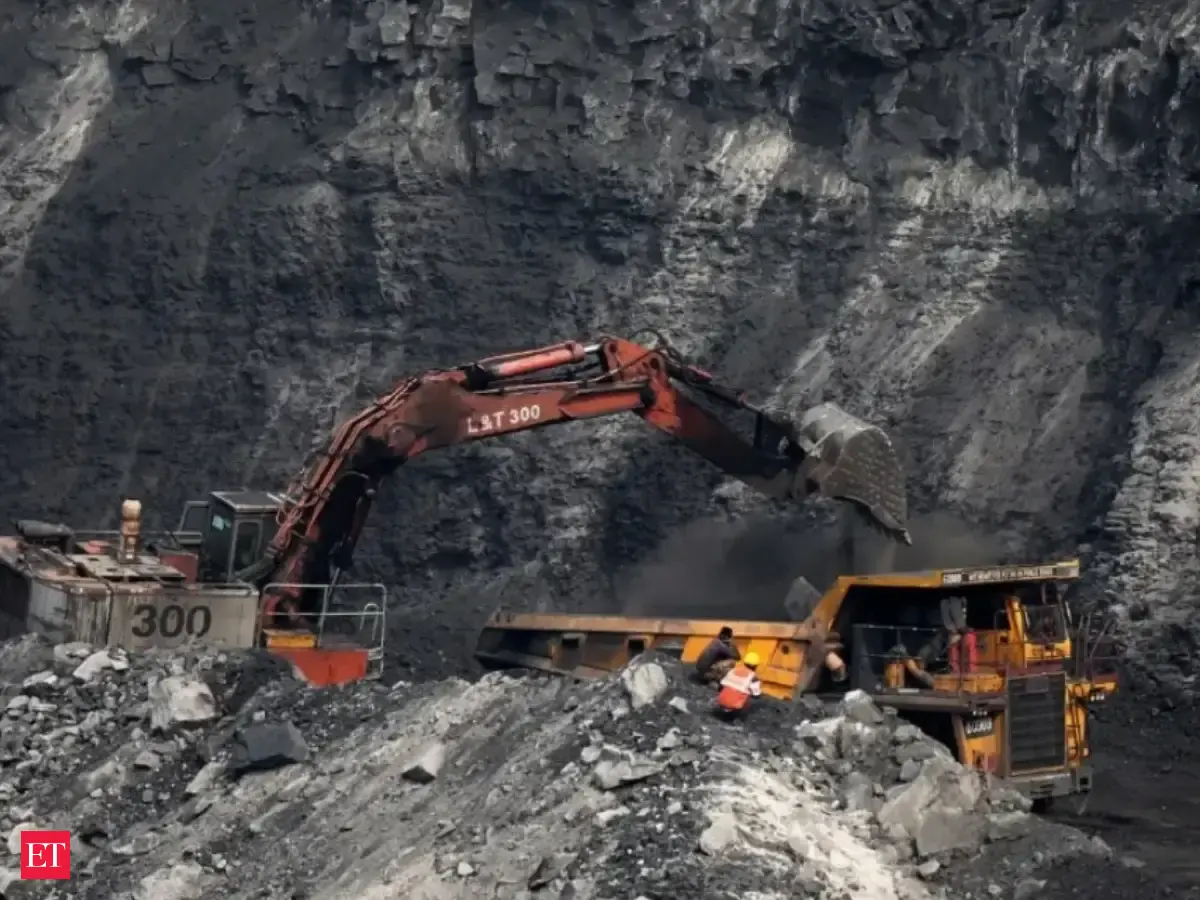
Coal India Ltd has reported a capital expenditure increase of 27% to Rs 7,966 crore for the first half. The company surpassed its H1 target of Rs 7,286 crore, achieving 109% of the planned outlay. Significant investments focused on mine infrastructure development, land acquisition, and diversification initiatives. Over Rs 1,000 crore was spent on operational readiness of mining projects during this period. View More
New Delhi: State-owned coal producer CIL on Tuesday said its capital expenditure rose 27 per cent to Rs 7,966 crore during the first half of the current financial year from Rs 6,283 crore a year ago. The increased capex comes in the wake of the company's efforts to modernise its mines, expand production capacity and strengthen coal evacuation infrastructure to meet the country's growing energy requirements. The expenditure also surpassed the H1 target of Rs 7,286 crore, achieving 109 per cent of the planned outlay for the period and over 48 per cent of the annual capex target of Rs 16,500 crore. The higher capex reflects Coal India Ltd 's (CIL) sustained focus on bolstering mining infrastructure , land acquisition, procurement of heavy earth moving machinery (HEMM) and progress on diversification projects. Mine infrastructure development emerged as the largest area of investment during the first half of the current fiscal year with Rs 2,152 crore. This included investments in railway sidings and corridors, coal handling plants (CHPs), silos and weighbridges to strengthen the coal evacuation and handling infrastructure, CIL said in a statement. Live Events Land acquisition was another major component of expenditure, accounting for Rs 2,033 crore during the period. Additionally, over Rs 1,000 crore was spent on mine development to support the expansion and operational readiness of mining projects, the statement said. "Capital expenditure under the Plant and Machinery (P&M) segment stood at Rs 1,394 crore. This included investments in HEMMs, washeries and other plant and machinery. "Of this, Rs 452 crore was spent on procuring HEMMs to strengthen mining operations and enhance operational efficiency," it said. The coal behemoth continued to advance its diversification initiatives, investing over Rs 739 crore in projects, including solar energy, critical minerals, coal gasification and thermal power generation. Mine infrastructure development, plant and machinery, land acquisition and diversification remained the principal components of CIL's capital expenditure, together accounting for over 79 per cent of the total capex during the first half of the current fiscal. These investments are expected to enhance CIL's operational capabilities and help the company meet its production and supply targets for the current financial year, it said. CIL accounts for over 80 per cent of domestic coal output. .Pbanner{display:flex;justify-content:space-between;align-items:center;background-color:#ec1c40;margin-top:20px;padding:5px 10px;border-radius:4px;color:#fff;line-height:10px;width: 100%;box-sizing: border-box} .Pbannertext{display:flex;align-items:center;font-size:16px;font-weight:600;font-family:'Montserrat';} .Pbannertext img{height:20px;margin:0 6px} .Pbannerbutton a{display:flex;align-items:center;background-color:#fff;color:#ec1c40;text-decoration:none;font-weight:600;padding:4px 8px;border-radius:6px;font-size:15px;font-family:'Montserrat';} .Pbannerbutton img{height:20px;margin-right:6px} .Pbannerbutton a:hover{background-color:#f7f7f7} Add as a Reliable and Trusted News Source Add Now! (You can now subscribe to our Economic Times WhatsApp channel) (You can now subscribe to our Economic Times WhatsApp channel)

Jio Platforms' recent IPO generated considerable public enthusiasm, showcasing a notable appetite for large-scale offerings among investors. This wave of interest could prompt other firms to accelerate their IPO plans. Experts suggest that the viability of future IPOs will hinge on prevailing market trends and investor mood. Additionally, the significant funds from Jio's IPO will soon be redirected into various investment avenues, potentially bolstering upcoming offerings and shaping pricing strategies. View More
The overwhelming response to Jio Platforms' Rs 30,213 crore IPO has raised expectations that India's primary market could absorb more mega offerings in the coming months, with several companies preparing to raise thousands of crores. However, analysts say the success of future issues will depend on valuations, investor returns and the strength of the secondary market. Mukesh Ambani's Jio Platforms attracted public bids worth Rs 4.9 lakh crore during its three-day offering, which closed on October 23. The issue was subscribed 22.19 times, with qualified institutional buyers bidding for 70.55 times their allotted shares and retail investors subscribing 2.72 times. The record demand comes at a time when India's equity markets have been under pressure from geopolitical uncertainty, elevated crude oil prices and foreign investor selling. It has also highlighted the depth of domestic and institutional capital available for large public offerings. Jio's shares are scheduled to list on October 28, and their performance could influence how other companies price and time their public issues. Also Read: Check Jio IPO allotment: GMP signals 22% listing gains. Here’s how to know status Live Events Piyush Mehta, smallcase manager and Chief Investment Officer at Caprize Investment, said the response to Jio assumes significance given the substantial fundraising already undertaken by Indian companies. He noted that more than 100 IPOs raised around Rs 90,000 crore during July-September alone, increasing competition for investor funds while the broader market remained weak. A strong listing could encourage companies waiting for better market conditions to proceed with their offerings. It could also give investment bankers greater confidence in placing large issues with domestic mutual funds, insurers, foreign institutions and retail investors. Mega IPO pipeline remains strong India already has a sizeable pipeline of companies awaiting their stock market debuts. According to Prime Database figures, about 145 companies held valid Sebi approvals as of September 25, with proposed fundraising estimated at Rs 2.75 lakh crore. That figure included Jio and other issues that have since reached the market. Among the large offerings still in the pipeline is Walmart-backed PhonePe. Solar equipment manufacturer Avaada Electro is preparing an offering worth up to Rs 7,600 crore. The company began investor roadshows in September, with a listing targeted before the end of 2026, subject to market conditions. Quick-commerce company Zepto is another closely watched candidate, with earlier pipeline estimates putting its proposed issue at more than Rs 5,000 crore. Hospitality company Prism, the parent of OYO, has meanwhile reduced its planned fresh issue to Rs 3,350 crore from Rs 6,650 crore, according to a regulatory filing in October. Other companies in the broader pipeline include Credila Financial Services, Infra.Market, Inox Clean Energy and Mahanadi Coalfields. Their proposed issue sizes and launch schedules remain subject to regulatory clearances and market conditions. The range of companies preparing to list also indicates that fundraising interest extends across digital payments, renewable energy, financial services, manufacturing and consumer businesses. Also Read: Anthropic IPO: 5 jaw-dropping numbers investors need to know about $1.5 trillion public offer Mahavir Lunawat, Chairman and MD of Pantomath Capital, expects the strong pipeline to support another major year for IPO fundraising. "There is a strong possibility that IPO fundraising in 2026 will surpass that of last year," Lunawat said earlier. He pointed out that more than 60 IPOs raised nearly Rs 74,000 crore during January-August 2026, exceeding fundraising in the corresponding period of 2025. According to Prime Database, India's mainboard IPOs raised a record Rs 1.76 lakh crore in calendar year 2025. Lunawat believes the continuing interest from companies across sectors reflects the growing depth of India's equity capital markets, although the eventual fundraising total will depend on market conditions. Will Jio's IPO release liquidity into the market? Another factor investors will be watching is the release of funds blocked during Jio's IPO. The offering attracted public bids valued at Rs 4.90 lakh crore against shares worth about Rs 22,000 crore available in the public bidding portion. This means a substantial amount of money blocked for unsuccessful applications is expected to become available again following allotment. Under the ASBA and UPI application systems, bid amounts generally remain blocked in investors' bank accounts until shares are allotted. The unutilised funds are subsequently released. Some of this money could be redirected towards other IPOs or the secondary market, potentially supporting demand for equities in the near term. Mehta said the release of blocked funds could provide a liquidity boost, although investors may choose to deploy the money across different assets or retain it in cash. September's record systematic investment plan (SIP) contributions of Rs 32,490 crore also point to continued household participation in equities through mutual funds. However, the expanding supply of new shares means companies seeking to list must compete with existing stocks for investors' incremental capital. The immediate IPO calendar remains active. Five mainboard offerings seeking a combined Rs 2,581 crore are scheduled to open during the week beginning October 26. Will Jio change how future IPOs are priced? Jio's offering could also influence the pricing strategies of companies preparing large issues. The telecom and digital services company priced its IPO at Rs 1,065-1,119 per share, valuing the business at Rs 10.3 lakh crore at the upper end. Its issue consisted entirely of fresh shares, with no offer for sale by existing investors. The company plans to use up to Rs 27,500 crore of the proceeds to repay borrowings at subsidiary Reliance Jio Infocomm. The strong response demonstrated institutional demand for a large, profitable business with an established market position and identifiable uses for fresh capital. The response to Jio also comes after the Rs 22,562 crore NSE IPO in September, showing that India's market has been able to accommodate multiple large offerings within a relatively short period. "India's ability to absorb future mega-listings will be determined as much by investor confidence as by the size of its capital pool," Mehta said. Disclosure: This article has been written by Podishetti Akash, who is not a SEBI-registered Research Analyst or an Investment Adviser. Podishetti Akash and his ‘relative(s)’ (as defined under Section 2(77) of the Companies Act, 2013) do not hold any financial interest in the companies mentioned in this article as of the date of publication. The views/recommendations mentioned in this article, wherever applicable, are those of the respective SEBI-registered Research Analyst/brokerage and have been reproduced/reported with due attribution. They should not be construed as the views or recommendations of The Economic Times Digital or the journalist. Readers are advised to consider the original research report and make their investment decisions based on their own assessment. Brokerage disclosures here . .Pbanner{display:flex;justify-content:space-between;align-items:center;background-color:#ec1c40;margin-top:20px;padding:5px 10px;border-radius:4px;color:#fff;line-height:10px;width: 100%;box-sizing: border-box} .Pbannertext{display:flex;align-items:center;font-size:16px;font-weight:600;font-family:'Montserrat';} .Pbannertext img{height:20px;margin:0 6px} .Pbannerbutton a{display:flex;align-items:center;background-color:#fff;color:#ec1c40;text-decoration:none;font-weight:600;padding:4px 8px;border-radius:6px;font-size:15px;font-family:'Montserrat';} .Pbannerbutton img{height:20px;margin-right:6px} .Pbannerbutton a:hover{background-color:#f7f7f7} Add as a Reliable and Trusted News Source Add Now! (You can now subscribe to our ETMarkets WhatsApp channel) (You can now subscribe to our ETMarkets WhatsApp channel)

SFC Environmental Technologies is planning an IPO to raise ?150 crore for debt repayment and ?517.5 crore for an offer for sale. The company has reported consistent growth in both revenue and profits, with significant contributions from repeat customers. Concerns include uneven cash flow due to high working capital and reliance on government contracts for revenue. View More
ET Intelligence Group: SFC Environmental Technologies, a wastewater and solid waste treatment solutions provider, is positioned to benefit from rising investments in environmental infrastructure by state governments and urban local bodies. It has reported steady growth in revenue and profits, with better profit margin relative to peers. However, its cash flow has been uneven due to high working capital requirements. Also, top 10 customers contributed 64% to revenue in FY26 and government entities or government tenders accounted for 92% of revenue, exposing the company to concentration risk. Given these factors, investors with high risk appetite may consider the IPO for long term. The company plans to raise ₹150 crore through a fresh issue to repay debt and ₹517.5 crore through an offer for sale. The promoter shareholding will decline to 38.4% after the IPO from 48.2%. Business Incorporated in March 2005, SFC Environmental Technologies provides engineering solutions for wastewater treatment (WWT), wastewater recycling and reuse (WRR), and solid waste treatment (SWT). Its business spans technology design, engineering, equipment manufacturing and supply, installation and commissioning supervision, and operation and maintenance services. Its product portfolio includes decanters, diffusers, air blowers, fibre disc filters and solar sludge drying systems, as well as automated control and monitoring solutions for water and wastewater treatment plants. The company has a pan-India presence with 728 wastewater treatment installations across 23 states and five union territories as of July 31, 2026. According to Frost & Sullivan, it held more than 80% market share in sequencing batch reactor (SBR) technology, one of the key wastewater treatment technologies deployed in India. Repeat customers contributed nearly 92% of revenue in FY26. As of March 31, 2026, its order book reached ₹1,574.5 crore. ET Bureau Financials Revenue from operations grew 10.6% annually to ₹803.6 crore in FY26 from ₹657.5 crore in FY24. Operating margin before depreciation and amortisation (Ebitda margin) remained broadly stable at 29.3% in FY26, from 29.4% in FY24, indicating the company has largely been able to preserve margins while scaling up operations. Net profit increased 5% annually to ₹160 crore in FY26 from ₹144 crore in FY24. Return on equity (RoE) declined to 21.6% in FY26 from 29.8% in FY24, although it remained well above the peer range of 2-14%. Operating cash flow turned negative at ₹25.8 crore in FY26 compared with a positive ₹65.5 crore in FY25, largely due to higher working capital requirements arising from strong business growth. It was negative at ₹11.7 crore in FY24. Read more : The Rs 1.5 lakh crore MTF problem: How shrinking leveraged positions are deepening India's smallcap sell-off Valuation At the upper price band, the company is valued at 20.2 times its post-issue FY26 earnings, compared with 34-51 times for larger peers such as Ion Exchange India and Thermax . Live Events Read more : Paytm Q2 Results: Profit rockets 976% YoY to Rs 226 crore, revenue jumps 28% Enviro Infra Engineers , which also provides water treatment solutions and reported a revenue of ₹1,146 crore in FY26, trades a trailing P/E of around 15. It had a lower Ebitda margin of around 24.2% and RoE of 15.3 in FY26 compared with SFC, which may justify the latter's valuation premium. .Pbanner{display:flex;justify-content:space-between;align-items:center;background-color:#ec1c40;margin-top:20px;padding:5px 10px;border-radius:4px;color:#fff;line-height:10px;width: 100%;box-sizing: border-box} .Pbannertext{display:flex;align-items:center;font-size:16px;font-weight:600;font-family:'Montserrat';} .Pbannertext img{height:20px;margin:0 6px} .Pbannerbutton a{display:flex;align-items:center;background-color:#fff;color:#ec1c40;text-decoration:none;font-weight:600;padding:4px 8px;border-radius:6px;font-size:15px;font-family:'Montserrat';} .Pbannerbutton img{height:20px;margin-right:6px} .Pbannerbutton a:hover{background-color:#f7f7f7} Add as a Reliable and Trusted News Source Add Now! (You can now subscribe to our ETMarkets WhatsApp channel) (You can now subscribe to our ETMarkets WhatsApp channel)

The company’s expansion plans come as India strengthens domestic solar manufacturing requirements and seeks to reduce dependence on imported components View More

Industry experts are urging domestic technology development and international partnerships as India assesses potential disruptions to solar manufacturing and investment View More
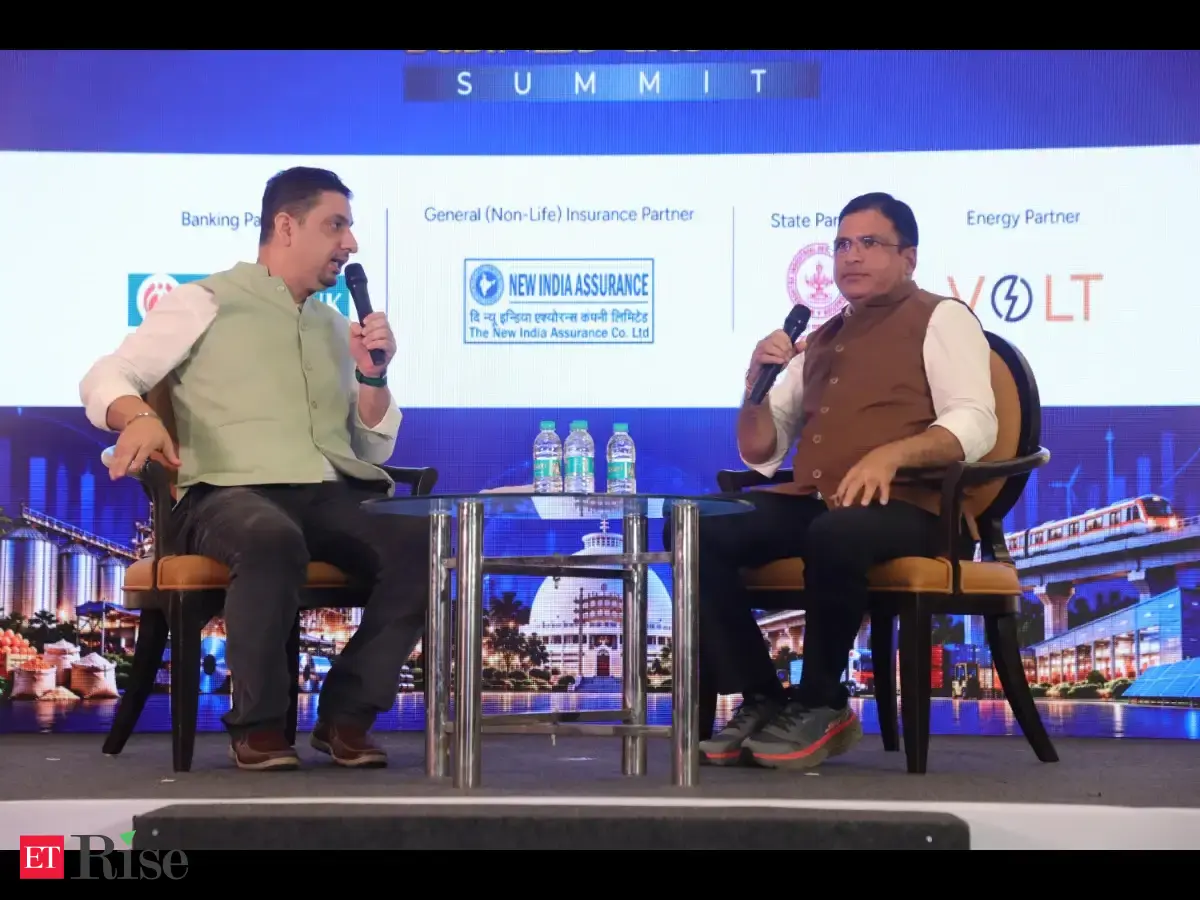
ET Business Growth Summit in Nagpur highlighted land shortages, financing constraints, and rising energy costs as major challenges. View More
At the ET Business Growth Summit in Nagpur, Maharashtra’s Minister of State Ashish Jaiswal called for a review of government incentive schemes, saying that delays in subsidy disbursements can create financial stress for businesses and undermine industrial growth. Jaiswal, Minister of State for Finance, Planning, Agriculture, Assistance and Rehabilitation, and Law and Justice, Maharashtra, during the summit on Friday said the government should explore mechanisms to provide industrial incentives upfront rather than requiring investors to wait years for reimbursements. He said the existing system of releasing incentives after investments needs to be reconsidered, particularly as businesses often depend on promised government support while planning projects and arranging finances. “Instead of waiting for money that the government will provide later, the system should be designed to deliver the benefit upfront,” Jaiswal said, urging industrial associations to submit concrete proposals for restructuring incentive schemes. Jaiswal suggested exploring alternatives that would reduce delays in releasing funds through government procedures, as this remains a challenge. In recent years, land availability has emerged as another major concern for industries looking to expand in Maharashtra, particularly in Vidarbha, where demand for large industrial plots is increasing. Jaiswal said the state government has prepared a new policy framework to simplify land acquisition through mutual consent, government land banks, leasing arrangements, and land-for-land compensation. The proposed framework would allow farmers, industries, and the government to enter into tripartite agreements, creating opportunities for landowners to benefit from industrial development beyond one-time compensation. “We want farmers to become long-term partners in development rather than merely receiving one-time compensation. Employment generation is our biggest priority,” he said. Live Events Leasing arrangements are also being considered to reduce the initial capital required to establish industrial units. The minister said the policy was nearly finalised and would be opened for suggestions before being taken forward. He added that resolving land acquisition challenges would be essential to achieving Maharashtra’s long-term economic development ambitions. ET OnlineMIDC Regional Head Manohar Pote emphasised that industrial development should go beyond attracting large investments and signing memorandums of understanding. Jaiswal also called for identifying products that Maharashtra currently sources from other states or imports from overseas and encouraging their local manufacture. Such an approach, he said, could reduce transportation costs, strengthen local supply chains and create employment opportunities. Vidarbha positioned for industrial expansion Earlier, Manohar Pote, Regional Head of the Maharashtra Industrial Development Corporation (MIDC), Nagpur, said the region was positioned for significant industrial expansion over the next decade, particularly in defence manufacturing, logistics, solar power cells, and automobiles. MIDC, a government agency of Maharashtra, is the state’s principal industrial infrastructure development body. It provides essential infrastructure to businesses, including industrial land, roads, water supply, drainage systems and street lighting. Nagpur’s central location offers logistical advantages, making it suitable for strategically important industries, including defence manufacturing, he said. Pote emphasised that industrial development should go beyond attracting large investments and signing memorandums of understanding. Greater attention should be given to building local vendor ecosystems so that smaller businesses can participate in the supply chains of major manufacturers, said Pote of MIDC. He also acknowledged land acquisition challenges and said the state was working towards more inclusive industrial policies. ET OnlineRamakrishna Eda, Chief General Manager of IDBI Bank, speaking during a fireside chat. The summit then featured a fireside chat with Ramakrishna Eda, Chief General Manager of IDBI Bank, on financing Vidarbha’s next phase of growth, including the transition from traditional businesses to new-age enterprises. "IDBI Bank is committed to supporting MSMEs with accessible financial solutions, timely credit and customised banking services to help them overcome business challenges, improve competitiveness and achieve sustainable growth," said Eda. "The Bank recognises the critical role of MSMEs in driving economic growth and employment generation. By strengthening digital banking, simplifying processes and improving access to finance, the bank aims to empower small businesses to expand and build long-term resilience," added Eda. During a panel discussion on Vidarbha’s Next Growth Story: From Local Strength to National Scale, industry representatives highlighted the opportunities arising from new investments while cautioning that land shortages and financing constraints could restrict expansion. P. Mohan, President of the MIDC Industries Association, said global disruptions presented both challenges and opportunities for industries in Nagpur. “I think we can cope, as far as Nagpur is concerned, since we have got all types of advantages,” he said. Mohan said the Vidharbha region has a lot of untapped potential, which will find its real takers going ahead. ET OnlineThis followed a panel discussion on Vidarbha’s Next Growth Story: From Local Strength to National Scale. Julfesh Shah, Chairman of the Chamber of Small Industry Associations (COSIA), Vidarbha Chapter, said the arrival of large industrial players had significantly increased demand for land. All big players are coming, and they require huge pieces of land—500 acres, etc. So that much land at once, whatever MIDC had, is getting exhausted,” he said. Shah expressed optimism that Vidarbha could emerge as Maharashtra’s next major industrial growth centre, citing Nagpur’s strategic location and mineral-rich districts such as Gadchiroli. Kirit Joshi, Co-Founder of Spacewood, said new-age consumer businesses often find it easier to attract funding because they have products that can be sold directly to consumers. While most MSMEs here are either ancillaries or they make intermediate products. That’s why they face scarcity of funds, added Joshi. Surbhi Bajaj, Co-Founder of Volt Energy, said industrial units face two major energy-related costs: electricity purchased from distribution companies and fuel used to operate diesel generators. She said solar power, particularly when combined with battery storage, could help MSMEs reduce dependence on grid electricity and diesel generation. Bajaj also argued that industrial consumers bear part of the burden of subsidised electricity supplied to other categories, including agricultural and residential consumers, making renewable energy an increasingly important option for reducing operating costs. Bajaj also said that investments in renewable energy could generate good returns and improve operational efficiency, adding that the sector represents the future, with countries across the world, including India, increasingly focusing on clean energy. “Start-ups are gradually gaining ground in tier II cities like Nagpur, driven by advances in modern technology and AI. Greater support through funding, infrastructure and mentorship could further strengthen the startup ecosystem and accelerate growth on the ground,” said Trishala Bothara, Co-Founder, Habuild. ET OnlineSuresh Babu, Nagpur Regional in-charge of The New India Assurance Co. Ltd, during a fireside chat. The summit also featured a discussion with Suresh Babu, Nagpur Regional in-charge of The New India Assurance Co. Ltd, on the role of insurance in strengthening the resilience of small and medium enterprises. Babu also said NIA aims to make insurance more accessible and affordable for MSMEs through tailored products and simplified digital processes, helping them manage risks, protect assets and build resilience. In the session dedicated to business success stories, Prashant Mohota, Managing Director of Gimatex Industries (Textiles) and President of the Vidarbha Industries Association (VIA), shared his entrepreneurial journey and business growth. He also discussed the challenges of scaling businesses beyond domestic markets. ET OnlinePrashant Mohota, Managing Director of Gimatex Industries (Textiles) and President of the Vidarbha Industries Association (VIA), during a fireside chat. Mohota, a sixth-generation entrepreneur, emphasised the importance of staying focused on core business strengths rather than diversifying into multiple sectors at the same time without a clear strategy. He said this approach had helped the Mohota Group sustain itself for over 125 years, while Gimatex Industries has been operating for more than 25 years. He remained optimistic about the textile sector’s growth prospects and expressed hope that the government would address minor regulatory hurdles to strengthen Maharashtra’s textile ecosystem. He also advised entrepreneurs to carefully assess the extent of government intervention before venturing into new businesses. The discussions underscored the need for industrial policies that address not only the availability of land and capital but also the practical difficulties faced by smaller manufacturers in accessing finance, managing costs and participating in emerging supply chains. For Vidarbha, industry representatives said the opportunity lies in converting the region’s geographical advantages, natural resources, and growing investor interest into sustained industrial activity, supported by timely incentives, adequate infrastructure, and stronger participation by local MSMEs. The ET Business Growth Summit in Nagpur was sponsored by IDBI Bank as the Banking Partner, The New India Assurance Co. Ltd. as the General Insurance Partner, Maharashtra Industrial Development Corporation (MIDC) as State Partner and Volt Energy as the Energy Partner. .Pbanner{display:flex;justify-content:space-between;align-items:center;background-color:#ec1c40;margin-top:20px;padding:5px 10px;border-radius:4px;color:#fff;line-height:10px;width: 100%;box-sizing: border-box} .Pbannertext{display:flex;align-items:center;font-size:16px;font-weight:600;font-family:'Montserrat';} .Pbannertext img{height:20px;margin:0 6px} .Pbannerbutton a{display:flex;align-items:center;background-color:#fff;color:#ec1c40;text-decoration:none;font-weight:600;padding:4px 8px;border-radius:6px;font-size:15px;font-family:'Montserrat';} .Pbannerbutton img{height:20px;margin-right:6px} .Pbannerbutton a:hover{background-color:#f7f7f7} Add as a Reliable and Trusted News Source Add Now!