Latest Sectors News
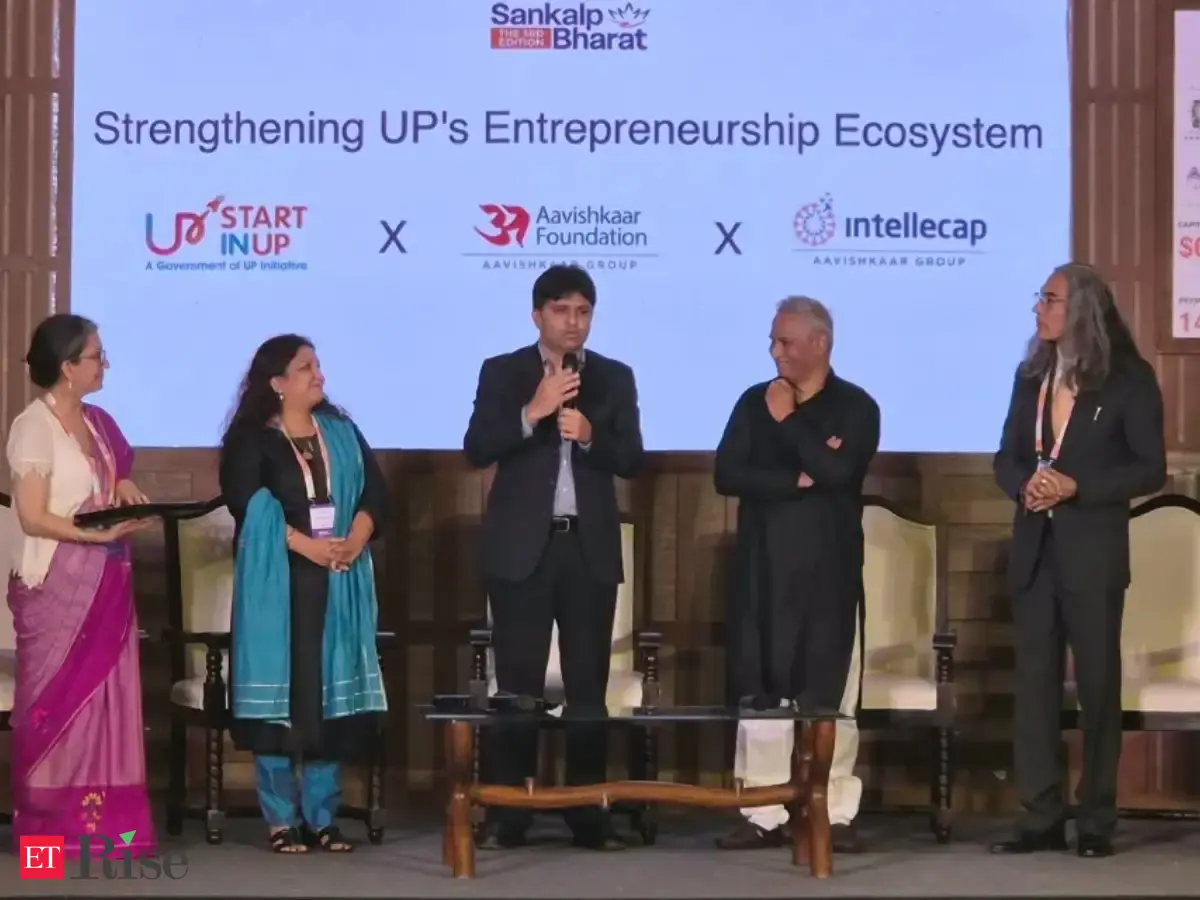
With more than 11.5 million MSMEs across the state, Uttar Pradesh is looking beyond its established startup centres to build a wider enterprise ecosystem. A new Invest UP partnership with Aavishkaar Foundation and Intellecap aims to take capital, advisory support and market connections closer to entrepreneurs across its districts. View More
Lucknow: Uttar Pradesh is looking to take its entrepreneurship push beyond established startup centres such as Lucknow and Noida, with the state government joining hands with grassroots-focused organisation Aavishkaar Foundation and Intellecap to connect entrepreneurs and smaller businesses across the state with capital, mentors, markets and institutional support. The scale of the opportunity is significant. Uttar Pradesh had about 11.6 million MSMEs registered under the Udyam and Udyam Assist systems, according to the latest state-wise data from the Ministry of MSME. The base includes about 5.86 million micro enterprises, 45,453 small enterprises and 3,065 medium enterprises under Udyam, along with more than 5.68 million informal micro enterprises registered through the Udyam Assist Platform. The partnership, signed at Sankalp Bharat 2026 in Lucknow on October 28, comes as Uttar Pradesh pursues its ambition of becoming a $1 trillion economy. The challenge for the state is not only to attract large investments or build startup hubs, but also to help the millions of smaller businesses (MSMEs) and emerging enterprises spread across its districts access the ecosystem needed to grow. Invest UP, Aavishkaar Foundation and Intellecap signed an MoU to work as strategic partners, bringing together advisory expertise, investor networks and government facilitation. The partnership will connect entrepreneur identification, incubation and mentoring with One District One Product clusters, local market needs and Invest UP infrastructure. It will also seek to give promising UP enterprises access to Indian and global venture funds, development finance institutions, alternative investment funds, academics, incubators and corporate ecosystem partners. Live Events Taking entrepreneurship deeper into UP's districts The partnership comes at a time when the focus of Uttar Pradesh's entrepreneurship and MSME ecosystem is gradually moving beyond its larger cities. For Aavishkaar Foundation, this shift is already underway in eastern Uttar Pradesh. The Foundation works across 25 districts through its Youth Entrepreneurship Programme, which has reached more than 60,000 students across 1,000 schools and colleges, according to the organisation. It has set an ambition of reaching 1 million students by 2030. Vineet Rai, Founder and Vice-Chairman, Aavishkaar Group, said his experience of working with entrepreneurs has taught him that simply putting money behind an idea does not guarantee that the business will succeed. “If you want to bring change, you have to give money,” Rai said. But capital, he added, has to be accompanied by intellectual capital and the right kind of support. Rai's thinking on capital was shaped early in his career, when he worked with farmers and entrepreneurs and saw how promising ideas could struggle without access to risk-taking finance. He added that the capital deployed for such businesses also needs to be willing to take risks, rather than expecting every investment to succeed. The key lesson, he said, was that money has to be matched to the nature and objective of the enterprise. Rai highlighted that this philosphy has shaped Aavishkaar Group, which operates through different entities with distinct roles. Notably, Aavishkaar Capital is the group's impact investment fund manager, investing in businesses across India and other emerging markets. Aavishkaar Foundation, the social impact-focused entity is its not-for-profit arm focused on underserved communities and entrepreneurship. Intellecap is the advisory and consulting arm, while Arohan provides microfinance to underserved households. The group also has a dedicated MSME lending business. Rai said Ashv Finance provides collateral-free loans to micro, small and medium enterprises, with lending in the range of about Rs 10 lakh to Rs 1 crore. This distinction, Rai highlighted is important for Uttar Pradesh, where the financing needs of a micro enterprise in a district can be very different from those of an established small or medium business, a young entrepreneur or a venture-backed technology company. The founder of the social enterprise ecosystem builder underlined that different forms of capital have different purposes. “Every kind of money has a purpose,” he said, explaining that lending has to be repaid, equity shares risk, advisory capital provides knowledge, while philanthropic capital is deployed where financial returns are not the immediate objective. He further flagged that using the wrong form of financing can also hurt a business. “If you don't understand the form of money and take the wrong money, then you can have a lot of damage,” Rai said. The issue is particularly relevant for smaller businesses, many of which can find themselves caught between conventional bank lending and venture capital. Aavishkaar Capital has invested about Rs 5,500 crore across around 100 enterprises, according to Rai, with investments spanning agritech, fintech, deeptech, spacetech, climate technology, EVs and circularity. The group is also working on the Aavishkaar Next Generation Fund, which Rai said is targeting about Rs 2,500 crore over the next five years, with areas such as circularity, deeptech and energy transition among its focus sectors. But venture capital is only one part of the development solutions firm's operational model. From problem statements to solutions that can scale For Santosh Singh, Managing Director, Intellecap Advisory Services, the evolution of Sankalp reflects a larger shift in the development ecosystem itself. Singh, who leads Intellecap's energy, climate change and agriculture practice, said the increased focus on climate, deeptech and technology at this year's event should not be seen as a move away from the rural economy. “The focus is the underprivileged,” he said, pointing to the billions of people across the Global South that Intellecap works with. The next stage, according to him, will be about taking those solutions to scale and eventually making them mainstream. “If first year was all about talking about the problem and setting the goal post, next year would be that, how we are moving the needle on that,” he said. Such an emphasis on scale is particularly important in agriculture, where a solution can work for thousands of farmers but still remain small compared with the size of the problem. “For us a solution is successful by, say, 30,000 farmers. But the problem is so big that we want the 30,000 to be 30 million,” Singh said. Singh added that Intellecap often finds that technology itself is not the biggest obstacle to adoption. The problem can instead be affordability, access, the business model or simply whether a farmer sees enough immediate value in paying for a particular solution. He cited solar irrigation pumps as an example. Such pumps can reduce diesel costs, but their upfront cost can be several times higher than that of conventional pumps. The answer, therefore, was not necessarily to convince every farmer to buy one. Intellecap looked at models in which an entrepreneur owns the solar pump and supplies water to several farmers. Instead of bearing the entire upfront investment, farmers pay for the service. “Suddenly, the upfront cost of acquiring solar pump has been reduced by this business model,” Singh said, adding that the same principle can apply to technology. He cited soil testing, where the technology has existed for years but adoption remains limited. A farmer may send a sample to a laboratory and receive a report several days later. Intellecap has worked with entrepreneurs on solutions that can provide results much faster. Agriculture is also where Intellecap sees a larger opportunity for Uttar Pradesh. The organisation is already working with Farmer Producer Organisations (FPOs) in the state and examining what technology and financing can help them improve operations and expand their businesses. For Singh, Uttar Pradesh, the country's most populous state and an agricultural hotspot, is looking to become an agri hub; and his focus is on bringing technology and finance to these FPOs and relevent organisations, build their capacity and help them access international markets. Notably, Intellecap is exploring ways to aggregate large numbers of small farmers for carbon projects because individual farmers often have holdings too small to make standalone projects viable. In Uttar Pradesh, it is looking at rice farming and practices related to water and fertiliser use. However, for Singh, carbon is not the starting point. “We don't go there as a carbon people. We go there as an agriculture person trying to solve agriculture problems,” he said. According to him, if carbon finance can provide an additional source of income or reward farmers for practices that reduce emissions or remove carbon, it becomes another tool in the larger agricultural transformation. 25 JanAI Cafés to add an AI layer Alongside the Invest UP partnership, Aavishkaar Foundation has announced a separate initiative aimed at taking artificial intelligence deeper into eastern Uttar Pradesh. Aavishkaar Foundation, Head Held High Foundation and JanAI Technology signed an MoU at Sankalp Bharat 2026 to establish 25 JanAI Cafés across 25 districts of eastern UP over the next 12 months. The cafés are intended to serve as community-level access points where rural households, youth, women, farmers, entrepreneurs and smaller businesses can use AI in their own languages. The proposed applications range from accessing government schemes and finding jobs and markets to developing enterprise ideas and addressing everyday problems. JanAI Technology will rovide the multilingual AI platform, while Head Held High Foundation will recruit and train JanAI Ambassadors. These local operators will help citizens use AI and identify local needs and opportunities. For Aavishkaar Foundation, the initiative also links directly to its existing Youth Entrepreneurship Programme. The Foundation plans to use JanAI's AI tools to help students explore ideas and entrepreneurial opportunities, potentially giving its entrepreneurship programme a technology layer that can be deployed across the 25 districts where it already works. The partners are positioning the 25 districts as a demonstration of what they call “people-first AI”. The question before the development advisory firm Intellecap is whether access to AI can eventually translate into measurable economic outcomes. For a young person, the organisation said, this could mean finding an opportunity or developing a business idea. For a small business owner, it could mean finding a market, improving operations or accessing a government scheme. For a farmer, it could mean getting information that helps improve a production decision. Rai said the larger objective is to help ideas that begin at the margins eventually become part of the mainstream economy. “That is the journey we have to take, from impact to mainstream,” he added. .Pbanner{display:flex;justify-content:space-between;align-items:center;background-color:#ec1c40;margin-top:20px;padding:5px 10px;border-radius:4px;color:#fff;line-height:10px;width: 100%;box-sizing: border-box} .Pbannertext{display:flex;align-items:center;font-size:16px;font-weight:600;font-family:'Montserrat';} .Pbannertext img{height:20px;margin:0 6px} .Pbannerbutton a{display:flex;align-items:center;background-color:#fff;color:#ec1c40;text-decoration:none;font-weight:600;padding:4px 8px;border-radius:6px;font-size:15px;font-family:'Montserrat';} .Pbannerbutton img{height:20px;margin-right:6px} .Pbannerbutton a:hover{background-color:#f7f7f7} Add as a Reliable and Trusted News Source Add Now!

Navitas Solar secures $20 million or ?190 crore from responsAbility to fund its growth plans. The investment is a part of responsAbility's Asia Climate Fund. View More

ACME Solar’s consolidated total expenses also rose to around ?134 crore in Q2 FY27 against ?123 crore in Q1 FY27 and ?68 crore in Q2 FY26 View More

Only 88 lakh pumps of the total 3 crore in the country run on diesel, while farmers look to earn more from PM-KUSUM scheme, says Mayur Misra View More

Waaree would "double down" on its US manufacturing footprint ?as new import rules, and other duties imposed by the US View More
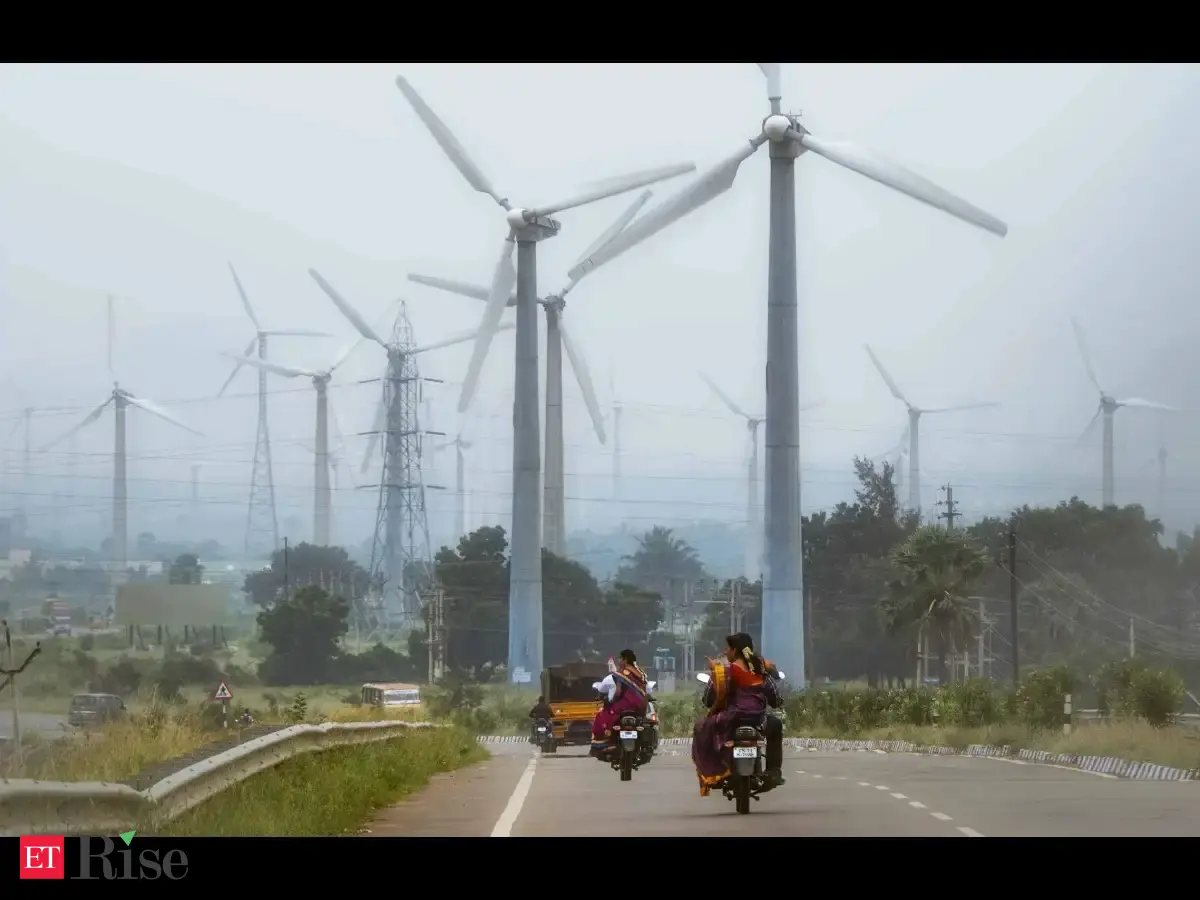
The International Renewable Energy Agency predicts a decline in clean energy capacity additions by 2026. This slowdown is largely due to insufficient transmission networks and various trade barriers. View More
SINGAPORE: The world will add less clean energy capacity in 2026 for the first time in five years due to inadequate transmission networks and trade barriers, the chief of the International Renewable Energy Agency (IRENA) said. Growth in solar and wind capacity has been accelerating every year since 2021, when the coronavirus pandemic disrupted global supply chains. Clean power installations including hydropower surged a record 692 gigawatts, or 15.5%, to 5,149 GW in 2025- representing half the world's power capacity. Governments have pledged to boost clean energy use to ensure reliable power supply and cut costs, particularly after the US-Israeli war with Iran choked energy supplies and inflated prices. But IRENA Director-General Francesco La Camera noted that there has been a slowdown in renewables deployment in China due to curtailment — or rejection of clean power when a grid hits its limits. "The main cause of a lack of new record in additions this year is the mismatch between generation capacity and the capacity to distribute and transmit electricity," he told Reuters on the sidelines of the Singapore International Energy Week conference. China, the world's biggest renewable energy producer, turned away enough clean energy to power Mexico for a year in the first half of 2026, while networks in nations such as Australia and Japan also failed to keep pace with a surging renewables buildout. Live Events "The amount of the (capacity) increase in the other parts of the world this year, I don't think it will offset the slowing down in China," La Camera said. He declined to provide a numerical forecast for expected growth in clean energy additions this year. Renewable energy additions are crucial to reducing global emissions, and the United Nations said in a report last week that "urgent and stringent" emission cuts were required to slow global warming. .Pbanner{display:flex;justify-content:space-between;align-items:center;background-color:#ec1c40;margin-top:20px;padding:5px 10px;border-radius:4px;color:#fff;line-height:10px;width: 100%;box-sizing: border-box} .Pbannertext{display:flex;align-items:center;font-size:16px;font-weight:600;font-family:'Montserrat';} .Pbannertext img{height:20px;margin:0 6px} .Pbannerbutton a{display:flex;align-items:center;background-color:#fff;color:#ec1c40;text-decoration:none;font-weight:600;padding:4px 8px;border-radius:6px;font-size:15px;font-family:'Montserrat';} .Pbannerbutton img{height:20px;margin-right:6px} .Pbannerbutton a:hover{background-color:#f7f7f7} Add as a Reliable and Trusted News Source Add Now!
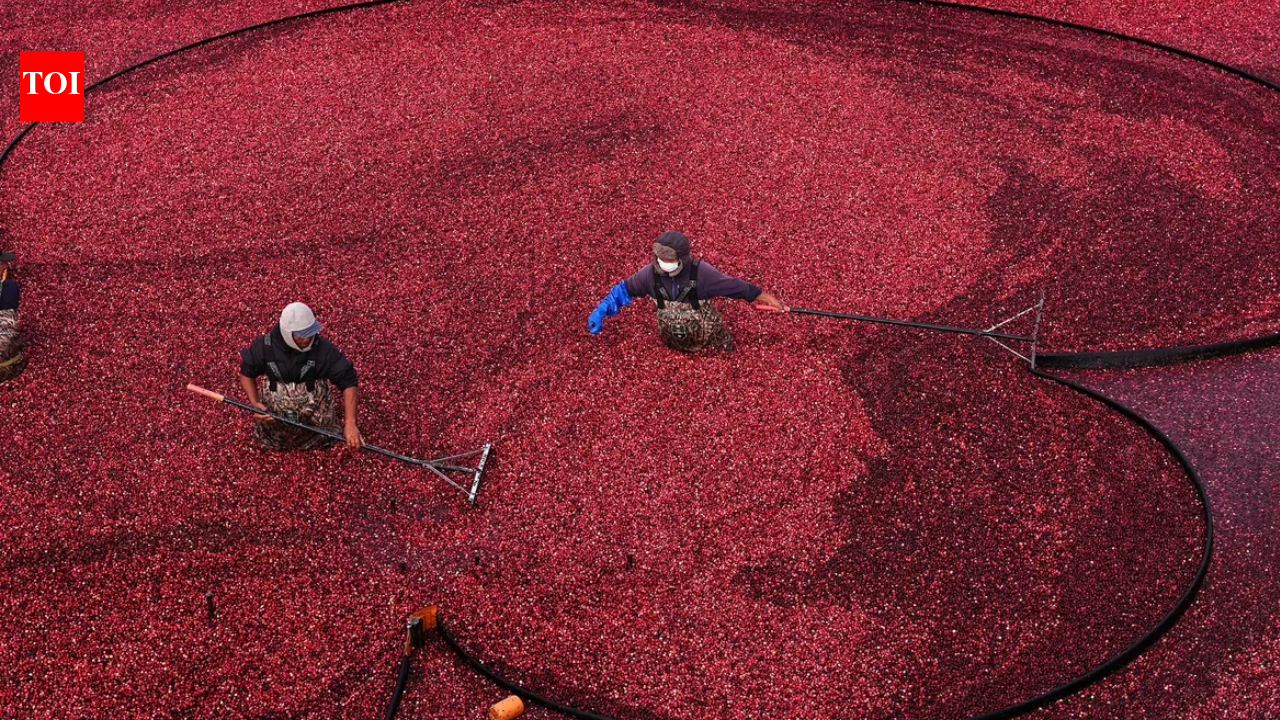
In Massachusetts, a groundbreaking approach has emerged as two cranberry bogs have implemented solar panels above their crops. This eco-friendly strategy not only cuts farming expenses but also creates extra revenue through solar energy production. The initiative fosters healthier soil and revives forgotten bog areas, ensuring ongoing agricultural yield. Supported by state policies, this dual use of land is paving the way for agrivoltaics and sustainable farming practices. View More
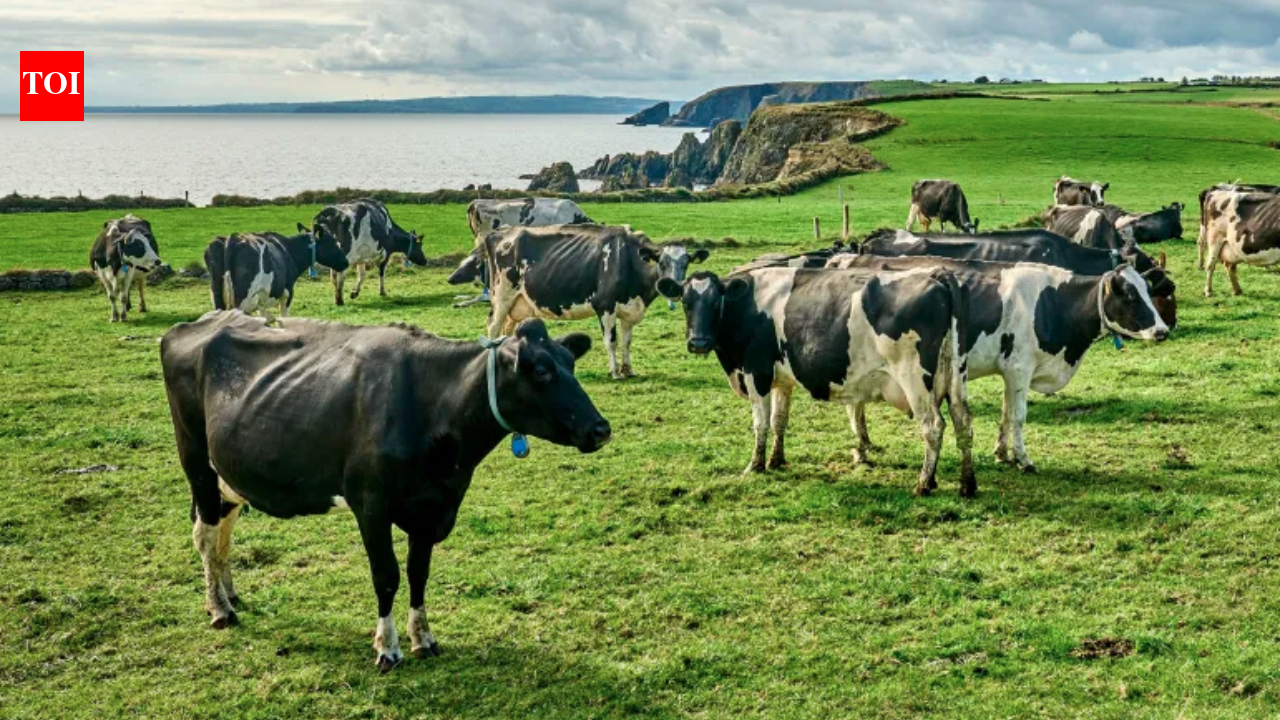
In County Cork, Sean Keating, a dedicated dairy farmer, has innovatively transformed a portion of his land into a solar farm. This eco-friendly venture enables him to harvest renewable energy while still allowing sheep to graze comfortably beneath the solar installations. Expected to power about 150 households annually, this project showcases the critical support from the government and could potentially motivate other farmers to explore similar sustainable energy alternatives. View More
In County Cork, Sean Keating, a dedicated dairy farmer, has innovatively transformed a portion of his land into a solar farm. This eco-friendly venture enables him to harvest renewable energy while still allowing sheep to graze comfortably beneath the solar installations. Expected to power about 150 households annually, this project showcases the critical support from the government and could potentially motivate other farmers to explore similar sustainable energy alternatives. View More
In County Cork, Sean Keating, a dedicated dairy farmer, has innovatively transformed a portion of his land into a solar farm. This eco-friendly venture enables him to harvest renewable energy while still allowing sheep to graze comfortably beneath the solar installations. Expected to power about 150 households annually, this project showcases the critical support from the government and could potentially motivate other farmers to explore similar sustainable energy alternatives. View More