
Latest Sectors News

ACME Solar's subsidiary, ACME Alpha Renewables, has executed a power purchase agreement (PPA) with NTPC for a Hybrid Power Project for a contract capacity of 150 MW. View More
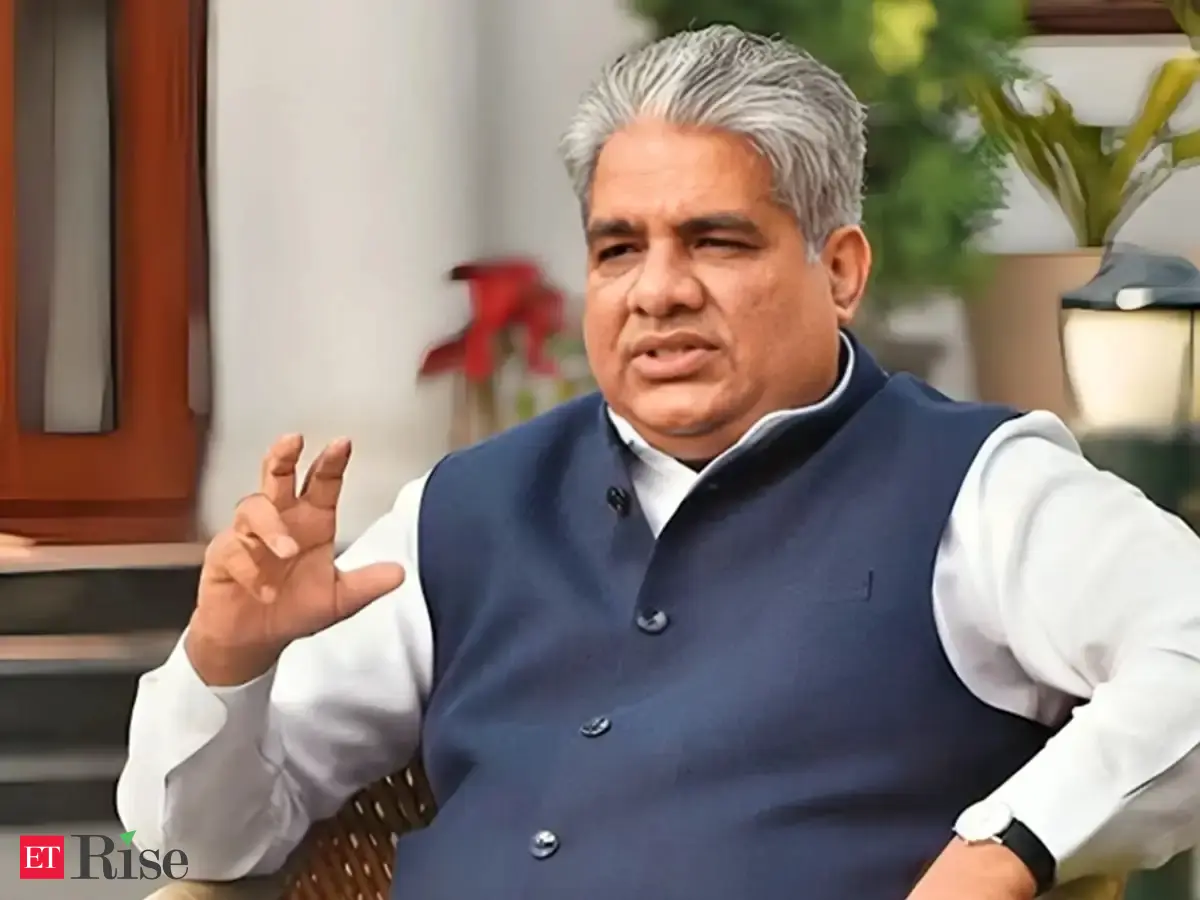
At COP31 in Turkiye, India's Union Environment Minister Bhupender Yadav detailed the nation's strategy for climate resilience. He stressed the significance of collaborating with Small Island Developing States on coastal risk management and ecosystem conservation. Yadav outlined four priority focus areas for strengthening partnerships, such as technology exchange and capacity enhancement. View More
NEW DELHI: India believes that environmental protection and development must advance together, with climate resilience centred on people, livelihoods and ecosystems, Union Environment Minister Bhupender Yadav said on Tuesday during an event at COP31 being held in Turkiye’s Antalya. The minister also highlighted India's experience in coastal resilience and cited the Mangrove Initiative for Shoreline Habitats and Tangible Incomes (MISHTI), which advances mangrove conservation and restoration while supporting coastal livelihoods . Yadav made these comments at an event on 'India-SIDS ( Small Island Developing States ) Partnership for Resilient Coasts and Oceans: Sharing Knowledge, Technology and Solutions'. During his address, the minister identified four priority areas for enhanced India-SIDS cooperation, the first one being coastal risk assessment, shoreline monitoring and early warning systems. Live Events Second, ecosystem-based approaches covering mangrove conservation, coral reef and seagrass protection, wetland restoration and sustainable management of coastal and marine resources; and third, technology partnerships for island context, focused on solar-powered solutions, decentralised renewable energy, water security and climate-resilient infrastructure. The fourth highlighted the need for institutional partnerships and capacity-building to support joint project preparation and country-led pilot initiatives. "Cooperation must be guided by the priorities and national circumstances of individual countries, with solutions adapted to their geography, ecosystems and institutional capacities," Yadav said. Moreover, he underlined the importance of mutual learning, noting that SIDS, as custodians of extraordinary marine biodiversity and traditional knowledge, have valuable experience in adapting to changing ocean conditions. .Pbanner{display:flex;justify-content:space-between;align-items:center;background-color:#ec1c40;margin-top:20px;padding:5px 10px;border-radius:4px;color:#fff;line-height:10px;width: 100%;box-sizing: border-box} .Pbannertext{display:flex;align-items:center;font-size:16px;font-weight:600;font-family:'Montserrat';} .Pbannertext img{height:20px;margin:0 6px} .Pbannerbutton a{display:flex;align-items:center;background-color:#fff;color:#ec1c40;text-decoration:none;font-weight:600;padding:4px 8px;border-radius:6px;font-size:15px;font-family:'Montserrat';} .Pbannerbutton img{height:20px;margin-right:6px} .Pbannerbutton a:hover{background-color:#f7f7f7} Add as a Reliable and Trusted News Source Add Now!
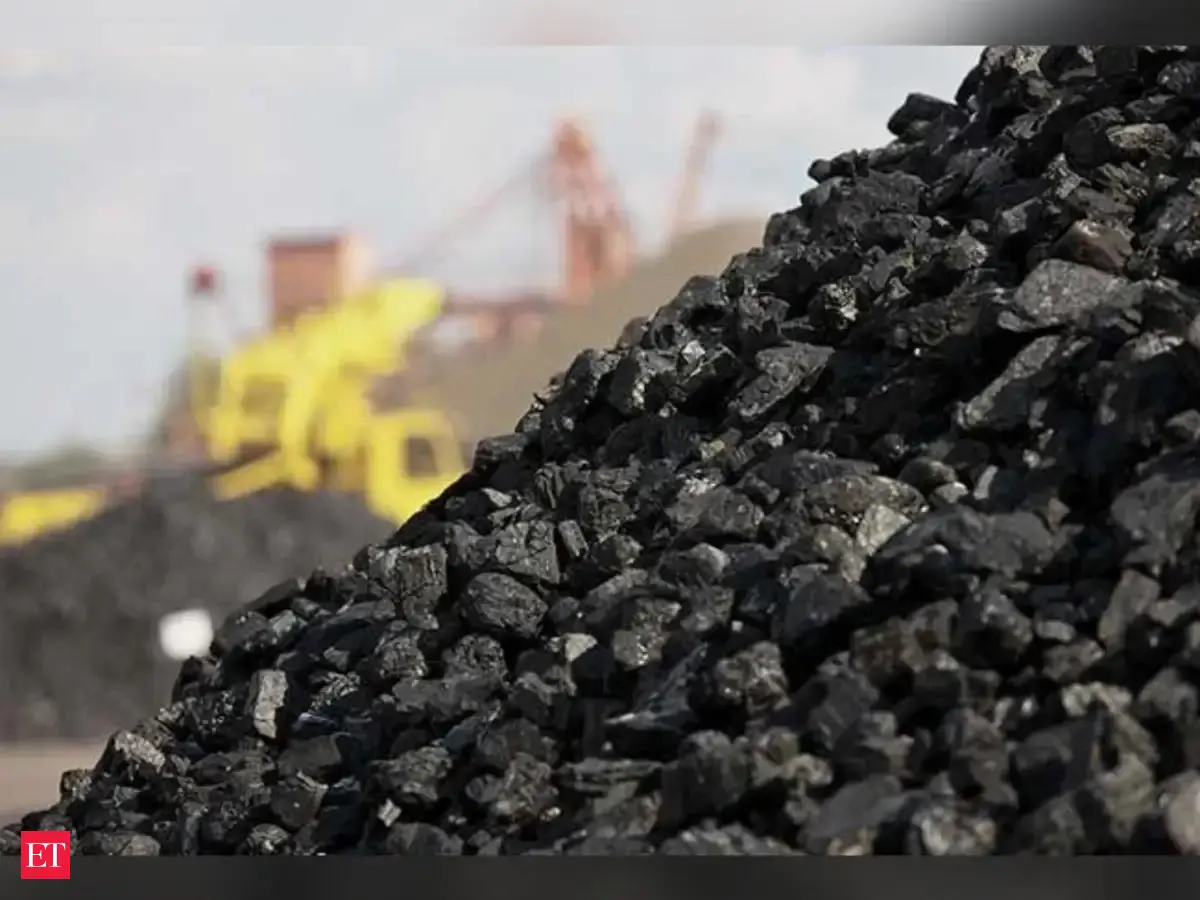
Global coal consumption is resilient due to rising demand from China and India, which is increasing despite declining figures elsewhere. However, many coal exporters are struggling financially as they face significant losses in their operations. The coal industry is experiencing tough economic conditions, with job losses and company closures becoming commonplace. View More
Two seemingly contradictory things are happening in the world’s coal market right now. Consumption of the fuel is showing remarkable resilience. Across 193 of the 195 countries represented at this week’s COP31 climate conference in Antalya, Turkey, aggregate demand fell by about 10% between 2019 and 2025. That would be good news, if it weren’t for the two heavyweights: China and India, which together burn seven out of every 10 metric tons used globally. Also Read: Reliance plans Rs 43,000 cr coal gasification project in Andhra Pradesh, document shows Their consumption rose by 13% and 28%, respectively, over the same period. Combined with policies that continue to favor coal, that has been enough to keep global demand bumping along at about 9 billion tons a year since 2023 — just when the world desperately needs a rapid and irreversible decline. Yet stubbornly high consumption doesn’t mean it’s a good time to be a coal miner. China and India have been able to cushion domestic generators and miners with capacity payments and favorable contract terms. Exporters have no such protection. With swaths of the industry losing money on every ton dug from the ground, the seaborne coal trade has become a Squid Game-style fight for survival. Live Events Turkey’s principal coal suppliers Russia and Colombia are ground zero. About 70% of Russian coal companies can’t make a profit and the industry is likely to lose 324 billion rubles ($3.9 billion) this year, the government estimated last month. Losses are expected to continue into a fourth consecutive year in 2027, even if prices improve. In the Kuznets basin, from where about half of Russia’s coal is extracted, 7,000 people lost their jobs last year and roughly a third of mining companies are shut or financially distressed. Bloomberg Colombia, whose mines helped power Europe through the 1990s and 2000s, is also feeling the squeeze. Exports fell by nearly a quarter in 2025, to their lowest level since 2003. Glencore Plc last year wrote $859 million off the value of Cerrejón — Latin America’s biggest coal mine, with a 5 billion-ton resource — and plans to hand it back to the government when its rights expire in 2034. South Africa, where export mines are barely making a profit these days, looks to be next in line. The fact that these operations are still running amid such bleak conditions is a clue to the brutal economics of a declining commodity. Miners don’t need demand to recover. They need their competitors to fold first. If enough Russian mines go under, the seaborne market will tighten, lifting prices and pushing loss-making operations in Colombia and South Africa back into the black. That should buy them some time before the next leg down in demand puts them in the firing line. For the US, Indonesia and Australia — the only other major players in the seaborne trade — what lies ahead looks less like a reprieve than a stay of execution. There’s a historical symmetry to this decline. Seaborne coal is being squeezed by the same remorseless economics that threaten the future of liquefied natural gas. Both industries took off in the aftermath of the 1970s oil shocks, when importers went searching for alternatives to dependence on Middle Eastern crude. Bloomberg Coal and gas can be relatively cheap when consumed close to the source, especially when their pit-head price excludes the climate and health damage their pollution causes. Put them on a railway or a ship and transport them halfway around the world, however, and the economics deteriorate fast. Hefty transport costs leave them struggling to compete in energy markets where cheap, clean renewable power is relentlessly pushing prices lower. Also Read: Coal gasification projects may save India Rs 1.5 lakh crore in forex over 5-7 years: Coal Ministry Secretary Consider those Siberian miners. For every $100 a Chinese utility pays for a metric ton of their coal, barely $25 makes it back to the pit. The rest pays for the astronomical cost of transporting the world’s dirtiest energy to a Pacific port and shipping it down the coast. It gets worse. To compete with the local cost of new wind and solar plants, the Chinese utility needs to be paying about $75 a ton. With transport costs largely unchanged, that would leave virtually nothing at the mine gate — wiping out the miner’s revenue, never mind its profits. That’s broadly the situation we’re seeing right now. Despite LNG shortages, policy support for fossil fuels, and government regulations to put a brake on wind and solar, Chinese fossil generation is declining in 2026 for the second year running. The coal industry once imagined a future of rising demand and healthy profits. Those days are long gone. What passes for good news these days is that consumption isn’t falling as fast as we need to avoid devastating climate change. That's an odd definition of success when you’re simultaneously shutting mines, laying off workers, losing money and writing down assets. The future of energy is local. Coal’s problem is that its mines aren’t. Disclaimer: This article reflects the author’s personal opinion. The views expressed do not represent the stance of The Economic Times. .Pbanner{display:flex;justify-content:space-between;align-items:center;background-color:#ec1c40;margin-top:20px;padding:5px 10px;border-radius:4px;color:#fff;line-height:10px;width: 100%;box-sizing: border-box} .Pbannertext{display:flex;align-items:center;font-size:16px;font-weight:600;font-family:'Montserrat';} .Pbannertext img{height:20px;margin:0 6px} .Pbannerbutton a{display:flex;align-items:center;background-color:#fff;color:#ec1c40;text-decoration:none;font-weight:600;padding:4px 8px;border-radius:6px;font-size:15px;font-family:'Montserrat';} .Pbannerbutton img{height:20px;margin-right:6px} .Pbannerbutton a:hover{background-color:#f7f7f7} Add as a Reliable and Trusted News Source Add Now! (You can now subscribe to our Economic Times WhatsApp channel) (You can now subscribe to our Economic Times WhatsApp channel)
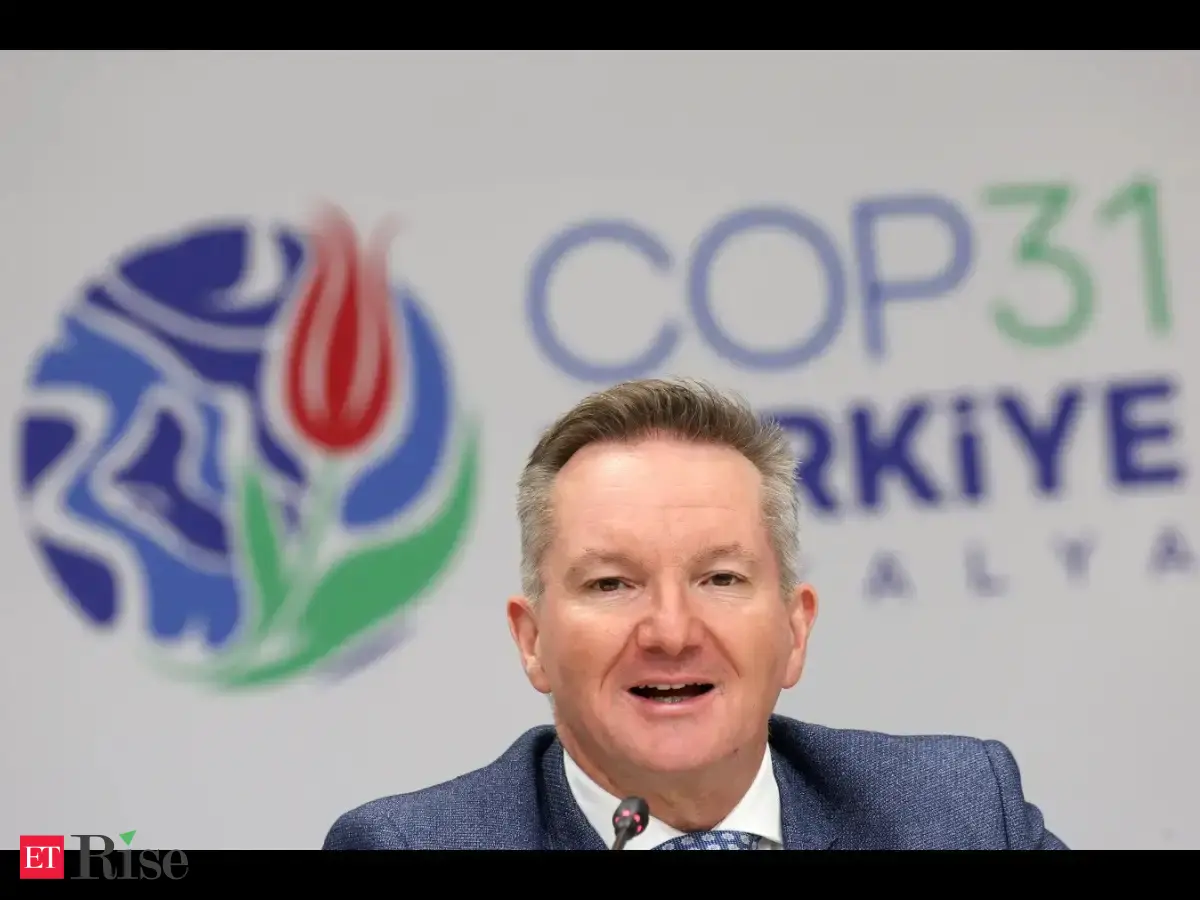
During COP31 in Turkey, a bold proposal was made to boost electricity's share in global energy demand to 35% by the year 2035. This ambitious plan aims to improve energy efficiency across major sectors, including transportation, buildings, and industries to mitigate emissions. View More
A proposal at United Nations climate talks to increase electricity’s role in the global energy system needs detailed country plans and financing to become more than an empty idea, according to the head of the International Solar Alliance . The presidency of COP31 in Antalya, Turkey, began by pushing for countries to sign onto a voluntary pledge to raise electricity’s share of global final energy demand to 35% by 2035, from just over 20% currently. The notion was included in draft language of the final deal on Monday, but there is opposition to including it in an ultimate declaration with the backing of nearly 200 nations at the summit. Even if the electrification goal makes it into the final text, implementation will be tough, said Ashish Khanna, director general of the India-based intergovernmental group. The research going into the idea was based on a global analysis and doesn’t represent circumstances of many countries, Khanna said. “It doesn’t mean that just announcing will make a difference,” Khanna said. “The number 35% should have come from a good bottom-up assessment. That is what the heart of the COP is.” Bloomberg Electrification of the Global Economy Is Already Underway | Electricity consumption as a share of total final energy consumption Live Events The initiative is intended to curb emissions by shifting transport, buildings and industry toward more energy-efficient electric devices. The cleaner the source of electricity the deeper the emission reductions . Bloomberg reported Monday that the Like-Minded Developing Countries bloc, which includes China, India and Bangladesh, opposes any recognition of the pledge in the final text. Options under consideration include acknowledging the initiative without repeating the 2035 target or making a more general reference to accelerating electrification. Chris Bowen, the Australian energy and climate minister leading negotiations at COP31, told reporters on Monday that the target’s inclusion in the draft text was about “continuing the work,” and less an indicator it would remain in a final consensus agreement. Khanna said to ease differences the organizers could have assessed 40 or 50 countries across different economic and energy-system “archetypes,” and then estimated how quickly each could accelerate electrification, combining those pathways to test the global target. Africa’s immediate challenge is expanding energy access, while India needs to electrify transport to address pollution and decarbonize industry, Khanna said. Indonesia’s archipelagic geography presents a different infrastructure challenge, he added. “You need to have a bottom-up approach of looking at different types of countries and seeing how can they can achieve higher electrification.” The World Bank, ISA and the International Renewable Energy Agency could help governments design policies and financing structures and calculate how lower fossil-fuel imports would affect fiscal deficits, he said. Such analysis would help countries judge whether the target makes economic as well as climate sense, he said. “Electrification should be one of the biggest priorities for next decade. Obviously it requires financing,” Khanna said. “That is a difficult question because the world doesn’t have financing after all these wars, but it’s a fair demand of developing countries.” .Pbanner{display:flex;justify-content:space-between;align-items:center;background-color:#ec1c40;margin-top:20px;padding:5px 10px;border-radius:4px;color:#fff;line-height:10px;width: 100%;box-sizing: border-box} .Pbannertext{display:flex;align-items:center;font-size:16px;font-weight:600;font-family:'Montserrat';} .Pbannertext img{height:20px;margin:0 6px} .Pbannerbutton a{display:flex;align-items:center;background-color:#fff;color:#ec1c40;text-decoration:none;font-weight:600;padding:4px 8px;border-radius:6px;font-size:15px;font-family:'Montserrat';} .Pbannerbutton img{height:20px;margin-right:6px} .Pbannerbutton a:hover{background-color:#f7f7f7} Add as a Reliable and Trusted News Source Add Now!

From BSE’s entry into the US derivatives market to RRP Defence’s anti-drone technology partnership, corporate developments span renewable energy, manufacturing, hospitality, infrastructure, jewellery and real estate, alongside fundraising and overseas investment plans View More

The patented microgrid combines solar power, batteries and supercapacitors to manage electricity demand, reduce stress on conventional grids and support two-way EV charging View More

Uttar Pradesh secured the top position with 75,031 installations in October 2026, surpassing Gujarat and Maharashtra in cumulative rooftop solar installations View More

Shares of Vikram Solar, Premier Energies, Waaree Energies and Suzlon Energy fell on Monday amid volatile markets and bearish technical signals. View More

The expansion reflects rising domestic manufacturing investment, declining imports and stronger exports, although global competition and supply constraints remain concerns. View More

European Solar Manufacturing Council seeks to rebuild the region’s solar manufacturing capacity View More