
Latest Sectors News

In the past three trading days, the Nifty India Defence index outperformed the market by soaring 5% against a 2% rise in the Nifty 50. View More
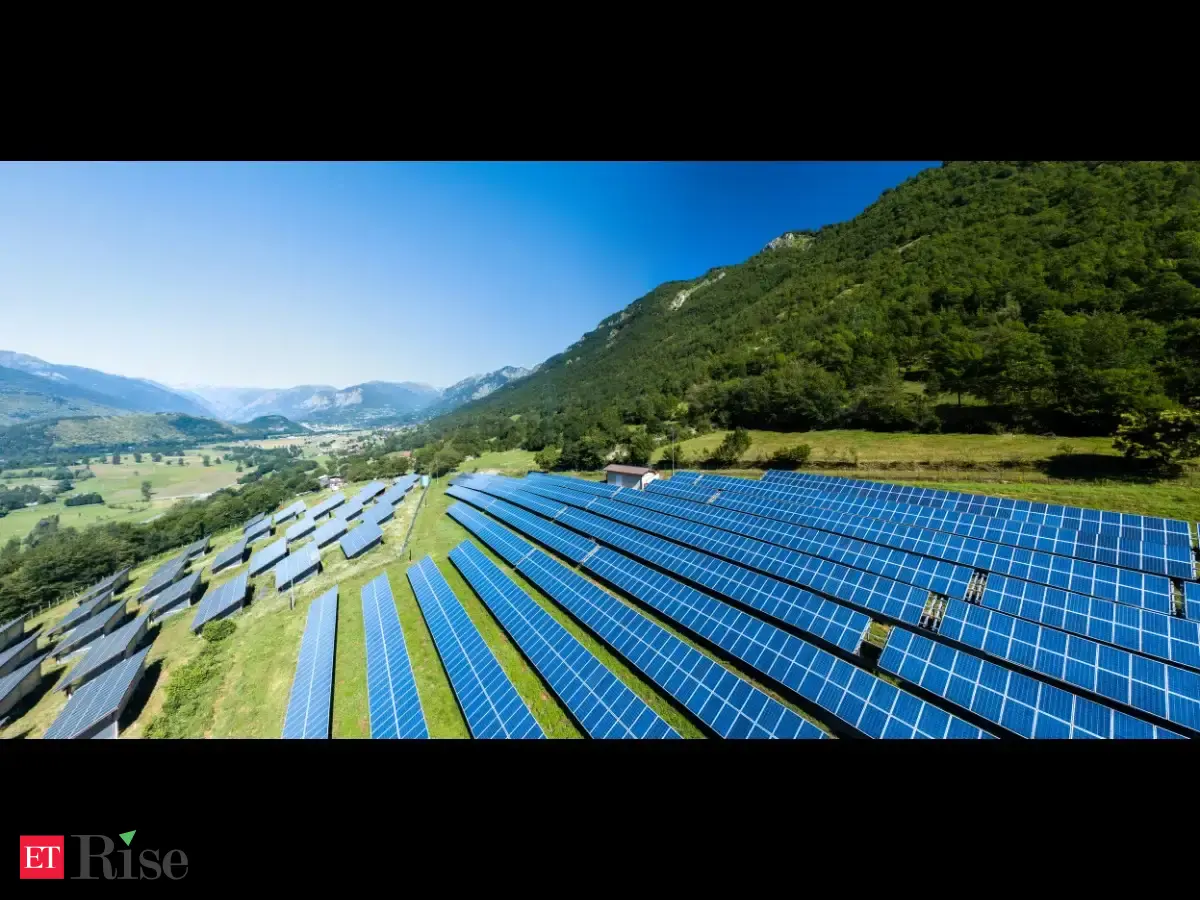
China is actively forging stronger partnerships with developing countries, aiming to support their energy transitions and stimulate economic growth. The Belt and Road energy meeting underscored priorities regarding energy security and sustainable practices. Delegates from these nations highlighted their need for technology transfer and building local workforce capabilities, while South Sudan showcased untapped investment opportunities in its energy sector. View More
China is leveraging its dominance in clean technologies to expand partnerships with developing countries, promising to help them not only decarbonize but also strengthen energy security and economic development. That was the message from Thursday’s Belt and Road energy meeting in Qingdao, which brought together ministers and officials from dozens of nations involved in the Chinese global infrastructure and investment program. China stands ready to work with other countries to bolster their energy transitions, but won’t dictate how other governments go about it, said Wang Hongzhi, head of China’s National Energy Administration. “In the volatile energy landscape, no country can isolate itself,” Wang said. “We will respect differences in resource endowment and development stage, and support each country in pursuing a transition path suited to its own conditions.” Energy has sat at the heart of President Xi Jinping’s Belt and Road Initiative since its launch in 2013. An early emphasis on infrastructure like pipelines, power stations and transmission lines has increasingly shifted toward solar panels, wind turbines, batteries and grids. That hasn’t meant abandoning fossil fuels. Wang declared “the trend toward a green and low-carbon transition is irreversible,” even as he pledged that China would step up oil and gas exploration and diversify imports over the next five years. The combination encapsulated Wang’s broader message: countries should keep moving toward cleaner energy without sacrificing security or economic development along the way. Live Events Climate Breakdown This week’s gathering follows shortly after the breakdown of COP31 climate talks in Turkey, underscoring the strains facing global cooperation on climate and energy. In Qingdao, the prescription was to keep the transition moving while putting greater weight on security, affordability and development. “In a crisis, the answer is not to pause the transition, but to adjust the balance and to keep moving forward,” said Adnan Amin, chair of the World Energy Council. For their part, developing nations said they were seeking more than energy infrastructure. Ministers said they also wanted help with technology transfers and developing local manufacturing and workforce skills. “For us, the energy transition must be a tool for industrial development,” said Kgosientsho Ramokgopa, South Africa’s minister of electricity and energy. Still, reliable electricity was at the heart of many countries’ appeals, some of them quite direct, to the Chinese agencies and companies represented at the event. In South Sudan, just 8% of the population has access to electricity, said Minister of Petroleum Awow Daniel Chuang, who portrayed the country’s vast undeveloped energy resources as an investment opportunity. “We invite the big Chinese companies that are working in oil and power, like PowerChina, China Energy and Huawei, to come to South Sudan and build our dams, build our solar farms, build our wind turbines and geothermal energy,” he said. While most leaders steered clear of politics in their speeches, Iranian Energy Minister Abbas Ali Abadi excoriated the US and Israel for attacking civilian and energy infrastructure, and called on all countries and international organizations to condemn such strikes. “Electricity is not merely a commodity,” he said. “It is the foundation of daily life, health, education and human security.” .Pbanner{display:flex;justify-content:space-between;align-items:center;background-color:#ec1c40;margin-top:20px;padding:5px 10px;border-radius:4px;color:#fff;line-height:10px;width: 100%;box-sizing: border-box} .Pbannertext{display:flex;align-items:center;font-size:16px;font-weight:600;font-family:'Montserrat';} .Pbannertext img{height:20px;margin:0 6px} .Pbannerbutton a{display:flex;align-items:center;background-color:#fff;color:#ec1c40;text-decoration:none;font-weight:600;padding:4px 8px;border-radius:6px;font-size:15px;font-family:'Montserrat';} .Pbannerbutton img{height:20px;margin-right:6px} .Pbannerbutton a:hover{background-color:#f7f7f7} Add as a Reliable and Trusted News Source Add Now!

SCR makes effective use of available rooftop spaces across its railway establishments in Secunderabad, Hyderabad, Nanded divisions and Lalaguda workshop View More

The rapid growth of distributed renewable energy is reshaping power supply, prompting the government to back pilot projects to help discoms manage grid stability and rising complexity. View More

Jammu and Kashmir has achieved 97.8% of its solar agricultural pump installation target under the scheme View More

The Power Ministry has proposed changes to electricity tariffs, rooftop solar installation limits, connection timelines and consumer grievance redressal mechanisms. View More

The Ministry has proposed amendments to the Electricity (Rights of Consumer) Rules, which is proposed to come into force with effect from April 1, 2027 View More


Developing countries are increasingly turning to rooftop and decentralised solar systems amid limited electricity access and prolonged power cuts, with nearly 80 GW of off-grid capacity expected to be added by 2031. View More

Solar power installed capacity in India tripled between 2020 and 2025 to about 140 GW, with annual additions reaching a record 38 GW in 2025 View More