
Latest Sectors News

Two Gujarat-based companies have submitted draft IPO papers to Sebi. Surat's Cosmic PV Power plans to raise ?640 crore through a fresh issue and OFS. Vadodara's Gujarat Victory Forgings has also filed for an IPO, comprising a fresh issue and an offer for sale. View More
MUMBAI: Two Gujarat-based firms have filed draft red herring prospectuses (DRHP) with Sebi for their IPOs. Surat-based, solar module manufacturer Cosmic PV Power has filed draft papers with Sebi to raise ₹640 crore through an IPO, comprising a ₹540 crore fresh issue and a ₹100 crore OFS. Vadodara-based non-ferrous metal products manufacturer Gujarat Victory Forgings has also filed draft papers with Sebi for an IPO which will comprise a fresh issue of 65 lakh shares and an OFS of 1.32 crore shares. .Pbanner{display:flex;justify-content:space-between;align-items:center;background-color:#ec1c40;margin-top:20px;padding:5px 10px;border-radius:4px;color:#fff;line-height:10px;} .Pbannertext{display:flex;align-items:center;font-size:16px;font-weight:600;font-family:'Montserrat';} .Pbannertext img{height:20px;margin:0 6px} .Pbannerbutton a{display:flex;align-items:center;background-color:#fff;color:#ec1c40;text-decoration:none;font-weight:600;padding:4px 8px;border-radius:6px;font-size:15px;font-family:'Montserrat';} .Pbannerbutton img{height:20px;margin-right:6px} .Pbannerbutton a:hover{background-color:#f7f7f7} Add as a Reliable and Trusted News Source Add Now! (You can now subscribe to our ETMarkets WhatsApp channel) (You can now subscribe to our ETMarkets WhatsApp channel)

Seoul imports 94% of its energy needs, and almost 72% of its crude oil comes from the Middle East. View More
Workers install solar power infrastructure at a public parking lot within the National Assembly grounds in Yeouido, Seoul, on March 26, 2026. Nurphoto | Nurphoto | Getty Images South Korea on Tuesday proposed a supplementary budget worth 26.2 trillion won (about $17.1 billion) to ease the burden of rising energy prices on households and industries as the Middle east conflict has created a supply crunch. About 10.1 trillion won will be aimed directly at "easing the burden of high oil prices," according to a Google Translation of the budget document in Korean, while other measures included support for exporters and an increase in grants to local governments. Minister of Planning and Budget Park Hong-geun wrote said that "swift fiscal support is necessary to alleviate the hardships facing the people's livelihoods as soon as possible and to ensure that the spark of economic recovery, which the current administration has painstakingly revived, does not die out."Crude oil prices have spiked since the U.S. and Israel launched strikes on Iran on Feb. 28, as a supply crunch impacts Asian economies, particularly those excessively dependent on imports from the Middle East. South Korea, Asia's fourth-largest economy, imports 94% of its energy, according to a 2024 report from the Korea Energy Statistics Information Systems, and almost 72% of its crude oil comes from the Middle East. At the heart of the 10.1 trillion won package is a 5 trillion won tranche for a petroleum price cap, which was announced by President Lee Jae Myung on March 9. Seoul will also hand out a higher refunds for public transportation passes nationwide. The country will allocate 4.8 trillion won for consumer vouchers of between 100,000 won to 600,000 won per person, for the bottom 70% of the earners, depending on income and region. Other measures in the relief package include fuel subsidies for farmers and fishermen, as well as for small-scale cargo ship operators. About 9.7 trillion won will be used to boost grants for local governments. This budget will be funded by tax revenue from the boom in chip exports and the stock market rally, Park said. South Korean media reported the bill has been submitted to the National Assembly, and is expected to be supported by the opposition People Power Party. It is expected to be passed by April 10. watch nowVIDEO3:1803:18U.S. mkt seems undervalued, like Asian consumer sector: MorningstarSquawk Box Asia Choose CNBC as your preferred source on Google and never miss a moment from the most trusted name in business news.

The company will set up a production facility in Odisha, supplying fertiliser plants across multiple states, marking a key step in scaling India’s green hydrogen and ammonia ecosystem. View More
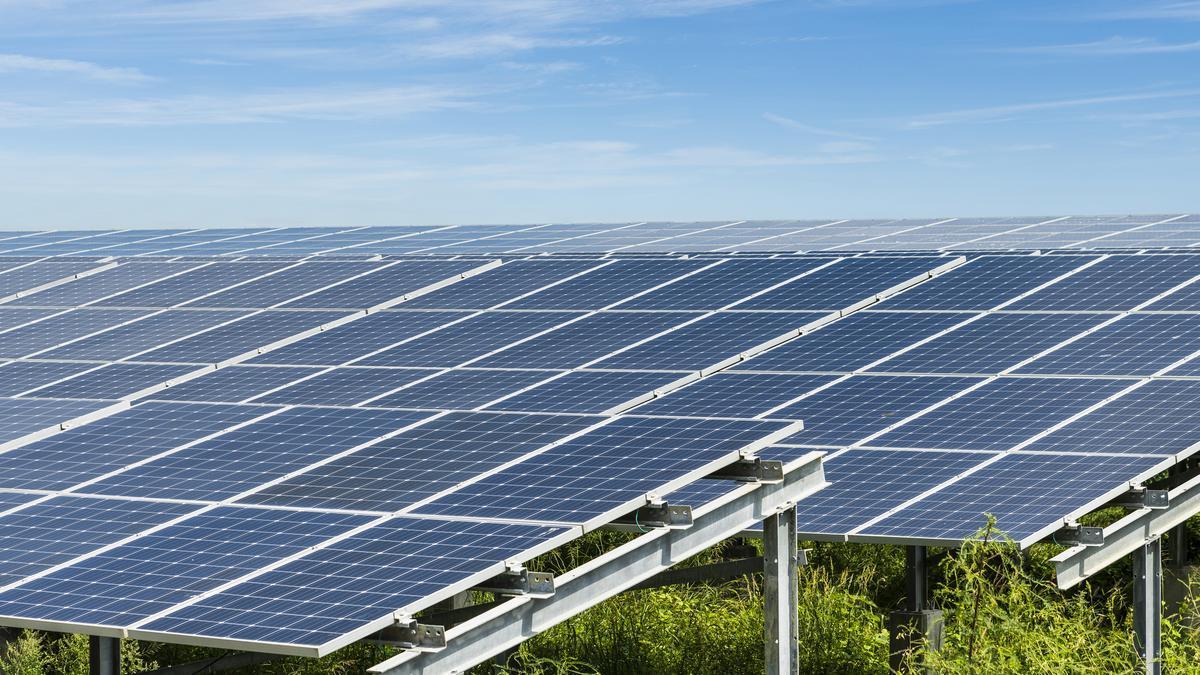
The facility is expected to create approximately 2,000 jobs, boosting local economy and strengthening India’s clean energy manufacturing ecosystem View More
The initiative is expected to result in foreign exchange savings of approximately $2.5 billion over a period of 10 years through substitution of imported grey ammonia in non-urea based fertilizer units View More

Aluminum hit prices not seen since 2022 after Iranian attacks on two Middle Eastern producers over the weekend, amid fears of a supply crisis. View More
In this articleFollow your favorite stocksCREATE FREE ACCOUNT BAHRAIN - APRIL 17: Aluminium ingots seen at the Aluminium Bahrain B.S.C plant in Bahrain, Tuesday, April 18, 2006. (Photo by Phil Weymouth/Bloomberg via Getty Images)Bloomberg | Bloomberg | Getty Images Aluminum closed in on prices not seen since 2022 following Iranian attacks on two Middle Eastern producers over the weekend, heightening fears of a supply crisis for the industry. Futures prices on the London Metal Exchange initially jumped 5.5% on Monday to briefly touch $3,492 per tonne, a price last seen in April 2022.It pulled back slightly by Monday afternoon to land 3.5% higher at $3,381 per tonne. Aluminum has risen around 10% since the conflict began on Feb. 28, though it fell briefly last week alongside most other asset classes amid fears of a global recession.Emirates Global Aluminium (EGA) and Aluminium Bahrain, two of the Gulf's largest producers, came under fire from Iranian drones and missiles on Saturday.EGA said in a statement that its Al Taweelah smelter sustained "significant" damage in the strikes, injuring several people."The safety and security of our people is our top priority at all times," CEO Abdulnasser Bin Kalban said. "We are deeply saddened and are assessing the damage to our facilities."'Shockwaves' through the global marketSaturday's attacks only served to darken the outlook for commodity firms in the region, which have faced severe supply disruption over the past month. Around 9% of global âaluminum supply comes from the Gulf, and most firms there have been unable to export the metal beyond the region since Iran effectively closed the Strait of Hormuz. EGA's damaged smelter produced 1.6 million tons of cast metal in 2025, according to its statement."The attacks have sent shockwaves through the global aluminum market, raising the risk of a supply crisis that could reshape the industry," April Kaye Soriano, aluminum research analyst at S&P Global Energy, told CNBC over email.She added that, if the damage proves lasting, the market could move away from any temporary softness and begin to reflect expectations of tighter supply and higher prices.Joyce Li, commodities strategist at Macquarie Group, told CNBC over email that their base case before the attacks assumed a cut to the current running capacity of approximately 20%, which amounts to roughly 800 to 900 kilotons of production loss in 2026.Li said Macquarie saw this disruption as sufficient to push the global market into a full-year deficit, adding added that they were closely monitoring the "fluid" situation for any changes.The role of ChinaAluminum is an essential material across electronics, transport, and construction, as well as other industries such as solar panels and packaging.China is the world's biggest producer of aluminum and tends to keep production constrained at 45.5 million tons per year to reduce emissions and prevent overcapacity. Some analysts believe the country has a role to play in unlocking supply to the wider market."If the Chinese government decides that the prices are too high, they can restart a number of idle smelters in the country and the world will be full of aluminum," Artem Volynets, CEO of miner ACG Metals, told CNBC's Europe Early Edition on March 18. S&P Global's Soriano, on the other hand, believes China's ability to ramp up supply is "limited." "While there is some capacity to increase output, the global market remains exposed to further shocks, especially if the conflict spreads to other metal supply chains," she added. Choose CNBC as your preferred source on Google and never miss a moment from the most trusted name in business news.

A Russian oil tanker carrying a humanitarian shipment of 100,000 tons of crude oil reportedly arrived in Cuba on Monday. View More
An old Soviet-era Lada car drives past a truck belonging to a private Cuban company (mipyme) parked in front of a gas station with an IsoTank of imported fuel in Havana on March 19, 2026.Adalberto Roque | Afp | Getty Images The Kremlin on Monday welcomed the arrival of a Russian-flagged oil tanker to Cuba, saying energy supplies to the fuel-starved island had been discussed with the U.S. ahead of its delivery.Kremlin spokesman Dmitry Peskov said Moscow considered it its duty to help Cuba, according to Russian state news outlet RIA Novosti. He added that Havana needed petroleum products amid a de facto U.S. oil blockade.A Russian oil tanker carrying a humanitarian shipment of 100,000 tons of crude oil reportedly arrived in Cuba earlier in the day. The sanctioned Anatoly Kolodkin vessel was said to be waiting to unload shortly after U.S. President Donald Trump said he had "no problem" with a Russian crude tanker delivering fuel to Cuba. Speaking to reporters aboard Air Force One on Sunday, Trump said, "If a country wants to send some oil into Cuba right now, I have no problem with that, whether it's Russia or not."The shipment of crude oil is seen as something of a lifeline to the Caribbean nation, which is facing its biggest test since the collapse of the Soviet Union amid a deepening energy crisis.Cuba had been heavily dependent on oil supplies from Venezuela, but it has effectively been cut off since early January when the U.S. launched an extraordinary military operation to depose Venezuelan President Nicolás Maduro. The Trump administration subsequently threatened to impose tariffs on any country that sent crude to Cuba, prompting the likes of Mexico to halt shipments. The Kremlin has previously shrugged off Trump's tariff threats, pointing out that Washington and Moscow "don't have much trade right now." Read moreCuba partially restores power and vows âunyielding resistanceâ to U.S. oil blockadeU.S. says Cuba is prohibited from taking Russian oil as two tankers head to islandIs Cuba next? What the fallout from the Iran war means for Havana Cuba's president, Miguel DÃaz-Canel, said last week that the island hadn't received oil shipments in more than three months. The country, which has said it is holding talks with the U.S., has sought to dramatically increase its solar power generation amid the ongoing fuel shortage. The island of roughly 10 million people has faced a series of power blackouts in recent weeks and the United Nations has warned that Cuban hospitals have been struggling to maintain emergency and intensive care services. "Cuba is finished, they have a bad regime and they have very bad and corrupt leadership and whether or not they get a boat of oil it's not going to matter," Trump said Sunday. "I prefer letting it in, whether it's Russia or anybody else, because the people need heat and cooling and all of the other things that you need," he added. Choose CNBC as your preferred source on Google and never miss a moment from the most trusted name in business news.
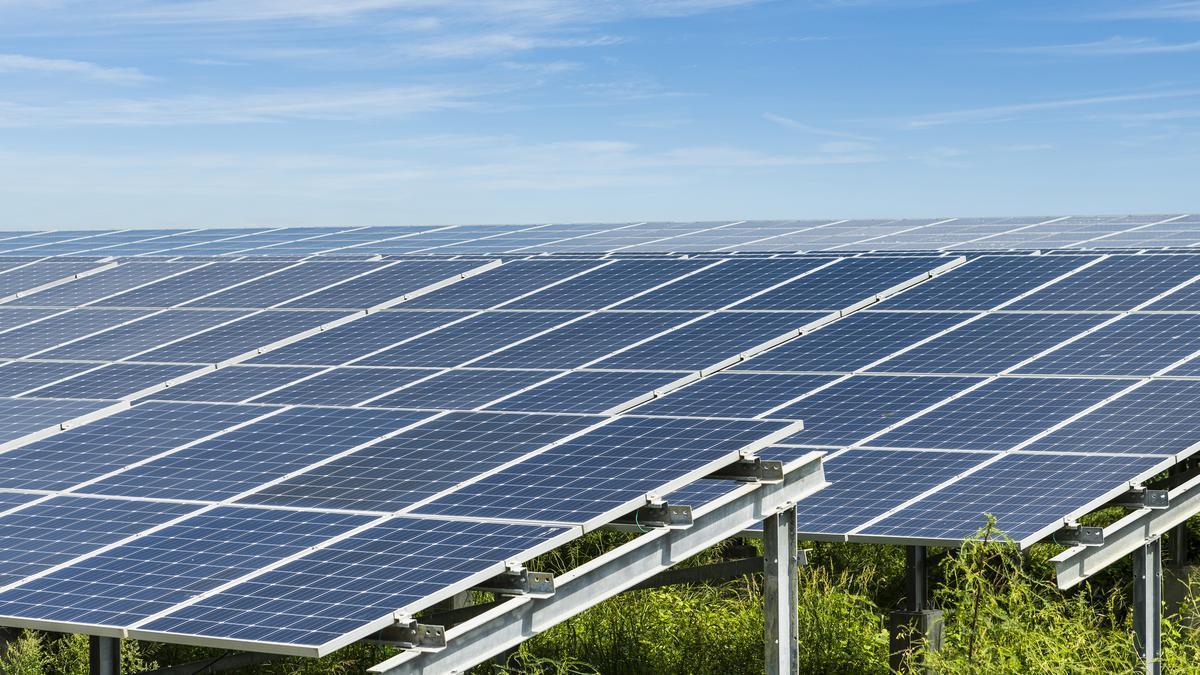
Sudhir Reddy said the new facility would strengthen the company’s roadmap to scale integrated manufacturing while aligning closely with India’s renewable energy ambitions View More
The probe targets restrictions on imports and technology cooperation. China aims to position itself as a key player in global decarbonization, contrasting its approach with perceived US protectionism. View More
Beijing launched a sweeping investigation into US efforts to block imports of Chinese clean technology on Friday. China’s Ministry of Commerce announced the probe into “trade barriers on green products” alongside a separate trade investigation in the lead-up to an expected visit to Beijing by President Donald Trump in May. By kicking off its investigation — itself a response to US probes — China is preparing a legal basis for retaliation against any new US duties after the majority of Trump’s previous tariffs were struck down by the Supreme Court, experts said. The trade in green goods is “an obvious target,” said Wendy Cutler, senior vice president at the Asia Society Policy Institute, because the US has piled tariffs and other restrictions on Chinese clean-technology products over more than a decade. “They're trying to send a signal to the US: don't impose tariffs on us as a result of these investigations because our gun is loaded and we're ready to retaliate,” Cutler added. Under the Biden administration, the US raised tariffs on Chinese electric-vehicle battery imports to 25% and on EVs themselves to 100%, among duties on other key green products like solar panels. Trump has added his own tariffs on Chinese supply chains. In January, a World Trade Organization panel sided with Beijing in a complaint that US clean energy subsidies unfairly discriminated against Chinese technology. China has increasingly looked to the export of green products to buoy its flagging economy, and Chinese companies have targeted the US as a lucrative market. Solar panels, electric vehicles and other clean energy technologies contributed to more than a third of the nation’s economic growth last year, according to an analysis published in February by the Centre for Research on Energy and Clean Air, a nonprofit think tank. Without green industries, China would have missed its GDP target, the report said. Last year saw the country set a record for exporting green products as well. Live Events While experts see China’s investigation into US practices as a tactical move ahead of another potential escalatory cycle of tariffs, they also see the move as sending a broader message. The Ministry of Commerce defined US green trade barriers in broad terms in its probe, including restrictions on Chinese imports, limits on technology cooperation and stymying clean energy deployment. “China is essentially arguing that US industrial policy is actively slowing global decarbonization, a message likely aimed less at Washington than at Europe and emerging markets,” said Jonas Nahm, an associate professor at Johns Hopkins University School of Advanced International Studies. That narrative aligns with Beijing's argument at recent international climate talks that its clean technology exports are a driver of global emissions reductions. “Beijing is positioning itself as enabling fast, cheap clean energy rollout while casting the US approach as fragmented and protectionist under security pretenses,” Nahm added. .Pbanner{display:flex;justify-content:space-between;align-items:center;background-color:#ec1c40;margin-top:20px;padding:5px 10px;border-radius:4px;color:#fff;line-height:10px;} .Pbannertext{display:flex;align-items:center;font-size:16px;font-weight:600;font-family:'Montserrat';} .Pbannertext img{height:20px;margin:0 6px} .Pbannerbutton a{display:flex;align-items:center;background-color:#fff;color:#ec1c40;text-decoration:none;font-weight:600;padding:4px 8px;border-radius:6px;font-size:15px;font-family:'Montserrat';} .Pbannerbutton img{height:20px;margin-right:6px} .Pbannerbutton a:hover{background-color:#f7f7f7} Add as a Reliable and Trusted News Source Add Now!

Foreign ministers of Pakistan, Saudi Arabia, Turkey and Egypt all arrived in Islamabad to discuss the evolving regional situation in the Middle East. View More
Foreign Ministers Badr Abdelatty of Egypt, Prince Faisal bin Farhan Al Saud of Saudi Arabia, Ishaq Dar of Pakistan and Hakan Fidan of Turkey meet to discuss regional de-escalation, amid the U.S.-Israel conflict with Iran, in Islamabad, Pakistan, on March 29, 2026.Turkish Foreign Ministry | Via Reuters Pakistani Deputy Prime Minister and Foreign Minister Ishaq Dar said Sunday that both the U.S. and Iran have expressed confidence in Pakistan to hold talks in the coming days aimed at ending the U.S.-Israeli war in Iran. In a statement following a meeting with the foreign ministers of Saudi Arabia, Turkey and Egypt, Dar said Pakistan is engaging with the U.S. to find an end to the conflict, and that "both Iran and the US have expressed their confidence in Pakistan to facilitate the talks. "Pakistan will be honoured to host and facilitate meaningful talks between the two sides in coming days, for a comprehensive and lasting settlement of the ongoing conflict," Dar said. It is unclear whether the U.S. and Iran had agreed to any formal talks with Pakistan. The White House did not immediately respond to a request for comment from CNBC. The foreign ministers from the four Middle East nations met in Pakistan to discuss the U.S. and Israeli war on Iran, as U.S. President Donald Trump reportedly weighs deploying ground troops into the conflict that is now stretching into its second month. watch nowVIDEO4:1804:18No reason not to have talks with Iran, says TD Cowen's Roman SchweizerThe Exchange Trump, meanwhile, is reportedly weighing the deployment of U.S. ground troops into the conflict as Iran holds the Strait of Hormuz largely closed â sending shockwaves through the markets and spiking oil and gasoline prices.The Washington Post reported Saturday night that the Pentagon is preparing for weeks of potential ground conflict in Iran as thousands of U.S. troops arrive in the region. It's unclear if Trump will green-light the operations, as he claims that the war effort is both winding down while threatening to escalate the conflict. Lawmakers, who just left Washington for a two-week recess, on Sunday expressed some hesitation about a potential full-scale invasion of Iran with U.S. forces. But top Republicans appeared to give Trump partial approval for some use of U.S. ground troops. Sen. James Lankford, R-Okla., said on NBC's "Meet the Press" that his support for the use of ground troops "depends on what boots we're putting on the ground," arguing that the use of special forces units for specific goals is different than a longstanding occupation and ground war, which he said would require congressional authorization. "If we had a long-standing war that's happening, go back again to what happened in Iraq or in Afghanistan, yes," Lankford said on congressional approval. "If this is to protect Americans and to be able to make sure that we're in there for a season and we're stopping and getting out, that's very, very different. So again, this is all contingent."Iranian parliament speaker Mohammad Bagher Qalibaf on Sunday warned that Iranian troops "are waiting for the arrival of American troops on the ground to set them on fire and punish their regional partners forever," the Associated Press reported, citing state media. Egypt says meetings aim for 'direct dialogue' Egyptian Foreign Minister Badr Abdelatty said the meetings in Pakistan are aimed at opening a "direct dialogue" between the U.S. and Iran, which have largely communicated through mediators. The war began with U.S. and Israeli strikes during indirect talks. Pakistan said the foreign ministers met Sunday without U.S. or Israeli participation. Foreign Ministers Badr Abdelatty of Egypt, Prince Faisal bin Farhan Al Saud of Saudi Arabia, Ishaq Dar of Pakistan and Hakan Fidan of Turkey meet to discuss regional de-escalation, amid the U.S.-Israel conflict with Iran, in Islamabad, Pakistan, on March 29, 2026.Turkish Foreign Ministry | Via Reuters Iranian officials have rejected a U.S. 15-point "action list" as a framework for a possible peace deal and publicly dismissed the idea of negotiating under pressure. But Iran's state broadcaster has reported that Tehran drafted its own five-point proposal, reportedly calling for a halt to killing Iranian officials, guarantees against future attacks, reparations, and Iran's "exercise of sovereignty over the Strait of Hormuz."Iran has eased some restrictions on commercial ships in the strait, agreeing late Saturday to allow 20 more Pakistani-flagged vessels to pass through. It "sends a clear signal that Iran remains open for business with the world, provided the United States abandons coercion," said Asif Durrani, Pakistan's former ambassador to Iran.An adviser to the United Arab Emirates, Anwar Gargash, called for any settlement to the war to include "clear guarantees" that Iranian attacks on neighbors will not be repeated. He said Iran's government has become "the main threat" to Persian Gulf security, and called for compensation for attacks on civilian infrastructure. Iran heavy water production plant damaged The U.N. nuclear watchdog said satellite imagery confirmed severe damage to the Khondab heavy-water production plant near Arak.The International Atomic Energy Agency added that the installation has no declared nuclear material. Iran's Atomic Energy Organization reported on Friday that the facility was hit and Israel claimed responsibility for the strike.Since the war began a month ago, several strikes have targeted nuclear sites across Iran. Aluminium maker struck Aluminium Bahrain, which hosts the world's largest smelter of the metal, said on Sunday its facility was subjected to an Iranian attack.The company, known as Alba, said in a statement that the attack happened on Saturday."Alba is assessing the extent of the damage to its facilities and remains focused on maintaining its operational resilience and the safety of its employees," Alba said.The company had cut production capacity by 19% of its annual output of 1.6 million tons "as an operational measure to preserve business continuity amid ongoing supply and transit disruptions affecting the Strait of Hormuz," the company said on March 15.The production cuts have been adding to fears of a global shortage of the metal. Aluminum prices surged to four-year highs earlier this month before paring some of those gains. They remain 4.3% above their Feb. 27 levels.While aluminum may be the most abundant metal on earth, it is crucial to the functioning of the world economy. It is an essential material across electronics, transport, and construction, as well as other industries such as solar panels and packaging. Stock Chart IconStock chart iconLME Aluminum Iran has been retaliating against U.S. and Israeli attacks that began on Feb. 28 by firing missiles and drones at its regional neighbors.The United Arab Emirates said on Sunday its air defenses were dealing with the latest salvo of incoming missiles. Houthis enter the fray On Saturday, Iranian-backed Houthi fighters said they launched a missile strike against Israel, the first time the group has participated in the war.Analysts have told CNBC that the Houthis could attempt to choke off maritime traffic through the Bab el-Mandeb Strait, separating the Arabian Peninsula and the Horn of Africa â through which ships must pass to reach the Red Sea and the Suez Canal â adding to pressure on global trade.On Saturday, Danish shipping giant Maersk, widely regarded as a barometer of global trade, responded to reports of drone activity and explosions that occurred at the Port of Salalah in Oman.The Bab el-Mandeb Strait was estimated to account for 12% of seaborne oil trade and 8% of liquefied natural gas trade in the first half of 2023.Iranian forces have already effectively shut down the Strait of Hormuz between Iran and the Arabian Peninsula, through which about 20% of the world's oil supplies moved before the war.Oil prices on Friday closed at their highest level in more than three years, as President Donald Trump's pivot toward negotiations with Iran failed to ease market fears about the huge supply disruption in the Middle East.U.S. crude oil prices rose 5.46% to close at $99.64 per barrel. International benchmark Brent crude prices gained 4.22% to settle at $112.57. Trump's move to give Iran a 10-day extension to open the strategically vital Strait failed to soothe supply concerns. The president said in a social media post on Thursday that talks with Iran were "going very well" despite "erroneous statements to the contrary by the Fake News Media, and others." Iran says it has not engaged in any negotiations.As part of the announcement, the U.S. president said he would pause attacks on Iran's energy infrastructure through April 6.Meanwhile, a growing U.S. troop presence in the Gulf has raised fears of a ground invasion, possibly prolonging the war and uncertainty for the global economy.The U.S. Central Command confirmed the 31st Marine Expeditionary Unit, made up of roughly 3,500 Sailors and Marines, arrived in the Middle East on Saturday."U.S. Sailors and Marines aboard USS Tripoli (LHA 7) arrived in the U.S. Central Command area of responsibility, March 27," according to a statement posted on X.On Sunday, Iran threatened to target U.S. and Israeli educational institutions in the region unless the U.S. condemns attacks on Iranian universities, according to Iranian media, which quoted its armed forces. It posted images of damage to the University of Science and Technology in Tehran, which it blamed on U.S. attacks. Death toll continues to climb In Lebanon, officials said more than 1,200 people have been killed. There were fears of more deaths after Netanyahu, speaking on a visit to northern Israel, said Israel was "determined to fundamentally change the situation in the north." He said Hezbollah "still has residual capability to fire rockets at us."Iranian authorities say more than 1,900 people have been killed in the Islamic Republic, while 19 have been reported dead in Israel.In Iraq, where Iranian-supported militia groups have entered the conflict, 80 members of the security forces have died.In Gulf states, 20 people have been killed. Four have been killed in the occupied West Bank.Thirteen American service members have been killed in the war.â The Associated Press and Reuters contributed to this report Choose CNBC as your preferred source on Google and never miss a moment from the most trusted name in business news.