
Latest Sectors News

The U.S. naval blockade of the Strait of Hormuz threatens to halt more tanker traffic, sending oil surging and risks drawing China into a widening confrontation with Washington. View More
In this article@CL.1@LCO.1Follow your favorite stocksCREATE FREE ACCOUNT Lightning occurs when META 4, an Oil Products Tanker, sails into Muscat Anchorage on March 21, 2026 at Sultan Qaboos Port in Muscat, Oman. Elke Scholiers | Getty Images President Donald Trump ordered a naval blockade of the Strait of Hormuz on Sunday, dimming hopes for a quick end to the conflict in the Middle East and escalating a standoff with Iran that has already triggered the worst energy shock in history. The blockade would take effect at 10 a.m. ET Monday, targeting vessels of all nations entering or departing Iranian ports and coastal areas, including those on the Arabian Gulf and Gulf of Oman, the U.S. Central Command said in a statement. Tanker traffic through the strait, which had begun to inch higher after a two-week ceasefire announced by Trump last week, came to a halt again within hours of Trump's announcement, according to Lloyd's List Intelligence. At least two vessels that had appeared to be heading for the exit turned back.Crude oil surged as investors scrambled to price in a further squeeze on Persian Gulf supply. U.S. WTI futures for May delivery jumped more than 8% to $104.40 a barrel, while Brent crude rose over 7% to $101.86. Trump's order came after 21 hours of weekend negotiations between Washington and Tehran collapsed without an agreement on Iran's nuclear program, control of the waterway, and Israel's continued attacks against the Iranian-backed Hezbollah in Lebanon. Deepening the oil shock Before the opening strikes by the U.S. and Israel against Iran on Feb. 28, roughly one-fifth of the world's oil passed through the Strait of Hormuz. That flow has since slowed to a trickle, upending supply chains for oil, fertilizers, apparel and industrial goods. Analysts have warned that clearing the backlog could take weeks even after a resolution.A full blockade would further tighten the squeeze. "Taking more oil off the market â particularly the only oil that is now getting out from the Persian Gulf â will drive oil prices further up ... [to] around $150 per barrel," Trita Parsi, executive vice president of the Quincy Institute for Responsible Statecraft, said on CNBC's "The China Connection" on Monday. Since neither side has explicitly stated that talks won't resume or that the ceasefire is over, all these moves should be treated as tactics and threats within the negotiations.Trita ParsiExecutive vice president, Quincy Institute for Responsible Statecraft Besides crude, commodity prices for fertilizer and helium â critical inputs for food production and semiconductor manufacturing â are likely to keep climbing, fanning inflation that is already accelerating, said Ben Emons, managing director at Fed Watch Advisors. The IMF and World Bank officials last week signaled they would downgrade global growth forecasts and raise inflation projections, warning that emerging markets would be hit hardest."The economic scarring from attacks on energy facilities and ports in Iran and other Gulf nations could continue to keep supply under stress in emerging Asia," Barclays said. "It remains to be seen how quickly the extraction, refining, and loading of oil and gas can be normalized." The month-long disruption in the Strait of Hormuz has sparked warnings of an energy shortage worse than the 1970s oil crisis, when an embargo by Arab producers on countries aligned with the U.S. quadrupled oil prices, prompting fuel rationing across major economies. The Liberia-flagged crude oil tanker Shenlong Suezmax successfully docked at Mumbai Port after navigating the high-risk Strait of Hormuz amid the intensifying West Asia conflict on March 11, 2026 in Mumbai, India. Hindustan Times | Getty Images Fatih Birol, head of the International Energy Agency, last week called the disruption the worst energy shock the world has ever seen â more severe than the oil crises of the 1970s and the Ukraine war combined."This is a historic disruption to world oil," Daniel Yergin, vice chairman of S&P Global, said in an interview with Barron's last month. "There has never been anything of this scale. Even the oil crises of the 1970s, the Iran-Iraq war of the 1980s, Iraq's invasion of Kuwait in 1990 â none of those come close to the magnitude of this disruption." Yet the price response has so far been more muted, and economic growth may prove more resilient than feared, said David Lubin, senior research fellow at Chatham House. He noted that the global economy is less oil-intensive than in the past, with oil use per unit of GDP now requiring roughly 40% of a barrel of oil, compared with a full barrel in the early 1970s. Wind, solar and nuclear have also diversified the energy mix in ways that didn't exist five decades ago, Lubin noted. Should the conflict escalate further, "it's quite possible that the energy impact of this crisis could start to deliver as big a negative shock as the 1970s crisis did," he said. China in the crosshairs The blockade also risks drawing the world's second-largest economy into the confrontation. China remains Iran's largest oil buyer and has continued to receive shipments through the strait since the war began, analysts say. A blanket ban on tankers carrying Iranian crude threatens to cut off that supply, potentially reigniting U.S. tensions with Beijing ahead of Trump's planned trip to China next month. "I doubt Trump is ready for that escalation," said Parsi, adding that "it wouldn't be surprising" if Trump walks back on the earlier threats. watch nowVIDEO4:1804:18China will take center stage in the U.S.-Iran negotiations: Atlantic CouncilInside India The Trump administration on Monday also threatened to impose an additional 50% tariff on China if Beijing supplies advanced defense equipment to Tehran. Countries including India and Pakistan, which have negotiated safe-passage arrangements with Iran, could also find themselves caught in the crossfire, Parsi said. Negotiating tactic or miscalculation? Some analysts see the blockade as coercive leverage rather than a terminal escalation. "Since neither side has explicitly stated that talks won't resume or that the ceasefire is over, all these moves should be treated as tactics and threats within the negotiations," Parsi said. Brian Jacobsen, chief economist at Annex Wealth Management, was cautiously optimistic, suggesting Washington may carve out safe-passage exemptions for allied vessels. But Emons warned that the strategy carries serious downside risk. A move designed to bring Iran "to its knees" could just as easily trigger counterstrikes and a fresh cycle of military escalation, he said.Iran's Islamic Revolutionary Guard Corps signaled as much, warning on Sunday that any military vessels approaching the strait "under any pretext" would be considered a ceasefire violation. It also hardened its rhetoric, saying that enemies would be trapped in a "deadly vortex" in the case of any miscalculation. No legal footing The blockade is also legally contentious, according to several experts, as neither the U.S. nor Iran has the authority to close or impede passage through Hormuz. "Under international law, specifically the rules governing international straits, the U.S. has no legal authority to close, suspend, or impede transit passage through Hormuz," said Emons. Only Iran and Oman are coastal states, and even they are prohibited from suspending transit passage, he added. For shipowners, the practical deterrent from traversing through the strait also includes exposure to Western sanctions on Iran. Payments to Iran risk breaching U.S. and European rules, and firms may face severe penalties, according to Lloyd's List Intelligence. Choose CNBC as your preferred source on Google and never miss a moment from the most trusted name in business news.
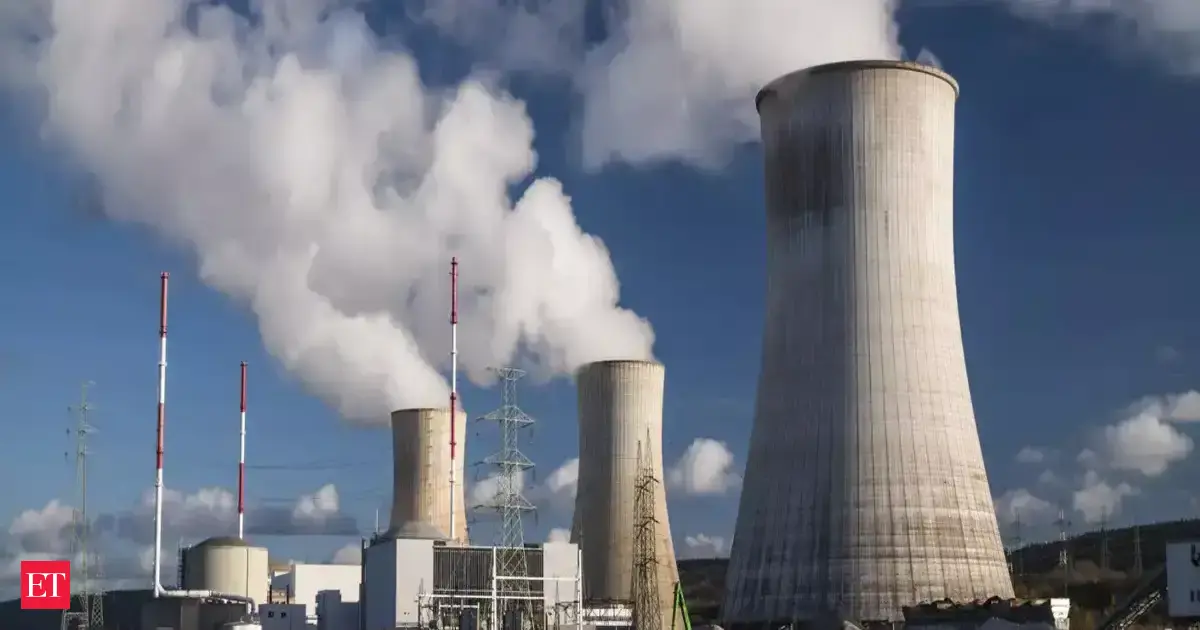
"L&T has been associated with India's nuclear programme since its inception and has supported technology development, manufacturing and localisation," Anil V Parab, whole-time director and senior executive vice president, heavy engineering & manufacturing, told ET. "We will continue to support the government's push to scale nuclear capacity from about 8.8 GW currently to 100 GW by 2047." View More
MUMBAI: Engineering and construction conglomerate Larsen & Toubro (L&T) expects substantial growth in nuclear energy business revenue over the next five years, said a senior company executive. This would be bolstered by a global push towards nuclear power generation, triggered partly by rising electricity demand from emerging sectors such as AI and data centres. "L&T has been associated with India's nuclear programme since its inception and has supported technology development, manufacturing and localisation," Anil V Parab , whole-time director and senior executive vice president, heavy engineering & manufacturing, told ET. "We will continue to support the government's push to scale nuclear capacity from about 8.8 GW currently to 100 GW by 2047." "We realistically see a 3 to 3.5 times increase in nuclear-related revenues over the next five years, depending on how quickly projects are executed," said Parab. Also Read: Delhi EV policy 2026: From subsidies and scrapping incentives to tax exemptions, all you need to know He said beyond India, L&T is evaluating global opportunities as nearly 32 countries are planning to significantly expand nuclear capacity, creating strong demand for manufacturing and engineering capabilities. Live Events "We see opportunities internationally, particularly in manufacturing of critical equipment such as reactors, steam generators and pressurisers, which can be built in India and exported," he said. In West Asia, including markets like Abu Dhabi, the company is scouting for construction and project execution roles. Also Read: India records highest-ever annual solar capacity addition of 45 GW in FY 2025-26: Pralhad Joshi Parab however, clarified that L&T doesn't have any plan to own or operate nuclear power plants. Instead, the company would solely focus on engineering, procurement and construction (EPC), manufacturing, project management contracts, and potentially expand into plant services as regulatory conditions evolve. L&T's Hazira facility, established decades ago, has sufficient capacity to support a rapid scale-up in nuclear projects without significant fresh capital expenditure. The company is also in discussions with global technology providers for both large reactors and small modular reactors (SMRs), though these partnerships are still at a preliminary stage and are likely to progress once projects achieve financial closure. Accelerated growth in AI and data centres is partly helping drive the nuclear energy push. Industry leaders globally, including hyperscalers, are increasingly turning to nuclear power for its ability to provide stable, round-the-clock clean energy. For India, scaling up nuclear capacity could play a critical role in supporting energy-intensive sectors while advancing energy security. To be sure, challenges remain in areas such as cost competitiveness, policy support, and faster project execution for determining the pace of nuclear expansion. Companies are calling for reforms such as lower taxation, green energy classification, and financial incentives to make nuclear power more viable. .Pbanner{display:flex;justify-content:space-between;align-items:center;background-color:#ec1c40;margin-top:20px;padding:5px 10px;border-radius:4px;color:#fff;line-height:10px;} .Pbannertext{display:flex;align-items:center;font-size:16px;font-weight:600;font-family:'Montserrat';} .Pbannertext img{height:20px;margin:0 6px} .Pbannerbutton a{display:flex;align-items:center;background-color:#fff;color:#ec1c40;text-decoration:none;font-weight:600;padding:4px 8px;border-radius:6px;font-size:15px;font-family:'Montserrat';} .Pbannerbutton img{height:20px;margin-right:6px} .Pbannerbutton a:hover{background-color:#f7f7f7} Add as a Reliable and Trusted News Source Add Now! (You can now subscribe to our Economic Times WhatsApp channel) (You can now subscribe to our Economic Times WhatsApp channel)
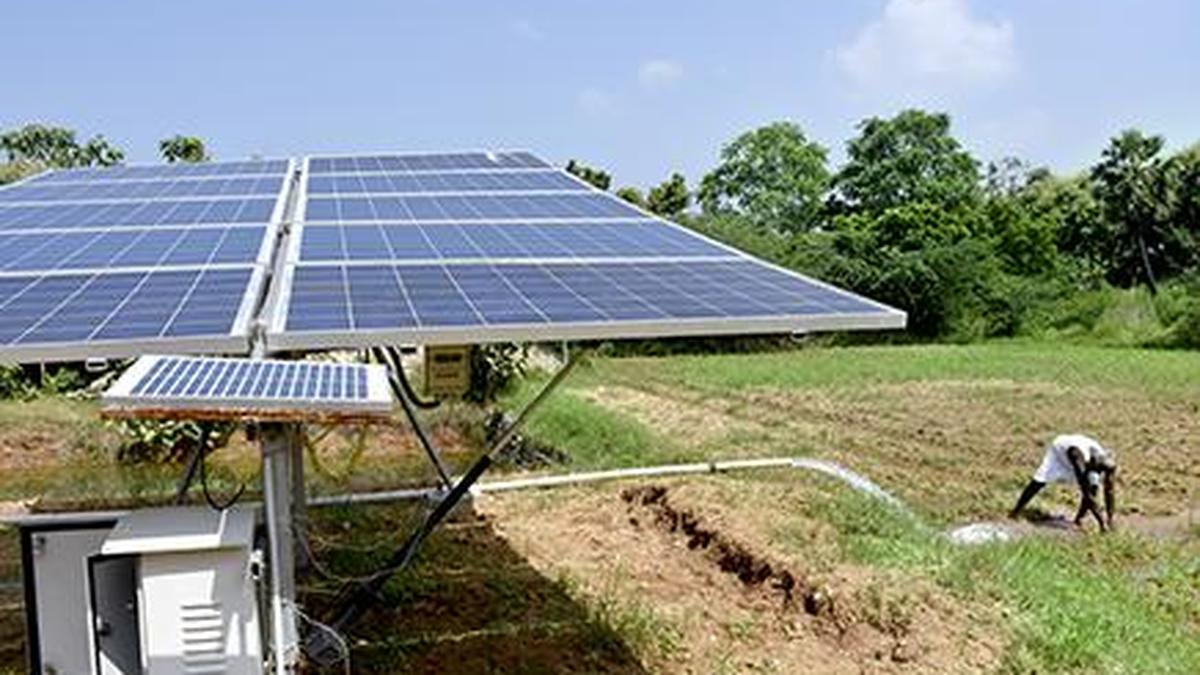
The transition from diesel to solar is no longer on the horizon — it is already happening at scale View More

Protestors are taking issue with the government's response to the spike in fuel prices since the onset of the Iran war. View More
Trucks and tractors block O'Connell Street in the centre of the city, as protests continue for a third day against the rising cost of fuel due to the Middle East crisis, in central Dublin on April 9, 2026. (Photo by Paul Faith / AFP via Getty Images)Paul Faith | Afp | Getty Images Protests around fuel prices in Ireland are entering their fourth day, with three of the country's main refineries and terminals blockaded, and traffic in Dublin at a standstill.The demonstrations have been primarily instigated by farmers, agricultural contractors and road haulage operators, who are upset with the government's response to the spike in fuel prices since the onset of the Iran war.However, recognized industry bodies, including the Irish Farmers' Association and the Irish Road Haulage Association, are not involved.Countries around the world are grappling with higher fuel prices as a result of the Middle East conflict. British Prime Minister Keir Starmer said Thursday he was "fed up" seeing energy bills in the U.K. fluctuate because of actions taken by U.S. President Donald Trump and Russian President Vladimir Putin. Oil prices were off their highs on Friday as shipping flows around the Strait of Hormuz remained severely restricted. Fuel protesters block the motorway outside Dundalk as protests continue for a third day against the rising cost of fuel due to the Middle East crisis across the country on April 9, 2026. (Photo by Paul Faith / AFP via Getty Images)Paul Faith | Afp | Getty Images The standoff in Ireland has seen petrol pumps in forecourts across the country run dry, with demonstrators claiming they will remain in place until they secure a meeting with the government to air their grievances over what they claim is a lack of support from authorities.The government has asked the country's army to be on standby to remove blockades at terminals and refineries. Taoiseach  â Irish for leader â Micheál Martin has described the protests as an "act of national sabotage," adding that he can't comprehend the logic of blocking access to fuel in the midst of a surge in prices.The Irish government announced in March a 250-million-euro ($293 million) package of measures to help households and businesses tackle the spike in prices, including a cut in excise duty on both diesel and petrol."We will navigate this period of volatility. But, to put it bluntly, nobody knows what the situation will be in a month from now; we must remain flexible in our response," Ireland's Finance Minister Simon Harris, said at the time. A man sits in the wheel of a tractor as fuel protestors block O'Connell Street in the centre of the city, as protests continue for a third day against the rising cost of fuel due to the Middle East crisis, in central Dublin on April 9, 2026. (Photo by Paul Faith / AFP via Getty Images)Paul Faith | Afp | Getty Images Government officials are due to meet with industry bodies on Friday to discuss the crisis, but Defense Minister Helen McEntee has confirmed that those protesting have not been given an invitation.  In a bid to cope with the fallout of the energy shock, governments around the world have been quick to impose measures from fuel export bans to loosening refining standards. The U.K. government last month introduced rules requiring developers to install heat pumps and solar panels in all new homes across England, while Greece has capped profit margins on fuel and supermarket products for three months. Price caps, taking the stairs, and short-sleeved shirts: How countries are coping with the Iran war energy shock Choose CNBC as your preferred source on Google and never miss a moment from the most trusted name in business news.
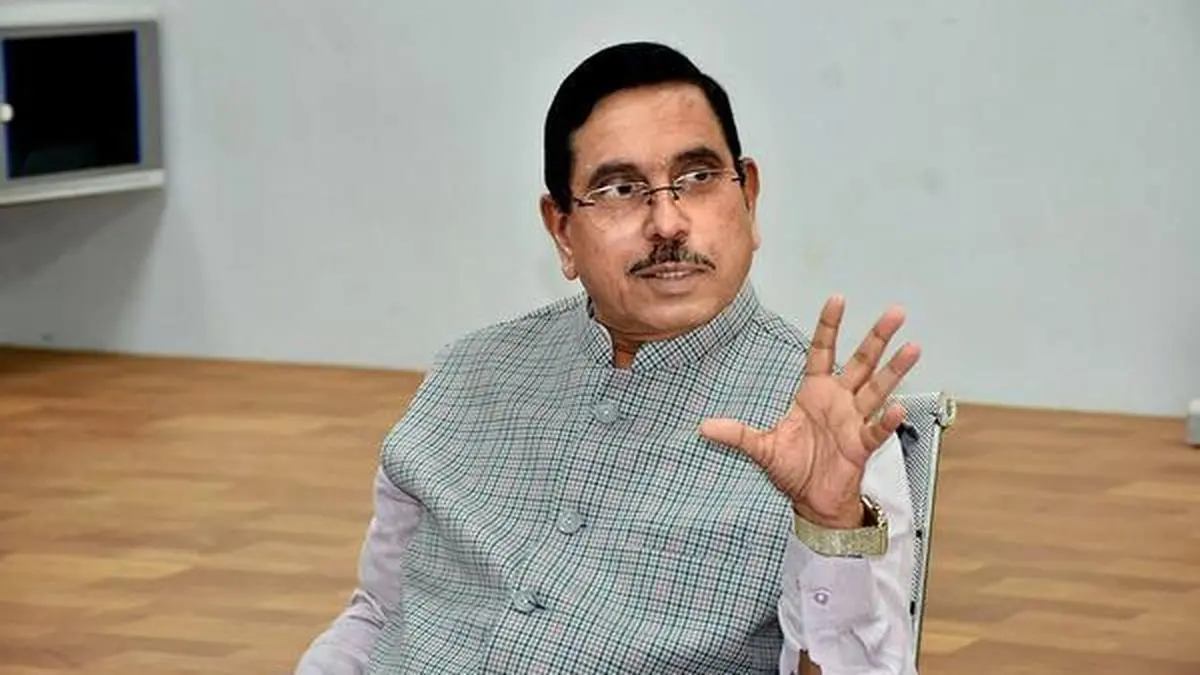
Joshi says clean energy push could generate 5.1 million green jobs; Storage, EVs, and global partnerships to shape next phase of growth View More

Chinese assets emerged as an unlikely bastion of stability during a period where other traditional havens, such as gold and U.S. Treasurys, stumbled. View More
19 November 2025, China, Shanghai: Boats sail past downtown Shanghai on the Huangpu River. The tallest building on the skyline is the Shanghai Tower (rear). Bernd von Jutrczenka | Picture Alliance | Getty Images The outbreak of the Iran war sparked a sharp sell-off across most regions and asset classes in March, as investors weighed the impact the conflict would have on inflation and economic output. China proved to be an exception.Despite its status as one of the world's major oil importers, China averted the worst of the energy shock caused by the effective closure of the Strait of Hormuz thanks to multi-year efforts to diversify its energy mix and build up reserves.Its stockpile of over 1.2 billion barrels of oil and diverse mix of energy resources, such as coal, renewables and LNG, made it less vulnerable to upheaval in the Persian Gulf, through which 9% of global oil supply passes."Much of the low correlation observed from its capital markets in the last few weeks surely comes from the fact that, as the world's largest oil importer, it has been thinking strategically about a war for some time," Julian Howard, chief multi-asset investment strategist at Gam, told CNBC over email.China's relative insulation from the conflict could have its roots in the first trade war between the U.S. and China in 2018 during U.S. President Donald Trump's first term in office, according to Peter Boockvar, chief investment officer at One Point BFG Wealth Partners."Back then, Trump punched China in the face, and what's happened since then is China started going to the gym, and they started to become more resilient and independent," he told CNBC. "Our attempt to limit their access to our technology just encouraged them to develop it themselves." Different characteristics Chinese government bonds emerged as an unlikely bastion of stability during a period where other traditional havens, such as gold and U.S. Treasurys, stumbled. Map of the Middle East and Iran on a globe under a magnifying glass in Shanghai, China on March 29, 2026. Cfoto | Future Publishing | Getty Images The 10-year Chinese government bond yield has stayed broadly stable at 1.81% since the conflict began, while U.S. Treasury yields moved almost 50 basis points higher to 4.297%.China is also one of the few major powers that hasn't experienced high inflation since 2022, potentially adding to the allure of Chinese bonds over the past month."Importantly, the main problem of this crisis was the inability of countries to react effectively, given very stretched fiscal deficits and debt levels and inflation at uncomfortable levels," Gustavo Medeiros, head of research at emerging markets asset manager Ashmore, told CNBC over email."China has been struggling with deflation, so its bond market was less exposed than other major markets. Lower yields mean there was a smaller tightening of financial conditions in China than other countries."Chinese assets may have also benefited from their underlying ownership profile.Despite being the largest country in the MSCI Emerging Markets index, less than 5% of its stocks and bonds are held by overseas investors, which limits the scope for forced selling, Medeiros added. China's stock market also experienced less severe declines than European and Asian peers in March, with its blue-chip onshore benchmark, the CSI 300, down 5.5% over the month. The pan-European Stoxx 600 fell 8%, while India's Nifty 50 shed 10% and Japan's Nikkei 225 dropped 14%. Competing with the U.S. Despite recent resilience, China is only just emerging from a prolonged bear market. Since 2021, the state has been grappling with slowing economic output, weaning itself off a property market bubble, and trying to find a balance between promoting a free market and stock exchange within a one-party autocracy.Just four years ago, many Western policymakers and investors were calling China "uninvestable." Shareholders have experienced underwhelming returns over the decades compared to Western equity markets, even as China revolutionized its growth story to become the world's second-largest economy. Since 2000, the MSCI China has returned 302%, compared to over 500% for the S&P 500. Crucially, the Chinese index is yet to surpass its 2021 highs, during which time the value of the US market has risen over 80%. Stock Chart IconStock chart iconHow the MSCI China has fared against the S&P 500 since 2000. As such, China comprises just 3% of the MSCI World index, despite contributing almost 20% to global GDP.China's ability to match â and, in some cases, surpass â U.S. technological innovation may prove the key in unlocking real shareholder value over the coming years."There's only one country, and that's China, competing vigorously with the U.S. in every industry across the board," Liqian Ren, director of modern alpha at WisdomTree, told CNBC in an interview."No other country right now has the capability to compete, not just in technology but in commercialization of the technology."WisdomTree sees AI, biotech, electric vehicles and batteries as the key areas where China is competing with the United States.Analysts also see China's potential to provide a helping hand to its Asian neighbors in developing energy security.Li Shuo, director of China Climate Hub at the Asia Society Policy Institute, told CNBC in an interview that China is hoping to convince regional partners it can provide stability and act as a shield from volatility originating from the U.S."[China is saying], 'We are here to provide economic development. We are here and we can help you ensure energy supply safety, because we are 80% of global solar panel production. So while you are working hard to insulate yourself from that volatility, we are here to help and we can provide stability,'" he added. Choose CNBC as your preferred source on Google and never miss a moment from the most trusted name in business news.
Union Minister Pralhad Joshi stated that this achievement showcases India’s commitment to energy security, sustainable development, and the vision of a Viksit Bharat View More

In the full year 2025-26, India’s solar India’s solar installations were 44.61 GW, taking the cumulative capacity to 150.26 GW View More

Maharashtra's state-owned power distribution firm will be split into two entities under a financial restructuring plan approved by the state cabinet on Tuesday and one of it will be listed on bourses after an IPO is launched within six to nine months of the recast process. View More
Maharashtra's state-owned power distribution firm will be split into two entities under a financial restructuring plan approved by the state cabinet on Tuesday and one of it will be listed on bourses after an IPO is launched within six to nine months of the recast process. The cabinet approved the financial restructuring of Maharashtra State Electricity Distribution Company Ltd (MSEDCL or Mahavitaran ), including its bifurcation and plan to launch an initial public offering (IPO) of non-agricultural business, at its meeting chaired by Chief Minister Devendra Fadnavis. Under the restructuring, Mahavitaran will be split into two entities -- one catering to industrial, commercial, domestic and other non-agricultural consumers, while the second company, MSEB Solar Agro Power Ltd (MSAPL), will be dedicated to supplying electricity to agricultural consumers, the Chief Minister's Office (CMO) said in a statement issued after the cabinet meeting. The cabinet approved listing of the non-agricultural distribution business of Mahavitaran in the capital markets through an IPO within six to nine months after the restructuring. The IPO will include a mix of fresh equity issuance and an offer for sale by the state government, it said. As part of the financial restructuring, the Maharashtra government will issue long-term bonds with a tenure of 15 years to address Mahavitaran's debt liabilities of about Rs 32,679 crore, which carry state guarantees, according to the statement. Live Events The move is expected to reduce the utility's debt burden and improve its financial health. The newly-created firm MSAPL will focus on agricultural power supply and development of solar-based energy systems for farming, aligned with the Mukhyamantri Saur Krishi Vahini Yojana 2.0. The cabinet approved an initial capital support of Rs 2,500 crore for MSAPL. The restructuring aims to ensure energy security, improve service quality and bring sustainability in power distribution. It is also expected to facilitate investments in smart metering, digital distribution systems, grid modernisation and energy transition, according to the CMO. The government said the move will help provide reliable and uninterrupted power supply to all consumer categories, with a particular focus on ensuring availability of daytime electricity to farmers and promoting solarisation in the agriculture sector. .Pbanner{display:flex;justify-content:space-between;align-items:center;background-color:#ec1c40;margin-top:20px;padding:5px 10px;border-radius:4px;color:#fff;line-height:10px;} .Pbannertext{display:flex;align-items:center;font-size:16px;font-weight:600;font-family:'Montserrat';} .Pbannertext img{height:20px;margin:0 6px} .Pbannerbutton a{display:flex;align-items:center;background-color:#fff;color:#ec1c40;text-decoration:none;font-weight:600;padding:4px 8px;border-radius:6px;font-size:15px;font-family:'Montserrat';} .Pbannerbutton img{height:20px;margin-right:6px} .Pbannerbutton a:hover{background-color:#f7f7f7} Add as a Reliable and Trusted News Source Add Now! (You can now subscribe to our ETMarkets WhatsApp channel) (You can now subscribe to our ETMarkets WhatsApp channel)
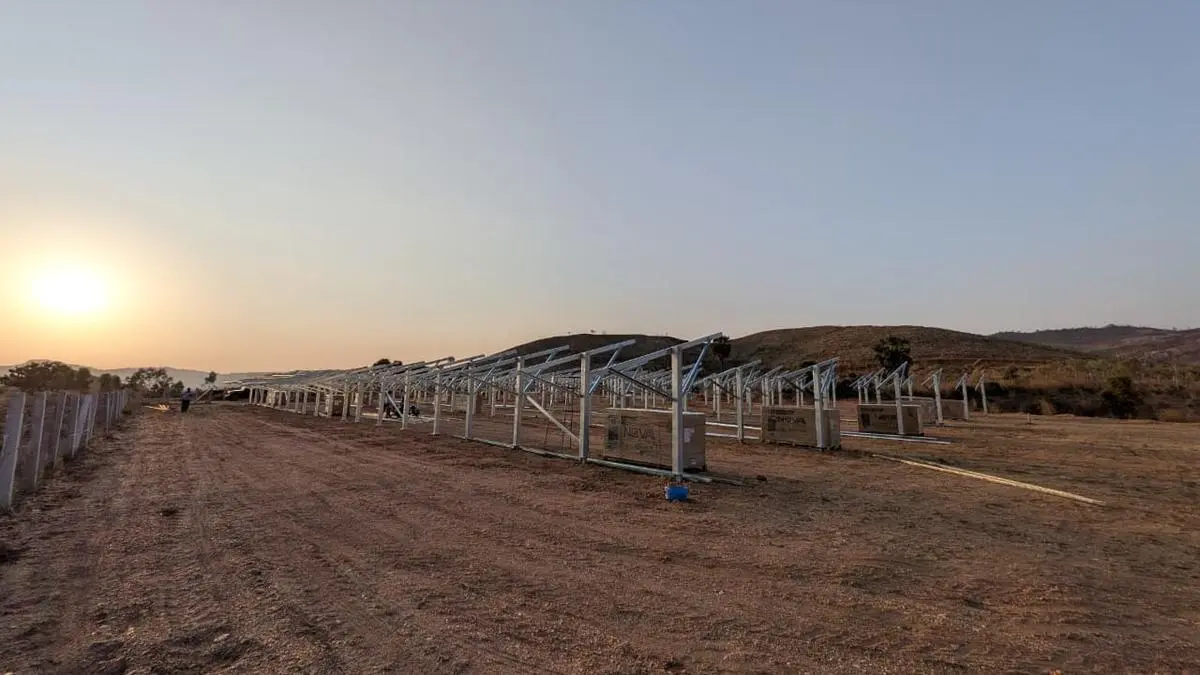
Project Chittoor demonstrates how farmers can generate power while growing crops on the same plot View More