
Latest Sectors News

Jupiter International has appointed four investment banks to lead a $300 million IPO, with a May filing, to fund its transition into a fully integrated solar manufacturer. View More

Polite Powertech has filed its DRHP with Sebi to launch an IPO comprising fresh issuance and an offer for sale. The power EPC firm has shown sharp growth in revenue and profitability, supported by a strong order book and newly secured projects, strengthening visibility for future expansion. View More
Polite Powertech Limited has filed its Draft Red Herring Prospectus (DRHP) with the market regulator, Securities and Exchange Board of India (SEBI), marking its move to tap the capital markets with an initial public offering (IPO). The company operates as an integrated power infrastructure engineering, procurement and construction (EPC) player, undertaking end-to-end execution of power transmission, distribution and renewable energy projects. Its expertise spans high-voltage and extra-high-voltage transmission lines, underground and overhead cabling, solar EPC projects, as well as air-insulated and gas-insulated substations for state utilities, public sector undertakings and private clients. Also read: HPCL, BPCL, IOCL shares rebound up to 6%. Here are two reasons behind renewed buying As per the DRHP, the IPO will comprise a total offer of up to 1.25 crore equity shares, including a fresh issue of up to 1 crore shares and an offer for sale of up to 25 lakh shares. The proceeds from the fresh issue will primarily be used to meet working capital requirements and for general corporate purposes. The shares are proposed to be listed on both the NSE and BSE. The company has reported sharp financial growth in recent years. Revenue from operations rose from nil in FY2023 to Rs 24.65 crore in FY2024, and further surged to Rs 155.63 crore in FY2025. For the first half of FY2026, revenue stood at Rs 97.32 crore. Live Events Profitability has also improved, with EBITDA at nil in FY2023, Rs 1.55 crore in FY2024, Rs 21.64 crore in FY2025 and Rs 17.16 crore in H1 FY2026. Net profit followed a similar trend, coming in at nil, Rs 0.84 crore, Rs 13.02 crore and Rs 10.74 crore, respectively. The growth is supported by a strong order book of Rs 313.56 crore as of December 31, 2025, offering clear visibility for future revenues. Additionally, as of March 12, 2026, the company has secured fresh orders worth Rs 302.21 crore. Arihant Capital Markets Limited and Valmiki Leela Capital Private Limited are acting as the book-running lead managers to the issue. ( Disclaimer : Recommendations, suggestions, views and opinions given by the experts are their own. These do not represent the views of The Economic Times) .Pbanner{display:flex;justify-content:space-between;align-items:center;background-color:#ec1c40;margin-top:20px;padding:5px 10px;border-radius:4px;color:#fff;line-height:10px;} .Pbannertext{display:flex;align-items:center;font-size:16px;font-weight:600;font-family:'Montserrat';} .Pbannertext img{height:20px;margin:0 6px} .Pbannerbutton a{display:flex;align-items:center;background-color:#fff;color:#ec1c40;text-decoration:none;font-weight:600;padding:4px 8px;border-radius:6px;font-size:15px;font-family:'Montserrat';} .Pbannerbutton img{height:20px;margin-right:6px} .Pbannerbutton a:hover{background-color:#f7f7f7} Add as a Reliable and Trusted News Source Add Now! (You can now subscribe to our ETMarkets WhatsApp channel) (You can now subscribe to our ETMarkets WhatsApp channel)

Some of the estimated $2.9 billion worth of equipment, including screen-printing production ?lines, ?will require export approval from Chinese regulators, say sources View More
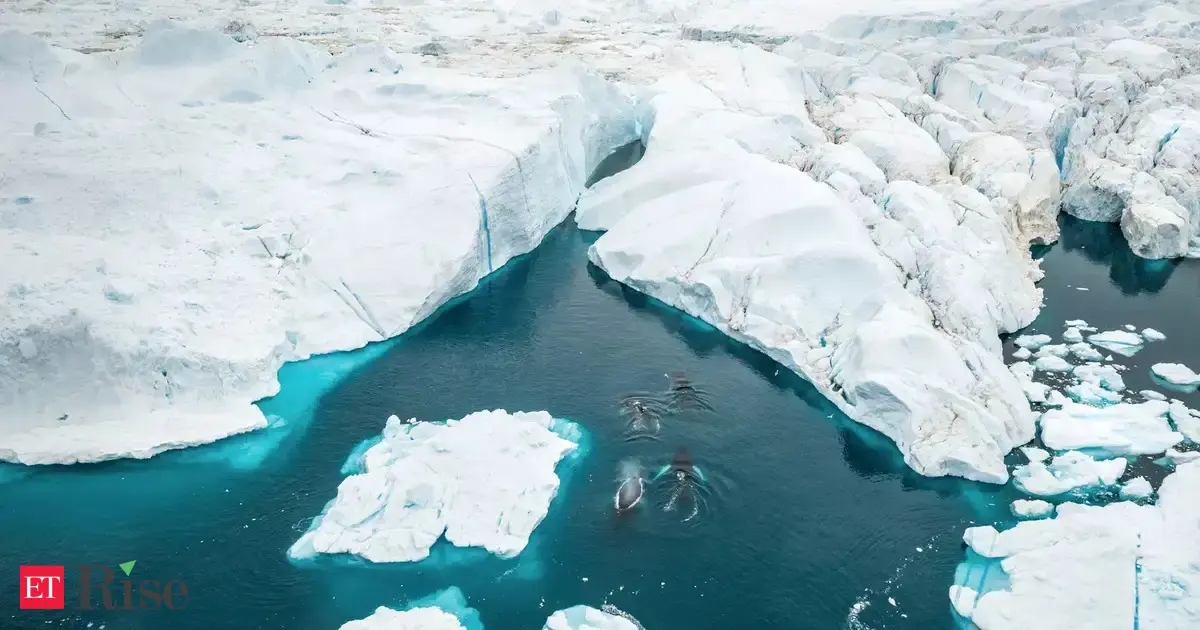
Global warming effects are intensifying unexpectedly. Scientists are debating if the pace of climate change is accelerating. Extreme weather events are becoming more frequent and powerful. View More
Scientists who study global warming are currently wrestling with a question that, while seemingly technical, is profoundly consequential: Is climate change accelerating? The debate spilled into the open this month, after new research found that the rate of global warming has nearly doubled over the last decade. The findings set scientific circles buzzing, and not all researchers agree with the conclusion. But while the debate about accelerating global warming remains unsettled, a growing number of scientists do agree on another troubling development: The effects of climate change are intensifying in ways that have surprised even experts. Many of the consequences of global warming such as more intense storms , warming oceans and melting glaciers are arriving faster and more powerfully than many scientists had expected. "Key impacts are exceeding what models predicted when it comes to extreme weather, the intensification of hurricanes, ice sheet disintegration and sea level rise," said Michael Mann, a professor of environmental science at the University of Pennsylvania . Live Events This week in the United States, extreme weather pushed temperatures above 100 degrees Fahrenheit in parts of California and the Southwest, even as it is still winter, and recent research has found that the duration and intensity of heat waves is accelerating. At the same time, blizzard conditions whipped the upper Midwest and severe thunderstorms moved east from Arkansas to the Gulf. The country’s most definitive MSME stage returns on March 24 in New Delhi. Register now for the ET MSME Awards 2025 Around the world, anomalous weather and shattered records are sending new waves of concern through the scientific community, which was already well aware that some ecosystems are showing signs of intense stress. "Things are getting really outside of what humans have ever seen," said Friederike Otto, a professor of climate science at Imperial College London. "Almost every part of the world is experiencing these extreme events." The Debate An acceleration in the pace of climate change could have dire implications for a planet grappling with more powerful storms, floods and heat waves. Global average temperatures have already climbed nearly 1.5 degrees Celsius above preindustrial levels, a threshold that is seen as crucial for avoiding the worst effects of climate change. A study about the pace of global warming, published March 6, found that, even after accounting for other phenomena such as volcanic eruptions, solar radiation and natural variability, the rate of global warming has accelerated since 2015. "Over the last 10 years, the warming trend has been faster than in the previous decades," said Stefan Rahmstorf, a climate scientist at the Potsdam Institute for Climate Impact Research in Germany, and one of the authors of the study, which appeared in the journal Geophysical Research Letters. Mann was among those who were unconvinced. He said the evidence for an uptick in the rate of warming was "not statistically detectable," adding that "the anomalous warmth in recent years was due to a natural El Nino spike." El Nino is the warm phase of a natural climate pattern that shapes weather patterns worldwide, typically bringing wet and cool conditions with increased flooding to the southern United States, and warmer, drier winters to the northern United States and Canada. It appears that El Nino may return this summer, raising the prospect of even more extreme weather in the months ahead. Warming Oceans As the atmosphere warms, so do the seas, which have been showing signs of strain in recent years. Ocean temperatures are hitting record highs around the globe, resulting in mass coral bleaching from the Caribbean to Australia, and a sharp decline in fish populations. The oceans, which absorb more than 90% of the excess heat trapped in the Earth's atmosphere, are warming at an accelerating rate, leading to bathtub-like temperatures off the coast of Florida. Each of the past eight years set a record for ocean heat, with the rate of ocean warming roughly doubling over the past two decades compared with the longer-term trend. Marine heat waves now affect more than half of the global ocean in a typical year, according to the National Oceanic and Atmospheric Administration . The world experienced its fourth global coral bleaching event starting in 2023, with reefs across the Caribbean, Pacific and Indian Oceans suffering extensive damage. It was still in progress in 2025. Glaciers, Ice and Rising Seas As oceans have warmed, the North and South poles have both experienced abnormal heat, and in Antarctica, the Thwaites Glacier is melting at an alarming rate. If it breaks apart entirely, global sea levels could rise by 2 feet over the course of several decades, putting millions at risk. Antarctic sea ice is also plummeting, with the four lowest readings in the 47-year satellite record all occurring over the past four years. "Sea ice loss in Antarctica is very concerning, because if it continues to melt, we risk self-perpetuating processes, whereby you expose more of the ocean, and that warms the surface of the ocean," said Bethan Davies, a geologist at Newcastle University. "It's a tipping point." Outside the poles, other glaciers are also melting at an accelerating rate. For the second consecutive year in 2024, all 58 of the main glaciers tracked by the World Glacier Monitoring Service across five continents lost mass, the greatest average ice loss in 55 years of records. The European Alps lost roughly 10% of their remaining glacier volume in just two years, while Venezuela became the first Andes nation to lose all of its glaciers. Melting glaciers can push sea levels higher. Worldwide, the rate of sea level rise is now picking up pace, more than doubling since satellite measurements began in 1993, leading to warnings about the fate of coastal cities from Miami to Jakarta, Indonesia. Connected Systems The changes to Earth's natural patterns reveal an interconnected web of ecological systems that are undergoing profound changes beyond what many researchers have predicted. Scientists say the culprit is clear: Ever since the Industrial Revolution, the relentless burning of fossil fuels including coal, oil and gas has been adding heat-trapping gasses to the atmosphere, leading to a sharp rise in global temperatures. The hottest year in recorded history was 2024, and each of the 10 warmest years on record have come in the past decade. Since 1997, when nations agreed to limit planet-warming gases as part of the landmark Kyoto Protocol, humanity has released more greenhouse gases than in all prior history. The temperature rise associated with that growing volume of heat-trapping gas has kicked in and is continuing to rise. And at the same time, the ability of the planet's natural systems to absorb planet-warming gasses such as carbon dioxide appears to be diminishing. Oceans, which have absorbed much of the carbon dioxide that humans have added to the atmosphere, are becoming less efficient at storing carbon. The same is true for forest and soils. .Pbanner{display:flex;justify-content:space-between;align-items:center;background-color:#ec1c40;margin-top:20px;padding:5px 10px;border-radius:4px;color:#fff;line-height:10px;} .Pbannertext{display:flex;align-items:center;font-size:16px;font-weight:600;font-family:'Montserrat';} .Pbannertext img{height:20px;margin:0 6px} .Pbannerbutton a{display:flex;align-items:center;background-color:#fff;color:#ec1c40;text-decoration:none;font-weight:600;padding:4px 8px;border-radius:6px;font-size:15px;font-family:'Montserrat';} .Pbannerbutton img{height:20px;margin-right:6px} .Pbannerbutton a:hover{background-color:#f7f7f7} Add as a Reliable and Trusted News Source Add Now!

IREDA's board will meet on March 25 to consider an interim dividend for FY 2025-26. The trading window for securities will remain closed until 48 hours post-meeting. The board also approved raising its borrowing plan for FY 2025-26 to ?35,800 crore. View More
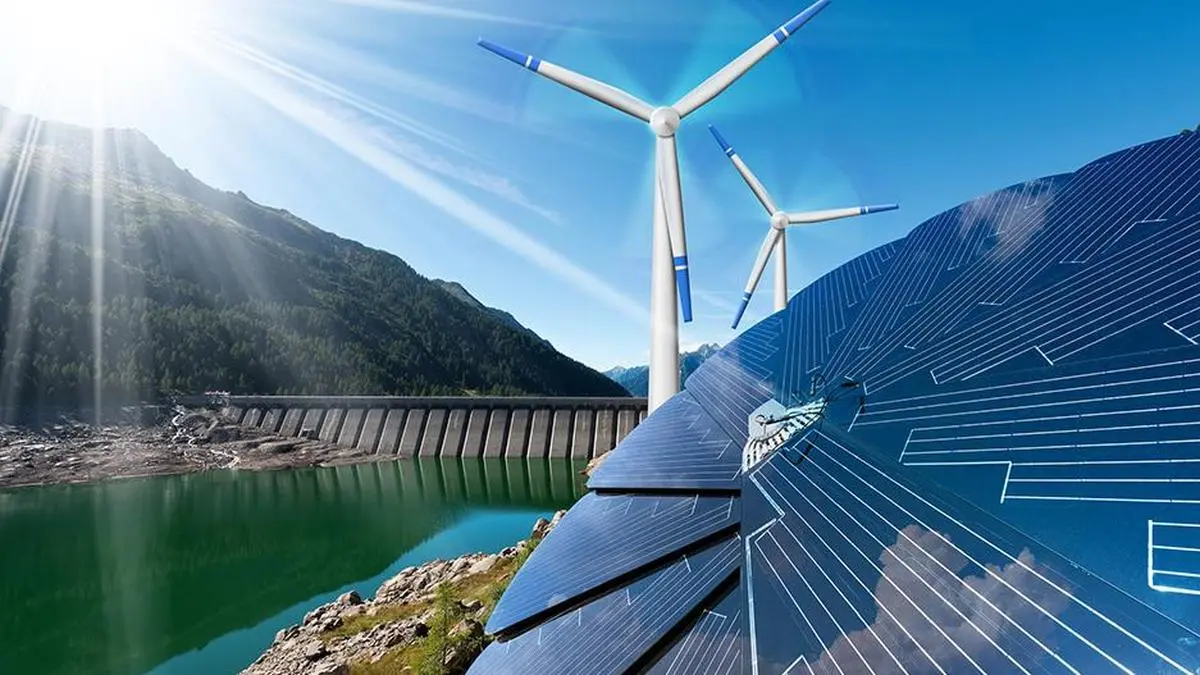
Jump in renewables capacity expected to reduce dependence on coal as source of electricity generation to 49% in 10 years from 70% currently View More

Banks have turned cautious about lending to solar module makers after a December letter from the clean energy ministry urging them to be cautious about financing new solar photovoltaic module capacity. The sector also faces pressure from a preliminary 126% US tariff. View More

The move marks a step towards building a robust, self-reliant solar manufacturing ecosystem that will boost domestic production, strengthen supply chains View More

The U.S. and Israel's war with Iran has upended the supply of aluminum in the Middle East, sending prices of the base metal skyrocketing. View More
In this articleFollow your favorite stocksCREATE FREE ACCOUNT View of the interior of a furnace in an aluminium foundry.Monty Rakusen | via Getty Images The U.S. and Israel's war with Iran has upended the supply of aluminum in the Middle East, sending prices of the base metal skyrocketing.While aluminum may be the most abundant metal on earth, it is crucial to the function of the world economy. It is an essential material across electronics, transport, and construction, as well as other industries such as solar panels and packaging. At the outbreak of the Iran conflict on Feb. 28, 3-month LME aluminum futures initially jumped by as much as 10% by March 12 before paring some gains to land around 8% higher, as the effective closure of the Strait of Hormuz has caused a significant disruption to supply. Stock Chart IconStock chart iconHow aluminum has performed against gold, silver and copper since the beginning of the Iran conflict on February 28. It's been the best-performing industrial metal over the past two weeks, and prices are now hovering just below 4-year highs at $3,370 as of Wednesday afternoon in London. Bahrain's Alba, which hosts the world's largest smelter, has also cut production by 19% of its 1.6 million tons of annual output, only adding to fears of a global shortage.Lower stock levels and the potential for further supply disruption in the Middle East could push prices towards $4,000 per ton, according to metals intelligence provider CRU Group. CRU principal analyst Guillaume Osouf wrote in a recent article that the LME price would likely be much higher now if it wasn't for weak global demand for the metal."A prolonged conflict will likely drastically change our market outlook for the rest of the year due to the lasting impact this will have on global supply, and the potential negative effects on demand," he added.The answer as to where the price could be headed next lies with China, according to other analysts. China is the biggest producer of aluminum and tends to keep production constrained at 45.5 million tons per year to reduce emissions and prevent overcapacity issues. "If the Chinese government decides that the prices are too high they can restart a number of idle smelters in the country and the world will be full of aluminum," Artem Volynets, CEO of miner ACG Metals, told CNBC's Europe Early Edition on Wednesday. Despite the recent rise in price on the LME, neither analyst sees aluminum becoming a significant trade for retail investors, as is the case with silver and copper. Volynets added that he would be "surprised" to see retail investors involved in such an industrial element, while Osouf told CNBC that the gross long position is only marginally smaller than what it was at the end of January, so involvement from funds has been limited since the start of the conflict. "Interestingly, the shorts have increased their exposure by 15k lots, suggesting a larger portion of investors believe in lower prices from now," he added. Choose CNBC as your preferred source on Google and never miss a moment from the most trusted name in business news.

Move aims to boost domestic production, enhance supply chain resilience, reduce import dependence, and ensure higher quality standards across the solar value chain View More