
Latest Sectors News

TotalEnergies CEO Patrick Pouyanné on the Iran war, the $1 billion deal with the White House, investment in the U.S., and more. View More
In this articleTTETTE-FRFollow your favorite stocksCREATE FREE ACCOUNT watch nowVIDEO10:2910:29Watch CNBC's full interview with TotalEnergies CEO Patrick PouyannéNews Videos Roughly 15% of TotalEnergies' production is offline, as the war with Iran nears the one-month mark, but surging oil prices have more than made up for the lost barrels, chairman and CEO Patrick Pouyanné told CNBC in an exclusive interview.With Brent crude trading solidly above $100 a barrel, much of the attention has focused on oil prices, but Pouyanné said the crisis is having a much larger impact on product prices. "The Brent market is ok, but the products market, which is the one which impacts customers ⦠is much higher than Brent," he told CNBC at S&P Global's CERAWeek energy conference in Houston. He added, the world has "never experienced" refining margins from products including Asian jet fuel at current levels. In addition to petroleum products, about 30% of global fertilizer moves through the Strait of Hormuz, jeopardizing the spring planting season.TotalEnergies is a major player in the global LNG market, including the largest exporter of U.S. LNG. The CEO said the company can still fulfill customer orders in Europe and Asia thanks to its diversified global portfolio. Last week, QatarEnergy said its Ras Laffan plant suffered "extensive damage" following Iranian drone attacks, effectively taking 20% of global LNG supply offline. The shutdown has sent natural gas prices in Europe and Asia surging.Pouyanné expects prices could move substantially higher if the war drags on through the summer, since Asian demand rises over the summer just as Europe looks to refill storage. European natural gas traded around $18 per million British thermal units Tuesday, but Pouyanné said prices could hit $40/MMBtu over the summer if the conflict continues.TotalEnergies is a major investor in U.S. energy. On Monday, it struck a deal with the Trump administration to abandon its offshore wind projects in return for $1 billion. The company agreed to reinvest the money into U.S. oil and gas projects instead.The federal government is key for offshore wind permitting, and the current administration has been a vocal critic of the industry. Pouyanné said he did not want to litigate with the administration over its offshore wind leases â acquired under former President Joe Biden â and so approached the administration with a deal. He added that in the U.S. offshore wind no longer makes sense given cheaper alternatives."In the specific situation of the U.S., where you have a lot of land, you have a lot of gas, you have a lot of coal, you have a lot of land to build onshore solar, onshore wind, batteries, we don't need to have offshore wind," he said. "It's a marginal technology, which is not affordable.""I prefer to allocate my capital to technologies which are more efficient, which give affordable electricity to customers," he said.As part of its expanding U.S. portfolio, TotalEnergies recently inked a 15-year agreement with Google to supply renewable power for data centers. Pouyanné said other hyperscalers â including Amazon and Microsoft â are now speaking to TotalEnergies directly. "These hyperscalers have understood that an energy company â like TotalEnergies â because we have also capacity, not only to build, to invest, to have land, to trade, we were quite a good partner for them," he said. Choose CNBC as your preferred source on Google and never miss a moment from the most trusted name in business news.

The move comes as part of Britain's response to the Iran war, with the conflict triggering the largest supply disruption in the history of the oil market. View More
Heat pump installer Richard Wilkins from Lotus Energy, screws in pipes to a Vaillant aroTHERM plus heat pump, that is being installed in a residential property in Farnham, Surrey, southwest of London, on June 2, 2025. Justin Tallis | Afp | Getty Images The U.K. government on Tuesday introduced new rules requiring developers to install heat pumps and solar panels in all new homes across England, in policymakers' latest response to the economic fallout of the Iran conflict. U.K. ministers say the Iran war and the largest supply disruption in the history of the oil market reinforces the need to leverage clean power as an energy security tool.The Future Homes Standard â a set of new-build regulations for England from 2028 â will establish requirements to ensure homes are built with on-site renewable electricity generation, the majority of which is expected to be provided by solar power. The rules will also see homes built with low-carbon heating, such as heat pumps and heat networks.The government added that plug-in solar panels, which homeowners can install on balconies, would be available within shops over the coming months. "The Iran War has once again shown our drive for clean power is essential for our energy security so we can escape the grip of fossil fuel markets we don't control," U.K. Energy Secretary Ed Miliband said in a statement. "Whether through solar panels fitted as standard on new homes or making it possible for people to purchase plug-in solar in shops, we are determined to roll out clean power so we can give our country energy sovereignty," he added. U.K. Secretary of State for Energy Security and Net Zero Ed Miliband arrives in Downing Street to attend a meeting of Cabinet ahead of the Spring Statement announcement in London on March 3, 2026.Wiktor Szymanowicz | Future Publishing | Getty Images The guidance was broadly welcomed by energy industry players, while some campaigners called on the U.K. government to go further to reduce the country's reliance on fossil fuels."People want to be free of these fossil fuel crises â since the conflict in the Middle East began, interest in solar has shot up 50%, heat pump and electric cars are also seeing surges," Greg Jackson, founder and CEO of Octopus Energy, said in a statement."Every solar panel, heat pump and battery cuts bills and boosts Britain's energy independence. And the government's latest steps can help cut the costs of electrification," Jackson said. Climate scientists have repeatedly warned that a substantial reduction in fossil fuel use will be necessary to curb global heating, with the burning of coal, oil and gas identified as the chief driver of the climate crisis. Energy security The U.S. and Israeli-led war on Iran, which began on Feb. 28, continues to disrupt oil production and shipping in the region, with traffic through the strategically vital Strait of Hormuz effectively grinding to a halt in recent weeks. The Strait of Hormuz is a key narrow maritime corridor that connects the Persian Gulf and the Gulf of Oman. Roughly 20% of global oil and gas typically passes through it. Opposition lawmakers, meanwhile, urged the ruling center-left Labour Party to focus on securing domestic energy supply to lower consumer bills amid the Iran war energy crisis.In a post on social media, shadow energy secretary Claire Coutinho of the center-right Conservatives called on the government to issue licenses for new oil and gas fields in the North Sea. Read moreOil rises with Brent climbing back above $100 as optimism fades over Iran war de-escalationTrump tells CNBC 'we are very intent on making a deal' with IranMore than 40 Middle East energy assets âseverely damaged,â IEA chief says Countries across the globe have been experiencing steep fuel price increases as a result of the Middle East conflict.Slovenia, for its part, recently became the first member of the European Union to implement fuel rationing to tackle supply disruptions. Greece, meanwhile, has moved to cap profit margins on fuel and supermarket products for three months. Analysts expect the fallout from the Iran war to expedite the shift away from fossil fuels, with countries increasingly recognizing renewables as a way to improve resilience, reduce pollution and mitigate geopolitical risks. Choose CNBC as your preferred source on Google and never miss a moment from the most trusted name in business news.

The newly commissioned projects, developed through the company’s subsidiaries, are connected to the existing Inter-State Transmission System (ISTS) and will operate on a merchant basis View More

Generic semaglutide launches by multiple drugmakers dominate pharma action, while SBI faces a hefty tax demand. Kotak Mahindra Bank, Tata group firms, Wipro, Infosys, and others drive dealmaking, AI, expansion and order activity. View More

Decentralised solar’s potential can be best realised by pushing localised consumption in the form of EV charging stations View More

Big Tech companies including Nvidia and Elon Musk's SpaceX are making large bets on a new layer of critical infrastructure that's emerging above our heads. View More
In this articleETL-FRAMZNNVDAFollow your favorite stocksCREATE FREE ACCOUNT Europe's Ariane 6 rocket takes off, in Kourou, French Guiana, July 9, 2024. European Space Agency ESA | Via Reuters A new layer of critical infrastructure is emerging above our heads. Low Earth Orbit (LEO) â which NASA defines as the stretch of space at an altitude of 2,000 km or less â is rapidly evolving from a niche technical domain into one of the most strategically important environments of the 21st century. It underpins global navigation, telecommunications, defense and worldwide connectivity and is seeing a flood of investment.LEO satellites, with their relative proximity to Earth, deliver quicker responses, reduced launch costs and faster communication speeds. Unlike satellites in more elevated orbits, they do not stay above a fixed spot on Earth and often work in constellations to maximize global coverage. Higher trajectories, such as Medium Earth Orbit (MEO) and Geostationary Orbit (GEO), host longâestablished satellite infrastructure, but they are subject to more rigid operational constraints.More than $45 billion worth of investment in the sector was recorded in 2025, up sharply from just under $25 billion in 2024, according to Space IQ, a report tracking startup activity and investment trends in the space economy."Orbital access is becoming a strategic asset much like ports, cables, or energy grids on Earth," Carlos Moreira, CEO of Swiss cybersecurity and semiconductor firm Wisekey, told CNBC. watch nowVIDEO6:0506:05Nokia CEO: Musk's vision of an AI data centre in space is something we all need to supportSquawk Box Europe The most visible example of this shift is Elon Musk's rapidly expanding satellite network. His rocket company, SpaceX, already operates the Starlink constellation, which currently has more than 9,500 satellites flying. The company plans to expand this network by adding thousands more satellites. SpaceX has also proposed an even larger project, a solar-powered orbital data-center system, that could eventually involve up to one million satellites. But SpaceX is not alone. Just this week tech darling Nvidia unveiled a new platform aimed at bringing AI computing into orbit. The system is designed to support orbital data centers, geospatial intelligence and autonomous space operations. "Space computing, the final frontier, has arrived," said Nvidia CEO Jensen Huang at the company's GTC conference 2026 in San Jose. This approach could transform orbital data centers into instruments of discovery and spacecraft into self-navigating systems, he said.Amazon LEO â formerly known as Project Kuiper â plans to deploy more than 3,000 satellites into Low Earth Orbit. Earlier this year, the Federal Communications Commission (FCC) approved a further 4,500 satellites for future deployment. Meanwhile, Blue Origin, founded by Jeff Bezos, is expected to launch more than 5,000 satellites by late 2027. In Europe, Eutelsat's OneWeb LEO satellite network currently consists of more than 600 satellites. While currently operating on a much smaller scale, France is hoping the company will eventually rival Musk's Starlink and has committed 1.35 billion euros ($1.58 billion) in investment in Eutelsat, making it the company's biggest shareholder with a roughly 30% stake. China has also filed plans for more than 200,000 satellites across 14 constellations. The scale of these planned deployments represents a fundamental shift in how space will be used, governed, and commercialized. A new investment moment More than $400â¯billion has been invested in the space economy since 2009, with the U.S. contributing over half of that investment, followed by China, according to Space Capital.Space Capital CEO Chad Anderson said the industry remains in the "early innings of a multi-decade infrastructure cycle." He noted that while the sector is still in early stages of evolution, it has matured enough to offer meaningful public market opportunities.  Around a dozen space companies are already publicly listed, with more expected over the coming year, including the highly anticipated SpaceX IPO , which Anderson said could mark the space sector's "Netscape moment" â a pivotal event that reshapes investor expectations and draws broader capital into the market.  Yet as momentum builds and commercial activity accelerates, Wisekey's Moreira cautioned that this expansion must be "managed with the same level of seriousness as digital sovereignty on Earth."  He argued that space should remain a domain that benefits humanity â supporting connectivity, scientific discovery and economic growth â rather than becoming a place of uncontrolled competition and systemic risk. Regulations risks A key challenge for market growth is the fragmented governance of Leo and its multi-layered system of operation.At the international level, the Outer Space Treaty establishes that states are responsible for all space activities carried out under their jurisdiction, while the UN's space debris mitigation guidelines provide nonâbinding sustainability principles. The International Telecommunication Union (ITU) manages global spectrum allocation, helping prevent interference and maintain reliable operation across communications networks. Alongside these formal mechanisms, industry groups such as the Space Safety Coalition promote voluntary bestâpractice standards. National authorities then provide operational oversight. In the United States, for example, the FCC licenses satellite constellations and spectrum use, and the FAA oversees launch and reâentry activities.  Read moreNvidia announces Vera Rubin Space-1 chip system for orbital AI data centersFCC chair slams Amazon for slow satellite launches after it opposed SpaceX data center planFrom data center spas to servers in space: How the energy crunch is reshaping cloud computing However, many experts argue that existing frameworks are no longer fit for purpose. Raza Rizvi, TMT lawyer at Simmons & Simmons, says that much of today's legal structure was designed around the more predictable conditions of the GEO.  "Now that we are entering a higherârisk, higherâcomplexity environment in LEO, we don't yet have the specific legal tools to manage this new technology." Siamak Hesar, CEO of spaceflight intelligence company Kayhan Space, says current regulations were built for slowerâmoving, stateâdriven space programmes that "Regulations need to evolve to the scale at which the industry is growing."  He notes that regulation now needs a "new perspective," as commercial operators, not governments, are becoming the primary users of space. This shift from stateâdriven to commercially driven activity is also reshaping how industry leaders view the opportunities ahead. Martijn Rogier van Delden, Head of Europe Consumer for Amazon LEO, sees "tremendous opportunity" for LEO satellites to connect billions of people, describing it as "a game changer to bridge the digital divide."  Choose CNBC as your preferred source on Google and never miss a moment from the most trusted name in business news.

Jupiter International has appointed four investment banks to lead a $300 million IPO, with a May filing, to fund its transition into a fully integrated solar manufacturer. View More

Polite Powertech has filed its DRHP with Sebi to launch an IPO comprising fresh issuance and an offer for sale. The power EPC firm has shown sharp growth in revenue and profitability, supported by a strong order book and newly secured projects, strengthening visibility for future expansion. View More
Polite Powertech Limited has filed its Draft Red Herring Prospectus (DRHP) with the market regulator, Securities and Exchange Board of India (SEBI), marking its move to tap the capital markets with an initial public offering (IPO). The company operates as an integrated power infrastructure engineering, procurement and construction (EPC) player, undertaking end-to-end execution of power transmission, distribution and renewable energy projects. Its expertise spans high-voltage and extra-high-voltage transmission lines, underground and overhead cabling, solar EPC projects, as well as air-insulated and gas-insulated substations for state utilities, public sector undertakings and private clients. Also read: HPCL, BPCL, IOCL shares rebound up to 6%. Here are two reasons behind renewed buying As per the DRHP, the IPO will comprise a total offer of up to 1.25 crore equity shares, including a fresh issue of up to 1 crore shares and an offer for sale of up to 25 lakh shares. The proceeds from the fresh issue will primarily be used to meet working capital requirements and for general corporate purposes. The shares are proposed to be listed on both the NSE and BSE. The company has reported sharp financial growth in recent years. Revenue from operations rose from nil in FY2023 to Rs 24.65 crore in FY2024, and further surged to Rs 155.63 crore in FY2025. For the first half of FY2026, revenue stood at Rs 97.32 crore. Live Events Profitability has also improved, with EBITDA at nil in FY2023, Rs 1.55 crore in FY2024, Rs 21.64 crore in FY2025 and Rs 17.16 crore in H1 FY2026. Net profit followed a similar trend, coming in at nil, Rs 0.84 crore, Rs 13.02 crore and Rs 10.74 crore, respectively. The growth is supported by a strong order book of Rs 313.56 crore as of December 31, 2025, offering clear visibility for future revenues. Additionally, as of March 12, 2026, the company has secured fresh orders worth Rs 302.21 crore. Arihant Capital Markets Limited and Valmiki Leela Capital Private Limited are acting as the book-running lead managers to the issue. ( Disclaimer : Recommendations, suggestions, views and opinions given by the experts are their own. These do not represent the views of The Economic Times) .Pbanner{display:flex;justify-content:space-between;align-items:center;background-color:#ec1c40;margin-top:20px;padding:5px 10px;border-radius:4px;color:#fff;line-height:10px;} .Pbannertext{display:flex;align-items:center;font-size:16px;font-weight:600;font-family:'Montserrat';} .Pbannertext img{height:20px;margin:0 6px} .Pbannerbutton a{display:flex;align-items:center;background-color:#fff;color:#ec1c40;text-decoration:none;font-weight:600;padding:4px 8px;border-radius:6px;font-size:15px;font-family:'Montserrat';} .Pbannerbutton img{height:20px;margin-right:6px} .Pbannerbutton a:hover{background-color:#f7f7f7} Add as a Reliable and Trusted News Source Add Now! (You can now subscribe to our ETMarkets WhatsApp channel) (You can now subscribe to our ETMarkets WhatsApp channel)
Some of the estimated $2.9 billion worth of equipment, including screen-printing production ?lines, ?will require export approval from Chinese regulators, say sources View More
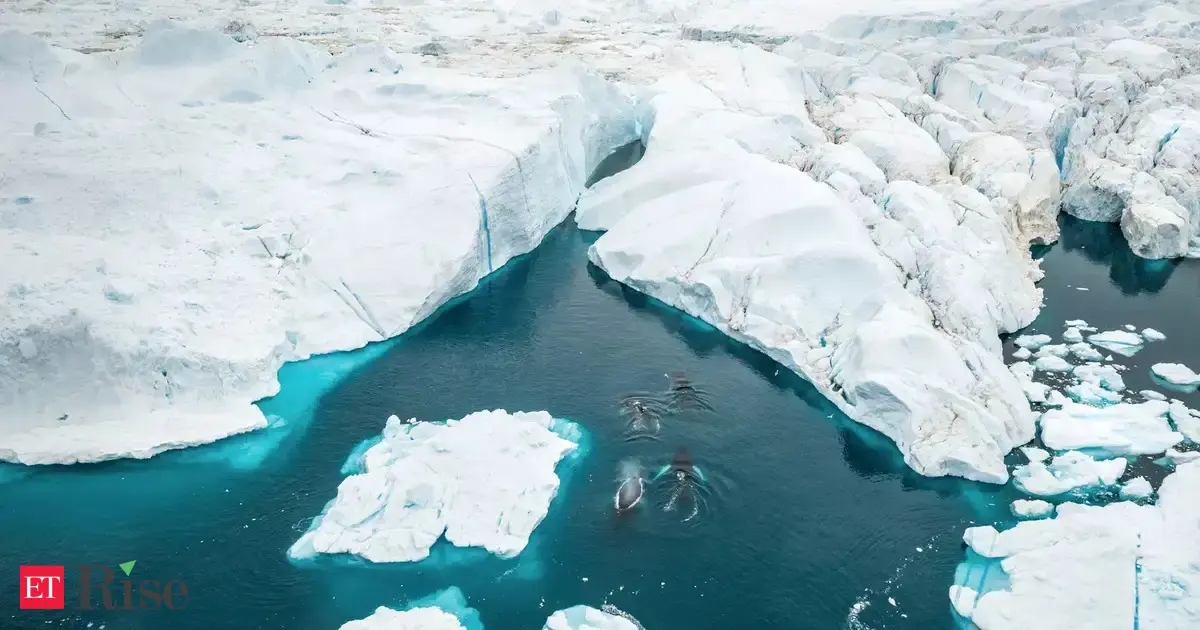
Global warming effects are intensifying unexpectedly. Scientists are debating if the pace of climate change is accelerating. Extreme weather events are becoming more frequent and powerful. View More
Scientists who study global warming are currently wrestling with a question that, while seemingly technical, is profoundly consequential: Is climate change accelerating? The debate spilled into the open this month, after new research found that the rate of global warming has nearly doubled over the last decade. The findings set scientific circles buzzing, and not all researchers agree with the conclusion. But while the debate about accelerating global warming remains unsettled, a growing number of scientists do agree on another troubling development: The effects of climate change are intensifying in ways that have surprised even experts. Many of the consequences of global warming such as more intense storms , warming oceans and melting glaciers are arriving faster and more powerfully than many scientists had expected. "Key impacts are exceeding what models predicted when it comes to extreme weather, the intensification of hurricanes, ice sheet disintegration and sea level rise," said Michael Mann, a professor of environmental science at the University of Pennsylvania . Live Events This week in the United States, extreme weather pushed temperatures above 100 degrees Fahrenheit in parts of California and the Southwest, even as it is still winter, and recent research has found that the duration and intensity of heat waves is accelerating. At the same time, blizzard conditions whipped the upper Midwest and severe thunderstorms moved east from Arkansas to the Gulf. The country’s most definitive MSME stage returns on March 24 in New Delhi. Register now for the ET MSME Awards 2025 Around the world, anomalous weather and shattered records are sending new waves of concern through the scientific community, which was already well aware that some ecosystems are showing signs of intense stress. "Things are getting really outside of what humans have ever seen," said Friederike Otto, a professor of climate science at Imperial College London. "Almost every part of the world is experiencing these extreme events." The Debate An acceleration in the pace of climate change could have dire implications for a planet grappling with more powerful storms, floods and heat waves. Global average temperatures have already climbed nearly 1.5 degrees Celsius above preindustrial levels, a threshold that is seen as crucial for avoiding the worst effects of climate change. A study about the pace of global warming, published March 6, found that, even after accounting for other phenomena such as volcanic eruptions, solar radiation and natural variability, the rate of global warming has accelerated since 2015. "Over the last 10 years, the warming trend has been faster than in the previous decades," said Stefan Rahmstorf, a climate scientist at the Potsdam Institute for Climate Impact Research in Germany, and one of the authors of the study, which appeared in the journal Geophysical Research Letters. Mann was among those who were unconvinced. He said the evidence for an uptick in the rate of warming was "not statistically detectable," adding that "the anomalous warmth in recent years was due to a natural El Nino spike." El Nino is the warm phase of a natural climate pattern that shapes weather patterns worldwide, typically bringing wet and cool conditions with increased flooding to the southern United States, and warmer, drier winters to the northern United States and Canada. It appears that El Nino may return this summer, raising the prospect of even more extreme weather in the months ahead. Warming Oceans As the atmosphere warms, so do the seas, which have been showing signs of strain in recent years. Ocean temperatures are hitting record highs around the globe, resulting in mass coral bleaching from the Caribbean to Australia, and a sharp decline in fish populations. The oceans, which absorb more than 90% of the excess heat trapped in the Earth's atmosphere, are warming at an accelerating rate, leading to bathtub-like temperatures off the coast of Florida. Each of the past eight years set a record for ocean heat, with the rate of ocean warming roughly doubling over the past two decades compared with the longer-term trend. Marine heat waves now affect more than half of the global ocean in a typical year, according to the National Oceanic and Atmospheric Administration . The world experienced its fourth global coral bleaching event starting in 2023, with reefs across the Caribbean, Pacific and Indian Oceans suffering extensive damage. It was still in progress in 2025. Glaciers, Ice and Rising Seas As oceans have warmed, the North and South poles have both experienced abnormal heat, and in Antarctica, the Thwaites Glacier is melting at an alarming rate. If it breaks apart entirely, global sea levels could rise by 2 feet over the course of several decades, putting millions at risk. Antarctic sea ice is also plummeting, with the four lowest readings in the 47-year satellite record all occurring over the past four years. "Sea ice loss in Antarctica is very concerning, because if it continues to melt, we risk self-perpetuating processes, whereby you expose more of the ocean, and that warms the surface of the ocean," said Bethan Davies, a geologist at Newcastle University. "It's a tipping point." Outside the poles, other glaciers are also melting at an accelerating rate. For the second consecutive year in 2024, all 58 of the main glaciers tracked by the World Glacier Monitoring Service across five continents lost mass, the greatest average ice loss in 55 years of records. The European Alps lost roughly 10% of their remaining glacier volume in just two years, while Venezuela became the first Andes nation to lose all of its glaciers. Melting glaciers can push sea levels higher. Worldwide, the rate of sea level rise is now picking up pace, more than doubling since satellite measurements began in 1993, leading to warnings about the fate of coastal cities from Miami to Jakarta, Indonesia. Connected Systems The changes to Earth's natural patterns reveal an interconnected web of ecological systems that are undergoing profound changes beyond what many researchers have predicted. Scientists say the culprit is clear: Ever since the Industrial Revolution, the relentless burning of fossil fuels including coal, oil and gas has been adding heat-trapping gasses to the atmosphere, leading to a sharp rise in global temperatures. The hottest year in recorded history was 2024, and each of the 10 warmest years on record have come in the past decade. Since 1997, when nations agreed to limit planet-warming gases as part of the landmark Kyoto Protocol, humanity has released more greenhouse gases than in all prior history. The temperature rise associated with that growing volume of heat-trapping gas has kicked in and is continuing to rise. And at the same time, the ability of the planet's natural systems to absorb planet-warming gasses such as carbon dioxide appears to be diminishing. Oceans, which have absorbed much of the carbon dioxide that humans have added to the atmosphere, are becoming less efficient at storing carbon. The same is true for forest and soils. .Pbanner{display:flex;justify-content:space-between;align-items:center;background-color:#ec1c40;margin-top:20px;padding:5px 10px;border-radius:4px;color:#fff;line-height:10px;} .Pbannertext{display:flex;align-items:center;font-size:16px;font-weight:600;font-family:'Montserrat';} .Pbannertext img{height:20px;margin:0 6px} .Pbannerbutton a{display:flex;align-items:center;background-color:#fff;color:#ec1c40;text-decoration:none;font-weight:600;padding:4px 8px;border-radius:6px;font-size:15px;font-family:'Montserrat';} .Pbannerbutton img{height:20px;margin-right:6px} .Pbannerbutton a:hover{background-color:#f7f7f7} Add as a Reliable and Trusted News Source Add Now!