
Latest Sectors News

The investment story for Corning looks even sweeter in the wake of Jim Cramer's sit-down with CEO Wendell Weeks. View More
The investment story for Corning looks even sweeter in the wake of Jim Cramer's sit-down with CEO Wendell Weeks on "Mad Money" on Thursday night. One day after Corning's blockbuster optical partnership with Nvidia , Weeks shed some more light on the company's new supply agreements with two unnamed hyperscalers. Corning first disclosed these along with earnings last week, but details were light. Here's the comment from Weeks that caught our attention from Jim's interview: "Probably the biggest commercial arrangement ever in my career we just entered into with Nvidia, and then these other two major ones are larger than the Meta deal that's been public on, and I'm sure some of those customers will want to be more open about that over time." We knew they were about the same size as the Meta deal, which Corning went public with back in January, saying at the time it was worth up to $6 billion through 2030 to supply fiber optic cables for data centers. But to hear they are actually larger is, of course, encouraging. At the very least, it gives us a floor for these combined deals at about $12 billion. On Corning's April 28 earnings call, this is what Weeks had to say about the two new deals: "On our last call [in January], I shared that we were in the process of concluding other agreements of the same size and duration as the Meta agreement. We now have concluded two more large, long-term agreements with hyperscale customers. And they are each similar in size and duration. Now I know, we will get questions on who the other customers are and the specifics of our arrangements. However, our philosophy is to let our customers decide when, and where they choose to make announcements on their critical supply chain decisions. I can share that these deals are very significant, and they share the risk and rewards of the required expansions with our strategic customers." Now back to Thursday's remarks. Those two hyperscale deals we figured were worth about $6 billion each, now it seems they're more like at least $6 billion. Corning may be celebrating its 175th anniversary this week, but it's got the growth prospects of a young startup in a new field, which just so happens to be at the center of, well, everything. And, when you combine that outlook with the experience that comes from nearly two centuries of operation, you get something worth owning. Corning's execution may not have been perfect over those many, many decades, but the lessons learned are clearly on display with these recent deals. The company has been burned before, by capacity expansion investments made ahead of revenue that never materialized. However, that is exactly why we are now seeing deals like these, which have customers share not only in the rewards of capacity expansion but also in the risks that come with it. That's why we are so thrilled about these hyperscale deals and why we are more than happy to suffer a bit of dilution as Corning shareholders, in exchange for a deeper relationship with the sun at the center of the AI solar system, Nvidia. Jim also interviewed Nvidia CEO Jensen Huang on Thursday evening about his company's Corning alliance. Jensen said it will "revitalize American manufacturing." After all, there aren't many companies around like Corning that can say they went from ushering in the age of electricity with glass for light bulbs to ushering in the AI revolution with glass wires that will one day transport the world's data at the speed of light. There aren't many, but there is at least one â and we plan to hold onto it for the run that's about to take place on top of this year's already more than 100% surge in shares. (Jim Cramer's Charitable Trust is long GLW, NVDA, and META. See here for a full list of the stocks.) As a subscriber to the CNBC Investing Club with Jim Cramer, you will receive a trade alert before Jim makes a trade. Jim waits 45 minutes after sending a trade alert before buying or selling a stock in his charitable trust's portfolio. If Jim has talked about a stock on CNBC TV, he waits 72 hours after issuing the trade alert before executing the trade. THE ABOVE INVESTING CLUB INFORMATION IS SUBJECT TO OUR TERMS AND CONDITIONS AND PRIVACY POLICY , TOGETHER WITH OUR DISCLAIMER . NO FIDUCIARY OBLIGATION OR DUTY EXISTS, OR IS CREATED, BY VIRTUE OF YOUR RECEIPT OF ANY INFORMATION PROVIDED IN CONNECTION WITH THE INVESTING CLUB. NO SPECIFIC OUTCOME OR PROFIT IS GUARANTEED.

On Thursday, spot gold jumped 1.2% to $4,750 per ounce amid hopes that the U.S. and Iran could be nearing a deal to bring the 69-day war to an end. View More
In this articleXAU=XAG=@GC.1@SI.1Follow your favorite stocksCREATE FREE ACCOUNT Argor-Heraeus' CEO Robin Kolvenbach holds one kilo bars of silver and gold at the plant of refiner and bar manufacturer Argor-Heraeus in Mendrisio, Switzerland, July 13, 2022. Denis Balibouse | Reuters The rally that propelled gold and silver to record-breaking highs in 2025 could pick up again if a U.S.-Iran peace deal is reached, market watchers told CNBC as prices ticked higher on Thursday.Spot gold jumped 1.2% to $4,750 per ounce early on Thursday, amid hopes that the U.S. and Iran could be nearing a deal to bring the 69-day war to an end. Stock Chart IconStock chart iconSpot gold U.S. gold futures were up 1.2% to settle around $4,750.00.Meanwhile, spot silver added 3% to trade at $79.62 an ounce, and silver futures for July delivery jumped 3.9%. Stock Chart IconStock chart iconSpot silver Gold and silver both enjoyed record-smashing rallies in 2025, surging 66% and 135%, respectively, over the course of the year. However, they have seen much more volatile trade in 2026, with silver futures suffering their biggest single-day blow since the 1980s at the end of January and gold knocking more 10% off its January peak.Since the outbreak of the U.S.-Iran war on Feb. 28, gold's reputation as a "safe haven" asset in times of turmoil has come under pressure as some of the drivers behind its ascendance have been called into question. The potential for higher interest rates, a stronger U.S. dollar resulting from a surge in oil prices, and traders exiting positions all contributed to its recent decline, particularly as the yellow metal entered the conflict "significantly overbought", according to Ross Norman, CEO of precious metals website Metals Daily. This gave dealers a reason to take profit and for the market to consolidate as traders sold up their best-performing asset, he told CNBC.Francis Tan, chief Asia strategist at Indosuez Wealth Management, described this property as "pretty useful" during March's market tumult in an interview with CNBC on Tuesday."If you look at March, when equities were selling, for an investor with some allocation in gold during that period, you were sitting on pretty strong returns in gold, and you could perhaps take some off the table to cover some of your equity losses. "So gold as a safe haven certainly has played its part." watch nowVIDEO2:2602:26Yen currently undervalued, sliding further into discount territory: Indosuez WMSquawk Box Asia During the course of the conflict, gold traded inversely to both oil prices and the U.S. dollar."The dollar and gold both rallied, the former seeing hot money flows as energy supplies choked, while the dollar gained on safe haven flows," Norman added. "A peace deal would suggest those tailwinds ease off and we are seeing that just now. It's as if the handbrake has been released from gold and silver." Where next? Philippe Gijsels, chief strategy officer at BNP Paribas Fortis, has long held a bullish view on gold and silver, and his belief that more upside lies ahead for the metals has not wavered even as volatility continues to grip precious metal markets. He told CNBC on Thursday that he saw the downturn in gold and silver prices as a "consolidation phase.""This time around, precious metals have shown a strong correlation with equities. Both were mostly hurt by fears inflation would drive up interest rates," Gijsels said. "In our world interest rates are like gravity. When interest rates rise, gravity increases and all assets are pulled down, including precious metals."As the Iran war dragged on â prompting warnings of price shocks and economic growth stunting â markets rushed to price in a suspension of monetary easing cycles in various major economies, with some central banks now expected to hike interest rates to ward off the impact of inflated energy prices. But optimism resurfaced on Wednesday following reports that the U.S. and Iran are close to agreeing a peace settlement. Gijsels noted that precious metals were now recovering with equities. "We expect the secular bull market in gold and silver to resume and the metals to reach new all-time highs in the not too distant future, potentially this year," he told CNBC. As the fog of war lifts, investors will come back into the market for gold and silver.Philippe GijselsChief strategy officer at BNP Paribas Fortis Gijsels said on Thursday that all the elements that have brought gold and silver this far "are still very much in place.""Central banks and governments will continue to diversify away from U.S. government paper into gold," he told CNBC. "As we live in an environment of structurally higher inflation one needs to hold real assets. Precious metals are clearly part of this. [And] as the fog of war lifts, investors will come back into the market for gold and silver."The decline in gold and silver prices in recent months, he argued, was "not the end, but merely a pause in what will live up to be the strongest and longest bull market in gold and silver in history."Paul Williams, managing director of gold and silver supplier Solomon Global, told CNBC in an email on Thursday that it was difficult to make predictions with the war still ongoing, particularly for the more volatile silver. But, like Gijsels, he said silver prices were still underpinned by the same fundamental drivers that fueled the 2025 rally."Supply of physical silver remains tight, while strong demand from green technologies continues," he said. "The U.S.-Iran conflict has only underscored the strategic case for solar power. AI-related demand remains significant and is growing, adding further pressure to an already stretched supply/demand balance."Silver is used for a wide range of industrial purposes, and is an essential component in goods from computers and mobile phones to solar panels and cars. While Williams said short-term volatility was likely to persist until a durable agreement between the U.S. and Iran is formalized, he said prices should be supported in the longer term. "I expect we can see further upside and bullish conditions as more people seek the safety and reassurance of being able to hold a physical asset outside of the traditional financial system," he said. "If a peace deal is signed, silver would most likely benefit from improved economic sentiment, stronger industrial demand, and greater investor risk appetite. If talks fail, gold would probably lead the initial safe-haven move, but silver's tighter physical market means it could catch up very quickly." Choose CNBC as your preferred source on Google and never miss a moment from the most trusted name in business news.

Her role will focus on expanding the alliance's work in India's energy systems and clean power. This includes battery storage, grid digitalization, and distributed energy. View More
The Global Energy Alliance for People and Planet (Global Energy Alliance) has appointed Tanya Singhal as Vice President, India. A renewable energy entrepreneur and climate tech leader, Singhal joins as the Global Energy Alliance expands its work on India’s energy systems and clean power initiatives . Her appointment comes as the Global Energy Alliance marks three years of work in India, focusing on battery storage, grid digitalization, and distributed energy, along with efforts related to jobs and economic activity. Tanya Singhal is the co-founder of SolarArise, a grid-connected solar platform that she led for eight years. During her tenure, she raised and deployed over Rs2,000 crore in capital, backed by the European Investment Bank’s GEEREF fund and Kotak Mahindra ’s Singapore-based infrastructure fund, to develop a 500 MWp portfolio of utility-scale solar assets across multiple states. She later oversaw a sale to an Infrastructure Investment Trust (InvIT) listed on the London Stock Exchange, making SolarArise among the Indian renewable platforms associated with an LSE listing. She is an alumna of Indian Institute of Technology Delhi and a former strategy consultant at BCG. Woochong Um, CEO of Global Energy Alliance said in a statement, “Tanya has built and scaled clean energy platforms in one of the world’s most important and fastest-moving energy markets. India will play a defining role in how the energy transition unfolds, and it is already showing what modern, resilient power systems can look like. Her leadership will help us accelerate solutions that strengthen the grid, expand opportunity, and unlock investment at scale.” “The energy transition today is fundamentally about energy sovereignty: ensuring 24-hour, reliable clean power for every Indian. That requires modernized grids, battery storage, and the integration of distributed renewable energy. That’s precisely where Global Energy Alliance is focused, and what drew me to this role. Global Energy Alliance’s ability to bring together governments, private capital, and communities is key to unlocking solutions at scale. I’m excited to bring my experience building and scaling SolarArise to help accelerate that progress at a moment of real momentum," Tanya Singhal said. .Pbanner{display:flex;justify-content:space-between;align-items:center;background-color:#ec1c40;margin-top:20px;padding:5px 10px;border-radius:4px;color:#fff;line-height:10px;} .Pbannertext{display:flex;align-items:center;font-size:16px;font-weight:600;font-family:'Montserrat';} .Pbannertext img{height:20px;margin:0 6px} .Pbannerbutton a{display:flex;align-items:center;background-color:#fff;color:#ec1c40;text-decoration:none;font-weight:600;padding:4px 8px;border-radius:6px;font-size:15px;font-family:'Montserrat';} .Pbannerbutton img{height:20px;margin-right:6px} .Pbannerbutton a:hover{background-color:#f7f7f7} Add as a Reliable and Trusted News Source Add Now!

Southeast Asia to benefit significantly from Asian Development Bank's $70 billion new energy and digital infrastructure plan in Asia and the Pacific by 2035. View More
A solar power plant in Vietnam's Tay Ninh Province. Singapore's central bank is backing bio-energy and solar projects in Southeast Asia via its Green Investments Partnership.Tan Dao Duy | Moment | Getty Images The Asian Development Bank $70 billion plan, backing new energy and digital infrastructure in the region, is set to boost Southeast Asia the most.The program includes a pan-Asia power grid initiative, connecting national and subregional power systems, and an Asia-Pacific digital highway to close the infrastructure gap in the region, according to ADB that has set 2035 as the deadline for funding projects. "Energy and digital access will define the region's future," said ADB President Masato Kanda said in a statement on Sunday. That connectivity will build the systems Asia and the Pacific need to grow, compete, and connect, Kanda said. "By linking power grids and digital networks across borders, we can lower costs, expand opportunity, and bring reliable power and digital access to hundreds of millions of people." While the funds are for the entire Asia-Pacific region, experts say that Southeast Asia is expected to be the major beneficiary of ADB's connectivity push. The bank typically leans toward developing member countries based on growth needs, project readiness and mandate, beyond sheer market size, said Greg Statton, vice president and chief technology officer for Asia Pacific and Japan at AI-powered data security firm Cohesity. Statton noted that unlike Southeast Asia, China has largely moved away from ADB financing with its own finance institutions and policies in place. India has strong access to capital markets and runs many domestically financed projects, even though it still receives a fair amount of funding from ADB, while Japan itself is a major funder of ADB. "Larger economies such as China, India, and Japan already have more established domestic capital markets, deeper infrastructure financing channels, and greater fiscal capacity to fund large scale projects internally," said Chasen Nevett, managing partner of principal investments at GMA Capital Partners, adding that Southeast Asia remains structurally underbuilt in both energy interconnection and digital infrastructure."That combination creates a more efficient deployment environment for capital, where each dollar can unlock broader private sector participation and accelerate regional integration, Nevett said. Power play Indonesia, Vietnam, and the Philippines are expected to be the largest beneficiaries within Southeast Asia. Those countries are expected to receive a larger share of the $70 billion funding due to their population size, infrastructure needs and active project pipelines, based on ADB''s historical lending patterns and current priorities, according to Statton. While Malaysia and Thailand could also benefit given they are regional hubs for energy and data infrastructure, the relative marginal impact of capital may be somewhat lower due to their more developed base in Southeast Asia, said Nevett. Malaysia has the biggest data center project pipeline in Southeast Asia, which accounts for about 60% of all proposed projects in the region and, along with Thailand, it is expected to lead data-center load demand in Southeast Asia by 2035, according to Wood Mackenzie. ADB funding also provides an opportunity to build interoperable transmission systems that allow clean power to flow across borders, improving reliability and lowering costs, said Scott Dunn, strategy and growth lead for Asia at infrastructure consulting firm AECOM.Markets such as Laos, Thailand, Vietnam and Cambodia have abundant hydropower and fast-expanding solar and wind, but they lack cross-border capacity to move clean power to the biggest demand centers, Dunn said, adding that ADB's plans are "effectively designed for these conditions."ADB aims to integrate nearly 20 gigawatts of renewable energy across borders and link 22,000 circuit-kilometers of transmission lines by 2035. Choose CNBC as your preferred source on Google and never miss a moment from the most trusted name in business news.
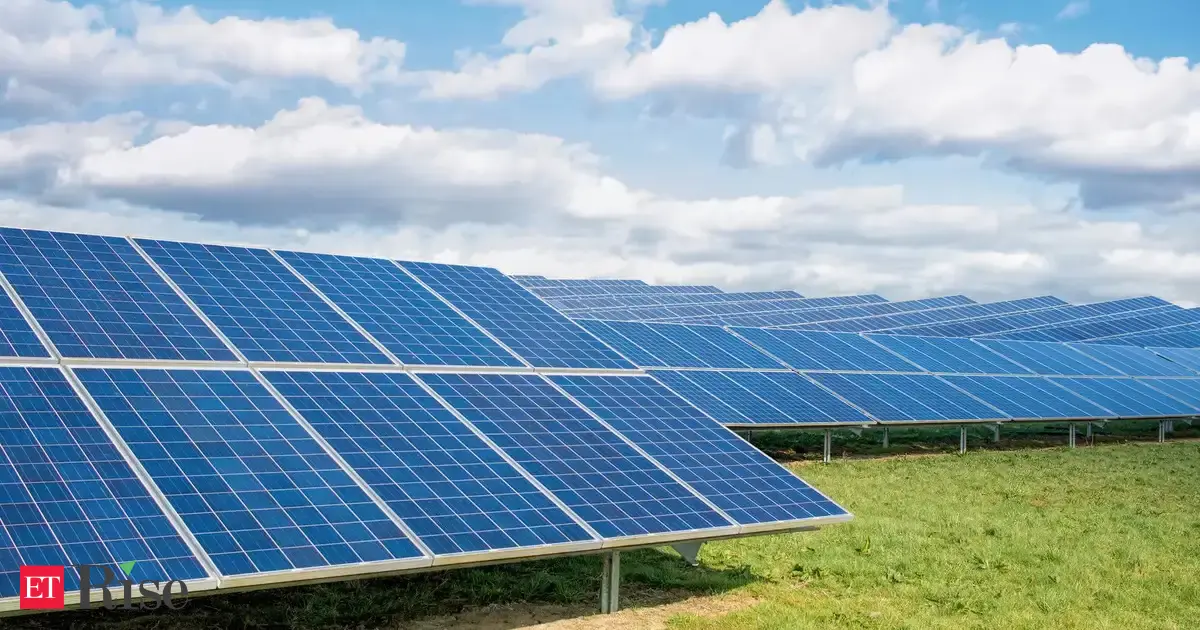
Grid delays mean the company is instructed to reduce generation during peak solar hours. ReNew plans to install batteries to store excess power and address the imbalance between midday production and evening demand. View More
ReNew Energy Global Plc is being forced to curb its solar power output, putting profits at risk, as India’s inadequate grid infrastructure struggles to absorb renewables during peak generation hours. The wind and solar plant operator sees up to 15% of its solar electricity wasted on some days because the grid is unable to integrate the extra supply when ReNew’s production peaks during daylight hours, according to its chief executive officer. “The fact is you’re asked not to generate, and that is losing us power,” said Sumant Sinha, adding that any pause in generation impacts the company’s profit. “The grid build-out has got delayed quite substantially and therefore we are just being told to back down.” India is set to see a blistering summer and blackouts as its grid infrastructure struggles to cope with record high power consumption and a mismatch of renewables supply and demand. On some days last year, about 40% of solar power output was denied access to the national network, according to Grid Controller of India Ltd. ReNew, which accounts for about 5% of India’s 223 gigawatts of renewables capacity, is planning to set up almost four gigawatt-hours of batteries alongside its renewable projects this year, Sinha said, a move that could help reduce the wastage by storing electricity until there’s demand for it. The imbalance between midday peak production and high demand in the evening will begin to be addressed as more batteries come online, he added. Live Events The firm, which also produces solar panels, is seeing higher costs as shipping gets more expensive due to the Iran war, as well as a delay in deliveries of raw materials. Still, any overall increase in costs “is probably not more than a few percentage points” and is “hopefully temporary,” he said. The company expects its portfolio to skew toward solar going forward due to challenges emerging from falling wind speeds, Sinha said. .Pbanner{display:flex;justify-content:space-between;align-items:center;background-color:#ec1c40;margin-top:20px;padding:5px 10px;border-radius:4px;color:#fff;line-height:10px;} .Pbannertext{display:flex;align-items:center;font-size:16px;font-weight:600;font-family:'Montserrat';} .Pbannertext img{height:20px;margin:0 6px} .Pbannerbutton a{display:flex;align-items:center;background-color:#fff;color:#ec1c40;text-decoration:none;font-weight:600;padding:4px 8px;border-radius:6px;font-size:15px;font-family:'Montserrat';} .Pbannerbutton img{height:20px;margin-right:6px} .Pbannerbutton a:hover{background-color:#f7f7f7} Add as a Reliable and Trusted News Source Add Now!

The scope of work covers design, manufacture, supply, transport, installation, testing, and commissioning of pumping systems in 3 HP, 5 HP, and 7.5 HP capacities View More
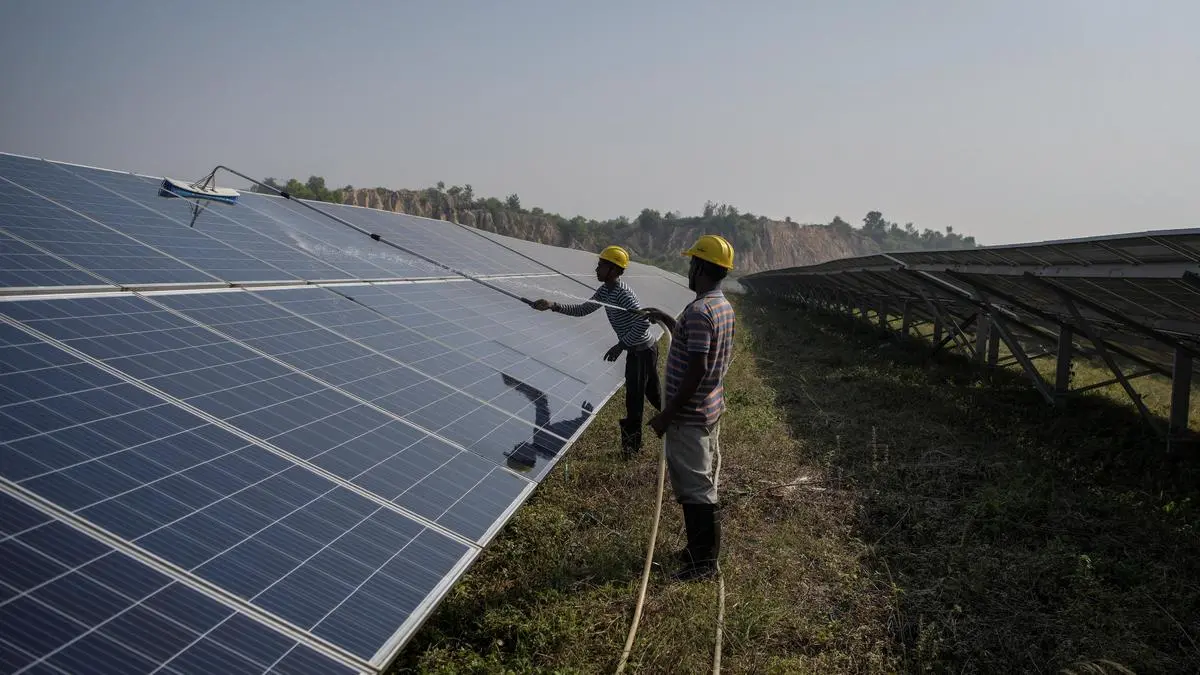
The wind and solar plant operator sees up to 15% of its solar electricity wasted on some days because the grid is unable to integrate the extra supply when ReNew’s production peaks during daylight hours View More

OpenAI President Greg Brockman concluded his testimony on Tuesday as the blockbuster trial between the AI startup and Elon Musk rolled into its second week. View More
In this articleTSLAFollow your favorite stocksCREATE FREE ACCOUNT watch nowVIDEO1:4701:47OpenAI co-founder Greg Brockman concludes testimony in Musk-Altman trialClosing Bell OpenAI President Greg Brockman concluded his testimony on Tuesday, where he largely rebutted Elon Musk's account of the early years of the startup and negotiations that occurred at the company.Brockman testified that he never made any commitments to Musk about the company's corporate structure, and he never heard anyone else make them. He emphasized that OpenAI is still governed by a nonprofit."This entity remains a nonprofit," Brockman said, referring to the OpenAI foundation. "It is the best-resourced nonprofit in the world." The trial for Musk's lawsuit against the artificial intelligence company began its second week on Monday.Musk sued OpenAI, Brockman and CEO Sam Altman two years ago, alleging that they violated an obligation to keep the company a nonprofit. Musk testified during the trial's first week of proceedings, where he repeatedly accused Altman and Brockman of trying to "steal a charity." Brockman, who spoke from the witness stand in federal court in Oakland, California, over the course of two days, also revealed that Musk had enlisted several OpenAI employees to do months of free work for him at Tesla, Musk's electric vehicle company. That work mainly included efforts to overhaul the company's approach to developing self-driving technology as part of the Autopilot team there in 2017. During his two days on the stand, Brockman answered questions about his personal financial ambitions, his understanding of OpenAI's structure and Musk's involvement at the company, which they co-founded with other executives in 2015.In Musk's testimony last week, the Tesla and SpaceX CEO said that the time, money and resources he poured into OpenAI had been integral to the company's success. He repeatedly said that he helped recruit the company's top talent.Brockman said Tuesday that while Musk was helpful in convincing some employees to take the leap to join OpenAI, he was a polarizing figure for others. "Elon had a reputation of being an extremely hard driver," Brockman said. He added that "certain candidates were very attracted" by Musk's involvement at OpenAI, and that "certain candidates were very turned off." Musk testified last week that a former OpenAI researcher named Andrej Karpathy joined Tesla, but only after he had planned to leave the startup already. Brockman said that Musk, after he hired Karpathy, approached him with "an apology and a confession," about the hire, and that neither Musk nor Karpathy had told him the researcher planned to leave OpenAI before that. Read more CNBC tech newsCoinbase cuts headcount by 14% citing AI acceleration. The shares are gainingOpenAI sales leader leaves for role at Thrive CapitalPalantir tops estimates on 85% revenue growth, fastest expansion since market debut in 2020SEC and Elon Musk agree to settle lawsuit over Twitter buyout in 2022 Musk was generally not very available for meetings and conversations, Brockman said, so he relied on employees, including Sam Teller and former OpenAI board member Shivon Zilis, as proxies.Brockman also testified that Musk never expressed interest in open sourcing OpenAI's technology, nor did he move to formally require it of the nonprofit. Musk had repeatedly suggested on the stand that open sourcing OpenAI's models was supposed to be a core tenant of the organization. "Honestly, it was not a topic of conversation," Brockman said.Around 2017, Musk, Altman and Brockman participated in discussions about OpenAI's direction, and they explored establishing a for-profit subsidiary where Musk would have an equity stake. Musk left the company's board in 2018, and OpenAI established a for-profit arm following his departure.Brockman testified on Tuesday about Musk's hot-tempered response to him and other co-founders when they tried to negotiate over who should hold what stakes in a for-profit affiliate of OpenAI.When their conversation turned to equity, Brockman said "something really changed" in Musk. "Something just shifted in him. You could sense it. He was angry, he was upset," Brockman said.  He said Musk declined the proposal during an in-person meeting, then tore a painting of a Tesla Model 3 car off the wall, and began storming out of the room. Before he left, Brockman said Musk turned and demanded to know when he and his cofounders would be leaving the company. He said he feared Musk might hit him at the time. Lawyers for OpenAI also asked Brockman if Musk ever said why he wanted to control OpenAI.Brockman said that in conversations, Musk said he "experienced what it was like to not have control and he didn't like it."For example, Brockman said, Musk told him that at Zip2, his lack of control "caused a problem," and at SolarCity "his cousins didn't have control," and "he had to bail them out." Musk's auto business, Tesla, acquired his cousins' faltering solar business in a $2.6 billion deal in 2016.Brockman also said that Musk told him he wanted control of OpenAI, in part, to finance the building of a "city on Mars" which the SpaceX CEO had said required $80 billion around the time of their negotiations.SpaceX, which owns and operates OpenAI competitor xAI, is now aiming for a 2026 IPO, in which it is reportedly aiming to raise $75 billion.Brockman's financesOn Monday, Musk's lawyer, Steven Molo, pressed Brockman about his equity stake in OpenAI's for-profit subsidiary, which is worth roughly $30 billion. Molo repeatedly pointed out that Brockman never followed through on an offer to contribute $100,000 â or any cash â to the nonprofit."I did not end up donating, that is true," Brockman said from the stand. Brockman kept a journal to document both personal and professional events in his life, and Molo pointed to several entries during his line of questioning, including one excerpt from 2017, which read, "Financially, what will take me to $1B?"Molo questioned whether Brockman was more interested in funding the nonprofit, or becoming a billionaire and enriching himself. Brockman said that OpenAI's mission has "always been my primary motivation," and that fair compensation for his work as a founder was a consideration but a secondary one. Brockman testified that he thought he would have been "good" with $1 billion worth of shares, and Molo harped on his choice of words repeatedly. Molo asked Brockman why he had not donated the other $29 billion worth of his equity back to the nonprofit, now known as the OpenAI Foundation. Brockman didn't have a straightforward answer. The trial will resume at 8:30 a.m. PT on Wednesday. The mother of four of Musk's children, former OpenAI board member Shivon Zilis, is expected to testify. watch nowVIDEO3:1103:11The Musk vs. OpenAI trial is underway â here's where things standTech Choose CNBC as your preferred source on Google and never miss a moment from the most trusted name in business news.
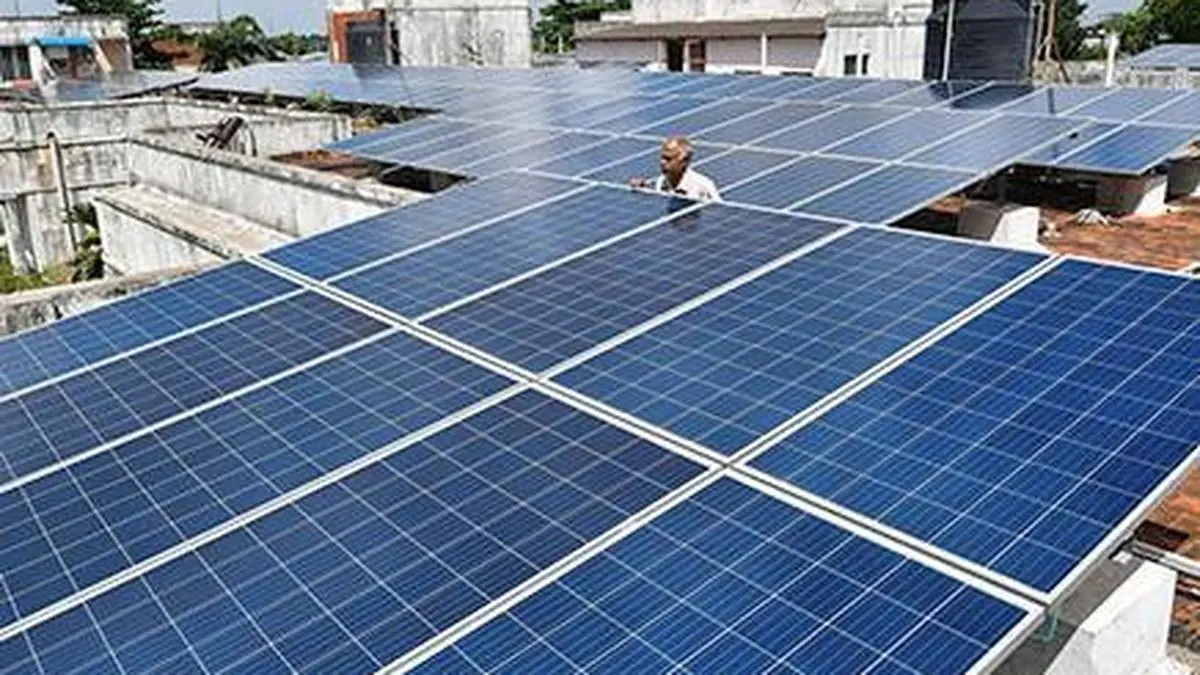
In the financial year ending March 2026, a total of about 21.2 lakh households were benefited from rooftop solar installations under the scheme View More

A trio of Club holdings report earnings. Plus, there is Corning's investor day and a fresh batch of jobs data. View More
The S & P 500 kept its record run alive last week, boosted by a strong batch of earnings reports that showed the artificial intelligence spending boom isn't slowing down. Even more earnings are on the way in the coming week. Plus, the jobs market will be under the microscope. The market's blistering rally in recent weeks has occurred despite continued disruptions to global energy supplies in the Middle East. Enthusiasm for the AI trade and signs of a resilient U.S. economy have triumphed over worries about elevated oil prices. This tension remains something to keep an eye on. But at the moment, the bulls are in control. Now, let's get into the three biggest things on our radar this week. 1. Earnings: A trio of Club names are set to deliver quarterly results this week. All revenue and EPS estimates are courtesy of data provider LSEG. Electrical equipment supplier Eaton reports on Tuesday morning. The main theme of this report is the AI buildout and the resulting order growth for Eaton. In the fourth quarter, Eaton saw a roughly 200% increase in data center orders within its Electrical Americas segment, its largest. Where will that figure be this time around? Eaton makes a bunch of products used in data centers that collectively feed the power-hungry server racks with consistent and reliable electricity. That's no longer all. Thanks to a wise acquisition of Boyd Thermal, which closed in March, Eaton is now in the liquid cooling business. This moves them even closer to the AI chips â obviously a lucrative place to be these days. We expect to hear more about Boyd on the earnings call. Eaton's order backlog will be another focus. It totaled $19.6 billion at the end of 2025. With Eaton ramping up manufacturing capacity, earnings this year are expected to be stronger in the second half of the year. Revenue : $7.08 billion EPS : $2.74 DuPont also reports Tuesday morning, and one of our biggest focuses will be on the performance of its Healthcare & Water Technologies segment, the company's most exciting since spinning off its electronics business last fall into the standalone Qnity . That segment is expected to see mid-digits organic growth this year. Its other reporting unit, called Diversified Industrials, is projected to grow low single digits, helped in part by a stabilization in U.S. construction activity and aerospace strength. DuPont is the kind of company that investors worry could be hurt by war-related slowdowns in economic activity, so the company's commentary on any changes to customer behavior since late February will be valuable. Revenue : $1.67 billion EPS : $0.48 Arm Holdings is our final report of the week on Wednesday night. This will be Arm's first earnings call since debuting its AI-focused central processing unit (CPU) for data centers in March â and its first since we took a stake on April 20. No doubt, the CPU, dubbed the AGI CPU, will be a big conversation on the earnings call, as this marks a strategic shift for the company into designing a complete chip rather than simply licensing its Arm instruction set to other chipmakers in exchange for royalties. As far as the quarter on deck, though, Arm's revenues will be driven by royalties and licensing fees because the AGI CPU isn't on the market yet. Booming AI demand should fuel strong growth for Arm's cloud revenue in its fiscal 2026 fourth quarter. One question mark is the health of the smartphone royalty stream going forward, as sky-high memory prices are expected to squeeze that market . In a note to clients Friday, analysts at Morgan Stanley said the trajectory of Arm's operating expenses in its fiscal 2027 is a focus for investors. The contribution of SoftBank to Arm's license revenues is another area to watch, Morgan Stanley said. Last quarter, SoftBank represented $200 million of $505 million in license revenue. Revenue : $1.47 billion EPS : $0.58 A couple non-Club earnings reports worth flagging because they're tied to the AI trade: Chipmaker AMD reports on Tuesday night, as does optical technology supplier and Nvidia partner Lumentum. Coherent, another optical player and Nvidia partner, will release results on Wednesday night. And then on Thursday, we'll hear from CoreWeave, the AI cloud computing provider. Away from the data center, Club name Cardinal Health's two main rivals, Cencora and McKesson, report on Wednesday and Thursday, respectively. 2. Corning's investor day: Fresh off a quarter that was stronger than the stock pullback indicated , Corning holds an investor day on Wednesday in New York. The AI boom is fueling demand for Corning's fiber-optic technology inside data centers, so we expect to hear plenty of bullish updates. Specifically, Corning plans to update and extend its "Springboard" growth initiative out two more years to 2030. For now, Corning's Springboard plan is expected to add $11 billion in incremental annualized sales through 2028. We'll see where that target goes next. We would also love to hear any more details on Corning's long-term supply agreements with three hyperscalers (only Meta has been publicly disclosed). Are there any more on the soon on the way? Corning will also unveil what it calls its "Photonics Market-Access Platform," which may offer insight into its roadmap for fiber replacing copper inside server racks , not just connecting them. Finally, while still relatively small, Corning's solar business is growing fast and becoming an increasing point of emphasis for management. It certainly helps to have diversification away from the data center, so this will likely get some time in the sun at the investor day too. CEO Wendell Weeks will be joining Jim Cramer on "Mad Money" on Wednesday night. 3. Jobs, jobs, jobs: The usual slate of monthly labor market reports is due out. It kicks off Tuesday with the Job Openings and Labor Turnover Survey (JOLTS), which is used to gauge the tightness of the jobs market; a very tight labor market can be a source of inflation, but that's not a major risk right now. Keep in mind: the JOLTS report operates on a slight lag, though, so Tuesday's data will cover the month of March. The week's other big releases â ADP's private payroll survey and the government's official nonfarm payroll report â are for April. On Wednesday morning, economists polled by FactSet expect ADP to show job gains of 95,000 in April. For the nonfarm report on Friday morning, the consensus is for 60,000 additions. As Federal Reserve Chair Jerome Powell said last week , the labor market has showed "more and more signs of stability." We'll look for more of those signs in the upcoming batch of data. Week ahead Monday, May 4 Durable goods and factory orders at 10 a.m. ET Before the bell: Norwegian Cruise Line Holdings (NCLH), Axsome Therapeutics (AXSM), CNA Financial (CNA), Hess Midstream (HESM), Krystal Biotech (KRYS), Tyson Foods (TSN), Twist Bioscience (TWST) After the bell: Palantir Technologies (PLTR), Transocean (RIG), onsemi (ON), Duolingo (DUOL), BWX Technologies (BWXT), Pinterest (PINS), Ero Copper (ERO), Fabrinet (FN) Tuesday, May 5 JOLTS report at 10 a.m. ET ISM Services PMI at 10 a.m. ET Census Bureau's new home sales at 10 a.m. ET Before the bell: DuPont (DD), Eaton (ETN), Shopify (SHOP), PayPal (PYPL), Energy Transfer (ET), Pfizer (PFE), KKR (KKR), Cipher Mining (CIFR), Fiserv (FISV), American Electric Power (AEP), DigitalOcean (DOCN), Harley-Davidson (HOG), Ocular Therapeutix (OCUL), Anheuser-Busch InBev (BUD), GlobalFoundries (GFS), Marathon Petroleum (MPC), Ferrari (RACE) After the bell: Advanced Micro Devices (AMD), Lumentum Holdings (LITE), Supermicro (SMCI), AMC Entertainment Holdings (AMC), Arista Networks (ANET), Astera Labs (ALAB), Hecla Mining (HL), Strategy (MSTR), Occidental Petroleum (OXY), BigBear.ai (BBAI), Tempus AI (TEM), Devon Energy (DVN) Wednesday, May 6 ADP private payroll report at 8:15 a.m. ET Before the bell: Walt Disney (DIS), Hut 8 Mining (HUT), Kraft Heinz (KHC), Uber Technologies (UBER), CVS Health (CVS), Amcor (AMCR), Carter's (CRI), Cenovus Energy (CVE), Trinity Capital (TRIN), Apollo Global Management (APO), Instacart (CART), EOG Resources (EOG) After the bell: Coherent (COHR), IonQ (IONQ), Axon Enterprise (AXON), Arm Holdings (ARM), AppLovin (APP), Dutch Bros (BROS), Fastly (FSLY), Beyond Meat (BYND), Snap (SNAP), Albemarle (ALB) Thursday, May 7 Initial jobless claims at 8:30 a.m. ET Before the bell: ACM Research (ACMR), ARKO Corp. (ARKO), Blackstone Secured Lending Fund (BXSL), BlackSky Technology (BKSY), Datadog (DDOG), Iovance Biotherapeutics (IOVA), McDonald's (MCD), 1-800-Flowers.com (FLWS), GigaCloud Technology (GCT), Planet Fitness (PLNT), TripAdvisor (TRIP), Unity (U) After the bell: CoreWeave (CRWV), IREN Limited (IREN), Coinbase Global (COIN), Opendoor Technologies (OPEN), Applied Optoelectronics (AAOI), MercadoLibre (MELI), Red Cat Holdings (RCAT), SoundHound AI (SOUN), Affirm Holdings (AFRM), Monster Beverage (MNST), Rocket Lab USA (RKLB), Trade Desk (TTD), Toast (TOST), McKesson (MCK), Cloudflare (NET), Gilead Sciences (GILD), NuScale Power (SMR), DraftKings (DKNG), MP Materials (MP), 10x Genomics (TXG), Block (XYZ), Airbnb (ABNB), Axcelis Technologies (ACLS), Corsair Gaming (CRSR), Expedia (EXPE), Grindr (GRND), HubSpot (HUBS), Innodata (INOD), nLIGHT (LASR), Rocket Companies (RKT), RingCentral (RNG) Friday, May 8 Nonfarm payrolls report at 8:30 a.m. ET University of Michigan Consumer Sentiment Survey at 10 a.m. ET (preliminary) Before the bell: Wendy's (WEN), Algonquin Power & Utilities (AQN), Dauch Corporation (DCH), Enbridge (ENB), Arbor Realty Trust (ABR), AMC Networks (AMCX), Embraer (EMBJ), Plains All American Pipeline (PAA), Plains GP Holdings (PAGP) (Jim Cramer's Charitable Trust is long ETN, DD, ARM, GLW and META. See here for a full list of the stocks.) As a subscriber to the CNBC Investing Club with Jim Cramer, you will receive a trade alert before Jim makes a trade. Jim waits 45 minutes after sending a trade alert before buying or selling a stock in his charitable trust's portfolio. If Jim has talked about a stock on CNBC TV, he waits 72 hours after issuing the trade alert before executing the trade. THE ABOVE INVESTING CLUB INFORMATION IS SUBJECT TO OUR TERMS AND CONDITIONS AND PRIVACY POLICY , TOGETHER WITH OUR DISCLAIMER . NO FIDUCIARY OBLIGATION OR DUTY EXISTS, OR IS CREATED, BY VIRTUE OF YOUR RECEIPT OF ANY INFORMATION PROVIDED IN CONNECTION WITH THE INVESTING CLUB. NO SPECIFIC OUTCOME OR PROFIT IS GUARANTEED.