
Latest Sectors News

The Department of Homeland Security raided a Fuyao auto glass plant last year, as its main competitor warns it could be put out of business. View More
In this article660-SZFollow your favorite stocksCREATE FREE ACCOUNT Construction materials sit in front of the loading docks at the Fuyao Glass America production facility in Moraine, Ohio, U.S., on Friday, Aug. 19, 2016.Ty Wright | Bloomberg | Getty Images MEADVILLE, Pa â President Donald Trump is in China, courting new trade deals with Beijing. One glassmaker in the U.S. is warning that their top Chinese competitor exemplifies the risks of letting China in. CNBC last week visited a Vitro glass plant in Meadville, Ohio, with Rep. Ro Khanna, D-Calif., who is the top Democrat on the U.S.-China select committee in Congress. The plant is helping produce glass for solar panels, and has long produced automotive glass. CNBC travelled with Khanna throughout the Rust Belt as part of his "Heartland Tour," a multi-state swing through the country's industrial heart to highlight the growth of U.S. manufacturing and the risks from China, the U.S.'s chief competitor. During Khanna's visit, executives from Vitro aimed their fire at chief rival, Fuyao, and warned that without protection, all competitors in the glass industry would be pushed out. "If we don't do something about this, there's only going to be two of us," one Vitro executive told Khanna at the meeting. "China has deeper pockets than before, so eventually what they will do is they'll make sure they completely destroy the competition, and then they'll bring up the prices." "We definitely have to do something about this, otherwise Fuyao is going to be managing the business here," the executive said. The dynamic underscores the risks that come with allowing Chinese investment in the U.S. at a time when Trump is in Beijing and could strike a deal to allow even more investment. And lawmakers in the Rust Belt are fretting that Trump will strike a deal that allows further hollowing out of the U.S. manufacturing industry from automotive glass to autos themselves. Read more CNBC politics coverageGas tax holiday as Trump promises? Not so fast, trucking, construction industries sayTrump doesn't need Congress to restart Iran strikes: HegsethAnalysis: Iran war hangs over Trump's China trip â and his presidencyCongress members push Chinese auto parts ban before Trump China trip Vitro and Fuyao both make automotive glass and sell to major automakers such as General Motors and Ford. Vitro is headquartered in Mexico and operates this Meadville factory along with numerous others in the U.S. Fuyao operates a large factory in Moraine, Ohio, which it purchased over a decade ago and was initially welcomed by leaders in the state. The plant was the subject of the 2019 Netflix documentary "American Factory" that was produced by Barack and Michelle Obama's production company.Vitro says it and other Fuyao competitors cannot match the prices the Chinese company offers. They said during the visit that they don't see a way to produce glass in a way that matches Fuyao's prices, given the industry's maturity and associated costs.A Fuyao spokesperson brushed aside concerns that it is undercutting its competitors. "A reliable indicator of your strength in the brand is when a competitor resorts to such claims," the spokesperson said. "Our prices are reasonable, and customers choose Fuyao based on a comprehensive evaluation of technological expertise, product quality, delivery reliability, and service excellence, et alânot solely on cost."Fuyao has also been the subject of scrutiny in the U.S. recently. In 2024, the Justice Department and Department of Homeland Security raided Fuyao's factory in Moraine, part of a civil forfeiture complaint related to an investigation into a potential $126 million illegal staffing and money laundering operation. The DOJ said in a press release following the raid that the suspects in the case created roughly 40 "entities" to "facilitate the harboring, transportation and employment of illegal aliens at various factories," including Fuyao's plant in Moraine."It is alleged that many of the workers were illegally smuggled into the United States, primarily through Mexico, and encouraged to travel to the Dayton area to be employed by one of the target entities and serve as a workforce at the various factories," the Justice Department said. "Most of the workers are of Chinese or Hispanic nationality. Workers allegedly lived at 'family style hotels' (boarding houses) owned by the target entities and were driven to and from work in transportation provided by the target entities."In response to a question about the investigation, Fuyao said the company does not believe it is the target of the investigation. "Fuyao Glass America has maintained good standing and remains committed to full compliance with all applicable federal, state, and local laws," the spokesperson said.The incident prompted scrutiny from Congress. Last year's Commerce, Justice and Science Appropriations bill included a requirement for a Justice Department report on "entities implicated in forced labor supply chains, and a detailed breakdown of all related costs to carry out these efforts."A former Mexican ambassador to China warns that Fuyao is just one of many cases where Chinese-owned entities have become vital to the U.S. supply chain. And he said those supply chains can be disrupted at a moment's notice if China's government decides to shift policy. "That makes Chinese ownership, wherever they might be, of a part of the supply chain concerning," said Jorge Guajardo, a former Mexican ambassador to China who is now a partner at DGA Group. "Because they have shown they're willing to use that ownership to pressure and to stop companies from acquiring whatever product they use, and, in essence, stopping production."Fuyao said its U.S. operation is an "Ohio corporation based in Moraine, Ohio and is committed to localized manufacturing operations and the creation of local employment opportunities," and maintained that it does not pose a risk to the supply chain. Khanna has concerns about Chinest investment Khanna, after a visit to Ultium Cells, an electric vehicle battery-maker run by GM and LG, warned of the potential risks of letting China in. Trump has courted foreign investment from a number of countries, including the United Arab Emirates, Qatar and Saudi Arabia. "We don't want Chinese investment if it's going to be predatory," Khanna said. "What the president needs to say to China is much more about opening our markets there and making sure they are not engaged in abusive, predatory behavior here."Another stop on Khanna's tour was First Solar, a U.S. solar panel manufacturer, where he was joined by Rep. Marcy Kaptur, D-Ohio. Kaptur said China dumping cheaper goods into other markets is "their habit," and warned against Chinese-made vehicles being allowed into the U.S."If those borders are open to those $10,000 cars, it'll wipe out the industry," she said. "The president better have the best negotiators in trade that exist in the manufacturing sector in order to properly enforce our trade laws." And after a meeting at a General Motors plant in Romulus, Mich. with Khanna, Rep. Debbie Dingell, D-Mich., and Rep. Haley Stevens, D-Mich., the lawmakers argued that China poses an existential threat to the broader auto industry. "If we allow China to manufacture in the U.S., it is to let them come from within," Dingell said. "We cannot allow that to happen."In a further interview with CNBC at a United Auto Workers Local 600 union hall, Dingell doubled down."Sometimes you've got to be smart enough that you don't make the deal," she said. "You're protecting your country by not making the deal." Choose CNBC as your preferred source on Google and never miss a moment from the most trusted name in business news.

Indian billionaire Gautam Adani and his nephew Sagar Adani have agreed to settle a U.S. Securities and Exchange Commission lawsuit over allegations they misled investors. View More
In this articleADANIENT-INADANIGREEN-INFollow your favorite stocksCREATE FREE ACCOUNT Gautam Adani, chairman of Adani Group, during the inauguration ceremony for the Navi Mumbai International Airport in Navi Mumbai, India, on Wednesday, Oct. 8, 2025. Indranil Aditya | Bloomberg | Getty Images Shares of Adani Enterprises and Adani Green Energy pared early losses on Friday after the U.S. regulators sought court approval for a settlement in their civil lawsuit against Indian billionaire Gautam Adani and his nephew, Sagar Adani.Both stocks remain above their 52-week highs, according to LSEG data. Shares of Adani Enterprises are up roughly 24% this year, while Adani Green is up around 41%. The Securities and Exchange Commission had alleged that the two men misled investors as part of a bribery and fraud scheme tied to solar contracts in India. Under the settlement, Gautam Adani will pay a $6 million penalty, while Sagar Adani will pay $12 million. Both men have consented to "entry of the final judgment without admitting or denying the allegations made in the civil complaint," and payment of penalties, Indian renewable energy firm Adani Green said in a filing to the Indian stock exchanges. The company added that it is not part of these proceedings and "no charges have been brought against it."Shares of Adani Enterprises, the group's flagship company, rose 1.8% and Adani Green, the company at the center of the bribery allegations, added 0.6% after recovering from early losses following news of the SEC settlement. Stock Chart IconStock chart icon The SEC's civil complaint against Gautam and Sagar Adani, along with executives at Azure Power Global, centered on allegations of bribery tied to solar energy contracts awarded by India's government.The U.S. Justice Department will also likely drop the criminal fraud charges against Adani, according to multiple media reports. A New York federal court indicted Gautam Adani and seven others in November 2024 on criminal charges related to an alleged bribery and fraud scheme. Prosecutors alleged that the defendants paid more than $250 million in bribes to Indian government officials, misled investors and banks to raise billions of dollars, and obstructed justice, according to court documents. Stock Chart IconStock chart icon Although the alleged conduct at the center of the indictment occurred in India, the defendants were charged in the Brooklyn federal court because the fundraising efforts happened in the U.S. The Adani Group has denied the allegations made by U.S. authorities, calling them "baseless." In a meeting at the Justice Department's headquarters in Washington last month, Adani's legal team, led by Robert J. Giuffra Jr., argued that prosecutors lacked "basic evidence," according to a report by the New York Times on Thursday. The Indian businessman had offered to invest $10 billion in the U.S. economy and create 15,000 jobs, the report added.Earlier this year, the SEC sought permission from U.S. District Judge Nicholas Garaufis in Brooklyn to serve a legal summons on Adani after India's Law and Justice ministry twice refused to deliver it last year. Funding relief? Easing legal uncertainty in the U.S. could help reopen international capital markets for the Adani Group and accelerate its renewable and infrastructure expansion plans, Deven Choksey Research said in a report.The group had nearly 2.78 trillion rupees ($29 billion) in net debt as of September of last year, according to company data. Global banks and capital markets account for 41% of Adani Group's total debt."High debt remains the structural caveat," said the report, adding that it can be "adequately taken care of" by earnings growth, which is compounding annually by 20%.Gautam Adani, chair of India's Adani Group, oversees a sprawling business empire spanning ports, power and infrastructure. The conglomerate comprises 11 publicly traded companies, with the Adani family holding significant majority stakes in many of them.The group has also faced scrutiny since a 2023 report by short seller Hindenburg Research, which accused it of accounting fraud and stock manipulation. The Adani Group has repeatedly denied the allegations. Choose CNBC as your preferred source on Google and never miss a moment from the most trusted name in business news.

Trump-Xi talks spark bipartisan warnings over Chinese automakers, U.S. auto jobs, connected vehicles and China’s growing role in the supply chain. View More
In this articleTMFGMTMFollow your favorite stocksCREATE FREE ACCOUNT The exterior of a BYD electric vehicle showroom, operated by Schiller Auto, in Budapest, Hungary, on May 27, 2024.Bloomberg | Bloomberg | Getty Images As President Donald Trump meets Chinese President Xi Jinping this week, lawmakers in both parties are warning the White House not to use the U.S. auto market as a bargaining chip in any deal with Beijing.The warning stems in part from Trump's January suggestion that he could welcome Chinese automakers if they built vehicles in the U.S. with American workers â remarks that were later walked back but still rattled auto-state lawmakers, unions and industry groups. Trump in January in an appearance at the Detroit Economic Club said he would happily welcome Chinese automakers to manufacture in the U.S."While the Administration is always seeking more investment into America's industrial resurgence, any notion that we would ever compromise our national security is baseless and false," White House spokesperson Kush Desai said in an email.For lawmakers in auto-heavy battleground states like Michigan and Ohio, even a limited opening for China could be politically explosive. They warn that if heavily subsidized Chinese automakers gain a foothold in the U.S. market, it could threaten domestic manufacturing jobs in states central to the 2026 midterm elections and the next presidential race."If your state is in the Rust Belt, letting Chinese automakers into the U.S. market would be detrimental and politically bad for many people," said Stephen Ezell, a vice president at the Information Technology and Innovation Foundation, a Washington think tank focused on industrial competitiveness that has studied Chinese automakers. "You're talking about risks to industry, jobs, factories and whole communities."So far, Democrats have pitched the fight over Chinese autos as critical to protecting union jobs and domestic production, while Republicans are casting it as part of a broader economic nationalism push to counter Beijing and protect critical industries.Major Chinese automakers such as BYD, Zhejiang Geely Holding Group and SAIC Motor, don't have a retail presence in the U.S., where they face 100% tariffs and other national security-related barriers.But walling off the U.S. market is complicated by China's existing footprint in the U.S. auto supply chain. More than 60 U.S.-based auto suppliers are owned by companies in China, according to global consulting firm AlixPartners. That includes makers of axles, airbags, windshields and steering systems. Chinese companies also hold stakes in about 5% of roughly 10,000 U.S. auto suppliers, according to AlixPartners.The links extend into some of the best-known vehicles sold in the U.S., as tracked by the National Highway Traffic Safety Administration.Toyota's newest Prius plug-in hybrid contains about 15% Chinese parts. Ford's latest Mustang GT uses six-speed manual transmissions sourced from China. General Motors, despite backing hawkish trade policies, has reported that several Chevrolet models â including the electric Blazer and the electric Equinox â contain roughly 20% Chinese parts.GM has set a 2027 deadline for some suppliers to dissolve their China sourcing ties over geopolitical issues, Reuters first reported in November. Ford, Toyota and GM did not respond to requests for comment. Rep. John Moolenaar, R-Mich., chair of the House Select Committee on the Chinese Communist Party, speaks at the 2025 CNBC CFO Council Summit in Washington, Dec. 3, 2025.Aaron Clamage | CNBC The rising political backlash has already translated into legislative action. Reps. John Moolenaar, R-Mich., and Debbie Dingell, D-Mich., introduced a bill this week that would lock in restrictions on Chinese-made connected vehicles, software and hardware over national security and data concerns. It mirrors Senate legislation from Sens. Elissa Slotkin, D-Mich., and Bernie Moreno, R-Ohio.Connected vehicles have internet access and wireless connectivity with other cars or trucks, technology that supporters say can enhance roadway safety."Every vehicle on American roads is a rolling data collection device," Moolenaar said Tuesday when announcing the bill, warning that Chinese vehicles and components could capture information on "location, movement, people and infrastructure in real time."The hard line against Chinese vehicles comes as U.S. consumers are struggling with a sharp affordability crunch.The average new car price in the U.S. was $49,461 in April, according to Kelley Blue Book. In China, consumers can choose from more than 200 battery-powered models, including hybrids, priced below the equivalent of $25,000, according to DCar, a Chinese automotive content and car-shopping platform."The reality is we are behind Chinese autos in America, but we hope automakers can respond through innovation," Ezell told CNBC. "Ultimately we need to compete through innovation if the industry is going to thrive domestically."Chinese brands have already used their scale and lower prices to capture about 20% of the market in Mexico, according to Mexico's national statistics agency INEGI and industry groups, and have made deep inroads across Europe, raising fears in Washington and Detroit that the same playbook could work in the U.S.But China hawks argue cheaper cars could carry long-term costs. They warn the auto industry could mirror solar panels, where Chinese companies used low prices, state support and scale to dominate global supply chains, pushing out higher-cost competitors before gaining greater control over the market."China has a pattern of coming in, subsidizing the cost to keep the price lower, destroy an industry and then jack up the price," Dingell said. "This is about America's future. This is about the American workers' future." Choose CNBC as your preferred source on Google and never miss a moment from the most trusted name in business news.
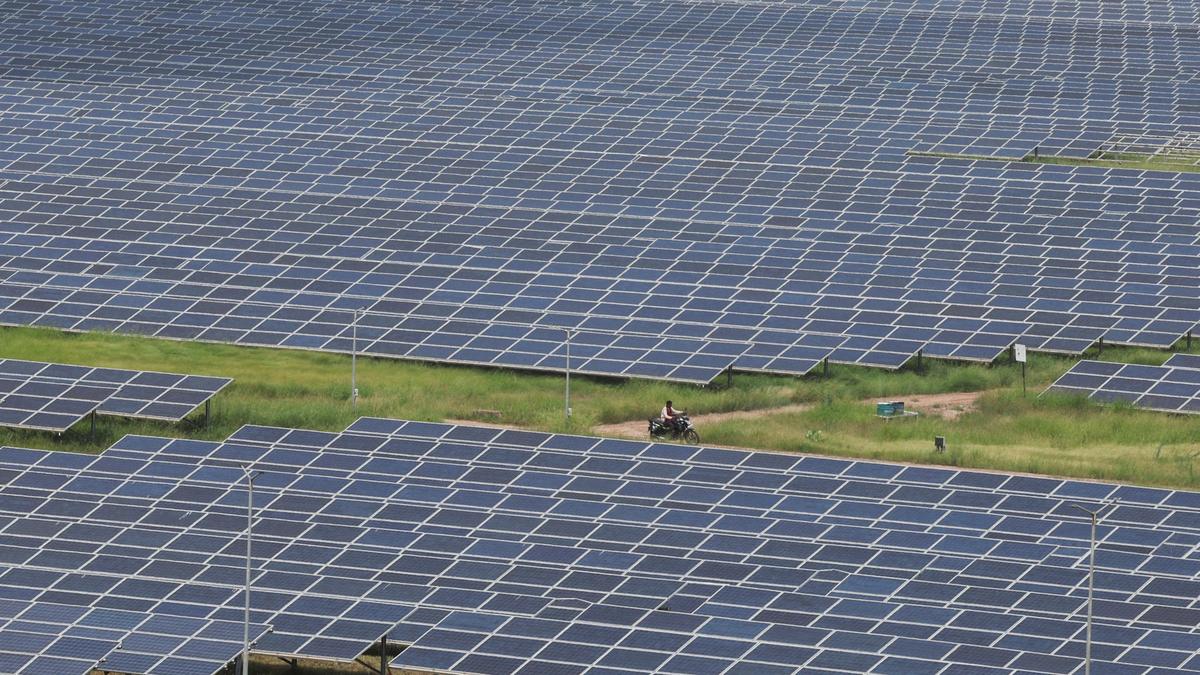
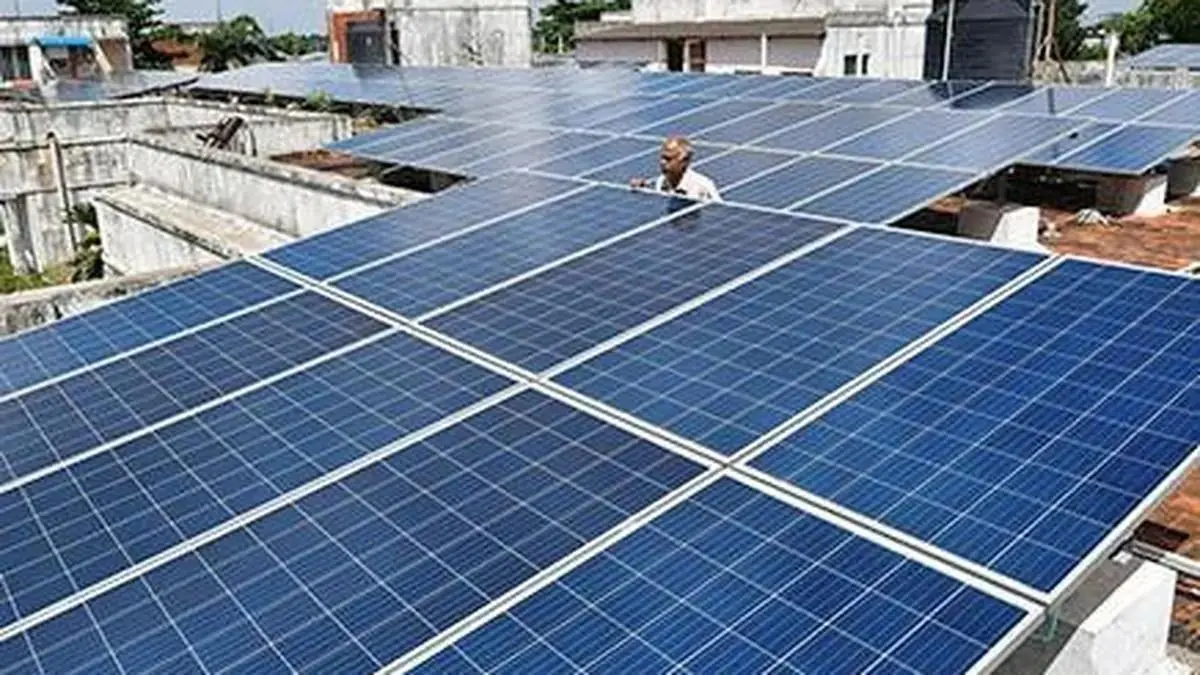
Inox Clean Energy Ltd announced that while solar module capacity is operational, cell manufacturing capacity is anticipated to be commissioned by year-end View More
Shift to solar a likely windfall for China, the world’s largest provider of solar technology View More
Beijing has alleged that India’s tariff structure and domestic preference policies discriminate against Chinese products and violate WTO agreements related to trade, subsidies and investment measures. View More

ACME Solar shares have soared 21% YTD despite market volatility caused by geopolitical tensions and economic shifts. Analysts from HSBC and Motilal Oswal foresee further growth, citing the company’s strategic shift and capacity expansion plans. View More
India Inc saw major wins across sectors as Rossell Techsys expanded capacity, Bharat Forge entered Embraer’s aerospace supply chain, HFCL secured export orders, and firms won large infra, energy, and global engineering contracts View More