
Latest Sectors News

The two companies entered into a high-profile partnership in 2024 when ChatGPT was integrated into the iPhone's operating system. View More
In this articleOPENAI.FGAAPLFollow your favorite stocksCREATE FREE ACCOUNT watch nowVIDEO5:3005:30Apple suing OpenAI over alleged trade secret theftClosing Bell: Overtime Apple on Friday sued OpenAI in federal court in Northern California, alleging trade secret theft, saying that the artificial intelligence lab took the iPhone maker's intellectual property in order to develop its own consumer hardware. "This much is clear, however: at every level, from members of its Technical Staff to its Chief Hardware Officer, and in coordination with business partners, OpenAI has been stealing Apple's trade secrets and confidential information," the company said in a legal filing. It's a shocking reversal for the two companies, which entered into a high-profile partnership in 2024, when ChatGPT was integrated into the iPhone's operating system. OpenAI CEO Sam Altman visited Apple's headquarters for the announcement. Sam Altman, chief executive officer of OpenAI Inc., left, and Tim Cook, chief executive officer of Apple Inc., during a dinner with tech leaders in the State Dining Room of the White House in Washington, DC, US, on Thursday, Sept. 4, 2025. US President Donald Trump said he would be imposing tariffs on semiconductor imports "very shortly" but spare goods from companies like Apple Inc. that have pledged to boost their US investments. Photographer: Will Oliver/EPA/Bloomberg via Getty ImagesWill Oliver | Bloomberg | Getty Images But relations between the two companies have chilled since OpenAI announced plans to enter the hardware industry last year, when it bought former Apple designer Jony Ive's startup, called IO Products, for $6.4 billion. Apple's updated version of its Siri assistant, which is coming out this fall, is based on Google's Gemini AI models instead of OpenAI's technology.Most of Apple's allegations involve former employees who have interviewed with or joined OpenAI. Read more CNBC tech newsAnduril CEO says it's bad to IPO in 'middle of a hype cycle'Palo Alto CEO Arora says AI pricing needs to fall 90% as token costs skyrocketOpenAI's newest AI model is 54% more token efficient on agentic coding, Altman tells CNBCMeta jumps into AI coding market in effort to chase Anthropic and OpenAI Apple alleged that OpenAI's hardware chief, Tang Tan, who is a former Apple vice president, has directed Apple employees interviewing at OpenAI to share Apple secrets as part of the interviewing process. Tan is named as a defendant in the suit. "He has directed job candidates still working for Apple to bring 'actual parts' from Apple to their interviews for 'show and tell' sessions in which he and his team at OpenAI can elicit still more Apple confidential information," Apple said in the filing. Apple alleged that OpenAI coached departing Apple employees in how to evade security processes when leaving the iPhone maker, and that Chang Liu, a former employee who joined OpenAI, stole an Apple laptop. Liu is named as a defendant in the suit. It also said that Apple believes OpenAI is asking hardware firms to carry out a metal finishing technique that Apple invented, while "misleading the partner to believe they had Apple's permission to do so.""Recently, significant evidence has emerged suggesting individuals employed by OpenAI wrongfully took Apple's secret and confidential information regarding our unreleased technologies, processes, and products," an Apple representative told CNBC in a statement. "We have no interest in other companies' trade secrets. We remain focused on building innovative technology that empowers people everywhere," a representative for OpenAI said in a statement. IO Products is also named in the lawsuit. OpenAI hasn't announced when or what its hardware products will be, but Altman said in November that it had finished its first prototypes. Apple didn't comment on whether the lawsuit will affect the partnership with OpenAI, which includes the integration of ChatGPT into Apple Intelligence. Mounting legal woes present another risk to OpenAI as it gears up for what's expected to be a historic IPO.Apple's complaint comes two months after OpenAI won a high-profile trial against Tesla and SpaceX CEO Elon Musk. A federal jury found that Musk, who helped start OpenAI, had waited too long to sue the AI lab over claims that Altman, co-founder Greg Brockman and the company reneged on agreements to run it as a nonprofit. Musk said he would appeal. Apple is seeking damages, injunctions, and an order to force OpenAI to stop using its trade secrets.WATCH: Apple shares move higher despite losing ground to China watch nowVIDEO1:4701:47Apple shares move higher despite losing ground in ChinaTechCheck Choose CNBC as your preferred source on Google and never miss a moment from the most trusted name in business news.

Apple stayed true to itself in the AI race, and Wall Street is finally rewarding the stock for it. View More
Apple's stock has had a bumpy ride this year. But it's been a lot more pleasant lately â so much so that shares posted their first record close in over a month during Thursday's session. In doing so, Apple stands out among the rest of the "Magnificent Seven." The other six members of the group â Amazon , Alphabet , Microsoft , Nvidia , Meta , and Tesla â are all well below their all-time closing highs. For some (Microsoft, Meta, and Tesla), you have to go all the way back to last year to find theirs. For the others (Amazon, Alphabet, and Nvidia), they topped out on various days in May before pulling back. Apple's roughly 16.5% year-to-date gain is also the best of the bunch (only Microsoft and Tesla are in the red in 2026). So, what makes Apple the outlier among these trillion-dollar-plus giants? Despite a modest pullback on Friday, why is it near its highs while the other stocks stare up at theirs? The simple answer is that Wall Street is, finally, rewarding Apple for its low-cost approach to the artificial intelligence race. At the same time, the Street is rethinking how it values the other megacaps as customers prioritize efficient AI consumption, rather than a maximalist mindset. This shift from "tokenmaxxing" to token optimization â a token is the basic unit of AI computing â marks a new chapter in the generative AI boom, with clear ripple effects in the stock market. Just look at the chart of Apple. To fully appreciate the love for Apple, at a time of skepticism toward the other megacaps, we need to turn back the clock a few years. ChatGPT launched Nov. 30, 2022 The catalyst for this entire technology revolution was the launch of OpenAI's ChatGPT in late 2022. While we're oversimplifying a bit, in the wake of ChatGPT, Amazon, Google parent Alphabet, Meta Platforms, and Microsoft started spending tens of billions of dollars on more compute capacity and data centers, while also working on AI-infused products. At various points along the way, each faced some level of skepticism from Wall Street. But generally speaking, their spending was considered a good and necessary thing. And, since a lot of this money was being spent on Nvidia's cutting-edge AI chips and networking gear, it was the biggest winner of them all. Apple was seen as late to the AI party. Perhaps its invitation got lost in the mail? It did not have a cloud-computing service receiving an influx of AI-related demand (unlike Amazon, Microsoft, and Google). It also had no large language model (LLM), the underlying technology behind ChatGPT and Anthropic's Claude, to speak of. Before Gemini, Google's models weren't exactly beloved, but at least they were making progress. It was similar to Meta and its Llama family of models, though, in its case, it could point to accelerating advertising growth as a result of its AI investments. Apple Intelligence unveiled June 10, 2024 Apple hoped to silence the doubters at its annual Worldwide Developers Conference, known as WWDC, in June 2024. That's when it unveiled a suite of AI features dubbed Apple Intelligence, and the stock ran up into the event. The on-screen demos looked cool, but the reality in the months that followed was ugly . The rushed and botched release of Apple Intelligence made clear that Apple's AI strategy wasn't fully fleshed out. The iPhone maker was still trying to figure it all out, while others â including startups like OpenAI and Anthropic â were pumping out new large language models on a regular basis. And, all of that usage of the LLMs was flowing into the coffers of the cloud providers. iPhone 17 announced Sept. 19, 2025 Apple essentially punted on new AI software features in 2025, a year also marked by tariff obstacles unrelated to AI. But what it did succeed at last year â a hit new piece of hardware in the iPhone 17 â underscored the company's biggest advantage in the AI race: it has billions of devices already out in the world. Indeed, Apple shares had a strong fall as the iPhone 17's popularity became clear, much to the surprise of some on the Street ( but not us ). A big development in Apple's AI strategy came in January, when Google confirmed reports that it signed a deal with Apple to license its Gemini models and cloud technology. In exchange for paying reportedly $1 billion a year , Apple can build off Gemini for its own models and a much better Siri. New Siri introduced June 8, 2026 To be sure, Apple already had a tie-in with ChatGPT, but it was more of a band-aid for Siri rather than a complete AI overhaul of the iPhone native smart assistant. With Apple leveraging Gemini, the market started to feel better about what Apple Intelligence and Siri could become later in the year. The realization was setting in: Apple may not be first, but it was the only one that already had an outlet for AI, the iPhone, in some 1.5 billion pockets around the world. Factor in how much users' mobile devices know about them, and the Street recognized that if Apple could execute on the Gemini partnership, it may well leap over everyone in terms of the adoption of its AI offering. Apple showed off its retooled AI suite at WWDC in June. The stock got hit with some profit-taking after the event , but we like what we saw. The full rollout of the improved Apple Intelligence is set for the fall, when Apple introduces its latest operating systems for iPhones, Macs, iPads and the Apple Watch. What's next? Execution remains the big question, but doubts around Apple's strategy have largely subsided. Apple is doing with AI what it did with search engines. Rather than compete with Google, they partnered. As a result, Apple could remain focused on selling as many iPhones as possible, while Google was responsible for providing the best Google Search experience possible. Two companies, working together, both responsible for doing what they do best. The result was a best-in-class product and investments that made sense for both companies. The same thing is playing out with AI now, and Wall Street has seen the light. Instead of punishing the company for not participating in an LLM arms race, Apple is being rewarded for being one of the only megacaps that has kept free cash flow intact. It's not vying to be the best LLM provider on the planet. Instead, it is seeking to be the widest-reaching provider of AI-capable devices â something it already has a massive head start in, again, thanks to the incredible success of the iPhone. This dovetails with the broader debate around token optimization and likely explains the latest leg of the Apple rally after the pullback to start June. With the rapid advances of LLMs, companies and consumers alike are starting to realize that the capabilities are starting to outpace the needs for most users. Put another way, most users don't need frontier AI models and, as a result, more commodity-like models may actually offer up a better value for most. That plays to Apple's favor. If Apple can take a non-frontier model and layer in the personal data from your iPhone, it may prove more valuable to users than a frontier model that doesn't have access to that data. Better yet, it means that Apple doesn't have to rush out a new, more capable model every other month just to keep up â contrast that to the frequent model announcements from OpenAI, Anthropic, Google, and Meta. That keeps costs down, value to the consumer high, and financial health intact. In addition to AI execution, the other big question around Apple's stock is surging memory prices (this is also a question for the megacaps paying for memory with their AI chips). However, Apple shares have largely been able to overcome this headwind, and the reason may be two-fold. First, Apple tends to sell a more premium product to a more affluent consumer. As a result, Apple has the pricing power needed to pass through its own higher costs with minimal demand erosion (or, at least, less erosion than if it were catering to lower-income consumers) â especially when you factor in service provider subsidies. That helps protect profit margins, despite increased input costs. Second, while Apple is raising prices to protect profit margins in the near term, any relief in memory prices down the line should actually help expand profit margins because Apple rarely lowers selling prices. While hiking Mac and iPad prices first, the big test will be where iPhone prices go. We expect to find out more on that at the company's annual fall launch event. (To be sure, relief in memory prices is likely so far off that it doesn't make sense to invest based on that, but it is something for longer-term investors to keep in mind.) Bottom line While hindsight is 20/20, the reality is that Apple is winning because it stayed true to itself. Apple, though it certainly is innovative, has always done better by staying patient and watching a market form before entering with a better, more sensible product. It was a hallmark of Steve Jobs' revival of the company â a torch carried by outgoing CEO Tim Cook and soon-to-be chief executive John Ternus. The iPod was not the first MP3 player. The iPhone was not the first smartphone. The iPad was not the first tablet. The Apple Watch was not the first smartwatch or health tracker on your wrist, and AirPods weren't the first wireless headphones. And yet, all these products went on to be massively successful as Apple took its time and refined existing offerings in the market, while integrating them into a frictionless ecosystem that made each offering all the more valuable than what anyone else could possibly bring to market. If there's one flop, it is the Vision Pro in the virtual reality headset market. But on the whole, it's hard to argue with the results of being late and better, versus first and mediocre. With that same strategy being implemented for the company's AI ambitions, it's no wonder the Street has come around and rewarded the company with an all-time high stock price. The doubters have been proven wrong. Along the way, Apple has once again reminded us why it is one of the most valuable companies in the world and why its stock should be owned for the long term, not traded. (Jim Cramer's Charitable Trust is long AAPL, AMZN, GOOGL, META, MSFT and NVDA. See here for a full list of the stocks.) As a subscriber to the CNBC Investing Club with Jim Cramer, you will receive a trade alert before Jim makes a trade. Jim waits 45 minutes after sending a trade alert before buying or selling a stock in his charitable trust's portfolio. If Jim has talked about a stock on CNBC TV, he waits 72 hours after issuing the trade alert before executing the trade. THE ABOVE INVESTING CLUB INFORMATION IS SUBJECT TO OUR TERMS AND CONDITIONS AND PRIVACY POLICY , TOGETHER WITH OUR DISCLAIMER . NO FIDUCIARY OBLIGATION OR DUTY EXISTS, OR IS CREATED, BY VIRTUE OF YOUR RECEIPT OF ANY INFORMATION PROVIDED IN CONNECTION WITH THE INVESTING CLUB. NO SPECIFIC OUTCOME OR PROFIT IS GUARANTEED.

Advocates say that Trump Accounts for foster children may end up being helpful, as long as concerns about flexibility and accessibility are addressed. View More
Catherine Delahaye | Stone | Getty Images Trump Accounts could provide kids in the foster care system with a more secure financial footing in adulthood, advocates say â but there are still some key details to work out.Under an initiative announced in early June by First Lady Melania Trump in conjunction with the Treasury Department, states will be able to open Trump Accounts on behalf of eligible foster children. So far, 25 governors have pledged to do so, according to a new tally provided by the Department of Health and Human Services.The goal is to help this vulnerable population reach adulthood with a financial safety net â something experts say many children lack when they age out of the foster care system. Yet there are some sticking points, including limits on accessing money held in a Trump Account if needed and whether those assets could affect eligibility for services that these individuals may qualify for as adults. Read more CNBC personal finance coverageTrump Accounts for kids launch July 4: What parents need to knowTrump administrationâs limits on student loan forgiveness program are blockedDon't rely on AI for personal finance advice, study findsCNBC's Financial Advisor 100: Best financial advisors, top firms rankedCNBC Elite Advisors: Top ultra-high net worth wealth management firms for 2026 "Overall, I think there can be benefits to [these] accounts, but there also needs to be more flexibility so that foster youth have access to the funds at the critical time when they are transitioning out of care," said Daniel Hatcher, a law professor at the University of Baltimore School of Law and an expert on child welfare finances. How Trump Accounts work Trump Accounts â which launched July 4 and are tax-advantaged investment accounts for kids â allow parents, guardians, grandparents and others to contribute up to $5,000 annually in after-tax dollars until the year before the beneficiary reaches age 18. Babies born between 2025 and 2028 who have an account will get a $1,000 initial deposit from the Treasury Department.Employers also are permitted to contribute up to $2,500 per worker each year, which is part of the $5,000 contribution limit. Additionally, qualifying charitable organizations, as well as state and local governments, can make contributions that don't count toward the annual cap.For foster children, states would be opening their accounts as legal guardians. These kids would likely benefit from donations or grants from external sources, experts say, and their accounts may also be the repository for certain federal benefits that a small share of them receive. watch nowVIDEO4:5504:55Investing in Trump Accounts: Here's what you need to knowSquawk Box There were an estimated 331,747 children in foster care in 2025, according to data from HHS.Roughly 15,000 aged out of the foster care system in 2025, HHS data shows. In most states, children become legal adults at age 18. For foster kids, states typically offer some form of extended foster care â usually through age 21 â for eligible young adults who choose to remain in the program.While there are services available to assist former foster kids in the transition to adulthood â including rent help, workforce training vouchers â supporters say the Trump Accounts could be another tool to help. But whether they will ultimately deliver the benefits envisioned remains an open question, advocates say."We're very pleased that the emphasis on foster kids ⦠brings attention to the long-term needs of children and youth experiencing foster care," said Arnie Eby, executive director of the National Foster Parent Association.However, "we're not 100% sure if the benefits [of Trump Accounts] will work out like they're intended to or hoped for," Eby said. Withdrawal rules may pose challenges Trump Account assets generally cannot be accessed before age 18. For foster children, one issue is that while the account would become their property at that age, the money may not be easily accessible without a cost.This is because the rules that govern traditional individual retirement accounts will apply. Ordinary income tax rates apply to withdrawals â unless the money had already been taxed when contributed â and a 10% early withdrawal penalty could apply to money taken out before age 59½ unless an exception is met.Those exceptions include higher education expenses, up to $10,000 to purchase a first home, $5,000 for the birth or adoption of a child, $1,000 annually for personal emergencies, medical expenses that qualify for a tax deduction and health insurance premiums while unemployed. However, if their need falls outside of those exceptions, having to pay a penalty would be problematic because it would further reduce the value of what may be one of the few assets they have, experts say."I think, long term, the flexibility is going to be something that needs to be worked out," Eby said. "We don't want the money to grow and then suddenly it's diminished because it's not used for an allowable reason." Charitable donations may boost balances At the same time, Trump Accounts could give foster children access to money they otherwise may not get.Already, philanthropic pledges have been made to Trump Accounts, including $6.25 billion from Michael Dell, founder of Dell Technologies, and his wife, Susan. In that case, children born between 2016 and 2024 could each get $250 if they live in a ZIP code where the median income is $150,000 or less. Other pledges are happening at the state and local levels. Founder of investment firm Bridgewater Associates Ray Dalio and his wife, Barbara, have committed to giving $250 to each qualifying child in Connecticut. Like the Dells, their contributions are for kids who live in a ZIP code where the median income is $150,000 or less. Altimeter Capital CEO Brad Gerstner, who helped spearhead Trump Accounts, has pledged $250 to qualifying children under age 5 in Indiana. Micron Technology also pledged $250 per account for children in communities where the memory chip maker operates. Some foster children receive federal benefits There also are about 27,000 foster children who receive Social Security and/or Supplemental Security Income benefits, according to the Social Security Administration. Social Security survivor benefits can come into play due to the death of a parent, for example, while SSI may apply for individuals with a disability if they meet income rules for eligibility.When the foster care initiative was announced June 11, Treasury Secretary Scott Bessent said states would be able to direct survivor benefits or SSI to Trump Accounts.However, many state child welfare agencies currently intercept those federal benefits to reimburse their own costs, according to experts. As of last year, just 11 states had policies in place to preserve survivor benefits for foster children. In mid-December, the Administration for Children and Families, an agency within HHS, announced that it had notified the remaining 39 state governors to stop diverting those benefits.Since then, the number of states that have agreed not to intercept survivor benefits has grown to 28, according to information provided by HHS, and only a few don't take SSI. However, it's unclear whether additional states will modify their practices or use Trump Accounts as a place for the assets. watch nowVIDEO3:5803:58Disability benefits & savings: Here's what to knowSquawk Box Already, states are permitted to conserve benefits on behalf of a foster child through a checking or savings account. They also can open Achieving a Better Life Experience, or ABLE, accounts if offered â which are specifically for individuals with disabilities â for foster kids receiving SSI due to a disability. Up to $100,000 can be in the account without affecting eligibility for SSI.If states do direct children's federal benefits to Trump Accounts, they may not be able to deposit the full amount.The average monthly survivor benefit for someone under 18 is about $1,181, according to the Social Security Administration. For SSI, the average benefit among children under 18 is roughly $874 monthly.If the survivor benefits are deposited into a Trump Account, it would count toward the $5,000 cap, according to the Treasury Department â which means any excess survivor benefits would need to be kept in a separate account for the child. No guidance has been released yet regarding SSI and how it would be treated in a Trump Account. We just want to make sure that, as intended, these funds change the trajectory of someone who experienced the child welfare system.Arnie EbyExecutive director of the National Foster Parent Association Additionally, while a Trump Account would not be considered when determining eligibility for SSI before the child reaches age 18, according to the Social Security Administration, it's uncertain how those assets would be counted for any means-based services once the child reaches adulthood."If a Trump Account gets in the way of them continuing to receive resources at [age] 18 or 21, whatever their state's threshold is, that's an unintended consequence that makes their situation worse," Eby said.By and large, however, advocates welcome the focus on improving long-term outcomes for children in foster care, he said."We just want to make sure that, as intended, these funds change the trajectory of someone who experienced the child welfare system," Eby said. Choose CNBC as your preferred source on Google and never miss a moment from the most trusted name in business news.

Investors are also celebrating Meta's launch Thursday of Muse Spark 1.1. View More
Meta Platforms finally delivered the rally Jim Cramer said was possible if Wall Street became convinced it could generate revenue from its massive artificial intelligence investments. The big question now: Where does the Club stock go from here? Shares of the Facebook and Instagram parent climbed nearly 18% from their June 30 close â the session before news that CEO Mark Zuckerberg plans to start a cloud business. Jim had been floating the cloud idea for weeks â saying struggling Meta stock could add $100 per share on such an announcement, which it did in Friday's more than 5% gain to over $667 per share. Shortly after confirming the July 1 cloud news , Jim said: "Until today, our feeling was, what the heck is Meta doing?" At the time, he added he was pleased Meta planned to stand up a "profitable enterprise to their customers." In a Bloomberg interview published Thursday, Zuckerberg discussed the cloud and shot down the bear case that the move signals that Meta has overbuilt its AI infrastructure. "The offers that you get for using the compute are so high that it may make sense, in some cases, to rent out or consider those kinds of deals instead of your own internal uses," the CEO said. "I don't know anyone in the industry who feels like they have too much compute." During Friday's Morning Meeting , portfolio director Jeff Marks said this week's nearly 14.5% Meta rally shows the Street is finally coming around to our views. Meta was our best-performing stock this week. "This idea that Meta is showing more forms of monetization of this huge capex cycle ⦠is why the stock is rallying now," Jeff explained. META 1Y mountain Meta Platforms 1 year Investors are also celebrating Meta's launch Thursday of Muse Spark 1.1, which represents the company's "strongest model for agentic and coding work yet," said Meta AI chief Alexandr Wang in an interview with CNBC. The upgrade can write and debug code; use software and external tools; understand text, images, and video; and carry out complex tasks, with less human intervention. The Spark allows Meta to compete with leading AI labs such as Anthropic and OpenAI by offering advanced AI coding and agentic capabilities. This week's momentum in Meta stock is a change of pace after months of investors shrugging off Meta's steady stream of AI announcements â from cheaper smart glasses to a Qualcomm chip partnership â because none directly addressed the stock's biggest overhang, which was uncertainty about how Meta will earn a return on its massive AI spending. Like its hyperscaler rivals, Meta has already invested billions and billions of dollars to keep pace in the AI arms race. The Zuckerberg-led company expects capital expenditures of $135 billion at the midpoint of its guidance range this year. For comparison, Microsoft plans to spend roughly $190 billion on capex this calendar year. While that is above Meta's outlook, the key difference is Microsoft has a cloud business to serve. A similar defense applies to Alphabet 's $180 billion to $190 billion in projected 2026 capex, as well as Amazon's guidance for $200 billion . To be sure, Big Tech chief executives are all feeling the pressure to show a return on investment on their AI spending. Last month, Alphabet chose to issue $85 billion in new stock to help offset its capex plans. Amazon has issued debt, including this week's news of a $25 billion bond sale. Bottom line Between selling compute and moving to a more capable artificial intelligence model, if Meta can deliver on how it plans to monetize these investments beyond its traditional digital advertising business, then we think the stock should continue to make a comeback. We're in good company. Analysts on Wall Street overwhelmingly see Meta as a buy â 91% to just 9% with holds. The mean price target is nearly $821, which implies more than 20% upside. The Club has our buy-equivalent 1 rating on Meta and a $750 price target. To be sure, even with this week's strong rally, the stock is only just over breakeven year to date. Shares also have more work to do to get back to its record-high close of $790 in August 2025. (Jim Cramer's Charitable Trust is long META, GOOGL, AMZN. See here for a full list of the stocks.) As a subscriber to the CNBC Investing Club with Jim Cramer, you will receive a trade alert before Jim makes a trade. Jim waits 45 minutes after sending a trade alert before buying or selling a stock in his charitable trust's portfolio. If Jim has talked about a stock on CNBC TV, he waits 72 hours after issuing the trade alert before executing the trade. THE ABOVE INVESTING CLUB INFORMATION IS SUBJECT TO OUR TERMS AND CONDITIONS AND PRIVACY POLICY , TOGETHER WITH OUR DISCLAIMER . NO FIDUCIARY OBLIGATION OR DUTY EXISTS, OR IS CREATED, BY VIRTUE OF YOUR RECEIPT OF ANY INFORMATION PROVIDED IN CONNECTION WITH THE INVESTING CLUB. NO SPECIFIC OUTCOME OR PROFIT IS GUARANTEED.

Congress passed the housing bill in June with strong bipartisan support amid concerns of rising home prices and institutional investors affecting the market. View More
watch nowVIDEO4:0104:01Here's what to know about the housing bill that could become law FridaySquawk Box President Donald Trump said Friday he will not sign a housing bill that Congress passed in June with overwhelming bipartisan support, setting the stage for it to automatically become law at 12:01 a.m. ET Saturday.Trump said he was withholding his signature from the housing bill in protest over the Senate's failure to pass the controversial election security legislation known as the SAVE America Act.The president did not say he would veto the housing bill, which seeks to lower costs for homebuyers and rein in institutional investors.And the Constitution says that if the president does not veto a bill within 10 days of receiving it, excepting Sundays, the bill "shall be a Law," as if he had signed it.The White House, when asked if Trump would veto the bill, referred CNBC to the president's Truth Social post saying he would not sign it.The bill, formally known as the 21st Century ROAD to Housing Act, was approved by a vote of 358-32 in the House of Representatives, and by a vote of 85-5 in the Senate.Those margins are well in excess of the two-thirds supermajority vote required to override a presidential veto. In his Truth Social post, Trump wrote, "I will not sign the Housing Bill, which has been fully approved by Congress and sent to the White House, in PROTEST over the fact that the United States Senate is not capable of passing THE SAVE AMERICA ACT.""THE SAVE AMERICA ACT'S non-passage is CRAZY, and a serious threat to any politician who votes against it!" Trump wrote. He also claimed that the bill has broad support from Americans, despite polls that have shown otherwise.Trump's announcement came one day after the National Association of Realtors reported that home prices last month rose to the highest level on record. The median price of an existing home sold in June was $440,600, an increase of 1.8% from the year before, according to the association's report.Democrats pounced on Trump's statement, calling it proof of his indifference to Americans' concerns about the cost of living."Millions of Americans are being crushed by housing costs," Senate Minority Leader Chuck Schumer, D-N.Y., wrote on X."Donald Trump called their crisis 'a big yawn' â then refused to sign the most significant bipartisan housing bill in decades." Schumer wrote, referring to the president's prior characterization of the bill."His priorities couldn't be clearer: higher costs for families and more power for himself."Rep. Jason Crow, D-Colo., in his own X post, wrote: "The rising cost of mortgages and rent are hitting Americans hard. Yet Trump refuses to act."Trump has pushed his fellow Republicans in Congress to make the SAVE America Act their top priority before November's midterm elections. Democrats, who have centered their political messaging around affordability ahead of the midterms, hope to retake control of both chambers of Congress in those contests.Trump has previously suggested he will refuse to sign other bills until the SAVE America Act is passed. He abruptly canceled a scheduled signing ceremony in June for the housing bill, citing that demand.The SAVE America Act is aimed at reducing the chance of noncitizens voting in U.S. elections. The bill would require voters to show photo identification to cast a ballot and proof of citizenship to register for elections.It is already illegal for noncitizens to vote in federal elections. And it is extraordinarily rare for noncitizens to cast a ballot, research has found.Trump, in his Truth Social post on Friday, demanded that Senate Republicans eliminate filibuster rules in order to pass the election bill and other GOP priorities.The rules require most legislation to clear a 60-vote procedural threshold, rather than advance by a simple majority, which is 51 votes if all 100 senators are present. Read more CNBC politics coverageTrump claims to be 'No. 1' on TikTok. What does that mean?What AI companies want for the millions they're spending on electionsPlatner quits Maine Senate race; Democrats set to pick new nominee Senate Republican leaders have long defended the filibuster and have rebuffed Trump's demands to ditch the procedural rules.Senate Majority Leader John Thune, R-S.D., last month said there is not enough support in the GOP caucus to eliminate the filibuster and advance the SAVE America Act. Republicans hold a 53-47 majority in the Senate. But a handful of GOP lawmakers have signaled opposition to the election bill. Choose CNBC as your preferred source on Google and never miss a moment from the most trusted name in business news.

Democratic Senators cited $1.4 billion in Trump family crypto income, unidentified investors and a reported UAE-backed stake in World Liberty Financial. View More
Sen. Elizabeth Warren, a Democrat from Massachusetts and ranking member of the Senate Banking, Housing, and Urban Affairs Committee, speaks to members of the media following a confirmation hearing in Washington, June 25, 2026.Graeme Sloan | Bloomberg | Getty Images Five top Senate Democrats on Friday renewed calls for hearings into President Donald Trump's cryptocurrency holdings, citing his new financial disclosure and questions about foreign and unidentified investors in his family's crypto business.The Democrats called on the Republican-controlled committees where they serve as ranking members to investigate any national security implications raised by Trump's disclosure for 2025, which became public on June 30."President Trump's new financial disclosures reveal the Trump family crypto ventures generated the vast majority of his income â about $1.4 billion in the first year of his second term alone," the senators said in a letter.The senators are Sens. Elizabeth Warren of Massachusetts; Richard Blumenthal of Connecticut; Gary Peters of Michigan; Dick Durbin of Illinois; and Ron Wyden of Oregon.Their concerns center on World Liberty Financial, the Trump family crypto venture that generated hundreds of millions of dollars in income for the president.A group tied to Sheikh Tahnoon bin Zayed Al Nahyan, the United Arab Emirates' national security adviser, reportedly bought a 49% stake in the company. The senators' letter referenced that reporting.The letter also pointed to Trump's disclosure listing unidentified "Third Parties" and called for an examination of whether the UAE or other financial backers influenced his administration's policy. The White House and World Liberty did not immediately respond to requests for comment on the letter.The lawmakers' push for hearings comes days before senators are set to return to Washington.CNBC's analysis of Trump's 927-page annual financial disclosure found that he reported at least $2.24 billion in revenue in 2025.The filing showed more than $580 million in crypto-related income, including about $515 million from World Liberty token sales and $65 million from sales of equity in its holding company. Trump also reported $635 million in royalties from "Celebration Coins," which have been linked to his meme coin business.Trump defended his ventures in a CNBC interview at the White House last week, saying there was "nothing illegal" or "wrong" with it."I tell my kids, stay away from as much as you can stay away from, but they also have a life," Trump said.Trump said his son Eric Trump oversees his assets and that outside firms manage his investments. The White House has repeatedly said that Trump's assets are held in a trust managed by his children and that his business interests do not create conflicts.The Democrats' move Friday builds on the party's earlier efforts to investigate World Liberty's foreign ties.Rep. Ro Khanna, D-Calif., launched a House inquiry in February into the reported UAE investment, seeking records about the transaction and whether it was connected to changes in U.S. restrictions on advanced AI chip exports.World Liberty at the time dismissed Khanna's inquiry as politically motivated.Democratic senators in June sought hearings about reports that UAE officials paid $218 million to entities tied to the Trump family and to the family of Steve Witkoff, the U.S. special envoy to the Middle East.They also questioned whether the deal influenced subsequent administration decisions involving AI chips and arms sales to the UAE.Republicans, who hold majorities in the Senate and House, did not schedule any hearings in response to the Democrats' requests. Choose CNBC as your preferred source on Google and never miss a moment from the most trusted name in business news.

Abdul El-Sayed and Rep. Haley Stevens will face off in the Michigan Democratic Senate primary on Aug. 4. View More
Detroit, Michigan, U.S. Senate candidate Dr. Abdul El-Sayed speaks at Senator Bernie Sanders 'Fighting Oligarchy' rally. Jim West | UCG | Universal Images Group | Getty Images Abdul El-Sayed, the progressive running for the Democratic nomination in the Aug. 4 Michigan Senate primary, sees a foundational risk in the rise of artificial intelligence. And he's betting that fears related to the emerging technology and the data centers that power it could play a pivotal role in the race. "There's literally not a conversation that I have, not a stop that I make, where data centers and AI don't come up," El-Sayed told CNBC. "It's an issue that I'm hearing about everywhere, and it's one of those issues that, as usual, D.C. has been slower to pay attention to than the rest of the country."El-Sayed, an epidemiologist and former public health official, is part of a cadre of left-wing Democratic candidates â some of whom have made strides in New York and Colorado in recent weeks â looking to upset establishment candidates. And like many progressives, El-Sayed has staked out a position on AI and data centers more hostile to the technology than his opponent, Rep. Haley Stevens, a moderate with the tacit support of Senate Majority Leader Chuck Schumer, D-N.Y.The tight race is critical for Democrats if they want to flip the Senate. El-Sayed and Stevens will seek to defend the seat Sen. Gary Peters, a Democrat, is vacating. The primary winner will square off against former Rep. Mike Rogers, a Republican, in the general election. The Cook Political Report with Amy Walter rates the race a "toss up." Read more CNBC politics coverageTrump claims to be 'No. 1' on TikTok. What does that mean?What AI companies want for the millions they're spending on electionsPlatner quits Maine Senate race; Democrats set to pick new nominee It can also be viewed as a battle in the larger civil war roiling the Democratic Party, as progressives and moderates tussle for control. And the split between El-Sayed and Stevens on AI and data centers could be a test case for Democrats on how to message on the issue going forward."There are lots of people in lots of places that are going to draw lessons from the outcome of this race," said Tyler Simko, an associate professor of political science at the University of Michigan. "People are going to try to infer the viability of this type of progressive argument on data centers and AI." New tech vs old tech While Michigan isn't in the top 10 for the number of AI data centers â the state has 77 currently operating, according to one public database, and more in the pipeline â anti-data center sentiment appears to be building in the state. Across the country, fears of AI in general are on the rise, recent polling has found.El-Sayed says he has a plan.In January, he released his "terms of engagement" for data centers. El-Sayed stops short of calling for a moratorium on their development, as some of his backers, like Sen. Bernie Sanders, I-Vt., and Rep. Alexandria Ocasio-Cortez, D-N.Y., have recently done. But he vows to impose strict guardrails on their development, including job guarantees, commitments to no utilities rate hikes and environmental protections.And earlier this month, he unveiled a multipronged policy to rein in AI that includes public ownership of the technology, an AI dividend paid to the public, mandatory divestiture of AI developers from major tech companies and a new tax on AI automation."The idea that we should allow the biggest corporations in the world, billionaires who are unaccountable to any of us, to develop the technology that might foundationally change the nature of human experience without democratic oversight to me is nuts," El-Sayed said. "AI may be new technology, but democracy is old technology. And I trust that old technology to hold that new technology accountable." Meanwhile, Stevens, who has represented Michigan's 11th Congressional District since 2019, has been less vocal. A spokesperson pointed out that she is the top Democrat on the House Research and Technology Subcommittee and served on a bipartisan House AI task force in the last Congress. Rep. Haley Stevens, D-Mich., speaks during a rally on the West Front of the U.S. Capitol to support research and policies for breast cancer treatment that are at risk by proposed Medicaid cuts, on Tuesday, May 6, 2025. Tom Williams | Cq-roll Call, Inc. | Getty Images She also co-led legislation â which was signed into law in 2020 â that promotes research into identifying deepfakes and helped write the CHIPS and Science Act of 2022, which aimed to invest in AI safety programs and boost domestic semiconductor manufacturing.Stevens has a four-pronged approach to tackling AI risks, according to her campaign. It includes expanded work training to protect against job loss, maintaining human control of AI technology and ensuring algorithms aren't used to discriminate in areas like employment, education and housing.On data centers, Stevens' campaign said she is working to ensure they do create union jobs, but don't result in higher utilities costs."Congress must take concrete steps to ensure that not a single Michigan job is lost and that not a single Michigander sees their costs rise as a result of artificial intelligence â I want to bring costs down and create Michigan jobs," Stevens said in an emailed statement. "As our world and Michigan's economy adapt to new technologies, I will always fight to protect our workers, create good-paying union jobs, and stand up for Michigan families." Her campaign did not make her available for an interview for this story. 'Further left than Bernie' As large as AI and data centers loom in the minds of some voters, the Michigan Senate race won't hinge solely on those issues.El-Sayed and Stevens have sparred over healthcare â he has advocated for universal Medicare and co-wrote a 2021 book on the subject whereas Stevens has advocated for an expansion of the Affordable Care Act and the creation of a government-run health insurance program.Throughout the race, El-Sayed has needled Stevens for taking corporate money, which he suggested explains her relatively moderate stances on AI."It's not clear that in that campaign they're advancing any original thought about how to actually deal with these problems. And they're also taking money from all the corporations that are part of the problem, so it's not surprising that they have nothing constructive to say about it," El-Sayed said.He's also repeatedly attacked Stevens for her support of Israel, and for taking significant campaign contributions from pro-Israel groups.Stevens, meanwhile, has cast El-Sayed as an extremist and a publicity hound. El-Sayed has a penchant for creating buzzy social media videos, which have drawn comparisons with those of New York Mayor and fellow leftist Zohran Mamdani. She's characterized herself as the more experienced candidate, and the one with the best odds to beat Rogers in the general election this November."I am not trying to sell a book or a podcast," Stevens said during her opening remarks of a Tuesday debate. "I'm the only one on this stage who doesn't have a talent agent trying to pitch me for paid speeches. And unlike my opponent, I'm not running at the first mic or camera I see."The Tuesday debate was the first time El-Sayed and Stevens squared off since the contest became a two-way race. At the debate, Stevens said data centers should pay their fair share, but she also wants Michigan to be at "the forefront of innovation and manufacturing.""I visited hundreds ... of manufacturing shop floors. They are using this technology. We want the jobs. We just can't afford to force the workers to pay for it," Stevens said.State Sen. Mallory McMorrow, who had laid out her own detailed plans on AI safety and data centers earlier this year, suspended her campaign on July 5. She's said she won't endorse in the head-to-head, which is virtually tied according to post-debate polling.But in an interview with CNBC, days before she suspended her campaign, McMorrow was sharply critical of El-Sayed's AI proposals."I saw a headline about his plans, about the candidate who is further left than Bernie on AI, which may be fine for a Democratic primary, but I also just don't believe that it's particularly realistic," McMorrow said. "There seems to be this attempt to just want to go farthest left."McMorrow and other critics have questioned the feasibility of El-Sayed's proposal, which in addition to 50% public ownership and direct payments to Americans includes expanded unemployment benefits and the establishment of a Food and Drug Administration-style safety testing agency within the federal government to test emerging AI technology.Others contend such restraints could stifle innovation and handicap the U.S. in the AI race, instead bolstering foreign competitors, like China.El-Sayed brushed off those claims. The farther left plan would be complete ownership, rather than the 50% he is proposing, he countered. And if enacted properly, he believes his proposal would hold large corporations accountable while keeping the U.S. competitive."I think that this is technology that has world-changing potential. We can yoke it to do some really amazing things for humankind, or it can do some really dangerous things for humankind," El-Sayed said. "The worry I have isn't the technology itself, it's the incentive driving the development of the technology. And those incentives right now are for maximal gain."Correction: This article has been updated to correct a quote from Abdul El-Sayed. Haley Stevens has a four-pronged approach to tackling AI risks, which includes expanded work training to protect against job loss. An earlier version misstated the approach. Choose CNBC as your preferred source on Google and never miss a moment from the most trusted name in business news.

JSW Cement plans a significant expansion to reach sixty million tonnes capacity. The company will ramp up capacities and enter new markets simultaneously. It aims to strengthen its GGBS business and improve cost competitiveness. Digital adoption and sustainability initiatives will also be accelerated. JSW Cement projects itself as a pan-India company with future growth. View More
New Delhi: JSW Cement , part of USD 23 billion JSW Group, said its next growth phase will be "larger and more demanding" and the coming years will require simultaneously ramping up capacities, expanding into new markets, and enhancing capacity utilisation, said its Managing Director Parth Jindal in the latest annual report. Besides, it will have to strengthen its ground granulated blast furnace slag (GGBS) business, improve cost competitiveness, grow premium products, deepen digital adoption and accelerate sustainability initiatives, he said while addressing the shareholders. Also Read: JSW Cement to boost capacity 65% by 2028 "Our next phase will be larger and more demanding. It will also be full of opportunity. India's growth story needs cement companies that can scale responsibly, produce efficiently and support lower-carbon construction. We are building ourselves for that role," he said. The company said it is advancing its vision to become one of India's top five cement companies, with plans to scale up capacity to 60 million tonnes per annum (MTPA) in the long term. Live Events "JSW Cement is advancing its vision to become one of India's top five cement companies through expansion of its manufacturing footprint, along with a clear focus on enhanced operational efficiency and sustainability. The Company's vision is to reach a capacity of 60 MTPA," said the company in its maiden annual report, which was listed last year. JSW Cement's current grinding capacity stands at 24.10 MTPA, supported by 9.74 MTPA of clinker capacity. Its consolidated sales grew 10.1 per cent to 13.51 MTPA. Looking to FY27, Jindal said the company must "ramp up new capacities, enter new markets, raise utilisation, strengthen the GGBS franchise, improve cost competitiveness, grow premium products, deepen digital adoption and accelerate sustainability actions" all at once, calling this the phase that will test the organisation's depth. However, he also pointed to external volatilities such as geopolitical tensions affecting imported fuel, diesel and packaging costs. Its Chairman, Seshagiri Rao MVS, said JSW Cement will continue to project itself as a pan-India cement company built on expansion, leadership, people capability, governance strength and enduring value creation. "We are currently operating at an installed capacity of 24.1 MTPA and progressing towards 35.25 MTPA by 2028 through brownfield expansion and greenfield capacity additions. Looking beyond 2028, our ambition is to reach 46 MTPA in the next few years through a stronger presence in strategically important markets across northern, central and eastern India," he said. JSW Cement, which incurred a capex of Rs 1,947 crore during FY 2025-26 said its capital expenditure programme will remain phased in line with project milestones and funding capacity, with investments in FY26 and FY27 focused on expanding manufacturing capacity through large integrated projects and brownfield additions. "JSW Cement remains well-positioned to deliver long-term growth and strengthen its leadership in sustainable, low-cost cement manufacturing," the company said. .Pbanner{display:flex;justify-content:space-between;align-items:center;background-color:#ec1c40;margin-top:20px;padding:5px 10px;border-radius:4px;color:#fff;line-height:10px;width: 100%;box-sizing: border-box} .Pbannertext{display:flex;align-items:center;font-size:16px;font-weight:600;font-family:'Montserrat';} .Pbannertext img{height:20px;margin:0 6px} .Pbannerbutton a{display:flex;align-items:center;background-color:#fff;color:#ec1c40;text-decoration:none;font-weight:600;padding:4px 8px;border-radius:6px;font-size:15px;font-family:'Montserrat';} .Pbannerbutton img{height:20px;margin-right:6px} .Pbannerbutton a:hover{background-color:#f7f7f7} Add as a Reliable and Trusted News Source Add Now! (You can now subscribe to our Economic Times WhatsApp channel) (You can now subscribe to our Economic Times WhatsApp channel)

The housing legislation, known as the 21st Century Road to Housing Act, cleared both the House and the Senate with overwhelming bipartisan support. Trump unexpectedly scrapped a planned signing ceremony for the housing bill in June. View More
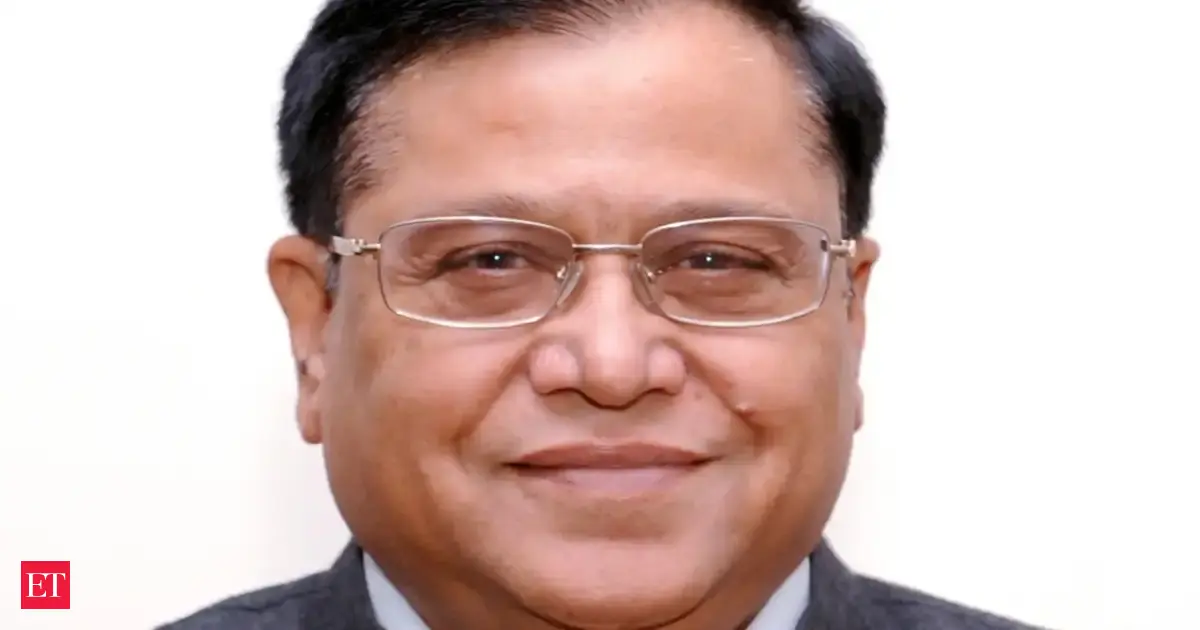
Addressing a conference on Enhancing Competitiveness of Mining and Metals, organised by FICCI here, he said that logistics must be recognised as a strategic determinant for mining & metals competitiveness. View More
New Delhi: India's logistics cost for the mining and metals sector may be far closer to 8 per cent of GDP but the sector's underlying bottlenecks remain unchanged, Former NITI Aayog member V K Saraswat said on Friday. Addressing a conference on Enhancing Competitiveness of Mining and Metals, organised by FICCI here, he said that logistics must be recognised as a strategic determinant for mining & metals competitiveness. "India's logistics cost for the mining and metals sector may be far closer to 8 per cent of GDP than the widely cited 14 per cent figure, though the sector's underlying bottlenecks remain unchanged," Saraswat said. Saraswat stated that bulk freight bottlenecks, mining-specific evacuation gaps are still real and costly. He identified two structural weaknesses that continue to hold back the sector: inadequate first- and last-mile connectivity from mines situated in remote, forested or mountainous terrain, and continued over-dependence on road haulage, which he said could cost two to three times more per tonne-kilometre than rail for bulk commodities. .Pbanner{display:flex;justify-content:space-between;align-items:center;background-color:#ec1c40;margin-top:20px;padding:5px 10px;border-radius:4px;color:#fff;line-height:10px;width: 100%;box-sizing: border-box} .Pbannertext{display:flex;align-items:center;font-size:16px;font-weight:600;font-family:'Montserrat';} .Pbannertext img{height:20px;margin:0 6px} .Pbannerbutton a{display:flex;align-items:center;background-color:#fff;color:#ec1c40;text-decoration:none;font-weight:600;padding:4px 8px;border-radius:6px;font-size:15px;font-family:'Montserrat';} .Pbannerbutton img{height:20px;margin-right:6px} .Pbannerbutton a:hover{background-color:#f7f7f7} Add as a Reliable and Trusted News Source Add Now! (You can now subscribe to our Economic Times WhatsApp channel) (You can now subscribe to our Economic Times WhatsApp channel)