
Latest Sectors News

Microsoft says that when integrated with OpenAI's GPT-5.4, its new cybersecurity model can beat Anthropic's new Mythos 5. View More
In this articleGOOGLAMZNFollow your favorite stocksCREATE FREE ACCOUNT Microsoft CEO Satya Nadella speaks at the Microsoft AI Tour at TikTok Entertainment Centre in Sydney on April 23, 2026.George Chan | Getty Images Microsoft on Monday talked up a new artificial intelligence model for spotting cybersecurity vulnerabilities. The move marks the company's first major push to rejuvenate its cybersecurity business since it brought back Google executive Hayete Gallot to run the unit.When paired with OpenAI's general-purpose GPT-5.4, Microsoft's MAI-Cyber-1-Flash outperforms Anthropic's Mythos 5, Google's 3.5 Flash Cyber and OpenAI's GPT-5.5 Cyber on the CyberGym benchmark, the company said."We have world-leading performance at 50% of the cost," Mustafa Suleyman, CEO of Microsoft AI, said at an event the company held in San Francisco.The generative model is the software maker's first for cybersecurity. It will work in its Project Perception, a collection of AI agents for discovering and fixing weaknesses that becomes available in public preview starting Aug. 3, according to a blog post from Gallot.She rejoined Microsoft in February to become executive vice president of security, as its top leader in the category, former Amazon cloud executive Charlie Bell, became an individual contributor.Generative AI models have made it easier for attackers to quickly try to exploit newly documented vulnerabilities. Anthropic and OpenAI have released models that can help cybersecurity practitioners with defense.So far in 2026, Microsoft shares have come down 19%. "Given that consensus view that open-source (Chinese and other) AI models are poised to take share from the frontier labs, investor sentiment about Microsoft's high OpenAI exposure has swung back to being perceived as a risk," Microsoft analysts led by Karl Keirstead wrote in a Sunday note to clients. Keirstead recommends buying the stock.This year the company has announced its own model that can generate code in the GitHub Copilot tool, and lately it's been drawing on a first-party model in the Excel spreadsheet program. While Microsoft CEO Satya Nadella has a partnership with OpenAI to maintain, but he's also been allocating computing power to train models in house, with an eye toward spending efficiency."By combining specialized models and data with the right agents, tools, security context, and harness, we can advance the frontier of cost to outcome," Nadella wrote in a Monday X post.  Microsoft hasn't disclosed the scale of its cybersecurity business since 2023, when it said annual revenue exceeded $20 billion.In 2023, Microsoft introduced the Security Copilot assistant for cybersecurity practitioners that incorporated OpenAI's GPT-4. The service now comes with Microsoft's two most high-end productivity software bundles. Project Perception can suggest and implement code changes once given permission, and it can connect with non-Microsoft products. Cybersecurity executives "look at this as maybe a way to lower the bar and be able to bring in more talent to actually staff the SOCs and and get more people to participate because right now it's very limited in the industry," Gallot told CNBC. Companies maintain security operating centers (SOCs) full of people who look out for threats to information-technology systems.Last week, OpenAI said its models exploited a vulnerability and attacked AI startup Hugging Face's infrastructure during a test. Hugging Face used a model from Chinese lab Z.ai to conduct forensic analysis."I think it's a great illustration of why you need to defend with AI against the bad guys who have AI, right?" Gallot said.There's plenty of room for Microsoft to improve the performance of the new model."We have a unique data set," Suleyman said in an interview. "We've used way less than 1% of that data."WATCH: SandboxAQ CEO weighs in on security incidents involving OpenAI and Hugging Face watch nowVIDEO4:0104:01SandboxAQ CEO weighs in on security incidents involving OpenAI and Hugging FaceSquawk on the Street Choose CNBC as your preferred source on Google and never miss a moment from the most trusted name in business news.

Critics have questioned why Anthropic didn't sign an industry letter last week in support of open-weight models. View More
Dario Amodei, chief executive officer of Anthropic, at the AI Impact Summit in New Delhi, India, on Thursday, Feb. 19, 2026. Ruhani Kaur | Bloomberg | Getty Images Anthropic CEO Dario Amodei said on Monday that his company has "never advocated for a ban on open-weights models," an attempt to beat back criticism emerging across the tech industry that the AI lab is trying to exert excessive control over the future of artificial intelligence. Amodei published his views in a blog post on Monday, after a coalition of tech companies, including Nvidia, Microsoft, Meta and Palantir, released a letter late last week urging policymakers to avoid "premature restrictions" on open-weight models, which users can download, modify and run on their own infrastructure. Chinese startups currently dominate the market, and some government officials have started to weigh whether those models should be banned or restricted in the U.S. Anthropic is best known for developing a family of proprietary models called Claude that it sells to businesses. Chief rival OpenAI also primarily builds closed models, but the company signed on in support of the open-weight letter after it was published, while Anthropic did not."To summarize my and Anthropic's position, we have not and are not advocating for a ban on open-weights models as a category," Amodei wrote. "We should instead focus on keeping powerful chips out of authoritarian hands, stopping industrial-scale distillation, and requiring safety testing of all sufficiently capable models, open and closed."Distillation is an AI training method where a smaller, less capable model is built using outputs from a bigger model already on the market. Anthropic sent a letter to the U.S. Senate Committee on Banking, Housing, and Urban Affairs last month alleging that China's Alibaba, developer of the Qwen family of models, had carried out the "the largest known distillation attack" against it to date.In the Friday letter, the signatories said that concerns about unlawful distillation should be addressed through "targeted legal and commercial frameworks," an idea that Amodei agreed with on Monday.Amodei said he also agrees with other portions of the letter, namely that open-weight models give customers greater control, expand access to the AI economy and strengthen competition in some use cases. But he said he disagrees with the idea that open-weight models favor cyber defenders over attackers, or that they make it easier for users to develop safeguards. Even so, Amodei made it clear that he does not support banning open-weight models."Protectionist bans would not address my most serious national security concerns," Amodei said.WATCH: Anthropicâs new AI model rivals Fable 5 and is cheaper as businesses fret about costs watch nowVIDEO1:0901:09Anthropic's new AI model rivals Fable 5 and is cheaper as businesses fret about costsThe Exchange Choose CNBC as your preferred source on Google and never miss a moment from the most trusted name in business news.
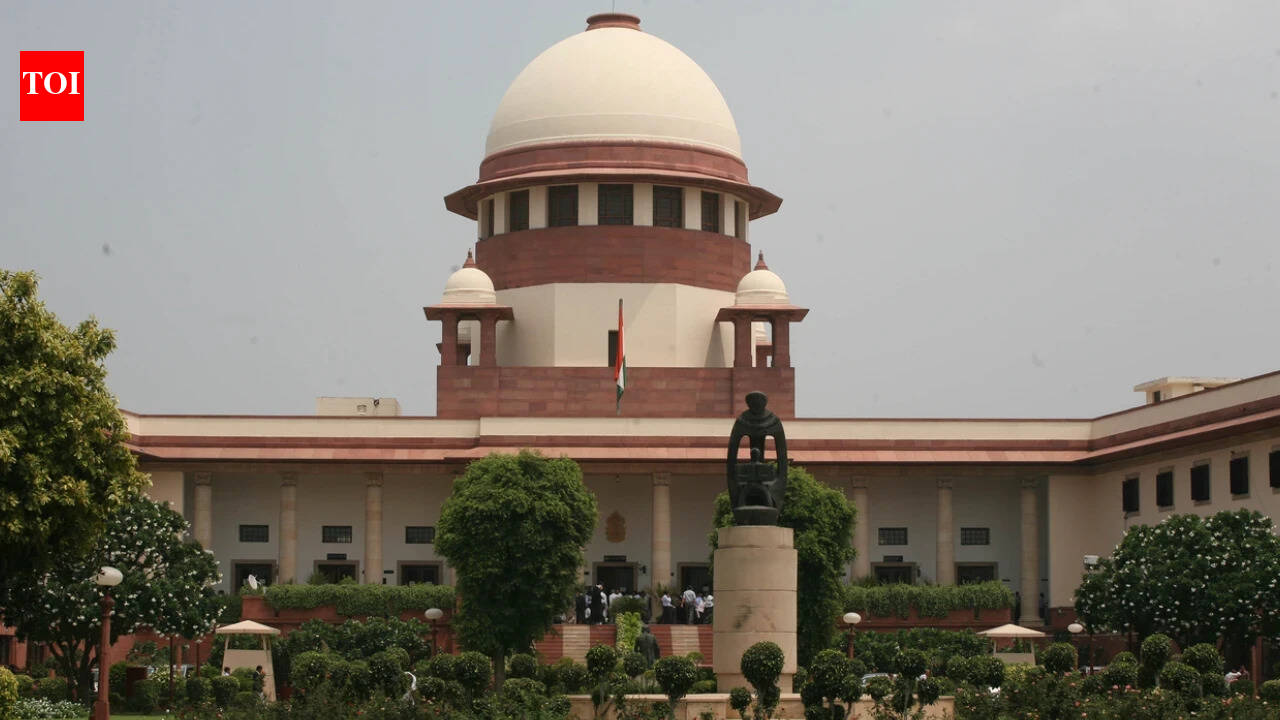
The Supreme Court has ordered Tamil Nadu to pay market rate compensation for acquired land. Alternatively, the state must return 970 acres of land to landowners within six weeks. This decision impacts Tamil Nadu's already strained fiscal situation significantly. The court emphasized landowners should not suffer due to government inaction. The state faces a substantial financial burden from this directive. View More
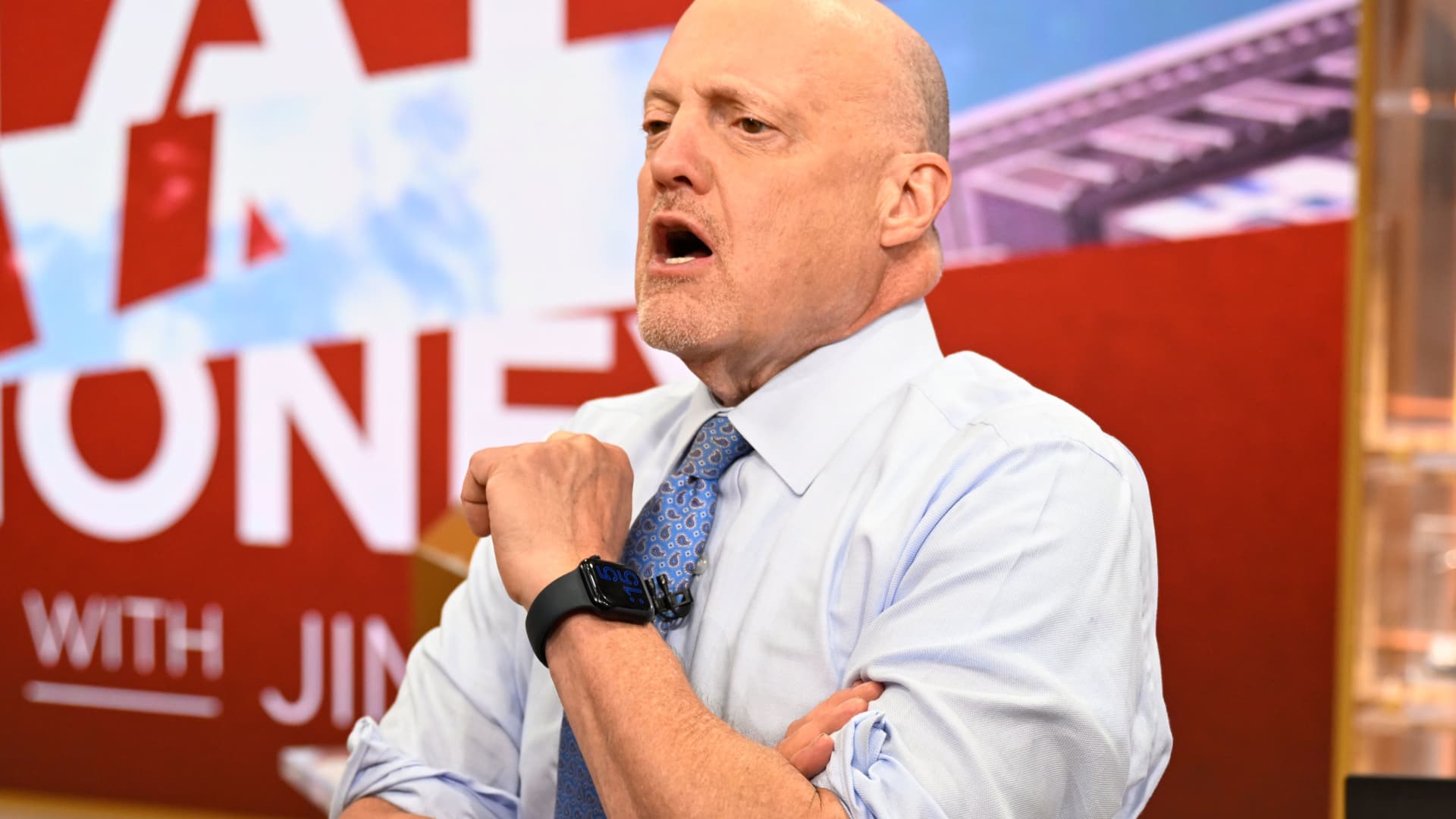
"If you're borrowing money to buy something related to the data center, then tomorrow morning, 9:30 a.m., sell it no matter what," said CNBC's Jim Cramer. View More
watch nowVIDEO1:2201:22If you own tech stocks on margin, get off it, says Jim CramerMad Money with Jim Cramer CNBC's Jim Cramer on Monday said the AI trade has become increasingly fragile. "If you're borrowing money to buy something related to the data center, then tomorrow morning, 9:30 a.m., sell it no matter what," the "Mad Money" host said. "You won't regret it."Many AI infrastructure and data center stocks have run up sharply over the past year. However, the cohort has started to pull back as investors question whether the pace of data center spending can continue. Cramer said the volatility in AI stocks that has stemmed from that uncertainty makes investing with borrowed money -- known as margin trading -- especially dangerous. The amount of margin debt has increased sharply over the last year."If you're on margin, get off it," Cramer said. "I no longer feel that you'll get out alive."Buying stocks on margin involves borrowing money from a brokerage to increase the size of an investment. While the strategy can amplify gains when share prices rise, it also magnifies losses. Sharp declines can trigger a margin call, forcing investors to either deposit additional cash or sell holdingsâpotentially at worse prices.Rather than concentrate portfolios in data center plays, Cramer said investors should look for companies with more diversified sources of growth. He pointed to building materials supplier CRH as one example, noting that while the company supplies materials used in data center construction, most of its business comes from roads, bridges, and office complexes."We want tech, but not the kind of big tech investors used to buy," Cramer said. "We want materials tech and we want science tech."Cramer added that investors who own quality technology stocks outright may still be able to weather the volatility."Now, if you own terrific tech stocks, and you're not on margin, you could be fine, assuming you can handle some pain," he said. VIDEO4:0204:02Jim Cramer on the waning importance of the data center story Jim Cramer's Guide to InvestingClick here to read Jim Cramer's Guide to Investing at no cost to help you build long-term wealth and invest smarter Sign up now for the CNBC Investing Club to follow Jim Cramer's every move in the market.DisclaimerQuestions for Cramer? Call Cramer: 1-800-743-CNBCWant to take a deep dive into Cramer's world? Hit him up! Mad Money Twitter - Jim Cramer Twitter - Facebook - InstagramQuestions, comments, suggestions for the "Mad Money" website? madcap@cnbc.com Choose CNBC as your preferred source on Google and never miss a moment from the most trusted name in business news.

CNBC's Jim Cramer said reports of Nvidia backing OpenAI's data center expansion revived memories of the financing arrangements that preceded the dot-com crash. View More
In this articleNVDAFollow your favorite stocksCREATE FREE ACCOUNT watch nowVIDEO2:2702:27Jim Cramer on how the year 2000 is haunting this marketMad Money with Jim Cramer CNBC's Jim Cramer on Monday said the latest chapter of the artificial intelligence boom is reviving memories of the excesses that fueled the dot-com bubble."I lived through 2000," the "Mad Money" host said. "I don't want the sequel."On Sunday, the Wall Street Journal reported that Nvidia was discussing a $250 billion backstop for OpenAI that would help finance a planned 10-gigawatt artificial intelligence data center campus in Ohio. CNBC confirmed the report on Monday, and Nvidia declined to comment. The proposed guarantee would support the project's lease and construction debt, not the Nvidia chips deployed inside the facility. Shares of Nvidia fell more than 4% on Monday, pulling many semiconductor stocks down with it.The discussions are the latest example of the increasingly circular nature of AI financing. Nvidia has invested in several companies that are also major customers for its chips, including a $30 billion investment in OpenAI in March and a $10 billion investment in Anthropic last year. The chipmaker has also backed multiple neocloud providers that rent Nvidia-powered computing capacity to customers. Nvidia has said those investments support the growth of the AI ecosystem while offering attractive long-term returns.Cramer said the circularity of the arrangement reminded him of the late 1990s, when telecom equipment makers helped customers finance major purchases to fuel growth. While those deals initially boosted sales, he recalled that many unraveled when cash-strapped buyers could no longer pay, inflicting heavy losses on suppliers and investors alike. "What we learned in 2000 is that you don't lend to companies who buy your goods," Cramer said. Cramer stressed that he still views Nvidia as an exceptionally strong company and is not predicting a repeat of the dot-com crash. Rather, he said history shows investors can quickly lose confidence when suppliers become too reliant on customers whose massive spending depends on continued access to capital. "If the buyer, in this case, OpenAI, can actually afford to pay for these chips, perhaps because it comes public ... then Nvidia's in terrific shape," Cramer said. "If the buyer can't pay, well, that's a different story." OpenAI confidentially filed for an initial public offering in June, but has not announced a timeline for its debut. The company was valued at more than $800 billion by private investors in March as it races to expand the computing infrastructure needed to power its artificial intelligence models while competing with rivals including Alphabet and Meta. Cramer said the risks extend well beyond Nvidia because a growing number of companies now depend on continued investment in AI infrastructure. "There are so many companies counting on the data center for their earnings," he said. "If the market decides it doesn't want to fund any more data centers, and the companies themselves don't have the money, or they don't get paid, then we're back in 2000." While Cramer said Nvidia has the financial resources to support projects of this scale, he argued that strong balance sheets alone have not always been enough to shield companies from the fallout when customers become overextended. "Nvidia shouldn't make these guarantees even if it has all the money in the world. Just history, that's all, just history," he said. VIDEO11:5211:52The ghosts of 2000 are haunting us this summer, says Jim Cramer Jim Cramer's Guide to InvestingClick here to read Jim Cramer's Guide to Investing at no cost to help you build long-term wealth and invest smarter Sign up now for the CNBC Investing Club to follow Jim Cramer's every move in the market.DisclaimerQuestions for Cramer? Call Cramer: 1-800-743-CNBCWant to take a deep dive into Cramer's world? Hit him up! Mad Money Twitter - Jim Cramer Twitter - Facebook - InstagramQuestions, comments, suggestions for the "Mad Money" website? madcap@cnbc.com Choose CNBC as your preferred source on Google and never miss a moment from the most trusted name in business news.

The backstop would let OpenAI raise debt for a data center campus in Pike County, Ohio, on the strength of Nvidia's credit. View More
In this articleNVDAFollow your favorite stocksCREATE FREE ACCOUNT OpenAI CEO Sam Altman walks through the Hart Senate Office Building following meetings on Capitol Hill, in Washington, June 3, 2026.Evelyn Hockstein | Reuters OpenAI is in discussions with Nvidia about a backstop of up to $250 billion that would help fund its ambitious plans to lease a massive new artificial intelligence data center, CNBC confirmed. The backstop would let OpenAI raise debt for a 10-gigawatt data center campus in Pike County, Ohio, on the strength of Nvidia's credit, according to a person familiar with the discussions who asked not to be named because the details are confidential. The guarantee would cover the lease and construction debt, not the Nvidia chips inside, which the two companies are discussing separately, the person said.Nvidia declined to comment. The Wall Street Journal was first to report the negotiations about the $250 billion backstop. The large site in Ohio once functioned as a uranium-enrichment plant, the person said. A gigawatt is a measure of power, and 10 gigawatts is roughly equivalent to the annual power consumption of 8 million U.S. households, according to a CNBC analysis of data from the Energy Information Administration. The data center campus could cost more than $500 billion in total, the person said. The talks about the site and its financing are in progress and still subject to change, according to another person familiar with the plans who asked not to be named due to confidentiality. watch nowVIDEO3:5503:55Nvidia to back OpenAI data center buildout: SourceTechCheck OpenAI kick-started the AI boom with the launch of its ChatGPT chatbot in 2022, and has been racing to secure the computing power it deems necessary to meet future demand for its models and services as it faces heightened competition from the likes of Anthropic, Google, Amazon and Meta. Those companies are collectively spending hundreds of billions of dollars on capex to support their own AI infrastructure ambitions. In September, Nvidia said it would invest up to $100 billion in OpenAI as part of a strategic partnership where the company would deploy at least 10 gigawatts of Nvidia systems. That investment never materialized, though Nvidia contributed $30 billion to the record-breaking funding round that OpenAI closed in March. Nvidia CEO Jensen Huang said it "might be the last time" the company invests in OpenAI before it goes public. OpenAI confidentially filed for an initial public offering with the Securities and Exchange Commission in June, but has not disclosed an official timeline for its debut. OpenAI is now valued at nearly $1 trillion by private investors betting that the company will maintain its lead in AI and find a long-term workable business model, which faces increased uncertainty as a host of open-weight alternatives, largely out of China, threaten to undercut its pricing power. SoftBank and SB Energy are developing the Ohio data center campus in partnership with the U.S. Department of Energy. SoftBank is a major investor in OpenAI, and the two companies announced plans to invest $1 billion in SB Energy earlier this year. â CNBC's Kristina Partsinevelos and Lora Kolodny contributed to this storyWATCH: OpenAI chairman Bret Taylor on AI tokenomics, token efficiency watch nowVIDEO8:1208:12OpenAI chairman Bret Taylor on AI tokenomics, token efficiencySquawk Box Choose CNBC as your preferred source on Google and never miss a moment from the most trusted name in business news.

Nvidia had held the top spot as the most valuable company since June 2025, when it took the crown from Microsoft. View More
In this articleNVDAFollow your favorite stocksCREATE FREE ACCOUNT watch nowVIDEO1:4101:41Apple emerges as megacap hedge against the AI spending bingeThe China Connection Apple passed Nvidia on Monday for the title of world's most valuable company, with the iPhone maker topping the artificial intelligence chip firm at market close for the first time since April 2025. Shares of Nvidia fell 5% on Monday, giving the chipmaker a valuation of $4.77 trillion, as AI chip stocks in general declined as investors fret about large costs related to the AI buildout. Meanwhile, Apple shares rose 1%, giving it a market cap of $4.95 trillion, ahead of the company's highly-anticipated earnings on Thursday.Nvidia had held the top spot as the most valuable company since June 2025, when it took the crown from Microsoft, and it briefly held a $5 trillion capitalization in October. So far in 2026, Nvidia's shares have only climbed 4% while Apple's are up 24%. Apple has outperformed the market as investors have rewarded its reluctance to spend heavily on capital expenditures for AI, preferring to rent capacity instead of building its own.While Nvidia's sales are now in the third year of massive AI-driven growth, many investors have switched their focus from AI chips called graphics processing units to memory chips and other data center infrastructure that benefit from the AI boom, such as Micron Technology, SK Hynix, and Sandisk. Apple will report fiscal third-quarter earnings on Thursday, in which the iPhone maker is expected to reveal for the first time some of the financial impacts from the AI-driven global memory chip shortage, which forced the company to raise Mac and iPad prices in June. Stock Chart IconStock chart iconApple and Nvidia stock chart. Read more CNBC tech newsSam Altman to meet with Trump administration, Senators this week. Here's what he plans to sayNvidia, SpaceX, Microsoft launch AI safety initiative as OpenAI cyberattack fallout continuesFrom Silicon Valley to DC, the tech world is suddenly obsessed with one concept in AI: DistillationSpaceX launches massive Starship rocket in first test flight since IPO Choose CNBC as your preferred source on Google and never miss a moment from the most trusted name in business news.

Kalshi traders are predicting Warsh will mention last week's supply shock at this week's Federal Reserve press conference. View More
In this article@LCO.1Follow your favorite stocksCREATE FREE ACCOUNT Federal Reserve Chairman Kevin Warsh testifies during the Senate Banking, Housing and Urban Affairs Committee hearing titled "The Semiannual Monetary Policy Report to the Congress," in Dirksen building, July 15, 2026.Tom Williams | Cq-roll Call, Inc. | Getty Images June's Federal Open Market Committee meeting ended with a much shorter statement from the Federal Reserve, and with Chairman Kevin Warsh not giving a forecast on the outlook for rates. It's likely he will continue a tight-lipped approach this week, as Kalshi traders point to potential words the recently minted central bank leader will mention.An event contract asking what Warsh will say in the next press conference shows over 50% odds that the Fed chief will mention the word "shock," along with a 74% chance that he will say "oil." The event contract is one of the leading mention markets on the platform as of Monday afternoon â and will be resolved based on what Warsh says at a press conference set for Wednesday at 2:30 p.m. ET.This week's Fed meeting, along with the contract on what words Warsh will utter this week, come after Iran and the U.S. paused their fighting. Last week, both countries exchanged attacks, briefly pushing Brent crude back above $100 per barrel. The halt took the air out the oil gains, with Brent trading back below $89 on Monday. Though Kalshi traders see a likelihood of Warsh referring to an energy supply shock, Bank of America on Monday said it is "textbook policy" for the central bank to avoid responding to it.The Fed is largely expected to keep its overnight benchmark rate unchanged, per the CME Group's FedWatch tool.Evercore ISI noted that, "It would be odd to [hike rates] right after the better June inflation print given an uncomplicated path to hike in September if needed.""But we cannot take the probability too low given Warsh's refusal to set out his strategy, and renewed US-Iran conflict that has revived the energy shock and pushed up yields," the firm added. One Kalshi contract, asking traders what the Fed decision will be in July, projects a nearly 75% chance that the Fed will maintain rates at current levels. Odds of a rate hike this week have increased to around 38% from 16% last week, per FedWatch. Similarly, another Kalshi contract asking when the next Fed hike will be, shows 68% odds of one taking place this year. Both Kalshi contracts on potential rates will be verified by the Federal Reserve.Disclosure: CNBC and Kalshi have a commercial relationship that includes customer acquisition and a minority investment. Choose CNBC as your preferred source on Google and never miss a moment from the most trusted name in business news.

President Donald Trump said Monday the U.S. has sold more than $13 billion of Venezuelan oil since taking control of the South American nation's energy exports. View More
US President Donald Trump makes an announcement on American Nuclear Innovation in the Oval Office of the White House in Washington, DC, on July 24, 2026. Mandel Ngan | AFP | Getty Images President Donald Trump said Monday that the U.S. has collected more than $13 billion from the sale of Venezuelan crude oil since the overthrow of former President Nicolás Maduro.The U.S. seized control of Venezuela's oil exports after capturing Maduro in a military raid on Jan. 3. Trump was responding to a question about a Financial Times' report that estimated how much money his administration had collected from the sales. "$13 billion from Venezuela? I think even more than that," the president told reporters aboard Air Force One as he traveled to Michigan to tour a General Motors' facility. "We've paid for that war many times over." Trump said the money is used to run Venezuela. "We're taking in a lot of money â billions and billions of dollars from Venezuela," Trump said.The U.S. has largely left the Venezuelan government in place after ousting Maduro. Washington has been closely cooperating with interim President Delcy RodrÃguez, who served as vice president under Maduro. Democrats in Congress have pressed the administration to disclose how much money it has collected from the sales, how the funds are spent, and how the program is monitored. Energy Secretary Chris Wright told Semafor in an April interview that the U.S. had sold around 150 million barrels of Venezuelan oil since January.Secretary of State Marco Rubio told Congress in June that the oil sales are audited by KPMG. The money is held in a Citibank account, Rubio said. "It's an ongoing audit, so it's not a once-a-year audit, it's on every expenditure, every single disbursement is audited by KPMG," Rubio told Congress. The Trump administration initially deposited $500 million in sales to an account in Qatar that was controlled by the U.S. government, Wright said in February. The U.S. subsequently set up a Treasury account and stopped sending money to the Qatar account, he said. State Department official Michael Kozak told Congress in April that around $3 billion had been disbursed from the Treasury account. Kozak said the money was used to pay the salaries of Venezuela's government workers, buy supplies for the nation's oil industry and other approved uses. Rubio authorizes the disbursement of the funds under an executive order issued by Trump on Jan. 9. The president's order states that the money is the property of the Venezuelan government held in a custodial capacity by the U.S. Choose CNBC as your preferred source on Google and never miss a moment from the most trusted name in business news.

Beginning in early 2027, YouTube Premium subscribers will receive the entirety of Peacock content, including sports and movies. View More
In this articleCMCSAGOOGLFollow your favorite stocksCREATE FREE ACCOUNT watch nowVIDEO1:2001:20NBCUniversal, YouTube ink streaming deal set to begin in early 2027Closing Bell NBCUniversal's Peacock is officially landing on YouTube. All of the streaming service's content â including NBC Sports' portfolio of the NFL and NBA, Universal films like the Minions franchise, and original Peacock and Bravo content like the Real Housewives franchise and "Love Island USA" â will be included in YouTube Premium subscriptions in the U.S. starting early next year. Google's YouTube Premium is the subscription version of the streaming platform that offers videos without ads and the ability to download most videos, depending on the subscription tier. The service offers a variety of plans beginning at $8.99 per month. Peacock Premium currently costs $10.99 per month."The first principle for us was, does this accelerate Peacock's long-term growth? And the answer to that is yes," said Matt Strauss, chairman of NBCUniversal media group, in an interview. "Peacock will now be one of the largest domestic streamers. It's going to significantly expand our reach." Parent company Comcast's stock closed up 2% on Monday. NBCUniversal's partnership with YouTube was formed after Comcast co-CEO Brian Roberts reached out to YouTube CEO Neal Mohan about nine months ago, according to a person familiar with the matter. Following a meeting between the executive teams that took place at Google offices, the two companies began to brainstorm partnerships such as this, the person added.The partnership comes at a fast-moving moment in the industry. Traditional media companies like NBCUniversal, Warner Bros. Discovery and Disney have been chasing business initiatives to boost revenue and profitability while tech platforms like YouTube and TikTok grab increasing share of viewership time. Media companies have also been shapeshifting as the business model changes due to consumers' departure from pay-TV bundles in favor of streaming. Paramount Skydance has agreed to acquire WBD; Fox Corp. reached a deal to acquire Roku; and Comcast is preparing to spin off NBCUniversal in the next year. While streaming services have been announcing a growing slate of bundles to grab more subscribers, this partnership goes a step further and will see Peacock's content live inside YouTube â or be ingested into the platform so viewers don't have to leave YouTube to access the content. Peacock has already signed deals with other streaming and tech platforms including Apple and Amazon. During an earnings call with investors last week, Comcast co-CEO Mike Cavanagh said while other media companies have taken a so-called "walled garden" path with their content, NBCUniversal will continue to "look for opportunities to partner, bundle and exhibit other people's [intellectual property]" across its theme parks and media platforms. While NBCUniversal's announced spinout from Comcast has raised industry hopes for more mergers and acquisitions, Cavanagh and others have poured cold water on the notion, focusing on potential partnerships and bundles instead. Partnership perks Zoom In IconArrows pointing outwardsNBCUniversal and YouTube deal to embed Peacock into YouTube Premium.Courtesy: NBCUniversal YouTube has long been considered a dominant force in streaming, as it claims a large share of viewership time as showcased in Nielsen's monthly "The Gauge" report. So-called creator-made videos â a category that amasses millions of viewers on YouTube â are becoming more attractive to media companies like NBCUniversal as they chase reliable and dedicated audiences. The category even hit the stage at this year's annual Upfront advertising presentations. The new partnership will allow Peacock content to be discoverable alongside such creator content, clips and highlights. According to YouTube's subscription page, it has over 125 million global Premium members. NBCUniversal reported last week that Peacock counted 48 million paying subscribers as of June 30 and that the streaming platform hit profitability for the first time during the most recent quarter. During Comcast's earnings call with investors, Cavanagh â who will become CEO of the NBCUniversal business following the separation â said he expects Peacock to remain profitable on an annual basis in the future, with some fluctuation between quarters. Live sports nab the biggest audiences for both streaming and linear TV. YouTube has been increasingly getting into the mix acquiring live sports rights. Last year it aired its first ever live NFL game, and since then the NFL has continued to hold talks with non-traditional media companies like YouTube and Netflix. YouTube has become a platform for both sports leagues and media companies to host highlights and other game-related content in a bid to attract younger audiences. NBCUniversal's sports-heavy streaming portfolio could complement that effort. As part of partnership between YouTube and NBCUniversal, NBC Sports will be a production partner for select live sports on YouTube, such as it was for the NFL game last year. The partnership announced Monday also extends NBCUniversal's multiyear distribution agreement with YouTube TV, the streaming-only TV bundle run by YouTube, as well as distribution of YouTube, YouTube TV and Premium on Comcast's Xfinity-branded cable TV and Xumo platforms. It will also see enhance the advertising partnership and capabilities between the two companies, allowing NBCUniversal to monetize advertising for its Peacock content on YouTube's platform. Advertising has become a key driver of streaming growth across media companies. Choose CNBC as your preferred source on Google and never miss a moment from the most trusted name in business news.