
Latest Sectors News
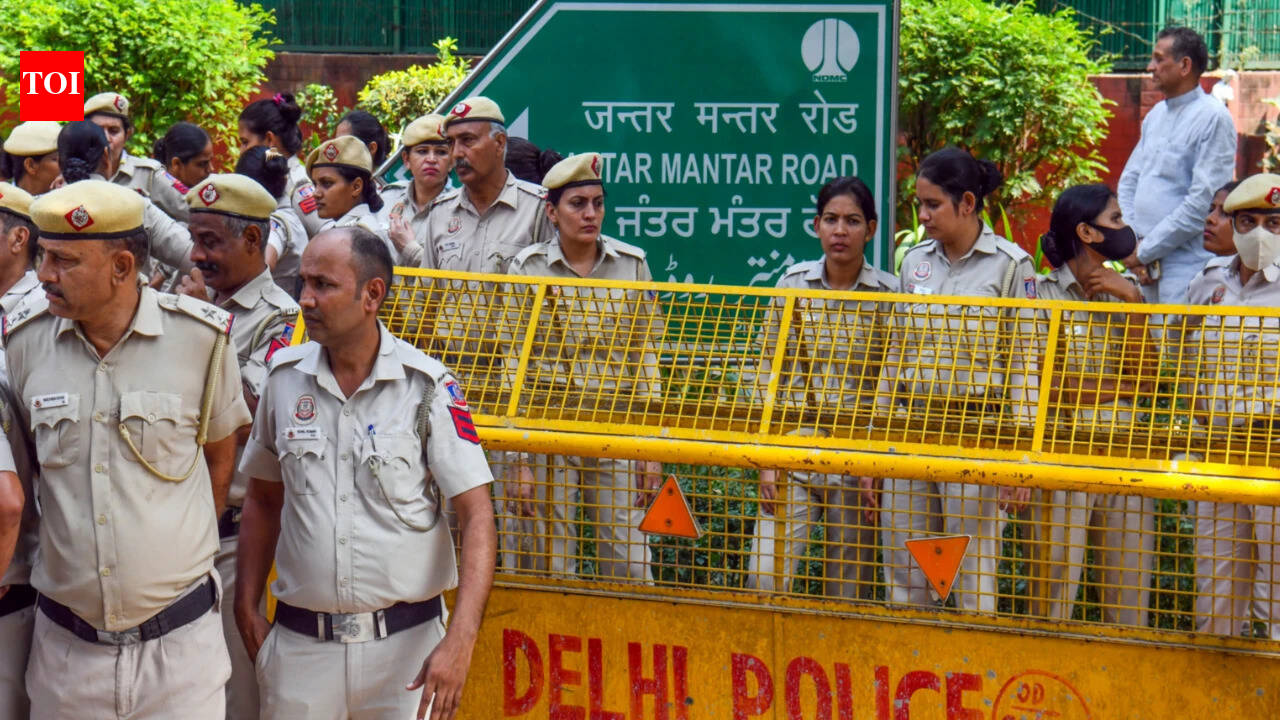

Gurugram residents have approached the NGT over DLF’s proposed installation of 24 high-capacity diesel generators and cooling towers near their homes and a metro station. The tribunal is scheduled to hear the matter on November 19 this year. View More

The earthquake's epicentre was near Pitaloza Arriba in central Herrera province, at a shallow depth of around 10 km. Damage was reported across Herrera, Coclé, Los Santos and Veraguas. View More

In one such case, a woman and her family bought a 3BHK ( 3 Bedrooms, Hall, Kitchen) from a builder in Bengaluru for Rs 1.03 crore. The builder promised two specially enabled parking spaces, and it was supposedly one of the property's key attractions. The builder's brochure and terms clearly referred to these parking facilities. However, he failed to deliver on that commitment. View More

HDFC Securities maintains a buy rating on Sobha, setting a target price of ?1,930—over 66% above its October 9 close. Record first-half presales, planned launches across key markets and expected margin improvement underpin the brokerage’s outlook. View More

Entrepreneurial stress carries constant uncertainty. A founder often has nobody above them to make the final call, and no way of knowing whether the next month brings a term sheet or a shutdown. View More
One sentence I hear often from the entrepreneurs I work with is: “My mind is never really switched off.” It sounds like a glorious badge of commitment at first, and then the realisation follows that it is actually a warning sign. Chronic stress that never has time to recover is a real health concern, not the normal cost of doing business. And for entrepreneurs, who carry the job of designing, deciding, building and delivering largely on their own, it needs a different conversation from the usual advice to just take a break from work. Entrepreneurial stress carries constant uncertainty. A founder often has nobody above them to make the final call, and no way of knowing whether the next month brings a term sheet or a shutdown. Research consistently shows that people find “not knowing” harder to bear than bad news. And for an entrepreneur, that state of not knowing can last a long time. Many also feel they cannot let the strain show, so they carry it privately. But isolation is itself a risk factor for poor mental health, and decisions made under constant, unspoken pressure tend to be more reactive and less flexible. Add the harsh verdict that follows a failed venture, one that feels like a judgement on who you are rather than on a business decision, and it is easy to see how capable people get worn down. The common response is to push through. That rarely works well as long term for our health, and this is where I find psychological presence to be a powerful thing. Here is what losing that presence looks like. You walk out of a meeting and realise you can’t recall what your CFO said about the cash flow, because you spent the meeting rehearsing your own answers to an investor. You were physically in the room, but not really there. The work still gets done, because habit and effort carry the visible tasks, so this lack of presence can go unnoticed for months. Presence simply means being fully available and engaged in the moment: aware of what is going on in your own mind and body, and then of the people in front of you. I see it as the first step in managing stress, because you cannot manage what you have not noticed. It lets you catch your fear before it turns into a decision and gives you space to respond instead of react. Before a difficult call, take one minute: notice your breathing, put a name to what you are feeling (“I’m anxious about this number”), and decide what you want from the conversation. Research shows that even naming a feeling begins to calm the mind’s threat response. Live Events Presence also opens the door to flow. Most of us have felt it without having a word for it. You sit down to write a product note, and when you look up, two hours have passed, and the work is the best you’ve done all week. Psychologists describe flow as complete absorption, where action and awareness merge, and time seems to disappear. It is most likely to happen when the goal is clear and the task is challenging but not overwhelming. Make it too challenging, too soon, and it can move into anxiety. And if you fill the week with back-to-back calls, it never happens at all. The practical step is simple. Block two 90-minute windows a week, put your phone in another room, and pick one clearly defined problem to work on. Treat that time like a board meeting you cannot move, and protect it. For many entrepreneurs, it becomes the most valuable time on their calendar. Sleep deserves the same respect and is not the first thing to cut, and a single bad night of sleep makes us more emotionally reactive. The other half of managing stress is our relationships. Psychologists point to something called co-regulation: our nervous systems settle more easily around someone calm and trusted. Picture yourself calling a mentor after losing a big deal and calming down within ten minutes, before addressing any problems. That steadying presence can come from a partner, a friend, a mentor with no stake in your business, or a founder you know who has been through it. It can also come from a therapist or coach, whose job is partly to stay steady and help you gain perspective. Think of it as personal risk management. So, for any entrepreneur reading this: notice what you are carrying into any room before it gets decided for you, protect the quality of your sleep, and immerse yourself in deep work and flow as seriously as your business. And don’t do it all alone. The road will have plenty of hard days, and having guidance from trusted people around you make it far easier to navigate. The author is a clinical psychologist, Founder, Dhira Wellness, and an executive and leadership mental health consultant. .Pbanner{display:flex;justify-content:space-between;align-items:center;background-color:#ec1c40;margin-top:20px;padding:5px 10px;border-radius:4px;color:#fff;line-height:10px;width: 100%;box-sizing: border-box} .Pbannertext{display:flex;align-items:center;font-size:16px;font-weight:600;font-family:'Montserrat';} .Pbannertext img{height:20px;margin:0 6px} .Pbannerbutton a{display:flex;align-items:center;background-color:#fff;color:#ec1c40;text-decoration:none;font-weight:600;padding:4px 8px;border-radius:6px;font-size:15px;font-family:'Montserrat';} .Pbannerbutton img{height:20px;margin-right:6px} .Pbannerbutton a:hover{background-color:#f7f7f7} Add as a Reliable and Trusted News Source Add Now!

India cannot spend Rs 11,040 crore building a domestic oil palm economy while allowing brands to turn the same crop into a warning sign. The cost of that contradiction will be paid by smallholders. View More
Some Indian parliamentarians, while debating food safety during this year’s monsoon session, made palm oil the chief villain of their story. They say multinationals use ‘cheap palm oil’ in their products for Indian families while using ‘high-quality’ oil abroad. The Ministry of Health and Family Welfare allayed these fears and asserted that palm oil is an approved edible oil under the Food Safety and Standards Authority of India (FSSAI) and meets internationally accepted Codex standards. The World Health Organisation (WHO) has not issued any instructions for consumers to avoid it. The Indian Council of Medical Research (ICMR) and the National Institute of Nutrition (NIN) view palm oil as an acceptable and practical dietary fat. And Europeans are happily consuming palm oil in their chocolate spread, biscuits, chocolates, ice cream, and instant noodles. The Indian health ministry’s statement should have ended the debate and made it clear that palm oil is just as nutritious and fit for your diet as any other common vegetable oil. But food companies have continued with the no-palm ‘health advice.’ From a ‘no palm oil’ range of snacks endorsed by a popular Bollywood actor to an un-junked bhujia with ‘no palm oil’ and ‘zero trans-fat.’ Unfortunately, ‘no palm oil’ on product packs are not neutral disclosures. They are comparative marketing without the comparison. In reality, “palm-free” products do not guarantee a nutritional improvement. Coconut oil contains about 85-90% saturated fat. Ghee commonly contains about 60-70% saturated fat. A manufacturer can remove palm oil, replace it with another fat, retain the same sugar and salt, and still print a health halo on the front pack. The consumer sees a virtue that the nutrition panel may not support. But the question is: what replaced palm oil? Did the new recipe contain less saturated fat? Did calories, sugar, or sodium fall? Was the substitute healthier and environmentally sustainable? The packet offers no answer because the power of the claim lies in insinuation. It asks the consumer to condemn an ingredient without examining the product. Live Events Indian regulation, however, demands discipline. The FSSAI’s Food Safety and Standards (Advertising and Claims) Regulations require food claims to be truthful, unambiguous, meaningful, and scientifically substantiated. The Central Consumer Protection Authority (CCPA) prohibits misleading advertisements and endorsements. A prominent ‘No Palm Oil’ badge placed beside words such as ‘healthy’, ‘clean’ or ‘unjunked’ implies a superiority claim. Typography, however, cannot be used to escape the evidentiary standard that would apply to an explicit claim on a product pack. Other jurisdictions have recognised the same distinction. In 2019, an appeal body in the Dutch advertising system upheld the position that the wider anti-palm branding was misleading, one-sided and insufficiently supported. Decisions by the court against Belgian supermarkets like Delhaize establish a clear consumer protection principle: marketers must not unfairly disparage palm oil or mislead consumers. ‘Consumer choice’ makes farmers pay? Beyond consumers, we miss the other end of the supply chain: smallholder farmers. In India, farm economics often creates two kinds of choices. Either the grower gets a higher price and consumers have to pay for it, or consumers pay less due to subsidies, and the price is controlled while farmers absorb the losses. Oil palm sits outside this trade-off. It’s a rare crop that provides major returns to Indian farmers on one end and provides consumers with affordable vegetable oil. One hectare of oil palm yields four to eight times the oil of any other comparable vegetable oil. This single fact pays the farmer and still leaves the packet affordable. It is no wonder that the National Mission on Edible Oils-Oil Palm carries a public outlay of Rs 11,040 crore. It operates across 15 states. By March 31, 2026, oil palm covered 6.40 lakh hectares and was supported by 27 processing mills. The mission provides planting material, management assistance, irrigation support, and a viability price mechanism because the government understands that farmers will plant a perennial crop only when they trust the market awaiting them. The taxpayer is financing this transformation on one end, but the ‘No Palm Oil’ marketing is monetising fear. The national policy cannot encourage farmers to plant with one hand while the marketplace discredits their crops. Every campaign that turns palm oil into shorthand for ill health weakens demand, discourages investment in processing, and tells farmers that the government’s chosen crop may become commercially unwelcome. Almost 100% of all oil palm is produced by smallholder farmers. Andhra Pradesh and Telangana alone report more than 2.45 lakh participating farmers. These households have committed land, labour, and borrowed money. Oil palm takes about four years to begin commercial bearing and can remain productive for more than two decades. Its fresh fruit bunches must reach a mill quickly, within 24 hours, to protect oil quality and the farmer’s price. A bread or biscuit company can alter a recipe during its next product review. A farmer cannot reformulate a standing crop after four monsoons. If food manufacturers retreat from palm oil because stigma has become profitable, mills lose throughput, collection becomes costlier and procurement confidence weakens. The brand keeps its reputation premium. The farmer carries the risk of a perishable crop tied to a local mill. Calling this “consumer choice” conceals who has power and who pays the price. Claims that must be substantiated Further, the logic of replacing palm oil simply doesn’t work. The average oil yields of 3.3 tonnes per hectare for palm, compared with 0.5 for soybean, 0.8 for sunflower, and 0.7 for rapeseed. Replacing 1,000 tonnes of palm oil with soybean oil would require about 6.6 times as much land. Rapeseed would require 4.7 times and sunflower 4.1 times as much land. A ‘No Palm Oil’ campaign does not make India’s demand for edible oil disappear. It moves production to a less land-efficient crop. A ‘No-Palm Oil’ campaign is not good for the consumers, not good for the business, and definitely not good for the farmers. FSSAI and the Central Consumer Protection Authority should act now. A front-of-pack ‘No Palm Oil’ claim must disclose the replacement oil and substantiate the claimed advantage. If the evidence does not exist, the halo should come off the packet. The agriculture ministry must also step in, defend the policy it is asking farmers to trust, and counter misinformation that threatens farmer confidence and India’s edible-oil security. India cannot build a national mission and permit the market to sabotage it. An oil palm farmer waits four years for the first commercial bunch and commits land for a generation. Three words on a packet must not be allowed to erase those four years of waiting and 25 years of a farmer’s future. The author is Managing Director, Solidaridad Asia, and a member of Solidaridad Network’s Global Executive Board. Views are personal. .Pbanner{display:flex;justify-content:space-between;align-items:center;background-color:#ec1c40;margin-top:20px;padding:5px 10px;border-radius:4px;color:#fff;line-height:10px;width: 100%;box-sizing: border-box} .Pbannertext{display:flex;align-items:center;font-size:16px;font-weight:600;font-family:'Montserrat';} .Pbannertext img{height:20px;margin:0 6px} .Pbannerbutton a{display:flex;align-items:center;background-color:#fff;color:#ec1c40;text-decoration:none;font-weight:600;padding:4px 8px;border-radius:6px;font-size:15px;font-family:'Montserrat';} .Pbannerbutton img{height:20px;margin-right:6px} .Pbannerbutton a:hover{background-color:#f7f7f7} Add as a Reliable and Trusted News Source Add Now!

During the festive season, every delivery is a brand promise in motion, and the businesses that recognise that early are usually the ones customers return to long after the celebrations are over. View More
Every festive season , businesses invest heavily in inventory, marketing, and customer acquisition, preparing for weeks that can define the performance of an entire year. One decision, though, tends to get far less strategic attention than it deserves: who actually moves the product once a customer clicks “buy”? Demand doesn’t behave the way it used to. Festive e-commerce sales in India crossed roughly $14 billion in 2024, up 12% year-on-year, and a large share of that growth came from Tier-II and Tier-III markets rather than the metros that used to carry the season on their own. This matters more than the headline number suggests, because demand is expanding faster in places where logistics infrastructure is still catching up: longer last-mile distances, thinner historical demand data, and far less margin for error. Anyone who has run a network through a festive season recognises the pattern well before the first big sale hits. Order volumes shift weeks ahead of the visible peak. Certain pin codes start seeing demand earlier than forecasts account for. A regional weather event, a labour crunch at one warehouse, a single congested hub—all these things ripple through a network faster than most planning documents assume. Over the years, we’ve seen that the businesses best prepared for festive demand aren’t necessarily the ones spending the most on logistics. They’re the ones that started planning for uncertainty the earliest. What it really takes to deliver during the festive rush Resilience can sound abstract when it’s discussed in terms of network reach, surge capacity, or visibility. In practice, though, its absence is immediately visible. It looks like a Diwali gift arriving after the festival, a retailer losing a first-time customer over a single bad delivery with little chance of winning them back, or a small business missing the narrow festive window that accounts for a significant share of its annual revenue. For a direct-to-consumer (D2C) brand, it can mean months of effort spent building anticipation for a festive launch, only to lose momentum because the product reached customers a week too late. That’s an expensive way to save on freight. Live Events These are also the moments that expose the difference between choosing a logistics partner on price alone and choosing one for resilience. Most businesses still begin with the question, “What’s the rate?” Instead, businesses should be evaluating a logistics partner across four dimensions: network scalability when volumes surge overnight, consistency of on-time performance during peak weeks rather than an average month, visibility when disruptions occur, and the ability to execute contingency plans if a critical hub or route is affected. These questions take longer to answer, but they reveal far more about whether a logistics partner can deliver when it matters most. Building capability, not just capacity Looking across businesses that consistently perform well during festive peaks, we’ve seen the same three patterns emerge. They invest in infrastructure that doesn’t collapse around a single point of failure, technology that surfaces problems before customers experience them, and operational teams experienced enough to make the right call under pressure. That last one is easy to underrate. Experienced teams are usually the difference between reacting to a disruption and staying a step ahead of it. What this looks like in practice is planning that starts long before the season does. Warehouse space and seasonal labour typically need to be locked in months ahead, not weeks; by the time festive volumes are visible in the data, the capacity to handle them either already exists or it doesn’t. The businesses that treat this as a mid-year decision, not a September one, are usually the ones that don’t end up scrambling for backup vendors in the middle of peak week. Increasingly, technology is amplifying that operational experience rather than replacing it. AI-powered forecasting and network planning now make it possible to spot bottlenecks earlier, rebalance shipments across hubs, and anticipate capacity constraints before they affect deliveries. Industry research increasingly points toward AI becoming central to supply chain planning in the years ahead, and that lines up with what’s already happening on the ground. Speed is earned before peak season begins By the time festive orders start flooding in, it’s already too late to build a faster network. Speed isn’t created during peak season; it’s the outcome of the infrastructure, technology, and planning already in place months earlier. The partners who consistently hit aggressive timelines aren’t improvising under pressure; they’re executing decisions made long before a customer ever clicked “buy.” A network that scrambles to meet festive-level expectations in October is a fundamentally different proposition from one that was built to meet them all along. Resilience is the investment, not the cost This isn’t just how logistics companies are thinking; businesses across industries are reaching the same conclusion. McKinsey’s research found 9 in 10 respondents faced supply chain disruptions last year. What’s more interesting than the number itself is how it’s changed thinking: resilience has stopped being treated purely as a cost to trim and become something businesses weigh deliberately against efficiency. That shift shows up operationally, not just on a balance sheet. It means a warehouse holding slightly more buffer stock than a lean model would recommend. It means a second carrier is on standby for a route that has never failed before, on the assumption that this could be the year it does. A logistics partner that costs a little more but holds service levels through the toughest weeks of the year usually works out cheaper than the alternative: a missed delivery, a spike in returns, or a customer who quietly doesn’t come back next year. The promise inside every shipment Every shipment carries more than a product during the festive season. It carries a gift meant to arrive before a celebration, inventory timed for a launch, sometimes a customer’s very first experience with a brand. Customers don’t usually remember the campaign that got them to click “buy;” they remember whether the package showed up on time, in one piece, when it mattered. During the festive season, every delivery is a brand promise in motion, and the businesses that recognise that early are usually the ones customers return to long after the celebrations are over. The author is Chief Commercial Officer, Blue Dart. Views are personal .Pbanner{display:flex;justify-content:space-between;align-items:center;background-color:#ec1c40;margin-top:20px;padding:5px 10px;border-radius:4px;color:#fff;line-height:10px;width: 100%;box-sizing: border-box} .Pbannertext{display:flex;align-items:center;font-size:16px;font-weight:600;font-family:'Montserrat';} .Pbannertext img{height:20px;margin:0 6px} .Pbannerbutton a{display:flex;align-items:center;background-color:#fff;color:#ec1c40;text-decoration:none;font-weight:600;padding:4px 8px;border-radius:6px;font-size:15px;font-family:'Montserrat';} .Pbannerbutton img{height:20px;margin-right:6px} .Pbannerbutton a:hover{background-color:#f7f7f7} Add as a Reliable and Trusted News Source Add Now!

NRIs can legally own and rent out property in India while they are living abroad. Here's who can help to manage the house, how to receive rent, pay tax and remit money abroad. View More