
Latest Sectors News

For now, flydubai has confirmed the cockpit altercation and safe emergency landing, while the more serious allegations about an attempted crash and the motive remain under investigation. View More

The Duke and Duchess of Sussex have been living in the UK since late August after moving their family to the Cotswolds area outside London. View More

The Delhi HC ruling is relevant to families where parents own a house but allow their children or other relatives to live there. It distinguishes between the right to reside in a family property and a legally established ownership interest. View More

A woman has gone viral on Instagram after she revealed her monthly expense of ?45,000. She is based out of Dibrugarh, Assam while working for Indian Oil. View More

Can a housing society evict a tenant from a rented flat? Know who has the legal right to seek eviction, how the Transfer of Property Act and rent-control laws protect tenants, and what renters should do if a society threatens forced eviction. View More


Larsen & Toubro Limited has secured twin contracts from Dubai’s Roads and Transport Authority for infrastructure development. The first contract involves a new road and associated works, enhancing connectivity in the area. The second contract includes improvements to Al Meydan Street and construction of a cycling track. Both projects are set for completion by the end of 2028 and will improve traffic flow. View More
Larsen & Toubro Limited (L&T) announced that the company's transportation infrastructure business vertical has executed twin contracts from the Roads and Transport Authority (RTA) of Dubai for the development of the Latifa Bint Hamdan Corridor . The first contract ranges between Rs 2,500 to 5,000 crore and involves the development of a new road connecting Al Khail Road with the extension of Latifa Bint Hamdan Street, along with the construction of bridges, tunnels and associated road works. This project will enhance connectivity between Al Khail Road, Latifa Bint Hamdan Street and Al Meydan Street and improve access to nearby development areas," the company said in a regulatory filing. L&T share price: Shares of Larsen & Toubro Limited were trading at Rs 3,774.20 per script as at 13:18 on BSE after a Rs 23.20 jump per unit. Also read: L&T-Mitsubishi to build world's largest APM system for Dubai's Al Maktoum International Airport Live Events The second order, ranging between Rs 1,000 to 2,500 crore, spans the development of parts of Al Meydan Street, including the construction of a new interchange and associated at-grade roads to serve development projects in the area and improve traffic flow. The scope of this contract also includes the construction of a cycling track connecting it with the existing cycling network and contributing to an integrated route from Al Qudra to Jumeirah . According to L&T, both the projects are scheduled for completion by the end of 2028. The overall Latifa Bint Hamdan Corridor will extend approximately 12 km and strengthen connectivity between Dubai’s key road corridors, including Sheikh Zayed Road, Al Khail Road, Al Meydan Street, Sheikh Mohammed bin Zayed Road, Sheikh Zayed bin Hamdan Al Nahyan Street and Emirates Road. .Pbanner{display:flex;justify-content:space-between;align-items:center;background-color:#ec1c40;margin-top:20px;padding:5px 10px;border-radius:4px;color:#fff;line-height:10px;width: 100%;box-sizing: border-box} .Pbannertext{display:flex;align-items:center;font-size:16px;font-weight:600;font-family:'Montserrat';} .Pbannertext img{height:20px;margin:0 6px} .Pbannerbutton a{display:flex;align-items:center;background-color:#fff;color:#ec1c40;text-decoration:none;font-weight:600;padding:4px 8px;border-radius:6px;font-size:15px;font-family:'Montserrat';} .Pbannerbutton img{height:20px;margin-right:6px} .Pbannerbutton a:hover{background-color:#f7f7f7} Add as a Reliable and Trusted News Source Add Now! (You can now subscribe to our Economic Times WhatsApp channel) (You can now subscribe to our Economic Times WhatsApp channel)

Rent vs buying a house is not just about comparing rent with EMI. Buyers must factor in loan interest, down payment, ownership costs, financial commitments, expected stay and the flexibility that renting offers. View More

India is undergoing a remarkable transformation as more individuals choose entrepreneurship over conventional careers. The influx of technology and digital tools presents new avenues for small enterprises to flourish. View More
When I look at India’s next billion, I do not see a single consumer segment waiting to be targeted. I see a much larger economic population that is still moving into formal markets in different ways as entrepreneurs, employees, suppliers, creators, professionals, farmers, and small-business owners. This distinction is important because India is changing not only how people consume but also how they participate in the economy and think about work. The traditional idea of a secure and successful career was often closely associated with a government job or a conventional salaried profession. That definition is steadily changing as we have more to explore and delve into. These days, many people choose to have their own businesses, work in emerging businesses, become suppliers, work independently, develop specialised professions, or even work to earn a livelihood from their local skills. Entrepreneurship has become a much wider form of work and economy than is generally assumed by technology entrepreneurs. India is now home to over 2.35 lakh startups, recognised by the DPIIT, creating over 24 lakh direct employment; of which, more than half have originated from Tier-II and Tier-III cities. Over 55,200 startups were recognized during FY2025-26 itself, which is the highest number of startups recognized in a single year since the inception of Startup India. This is why the next phase of entrepreneurship cannot be only about creating more startups. It has to be about creating more businesses that can survive, employ people, and become part of their local economies. Wider reach of technology India has an enormous opportunity in applying technology at a population scale. The country may have entered the AI race at a later stage, but it has something different to work with: a large digital population, increasingly connected businesses and public infrastructure that can carry technology across very different markets. The progress of the IndiaAI Mission shows how quickly this foundation is developing. By August 2026, subsidised AI computing had been accessed by 237 projects covering 93.18 lakh GPU hours, while AI Kosh had grown to more than 15,800 datasets and 350 AI models. Twenty AI solutions had also been deployed across public-sector institutions. Live Events The entrepreneurs have a great opportunity here in making this capacity useful for the companies that cannot afford expensive technology and specialised talent. AI can help a small business understand demand, improve productivity, conduct basic market research, navigate government schemes, or reach customers in markets that were previously difficult to access. Digital India and manufacturing India India will need more manufacturing, engineering, and physical infrastructure alongside its digital capabilities because software alone cannot support the economic requirements of the next billion. The next billion therefore need to be thought of not only as buyers of manufactured goods, but as participants in making them. Semicon 2.0, approved in July 2026 with an outlay of Rs 1,27,500 crore, is widening India’s semiconductor push across chip design, materials and machines, additional fabs, advanced packaging, R&D and talent. By September 2026, five semiconductor plants under the first phase had commenced commercial production, while around 70,000 design engineers had been trained over four years. The significance of this shift extends beyond semiconductor production itself. A stronger manufacturing economy can create opportunities across engineering, component supply, logistics, maintenance, specialised services and technology, allowing people and smaller businesses to participate at different points of a larger value chain. India has also continued to expand manufacturing through initiatives such as PLI, while Rs 2.40 lakh crore of investment was attracted across 14 PLI sectors, generating Rs 22.66 lakh crore of production and more than Rs 15.20 lakh crore of exports. Bharat will speak in many languages India’s next phase of digital adoption will not be built around one language or one type of user. Hindi and regional languages will increasingly shape how people search, learn, transact, and consume information. The opportunity is to design products around how people actually communicate. India’s current AI infrastructure push includes indigenous foundation-model development, with 20 foundation-model proposals selected from 506 applications, including large multimodal and small language models. This is not limited to commerce, as it goes beyond that. There are thousands and lakhs of regional-language creators, educators, journalists, and artists who are attracting a sizeable number of people, building audiences and businesses without having to relocate to a major city. In the world of entrepreneurship, it is not just about language and location; it's about grasping the diversity of Bharat users and breaking the lingual boundaries. Make the customer part of the infrastructure Capital gets discussed far more easily than customers. But for a young enterprise, the first meaningful order can change the business far more than another workshop. It validates the product, generates cash flow, creates a reference, and gives the entrepreneur evidence that the market is willing to pay. India’s public procurement system is already creating such opportunities. Over 40,000 startups are participating on GeM, with startup procurement exceeding Rs 61,400 crore. The larger lesson is not about GeM alone. Entrepreneurship policy has to think about demand alongside supply. A founder should receive support that goes beyond just registering a company and raising money. The system should also make it easier to find the first buyer, the first distributor, the first institutional customer, and eventually the first export market. It is about understanding who will pay for it, how it will reach them, and what will make the business sustainable after the first sale. Solve ecosystems, not isolated problems Agriculture offers one of the clearest examples. A farmer does not experience financing, insurance, inputs, storage, processing, logistics, and market access as separate industries. They experience one livelihood. The opportunity, therefore, is to understand how these pieces interact and remove the friction between them. The same principle applies to rural enterprises more broadly. Over 9 lakh ommunity resource persons are now working as part of the rural support network, including nearly 4.08 lakh livelihood CRPs working across agriculture, livestock, fisheries, forest produce and enterprise development. Another example is the traditional artisan. With support provided under the four pillars that are skill, tool, credit, digital incentive & market linkages- PM Vishwakarma achieved its milestone of registering 30 lakh artisans. These factors indicate a greater opportunity for entrepreneurs; that is, companies are not always required to create a new market. But sometimes the better opportunity is to find a way to organize an existing economic activity in a better way, link it to formal markets, and get it from local livelihood to scalable enterprise. This is the point where the idea grows beyond startups. When more individuals beyond the major cities establish sustainable enterprises, these businesses can generate local employment, enhance supply chains, and transform district-level skills into national companies. Gradually, some can enter manufacturing, electronics, renewable energy, healthcare technology, AI, aerospace, defence, and additional high-value sectors. India then shifts from expanding its consumer base to broadening its producer base. That is also what makes Bharat’s diversity an economic advantage. A company that masters operating across languages, price ranges, fragmented markets, and diverse local conditions is building skills that can extend far beyond India. The opportunity, therefore, is not simply to build products that the next billion Indians will buy. It is to build businesses that allow the next billion to earn, create, supply, employ and grow. That is the real shift entrepreneurs need to understand about Bharat: the next billion are not waiting at the end of the value chain. They can become a much larger part of the value chain itself. The author is Founder and CEO of Live Times .Pbanner{display:flex;justify-content:space-between;align-items:center;background-color:#ec1c40;margin-top:20px;padding:5px 10px;border-radius:4px;color:#fff;line-height:10px;width: 100%;box-sizing: border-box} .Pbannertext{display:flex;align-items:center;font-size:16px;font-weight:600;font-family:'Montserrat';} .Pbannertext img{height:20px;margin:0 6px} .Pbannerbutton a{display:flex;align-items:center;background-color:#fff;color:#ec1c40;text-decoration:none;font-weight:600;padding:4px 8px;border-radius:6px;font-size:15px;font-family:'Montserrat';} .Pbannerbutton img{height:20px;margin-right:6px} .Pbannerbutton a:hover{background-color:#f7f7f7} Add as a Reliable and Trusted News Source Add Now!
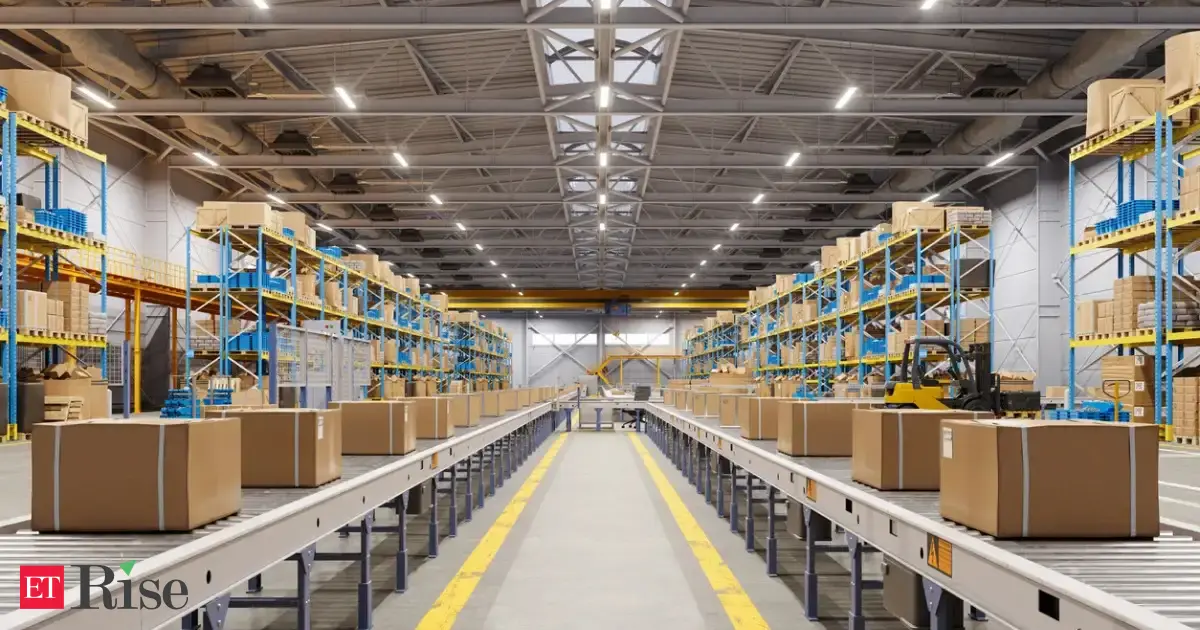
DPIIT’s logistics division is also drafting guidelines for multimodal logistics parks (MMLPs). View More
India is developing a grading and rating standards benchmark for warehouses and cold-chain facilities with the Asian Development Bank , Pankaj Kumar, Joint Secretary, DPIIT , said on Tuesday at FICCI. Addressing the FICCI’s third Logistics, Warehousing and Cold Chain Summit, Kumar said that the government had yet to decide who should regulate the ratings. Options include a government body or self-regulation by industry associations. Graded facilities could gain easier access to incentives and credit. The rating exercise follows two sets of warehouse standards and guidelines that DPIIT released recently. The department is also working with states to bring warehousing and cold chains into state logistics policies. It is helping them prepare city logistics plans that cover warehouses, dark stores and cold storage. DPIIT’s logistics division is also drafting guidelines for multimodal logistics parks (MMLPs). Warehousing and cold chains take up about 70 per cent of the area in MMLPs, Kumar said. The guidelines are expected to promote value-added services such as labelling, packaging, redistribution and digitalisation. Financing against stored produce is growing fast. Shanti Lal Jain, member of the Warehousing Development and Regulatory Authority (WDRA), said commodities worth about Rs 12,419 crore were pledged against electronic negotiable warehouse receipts (e-NWRs) last year, up 43 per cent. Loans against e-NWRs rose by the same margin to about Rs 5,700 crore. In the first five months of the current year, pledges have crossed Rs 6,000 crore and loans Rs 3,000 crore. The government has set a lending target of Rs 8,000 crore for the year, implying 40 per cent growth. Live Events About 7,800 warehouses are now registered with the regulator, with a combined capacity of 6 crore metric tonnes, roughly 30 per cent of national capacity. Registration remains voluntary. WDRA has raised its notified commodities to 246, covering food grains, pulses, oil, seeds, spices, horticulture, cash crops and even non-agricultural commodities; 61 commodities were added last year. “Unregistered storage can never be banked,” Jain said. He called on industry to invest in registered, scientific capacity closer to farm gates and to use government credit guarantees. The aim, he said, was to move farmers from distress sales to discretionary ones. States are competing for the investment. Anisha Shrivastav, Executive Director of Madhya Pradesh Industrial Development Corporation (MPIDC), said the state’s Logistics Policy 2025 offered a 30 per cent incentive on fixed capital investment for projects on land parcels of 25 acres or more. It also provides up to Rs 5 crore for external development. A 255-acre multimodal logistics park has been developed in Indore as a public-private partnership, and the state has set aside a further 110 acres in Jabalpur. .Pbanner{display:flex;justify-content:space-between;align-items:center;background-color:#ec1c40;margin-top:20px;padding:5px 10px;border-radius:4px;color:#fff;line-height:10px;width: 100%;box-sizing: border-box} .Pbannertext{display:flex;align-items:center;font-size:16px;font-weight:600;font-family:'Montserrat';} .Pbannertext img{height:20px;margin:0 6px} .Pbannerbutton a{display:flex;align-items:center;background-color:#fff;color:#ec1c40;text-decoration:none;font-weight:600;padding:4px 8px;border-radius:6px;font-size:15px;font-family:'Montserrat';} .Pbannerbutton img{height:20px;margin-right:6px} .Pbannerbutton a:hover{background-color:#f7f7f7} Add as a Reliable and Trusted News Source Add Now!