
Latest Sectors News


Fran Tarkenton, the legendary NFL quarterback, has made headlines by acquiring a beautifully renovated Mediterranean mansion in Palm Beach for $51.89 million. This stunning property boasts five spacious bedrooms and breathtaking ocean views, complemented by exclusive beach access. Having spent considerable time in the Palm Beach area, Tarkenton now joins a select group of affluent buyers captivated by the island's luxurious real estate offerings. View More
Fran Tarkenton, the legendary NFL quarterback, has made headlines by acquiring a beautifully renovated Mediterranean mansion in Palm Beach for $51.89 million. This stunning property boasts five spacious bedrooms and breathtaking ocean views, complemented by exclusive beach access. Having spent considerable time in the Palm Beach area, Tarkenton now joins a select group of affluent buyers captivated by the island's luxurious real estate offerings. View More

The Income Tax Assessing Officer (AO) in Berhampur received information from the property registrar's office in Jharsuguda that the man had sold a property and collected Rs 5.22 lakh in cash as part of the payment. The registered sale deed also mentioned the cash component. Following this information, the AO issued the man a notice under Section 269SS of the Income Tax Act and levied a penalty under Section 271DA. View More

An engineer became a full-time trader after his parents sold off their land, pledged jewellery and arranged ?35 lakh for him. However, things turned upside down, leaving him in a bigger debt. View More

Mahanadi Coalfields Ltd has filed its Red Herring Prospectus for an initial public offering with regulatory bodies. This IPO features an offer for sale of roughly 66.18 crore equity shares from Coal India, amounting to a 10 percent stake in the subsidiary MCL. The intended capital raise is around Rs 9,500 crore, with the final execution reliant on regulatory approval and market conditions. View More
Mahanadi Coalfields Ltd (MCL), a wholly owned subsidiary of Coal India Ltd , on Saturday said it has filed the Red Herring Prospectus (RHP) for the proposed initial public offering . The RHP, dated November 13, was filed with the Registrar of Companies (RoC), the Securities and Exchange Board of India (SEBI), the BSE and the NSE , Coal India said in a regulatory filing. The proposed IPO comprises an offer for sale (OFS) of up to 66.18 crore equity shares by Coal India, representing 10 per cent of its stake in the subsidiary. The issue is estimated to fetch around Rs 9,500 crore. The proposed public issue remains subject to receipt of applicable approvals, market conditions and other relevant considerations, the filing said. The IPO is part of Coal India's efforts to unlock value in its subsidiaries through stake sales and their listing on stock exchanges. .Pbanner{display:flex;justify-content:space-between;align-items:center;background-color:#ec1c40;margin-top:20px;padding:5px 10px;border-radius:4px;color:#fff;line-height:10px;width: 100%;box-sizing: border-box} .Pbannertext{display:flex;align-items:center;font-size:16px;font-weight:600;font-family:'Montserrat';} .Pbannertext img{height:20px;margin:0 6px} .Pbannerbutton a{display:flex;align-items:center;background-color:#fff;color:#ec1c40;text-decoration:none;font-weight:600;padding:4px 8px;border-radius:6px;font-size:15px;font-family:'Montserrat';} .Pbannerbutton img{height:20px;margin-right:6px} .Pbannerbutton a:hover{background-color:#f7f7f7} Add as a Reliable and Trusted News Source Add Now! (You can now subscribe to our ETMarkets WhatsApp channel) (You can now subscribe to our ETMarkets WhatsApp channel)

Not all gifts are tax-free under the Income-tax Act, 2025. Certain movable assets can attract tax depending on their value and the relationship between the giver and recipient. Here is what taxpayers should know about the rules, exemptions and possible tax liability. View More

The Supreme Court has clarified that a son cannot automatically claim a share in his grandfather’s property inherited by his father under the Hindu Succession Act, 1956. It held that partition made the father the exclusive owner, allowing him to sell the property. View More
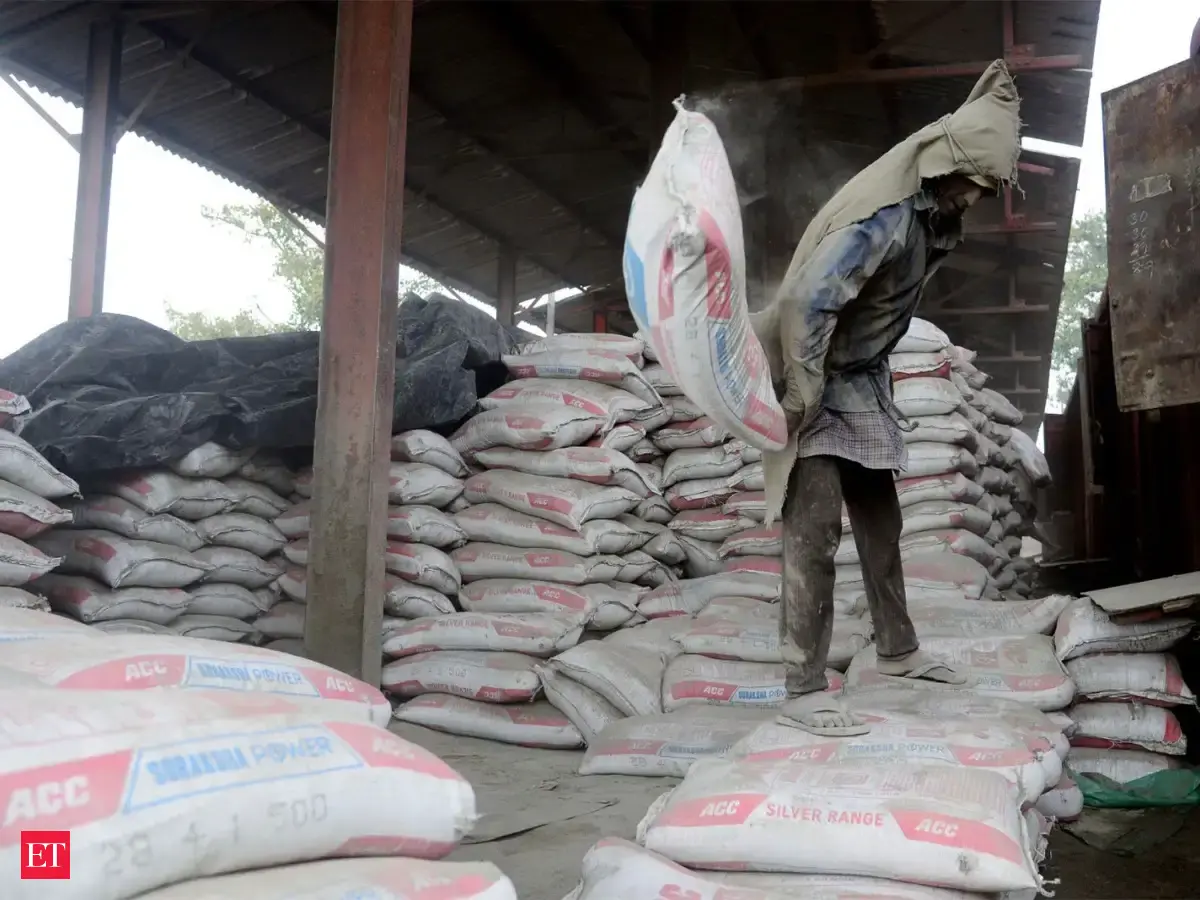
New cement price increases, along with seasonal demand revival, are expected to enhance sector performance in Q3FY27. Despite this, persistent cost inflation and new capacities may restrict margin recovery. The cement sector's total operating costs have risen, impacting profitability, although companies are implementing cost-saving measures. Revenue and EBITDA growth are projected over the next few years, yet supply may outpace demand. View More
New Delhi: New cement price increases and a seasonal revival in demand are expected to support an improvement in the sector's operating performance in the third quarter of FY27, although persistent cost inflation and additional capacity additions could limit the extent of margin recovery, according to a research report by Dolat Capital . The brokerage expects cement companies' EBITDA per tonne to increase by Rs 135, or 16.2 per cent, sequentially in Q3FY27, supported by a projected 2.1 per cent increase in blended realisations and a 0.3 per cent decline in operating expenses per tonne. The report noted that cement prices in the trade segment increased by Rs 9 per bag in October 2026, following a Rs 6 per bag hike in September. Non-trade prices also increased by Rs 5-20 per bag across markets during October. "This price increase is expected to partially offset cost pressures in Q3FY27 (cement bag + petcoke/coal + diesel) to a decent level, while price hike post Diwali in Nov-Dec'26 may further ease cost pressures," the report said. Reviewing the September quarter performance, Dolat Capital said the cement sector's coverage universe reported a 13.9 per cent year-on-year increase in revenue to Rs 589.8 billion, supported by 9.7 per cent growth in volumes to 103.7 million tonnes and a 3.9 per cent rise in blended realisations to Rs 5,690 per tonne. Live Events However, EBITDA declined 1.8 per cent year-on-year to Rs 86.5 billion, while EBITDA per tonne fell 10.4 per cent to Rs 834. Total operating costs per tonne increased 6.8 per cent year-on-year to Rs 4,855, with power and fuel costs rising 15.5 per cent to Rs 1,420 per tonne. The brokerage said industry volume growth remained healthy at around 8-9 per cent during Q2FY27 and H1FY27, supported by infrastructure and housing demand. "Cost inflation remains a key monitorable for FY27," the report said, adding that companies expect further cost pressures in Q3FY27 amid geopolitical tensions, although internal cost-saving measures could provide partial relief. Dolat Capital estimates revenue and EBITDA to grow at compound annual growth rates of 11.1 per cent and 13.4 per cent, respectively, over FY26-29. However, the brokerage cautioned that incremental cement supply of around 173 million tonnes per annum during FY26-29 would exceed incremental demand of approximately 122 million tonnes, potentially restricting meaningful price increases. It said managing profitability through volume growth, cost efficiency and premiumisation would remain critical for the industry. .Pbanner{display:flex;justify-content:space-between;align-items:center;background-color:#ec1c40;margin-top:20px;padding:5px 10px;border-radius:4px;color:#fff;line-height:10px;width: 100%;box-sizing: border-box} .Pbannertext{display:flex;align-items:center;font-size:16px;font-weight:600;font-family:'Montserrat';} .Pbannertext img{height:20px;margin:0 6px} .Pbannerbutton a{display:flex;align-items:center;background-color:#fff;color:#ec1c40;text-decoration:none;font-weight:600;padding:4px 8px;border-radius:6px;font-size:15px;font-family:'Montserrat';} .Pbannerbutton img{height:20px;margin-right:6px} .Pbannerbutton a:hover{background-color:#f7f7f7} Add as a Reliable and Trusted News Source Add Now! (You can now subscribe to our Economic Times WhatsApp channel) (You can now subscribe to our Economic Times WhatsApp channel)
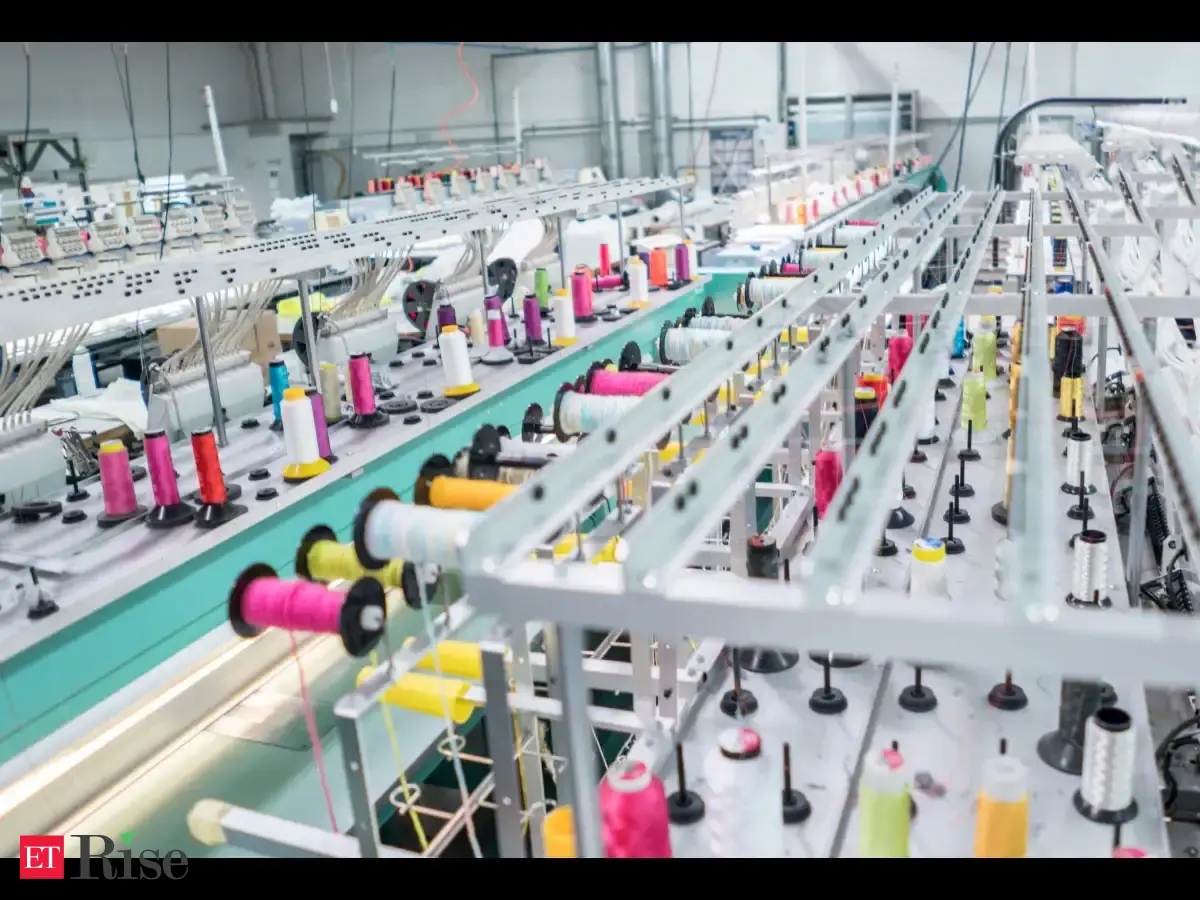
India's textile and apparel industry is aiming for $100 billion in exports by 2030 through Free Trade Agreements. The focus should be on enhancing capabilities in quality, delivery, and price to remain competitive. Indian manufacturers must leverage automation, digitization, and vertical integration to improve efficiency and respond to global demands. View More
India’s textile and apparel industry is entering an important phase. With the government signing key Free Trade Agreements (FTAs) and working towards an ambitious target of $100 billion in textile and apparel exports by 2030, access to global markets is expanding. But market access alone will not determine India’s success. FTAs can open doors, reduce tariff disadvantages and create opportunities for exporters. What happens after those doors open will depend on the competitiveness of Indian manufacturers. The industry must now focus on building capabilities that allow it to compete consistently on the three parameters that ultimately matter most to a global buyer: quality, delivery and price. India must build on its natural strengths Every major apparel-sourcing destination has developed its own competitive advantage. Bangladesh has created tremendous capabilities in producing certain categories at scale. China remains highly competitive across several specialised product segments, while countries such as Vietnam have demonstrated the impact of systematic, efficient and technology-driven manufacturing. India should not attempt to replicate every competing manufacturing destination. Instead, it must identify and strengthen the areas where it already has a genuine advantage. Live Events One of India’s strongest differentiators is value addition. The country has deep capabilities in embroidery, handwork, intricate detailing, craftsmanship, and high-fashion garments. The combination of quality, skill, and price at which Indian manufacturers can offer many of these products is difficult to replicate elsewhere. This allows India to position itself not simply as another large-volume manufacturing destination, but as a sourcing partner capable of delivering differentiated and value-added fashion. However, craftsmanship alone will not be enough. The next competitive advantage will come from combining India's traditional manufacturing strengths with modern technology and systematic execution. Automation must become a productivity strategy Automation is increasingly important for the apparel industry, but it is often misunderstood as simply replacing people with machines. That should not be the objective. The real purpose of automation is to enable people to become more productive, improve consistency, reduce variation and bring down the cost per operation. Manufacturing will continue to require skilled operators, technicians and managers, but technology can help them perform processes more efficiently and predictably. Operations such as collar and cuff making, plackets, buttoning and several repetitive production processes offer significant opportunities for greater automation and standardisation. Countries such as Vietnam and Bangladesh have progressed considerably in adopting systematic manufacturing processes. India must accelerate in this direction. But automation requires more than investment in machinery. It requires a change in mindset. Factories need a culture that is willing to adopt technology, measure performance, standardise processes and continuously improve productivity. Without this organisational mindset, even sophisticated technology will struggle to deliver its full potential. Digitisation is equally critical Alongside physical automation, manufacturers need stronger digital systems across their organisations. One of the challenges within Indian manufacturing is the significant variation in digitisation and systematic working across companies. Some manufacturers have successfully transformed their operations through technology and data, while others continue to depend heavily on manual processes. Closing this gap will be essential if India wants to scale its presence in global sourcing. Digital systems can improve visibility across production planning, inventory, quality, costing, capacity, and delivery. More importantly, they enable management teams to identify problems earlier and make faster, data-driven decisions. The objective should ultimately be to create manufacturing organisations where information flows as efficiently as materials. AI should solve business problems, not become a checkbox Artificial intelligence is naturally attracting enormous attention across industries, and its long-term potential in apparel manufacturing is significant. However, manufacturers should distinguish between excitement around AI and applications that create measurable business value. Current AI systems are already capable of supporting several business functions, but they also have limitations, including hallucinations, inconsistent outputs and challenges in reasoning or retaining context across complex workflows. For manufacturers, therefore, the question should not simply be: “Are we using AI?” The better question is: “Is this technology improving productivity, quality, forecasting, decision-making or efficiency?” The industry should continue experimenting with AI and identifying practical applications. At the same time, businesses should not overlook the significant and immediate gains available through conventional automation, digitisation, process standardisation and better use of operational data. Technology adoption should always be connected to measurable outcomes. Quality, delivery and price remain the fundamentals Technology, FTAs and government initiatives can strengthen India's competitive position, but the fundamentals of the apparel business remain remarkably straightforward. A buyer expects the right quality. The product must arrive on time. And the price must be competitive. Manufacturers that consistently perform across these three parameters will earn business. Those that do not will find it difficult to retain customers, irrespective of preferential market access. This is why India's export ambitions must ultimately translate into factory-level improvements. The focus needs to shift from simply asking, “How much capacity can we create?” to asking, “How competitive can that capacity become?” Productivity, efficiency, consistency, speed, technology adoption and management systems will increasingly determine which manufacturers capture the opportunities created by India's expanding trade relationships. Vertical Integration Can Strengthen Control Vertical integration can also play an important role in improving competitiveness. At CTA Apparels, our approach to vertical integration is fundamentally about gaining greater control over the manufacturing value chain. The more processes a manufacturer controls, the greater the visibility it can have over timelines, quality and costs. Better cost control can support competitive pricing, while greater control over production processes can improve quality consistency and delivery reliability. For global buyers, vertical integration therefore becomes valuable when it translates into responsiveness, predictability and reliability. It is not simply about bringing more capabilities under one organisation. Those capabilities must work together to create measurable value for customers. The government has created the opportunity; Industry must execute India's government is creating opportunities through FTAs, policy support and initiatives aimed at strengthening the textile and apparel sector. The responsibility now increasingly shifts towards industry. Manufacturers must invest in technology, automation, digital systems, people, productivity and process excellence. Most importantly, the industry needs to develop a mindset centred on global competitiveness. An FTA may make it easier for an Indian manufacturer to access a market, but an FTA cannot guarantee an order. And it certainly cannot guarantee a repeat order. That will depend on performance. India already possesses many of the ingredients required to become a much stronger global textile and apparel sourcing destination: a large manufacturing ecosystem, skilled people, a strong textile base and exceptional capabilities in craftsmanship and value addition. The opportunity now is to combine these traditional strengths with modern manufacturing. If Indian apparel manufacturers can bring together craftsmanship and automation, value addition and digitisation, competitive pricing and dependable delivery, the country can create a proposition that is extremely compelling for global brands. FTAs have opened the doors. Competitiveness will determine how far Indian apparel walks through them. The writer is Vice President (Strategy), CTA Apparels. Views are personal. .Pbanner{display:flex;justify-content:space-between;align-items:center;background-color:#ec1c40;margin-top:20px;padding:5px 10px;border-radius:4px;color:#fff;line-height:10px;width: 100%;box-sizing: border-box} .Pbannertext{display:flex;align-items:center;font-size:16px;font-weight:600;font-family:'Montserrat';} .Pbannertext img{height:20px;margin:0 6px} .Pbannerbutton a{display:flex;align-items:center;background-color:#fff;color:#ec1c40;text-decoration:none;font-weight:600;padding:4px 8px;border-radius:6px;font-size:15px;font-family:'Montserrat';} .Pbannerbutton img{height:20px;margin-right:6px} .Pbannerbutton a:hover{background-color:#f7f7f7} Add as a Reliable and Trusted News Source Add Now!