
Latest Sectors News

Despite regional geopolitical tensions and an anticipated surge in new housing supply, Dubai's real estate sector remains resilient, according to Emaar Properties founder Mohamed Alabbar. He asserts that the market has strong fundamentals and long-term planning to weather shocks, with record sales and luxury segment growth fueling optimism for continued stability and expansion. View More

Escalating Iran-US-Israel conflict has caused unprecedented travel disruptions across the Middle East. Thousands of travelers and expatriates in the Gulf are now using land corridors and emergency services to leave the region as airspace closures and flight cancellations persist. This crisis is reshaping regional mobility and impacting global aviation networks. View More



The FMCG supply chain, increasingly digital and data-driven, faces a human capital challenge with women's underrepresentation in leadership. Including women strengthens resilience, leverages consumer proximity, and drives technological agility. View More
In the ever-changing landscape of international commerce, the supply chain is the structural foundation which enables economies to remain agile, industries to remain competitive, and consumers to remain satisfied. Such complex systems, which include sourcing, manufacturing, warehousing, cold chain logistics, and delivery, are no longer back-end support systems; they are the engines for growth. Perhaps no industry is truer to this than the food industry and the consumer brands supply chain and logistics landscape. However, despite the strategic significance of the industry, a human capital challenge persists which undermines the true potential of the industry: the underrepresentation of women in the logistics and supply chain industry. This is not only a social justice issue; it is a structural one which affects the true strength of the supply chain. The Paradigm Shift: From Traditional Understandings to Strategic Inclusion Traditionally, the supply chain industry, especially the food processing and transportation industry, was considered a physically demanding and operationally rigid industry. However, the modern FMCG supply chain is increasingly digital, data-driven, and technology-enabled, with AI, IoT, and automation becoming integral to the way businesses operate. As the supply chain becomes more sophisticated, the basis for gender exclusion becomes less relevant, while the business case for inclusion becomes more compelling. Live Events Women make up about 40 percent of the global supply chain workforce, but their representation in leadership roles is yet to catch up. Nevertheless, studies have shown that organizations with more diverse leadership teams outperform their peers in innovation, financial performance, and flexibility. The FMCG industry, in particular, is an industry that is highly dynamic, with factors such as seasonal demand, regulatory requirements, and food spoilage all combining to make it a challenging industry to operate in. 1. Why Women Strengthen FMCG Supply Chains The food and consumer brands industry is a fast-moving sector. Companies have to handle situations arising due to fluctuations in the cost of raw materials, weather conditions, consumer behaviour, and geopolitical situations. In such a scenario, diverse teams can provide a broader cognitive perspective. For companies in the FMCG sector, building resilience is not an abstract concept. For them, building resilience can have direct implications on their inventory turnover rates and working capital. Gender diversity has a greater opportunity to build resilience and respond to situations in a better manner. 2. Consumer Proximity as a Strategic Advantage Unlike the industrial sector, the supply chain of the FMCG sector is related to consumer behaviour. For companies in the FMCG sector, women comprise a major percentage of consumer behaviour decision-makers in the country. For example, in the food supply chain, understanding consumer behavior can have direct implications for product freshness and consumer demand. 3. Technology Integration and Operational Agility The current value chains for FMCG industries have a robust data-driven and predictive environment. Women leaders are increasingly driving the agenda for digital transformation, procurement analytics, warehouse automation, and real-time tracking. The key to building agile value chains is through a combination of technology integration, regulatory compliance, and collaboration. These are leadership skills and not gender-specific skills, and a diversified talent pipeline ensures that organizations have access to the greatest bandwidth of leadership skills. Persistent Barriers in the Ecosystem While there has been a move in the right direction, there are still several barriers to entry, especially in more complex and logistics-centric value chains such as transportation, cold storage, and procurement. Safety, unconscious biases, and mentorship are a few of the key barriers to entry for women in these roles. In addition, while there are more women represented in planning and analytics, there are fewer women represented in more senior leadership roles related to operations, which are key to capital allocation, infrastructure development, and value chain redesign. The leadership gap is a key challenge that must be addressed. As without equitable representation at decision-making levels, the FMCG supply chain risks operating below its strategic potential. The Strategic Imperative for Food & Consumer Brands FMCG supply chains present a complex challenge: • Products may be perishable. • Compliance with regulatory requirements is extremely stringent. • Geographical reach is broad. • Brand loyalty is tenuous and price-vulnerable. Such a complex landscape requires the strengths of collaboration, precision, and partnership. Women leaders often possess a strong ability to work with various stakeholders and align teams, which is vital for effective partnership with various actors in the supply chain. Sustainability is no longer a choice; it is a necessity. Ethical sourcing, reduction of waste, and green logistics are integral to a brand’s image. A diverse leadership group is more focused on the impact metrics for the longer term along with the short-term operational metrics. A Blueprint for Stronger Participation In order to unlock the full potential within the food and consumer brands/FMCG supply chain and logistics ecosystem, businesses must go beyond the rhetoric of diversity. Structured Leadership Pathways Promotion paths, sponsorship opportunities, and rotations through the business ensure that women experience the fundamental supply chain, logistics, and infrastructure functions. Infrastructure and Policy Support Policies that ensure the safety of transport, warehousing that encourages diversity, and flexible leadership structures that support diversity remove barriers to participation. Digital Skill Acceleration Training programs that focus on supply chain analysis, AI, and automation ensure that women are equipped for the most impactful technical roles. Outcome-Based Accountability Tracking not only the number of women at the entry level but also at the managerial and senior leadership levels ensures that the momentum continues. Stronger Chains Begin with Equal Links The future of the FMCG supply chain will be characterized by adaptability, digitisation, and sustainability. Organisations that adopt inclusive leadership will be able to navigate the future better and build sustainable consumer relationships. In the food and consumer brands/FMCG supply chain and logistics ecosystem, every link matters. Women integrated across every link of the chain, not as participants but as leaders, make the chain stronger and future-ready. It is not enough to say that equal links make the chain stronger. They make the chain future-defining. The author is Women Entrepreneur and the CEO of Ghodawat Consumer Ltd. .Pbanner{display:flex;justify-content:space-between;align-items:center;background-color:#ec1c40;margin-top:20px;padding:5px 10px;border-radius:4px;color:#fff;line-height:10px;} .Pbannertext{display:flex;align-items:center;font-size:16px;font-weight:600;font-family:'Montserrat';} .Pbannertext img{height:20px;margin:0 6px} .Pbannerbutton a{display:flex;align-items:center;background-color:#fff;color:#ec1c40;text-decoration:none;font-weight:600;padding:4px 8px;border-radius:6px;font-size:15px;font-family:'Montserrat';} .Pbannerbutton img{height:20px;margin-right:6px} .Pbannerbutton a:hover{background-color:#f7f7f7} Add as a Reliable and Trusted News Source Add Now!
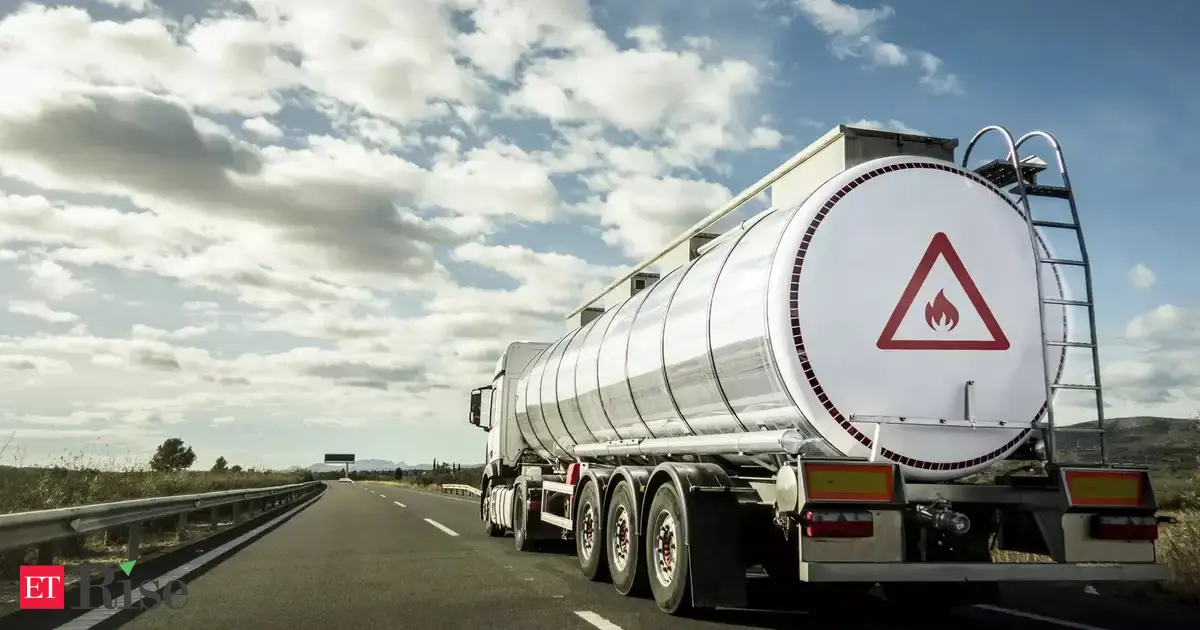
Refineries in Saudi Arabia, Kuwait, and Bahrain are reducing output due to drone and missile attacks, disrupting supplies to Asia and Europe and sending prices soaring. View More
The widening conflict in the Middle East is stoking fears over a global energy crunch as exporters scramble for routes out of the region while a swath of refineries reduce output. More oil tankers are diverting away from the Persian Gulf and toward the Red Sea, where Saudi Arabia is increasing crude loadings at the port of Yanbu. The near halt of traffic through the Strait of Hormuz is causing storage tanks across the region to top out, while drone and missile attacks have targeted refineries in Saudi Arabia, Kuwait and Bahrain, prompting several to cut capacity. The escalating war has choked off oil and gas supplies to key customers in Asia and Europe and sent energy prices soaring. The inability to export via Hormuz forced Iraq to start shutting its biggest oil fields earlier this week. Neighboring Kuwait has now cut production, too, according to the Wall Street Journal. Qatar told the Financial Times that a complete halt in energy shipments from the region is in the cards if hostilities persist. Saudi Arabia has boosted oil loading from Yanbu as part of its plans to divert supplies away from the usual route through Hormuz. The kingdom has loaded seven very large crude carriers at the port in the Red Sea so far this month, ship-tracking data show. That compares with just three in the first six days of February. The ships can each haul about 2 million barrels each. One is heading for Malaysia and has crossed the Bab El Mandeb strait where the Iran-backed Houthi militants in Yemen menaced shipping until recently and have threatened to revive their campaign. The other vessels are going north toward Egypt and the Sumed pipeline, where Saudi Arabia has additional storage capacity. There’s also a long line of empty VLCCs sailing toward the southern end of the Red Sea, though it’s not yet clear how many of those will head to Yanbu. Live Events While the kingdom can reroute much of its crude, other producers in the region face a shrinking window to resume exports via Hormuz before they run out of storage space. Commercial vessel traffic through Hormuz, the route to global markets for a fifth of the world’s oil supplies, remains largely suspended. The frequency of attacks on ships in and around the strait remains high, making it too risky for tankers and their multimillion-dollar cargoes to attempt transit. A prolonged shutdown of the waterway would force oil output cuts by more producers across the region, according to Giovanni Staunovo, a commodity analyst at UBS Group AG. “If the strait stays closed, all would feel it and will have to reduce production once storage reaches tank-tops,” he said. “Pipelines don’t allow to divert everything.” Kuwait began reducing production at some oil fields after running out of places to store bottled-up crude, the Wall Street Journal reported. Analysts at JPMorgan Chase & Co. had said the country would be one of the Gulf nations most at risk of shut-ins, after Iraq. HORMUZ TRACKER: Isolated Ship Transits Continue in Persian Gulf Iran fired a barrage of missiles and drones targeting countries across the Persian Gulf overnight, and on Friday threatened to ramp up attacks and use more advanced missiles. Benchmark Brent crude soared above $90 a barrel for the first time in almost two years, while US oil futures topped $89. US President Donald Trump has signaled “imminent action” to reduce pressure on prices, and the Treasury Department has eased curbs on India’s ability to buy Russian oil. Yet with no sign of a let-up in hostilities, Goldman Sachs Group Inc. flagged the risk of oil topping $100 a barrel were disruption to extend. Refinery Cuts Bahrain’s only refinery, a 90-year-old plant that’s just been upgraded, was hit in an attack Thursday night, though it continued running. Elsewhere in the region, Saudi Arabia’s largest refinery is shut, Kuwait’s biggest has slashed capacity and Qatar has shuttered refining — along with its massive liquefied natural gas operations. The effects of energy shutdowns in the Middle East are being felt globally. China’s government has told the country’s top oil refiners to suspend exports of diesel and gasoline as crude deliveries are disrupted. In the US, gasoline pump prices have advanced to the highest level at any time under Trump — in either his first or second term — potentially posing a challenge for the president and his party at midterm elections later this year. .Pbanner{display:flex;justify-content:space-between;align-items:center;background-color:#ec1c40;margin-top:20px;padding:5px 10px;border-radius:4px;color:#fff;line-height:10px;} .Pbannertext{display:flex;align-items:center;font-size:16px;font-weight:600;font-family:'Montserrat';} .Pbannertext img{height:20px;margin:0 6px} .Pbannerbutton a{display:flex;align-items:center;background-color:#fff;color:#ec1c40;text-decoration:none;font-weight:600;padding:4px 8px;border-radius:6px;font-size:15px;font-family:'Montserrat';} .Pbannerbutton img{height:20px;margin-right:6px} .Pbannerbutton a:hover{background-color:#f7f7f7} Add as a Reliable and Trusted News Source Add Now!


West Bengal CM Mamata Banerjee launched a sit-in protest, accusing the BJP and Election Commission of a conspiracy to disenfranchise voters by removing genuine names from electoral rolls. She highlighted instances of living individuals being declared dead, vowing to expose the alleged plot ahead of the EC's visit and upcoming assembly polls. View More

The average IRS tax refund is up 10.6%, based on early filing data. Here's what you can expect. View More
In this articleIRSFollow your favorite stocksCREATE FREE ACCOUNT Tony Anderson | Digitalvision | Getty Images The average tax refund is 10.6% higher so far this season, compared to roughly the same period in 2025, according to the latest IRS filing data.As of Feb. 27, the average refund amount for individual filers was $3,742, up from $3,382 about one year ago, the IRS reported on Friday. The average is down from the $3,804 reported last week. Typically, the average refund spikes around mid-February, once data includes payments claiming the earned income tax credit or the refundable part of the child tax credit, known as the additional child tax credit or ACTC, according to a Bipartisan Policy Center analysis. After the February peak, the average generally declines gradually through Tax Day. The latest filing data reflects roughly 51.5 million individual returns received, out of about 164 million expected through the April 15 deadline. Read more CNBC personal finance coverageAverage IRS tax refund is up 10.6%, early filing data showsGOP 'big beautiful bill' to deal 'shock' to the ACA marketplace: health expertsAs millions claim Trump's 'no tax on overtime' deduction, filers risk mistakesS&P 500 shrugs off 1% daily drops all the time. Investors can too, advisors sayWhere investors can look for stability as the Iran war rattles marketsWhat the Iran war market turmoil means for those nearing retirementMusk says Grok can help with your taxes. What experts say about AI and tax prepNew bill would update anti-poverty program, 'a critical lifeline': WarrenThere's a push to cut capital gains taxes on home sales to add supply for buyersIran war and your portfolio: Historical stock market patterns investors should knowTrump says '401(k)s are way up' â but workers are tapping them at record ratesAI, layoffs spur workers to want a career change, survey finds â but few may do itPoor coordination can cost couples an average $14,000 in retirement wealthGold price jumps on Middle East turmoil. What to know before investingWhat student loan borrowers need to know about judge's ruling on SAVE planCNBC's Financial Advisor 100: Best financial advisors, top firms ranked As the midterm elections approach, Republicans have been laser-focused on the size of tax refunds this season, with many pointing to the changes enacted via President Donald Trump's "big beautiful bill." In a late January release, the White House said average tax refunds could jump "by $1,000 or more," citing several media reports that reference early October research from investment bank Piper Sandler. Why tax refunds could be bigger this season Four of Trump's new tax breaks â the deductions for tip income, overtime, seniors and auto loan interest â go on a new form, known as Schedule 1-A, which is part of individual tax returns. As of March 4, some 43% of returns included Schedule 1-A, and refunds for those filings were $775 bigger than the typical refund last year, Frank Bisignano, Social Security Administration commissioner and IRS CEO, said this week during a House Ways and Means Committee hearing. Trump's bigger deduction limit for state and local taxes, known as SALT, could also boost refunds for eligible filers who itemize tax breaks, experts say. Some of the smaller changes include a bigger standard deduction and more generous child tax credit for 2025. However, tax refunds or balances due also vary based on workers' paycheck withholdings, or other payments made throughout the year, experts say. "What I'm running into is [the changes are] providing hundreds of dollars of difference, not thousands of dollars," Tom O'Saben, director of tax content and government relations at the National Association of Tax Professionals, told CNBC. watch nowVIDEO4:0804:08Trump tax laws to produce higher refunds in 2026Personal Finance Choose CNBC as your preferred source on Google and never miss a moment from the most trusted name in business news.