Latest Sectors News

Despite regional geopolitical tensions and an anticipated surge in new housing supply, Dubai's real estate sector remains resilient, according to Emaar Properties founder Mohamed Alabbar. He asserts that the market has strong fundamentals and long-term planning to weather shocks, with record sales and luxury segment growth fueling optimism for continued stability and expansion. View More
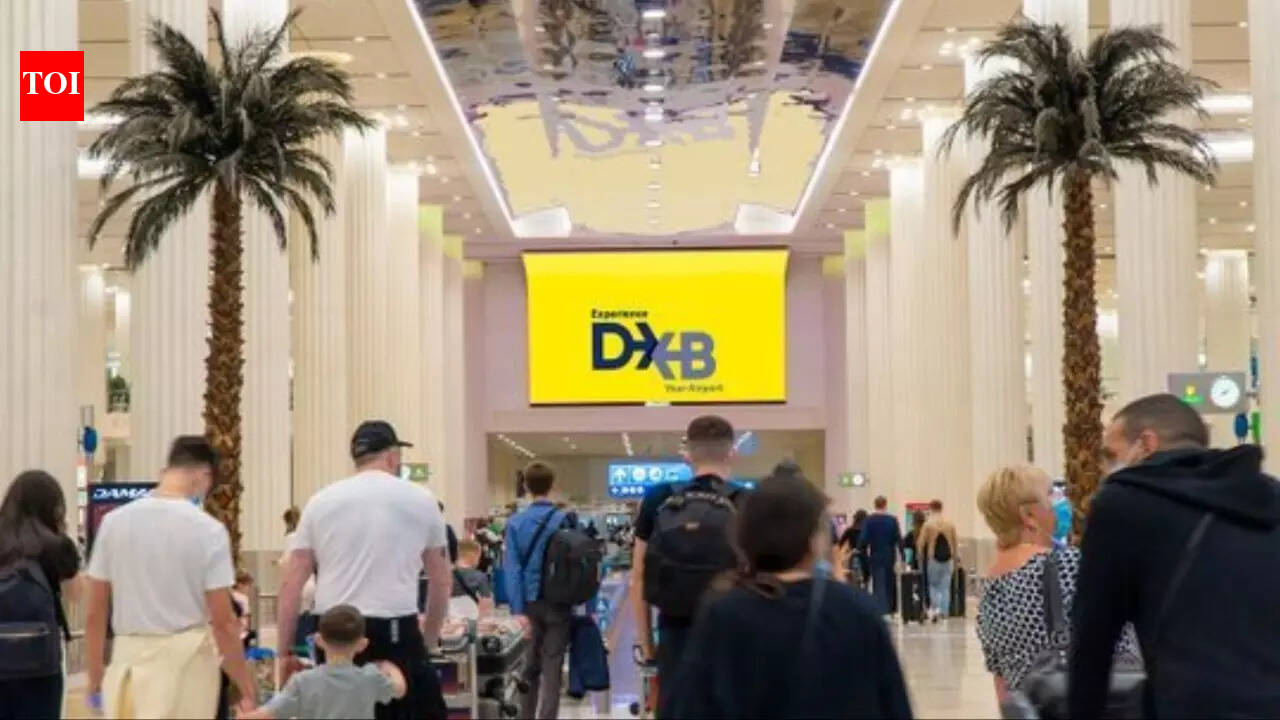
Escalating Iran-US-Israel conflict has caused unprecedented travel disruptions across the Middle East. Thousands of travelers and expatriates in the Gulf are now using land corridors and emergency services to leave the region as airspace closures and flight cancellations persist. This crisis is reshaping regional mobility and impacting global aviation networks. View More


While the amount that a median-income household can afford is higher than it was a year ago, it is still below the median price for a single-family home. View More
Lifestylevisuals | E+ | Getty Images When it comes to buying a house, affordability continues to slowly improve.U.S. households that have a median income â an estimated $86,300 â and enough money for a 20% down payment can now afford a $331,483 home, up $30,302 from $301,181 a year ago, according to a new report from Zillow. By "afford," Zillow means that the monthly mortgage payment, including insurance and property taxes, would be under 30% of a household's income."A $30,000 increase in buying power can open up a different neighborhood, bigger home or a home with fewer compromises," the report says. Read more CNBC personal finance coverageMiddle-income homebuyers have $30,000 more buying power than a year agoAverage IRS tax refund is up 10.6%, early filing data showsGOP 'big beautiful bill' to deal 'shock' to the ACA marketplace: health expertsAs millions claim Trump's 'no tax on overtime' deduction, filers risk mistakesS&P 500 shrugs off 1% daily drops all the time. Investors can too, advisors sayWhere investors can look for stability as the Iran war rattles marketsWhat the Iran war market turmoil means for those nearing retirementMusk says Grok can help with your taxes. What experts say about AI and tax prepNew bill would update anti-poverty program, 'a critical lifeline': WarrenThere's a push to cut capital gains taxes on home sales to add supply for buyersIran war and your portfolio: Historical stock market patterns investors should knowTrump says '401(k)s are way up' â but workers are tapping them at record ratesAI, layoffs spur workers to want a career change, survey finds â but few may do itPoor coordination can cost couples an average $14,000 in retirement wealthGold price jumps on Middle East turmoil. What to know before investingCNBC's Financial Advisor 100: Best financial advisors, top firms ranked The improvement is at least partly due to interest rates that have come down slowly. The average rate on a fixed 30-year mortgage was 5.99% as of Feb. 27 but has since ticked up to 6.14%, according to Mortgage News Daily. A year ago, it was 6.79%.For mortgages, even rates that are 0.5 percentage point lower can make a difference, said Kara Ng, senior economist at Zillow and author of the report."As a rough estimate, a half-point drop in mortgage rates could mean savings of about $1,000 a year for a typical U.S. home," Ng said.A 1 percentage point drop in rates could expand the pool of households that can afford to buy a home by about 5.5 million households, including roughly 1.6 million renters who could become first-time homebuyers, according to the National Association of Realtors. NAR said it estimated the income needed to afford a median-priced home assuming a 30-year mortgage, 10% down payment, and mortgage payment of 25% of income, and then calculated using a 7% mortgage rate and a 6% rate. Median-price home is still unaffordable However, affordability remains strained. While the amount a median-income household can afford is higher than a year ago, that figure remains below the median price of a single-family home, which was $400,300 in January, according to NAR.Based on that price and a 6.19% mortgage rate, the average in January, buyers would need an income of $94,032 to qualify for a mortgage, according to the NAR's affordability index. That measurement also assumes the buyer has a 20% down payment, which in this case would be $80,060. And, of course, lenders consider more than just income in determining whether to approve a loan, including factors such as credit score, credit history and outstanding debt.That income amount is less compared with a year earlier: When the average rate was 7.04% and the median home price was $398,100, buyers needed $102,096 in income to qualify, NAR's affordability index shows. Meanwhile, home values have risen much faster than household incomes. From 2000 to 2024, median per-capita income grew by around 155%, while median home prices increased by about 207%, according to a recent study from the Federal Reserve Bank of St. Louis. Additionally, mortgage rates jumped from below 3% in mid-2021 to nearly 8% in October 2023."Buyers are still feeling the impact of rapid price gains during the pandemic and mortgage rates that are still much higher than they were in the early part of this decade," Ng said. More buyers in the market could push up prices Also helping affordability is improved inventory, with 6% more homes on the market in January than a year earlier, according to the Zillow report. However, a broader housing shortage remains a problem.Improved affordability also means more potential buyers this spring."Unless housing supply increases, these additional potential buyers becoming active in the market could simply push up home prices," Lawrence Yun, NAR chief economist, said in a January release about pending home sales and increasing affordability. Choose CNBC as your preferred source on Google and never miss a moment from the most trusted name in business news.

Some Americans are using AI chatbots for therapy. Mental health experts share when it is, and isn't, safe to use those tools for emotional support. View More
As Americans get lonelier and lonelier, a growing number of people are getting some emotional support from artificial intelligence chatbots â and some mental health experts are concerned."The topic of AI for therapy [and] emotional support companionship is coming up a lot," says Leanna Fortunato, a licensed clinical psychologist and director of quality and health care innovation for the American Psychological Association. "Anecdotally, providers are talking about it, and we know from the research that people are using AI tools for that kind of support more and more."Some chatbot users accidentally fall into mental health-related conversations â by complaining about a stressful day to a digital entity that's guaranteed to listen, for example. Others may seek mental health advice from an AI chatbot that isn't a licensed professional, but is less expensive than a therapist, Fortunato says.In a health research survey of more than 20,000 U.S. adults, 10.3% of participants said they used generative AI daily. Of that group, 87.1% of them reported using the tech for personal reasons including advice and emotional support. The study was published on Jan. 21 and conducted by researchers from institutions including Massachusetts General Hospital, Weill Cornell Medicine and Northeastern University.On TikTok, the search term "Therapy AI Bot" has at least 11.5 million posts, ranging from users sharing their best prompts for turning chatbots into therapists to health experts warning about the potential dangers involved.Technology companies are spending billions of dollars developing AI tools and attempting to further integrate them into people's daily lives. But historically, AI chatbots don't always understand when a user is experiencing a serious health crisis, and may not always respond to them accordingly. The New York Times found "nearly 50 cases of people having mental health crises during conversations with ChatGPT," including three deaths, in a Nov. 23 report.Companies like Anthropic, Google and ChatGPT-maker OpenAI say they're working with mental health experts to strengthen their tools' responses to sensitive conversations. "These are incredibly heartbreaking situations and our thoughts are with all those impacted," an OpenAI spokesperson tells CNBC Make It. "We continue to improve ChatGPT's training to recognize and respond to signs of distress, de-escalate conversations in sensitive moments, and guide people toward real-world support, working closely with mental health clinicians and experts."Frequent conversations with AI companions can erode people's real-life social skills, according to an April 2025 paper written by an OpenAI product policy researcher. Heavy daily use of ChatGPT is correlated with increased loneliness, found an OpenAI-MIT Media Lab study also published in April 2025.The American Psychological Association strongly advises against using AI as a substitute for therapy and mental health support.Some mental health professionals say you can still engage with chatbots risk-free about certain related topics. Here's what you need to know. 'I see it as a tool, and I think that a tool can be helpful' AI chatbots can be useful for learning about mental health, says psychotherapist and lifestyle coach Esin Pinarli. They can help you generate journaling prompts for reflection, and you can ask them for links to research papers about coping strategies, treatment options and other questions you may have about mental health conditions, she says."I don't see it as [a substitute for] therapy. I see it as a tool, and I think that a tool can be helpful," says Pinarli, the founder of Boca Raton, Florida-based private practice Eternal Wellness Counseling. Her clients sometimes talk to ChatGPT about specific situations in their personal lives, and then run its responses past her before acting on them, she says.In her personal AI testing, Pinarli has seen chatbots sometimes use language that supports a user's "unhealthy behaviors," she says. If you ask a chatbot about a confrontation you had with a friend, it might tell you that your friend is being too sensitive, for example â even if you're actually the one in the wrong.If an exchange with an AI chatbot touches on your mental health, Fortunato recommends asking yourself:Is there a reputable source that I can cross-check this information with?Do I have a provider that I can ask these questions to?Reputable sources could include peer-reviewed scientific studies, articles from health news organizations or resources from medical organizations like Harvard Health Publishing or the Mayo Clinic. "AI could really increase people's access to health information," Fortunato says. "[But] AI isn't necessarily going to always give you correct information." Keep these considerations in mind when using AI Pinarli and Fortunato agree that people shouldn't use AI chatbots for getting a diagnosis or support in a mental health crisis, especially suicidal ideation. During an active mental health crisis, you can always call or text the Suicide and Crisis Lifeline (988), which is confidential and available 24 hours a day, seven days a week, free of cost."We've seen some really high-profile harms, particularly for youth or vulnerable groups who might be in crisis, where AI didn't handle the situation correctly," Fortunato says. "It continued to engage with people who were in crisis. It didn't provide crisis resources. It didn't challenge a pattern of thinking that was problematic."They also both say that you shouldn't share your medical records or any personal identifying information with a chatbot, because those conversations aren't confidential or legally protected. And you generally shouldn't rely on AI to solve problems in your real-life human relationships, says Pinarli."You need another person with another nervous system across from you in order to pay attention to body language, to tone of voice," she says. Chatbots are "not going to challenge you emotionally, and they don't require reciprocity."If you're experiencing a mental health crisis or concerning mental health symptoms, you can contact the free, confidential National Helpline for Mental Health at 1-800-662-HELP (4357).Want to improve your communication, confidence and success at work? Take CNBC's new online course, Master Your Body Language To Boost Your Influence. Take control of your money with CNBC Select CNBC Select is editorially independent and may earn a commission from affiliate partners on links.Six ways to file your taxes for freeWhat is a good monthly retirement income in 2026?How to buy gold from CostcoHere are 5 grocery rewards cards to beat inflationThe 6 best personal loans of February 2026 VIDEO5:0305:03We bought a $90K fire station and turned it into our dream homeMake It

Berkshire Hathaway's new CEO, Greg Abel, generated some significant headlines during a roughly half-hour live interview on CNBC's "Squawk Box." View More
In this articleBRK.BBRK.AFollow your favorite stocksCREATE FREE ACCOUNT Berkshire Hathaway CEO Greg Abel speaking on CNBC's Squawk Box on March 5th, 2026. CNBC (This is the Warren Buffett Watch newsletter, news and analysis on all things Warren Buffett and Berkshire Hathaway. You can sign up here to receive it every Friday evening in your inbox.)Berkshire Hathaway's new CEO, Greg Abel, generated some significant headlines during a roughly half-hour live interview on CNBC's "Squawk Box."Shortly after an SEC filing from the company early Thursday morning disclosed Berkshire "commenced repurchasing shares of our common stock" the day before, Abel told Becky Quick he plans to use his entire after-tax salary to personally buy Berkshire shares every year "as long as I'm the CEO."A second SEC filing that morning shows he started his annual purchases on Wednesday by paying $15.3 million for 21 Class A shares at an average price of $728,970 per share.He also revealed Berkshire has no plans to sell some or all of its $7.9 billion Kraft Heinz stake now that the food company's new CEO halted a plan to split the company in two.Warren Buffett publicly criticized the proposed move when it was announced last September. And just a month ago, Abel indicated there could be a reduction or elimination of Berkshire's KHC position with an SEC registration for "the potential resale" of almost its entire position.Here are the details and some other highlights.'This is a one-time event'Berkshire's announcement that it resumed share buybacks this week for the first time since May of 2024 appears to be all we're going to get on the subject for the foreseeable future.The SEC filing says the disclosure was made "in the interest of transparency with our leadership transition," and warns "Berkshire does not undertake any obligation to update or revise any disclosures regarding our repurchases, including any suspension or termination of the repurchases," expect in its regular quarterly financial reports.The filing did not include any further details on how many shares had, or will be, repurchased, simply repeating the company's "long-standing" policy that permits buybacks "at any time we believe the repurchase price is below our intrinsic value, conservatively determined." watch nowVIDEO5:2905:29Berkshire Hathaway CEO Greg Abel on resuming buyback program: I absolutely talked to WarrenSquawk Box In his "Squawk" interview, Abel had nothing to add, despite prodding from co-anchors Becky and Joe Kernen, except to say he "absolutely talked" to Buffett about the move and it was made after the 48-hour "cooling off" period following the release of Berkshire's 10-K annual report on Saturday."This is a one-time event to let our shareholders know."Abel will use his 'entire' salary to buy Berkshire shares every yearAbel revealed for the first time in the interview that he's making a long-term commitment to personally buy Berkshire stock annually with his after-tax salary because "absolute alignment with our shareholders, our partners, our owners, is critical.""As CEO, I absolutely, obviously, believe in Berkshire, with the transition from Warren, and I inherited a company that has an incredible foundation. I believe in its future, the opportunities that exist there." watch nowVIDEO6:1206:12Berkshire CEO on investing salary in company stock: Absolute alignment with shareholders is criticalSquawk Box Abel said both the Berkshire board and Buffett were "obviously very supportive" of his plan, with Buffett saying no one else in corporate America does this and it is "so Berkshire.""The whole idea is our shareholders are owners [who] use their after-tax dollars to buy Berkshire. I'll do the same. So, Warren acknowledged immediately the alignment with our values."With the addition of the newly purchased stock, Abel owns 249 Class A shares with a market value of $185.8 million as of Friday's closing.According to the filing, he also owns Class B shares valued at almost $1.2 million.No 'immediate action' on selling Kraft Heinz sharesAbel praised the decision last month by Kraft Heinz's new CEO Steve Cahillane to pause plans for split the company in two, a division that would have essentially reversed the merger Warren Buffett helped orchestrate in 2015.While Abel acknowledged there's "no question" Berkshire's investment in the food company has been "disappointing," he had concerns about breaking them apart "when they're facing a lot of challenges and haven't resolved a lot of their issues yet." Kraft Macaroni & Cheese and Heinz Tomato KetchupBrendan McDermid | Reuters "So, for Steve to come in and say we're pausing it, there's opportunities within Kraft Heinz to fix things and get the business back on track and then he'll evaluate things â we thought that was absolutely the right approach."Abel said the SEC registration was filed "really to be in a place that if we ever did sell, we'd be able to. But it's not that we're going to take any immediate action currently."Buffett is in the office every dayWhile Buffett is no longer CEO, he is still playing a significant role at Berkshire.Abel reports that as chairman, Buffett still comes into the Omaha headquarters every day.When he became CEO, Abel decided to continue to live in Des Moines, Iowa, but "if I'm in Omaha, we're always connecting. If I'm traveling ... I often check in just to catch up on what he's seeing, what he's hearing, what am I feeling."So, if it's not every day, it's every couple days." watch nowVIDEO6:2406:24Berkshire CEO Greg Abel on succeeding Warren Buffett: I still check in with him nearly every daySquawk Box Can Abel get a major deal done in three days as Buffett did?"We will act very decisively and quickly."Could there be a dividend after years of Buffett rejecting the idea?"We don't see it in the near future because we're clearly meeting" Buffett's long-standing policy that "we will retain a dollar if we see the opportunity to create more than a dollar for our shareholders."(It appears Abel shares Buffett's belief that there will always be opportunities to use a dollar to make more than a dollar.)Is there any chance Berkshire could pursue a crypto or blockchain opportunity?"I don't think you'll see crypto" associated with Berkshire.Ever? "I just don't see it."Berkshire shares regain some ground after earnings declineBerkshire shares fell almost 5% on Monday after the company reported Saturday morning that operating earnings dropped more than 29% during the fourth quarter, although Barron's estimates that after adjusting for a noncash goodwill impairment loss of $1.6 billion and other one-time factors, the drop is closer to 20%.Some investors were also disappointed Greg Abel's shareholder letter did not include any specific plans to reduce Berkshire's cash position, with some hoping in vain for a dividend. Zoom In IconArrows pointing outwards The stocks erased some of those losses to end the week down around 1.2%.CNBC.com's Yun Li quotes Keefe, Bruyette & Woods analyst Meyer Shields as saying he views "both the resumed share repurchases and Greg's commitment to annual buying as positives, but they don't change the earnings challenges at units like GEICO or Berkshire Hathaway Reinsurance."Gabelli Funds portfolio manager Macrae Sykes thinks "it's great to see more economic alignment with shareholders after the announcement from Greg about future stock purchases."Cathy Seifert at CFRA Research calls the resumption of buybacks "positive," but "at this juncture my view is that Berkshire's Class B shares are fairly valued, particularly given the tepid financial results."The whole thingThe entire 31-minute interview with Greg Abel is available in video form for CNBC Pro subscribers.There is also audio of the entire conversation in the latest "Squawk Pod."BECKY QUICK: Good morning, everybody, and welcome back.We have some breaking news right now coming from Berkshire Hathaway. The company has just filed a Form 4 and an 8K.And joining us to talk about those topics and his first letter to shareholders after taking the reins from Warren Buffett is Berkshire Hathaway's CEO Greg Abel.Greg, welcome. It is great to see you this morning.GREG ABEL: It's great to be here. Good morning, Becky. Morning, Joe.QUICK: We really appreciate your coming on set. We have so much to talk about.But let's jump in with the news that is just crossing the wires, and that's what's coming from the 8-K. That's the big headline here, that Berkshire Hathaway has begun repurchasing shares of the common stock under the previous policy that had been out there before.How many shares are you buying back? Why are we hearing about this?ABEL: Yes, so we've had a longstanding policy that when the intrinsic value, as we see it, and computed on a conservative basis, when it exceeds our market price, Berkshire has always acquired shares. That's been our longstanding policy.We highlighted that in the 10-K and in my letter that that remained in place, and we've just recommenced yesterday.So, the point being we see value, the intrinsic value exceeds the current market value, and we started â recommenced purchasing.And we felt it was important to communicate to our shareholders, our partners, our owners, that with the transition of leadership and that this is the first time we're purchasing shares, it was important to let them know we've recommenced.QUICK: Yeah. The last time that you had bought back shares was May of 2024. Berkshire shareholders have long realized that it might be Charlie, maybe Warren, talking to each other, kind of figuring what they thought was a fair value for the price of things.Did you talk to anybody about it, or you looked at it and you thought this is a good time to be buying back?ABEL: No, I absolutely talked to Warren. So, how we â how I approached it was obviously looking at the value, having a view of intrinsic value, consulted with Warren relative to the value and the timing of is it ready to â are we ready to recommence?And the thought there was after the consultation, we filed our 10-K, we âthere's a 70 â a 48-hour cooling off period Monday and Tuesday, and we commenced purchasing on Wednesday morning.QUICK: Have you been looking at this for a long time?ABEL: We look at it continuously.KERNEN: What are the three top things that would make you thinkâ is it something to the price of sales? Is it â what jumps out as a signal that the intrinsic value is not recognized by the share price? Which things?ABEL: Well, what we always look at is what are the economic prospects of each of our companies in Berkshire. And we look at that over the long term.KERNEN: Is it a gut feeling more than â are there numbers where you'd say, OK, this hit, you know, 80 percent of this part of Berkshire or something that ânothing that specific?ABEL: It's really just looking at the economic opportunities that exist within Berkshire and are we comfortable that the value proposition is very strong, and we're doing it on behalf of obviously our shareholders and owners.We have to view this as value, that we're creating value for our shareholders long term.KERNEN: So, if the stock goes up from the announcement or from the buybacks, how long would you do this? How much â will you keep doing it until it remains the case that you feel it's undervalued? You can do as much as you want?ABEL: Correct. As long as our intrinsic value exceeds the market value, again, conservatively determined, we'll continue to repurchase.But the one thing we have never done is we don't disclose the amount, the timing, or the computation. But we did feel this time it was important because of the change in leadership that we should.KERNEN: Not even a ballpark.QUICK: So, we're not going to hear something like this from you again. We won't know when you're in the market buying back?ABEL: This is a one-time event to let our shareholders know.KERNEN: And you won't say it's a $20 billion buyback and we're halfway through? We won't know anything.ABEL: Correct.KERNEN: Is that a reasonable number? Could it be â it could be a lot more at Berkshire.ABEL: It's completely dependent upon the intrinsic value and how that equation remains in place.QUICK: So, Berkshire shares up until a minute ago were down maybe one percent over the last year. Market's been up. You guys have $373 billion in cash as of the last filing.ABEL: Correct.QUICK: I guess you're looking around, and it tells you that this is something that makes way more sense to you than buying other things âother stocks â making other purchases?ABEL: Exactly. We always look at, effectively, three buckets when we're allocating our capital.We have our existing businesses, deploying capital back into those, both for their current operations and incremental opportunities. That really exists every day. And we're constantly challenging ourselves, are we thinking about that properly?As you highlighted, Becky, there's also, do we acquire stock? And when we're looking at companies, do we acquire whole companies also?And then there's the, do we acquire equities, other equities? And as we've highlighted, we always look at that as very similarly to buying 100 percent or two percent.And then the third bucket where we deploy our capital is share repurchases.Each of those with the amount of capital they have are â can be done independently. So, when we're purchasing our shares, it's not taking away from any of the other decisions.QUICK: OK, we're going to come back to this line of questioning and some of these issues here.But before we do, I want to talk about another form that you put out today, too. That's a Form 4. It may not jump out as people as being as significant as I think it is.But in it, you say that you are buying 21 class A shares. This is the disclosure of that â $15.3 million dollars. What's the significance behind that purchase?ABEL: Yes. And the significance is if you look at my 2026 compensation that I'll receive this year, what â what we've done is â and what I've done is taken the after-tax dollars of approximately $15.3 million dollars and reinvested it â or purchased Berkshire shares with the after-tax dollars.QUICK: All of the extra â after-tax.ABEL: All the after-tax dollars.QUICK: So, you're basically taking all of your take-home pay and putting it into shares of Berkshire.ABEL: Yes.QUICK: Why?ABEL: And the why is really important.One, as we've always highlighted, absolute alignment with our shareholders, our partners, our owners is critical. I already have some shares, but the goal was to continue to demonstrate alignment with them.Two, as CEO, I absolutely obviously believe in Berkshire with â with the transition from Warren. And I inherited a company that has an incredible foundation. I believe in its â you know, future, the opportunities that exist there.So, I was very excited to use my after-tax proceeds and my compensation, as you highlighted, all of it, and effectively do it as we came out of the blackout period.Now, there is another part to this that's really important, because I really view this more as a plan or an approach.I'm committed to doing this every year going forward.QUICK: Your entire salary?ABEL: My entire salary, as long as I'm the CEO. And I touched on it in the â in the letter. I hope it's 20 years. But I will do that.So, we'll file our 10-K. I'll write the letter. And after the 48-hour cooling off period, I'll purchase $15.3 million next year, whatever it is, after-tax dollars.KERNEN: I love â I love the Midwest. But I was kidding you when you walked in, I said, as your first move, you're going to Miami. You're going to move the headquarters, Miami.But now I understand. Leave it in â stay in Omaha. What are you going to spend your money on anyway? Might as well buy some Berkshire. You got nothing to do. You're going to go out and watch some cows or something. That's free, isn't it?ABEL: There's nothing better than Berkshire. And it's what I do every day.KERNEN: That's right.ABEL: I wake up, you know, thinking about Berkshire. When I go to sleep, think about Berkshire.KERNEN: Greg, if you decide to splurge on your compensation, it's like you're looking around â it's like, ah, I'm going to buy Berkshire stock. (Laughter)QUICK: What I think is interesting about this, Greg, is that you are effectively taking home less pay than Warren Buffett was when he was taking home $100,000. That was the salary that he took. It had to be the lowest pay in all of corporate America. Did he come up with this plan?ABEL: No, this was completely myself. And by that, I just mean I wanted that alignment. Again, believe in Berkshire. And the thought being that â it did evolve. Like I said, OK, I'm going to do it this year. And then shortly thereafter, I thought, well, no, I'm going to do this every year.And it's best just to tell the world. And over that period of time, it'll be hundreds of millions of dollars of â of my after-tax dollars, just like our shareholders do.QUICK: I can't imagine anybody, any other corporate leader doing this. I can't imagine myself doing it.KERNEN: I â I'm not worried about how you're going to do on this either, so âABEL: Well, I believe in Berkshire. But it is interesting, Becky and Joe, you're touching on it. Like, to me, of course, it's a logical thing to do when you're leading the company.And there's other leaders and CEOs that do the one-offs every once in a while. But to take all your after-tax dollars and to do it on a recurring basis.KERNEN: I did something similar with Versant stock. I'm with you. I'm an owner. I'm an owner. And I â I âQUICK: You did not take your entire âKERNEN: I got a couple hundred shares. No, I didn't. No, I didn't.QUICK: Greg, what did Warren say about this? What did the board say about it?ABEL: Both were obviously very supportive.Warren very much had your reaction, that no one else in corporate America does this. And said â and the other thing is that this is so Berkshire. Because one thing we â we do not do at Berkshire, across any of our businesses or with our executives, we don't have equity stock programs.QUICK: Right.ABEL: We don't have option programs.QUICK: You've never been given a share of Berkshire, ever.ABEL: Correct.QUICK: Yeah.ABEL: So, the whole idea is, our shareholders, our owners, use their after-tax dollars to buy Berkshire. I'll do the same.So, Warren acknowledged immediately the alignment with our values. And I highlighted this to our Berkshire board in our February board meeting, and they were just absolutely supportive of it, obviously.QUICK: Greg, Andrew's got a question, as wellABEL: Yes, Andrew.ANDREW ROSS SORKIN: Hey, Greg, it's great to see you. I applaud it, too.But I just â just to contextualize it, because we talked about selling shares, am I wrong, back in 2022, that you sold Berkshire Hathaway Energy and collected effectively $870 million? By the way, which I also applaud, but I just â contextually, what's going on here in terms of your total â total compensation and what's going into this?ABEL: Correct. So â so, Andrew, back in the summer of 2022, there was the decision to sell my Berkshire Hathaway Energy stock that had really accumulated going back to 1992, I think, is the duration of those holdings. And obviously, we had built the energy company, we were acquired by Berkshire in 2000. And then in 2022, monetized it. And again, with a very similar concept, I took a portion of those proceeds on an after-tax dollar basis and purchased Berkshire stock.QUICK: Yeah.KERNEN: I bought â I'll just say I bought a heck of a lot more than 21 shares. (Laughter)QUICK: Twenty-one shares that cost $730,000.KERNEN: Oh, that's right. That's right. Yeah. You're right. You're right. This was 32. OK.QUICK: Greg, let's talk through some other issues.That $373 billion that you had on cash as of the last filing, do you see other opportunities? Are you looking for a big elephant â elephant hunting â as Warren always said he was doing?ABEL: Right. So, I touched on it a little bit earlier, but the $373 million and âQUICK: Billion.ABEL: A billion, sorry. Thank you. And fortunately, it's a billion.We really view that as an opportunity. And so we do continue to look across the different investment options that exist out there. And there really are options. We're looking at these different buckets and looking for the right opportunity.But there is no need to â obviously, we want to deploy the capital into areas that we see long-term value creation for our shareholders. But the goal isn't to just take down the amount.QUICK: I guess my question is, do you see value out there in the market right now? Are things expensive as you weigh them? Or do you see pockets of opportunity?ABEL: As we see opportunity, you'll see the capital deployed. And we're deploying it in certain areas across our businesses, across certain repurchases of our shares, across other equity opportunities.But the repurchase of our own shares is a great example. Is that â Warner and I were just talking about discussing this yesterday. You know, we wish we could purchase more shares of our shares, but the intrinsic value has to be there.So, if you go back over all the years that we've been purchasing shares, if we could acquire more, that's a great use of our capital. But it has to meet that intrinsic value test.QUICK: But that's what I'm kind of getting at. You are now the person who's going to be responsible for deploying all of this capital.ABEL: Right.QUICK: I guess Ted Weschler is there. He's going to be â he has six percent. He's managing his money and the money that Todd Combs was managing before, too.ABEL: Right.QUICK: But what is your view of the market at this point? It's something we asked of Warren all the time. Do you think things are expensive?If you think Berkshire shares â you're going to buy back some, but you're not going to deploy everything. You'd love to buy back more, but it's not cheap enough. What do you think when you look at the overall market?ABEL: Yeah. I mean, obviously we've commented on our shares. We file our â where we highlight what we've acquired and what we've disposed of, you know, regularly. And we have some activity there, but it's not significant.QUICK: Yeah. Are you â I guess are you reading through 10-Ks and 10-Qs constantly and thinking, I'm looking for ways to deploy this? Or are you looking at things a little differently than maybe Warren did because you're such an operator.ABEL: No, perfect question. Thank you.QUICK: Yeah.ABEL: I'm an operator, but I love businesses and I love reading.QUICK: Yeah.ABEL: So, I do the same thing. I'm going through Ks, Qs, I'm looking at their â what are they saying about their businesses. I'm looking at the industries that we â we traditionally look at, and incrementally, to make sure, one, have a thorough understanding of the industries, what businesses stand out there.It doesn't mean it's an immediate â that there's an immediate value proposition there to acquire it, but that doesn't mean â or a portion of the business â but it doesn't mean it won't be there a month from now or three months.So, I view a lot of it [as] preparation, waiting for when we see that opportunity that the value exists within a specific opportunity.QUICK: You said you talked to Warren yesterday. How often do you talk to Warren Buffett?ABEL: Yeah, Warren and I pretty much â he's in the office every day. So, we're talking every â if I'm in Omaha, we're always connecting.If I'm traveling like I was yesterday, I often check in just to â just to catch up on what he's seeing, what he's hearing, what am I feeling.So, if it's not every day, it's every couple of days.KERNEN: Greg, would you do these large positions in, like, S&P bets that Warren has done at times in the past? He sold a lot of puts, brought in billions of dollars in premium back in the â the early 2000s.You've made some macro â Warren used to make macro calls, or at least hedging calls, on the overall industries, not just individual stocks. Would that continue with you?ABEL: I mean, if we see the right opportunity, yes. But it's not â it's not a strategy.KERNEN: He hasn't done it as much lately âABEL: Right.KERNEN: â I don't think. But I don't think he ever lost any money on any of those things, did he?ABEL: No, not that I'm aware of. But I mean, as we all know, these financial markets have become more fine-tuned and those opportunities â excuse me â may or may not exist going forward, where you can see an opportunity and we would pursue or deploy capital. But if we saw an opportunity that â that made sense to us, absolutely.KERNEN: How about you remember back in the financial crisis when major companies would say, "Warren, can you?" And he'd say, yeah, I'd be glad to step in. Here's what you'll do. Twelve percent preferred stock convertible into â yeah, eight, ten â Goldman's â blue-chip companies that â it was like a no-brainer. If I could have done it, I would have mortgaged the house and gotten those terms if I could. Would you do that again?ABEL: Absolutely. We look â (Laughter)KERNEN: Yeah, let me think about it. (Laughter)You can have some time if you want.ABEL: No, we don't need to pause on those. And â and, you know, we still â it's not a distressed time, but we still receive those calls even today. Warren receives them, myself, maybe not in a distressed situation. And we look at them and we evaluate them.But we're always prepared to act, and we'll act decisively and quickly.QUICK: Can you act the same way Warren did, which would be to do a deal for tens of billions of dollars and basically get it done in three days, without necessarily telling the board until after the deal had been cut?ABEL: Well, within that period of time, we â we have a very good process in place between Warren and I and our board as to how we'll act as we have in the past and we'll act very decisively and quickly.QUICK: So, you can do a big deal without âABEL: In three days, yes. Well, I would always â we have certain parameters where I would make sure, for example, our lead director is aware of what we're doing.QUICK: OK.ABEL: But it does allow me to act and act quickly.QUICK: OK. What about the idea of a dividend? That was something that Warren Buffett's never been a fan of. Would you potentially give a dividend back to shareholders if you don't see other opportunities in the market?ABEL: Yeah. And that's really, as you know, we have our dividend policy in place and the thought â and it's reviewed and approved by our board again on â on an annual basis and one that Warren has put forward every year.And we've, we've maintained that â that we will retain a dollar if we see the opportunity to create more than a dollar for our shareholders. And that's been the test.And we â and as long as we meet that test, we would continue to hold the dollar because we believe we can create value for our shareholders long term.Now, incremental to that, we do see the repurchases as an opportunity, effectively, to deploy â to return capital to our shareholdersâQUICK: Instead of dividends, you're basically saying?ABEL: Well, it's part of it. So, if we didn't meet that test, we do a dividend. But we do constantly look at the repurchase.QUICK: I don't think I've â that's more than I think I've heard from Warren and Charlie in the past. Just the idea if you didn't make that test, you'd do a dividend. Is that something you see in the near future?ABEL: We don't see it in the near future because we âQUICK: OK.ABEL: â we're clearly meeting the test as we see it. But we've always stated if we don't meet that test, that's the time.QUICK: So, basically what you're saying is no change?KERNEN: Correct.QUICK: OK.KERNEN: Could you ever see a time? (Laughter)QUICK: Would you rather? (Laughter)KERNEN: Warren â a lot of technology, he may not have been the first person there, but he â he finally did enter and he entered big â Apple, other â other companies.Is there any chance that some type of blockchain, new technology, crypto-related, maybe not â maybe not bitcoin itself, maybe not â you know, ether or anything like that, but â but a company that builds out a blockchain that suddenly all the tokens are moving on this? It looks like the future.Would that ever be a possibility or crypto would never be a word you'd see on a Berkshire â ?ABEL: I don't think you'll see crypto âKERNEN: Ever, in any âABEL: Well, ever is a long time, but I just don't see it.What I do see is that when it comes to technology, again, from even â from an operational perspective where we're seeing how we use it, the impact it's having, it does allow us to develop strong views and a better knowledge base around certain companies that are technology companies or how we're using the technology. So, technology will always be on the table and looking at âKERNEN: What could include some type of blockchain â ? No?ABEL: I don't know, because I haven't seen anything that would make sense that there's a value proposition where you see the asset and how it produces value.KERNEN: Some people think it's going to disintermediate the entire banking industry. You don't want to just watch while âABEL: We'll be happy with our hard assets and the companies we own at that time.KERNEN: But not gold. But not gold. (Laughter)What about gold miners? How about airlines? Where â where are you on that now? (Laughter)Remember how many times Warren's been in and out of that? Oh, my God. I'm in 'em, I'm out of 'em.ABEL: I know this is one of your favorite topics.We're very happy that we own NetJets â (laughter) â and the service it provides to its great customers.QUICK: Greg, let me ask you a couple of quick news questions.First of all, back in January, Berkshire filed an SEC registration for the potential resale of up to 99.99 percent of the Kraft Heinz holdings that you own.More recently, you did say that you supported Kraft Heinz's CEO, the decision to pause on that plan split of the company. Have you made a decision about what to do with that investment?ABEL: Well, we did announce, as I said, support for Steve pausing it.QUICK: Yeah.ABEL: And just for a little bit of background, as you know, when they first said they were going to split, we didn't â we expressed concerns with it.QUICK: You were vocal about it.ABEL: Right.QUICK: Yeah.ABEL: Because they did â when they brought Kraft and Heinz together, the whole idea was that there'd be a lot of synergies, a lot of opportunities.And then they announced â and it's as I highlight in the letter, it's been a disappointing investment. There's no question.At the same time to break them apart when they're facing a lot of challenges and haven't resolved a lot of their issues yet, we had concerns with that, including now adding dis-synergies to it.So, for [Kraft Heinz CEO] Steve [Cahillane] to come in and say we're pausing it, there's opportunities within Kraft Heinz to fix things and get the business back on track and then he'll evaluate things, we thought that was absolutely the right approach.And we filed our registration â straight â statement really to be in a place that if we ever did sell, we'd be able to. But it's not that we're going to take any immediate action currently.QUICK: OK, good.Another issue this week, S&P said that it may own â it may cut PacifiCorp Utility, which is a Berkshire-owned utility, to junk because of the wildfires and the lawsuits that have been resolved about it.This is another issue you touched on in your letter to shareholders. I think in the letter to shareholders, you basically said you accept responsibility for wildfires, but you're going to fight unjustified claims in court. And you think that this is one of those situations.ABEL: Correct. So, anytime we're responsible for something, we're willing to take absolute responsibility for it and resolve such matters.But there is a delicate balance, and it goes well beyond wildfires in the utility industry. The wildfires are very specific to the West, and we've seen some challenges in Texas and the Midwest that, you know, it's not an issue just to the West, but you can see it creeping.But what we see is a bigger issue in the regular â in the utility industry, and that is, does the regulatory compacts continue to exist? And by the regulatory compact, I mean we deploy capital into these businesses. We were â we receive a return that's reflective of us taking a certain amount of risk.And the minute they start expanding that risk to be pretty much anything, including things you're not responsible for, we're saying that's â that wasn't the investment thesis. That's not the relationship that existed.QUICK: Just to put some context to this, this came after a February 25th ruling where an Oregon jury awarded $305 million to 16 plaintiffs. That's about $19 million per plaintiff. Those plaintiffs blame PacifiCorp for not turning off the electricity.ABEL: Right. And there were lessons learned because if you look â and that's what we're saying â when there are ones where we clearly cause a fire [by] not turning off the electricity, we're taking responsibility for those.But separately, there were a number of fires there. And this gets beyond. But â but there is one area and one fire we're pushing back and it represents more than 60 percent of claims. It was a lightning strike.And we're just saying we're not responsible for that. We're sorry, absolutely, that these people's lives have been impacted. We feel for them. But that's not the utility's responsibility to take on those costs and obligations. So, that's where we're drawing the line.KERNEN: You guys know the insurance business pretty well, I think, don't you? You know when you're covered or things you need to cover and things that you can't run a business if â ABEL: Right. And it goes back to that regulatory compact. That's not part of â we didn't sign up for that.QUICK: This was your first letter that you wrote. It was a long one. Eighteen pages or so. It's â (Laughter)KERNEN: Is that AI?ABEL: No. (Laughter)But I will say on the length, that's the first response I get from everybody when they text me as they're reading it.KERNEN: Yeah.ABEL: Jeez, this is really long and halfway through.And I use this quote back to them. and it won't be a perfect quote. But I â Lincoln â President Lincoln â said, yes, this letter is very long, but I didn't have time to make it shorter. (Laughter)QUICK: Was that hard?ABEL: I use that to everyone because everybody would be texting me, I'm halfway through â but so far, it's going well. (Laughter)I text them that that quote every time.QUICK: I mean, you're stepping into some pretty big shoes. Warren's been writing that letter for 60 years and it's something that had a huge following. Was it tough letter to write?ABEL: Absolutely. So, those are â there's â those â the shoes to fill are tough on all fronts.But Warren's an exceptional communicator and how he does it.So, to take the letter and really want to make sure we're communicating to our â again, to our owners and shareholders â something that they would value. It was not easy.I've told Warren of all the â listen, the responsibilities transferred are great. As far as the work and the task I had to do, that was the toughest to sit down and make sure that that was done, at least from my perspective, well.And unfortunately, when I â when we were discussing it, he said, and the second letter doesn't get any easier.QUICK: So, you have that to look forward to.ABEL: Yeah, exactly. That's not what I wanted to hear. (Laughter)KERNEN: Every year. And it'll come fast, too. It's like you just finish it like that, like â like taxes.ABEL: But you know what when you âKERNEN: Yeah, yeah.ABEL: You know, when you do write it, it's like everything, or when you prepare for something, it's valuable.KERNEN: Yeah.ABEL: I had to reflect on a lot of things.KERNEN: Right. And then when you're done, it's just leading into this.ABEL: It's leading into it, right. Exactly.QUICK: Greg, very quickly.ABEL: Yes.QUICK: Operating income was down in the fourth quarter, more than 29 percent. That was largely because of weakness in the insurance business. And underwriting profits were down, I think close to 50 percent. What happened?ABEL: Yeah. So, in the fourth quarter, which then translated for the 12-month results, is that, yeah, our insurance results were down. You can see a lot of capital coming into the industry.We're going to â we, or our team â Ajit and his team â will continue to apply the discipline that the price and the risk have to be right for us to write a policy.So, as we back out of that with capital coming in, you'll see those results be what they are relative to how much capital we deploy into it.So, that had a significant impact.And then the other piece of that is we did, across our non-insurance businesses, take a $1.555 billion dollar impairment. And that was across four of our businesses, and realistically, smaller businesses in challenged industries.If it had been any of our major businesses, I would have touched on it. But it really related to four of our smaller businesses, again, and in industries that we see as challenged.QUICK: Greg Abel, the new CEO at Berkshire Hathaway, sitting down with us for the first time today. We really appreciate it, Greg. And we look forward to seeing you at the annual meeting.ABEL: Absolutely.KERNEN: So, it's not Creighton anymore, is it? Is it â do you have a team that you like in â March Madness is coming and âABEL: I'll be â I'll be â I'll be cheering for â let's just say, Joe, as you touched on earlier, all the Midwest teams.KERNEN: All the Midwest teams. (Laughter)QUICK: All of them.ABEL: All of them.KERNEN: All of them.ABEL: We've got â you know, my wife's from Iowa State. I have allegiances with Nebraska because I mentioned earlier my one grandfather was born in Unadilla, Nebraska. I've always followed the Cornhuskers. You name it. I've got a spectrum of teams. And my family reminds me of that â pick a team. (Laughter)KERNEN: I would say it was looking good. And I bet on them. And that's they were number four. Yeah, they lost the last two games, I think.ABEL: Yeah, they've had a rough couple of games. Hopefully they find it. But it's been a pleasure to be on. Thank you, Becky. Thank you, Joe.KERNEN: Thank you.ABEL: And it's great to be here.KERNEN: Don't be â don't be a stranger.ABEL: Absolutely not.KERNEN: Yeah, great to have you back. Thank you.ABEL: Thank you. BUFFETT & BERKSHIRE AROUND THE INTERNET Some links may require a subscription:CNBC.com: Buffett successor Greg Abel faces first big test as Berkshire Hathaway CEO. Did he pass it?Morningstar (Greggory Warren): After Earnings, Is Berkshire Hathaway Stock a Buy, a Sell, or Fairly Valued?Morningstar podcast video with Greggory Warren: Berkshire Hathaway After Warren Buffett: An Early Read on What Investors Can ExpectReuters: S&P may cut Berkshire-owned PacifiCorp utility to junk because of wildfiresYahoo Finance video: Berkshire beyond Buffett: How new CEO Greg Abel's legacy may unfoldBarron's on MSN: Berkshire CEO Abel is fond of financial metric similar to one criticized by Buffett BERKSHIRE STOCK WATCH Four weeks Zoom In IconArrows pointing outwards Twelve months Zoom In IconArrows pointing outwards BRK.A stock price: $747,800.00BRK.B stock price: $498.98BRK.B P/E (TTM): 16.08Berkshire market capitalization: $1,076,116,670,958Berkshire Cash as of December 31: $373.3 billion (Down 2.2% from Sept. 30)Excluding Rail Cash and Subtracting T-Bills Payable: $369.0 billion (Up 4.1% from September 30)Berkshire resumed stock repurchases on March 4, 2025, but did not release any details.(All figures are as of the date of publication, unless otherwise indicated) BERKSHIRE'S TOP EQUITY HOLDINGS - March 6, 2026 Zoom In IconArrows pointing outwards Berkshire's top holdings of disclosed publicly traded stocks in the U.S. and Japan, by market value, based on the latest closing prices.Holdings are as of September 30, 2025, as reported in Berkshire Hathaway's 13F filing on November 14, 2025, except for:Mitsubishi, which is as of August 28, 2025Mitsui, which is as of September 30, 2025The full list of holdings and current market values is available from CNBC.com's Berkshire Hathaway Portfolio Tracker. QUESTIONS OR COMMENTS Please send any questions or comments about the newsletter to me at alex.crippen@cnbc.com. (Sorry, but we don't forward questions or comments to Buffett himself.)If you aren't already subscribed to this newsletter, you can sign up here.Also, Buffett's annual letters to shareholders are highly recommended reading. There are collected here on Berkshire's website.-- Alex Crippen, Editor, Warren Buffett Watch Choose CNBC as your preferred source on Google and never miss a moment from the most trusted name in business news.

A new report warns that the U.S. could lose its dominance in space to China in the next few years. View More
watch nowVIDEO10:0510:05How China is challenging U.S. space dominanceInvesting in Space China's space program has hit a number of milestones lately. In 2025, China executed over 90 orbital launches, setting a new national record for orbital launches in a single year. In the last five years, China returned the first samples from the far side of the Moon, completed its own low-earth orbit space station and landed a rover on the surface of Mars. "We've seen multiple statements from President Xi [Jinping] and what he calls China's space dream," said Dave Cavossa, president of the Commercial Space Federation, a trade association that represents the commercial space industry. "They see space and AI as two of those, sort of, industries that are going to help lead and catapult China to become a global leader."The Commercial Space Federation recently published a report alongside Arizona State University's NewSpace initiative warning that the U.S. could soon lose its dominance in space to China. "The United States today is still by far the global leader when it comes to space," Cavossa told CNBC. "You know, we still have the strongest commercial space industry. We still have the strongest launch capability on the planet. But what we see is China is moving very quickly to catch up. And if we do nothing, we see them surpassing us here in the next five years."Chinese investment in its commercial space sector, including from private and government sources, increased from $340 million in 2015 to about $3.81 billion in 2025 according to data from space research firm Orbital Gateway Consulting. Over the last decade, China has spent over $104 billion on civil, military and commercial space efforts, according to Jonathan Roll, a research analyst at ASU's NewSpace initiative and co-author of the China space report."The immediate question you'll probably ask me is what did the U.S. spend in the equivalent amount of time? The estimates that we had was over five times more." Roll said. "But the real narrative is that China keeps increasing its expenditures. So they're they're progressing towards their goal of being a leader, if not the leader in space science."In China, the space sector is supported by a combination of local government, universities, state-owned enterprises and private companies. The result is a robust network of space activity hubs dispersed throughout the country. These hubs house rocket and satellite manufacturing facilities, as well as launch sites and universities."The real, real uptick â that hockey stick moment â has been since 2014. In 2014, one of the regulatory entities in China put out a document which is colloquially known as 'Document 60.' And what that essentially does is it opens the space domain and ecosystem to private investment, but then also private ownership," Roll said.China has doubled down on building rockets. The country has more than a dozen private rocket manufacturers, some of which are working on reusable rockets like those made by Elon Musk's SpaceX. The country is also making great strides in building out its satellite infrastructure. In 2020, China launched the last satellite needed to complete its own global satellite navigation system called BeiDou, which directly competes with the U.S. GPS constellation. Also in the works are thousands of internet satellites, though the majority have yet to be launched, that will directly compete with SpaceX's Starlink constellation. Space also has become a major part of the country's Belt and Road initiative. Launched in 2013 by Xi, the Belt and Road Initiative is a massive international infrastructure and economic development program meant to expand Chinese influence and economic reach. "They've long built satellites for other countries and launched them, but now they've started building out ground stations and even in some countries like Egypt and Pakistan, they've built out whole facilities," Roll said. "But then they've also sort of enveloped countries into the sinocentric world through standards, technology, services that they're getting from BeiDou .... So it's soft power. It's gray power, as you could say in diplomacy."Still, experts say that there are a number of things the U.S. can do to maintain its leadership in space.These include investing in space ports, streamlining commercial launch licensing and allocating sufficient spectrum for satellite operations. "This current space race is not about flags and footprints," Casossa said. "This space race is going to be the country that builds the strongest commercial space industrial base."Watch the video to find out more. Read more CNBC tech newsAI's got a gender gap: Women are more skepticalGoogle joins Microsoft in telling users Anthropic is still available outside defense projectsSamsung reveals first details of its AI smart glasses to CNBCAnthropic CEO says 'no choice' but to challenge Trump admin's supply chain risk designation in court Choose CNBC as your preferred source on Google and never miss a moment from the most trusted name in business news.


The FMCG supply chain, increasingly digital and data-driven, faces a human capital challenge with women's underrepresentation in leadership. Including women strengthens resilience, leverages consumer proximity, and drives technological agility. View More
In the ever-changing landscape of international commerce, the supply chain is the structural foundation which enables economies to remain agile, industries to remain competitive, and consumers to remain satisfied. Such complex systems, which include sourcing, manufacturing, warehousing, cold chain logistics, and delivery, are no longer back-end support systems; they are the engines for growth. Perhaps no industry is truer to this than the food industry and the consumer brands supply chain and logistics landscape. However, despite the strategic significance of the industry, a human capital challenge persists which undermines the true potential of the industry: the underrepresentation of women in the logistics and supply chain industry. This is not only a social justice issue; it is a structural one which affects the true strength of the supply chain. The Paradigm Shift: From Traditional Understandings to Strategic Inclusion Traditionally, the supply chain industry, especially the food processing and transportation industry, was considered a physically demanding and operationally rigid industry. However, the modern FMCG supply chain is increasingly digital, data-driven, and technology-enabled, with AI, IoT, and automation becoming integral to the way businesses operate. As the supply chain becomes more sophisticated, the basis for gender exclusion becomes less relevant, while the business case for inclusion becomes more compelling. Live Events Women make up about 40 percent of the global supply chain workforce, but their representation in leadership roles is yet to catch up. Nevertheless, studies have shown that organizations with more diverse leadership teams outperform their peers in innovation, financial performance, and flexibility. The FMCG industry, in particular, is an industry that is highly dynamic, with factors such as seasonal demand, regulatory requirements, and food spoilage all combining to make it a challenging industry to operate in. 1. Why Women Strengthen FMCG Supply Chains The food and consumer brands industry is a fast-moving sector. Companies have to handle situations arising due to fluctuations in the cost of raw materials, weather conditions, consumer behaviour, and geopolitical situations. In such a scenario, diverse teams can provide a broader cognitive perspective. For companies in the FMCG sector, building resilience is not an abstract concept. For them, building resilience can have direct implications on their inventory turnover rates and working capital. Gender diversity has a greater opportunity to build resilience and respond to situations in a better manner. 2. Consumer Proximity as a Strategic Advantage Unlike the industrial sector, the supply chain of the FMCG sector is related to consumer behaviour. For companies in the FMCG sector, women comprise a major percentage of consumer behaviour decision-makers in the country. For example, in the food supply chain, understanding consumer behavior can have direct implications for product freshness and consumer demand. 3. Technology Integration and Operational Agility The current value chains for FMCG industries have a robust data-driven and predictive environment. Women leaders are increasingly driving the agenda for digital transformation, procurement analytics, warehouse automation, and real-time tracking. The key to building agile value chains is through a combination of technology integration, regulatory compliance, and collaboration. These are leadership skills and not gender-specific skills, and a diversified talent pipeline ensures that organizations have access to the greatest bandwidth of leadership skills. Persistent Barriers in the Ecosystem While there has been a move in the right direction, there are still several barriers to entry, especially in more complex and logistics-centric value chains such as transportation, cold storage, and procurement. Safety, unconscious biases, and mentorship are a few of the key barriers to entry for women in these roles. In addition, while there are more women represented in planning and analytics, there are fewer women represented in more senior leadership roles related to operations, which are key to capital allocation, infrastructure development, and value chain redesign. The leadership gap is a key challenge that must be addressed. As without equitable representation at decision-making levels, the FMCG supply chain risks operating below its strategic potential. The Strategic Imperative for Food & Consumer Brands FMCG supply chains present a complex challenge: • Products may be perishable. • Compliance with regulatory requirements is extremely stringent. • Geographical reach is broad. • Brand loyalty is tenuous and price-vulnerable. Such a complex landscape requires the strengths of collaboration, precision, and partnership. Women leaders often possess a strong ability to work with various stakeholders and align teams, which is vital for effective partnership with various actors in the supply chain. Sustainability is no longer a choice; it is a necessity. Ethical sourcing, reduction of waste, and green logistics are integral to a brand’s image. A diverse leadership group is more focused on the impact metrics for the longer term along with the short-term operational metrics. A Blueprint for Stronger Participation In order to unlock the full potential within the food and consumer brands/FMCG supply chain and logistics ecosystem, businesses must go beyond the rhetoric of diversity. Structured Leadership Pathways Promotion paths, sponsorship opportunities, and rotations through the business ensure that women experience the fundamental supply chain, logistics, and infrastructure functions. Infrastructure and Policy Support Policies that ensure the safety of transport, warehousing that encourages diversity, and flexible leadership structures that support diversity remove barriers to participation. Digital Skill Acceleration Training programs that focus on supply chain analysis, AI, and automation ensure that women are equipped for the most impactful technical roles. Outcome-Based Accountability Tracking not only the number of women at the entry level but also at the managerial and senior leadership levels ensures that the momentum continues. Stronger Chains Begin with Equal Links The future of the FMCG supply chain will be characterized by adaptability, digitisation, and sustainability. Organisations that adopt inclusive leadership will be able to navigate the future better and build sustainable consumer relationships. In the food and consumer brands/FMCG supply chain and logistics ecosystem, every link matters. Women integrated across every link of the chain, not as participants but as leaders, make the chain stronger and future-ready. It is not enough to say that equal links make the chain stronger. They make the chain future-defining. The author is Women Entrepreneur and the CEO of Ghodawat Consumer Ltd. .Pbanner{display:flex;justify-content:space-between;align-items:center;background-color:#ec1c40;margin-top:20px;padding:5px 10px;border-radius:4px;color:#fff;line-height:10px;} .Pbannertext{display:flex;align-items:center;font-size:16px;font-weight:600;font-family:'Montserrat';} .Pbannertext img{height:20px;margin:0 6px} .Pbannerbutton a{display:flex;align-items:center;background-color:#fff;color:#ec1c40;text-decoration:none;font-weight:600;padding:4px 8px;border-radius:6px;font-size:15px;font-family:'Montserrat';} .Pbannerbutton img{height:20px;margin-right:6px} .Pbannerbutton a:hover{background-color:#f7f7f7} Add as a Reliable and Trusted News Source Add Now!
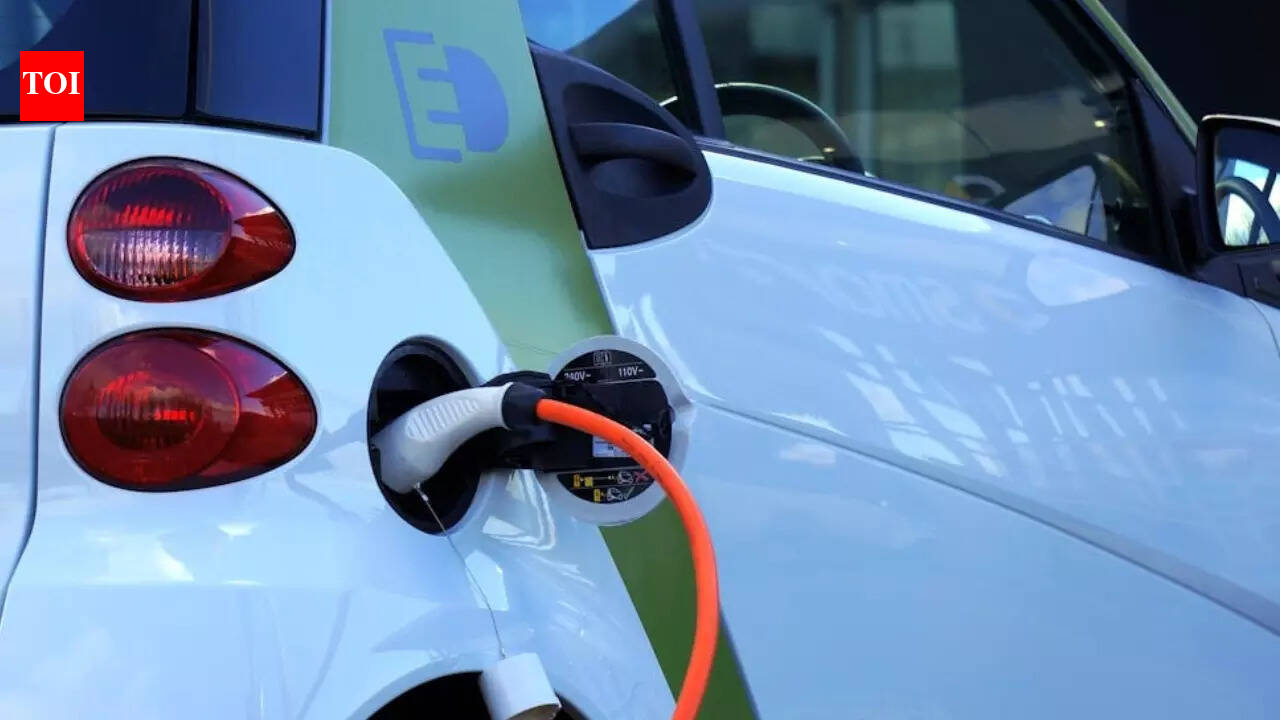
India's electric vehicle adoption is shifting from ownership to access, driven by supportive policies and falling costs. Bespoke lending and subscription models are emerging as key solutions to address upfront costs, rapid technological evolution, and battery concerns. This approach, particularly for businesses, offers significant financial advantages and mitigates risks, paving the way for widespread EV integration. View More