
Latest Sectors News

Tata Semiconductor has raised the amount from five foreign banks for its Gujarat fab unit, with lenders imposing what executives call “unconventional” terms on ownership, branding and equity, highlighting reliance on Tata’s credit profile as India pushes to build its chip ecosystem. View More

Amid a prolonged economic slowdown, one segment of the world's second-largest economy is growing quicker than the rest: China's so-called emotional economy. View More
A giant inflatable Labubu toy floats on the water at Victoria Harbour on October 25, 2025 in Hong Kong, China.Vcg | Visual China Group | Getty Images 28-year-old Rebecca Zhou, born in China's Sichuan province, owns an assortment of Moomin merchandise â bags, mugs, and figurines featuring the white hippo-looking cartoon character from Finland â that she has accumulated over the years.By her own admission, many of these purchases may seem "childish", but "it is [just] nice to treat yourself to something fun, even if it is not the most value-for-money," Zhou said.Zhou is not alone. Data from analysts and official sources show that Chinese consumers are increasingly spending on goods and experiences chosen for their emotional resonance over practical value â everything from theme parks to jewelry.But what may once have been a fairly unsurprising consumer impulse is now being taken seriously by China's business leaders and policymakers. 'A sense of connection' China's "emotional economy" first entered into public discourse in 2024, after a craze over Pop Mart's Labubu figurines appeared to signal shifts in Chinese consumer behavior, where a consumer group once characterized by norms of frugality and pragmatism appeared just as willing to splurge on self-indulgence."People are not just buying things," said Ashley Dudarenok, founder of digital consultancy ChoZan told CNBC in a phone call. "They're buying feelings, they're buying identity, they're buying a sense of connection." Over the recent Chinese New Year holiday, data from ChoZan shows that consumers spent significantly less on traditional staples like festive food gifts (known as nian huo), and more on unconventional expenses, like travel experiences and cosmetics compared to the same period in 2023."What people used to buy back in the day, like liquor and bulk nuts ... were all about social obligations and tradition. Right now, people buy gift boxes, they buy designer toys ... and people don't frown upon that," Dudarenok said.This shift from obligatory to more discretionary spending over China's largest holiday exemplified broader shifts in consumer norms, according to Dudarenok, with Chinese consumers increasingly looking to satisfy desires for personal fulfillment, over more "rational" purchases.Beyond the Chinese New Year season, a February report from DaXue Consulting also highlighted tangible goods like aromatherapy candles and cosmetics, as growing segments in China's emotional economy.One estimate from the iiMedia Research Center projected China's emotional economy to exceed a valuation of 4.5 trillion yuan ($655 billion) by 2029 â almost double its value in 2024 â as Chinese consumers seek ever-increasing "emotional relief and spiritual satisfaction". More stressed or just more comfortable? But while many commentators have noted a growth in China's emotion-driven spending, analysts are divided on what exactly is fueling this growth. The most common explanations see emotion-driven spending as a sort of stress response.Traditional paths to happiness in China â buying a house and car, all while settling down and starting a family â have "grown increasingly expensive to follow," Allison Malmsten, strategy consultant from DaXue Consulting, said by email.In step with China's ailing housing market â predicted to worsen in 2026, consumer inflation has also risen to a three-year high in February, according to China's National Bureau of Statistics.China's rising costs of living have also dovetailed with record low birth rates in 2025, adding to a growing sense of loneliness among many in the country.Compounded, these pressures have instilled in the average Chinese consumer "a sense of crisis," Dudarenok said, pushing many to redirect spending toward things that "bring [them] joy."But for Bo Chen, senior research fellow from the National University of Singapore's East Asian Institute, this sense of melancholy forms only part of the story.For Chen, the structural legacy of China's One-Child policy often concentrated familial resources from two parents (and four grandparents) on a generation of mostly single children.This concentration of familial wealth â sometimes termed the "six pockets" effect â produced a younger cohort of Chinese consumers materially cushioned by their families in ways that previous generations were not, which gave them greater latitude to finance their material desires.In a 2021 study, intergenerational income persistence â a measure of how the socioeconomic well-being of parents influenced those of their children â in China was found to have increased since 1979, particularly among China's urban population.Another study on homebuyers in Shanghai found that even those with considerable personal savings relied heavily on parental support to fund their purchases. div {box-sizing: border-box;} .noselect { -webkit-touch-callout: none; /* iOS Safari */ -webkit-user-select: none; /* Safari */ -khtml-user-select: none; /* Konqueror HTML */ -moz-user-select: none; /* Old versions of Firefox */ -ms-user-select: none; /* Internet Explorer/Edge */ user-select: none; /* Non-prefixed version, currently supported by Chrome, Edge, Opera and Firefox */ } #tcc-wrapper {width: 100%; max-width: 620px; min-width: 300px; cursor: pointer; display: block;} .tcc-widget-content { font-family: Proxima Nova,Helvetica,Arial,sans-serif; font-size: 16px; line-height: 24px; font-weight: 400; color: #000; padding: 16px 0 16px 0; width: 100%; height: auto; border-top: 1px solid #cccccc; border-bottom: 1px solid #cccccc; } .tcc-logo-col { float: left; margin-right: 20px; } .tcc-text-col { } .tcc-text a { color: #0053CF !important; text-decoration: none; font-weight: 600; } Weekly analysis and insights from Asia's largest economy in your inbox Subscribe now Such studies lend credence to Chen's claims that, on average, younger Chinese consumers â one of the largest groups in China's emotional economy â are increasingly buffered from the financial pressures of their forebears."This generation ... they don't need to worry about their lives that much," Chen said in a call with CNBC.Other macroeconomic trends, like the increased quality of China's manufactured goods, has meant that nondiscretionary products and big-ticket items have longer replacement cycles for the average Chinese consumer, freeing up capital for other expenses.With China's thriving entertainment sector, Chinese consumers also have incentives to spend on entertainment like "Ne Zha 2" â the second installment of a Chinese movie franchise which broke records last year after coming in as the world's highest-grossing animated film, Chen said. Capitalizing on the emotional economy What is unique about China's emotional economy is how it is growing against a backdrop of slowing consumer spending.In 2025, consumer spending in China grew by 2.3% from the year before, down from 5.2% in 2024, and 9.9% in 2023.A People's Bank of China survey further showed that for the fourth quarter of 2025, while interest in big-ticket purchases lagged pre-pandemic levels, the share of respondents willing to spend more on social and entertainment activities over the following three months reached an eight-year high over the same period.In the U.S., where paid-for experiences are similarly accounting for a growing share of consumer spending, overall consumption has remained buoyant, posting quarterly growth between 0.5% and 0.9%. Unlike China, therefore, spending on emotional economy experiences in the U.S. is keeping pace with, rather than against, broader consumer spending.This divergence has been noted by policymakers looking to spur consumer demand. Chongqing city government, for example, highlighted the role of the municipality's emotional economy for the first time in its 2026 work report.Businesses in China have also begun "reconsidering their value propositions," according to DaXue's Malmsten, with many looking into how they can lean into this trend of emotion-driven spending.It taps into a feeling that consumers are demanding more of."For me, personally, buying these 'childish' items gives a comforting feeling of going back to childhood," Zhou said. "It is a safe and nostalgic way of going back to adulthood."â CNBC's Anniek Bao contributed to this report. Choose CNBC as your preferred source on Google and never miss a moment from the most trusted name in business news.

The Iran war and rising oil prices will remain front and center. View More
Investors may catch their breath next week as earnings season winds down and only a few meaningful economic reports are released. The Iran war will remain front and center. Stock selling accelerated Friday into the close after Reuters reported that Iraq had declared force majeure on all oil fields operated by foreign companies. Oil prices spiked on the news, with Brent crude topping $112 a barrel and WTI oil trading over $98 a barrel. As we noted recently, oil is the lifeblood of the global economy. It's a large, unavoidable input cost for Main Street and Wall Street, so when its price rises, the price of most things goes up. As a result, active investors should regularly monitor oil prices every minute the market is open; they dictate how Wall Street views market value because commodity prices move inversely to corporate earnings potential. 1. How is the jobs market? Investors are still trying to get a handle on that question, and will look to the weekly initial claims report on Thursday and the productivity and costs report on Tuesday. These aren't the most important gauges of employment â the monthly nonfarm payroll report is king â but given how little data is coming out amid rising fears of stagnation, market watchers will pay more attention than usual. Expect more talk of stagnation â a prolonged period of slow or no economic growth, characterized by high unemployment and stagnant wages â given higher oil prices, rising concerns about the Middle East conflict, and corporate adoption of AI. Those fears are starting to make their way into the market. Look no further than the change in fed funds futures. One month ago, the odds of an April rate cut were 17%, while there was a 94% chance of at least one cut by the end of this year, and a 75% chance of more than one cut, according to the CME's FedWatch tool , which calculates probabilities using 30-day fed funds futures contracts. Odds of an April cut are now at 10%, and there is a 73% chance of no cuts this year. 2. Consumer sentiment is crucial because spending accounts for roughly two-thirds of the U.S. economy. That makes the University of Michigan's Surveys of Consumers, out Friday, especially important, since half of the data from the last one was collected before the war in Iran. This one will give a fuller reading on how the conflict is impacting sentiment. A handful of earnings â Winnebago , Designer Brands , and Carnival â should provide some more clues about spending. 3. S & P Global's CERAWeek , from Monday through Friday, is one of the biggest events for the energy complex , bringing together government officials and industry experts with a focus on energy, the climate, and geopolitics. Two key topics will be the war in Iran and the surging demand for energy driven by AI data center infrastructure initiatives. 4. KB Home is the key earnings release of the week. As one of the largest home builders in the U.S., the company's results should provide insight into the supply and demand dynamics of the housing market. It will be particularly interesting to hear what the team has to say about customer conversations in the wake of the war in Iran. It's difficult to imagine housing activity improving as long as the Strait of Hormuz remains closed and energy prices remain elevated. Week ahead Monday, March 23 10 a.m. ET: Construction Spending Tuesday, March 24 8:30 a.m. ET: Productivity and Unit Labor Costs report 9:45 a.m. ET: S & P Global Services and Manufacturing PMI reports Before the bell: Core & Main (CNM), Concentrix (CNXC), Smithfield Foods (SFD) After the bell: KB Home (KBH), GameStop (GME), AAR Corp (AIR) Wednesday, March 25 8:30 a.m. ET: Import/Export Price Index Before the bell: Chewy (CHWY), Pinduoduo (PDD), Baozun (BZUN), Cintas (CTAS), Paychex (PAYX), Winnebago (WGO) After the bell: Beyond Meat (BYND), Jefferies Financial (JEF), MillerKnoll (MLKN) Thursday, March 26 8:30 a.m. ET: Kansas City Fed Manufacturing Index 8:30 a.m. ET: Initial Jobless Claims Before the bell: Commercial Metals Company (CMC), Designer Brands (DBI) Friday, March 27 10 a.m. ET: Michigan Consumer Sentiment Before the bell: Carnival (CCL) (See here for a full list of the stocks in Jim Cramer's Charitable Trust.) As a subscriber to the CNBC Investing Club with Jim Cramer, you will receive a trade alert before Jim makes a trade. Jim waits 45 minutes after sending a trade alert before buying or selling a stock in his charitable trust's portfolio. If Jim has talked about a stock on CNBC TV, he waits 72 hours after issuing the trade alert before executing the trade. THE ABOVE INVESTING CLUB INFORMATION IS SUBJECT TO OUR TERMS AND CONDITIONS AND PRIVACY POLICY , TOGETHER WITH OUR DISCLAIMER . NO FIDUCIARY OBLIGATION OR DUTY EXISTS, OR IS CREATED, BY VIRTUE OF YOUR RECEIPT OF ANY INFORMATION PROVIDED IN CONNECTION WITH THE INVESTING CLUB. NO SPECIFIC OUTCOME OR PROFIT IS GUARANTEED.

The shutdown at the Department of Homeland Security has caused massive pileups at airport security lines. View More
Travelers wait in line at a Transportation Security Administration (TSA) checkpoint at Hartsfield-Jackson Atlanta International Airport (ATL) in Atlanta, Georgia, US, on Friday, March 20, 2026. Elijah Nouvelage | Bloomberg | Getty Images Immigration and Customs Enforcement agents will deploy to airports on Monday to help ease security lines amid the Department of Homeland Security shutdown, White House border czar Tom Homan said Sunday. President Donald Trump on Saturday threatened to deploy ICE agents to airports as the shutdown drags into its second month, creating headaches for travelers moving through hours-long Transportation Security Administration security lines. Homan confirmed that ICE will be deployed on Monday during an appearance on CNN's "State of the Union.""We will be at the airports tomorrow, helping TSA move those lines along," Homan said, adding that ICE will assist in areas like guarding exit doors to relieve TSA agents for screening travelers. "We're simply there to help TSA do their jobs in areas that don't need their specialized expertise."Homan said the details of the plan are still under discussion, but will be decided by Monday morning when ICE agents deploy. "We'll have a plan by the end of today, what airports we're starting with and where we're sending them," Homan said. "It's a work in progress."The move to deploy ICE comes as the DHS shutdown, which began on Feb. 14, strains airport workers. Many TSA agents have either called out rather than work without pay or quit altogether. More than 400 TSA officers have left their jobs since the start of the shutdown, according to an NBC News report. Read more CNBC politics coverageTrump threatens to send ICE to airports if DHS shutdown doesn't endFormer special counsel Robert Mueller has died at 81Analysis: Trump's unshackled presidency puts him at the center of the economyTrump administration sues Harvard alleging failure to protect Jewish studentsTrump administration unveils national AI policy framework to limit state powerTrump invokes Pearl Harbor in front of Japanese prime ministerPublic relations firm picks bar fight with PolymarketIran war-induced fertilizer shortage threatens farm state GOP in midtermsTrump signals DOJ should continue Powell probe, complicating Warsh Fed nomTrump's DHS pick Markwayne Mullin advances out of Senate committeeAnalysis: Powell just delivered a new blow to Warsh's plans for swift rate cutsPowell says he will stay on as head of the Fed until Warsh is confirmed Everett Kelley, the president of the American Federation of Government Employees, slammed the move. "ICE agents are not trained or certified in aviation security," Kelley said in a statement. "TSA officers spend months learning to detect explosives, weapons, and threats specifically designed to evade detection at checkpoints â skills that require specialized instruction, hands-on practice, and ongoing recertification. You cannot improvise that."He added: "Putting untrained personnel at security checkpoints does not fill a gap. It creates one."Kelley called for Congress "to stop playing politics and do their jobs" to fund the TSA. A spokesperson for the Port Authority of New York and New Jersey told MS NOW the decision to use federal officers at two New York City airports it oversees "rest[s] with the U.S. Department of Homeland Security.""The Port Authority expects that any such personnel assigned to assist with passenger processing functions will be appropriately trained and focused on supporting screening operations, consistent with maintaining the safety, integrity, and efficiency of the security process at our airports and protecting the flying public," the spokesperson said. Democrats are demanding statutory changes to immigration enforcement practices in exchange for funding DHS after two U.S. citizens were shot and killed by ICE in Minneapolis. House Democratic Leader Hakeem Jeffries of New York slammed the plan to deploy ICE agents to airports. "The last thing that the American people need are for untrained ICE agents to be deployed at airports all across the country, potentially to brutalize or, in some instances, kill them," Jeffries said on CNN. Jeffries, however, indicated that Democrats do not plan to back down from their demands in exchange for funding DHS. "It's unfortunate that Republicans have decided that they would rather force TSA agents to work without pay, inconvenience millions of Americans all across the country and now potentially expose them to untrained ICE agents and create chaos at airports throughout the land rather than get ICE agents under control," Jeffries said. "They need to be reined in, and our view is that they should not get another dime of taxpayer dollars until we have bold and dramatic and meaningful changes." The Democratic leader also suggested funding TSA and all other DHS subagencies, with the exception of ICE and Customs and Border Protection. Democrats have tried to advance such a bill several times, but Republicans have stymied the legislation, fearing they would lose leverage to eventually fund ICE and CBP. Some Republicans have warmed to the idea of splitting off ICE and CBP funding from the rest of DHS, which includes TSA, the Coast Guard, the Federal Emergency Management Agency and the Cybersecurity and Infrastructure Security Agency. Sen. Ted Cruz, R-Texas, who leads the Senate Commerce Committee, suggested the idea in an interview with The Hill on Saturday. Sen. John Kennedy, R-La., also brought up the idea in an interview on C-SPAN's "Ceasefire." Both Kennedy and Cruz said Republicans would try to then pass funding for ICE through the reconciliation process, which only requires 50 votes in the Senate. "Let's open up everything but ICE," Kennedy said. "But, I can tell you what's gonna happen next, the Republicans are going to put a reconciliation bill on the floor that only requires Republican votes to fund ICE." Choose CNBC as your preferred source on Google and never miss a moment from the most trusted name in business news.

India is set to auction 19 critical and strategic mineral blocks. This move aims to boost the nation's economic development and mineral security. These minerals are vital for clean energy and advanced technologies. The auction follows successful previous tranches. Reforms have streamlined the process for greater transparency and efficiency. Bidders will participate in an online, two-stage ascending forward auction. View More
New Delhi: Union Coal and Mines Minister G Kishan Reddy will launch the 7th Tranche of Auction of Critical and Strategic Mineral Blocks on Monday, according to a statement. Critical minerals are pivotal for the country's economic development and mineral security. The global transition towards clean energy and advanced technologies has significantly increased the demand for minerals such as lithium, graphite, rare earth elements (REE), tungsten, vanadium, titanium and other rare metals. Their limited availability and geographical concentration pose challenges to resilient supply chains worldwide. Also Read: India in talks over critical minerals deals with Brazil, Canada, France, Netherlands: Report Recognising their strategic importance, the Government of India amended the Mines and Minerals (Development and Regulation) Act, 1957 (MMDR Act) on August 17, 2023, notifying 24 minerals as Critical and Strategic Minerals. This amendment empowers the Central Government to auction Mining Leases and Composite Licences for these minerals. The revenue generated from these auctions accrues to the respective State Governments, the statement added. Live Events So far, the Ministry of Mines has successfully launched six tranches of auctions, with 46 critical and strategic mineral blocks already auctioned, reflecting strong industry participation and growing confidence in India's mineral sector. Building on this momentum, the Seventh Tranche will offer 19 blocks across several States under Mining Lease and Composite Licence. These blocks comprise a diverse basket of minerals essential for sectors such as clean energy, advanced technologies, fertilizers and strategic industries, the release further stated. The auction framework has been progressively strengthened to ensure transparency, efficiency and faster operationalisation of mineral blocks . Also Read: Critical Minerals, Cycles and Strategy: Why India should bet on Argentina Recent reforms, including the Mineral (Auction) Second Amendment Rules, 2025, have streamlined post-auction timelines such as submission of performance security, upfront payment and issuance of Letter of Intent. Additionally, the Mineral (Auction) Amendment Rules, 2026, have introduced the provision of Insurance Surety Bond as an alternative to bank guarantees, enhancing flexibility for bidders. The auction will be conducted online through a transparent two-stage ascending forward auction process, wherein the successful bidder will be selected based on the highest percentage of value of mineral dispatched quoted, the statement added. The country’s most definitive MSME stage returns on March 24 in New Delhi. Register now for the ET MSME Awards 2025 .Pbanner{display:flex;justify-content:space-between;align-items:center;background-color:#ec1c40;margin-top:20px;padding:5px 10px;border-radius:4px;color:#fff;line-height:10px;} .Pbannertext{display:flex;align-items:center;font-size:16px;font-weight:600;font-family:'Montserrat';} .Pbannertext img{height:20px;margin:0 6px} .Pbannerbutton a{display:flex;align-items:center;background-color:#fff;color:#ec1c40;text-decoration:none;font-weight:600;padding:4px 8px;border-radius:6px;font-size:15px;font-family:'Montserrat';} .Pbannerbutton img{height:20px;margin-right:6px} .Pbannerbutton a:hover{background-color:#f7f7f7} Add as a Reliable and Trusted News Source Add Now! (You can now subscribe to our Economic Times WhatsApp channel) (You can now subscribe to our Economic Times WhatsApp channel)

While there are pockets of weakness in private credit, concern about a broad-based meltdown among these funds may be misplaced, some experts say. View More
Oscar Wong | Moment | Getty Images As headlines swirl about trouble in the private credit market, investors might wonder whether it means significant problems lie ahead for these assets.Right now, pockets of weakness exist. Those shouldn't be ignored, but they don't foretell a broad-based meltdown among private credit funds, some financial advisors say."Some caution is reasonable, but the idea that private credit is on the verge of widespread trouble is overstated," said certified financial planner Crystal Cox, a senior vice president for Wealthspire Advisors in Madison, Wisconsin. More from Financial Advisor Playbook:When it comes to private credit, 'some caution is reasonable,' advisor saysSome economists are warning about 'stagflation.' What it may mean for your moneyStudent loan forgiveness is taxable again. How to plan for a five-figure IRS billTrump accounts have 'more unanswered questions than answered,' expert saysHome sellers start getting lower prices at 70, research shows â here's whyBigger SALT cap may 'drive higher refunds,' tax expert says â who benefitsTrump accounts could grow to $50,000 or more, president says. Advisors weigh inHousing affordability isn't just hurting buyers: More homeowners are falling behindIn an affordability crunch, Gen Z adults lean on their parents for financial helpPenalty-free withdrawals from 401(k)s can now pay for long-term care insurance "Some of the pressure you're seeing in headlines ⦠has more to do with a maturing market than systemic stress," Cox said. "What's really happening is the shift from a young, high-return market to a more competitive, mature one where manager selection and underwriting discipline matter a lot more."Overall, any exposure to private credit should be a small share of your investments, said Cox."For most individual investors, keeping it to no more than about 5% of the overall portfolio is a sensible way to access the benefits without taking on concentrated credit or liquidity risk," she said. Why private credit has exploded At its core, private credit refers to loans made by investment firms directly to companies. Asset managers raise money from investors, pool it into funds and use that cash to loan to businesses â generally charging higher interest rates in exchange for taking on more risk. Often, the interest rate floats, meaning that as the benchmark rate set by the Federal Reserve rises or fall, so do the rates paid by borrowers and earned by investors.The appeal of private credit has included the opportunity to earn returns that may be higher than in debt investments in the public market, i.e., government and corporate bonds. However, it also comes with less transparency, higher fees, a lack of liquidity â meaning an investor's money would be tied up for a lengthy period â and higher risk.Private credit is "diverse, with lots of different [lending] strategies," said Richard Grimm, a managing director and head of global credit for investment firm Cambridge Associates in Boston. "There are real pockets of concern, portfolios of concern, but the vast majority are highly cash generative and have a highly diverse portfolio." The market grew rapidly following the 2008 financial crisis, when tighter banking regulations prompted many lenders to pull back from riskier loans. Private funds stepped in to fill that gap and have since expanded into an estimated $1.7 trillion corner of the broader alternative investment world, up from about $500 billion 10 years ago, according to 2024 research from the Federal Reserve. Most private credit funds are available only to institutional investors â pension funds and insurance companies, for example â and wealthy individuals who meet certain asset and income criteria. These funds typically have high minimum investments â $1 million and upward â and investors must agree to have their money locked up for, say, seven or 10 years. Due to that illiquidity and risk, investors receive higher-than-usual interest payments along the way and get their principal back at the end of the term (assuming the borrower doesn't default).About 80% of investors in private credit funds are institutional, as of the end of 2024, according to J.P. Morgan Private Bank. How retail investors get exposure to private credit While pensions are major investors in private credit, 401(k) plans have generally excluded these assets from their lineups. Less than 2% of plans have incorporated private assets â which includes private credit â in their 401(k)s via custom target-date funds or similar offerings, according to an estimate from Cerulli Associates. A small number also offer private real estate in their lineup.However, last August, President Donald Trump issued an executive order aimed at encouraging more alternative investments in 401(k)s, which includes the private markets. A formal proposal is expected soon from the Labor Department, although the timing is uncertain. The agency submitted a proposed rule for review to the White House's Office of Information and Regulatory Affairs on Jan. 13.Retail investors have several other ways to invest in private credit. There are exchange-traded funds that invest in such funds, for example. There are also business development companies, or BDCs, as they're known, which make private loans to companies. Both ETFs and public BDCs trade on an exchange â meaning they are generally easy to buy and sell. Most of the time [semi-liquid funds] can fill those redemption requests. If they get too many, they can cap them.Crystal CoxSenior vice president for Wealthspire Advisors Then there are some funds that are semi-liquid, including interval funds and non-traded BDCs, available to retail investors, although they may come with minimum investments or investor qualifications.These funds allow investors to pull money out at certain times â for example, quarterly â and typically cap redemptions at a percentage of net assets, such as 5% per quarter. If withdrawal requests exceed that cap, investors may only receive part of the amount they wanted."Most of the time they can fill those redemption requests," Cox said. "If they get too many, they can cap them."Limiting withdrawals generally is intended to balance investor access with the fact that the underlying loans are private and largely illiquid.It's some of these semi-liquid funds that are grabbing headlines, due to high redemption requests from investors, who have watched yields fall as overall interest rates have eased since 2022.Since then, while private credit overall still pays more than comparable public debt markets, the extra yield that investors get has been cut in half, according to research from J.P. Morgan Private Bank."We'd argue part of the rise in redemptions is related to taking profits after almost three years of meaningful outperformance," the research says. Where trouble may be brewing Nevertheless, experts are sounding the alarm about the potential for higher default rates in certain parts of the private credit world.Among deals involving direct lending, defaults are expected to rise to 8%, up from the current 5.6%, according to new research from Morgan Stanley. Direct lending is just one way that private credit funds may deploy their capital; there's also asset-backed lending â where particular assets are used as collateral â and buying distressed debt, for example. watch nowVIDEO4:3004:30Private-credit funds cap payouts despite surge in redemptionsFast Money The defaults are expected to be driven by artificial intelligence disruption with concentration in software and AI-adjacent sectors, according to Morgan Stanley."The AI trade is disrupting everything ⦠specifically software," Cox said. "So that's a riskier [investment] at this juncture."Software exposure among private credit funds that do direct lending is an estimated 26%, according to Morgan Stanley. "What we're seeing is less a private credit crisis and more a manager-selection and structure test [in] a broader technology transition, particularly around AI's impact on software-heavy business models," said CFP Scott Bishop, a partner and managing director with Presidio Wealth Partners in Houston. Choose CNBC as your preferred source on Google and never miss a moment from the most trusted name in business news.

Larsen & Toubro advises the Indian government to maintain capital expenditure, even if it means a wider fiscal deficit. The company suggests increased borrowing to fund infrastructure projects. This spending is crucial for achieving Viksit Bharat 2047 goals. The ongoing Middle East conflict may accelerate the adoption of green energy sources. View More
Mumbai: Amid concerns over a surge in import bill because of commodity price hardening in the wake of the Middle East conflict, Larsen & Toubro is hoping that the government continues with its capital expenditure even if it means a widening of fiscal deficit . The engineering, procurement and construction major feels the government should borrow more if needed to continue with capital expenditure, a senior official has said. Also Read: Little impact of Middle East conflict on business, 95% projects on; supply chain a concern: L&T "The import bill will go up because of oil and gas prices. The government will have to balance it. They will maybe temporarily raise the deficit, may be they will borrow more," its Deputy Managing Director Subramanian Sarma told reporters over the weekend. "Overall, if you look at it, our fiscal situation is pretty good... we have some headroom so that we don't compromise on the capital for the infrastructure," Sarma added. Live Events He also noted India has been able to curtail the fiscal deficit after the impact of the Covid pandemic. Spends on infrastructure are necessary to achieve Viksit Bharat 2047 goals, Sarma said. Even the US, which, alongside Israel, started the conflict by attacking Iran, leading to subsequent retaliations and the hardening of commodity prices, is aware of the challenges and implementing strategies to not let oil prices skyrocket. The ongoing crisis will lead to rethink on the dependence on oil and gas for our energy needs, and bring to the fore troubles caused by the Strait of Hormuz , Sarma said, adding that this may lead to faster adoption of non-fossil energy sources like green hydrogen and renewable energy. L&T expects thermal power to continue being the mainstay of the energy needs, and is trying to capitalise on other opportunities that will be presented through the transition to newer energy sources, Sarma said. Its green hydrogen production is doing well and the company has upped the capacity to 4 MW from the earlier 0.5 MW, Sarma said, adding that at present, its manufacturing capacity is 250 MW per annum. About 95 MW of capacity will be used at an upcoming facility in Panipat being built for Indian Oil Corporation in Panipat, he said. Also Read: Looking beyond the obvious: Gulf wars have made L&T bigger. Will this one too? But there is a variable that did not exist before At Gujarat's Kandla, where it is establishing a green hydrogen plant, the first of the six phases will be built at an investment of USD 1.5-2 billion, he said. On the nuclear power front, the company is in discussions with technology providers for tie-ups, and feels that pressurised heavy water reactors will be built by the government while the small and modular reactors will be done by the private sector. L&T will be ready by the tenders for all the nuclear energy projects start coming, Sarma said, noting that the changes brought about by the passage SHAKTI Bill will help the sector. As part of the diversification efforts, it is also looking at moving into newer geographies, including Indonesia and Australia, and is also in talks with oil companies in Africa, he said. The country’s most definitive MSME stage returns on March 24 in New Delhi. Register now for the ET MSME Awards 2025 .Pbanner{display:flex;justify-content:space-between;align-items:center;background-color:#ec1c40;margin-top:20px;padding:5px 10px;border-radius:4px;color:#fff;line-height:10px;} .Pbannertext{display:flex;align-items:center;font-size:16px;font-weight:600;font-family:'Montserrat';} .Pbannertext img{height:20px;margin:0 6px} .Pbannerbutton a{display:flex;align-items:center;background-color:#fff;color:#ec1c40;text-decoration:none;font-weight:600;padding:4px 8px;border-radius:6px;font-size:15px;font-family:'Montserrat';} .Pbannerbutton img{height:20px;margin-right:6px} .Pbannerbutton a:hover{background-color:#f7f7f7} Add as a Reliable and Trusted News Source Add Now! (You can now subscribe to our Economic Times WhatsApp channel) (You can now subscribe to our Economic Times WhatsApp channel)

As OpenAI gears up for a potential IPO, it's outlined a more tempered infrastructure strategy and has moved away from an ambitious agreement with Nvidia. View More
Sam Altman, chief executive officer of OpenAI Inc., speaks during BlackRock's 2026 Infrastructure Summit in Washington, DC, US, on Wednesday, March 11, 2026. Daniel Heuer | Bloomberg | Getty Images When OpenAI CEO Sam Altman took the stage at BlackRock's U.S. Infrastructure Summit earlier this month, he acknowledged his company is facing a harsh reality: data centers are hard."Anything at this scale, it's just like so much stuff goes wrong," Altman said, in a fireside chat at the conference in Washington, D.C. Altman gave an example of a severe weather event at a data center campus in Abilene, Texas, that temporarily "brought things down." The facility serves as the flagship site of OpenAI, Oracle and SoftBank's $500 billion Stargate project. Altman said his company has also been navigating supply chain challenges and pressure to meet tight deadlines. The stakes for Altman are growing as he aims to turn OpenAI, which was valued at $730 billion in a record fundraising round last month, from a private market darling into an investable asset for a more discerning class of public market fund managers. That's meant retreating from some hefty spending plans, shelving certain ambitious projects and accepting OpenAI's role as a purchaser of massive amounts of cloud capacity rather than as a builder of mammoth data centers. "OpenAI has come to the realization that the market doesn't necessarily appreciate the reckless approach to growth and spending," Daniel Newman, CEO of Futurum Group, told CNBC in an interview. "The market wants to see OpenAI's revenues rolling at a pace in which the spending can be justified. The pivot, in my opinion, has been to try to show a little bit more fiscal responsibility."The strategic shift means OpenAI may have to settle for doing less while simultaneously trying to compete with Anthropic, Google and a host of other companies developing AI models, apps and features. OpenAI trains and runs AI models that require enormous amounts of computational resources, including chips, processing power, memory and energy. Altman and other OpenAI executives have for years stressed that compute is a major bottleneck for the company, which has proceeded to raise astronomical sums of cash, including $110 billion earlier this year, with $50 billion coming from Amazon. In a post on X in November, Altman wrote that OpenAI and other companies "have to rate limit our products and not offer new features and models because we face such a severe compute constraint." watch nowVIDEO1:4601:46Sam Altman on meeting with lawmakers: Economic impact on jobs will be a huge topicThe Exchange Up to that point, the big story for OpenAI last year was the extreme lengths Altman went to secure capacity. The company inked a flurry of multibillion-dollar infrastructure deals with companies including Nvidia, Advanced Micro Devices and Broadcom. Altman said in his November post that OpenAI was looking at commitments of roughly $1.4 trillion over the next eight years.  The deals rattled public markets, sparked fears about a potential AI bubble and caused many investors to question how OpenAI could afford to make such eye-popping commitments with $13.1 billion in revenue for the year. OpenAI's most notable announcement was with Nvidia. The chipmaker, which is also the world's most valuable company, agreed in September to invest up to $100 billion in the startup over a number of years, with capital distribution tied to OpenAI's buildout and use of Nvidia's technology. OpenAI said it planned to deploy at least 10 gigawatts of Nvidia systems, with the first $10 billion of investment arriving alongside completion of the first gigawatt, a unit of power that's roughly comparable to the electricity consumption of a mid-sized city. The press release said the partnership "enables OpenAI to build and deploy at least 10 gigawatts of AI data centers."Analysts told CNBC at the time that the deal was reminiscent of the vendor financing that fueled the dot-com bubble in the late 1990s. Altman repeatedly brushed off concerns about OpenAI's ambitious infrastructure plans, suggesting that revenue would balloon into the hundreds of billions by 2030. But in recent months, as the company has been gearing up for a potential IPO later this year, OpenAI has tempered expectations and outlined a more measured strategy. OpenAI told investors in February that it's now targeting roughly $600 billion in total compute spend by 2030, a figure that's meant to more directly tie to its expected revenue growth. The company is emphasizing discipline across other corners of its business as well. In December, OpenAI declared a "code red" to focus on improving its ChatGPT chatbot in the face of growing competition from Google and Anthropic. Fidji Simo, OpenAI's CEO of applications, held an all-hands meeting with staffers earlier this month about the enterprise business, and said the company is "orienting aggressively" towards high-productivity use cases."What really matters for us right now is staying focused and executing extremely well," Simo said, according to a partial transcript of the meeting reviewed by CNBC.'This is the race' The Stargate AI data center in Abilene, Texas, US, on Wednesday, Sept. 24, 2025.Kyle Grillot | Bloomberg | Getty Images OpenAI doesn't currently own any data centers, and may not for the foreseeable future, according to people familiar with the matter who asked not to be named because they weren't authorized to speak publicly. Instead, it's opted to lean heavily on partners like Oracle, Microsoft and Amazon, trying to piece together as much capacity as possible. A year ago, things looked very different for OpenAI. In January 2025, President Donald Trump unveiled the Stargate project alongside Altman, SoftBank CEO Masayoshi Son and Oracle Chairman Larry Ellison during an event at the White House. The companies pledged to deploy $500 billion over four years to build out new AI infrastructure in the U.S. OpenAI would be responsible for project operations, while SoftBank would be in charge of the finances, according to a blog post at the time. Oracle and Nvidia were named as key initial technology partners."Oracle, Nvidia, and OpenAI will closely collaborate to build and operate this computing system," the release said. As Stargate got underway, OpenAI was prepared to develop large portions of the project itself, and it aimed to directly lease or own some data center campuses, according to a report from The Information. But after the company came face to face with practical construction issues and struggled to secure backing from lenders, it pivoted. Oracle is leasing Stargate's data center campus in Abilene, and has been funding the buildout by taking on tens of billions of dollars in debt. OpenAI and Nvidia said in their September release that the first gigawatt of Nvidia systems will be deployed in the second half of 2026. Experts said that timeline would be tough in the best of circumstances. Walid Saad, an engineering professor at Virginia Tech, said building a 1-gigawatt data center from start to finish could take anywhere from three to 10 years. Challenges can crop up every step of the wayâ from finding a site, securing proper permissions and permitting, accessing power, constructing the physical structure, delivering the hardware to finally bringing it online."There's regulations, there's permits, different locations have different processes," Saad said. "There are processes they cannot control. You never know what pops up."Those obstacles have become very real for OpenAI, Arun Chandrasekaran, an AI analyst at Gartner, told CNBC in an interview.  "They're starting to say, 'You know what, let's try to secure the capacity that we can from the providers that are willing to give us that capacity now,'" Chandrasekaran said. OpenAI didn't provide a comment for this story. watch nowVIDEO9:5409:54'A very strong, long-term partnership': OpenAI CEO and Amazon CEO on new strategic partnershipSquawk Box As part of OpenAI's $110 billion financing announcement last month, the company agreed to consume roughly 2 gigawatts of Trainium capacity through Amazon Web Services infrastructure. Trainium is AWS' custom AI chip. Amazon announced the latest version, Trainium3, in December. Nvidia also contributed to OpenAI's funding round, investing $30 billion. OpenAI said it expanded its collaboration with Nvidia as part of the deal, and agreed to use 3 gigawatts of dedicated inference capacity and 2 gigawatts of training capacity on Nvidia's forthcoming Vera Rubin systems."OpenAI is doing what it must do, which is gain access to compute at scale," Futurum Group's Newman said, adding that Meta, Anthropic and Google are doing the same. "This is the race."Nvidia's investment landed after months of speculation about the status of the major infrastructure deal that the companies announced in September. The chipmaker disclosed in a quarterly filing in November that the $100 billion deal may not come to fruition, and The Wall Street Journal reported in January that the agreement was "on ice."Nvidia noted in a February filing that there was "no assurance" that the company will enter into an "investment and partnership agreement with OpenAI or that a transaction will be completed."At a conference earlier this month, Nvidia CEO Jensen Huang reined in expectations even further, and said that the opportunity to invest $100 billion in OpenAI is probably "not in the cards."The latest investment is not tied to any deployment milestones, and is distinct from the deal structure the companies touted six months ago. Huang said it "might be the last time" Nvidia invests in OpenAI ahead of its IPO.  "To their credit, they built an incredible growth story. It's just â the rest of the ride won't be a free one," Newman said of OpenAI. "And because their cost structure is so high, their route to profitability will be scrutinized every step of the way."--CNBC's Kate Rooney contributed to this reportWATCH: OpenAI renews focus on enterprise in all-hands meeting amid IPO push watch nowVIDEO1:3401:34OpenAI renews focus on enterprise in all-hands meeting amid IPO pushTechCheck Choose CNBC as your preferred source on Google and never miss a moment from the most trusted name in business news.

Engineering giant Larsen & Toubro states the Middle East conflict has not significantly impacted its business. Nearly all projects continue to operate smoothly. However, the company faces challenges with logistics and supply chains. Revenue risks exist if the situation persists. View More
Mumbai, Engineering, procurement and construction major Larsen & Toubro has not seen any major business impact because of the ongoing Middle East conflict, as nearly 95 per cent of the projects are continuing to function, a top official has said. The company, which gets over 35 per cent of its revenue from the geography witnessing conflict after the US and Israel's attack on Iran and the subsequent retaliations, however, flagged logistics and supply chain as key challenges and noted revenue risks if the situation remains unchanged. L&T does not see any immediate impact on revenues as the 5 per cent of projects where work has been stalled do not contribute significantly to the topline, Subramanian Sarma, its deputy managing director, told reporters over the weekend. However, if the logistical issues do not get resolved in three months, there can be an impact through revenue deferment, he added. The top company official, who directly oversees the energy portfolio, declined to directly answer queries on profit margins impact but hoped that it will be able to pass on the increase in costs to the customers. Live Events Stating that none of its sites have faced any attack, and all its staff and workers in the Middle East are safe, Sarma said work at 5 of the 100 projects in the region has ceased either because the company took a decision to that effect by itself or because a customer suggested to do so due to risk factors such as proximity to a military base, etc. "There has been no disruption in 95 per cent of the sites. It is business as usual," Sarma said, adding that work is suspended or disrupted in 5 per cent of the projects. The company has 8,000 staffers and 2,000 of their family members, and an additional 20,000 contractual workers at its sites in the Middle East, Sarma said, adding that none of the staff has evinced any interest to return. It has, however, stopped sending any new workers into the Middle East since the conflict started, he said. Sarma said the Middle East has been a "second home" to the homegrown company, where it has expanded over the last three decades. Elaborating on the supply chain challenges , he said the company generally keeps supplies that can last up to three months at a project site itself, and added that the last two weeks have seen disruptions in the supply lines. Getting material from other regions, including China and Europe, is a challenge as shipping lines are shut, but any sourcing from within the Gulf countries is not impacted, Sarma said. Everybody is looking at alternatives to the problems created in the Strait of Hormuz and utilising ports in Oman is among the possible alternatives for evacuation of cargos, Sarma said, exuding confidence that a solution will be found soon. On the margins front, he said it is a "mixed bag" when it comes to projects in the Middle East, with some being fixed price ones and some having price variations built in. Citing the experience during Covid, he said many customers paid higher to adjust for higher prices, hoping for a similar outcome in the present situation as well. The insurance costs have remained the same for older projects, but premiums on newer projects will go up in future and costs will have to be baked-in in project pricing. The company is continuously assessing developments, and has formed a situation management committee comprising top executives and continues to be in touch with key officials, including Indian missions in the region, he said. Sarma said the company had always thought over the geopolitics in the region and plans made then are helping it now. Once the conflict is over, it sees business opportunities in reconstruction, faster ordering of new projects, shift to alternative sources of energy like renewables and newer evacuation routes for oil and gas, which may involve laying pipelines, he said. If Iran integrates better with the world and there are no sanctions, it will provide a lucrative business opportunity, Sarma said, specifying that at present, it has no exposure to the country. The presence in the Middle East has been a "very rewarding" one for L&T, Sarma said, adding that it believes that it will continue. The conflict is a short-term "aberration", and the geography continues to hold business promise over the long-term, he said. The country’s most definitive MSME stage returns on March 24 in New Delhi. Register now for the ET MSME Awards 2025 .Pbanner{display:flex;justify-content:space-between;align-items:center;background-color:#ec1c40;margin-top:20px;padding:5px 10px;border-radius:4px;color:#fff;line-height:10px;} .Pbannertext{display:flex;align-items:center;font-size:16px;font-weight:600;font-family:'Montserrat';} .Pbannertext img{height:20px;margin:0 6px} .Pbannerbutton a{display:flex;align-items:center;background-color:#fff;color:#ec1c40;text-decoration:none;font-weight:600;padding:4px 8px;border-radius:6px;font-size:15px;font-family:'Montserrat';} .Pbannerbutton img{height:20px;margin-right:6px} .Pbannerbutton a:hover{background-color:#f7f7f7} Add as a Reliable and Trusted News Source Add Now! (You can now subscribe to our Economic Times WhatsApp channel) (You can now subscribe to our Economic Times WhatsApp channel)
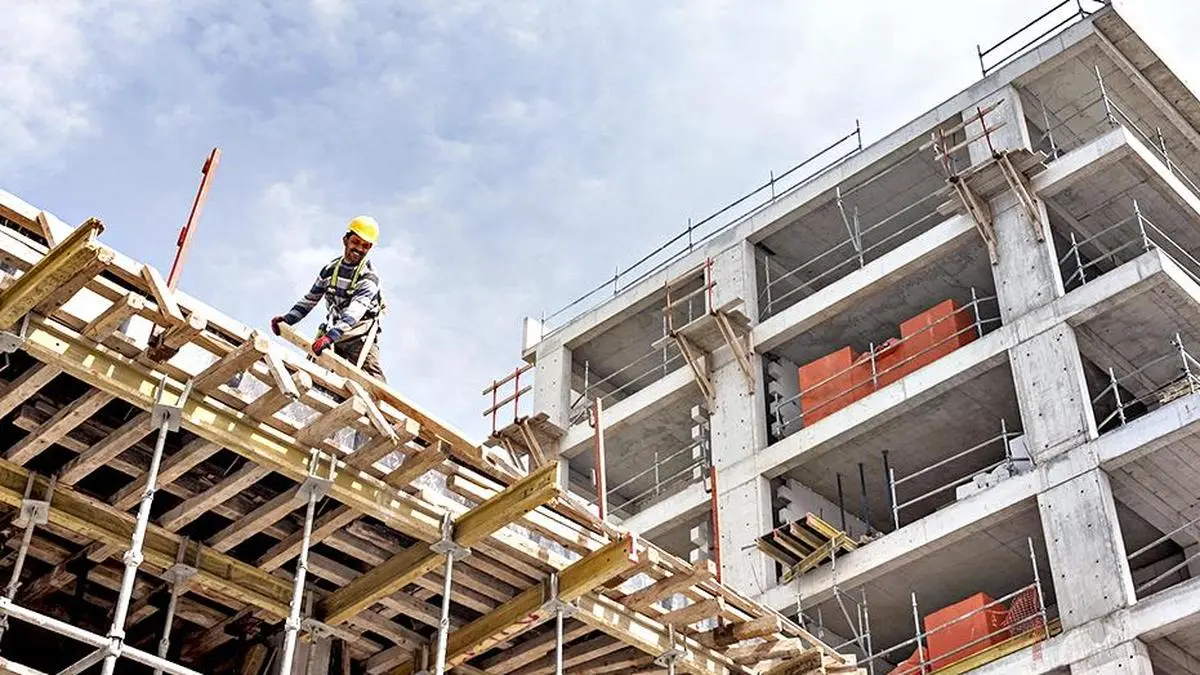
These 11 land parcels acquired by the Lodha Group have an estimated saleable area of 20.6 million sq ft and expected sales value of ?58,800 crore View More