
Latest Sectors News

While the idea to build space data centre may have some theoretical concepts in place, the reality of executing such technology is incredibly complex, capital-intensive, and far tougher in the real world than current hype suggests. View More

CoreWeave has been raising debt to finance its data center buildout, and S&P has boosted the company's credit rating. View More
In this articleMSFTCRWVFollow your favorite stocksCREATE FREE ACCOUNT Michael Intrator, co-founder and chief executive officer of CoreWeave Inc., at the Bloomberg Tech summit in London, UK, on Tuesday, Oct. 21, 2025. Chris J. Ratcliffe | Bloomberg | Getty Images CoreWeave shares tumbled as much as 10% in extended trading on Thursday after the AI infrastructure provider issued light revenue guidance and increased its 2026 capital spending forecast.Here's how the company did in comparison with LSEG consensus:Earnings per share: Loss of $1.12 adjusted vs. loss of 90 cents expectedRevenue: $2.08 billion vs. $1.97 billion expectedRevenue more than doubled in the quarter, from $981.8 million a year earlier, according to a statement. Net loss widened to $740 million from $315 million, or $1.49 per share, in the same quarter a year ago.CoreWeave is targeting $2.45 billion to $2.6 billion in second-quarter revenue. The middle of the range, $2.53 billion, was trailed the $2.69 billion LSEG consensus. For 2026, CoreWeave maintained its revenue guidance. calling for $12 billion to $13 billion in sales. The company ended the quarter with about 3.5 gigawatts of total contracted power, along with a $99.4 billion revenue backlog."We have reached hyperscale," CoreWeave's co-founder and CEO, Mike Intrator, said on a conference call with analysts. The company has diversified its business, with 10 clients now committed to spending at least $1 billion on its products, he said. In 2024, 62% of revenue came from Microsoft.While revenue is surging, operating expenses are growing even faster. Technology and infrastructure costs jumped 127% in the quarter to $1.27 billion, while sales and market costs increased more than sixfold to $69 million.CoreWeave has been racing top cloud providers such as Amazon to open data centers packed with Nvidia graphics processing units to rent to companies, including OpenAI and Anthropic, that are training and running artificial intelligence models. CoreWeave is competing with large and highly profitable cloud companies, and is borrowing heavily in the process to finance its data center development.In the first quarter, CoreWeave said it raised $8.5 billion in new debt, after announcing deals with AI startups Cline and Perplexity. It's secured more than $20 billion in debt and equity this year, the company said, closing the quarter with almost $25 billion in debt.Meanwhile, major backer Nvidia said early this year it bought $2 billion in additional stock in CoreWeave, which committed to adopting a variety of the chipmaker's products.As of Thursday's close, CoreWeave shares had climbed almost 80% so far in 2026, while the S&P 500 had gained 7%.S&P has upgraded its CoreWeave credit rating to positive from stable, said Nitin Agrawal, CoreWeave's finance chief.The company projected $31 billion to $35 billion in 2026 capital expenditures, up from a range of $30 billion to $35 billion that it announced in February. The revision of the low end of the range has to do with component prices, Agrawal said."It's an issue, it's a problem, but we have an incredible capacity to navigate the supply chain," Intrator said. "We have great partners, and we include the pricing that is required in order to end up delivering the infrastructure that's required, but also ensuring that we're able to secure the economics that we're targeting."CoreWeave reiterated that annualized revenue should exceed $30 billion by the end of 2027."I always think that everyone is looking at the stock and focusing on the trees and missing the forest, right?" Intrator told CNBC in an interview. "The forest is, there's this seismic level change occurring in our economy and being driven by these incredible technology companies that are dependent upon the infrastructure." CoreWeave reiterated that it's plans to have 1.7 gigawatts of power online by year end."That's the forest," he said.WATCH: Investors are bullish on neoclouds but skeptics question their financing watch nowVIDEO2:2102:21Investors are bullish on neoclouds but skeptics question their financingDigital Original Choose CNBC as your preferred source on Google and never miss a moment from the most trusted name in business news.

Nvidia CEO Jensen Huang highlighted his company's partnership with Corning as an opportunity to reinvest in American manufacturing. View More
watch nowVIDEO1:5701:57Nvidia CEO Jensen Huang says Corning partnership will 'revitalize American manufacturing'Mad Money with Jim Cramer Nvidia CEO Jensen Huang told CNBC's Jim Cramer that the company's new partnership with Corning represents an important opportunity to rebuild critical parts of the technology supply chain in the United States."We're going through the single largest infrastructure buildout in human history," Huang said "Mad Money" on Wednesday. "Artificial intelligence is going to become fundamental infrastructure all over the world, and surely here in the United States."His comments came one day after Nvidia announced a major partnership with Corning to dramatically expand domestic optical connectivity manufacturing capacity. As part of the deal, Corning is building three new facilities in Texas and North Carolina, saying it will create more than 3,000 jobs.Corning shares surged more than 12% following the announcement in Wednesday's session, while Nvidia shares popped 6%. Cramer's Charitable Trust, the portfolio used by the CNBC Investing Club, owns the stocks of both Corning and Nvidia. Huang said the scale of AI infrastructure spending is creating a unique opportunity to reinvest in American manufacturing and supply chains after decades of offshoring. The technology supply chain, in particular, has developed strong roots in places like Taiwan, China and Vietnam. "This is such an extraordinary opportunity because we can use these market dynamics to reinvest, revitalize American manufacturing for the first time in several generations," he said. The partnership centers on optical technologies used to connect chips within massive AI data centers. Huang said the next generation of AI infrastructure will require enormous amounts of optical connectivity as computing demands are rapidly increasing to the point where copper wires aren't able to keep up. "We're going to scale up optical at a scale that, quite frankly, no optical companies have ever enjoyed," Huang said. According to Huang, the current wave of AI investment is benefiting far more than just technology companies. He pointed to rising demand for electricians, construction workers, chip manufacturing employees, and data center infrastructure specialists as evidence that the buildout is already rippling through the broader economy. "The number of shortages that we have, and the demand for all of these skilled craft experts, are just incredibly high," Huang said. Huang said Nvidia's partnership with Corning is ultimately about ensuring the U.S. has the infrastructure and supply chain necessary to support the next phase of AI development. "We need the support and partnership of the world's best companies in our supply chain to help us create and realize this future," he said. "Silicon photonics and optical technology is a very big part of that." watch nowVIDEO14:2714:27Jim Cramer sits down with the CEOs of Nvidia and Corning to talk partnershipMad Money with Jim Cramer Jim Cramer's Guide to InvestingClick here to read Jim Cramer's Guide to Investing at no cost to help you build long-term wealth and invest smarter Sign up now for the CNBC Investing Club to follow Jim Cramer's every move in the market.DisclaimerQuestions for Cramer? Call Cramer: 1-800-743-CNBCWant to take a deep dive into Cramer's world? Hit him up! Mad Money Twitter - Jim Cramer Twitter - Facebook - InstagramQuestions, comments, suggestions for the "Mad Money" website? madcap@cnbc.com Choose CNBC as your preferred source on Google and never miss a moment from the most trusted name in business news.

Shares of Planet Fitness plunged Thursday after the fitness company slashed its guidance and canceled planned price hikes. View More
In this articlePLNTFollow your favorite stocksCREATE FREE ACCOUNT People work out at a Planet Fitness in Alexandria, Virginia, on Jan. 8, 2024.Leah Millis | Reuters Shares of Planet Fitness plunged more than 30% Thursday after the company reported a drag on sign-ups and trimmed its guidance.The stock was having its worst day ever, as of midday trading. Even though the fitness company saw 21.9% revenue growth in its first fiscal quarter and same-club sales increased by 3.5%, CEO Colleen Keating said the company saw a "slower than expected start from a net member growth perspective.""As a result, we are sharpening our marketing to prioritize capturing demand and driving net member growth," Keating said in a statement. "Additionally, we are pausing the planned national Black Card price increase pending a broader pricing review."The first fiscal quarter is usually the company's peak sign-up period. Keating said "internal and external headwinds" dealt a blow to the company's performance.Planet Fitness cut its revenue growth projection to 7% from a previous estimate of 9%. It also now expects same-club sales of just 1%, compared with previous expectations of 4% to 5%, and adjusted net income to decrease 2%, compared with a previous expected increase of between 4% and 5%. On a call with analysts Thursday, Keating said four factors affected the company's first-quarter performance: a lack of resonance from marketing, competition in some markets, bad weather conditions and macroeconomic pressures."We are making immediate and near-term adjustments to broaden our reach and ensure our messaging is both visible and resonates with the fitness beginner and more casual gym-goer," Keating said on the call.Keating also reaffirmed the company's confidence in its strategy to return to long-term growth. She said Planet Fitness is focusing this year on driving member acquisition and reinforcing affordability."Looking at data from Q4 of last year and Q1 of this year, we saw that our messaging and targeting was successful in driving increased penetration with the fitness-minded consumer, yet we may have pivoted too far," she said. Choose CNBC as your preferred source on Google and never miss a moment from the most trusted name in business news.

Market volatility offers investors a good time to reexamine if their stock allocations align well with their risk tolerance. View More
In this article.VIXFollow your favorite stocksCREATE FREE ACCOUNT Traders work on the floor of the New York Stock Exchange (NYSE) on May 6, 2026 in New York City. Spencer Platt | Getty Images The Iran war has triggered big swings in the stock market since the conflict started more than two months ago. While sharp selloffs in stocks can be unsettling, they offer a silver lining to investors, financial advisors and other experts said."Every drawdown is a useful stress test," Kevin Khang, senior global economist at Vanguard Group, an asset manager, wrote in an April 22 market commentary.Namely, the "discomfort" that investors feel reveals important information about their risk tolerances â something that "a calm market simply does not provide," Khang wrote. Read more CNBC personal finance coverageUsed EV sales are surging â how their ownership costs compare to gas carsTrump said $465,000 in retirement savings is 'rich.' Is it?New college grads overestimate starting salaries by nearly $24,000, report findsShould you buy Series I bonds amid higher inflation? What experts sayCNBC's Financial Advisor 100: Best financial advisors, top firms ranked That information can help guide investors' overall mix of stocks, bonds and other financial assets in a portfolio.For example, if a significant dip prompts behavior such as portfolio reviews or "restless nights, that's meaningful insight â not because this drawdown was particularly dangerous, but because the emotional signal it provides can help investors tailor portfolio allocations to their comfort zones," Khang wrote. The S&P 500 U.S. stock index shed about 9% from a Jan. 27 closing price peak to the March 30 trough, following the initial weeks of the Iran war. They've since gone on to recover their losses and reach new all-time highs, even though the Middle East conflict is ongoing. Stocks retreated from record highs as of 2:30 pm ET on Thursday as investors waited for Iran's response to a U.S. proposal to end the war and reopen the Strait of Hormuz, a key transit artery for oil tankers. Stock volatility 'is a good test' By the end of March, the CBOE volatility index (VIX) â known as Wall Street's fear gauge â spiked to its highest levels since April 2025, when President Trump announced a slew of steep tariffs on trading partners during so-called "liberation day."Volatility is a natural feature of the stock market, according to financial advisors. Investors who can weather the ups and downs have â historically speaking â reaped the financial benefits of higher long-term average returns relative to more conservative asset classes like bonds and cash. The S&P 500 has experienced 32 different stock plunges of at least 9%, according to Khang. Compared to other episodes, the Iran war selloff "sits on the shallow end," he wrote. But the last 15 or so years have been "unusually friendly" for stock investors, according to Khang. watch nowVIDEO1:1801:18How to keep your money safe amid this economic and political uncertaintyMarkets and Politics Digital Original Video "The vast majority of investors that are under 50 years old â that's a lot of people â have never really gone through gut-wrenching drawdowns that the older investors who are maybe in their 60s have gone through," Khang said in an interview.The recent drawdown may have felt especially jarring for younger investors, whose experiences with stocks have largely been positive and lulled them into a false sense of security, advisors said."Market volatility is a good test," said Ryan Greiser, a certified financial planner and co-founder of Opulus, a financial advisory firm based in Doylestown, Pennsylvania.He quoted former professional boxer Mike Tyson to reinforce the point, saying, "Everyone has a plan until they get hit in the mouth." How to dial in risk tolerance Ekaterina Goncharova | Moment | Getty Images There are two types of risk that investors should understand, according to financial advisors: risk capacity and risk tolerance. Having a good understanding of each can help guide an investor's overall mix of stocks and bonds in a portfolio.Risk capacity is an investor's ability to take risk. For example, a 25-year-old person investing for the long term generally has the ability â or capacity â to take ample risk, perhaps by investing 100% in stocks, since they have decades ahead of them to recover any losses. An 80-year-old with a $4 million portfolio who only spends about $80,000 a year has way more than enough money to fund their lifestyle, said Carolyn McClanahan, a CFP and founder of Life Planning Partners in Jacksonville, Florida. In theory, this person has the ability to take risks because they would be well-insulated in a market downturn.However, such an investor may not have a high risk tolerance, which is their comfort level with short-term market gyrations. It's a willingness to take risk, and is personal, subjective and guided by emotion.Investors who get spooked by gyrations in the stock market may have a relatively low risk tolerance â and may therefore be invested too aggressively, experts said. watch nowVIDEO1:2801:28Gen Z investors' lessons learned since 2021 meme stock maniaPersonal Finance Such investors may be more inclined to engage in self-destructive behavior such as buying high and selling low, advisors said. "What has [been] proven over and over again not to work is make an emotional decision and cash out when the market is down," Greiser said. "If you can stick it out, the right decision is always to do that."The Iran war can help investors determine their feelings about financial loss, and dial in their appropriate stock-bond mix, said McClanahan, who is a member of CNBC's Financial Advisor Council. Don't fully abandon stocks Sean Anthony Eddy | E+ | Getty Images Of course, the answer for jittery investors likely isn't to ditch stocks altogether. Stocks are an important growth engine for portfolios, even in retirement, and help investors outpace inflation over the long term, advisors said. For example, two popular target date funds, separately managed by Vanguard Group and Fidelity Investments, hold a roughly 48% and 55% allocation to stocks, respectively, for investors who planned to retire in 2025. However, some of McClanahan's retired clients have a roughly 80% allocation to bonds and a 20% allocation to stocks, she said. Ultimately, it's all about making sure an investor's cash flow needs and financial plan align with their lower risk tolerance, she said. "If they're happy with that, we're happy with that," she said. Choose CNBC as your preferred source on Google and never miss a moment from the most trusted name in business news.
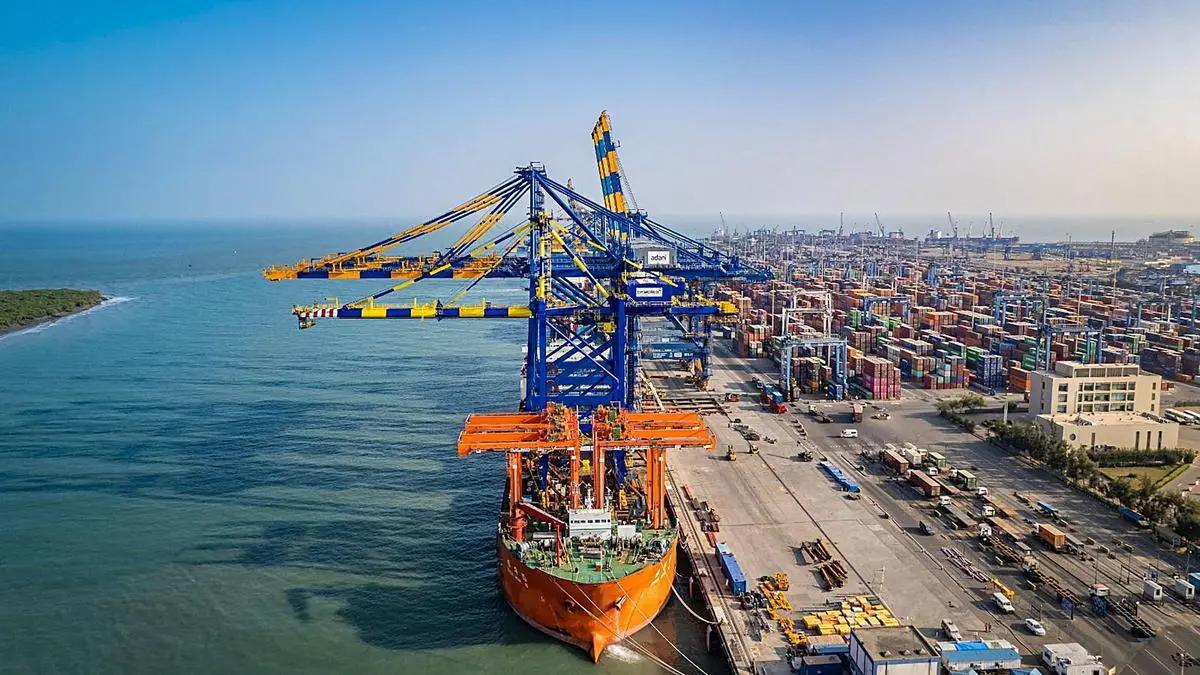
During the next five years, the company plans to spend ?60,000–63,000 crore on domestic ports, with a large part of the investments directed towards expanding infrastructure View More
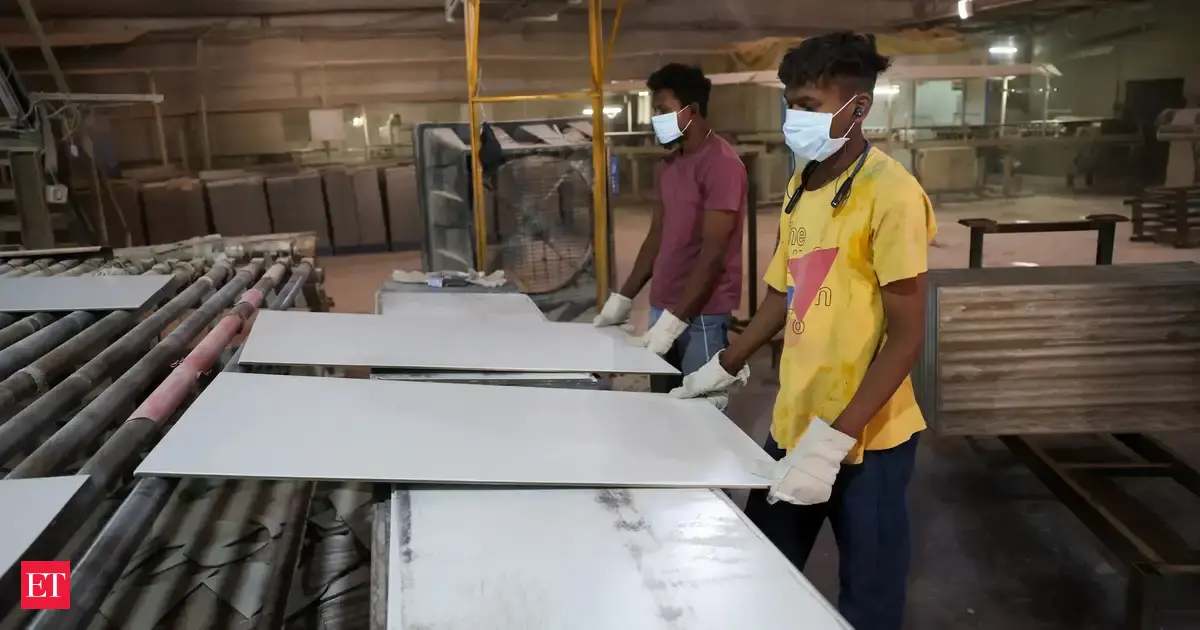
India's ceramic tile industry, particularly in Morbi, is shifting from a volume-focused model to prioritizing design, quality, and global appeal. Manufacturers are investing in advanced capabilities and curated collections to meet evolving international buyer demands for aesthetic sophistication and trend alignment, moving up the value chain. View More
India’s ceramic tile industry, long known for its manufacturing muscle and competitive pricing, is undergoing a quiet but significant transformation. In Morbi, Gujarat, one of the world’s largest ceramic production hubs, the focus is shifting from just producing more tiles at lower costs. Manufacturers are now rethinking their approach, placing design, quality, and global appeal at the center of their strategy. This shift comes at a time when international buyers are changing how they evaluate suppliers. Price and production capacity, once the primary factors, are no longer enough. As per manufacturers, importers are increasingly looking for consistency in design, precision in manufacturing, and the ability to align with global architectural trends. For Indian manufacturers, this has meant moving beyond a purely commodity-driven model. A gradual move up the value chain Morbi’s factories still operate at massive scale, contributing significantly to India’s tile exports. But behind the scenes, many companies are investing in new capabilities, from advanced finishing technologies to curated design collections. Large format tiles, premium porcelain surfaces, and textured finishes are becoming more prominent in export portfolios. These products are designed not just for functionality, but for visual impact, catering to architects and designers who view surfaces as a key element of spatial storytelling. “The industry is no longer just about volume,” said Nikhil Kanani, Founder Storico Ceramica, a Morbi-based ceramic manufacturer. “Buyers today expect design consistency and a certain level of aesthetic sophistication. That requires a different mindset, not just better machines.” Live Events Changing demand, changing products The shift is also being driven by evolving global design preferences. Minimalist architecture, seamless interiors, and natural textures are influencing how spaces are built across residential, hospitality, and commercial projects. "Large format tiles, in particular, are gaining traction for their ability to create expansive, uninterrupted surfaces with minimal grout lines. These features are increasingly in demand in international markets, where design cohesion is often as important as durability," Nikhil Kanani said. For Morbi manufacturers, adapting to these trends has meant investing in design development alongside production efficiency, a combination that was not always a priority in the past. Supply chains and new opportunities Global supply chains are also playing a role in reshaping the industry. As buyers diversify sourcing strategies, India has emerged as a key alternative manufacturing destination. But this opportunity comes with higher expectations. Importers are seeking partners who can deliver consistent quality across batches, maintain design uniformity, and respond quickly to changing preferences. This has pushed Indian companies to upgrade both their processes and their product offerings. Manufacturers that once relied heavily on OEM (original equipment manufacturing) exports are now exploring ways to build their own identity in global markets. The rise of brand-led manufacturing Another notable change is the growing emphasis on branding. Traditionally, much of India’s ceramic output was sold under foreign labels, with limited visibility for the actual manufacturers. That is beginning to change. A new generation of companies is focusing on developing distinct brand identities, creating design-led collections, and targeting specific markets with tailored products. This shift reflects a broader ambition, to be seen not just as suppliers, but as creators. “Earlier, the focus was on fulfilling orders. Now, it’s about offering a design perspective,” the Storico Ceramica founder added. “We are seeing more conversations around collections, themes, and how products fit into global design narratives.” Redefining India’s global image This transition is gradually altering how India’s ceramic industry is perceived internationally. Once viewed primarily as a volume-driven sector, it is beginning to gain recognition for design capability and product innovation. Industry observers say this evolution could shape the next phase of growth. As global markets become more design-conscious, manufacturers that can combine scale with creativity are likely to stand out. Morbi, in many ways, sits at the center of this transformation. Its factories still power India’s export engine, but its ambitions are expanding beyond production lines. .Pbanner{display:flex;justify-content:space-between;align-items:center;background-color:#ec1c40;margin-top:20px;padding:5px 10px;border-radius:4px;color:#fff;line-height:10px;} .Pbannertext{display:flex;align-items:center;font-size:16px;font-weight:600;font-family:'Montserrat';} .Pbannertext img{height:20px;margin:0 6px} .Pbannerbutton a{display:flex;align-items:center;background-color:#fff;color:#ec1c40;text-decoration:none;font-weight:600;padding:4px 8px;border-radius:6px;font-size:15px;font-family:'Montserrat';} .Pbannerbutton img{height:20px;margin-right:6px} .Pbannerbutton a:hover{background-color:#f7f7f7} Add as a Reliable and Trusted News Source Add Now! (You can now subscribe to our Economic Times WhatsApp channel) (You can now subscribe to our Economic Times WhatsApp channel)


Bagmane Prime Office REIT received record investor participation and strong oversubscription in its Rs 3,405 crore IPO. Backed by Blackstone and Bagmane Group, the trust offers exposure to premium Bengaluru office assets, high occupancy levels and global technology tenants ahead of its market listing. View More
The Bagmane Prime Office REIT has set a new benchmark for India's REIT market, attracting the highest number of investor applications ever for a REIT IPO in the country, as the Rs 3,405 crore public issue closed on Thursday with overwhelming demand from institutional and high-net-worth investors. As of 5 pm on May 7, the issue had received 2,01,146 applications, surpassing all previous listed REIT offerings in India, including Embassy Office Parks REIT, Mindspace Business Parks REIT, Brookfield India Real Estate Trust, Nexus Select Trust and Knowledge Realty Trust. The issue was subscribed 24.96 times overall by the close of bidding. The institutional portion saw the strongest response, with the QIB category, excluding anchor investors, subscribed 26.58 times, while the non-institutional investor segment was subscribed 22.82 times. Investors bid for 350.77 crore units against 14.05 crore units on offer, reflecting strong demand despite muted grey market signals. The REIT had opened for subscription on May 5 with a price band of Rs 95–100 per unit and is scheduled to list on the BSE and NSE on May 15. Live Events Ahead of the IPO, Bagmane had already raised Rs 1,150 crore from anchor investors, with participation from large domestic institutions including SBI Life , UTI Mutual Fund, Kotak Mutual Fund, WhiteOak Capital, Quant Mutual Fund and Max Life. The issue had also seen participation from the Jhunjhunwala Discretionary Trust, adding to institutional interest. Bagmane had raised another Rs 1,360 crore through a pre-IPO placement, entirely via primary issuance, even before the anchor round. Sponsored by Bengaluru-based Bagmane Group and backed by Blackstone Inc., the trust gives investors exposure to premium office assets in one of India’s strongest commercial leasing markets. Its portfolio includes six Grade A+ business parks in Bengaluru, spanning 20.3 million square feet, with a leasable area of 19.6 million square feet. As of June 2025, the portfolio reported 97.9% committed occupancy, among the highest in India’s listed office REIT universe. Its tenant roster includes global technology majors such as Google, Amazon, NVIDIA Corporation and Samsung Electronics. Financially, the trust reported Rs 1,960 crore in total income and Rs 829 crore in profit after tax for the nine months ended December 2025. With record retail participation and heavy institutional oversubscription, Bagmane is now set to become India’s sixth listed REIT, adding another milestone to the country’s fast-growing listed real estate investment market. .Pbanner{display:flex;justify-content:space-between;align-items:center;background-color:#ec1c40;margin-top:20px;padding:5px 10px;border-radius:4px;color:#fff;line-height:10px;} .Pbannertext{display:flex;align-items:center;font-size:16px;font-weight:600;font-family:'Montserrat';} .Pbannertext img{height:20px;margin:0 6px} .Pbannerbutton a{display:flex;align-items:center;background-color:#fff;color:#ec1c40;text-decoration:none;font-weight:600;padding:4px 8px;border-radius:6px;font-size:15px;font-family:'Montserrat';} .Pbannerbutton img{height:20px;margin-right:6px} .Pbannerbutton a:hover{background-color:#f7f7f7} Add as a Reliable and Trusted News Source Add Now! (You can now subscribe to our ETMarkets WhatsApp channel) (You can now subscribe to our ETMarkets WhatsApp channel)

An outbreak aboard a cruise ship of a rare rodent-borne illness called hantavirus left three passengers dead and sickened others. Here's all you need to know about the hantavirus scare on MV Hondius. View More