Latest Sectors News

Donald Trump also said negotiations with Iran were "proceeding nicely," but cautioned that the U.S. could resume military action if discussions were to collapse. View More
A drone view shows the Valero Houston Refinery in Pasadena outside of Houston, Texas, U.S., May 12, 2026. REUTERS/Shahrzad RasekhShahrzad Rasekh | Reuters Oil prices were mixed Tuesday as U.S. military operations in southern Iran on Monday and President Donald Trump's mixed messaging on the negotiations between Tehran and Washington kept traders on edge.July futures for international benchmark Brent crude gained 1.6% to $97.72 a barrel in Asia trading, while U.S. West Texas Intermediate futures for June was trading 5.4% lower at $91.38 per barrel.The U.S. military said it conducted operations in southern Iran, targeting vessels allegedly trying to deploy mines, as well as missile launch locations. The U.S. Central Command said the actions were intended "to protect our troops from threats posed by Iranian forces."Complicating peace talks, Trump said in a social media post Monday that he had encouraged Saudi Arabia, Qatar, Pakistan, Turkey, Egypt and Jordan to join the Abraham Accords aimed at normalizing Arab nations' ties with Israel.Trump also said negotiations with Iran were "proceeding nicely," but cautioned that the U.S. could resume military action if discussions were to collapse. "It will only be a Great Deal for all or, no Deal at all," Trump wrote.Swiss multinational investment bank UBS said Friday the global oil market was showing mounting signs of strain as inventories continue to fall amid ongoing disruptions to shipments via the Strait of Hormuz. Observed global oil inventories dropped by a combined 246 million barrels in March and April, while cumulative production losses could exceed 1 billion barrels by the end of May, the bank said. The sharp inventory drawdowns suggest the market remains "strongly undersupplied," UBS said, pointing to falling on-land crude and refined product inventories even as oil stored on tankers rose due to rerouted U.S. exports to Asia. Choose CNBC as your preferred source on Google and never miss a moment from the most trusted name in business news.
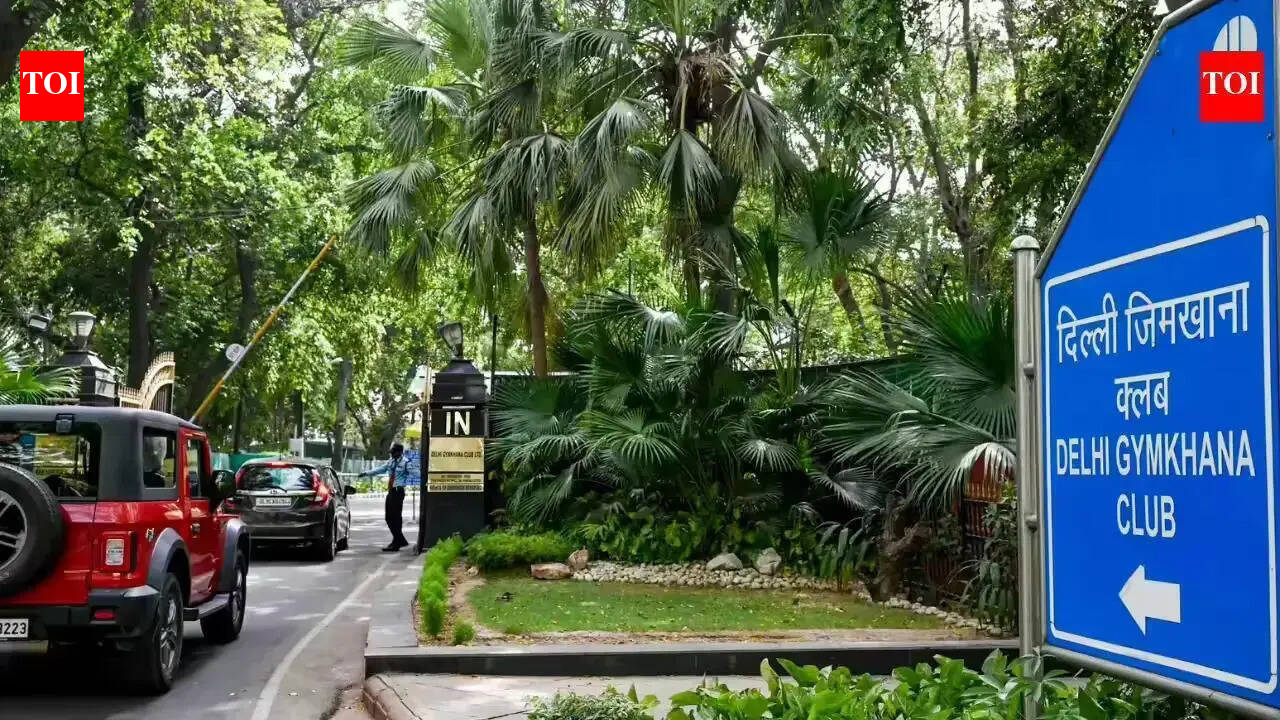

The government is set to link fertiliser sales with the national AgriStack database. This digital initiative aims to prevent the misuse of subsidised nutrients and monitor farm-level usage. Authorities will match fertiliser purchases with farmer IDs and land details. This will help identify excessive buying and estimate nutrient needs. View More
New Delhi: The Centre is planning to integrate fertiliser sales with the national AgriStack database in a digital push to curb diversion of subsidised nutrients , track farm-wise consumption and tighten subsidy targeting, said officials. As per the proposed plan, fertiliser purchases will be matched with a farmer's ID and landholding, crop sown and acreage, enabling authorities to flag excess buying and estimate nutrient requirement at the farm level. Digital crop surveys, artificial intelligence (AI)-based analytics and satellite imagery will be used to create farm-level fertiliser consumption profiles. Also read: Adequate availability of fertilisers for upcoming Kharif sowing season: Govt "The idea is to create an authenticated digital trail from land parcel to fertiliser purchase," said a senior government official, who did not wish to be identified. The move comes amid persistent concerns over diversion of subsidised fertilisers, black marketing and excessive urea usage. A pilot is currently running in Haryana and Madhya Pradesh, and the government is looking to roll it out across India from the next financial year, according to officials. Live Events "If fertiliser offtake is disproportionate to acreage or crop requirement, the system will throw up alerts," the official said. ET BureauPurchases to be matched with farmers’ ID and landholding, crop sown and acreage The government is positioning AgriStack as the backbone for future delivery of farm subsidies, crop insurance , agricultural credit and advisory services through authenticated farmer IDs, which could eventually help forecast fertiliser demand, curb diversion and reduce panic buying, said a second official. Digitisation of land records The government has earmarked ₹13,000 crore in this fiscal year for states to create digital agriculture architecture under the Special Assistance to States for Capital Investment scheme. The scheme incentivises states to digitise land records, build verified farmer registries and integrate agricultural databases with AgriStack. The government has a database of farmers under the PM Kisan scheme , but it is not linked with land records. It is now planning to link farmers' databases with agricultural land records by the end of this year. A mechanism is being worked out to include tenant farmers and sharecroppers within the framework, the second official said. .Pbanner{display:flex;justify-content:space-between;align-items:center;background-color:#ec1c40;margin-top:20px;padding:5px 10px;border-radius:4px;color:#fff;line-height:10px;} .Pbannertext{display:flex;align-items:center;font-size:16px;font-weight:600;font-family:'Montserrat';} .Pbannertext img{height:20px;margin:0 6px} .Pbannerbutton a{display:flex;align-items:center;background-color:#fff;color:#ec1c40;text-decoration:none;font-weight:600;padding:4px 8px;border-radius:6px;font-size:15px;font-family:'Montserrat';} .Pbannerbutton img{height:20px;margin-right:6px} .Pbannerbutton a:hover{background-color:#f7f7f7} Add as a Reliable and Trusted News Source Add Now! (You can now subscribe to our Economic Times WhatsApp channel) (You can now subscribe to our Economic Times WhatsApp channel)
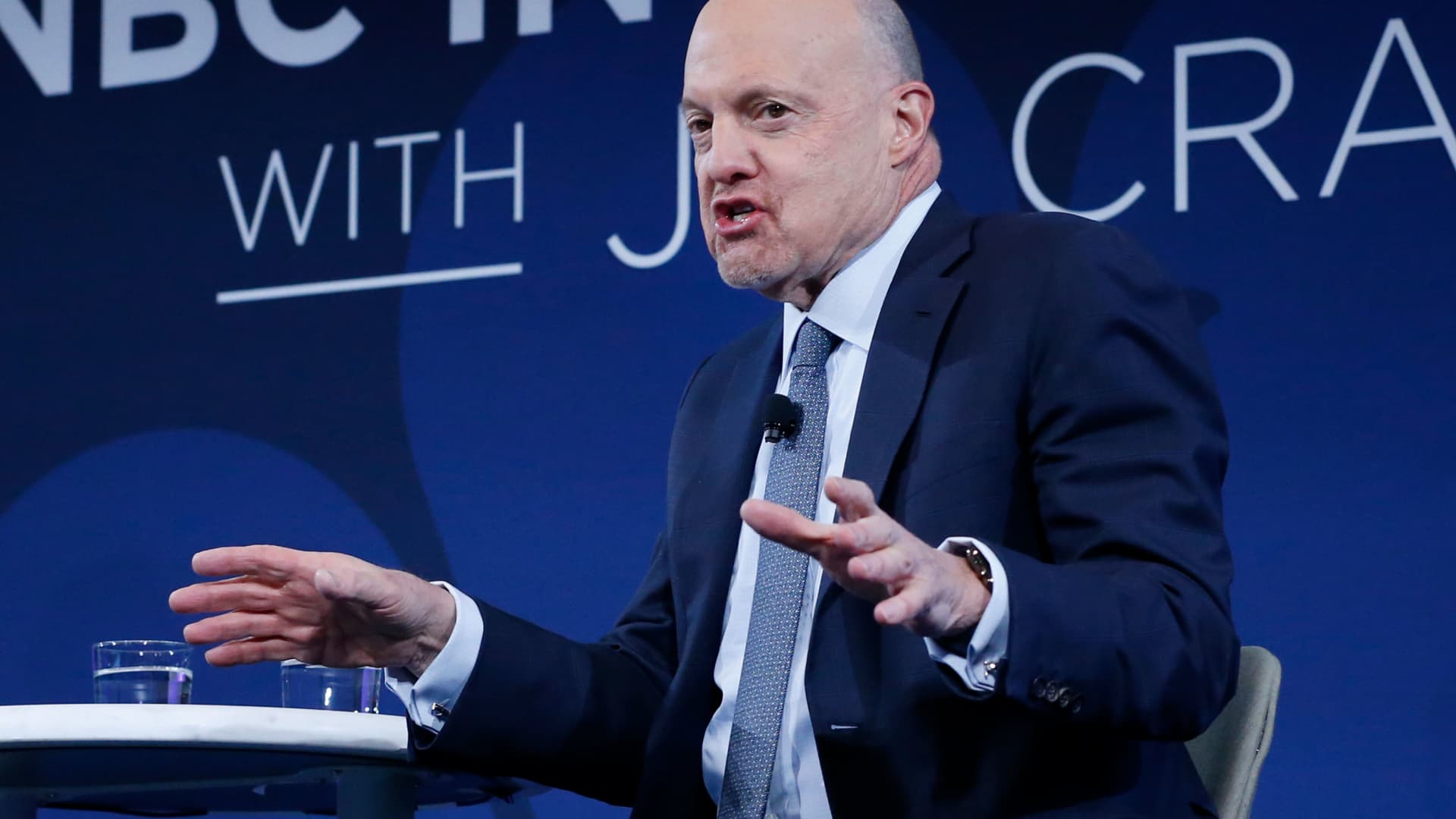
It's time for Nvidia to admit its status as a solid grower and do more for shareholders than it already has. View More
First, welcome to all who have joined us for the first time. Your participation in the CNBC Investing Club means a great deal to us. We aspire to get it right for you, in the same way a wonderful Club member explained this weekend as we gardened together. He couldn't believe how much he had learned and how much he had prospered from it. I can only express gratitude to him. Here's why â from 1983 to 1987 at Goldman Sachs and from 1987 until 2001 at Cramer & Co, I succeeded in the process of making money for the richest people in the world. It meant little to most of them. I was part of some allocation. I crushed it, for lack of a better verb, but I got thanks from only one soul â a very rich and creative one â and no one else. But that's not the way it works now at the Club. My gardener friend expressed joy in learning about stocks. It wasn't because the cost is a microscopic percentage of what I used to charge. It was because he could figure out why stocks went up and down. We discussed the disappointment with Microsoft and whether it should be kicked out. I expressed my doubts about the company in the age of artificial intelligence and what it could do to the core, clunky Windows product, but I doubted that Amy Hood, the incredible CFO at the cloud and software giant, would tolerate that much underperformance. I pondered whether I had come to be too close to Marc Benioff, a special man who invented a company with a product that I loved, and here I am talking about Salesforce with its $40 billion in revenue. It's a small position in the Club portfolio and now a painful one. I want to give Salesforce and struggling Nike one more quarter â and then, I will have to try a lunch of "crow a la mode." Nike gets the chance if only because the last quarterly conference call gave it the slim right to endure the endless pain. It's up or nothing. Mostly, we talked about the winners, including our two "own, don't trade" names, Apple and Nvidia . The quiet upward propulsion of Apple is a great joy. It closed at a record high of nearly $309 per share on Friday â now up roughly 13.5% year to date. However, who wouldn't worry about the coming retirement of the spectacular CEO Tim Cook ? There are enough irons in the proverbial fire that the CEO-in-waiting, hardware specialist John Ternus, should be able to feast off the continual earnings conflagration. How about Nvidia? Let's talk about it. Nvidia still brings me great joy. I got an egg, ham â sadly not Taylor Ham â and cheese this weekend. On my order, the cook wrote not my name but "Nvidia" on the ticket â another proud Club member. I was tickled. But we are in a "what have you done for me lately business." I wish, during the transaction, I could have explained what must happen to get this stock to hunt again. It is undeniable that with this quarter, Nvidia has, indeed, lost its luster. It was a true blowout, but it sent the stock noticeably backward, which means that an earnings surprise for this behemoth no longer mattered. The skein of stock success has ended. The market cap is well-worn. The world heavyweight stock champion title is soon to go to another. It was swell while it lasted. Or should there be a question mark at the end of that sentence? I am not sure. But it got me thinking. What do you do about being the best, at having a tremendous surprise, and yet landing with more than a dud? You can, of course, say that the stock is up from $180 and that its ascension to a record close on May 14 of nearly $236 ( less a week before earnings last past Wednesday evening) was built not to last. I can handle that analysis, but we are talking playoffs here, and you are only as good as your last endeavor. Other stocks won. Is it time for us to admit defeat and strip the stock of its "own, don't trade" appellation? Perhaps. But I think it is time for the company to begin a different course, one having to do with its capital allocation â a strategy that has served Apple so well all these years. A long time ago, Luca Maestri of Apple became the first CFO to truly understand the power of raw, hard cash on the balance sheet and what it could mean for shareholders. My life and times with his more than 10-year regime were, at times, tempestuous, mostly because of my ignorance and adamance in the need to grow by acquisition. I had suggested once, a long, long time ago, that Apple should buy Netflix , something that I now think comes under the category of being lucky, not good, considering that it hung at $25 billion at the time. With a rigorous outfit like Apple, you can only live a short period of time on that prompt. Organic growth is what mattered, and Apple had it in spades. But it was never enough in the Cook era. Tim could have invented a car that runs on water, and it would not mean enough to some of the greedy shareholders and critics who often said its best times were behind it, something first heard when this $4.5 trillion company traded at about $500 billion (yes, billion with a "B"), instead of at a price that could pass Nvidia at these paces. Nvidia is still a $5.2 trillion company. Not too shabby. So, what would Luca have done with Nvidia? I think he would not have tolerated even this long a period of underperformance. He would aggressively pivot toward a dual plan of a hefty increase in the dividend each year, coupled with a monster buyback that led to more than a third of the stock being retired over a decade. I know Warren Buffett often talks about his trip to Dairy Queen â watching young people glued to their iPhones â that got him started in owning a position in Apple stock. It would have always been nothing but a curiosity if not for the $35 billion to $36 billion he accumulated beginning in 2016. It was something else entirely that made it his largest position, something that was his first love: a masterful buyback coupled with a bountiful dividend. The king-of-all-equities always proclaimed that his true love of owning a stock centered on how the company itself allowed him to become an ever-bigger part of the enterprise simply by buying back its own stock and forever sharing the proceeds and bounty that comes with that process. Apple's products were the ante, the buyback and dividend were the sustenance. It's time for Nvidia to admit its status as a solid grower and do more for shareholders than it already has. It has to accept that its graphics processing units (GPUs) and central processing units (CPUs) and networking products are the ante, and the buyback and dividend are the sustenance. The Jensen Huang-led chip powerhouse started the process by offering a sizable â some would say colossal â buyback and a decent-sized dividend. But neither reaches the skies that Apple presented. Nvidia must signal that it wants to shrink its float (currently at 24.2 billion shares) while increasing the buyback to backstop investors, no matter what the CPU or GPU or, for all I know, quantum computing can offer. How can Nvidia be sure to do so, given all that must be done to stay ahead? I think that it is not enough to apply current cash. Nvidia must begin a systematic reduction in investment size after the victories Jensen so often wins in the process of anointing winners. Let's take Intel . Nvidia bought $5 billion of Intel shares at $23.28 each. Intel is now at $119 (not too far off its $129 record-high close on May 11). I think Intel goes higher. But if I were running Nvidia's books, I would say it is time to take out the cost and play with the house's money. That means a return that encompasses far more than the $5 billion invested. That investment can easily be applied to the buyback. Each year, more can be peeled off. Other investments can perform the same role. As each is made, others should come off. It's not like the companies that are invested in generate all that much fealty. They still play the field. The secondaries could be a form of shareholder payback that would change the equation of the stock in the same way it did for Apple. It would supply the support that so many are not counting on from a semiconductor company because there is thought to be a law-of-large-numbers defeat in the works. Alas, there is no Buffett to take advantage of the moment. But he has enough acolytes that one must presume the shareholder base would change from somewhat sadly fickle to more of a mainstay. I am not asking for a yearly weekend of love â we have Nvidia's annual GTC event for that â I am simply saying an epoxied set of shareholders might stop the tyranny of a wall of options that holds the stock back . Did you catch that picture of all the calls that I showed from the floor of the New York Stock Exchange? Each one works against the increase in value as the pros crush the over-exuberance, as represented by fat premiums that the amateurs create. They are gluttons for punishment. Without this capital return program, I fear that we will soon have to question the wisdom of a big position in Nvidia. No, not an exit, merely a recognition that the punching-bag nature of being a shareholder can cause an exit on each round, and I don't want to wait around for the ref to raise the hand of a winner and new champion. Why would I think that the Apple program would work? Simply because it's not like Apple has explosive growth. That ended years ago. It's just the consistency of the capital return that has mattered. With that, I will return to my family and my garden on this, the appointed time of planting. We will convene a Club meeting this week. I hope you will join us. Jim Cramer's Charitable Trust is long CRM, NKE, AAPL, NVDA. See here for a full list of the stocks.) As a subscriber to the CNBC Investing Club with Jim Cramer, you will receive a trade alert before Jim makes a trade. Jim waits 45 minutes after sending a trade alert before buying or selling a stock in his charitable trust's portfolio. If Jim has talked about a stock on CNBC TV, he waits 72 hours after issuing the trade alert before executing the trade. THE ABOVE INVESTING CLUB INFORMATION IS SUBJECT TO OUR TERMS AND CONDITIONS AND PRIVACY POLICY , TOGETHER WITH OUR DISCLAIMER . NO FIDUCIARY OBLIGATION OR DUTY EXISTS, OR IS CREATED, BY VIRTUE OF YOUR RECEIPT OF ANY INFORMATION PROVIDED IN CONNECTION WITH THE INVESTING CLUB. NO SPECIFIC OUTCOME OR PROFIT IS GUARANTEED.

In a court filing, Blanche said the incident demonstrated why the administration considers the ballroom project essential to national security. View More

Individuals making overseas property payments via international credit cards should be aware of FEMA regulations. Such transactions may invite scrutiny, especially if not routed through authorised channels. Details here. View More

Nadda directed authorities to maintain vigilant Ebola screening at all entry points, including airports, seaports, and land borders View More
Zepto is preparing for a potential $1 billion IPO, with a public filing expected in June and launch targeted for July. The quick-commerce firm plans to use proceeds for expansion as India’s IPO market seeks renewed momentum amid slowing deal activity and global economic concerns. View More
Rapid-commerce firm Zepto Ltd. is preparing to publicly file in the first half of June for an initial public offering that may raise up to $1 billion, according to people familiar with the matter. The 10-minute delivery platform is likely to begin investor roadshows later next month, and is targeting an IPO launch as early as July, the people said, asking not to be identified because the information is private. The offering is expected to include a fresh issue of shares as well as secondary share sales by existing investors, with proceeds likely to fund expansion, the people said. Deliberations are ongoing and details including the size and timing of the IPO may still change, they said. Zepto’s offering may become only the second billion-dollar IPO in India this year, after SBI Funds Management’s planned share sale. The deals may help revive momentum in a market slowed by weak dealmaking as investors assess the economic fallout from the Iran war. Local companies have raised a combined $3.5 billion through first-time share sales so far in 2026, far below the record levels of the previous two years. Representatives for Zepto declined to comment. Live Events The company achieved a $7 billion valuation in its last $450 million funding round in October. It competes with Amazon.com Inc.’s India unit as well as local rivals including Swiggy Ltd. , Eternal Ltd. ’s Zomato and Tata Group-backed BigBasket. Zepto is working with Axis Capital Ltd. , Motilal Oswal Investment Advisors Ltd. and the local units of Morgan Stanley, HSBC Holdings Plc and Goldman Sachs Group Inc. on the share sale. The company confidentially filed draft IPO papers at the end of December and received regulatory observations on May 10. Under local rules, companies are required to make their prospectuses public for at least 21 days before launching an offering. .Pbanner{display:flex;justify-content:space-between;align-items:center;background-color:#ec1c40;margin-top:20px;padding:5px 10px;border-radius:4px;color:#fff;line-height:10px;} .Pbannertext{display:flex;align-items:center;font-size:16px;font-weight:600;font-family:'Montserrat';} .Pbannertext img{height:20px;margin:0 6px} .Pbannerbutton a{display:flex;align-items:center;background-color:#fff;color:#ec1c40;text-decoration:none;font-weight:600;padding:4px 8px;border-radius:6px;font-size:15px;font-family:'Montserrat';} .Pbannerbutton img{height:20px;margin-right:6px} .Pbannerbutton a:hover{background-color:#f7f7f7} Add as a Reliable and Trusted News Source Add Now! (You can now subscribe to our ETMarkets WhatsApp channel) (You can now subscribe to our ETMarkets WhatsApp channel)

Harikanta Overseas IPO worth ?24.30 crore is entirely a fresh issue of 0.27 crore shares, priced in the range of ?86 to ?91 apiece. Since the SME IPO has no offer-for-sale (OFS) component, all proceeds will be received by the company. View More

"In the long run, it's a pretty dreadful industry," William de Gale of BlueBox Asset Management, told CNBC's Europe Early Edition on Wednesday. View More
In this articleSSNHZHXSCLFollow your favorite stocksCREATE FREE ACCOUNT A SK Hynix flag (R) and a South Korean national flag (L) flutter outside the company's Bundang office in Seongnam on Jan. 26, 2024. Jung Yeon-je | Afp | Getty Images London â Outsized returns for memory-related stocks have helped fuel substantial gains in U.S. and South Korean equity markets in recent years â but market watchers warn investors forget the market's cyclicality at their own risk. The memory industry has been in a period of sustained growth since the launch of ChatGPT in December 2022, which triggered huge demand for high-bandwidth memory, or HBM.Samsung and SK Hynix are among the largest producers of HBM chips, and their stock prices have soared 114% and 186% higher year-to-date, respectively. US-based Micron Technology and SanDisk have each advanced 141% and 156% in 2026.Central to the thesis underpinning the bull run in memory stocks is the belief that the industry has shaken off its past cyclicality, whereby demand for storage fluctuates significantly while supply remains largely fixed.Executives have argued that AI has upended the industry's history of boom and bust, and a structural supply shortage means that prices could stay high for years. watch nowVIDEO5:5305:53Supply constraints capping AI sector growth, says analystEurope Early Edition William de Gale, portfolio manager at BlueBox Asset Management, told CNBC's Europe Early Edition on Wednesday that the industry tends to have "enormous ups and downs"."In the long run it's a pretty dreadful industry," he said."I suspect that's still the case every time people make an argument that the memory cycle is gone, and it's now a long-term value-creating industry â just before it all goes horribly wrong." watch nowVIDEO10:2510:25Why the AI boom is reshuffling the global stock market hierarchyCNBC Explains New innovations Though memory chip supply is extremely constrained at present, Alphabet's Google on March 24 unveiled TurboQuant, a new compression method, which it says could reduce the amount of memory required to run large language models by six times. It is designed to make AI models more efficient, a major goal of the leading labs.Such developments have the potential to slash demand for AI memory chips, which have been a critical component to train up huge LLMs from companies like Google, OpenAI and Anthropic. Deutsche Bank wrote in a Tuesday note that investors should "continue to brace themselves for continuous AI-related disruption", as evidenced by TurboQuant, which caused a sharp decline in the share price of the biggest memory providers upon its release.The analysts added, however, that it "remains to be seen" whether the TurboQuant technique will create a structural shift in demand.Jon Cunliffe, head of investment office at wealth manager JM Finn, told CNBC that there is scope for production to increase meaningfully over the next three years, easing supply constraints, "especially if AI demand grows at a more normal pace.""Today's share prices assume that prices stay high for a long time, companies stay very disciplined about not overâinvesting, and profit margins remain much better than in the past," he added. "We'd also highlight that the sector has experienced a high degree of momentum crowding in recent weeks, which has made it vulnerable to a shakeout."Though forecasting when memory supply could exceed demand is an impossible task, investors must exercise caution when investing in an industry with "historically average returns on capital that is priced to make very high returns in future", according to Andrew Lapping, chief investment officer at Ranmore Fund Management. "A leopard does not often change its spots," Lapping said of the potential for a structural shift in the memory sector.  South Korean concentration risk Samsung and SK Hynix are responsible for sending South Korea's Kospi to stratospheric heights across 2025 and 2026. Together, the stocks comprise over 50% of the entire index. Steve Brice, global chief investment officer at Standard Chartered, told CNBC's Squawk Box Asia on May 13 that he believes peak optimism around Korean equities is "not too far around the corner". "I was in Korea last week and we were advising clients to take profits on parts of their portfolio and rotate into a globally diversified portfolio," he said. Nonetheless, some banks remain bullish on the two firms' prospects, with Nomura estimating SK Hynix stock to hit 4 million won and Samsung Electronics to reach 590,000 won over the next 12 months.That would imply an advance in Samsung's share price of 20% and see SK Hynix double, based on current prices. watch nowVIDEO3:3703:37Markets await clarity on Iran issue from Trump-Xi talks: Standard CharteredSquawk Box Asia â CNBC's Arjun Kharpal also contributed to this report. Choose CNBC as your preferred source on Google and never miss a moment from the most trusted name in business news.