
Latest Sectors News
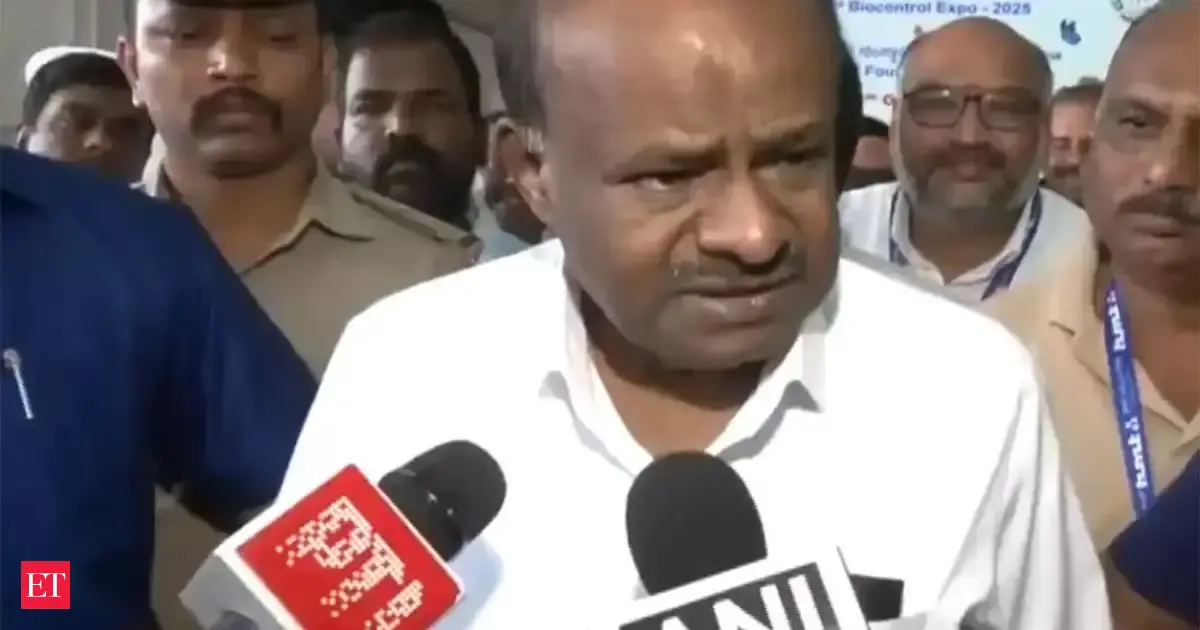
Union Minister HD Kumaraswamy has accused the Karnataka government of obstructing the revival of HMT by using the forest department to claim 430 acres of its land. He alleges this move, coinciding with a special revival package nearing finalization, is an attempt to interfere with judicial proceedings and benefit vested interests. Kumaraswamy vowed to challenge the order and assured HMT employees of the revival under Prime Minister Modi's leadership. View More
Bengaluru: Union Minister for Heavy Industries and Steel HD Kumaraswamy on Monday accused the state government of trying to derail the union government's efforts to revive HMT by unleashing the forest department to create obstacles just as a special revival package was nearing finalisation. The union minister, addressing a press conference, questioned the timing of a notice issued by the Bengaluru Urban deputy conservator of forests (DCF) directing HMT to surrender about 430 acres, which the department has identified as forest land. "The matter is pending before the court. Issuing such a notice and fixing a deadline at this stage amounts to interference with judicial proceedings," he said, adding that HMT would challenge the order in a court of law. Also Read: MEIL to pump in Rs 40,000 crore capex in 3 years, eyes Rs 2 lakh crore topline in 5 years Kumaraswamy, who represents Mandya in the Lok Sabha, said he had been working to secure a special package for the loss-making public sector undertaking and that discussions on the proposal were scheduled for next week. Live Events "Just when the package was close to being announced, the state government got such a notice issued," he alleged. Kumaraswamy claimed the land had been valued at nearly Rs 15,000 crore and alleged that vested interests were eyeing the property. He also accused previous governments of allowing large-scale sale and development of HMT land and said he had stopped further sales during his tenure as chief minister in 2006. "I was determined that HMT land should not fall into the hands of land grabbers or the real-estate mafia," he said. The minister said HMT remained an important manufacturer of machinery for sectors such as defence, space and research, and continued to enjoy demand in domestic and overseas markets. Also Read: Tata Technologies expands partnership with Tenneco in $100 million deal "Under the leadership of PM Modi, we will revive HMT. No one can stop us," he said, while assuring employees that they need not be anxious over the state government's action. Kumaraswamy also alleged that the Congress government had created hurdles for other central public sector initiatives, including efforts to strengthen Kudremukh Iron Ore Company . He contrasted Karnataka with Andhra Pradesh, saying neighbouring states worked more closely with the Centre to attract industrial investments and revival packages. "If the State Government itself creates a hostile environment, how will industries come to Karnataka" he asked. .Pbanner{display:flex;justify-content:space-between;align-items:center;background-color:#ec1c40;margin-top:20px;padding:5px 10px;border-radius:4px;color:#fff;line-height:10px;} .Pbannertext{display:flex;align-items:center;font-size:16px;font-weight:600;font-family:'Montserrat';} .Pbannertext img{height:20px;margin:0 6px} .Pbannerbutton a{display:flex;align-items:center;background-color:#fff;color:#ec1c40;text-decoration:none;font-weight:600;padding:4px 8px;border-radius:6px;font-size:15px;font-family:'Montserrat';} .Pbannerbutton img{height:20px;margin-right:6px} .Pbannerbutton a:hover{background-color:#f7f7f7} Add as a Reliable and Trusted News Source Add Now! (You can now subscribe to our Economic Times WhatsApp channel) (You can now subscribe to our Economic Times WhatsApp channel)
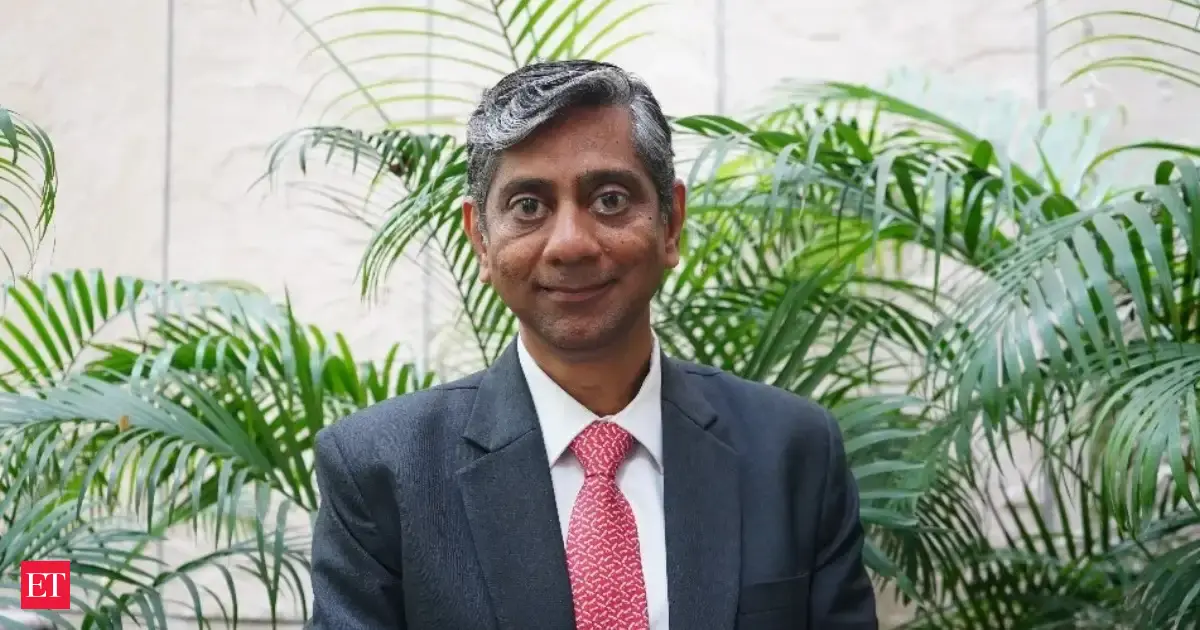
Jindal Stainless, India's leading stainless steel maker, has appointed Kunjal Mehta, formerly of Adani Energy Solutions, as its new Chief Financial Officer, effective June 25. Mehta, a seasoned finance professional with extensive experience in corporate finance and value creation, is expected to bolster the company's financial strength and growth. Jindal Stainless is currently expanding its production capacity and global reach. View More
New Delhi: Jindal Stainless , India’s largest stainless steel producer , has picked former Adani Energy executive Kunjal Mehta as chief financial officer, according to an official release from the company. His appointment is effective 25 June, as per the company’s statement. Also Read: Jindal Stainless commissions 1.2 MTPA stainless steel melting shop project in Indonesia Mehta was previously chief financial officer of Adani Energy Solutions, the largest private sector power transmission company. He has also previously worked at Essar. “Kunjal brings deep expertise across corporate finance, treasury, fundraising, and business transformation, along with a strong track record of value creation in large and complex organisations. I am confident his leadership will further strengthen our financial resilience and support our upward trajectory in the manufacturing business,” said Abhyuday Jindal, managing director, Jindal Stainless. Live Events Mehta is a qualified chartered accountant and cost accountant. His experience covers corporate finance, resource mobilisation, treasury and working capital management, financial planning and analysis, investor relations, governance, assurance and risk management. He has led several financial initiatives across domestic and international markets and driven finance transformation programmes across large organisations. Also Read: Jindal Stainless enters retail segment, expands into construction value chain “I am delighted to join Jindal Stainless at a defining stage in its growth journey. The company has built a strong leadership position in the stainless steel sector through its focus on innovation, operational excellence, sustainability, and customer-centricity,” said Mehta. Jindal Stainless, had an annual turnover of INR 42,955 crore in financial year 2025-26 and is ramping up its facilities to reach 4.2 million tonnes of annual melt capacity in financial year 2026-27. It has 16 stainless steel manufacturing and processing facilities in India and abroad, including in Spain and Indonesia, and a worldwide network in 12 countries, as of March 2026. .Pbanner{display:flex;justify-content:space-between;align-items:center;background-color:#ec1c40;margin-top:20px;padding:5px 10px;border-radius:4px;color:#fff;line-height:10px;} .Pbannertext{display:flex;align-items:center;font-size:16px;font-weight:600;font-family:'Montserrat';} .Pbannertext img{height:20px;margin:0 6px} .Pbannerbutton a{display:flex;align-items:center;background-color:#fff;color:#ec1c40;text-decoration:none;font-weight:600;padding:4px 8px;border-radius:6px;font-size:15px;font-family:'Montserrat';} .Pbannerbutton img{height:20px;margin-right:6px} .Pbannerbutton a:hover{background-color:#f7f7f7} Add as a Reliable and Trusted News Source Add Now! (You can now subscribe to our Economic Times WhatsApp channel) (You can now subscribe to our Economic Times WhatsApp channel)

JSW Steel is among India's leading steel making companies with a domestic installed capacity of 36.4 million tonne per annum View More
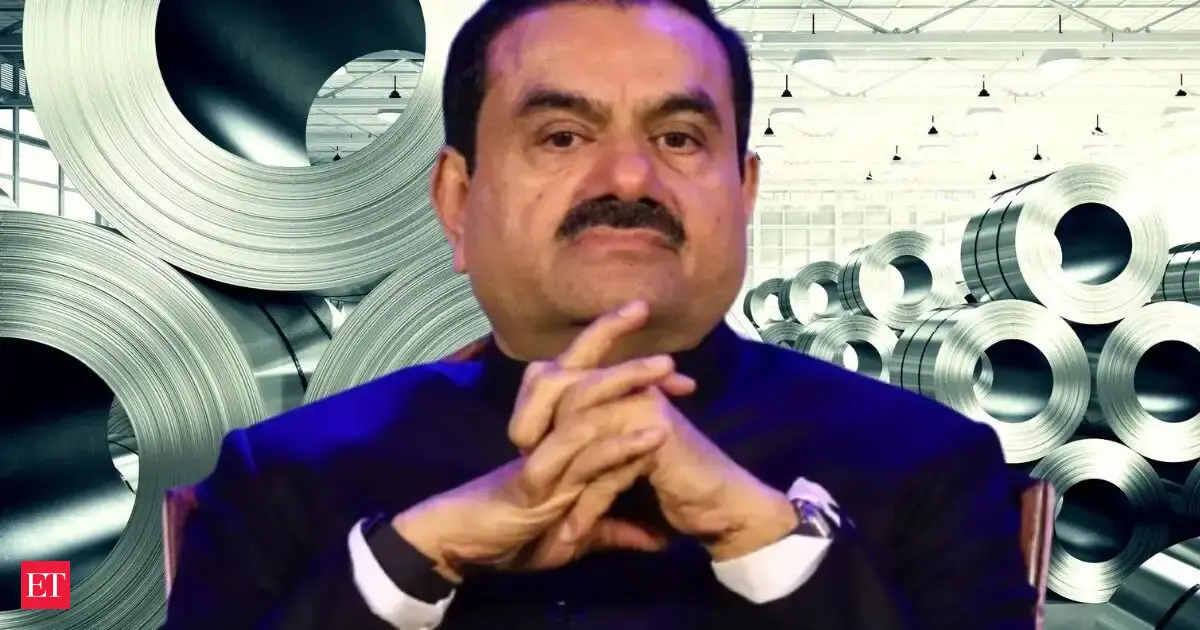
Gautam Adani's $11.5 billion aluminium joint venture with IHC marks his biggest bet yet on India's industrial future. Rather than challenging Hindalco and Vedanta directly, Adani is targeting soaring aluminium demand driven by manufacturing, renewable energy and infrastructure, aiming to build a fully integrated metals business and reshape India's aluminium industry. View More
When Gautam Adani entered cement in 2022 through the acquisition of Ambuja Cements and ACC , many saw it as a natural extension of his infrastructure ambitions. His subsequent move into copper through Kutch Copper reinforced the view that the group was steadily building a commodities portfolio around sectors critical to India’s industrial growth. Now, Adani has turned to aluminium, one of the country’s most strategic metals. The $11.5 billion joint venture with Abu Dhabi-based International Holding Company (IHC) is one of the largest investments in India’s metals sector. It is also an attempt to enter a market long dominated by two powerful incumbents, Hindalco Industries and Vedanta Aluminium . Also Read: Adani, IHC plan to forge $11.5 billion aluminium unit Yet this may not be a story of a challenger trying to displace established leaders. The aluminium market that Adani is entering is already growing faster than domestic supply. India remains a net importer despite being the world’s second-largest producer. The group appears to be betting that the opportunity lies not in taking market share away from rivals but in positioning itself for a future where demand expands dramatically and aluminium becomes central to manufacturing, energy transition and infrastructure. A sector ruled by two giants For years, India’s aluminium sector has effectively been controlled by Hindalco and Vedanta. These two companies account for nearly 90% of domestic aluminium production and have built deep integration across mining, refining, smelting and downstream manufacturing. That dominance has not emerged overnight. Aluminium is among the most capital-intensive and energy-intensive industries in the world. Building a competitive business requires access to bauxite reserves, refining capacity, captive power generation and large-scale logistics infrastructure. Few companies possess the financial resources or operational capability to create such an ecosystem from scratch. Live Events That is why Adani’s proposed entry is significant. The group and IHC plan to invest approximately Rs 1.1 lakh crore through a 50:50 joint venture that will create a fully integrated aluminium complex in Odisha. The project will include a 4 million tonnes per annum alumina refinery, a 2 million tonnes per annum aluminium smelter, a 4,000 MW captive power plant and a downstream manufacturing park with capacity of 1 million tonnes per annum. The scale of Adani's gambit is difficult to ignore. India produced around 4.2 million tonnes of aluminium in FY25. A smelter capacity of more than 2 million tonnes would eventually add nearly 50% to the country’s current output and instantly place Adani among the largest players in the sector. Also Read: Why aluminium is emerging as manufacturers' preferred alternative to copper Why aluminium, and why now? The timing reflects both industry dynamics and Adani’s broader business strategy. Aluminium demand is expected to rise sharply over the next two decades as India expands manufacturing, builds transmission networks, scales renewable energy capacity and increases production of automobiles and consumer goods. According to the government's vision document for the sector, domestic aluminium consumption is projected to rise from about 5.5 million tonnes in FY25 to 8.5 million tonnes by FY30. The document estimates demand could reach 18 million tonnes by FY40 and 28 million tonnes by FY47. India’s per capita aluminium consumption remains only 3.4-3.9 kg compared with a global average of 8-12 kg. That gap is often cited by industry executives as evidence that the country is still in the early stages of aluminium adoption. Karan Adani has argued that growing digitisation and manufacturing activity will create sustained demand for the metal. He has also pointed to a more immediate reality that India continues to import aluminium despite substantial domestic capacity. "I think if you look at the overall market, even with such large capacities being there, large players being there, we still import aluminium, which is a sign that there is more demand and there is going to be enough room for everybody to be in this market," he said after the MoU signing in Odisha. That assessment explains why the group does not appear to view aluminium as a winner-takes-all market. The opportunity, from its perspective, is to help meet incremental demand rather than displace existing producers. The Adani advantage: Energy and integration If there is one area where Adani believes it possesses a structural advantage, it is energy. Aluminium production consumes enormous quantities of electricity. Power costs often determine whether a smelter remains globally competitive. The proposed project will include a 4 GW captive power plant alongside a 400 MW green energy component. "Aluminium is a very energy-intensive business, and as one of the lowest-cost producers of energy, it will be one of the biggest competitive edge that we bring to the table," Karan Adani said. This is where the group’s existing businesses become relevant. Adani already operates one of India’s largest power generation portfolios, alongside transmission networks and renewable energy assets. Few new entrants can replicate that ecosystem. The project also fits neatly into the group’s broader strategy of creating commodity platforms that support its existing businesses. Aluminium is increasingly used in power transmission, renewable energy infrastructure, construction and transportation. As the group expands its presence across energy, ports, data centres and industrial infrastructure, internal demand for aluminium products is likely to grow as well. In that sense, aluminium is not simply another business vertical for Adani. It is also a raw material that can strengthen other parts of the conglomerate. Why Odisha matters The choice of Odisha is not accidental. The state possesses more than half of India’s bauxite reserves and is already a major centre for alumina and aluminium production. The project’s refinery is expected to be located in Rayagada district, close to bauxite deposits, while the smelter will come up in Sundargarh. Bauxite supplies are expected to come from Ballada, Kutrumali and Sasubohumali mines. The latter, which has some of the largest reserves among the identified deposits, is likely to be operated by Odisha Mining Corporation. The project will also leverage existing logistics assets. Dhamra Port, owned by Adani Ports and Special Economic Zone, is expected to play a central role in handling cargo movements. According to officials involved in planning the project, producing one million tonnes of aluminium annually requires moving roughly eight million tonnes of raw materials and intermediate products, underscoring why the project is being designed around dedicated rail and conveyor infrastructure. This combination of mining access, logistics and industrial infrastructure gives Odisha a natural advantage as an aluminium hub and helps explain why both state and central policymakers are keen to support large investments in the sector. What it means for Hindalco and Vedanta Adani’s entry is unlikely to trigger immediate pressure on the incumbents. The project is expected to take around five years before meaningful production begins. By then, both Hindalco and Vedanta are expected to have expanded their own capacities. Demand growth is also likely to absorb a substantial portion of new supply. What changes is the structure of the industry. For years, the aluminium sector has largely revolved around two dominant private players with Nalco occupying a smaller but important position. The emergence of a third large integrated producer introduces a new competitive dynamic. That could influence everything from procurement practices and downstream investments to technology adoption and export strategies. It may also accelerate capacity expansion plans across the industry as companies position themselves for future demand growth. At the same time, aluminium is not a sector where scale alone guarantees success. Access to bauxite, power costs, operational efficiency and capital discipline remain decisive factors. Hindalco and Vedanta possess decades of experience and deeply integrated operations. Adani will still need to prove that it can execute efficiently in a business very different from ports, airports or power transmission. A bigger ambition than market share Perhaps the most revealing aspect of the aluminium project is that it mirrors a pattern visible across Adani’s recent investments. The group entered cement when India was embarking on a major infrastructure buildout. It entered copper as transmission networks, renewable energy and electrification expanded. Aluminium too is at the centre of many of the same trends. The government’s aluminium vision document argues that India could eventually target a 10% share of the global aluminium market by FY47. Achieving that would require domestic capacity to expand to roughly 37 million tonnes annually from current levels. Against that backdrop, Adani’s investment looks less like a challenge to Hindalco and Vedanta and more like a wager on India’s industrial future. The group appears convinced that the market will become large enough to accommodate another major producer. Whether the project ultimately reshapes the competitive hierarchy remains to be seen. What seems more certain is that the arrival of a third large integrated player will deepen India’s aluminium ecosystem, attract fresh capital into the sector and strengthen the country’s ambitions of becoming a more important force in global metals supply chains. For a market long defined by a duopoly, that alone marks a significant shift. .Pbanner{display:flex;justify-content:space-between;align-items:center;background-color:#ec1c40;margin-top:20px;padding:5px 10px;border-radius:4px;color:#fff;line-height:10px;} .Pbannertext{display:flex;align-items:center;font-size:16px;font-weight:600;font-family:'Montserrat';} .Pbannertext img{height:20px;margin:0 6px} .Pbannerbutton a{display:flex;align-items:center;background-color:#fff;color:#ec1c40;text-decoration:none;font-weight:600;padding:4px 8px;border-radius:6px;font-size:15px;font-family:'Montserrat';} .Pbannerbutton img{height:20px;margin-right:6px} .Pbannerbutton a:hover{background-color:#f7f7f7} Add as a Reliable and Trusted News Source Add Now! (You can now subscribe to our Economic Times WhatsApp channel) (You can now subscribe to our Economic Times WhatsApp channel)

Anand Rathi’s Jigar Patel recommends buying three stocks, including Maruti Suzuki and Tata Steel, for the next 1-2 weeks. Learn how technical analysis supports these picks and the market's bullish outlook. View More

The company will set up 10 gigawatt of ingot and 10 gigawatt wafer capacity at the said, the CBO said, adding the work is expected to begin soon View More

India's refined copper demand is set to surge, requiring an additional 500,000 tonnes of capacity every five years. Despite planned expansions, domestic production will remain insufficient to meet this growing need. Robust economic progress, infrastructure development, and the clean energy transition are fueling this demand, with building construction and renewables leading the charge. Further investment in smelting and refining facilities is crucial to bridge the supply gap. View More
New Delhi: India will require roughly 500,000 tonnes of additional refined copper capacity every five years to keep pace with rising demand of the metal, International Copper Association India (ICA India) Managing Director Mayur Karmarkar said on Sunday. Speaking on the outlook for the ongoing financial year, Karmarkar said copper demand is likely to track overall GDP growth and the association is anticipating at least around 9 per cent growth over 2026. Also Read: Hindustan Copper to seek Navratna status, eyes threefold ore output by 2029 On the supply side, restarting secondary smelter of Hindustan Copper and new secondary smelter of Hindalco will add capacity of 100,000 tonnes but that is small against the total demand of about 1.8 million tonnes, Karmarkar said. "It will help a bit, but the scale is relatively small," he added. Live Events Karmarkar said domestic cathode availability will further improve as smelter-refinery capacities expand. "Hindalco is putting up an expansion plant, and Kutch Copper's capacity is also coming on stream. These projects will make more cathode available in the country for domestic conversion," he noted. Despite these investments, he warned that domestic refined copper production will remain insufficient. "If you really see the demand trajectory versus supply in the long term, will require almost like another 500,000 tonnes capacity every five years to meet the growing demand," he said. Also Read: Anupam Misra takes charge as CMD of Hindustan Copper He added that under the current growth scenario, supply will need to chase demand, underscoring the urgency for further capacity additions and investment in refining and smelting facilities. India's copper demand grew 9.3 per cent to 1,878 kilo tonnes (KT) in FY25 as compared to 1,718 kilo tonnes in FY24 due to robust economic progress and increasing adoption of the metal across critical sectors, annual demand data of International Copper Association India had earlier said. India's continued emphasis on large-scale infrastructure projects, building construction, clean energy transition and emerging technologies has accelerated demand for key industrial materials, with copper emerging as a critical enabler across these sectors, the annual data anaylsis said. The building construction and infrastructure segments remained primary growth drivers registering 11 per cent and 17 per cent year-on-year growth, respectively. The renewable energy sector achieved one of the highest annual capacity additions in FY25, while the consumer durables sector saw a double-digit per cent increase, driven by strong sales of air conditioners, fans, refrigerators and washing machines. .Pbanner{display:flex;justify-content:space-between;align-items:center;background-color:#ec1c40;margin-top:20px;padding:5px 10px;border-radius:4px;color:#fff;line-height:10px;} .Pbannertext{display:flex;align-items:center;font-size:16px;font-weight:600;font-family:'Montserrat';} .Pbannertext img{height:20px;margin:0 6px} .Pbannerbutton a{display:flex;align-items:center;background-color:#fff;color:#ec1c40;text-decoration:none;font-weight:600;padding:4px 8px;border-radius:6px;font-size:15px;font-family:'Montserrat';} .Pbannerbutton img{height:20px;margin-right:6px} .Pbannerbutton a:hover{background-color:#f7f7f7} Add as a Reliable and Trusted News Source Add Now! (You can now subscribe to our Economic Times WhatsApp channel) (You can now subscribe to our Economic Times WhatsApp channel)
Tata Steel plans a capital expenditure of Rs 20,000 crore this fiscal year, with 60% earmarked for its Indian operations. This investment will bolster expansions in tinplate, wires, and new facilities, alongside ongoing projects in mining and sustainability. The company aims to boost its long-term steelmaking capacity to over 50 million tonnes, primarily driven by growth in India. View More
New Delhi: Tata Steel is looking to spend around Rs 20,000 crore as capex in the current financial year and a major share of it will be spent to support the India business, the company's management said. The capex for the ongoing FY27 will be around 38 per cent higher from Rs 14,559 crore that Tata Steel has spent on capital expenditure in the preceding 2025-26 financial year. Read more: Tata-owned IHCL CEO Puneet Chhatwal's remuneration climbs to Rs 25 crore in FY26 "In FY26, we spent Rs 14,559 crore on capital expenditure, and we plan to increase this to approximately Rs 20,000 crore in FY 2026-27, with 60 per cent allocated to India," said Tata Steel's CEO & MD T V Narendran, and Koushik Chatterjee, the company's Executive Director & Chief Financial Officer. The management made the statement in reply to a question related to Tata Steel's capex plans and long-term growth strategy. Live Events They said the capital allocation strategy for FY27 focuses on a balanced mix of sustenance projects, ongoing investments in value-added downstream and infrastructure projects, new technologies, and long-term growth projects, with a clear emphasis on India. "This includes expansions in tinplate and wires, the HRPGL (Hot Rolled Pickling & Galvanising Line) facility at Tarapur, and the Coke Ovens project at Jamshedpur. In addition, we are continuing to invest in mining, a stronger supply chain and sustainability of operations," the company officials said. Tata Steel has a consolidated steelmaking capacity of over 36 million tonnes per annum (MTPA) -- excluding the UK's 3.2 MT under transition -- in India (27.35 MT), the Netherlands (7 MT), and Thailand (1.7 MT) to cover South East Asian markets. The company aims to increase its capacity to over 50 million tonne in the long-term. The increase will be mainly in India, where the company is working on plans to add over 12 MT. In India, the company owns and operates an 11 MTPA steel plants at Jamshedpur, and 1 MTPA at Gamharia in Jharkhand. In Odisha's Kalinganagar, the company has 9 MTPA production capacity, that includes Neelancha Ipsat Nigam Ltd (NINL), which it had acquired through insolvency route. Tata Steel also operates a 5.6 MTPA plan in Odisha's Meramandali. With the expansion of capacities and transition to low-emitting steel making routes , the company aims to have 40 MTPA steelmaking capacity in India from present 27.35 MTPA, which includes recently commission 0.75 MT electric arc furnace in Punjab. Read more: Reliance market value now equals India's top five IT companies combined The company is pursuing 4.8 MTPA Phase-I expansion at NINL enhancing its presence in long-products segment and capitalising on growth in infrastructure and retail steel. It has also formed a strategic partnership with Lloyds Metals & Energy Ltd to develop the emerging Gadchiroli iron ore hub and evaluate a phased greenfield steel capacity of 6 MTPA. .Pbanner{display:flex;justify-content:space-between;align-items:center;background-color:#ec1c40;margin-top:20px;padding:5px 10px;border-radius:4px;color:#fff;line-height:10px;} .Pbannertext{display:flex;align-items:center;font-size:16px;font-weight:600;font-family:'Montserrat';} .Pbannertext img{height:20px;margin:0 6px} .Pbannerbutton a{display:flex;align-items:center;background-color:#fff;color:#ec1c40;text-decoration:none;font-weight:600;padding:4px 8px;border-radius:6px;font-size:15px;font-family:'Montserrat';} .Pbannerbutton img{height:20px;margin-right:6px} .Pbannerbutton a:hover{background-color:#f7f7f7} Add as a Reliable and Trusted News Source Add Now! (You can now subscribe to our Economic Times WhatsApp channel) (You can now subscribe to our Economic Times WhatsApp channel)

The capex for the ongoing FY27 will be around 38 per cent higher from ?14,559 crore that Tata Steel has spent on capital expenditure in the preceding 2025-26 financial year View More

France said it has deployed mine countermeasures to the Middle East, including two mine-hunting ships. View More
Vessels are pictured off coast of the Khor Fakkan Container Terminal, the only natural deep-sea port in the region and one of the major container ports in Sharjah Emirate, along the Gulf of Oman on June 28, 2026. (Photo by AFP via Getty Images) / - | Afp | Getty Images Oman has agreed to work with the U.K. and France to ensure the Gulf country's territorial waters are safe for navigation, the U.K. said on Saturday, as oil shipments through the Strait of Hormuz pick up since the U.S. and Iran signed an agreement last month to reopen the crucial sea lane."The U.K. and France also stand ready to deploy the wider Multinational Military Mission to support freedom of navigation in the Strait of Hormuz," U.K. Prime Minister Keir Starmer said in a joint statement with French President Emmanuel Macron."The Strait of Hormuz is a vital artery for the global economy. Restoring safe transit for ships of all nations through the Strait is a matter of global concern," the statement read.France said it has deployed mine countermeasures to the Middle East, including two mine-hunting ships."Accompanied by two frigates and a maritime patrol aircraft, these assets are ready to contribute, alongside our partners, to the full resumption of navigation and to ensure the safety of traffic in the Strait of Hormuz," Macron said in a statement on X.The U.K., France and more than two dozen countries said in May that they would support freedom of navigation through the Strait of Hormuz under the Multinational Military Mission for the waterway.Oman's Foreign Ministry did not immediately respond to CNBC's emailed request for comment Saturday.Iran warned against the U.K. and French move."The Strait of Hormuz is not a theater for the military display of extra-regional powers," Iran's Deputy Foreign Minister Kazem Gharibabadi said in a post on X."The security of Hormuz lies with the coastal states; the crisis-makers will be held accountable for the consequences of their adventurism; this is a serious warning," Gharibabadi said. Key intermediary Situated on the southeastern coast of the Arabian Peninsula, opposite Iran across the strait, Oman has been in joint talks with Iran on a new maritime security order, amid reports that the two countries could push to establish transit fees.Oman has said that any agreement will comply with international law, although the prospect of a financial system on a waterway that typically handles around 20% of the world's oil has sparked alarm.The Gulf nation has served as a key intermediary in regional crises and remains one of the few countries trusted by both Tehran and Washington, which is keen to ensure the flow through the strait resumes after it was blocked during the war, triggering a global energy crunch.The Sultan of Oman, Haitham bin Tarik, met Starmer in London on Thursday. The two spoke about de-escalating the conflict in the Middle East and to "secure maritime navigation through the Gulf's strategic waterways", Oman's state news agency said in a post on X.The U.S. and Iran signed a memorandum of understanding on June 17 to end nearly four months of war and reopen the Strait of Hormuz, and set âup 60 days of negotiations to work out a permanent peace deal. Oil shipments have ramped up since then. Saudi Arabia has shipped about 34 million barrels of oil through Hormuz since June 17, according to data from the trade intelligence firm Kpler. Riyadh's exports over the two weeks to July 2 were more than double the 15 million barrels the kingdom shipped through the strait from March 9 through June 17.Benchmark Brent crude oil prices have fallen 39% from their highs in March. Stock Chart IconStock chart iconBrent crude oil price per barrel, year to date. The U.S. has staunchly opposed any tolls in the Strait of Hormuz.U.S. President Donald Trump's administration has previously threatened to "aggressively" impose sanctions against Oman if it was seen to help Iran establish a tolling system."All nations should reject outright any efforts by Iran to disrupt the free flow of commerce," Treasury Secretary Scott Bessent said in a post on X on May 28.Under the terms of the U.S. and Iran's memorandum of understanding, Tehran cannot impose tolls on ships during the 60 days of negotiations to find a permanent settlement. watch nowVIDEO2:5902:59Trump on U.S. blockade of Hormuz: 'Not one ship got through to Iran'Fast Money In an interview with CNBC on Thursday, Trump said that "not one ship got through to Iran," suggesting the U.S. blockade of the Strait of Hormuz during the Iran war was not penetrated."It was a wall of steel," he said.However, according to shipping industry information service Lloyd's List, the blockade was breached multiple times by an "Iranian shadow fleet."Iran's parliament speaker and chief negotiator Mohammad Bagher Ghalibaf said Tuesday that Iran has exported more than 40 million barrels of crude oil since the U.S. removed its naval blockade of Iranian ports, and is now selling oil at prices roughly 20% higher than before the war. Choose CNBC as your preferred source on Google and never miss a moment from the most trusted name in business news.