
Latest Sectors News
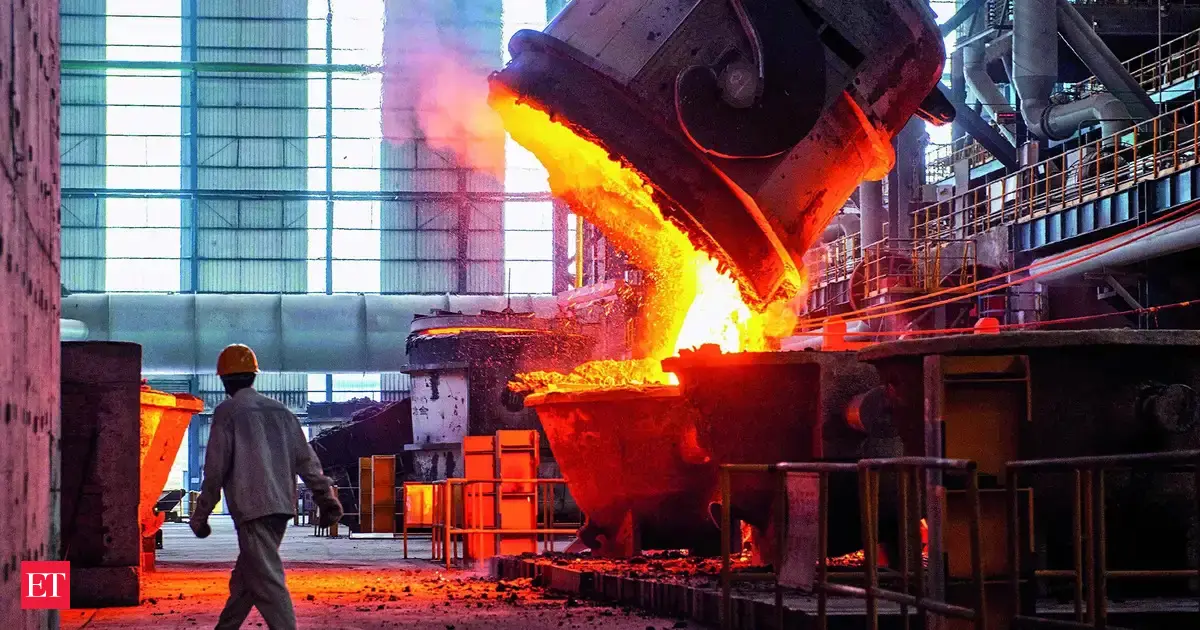
Dutch prosecutors have initiated criminal proceedings against Tata Steel IJmuiden. The company faces charges for illegally releasing harmful substances into the environment. This action follows a 2022 investigation prompted by a complaint from over 800 individuals. Authorities allege failures in maintenance and unauthorized operations at the steel plant. Tata Steel acknowledges concerns and is implementing improvement measures to minimize issues. View More
Amsterdam: Dutch prosecutors have launched criminal proceedings against the Dutch arm of Tata Steel, accusing the company of deliberately and illegally releasing harmful substances into the environment, potentially endangering public health. The Dutch public prosecutor's office said it suspects Tata Steel IJmuiden of multiple criminal offences, including the intentional discharge of hazardous substances into the atmosphere and failing in its duty of care. The case stems from a criminal investigation launched in 2022 after a complaint filed by a lawyer representing more than 800 people. Prosecutors said the probe into the steel production process and the operation of Tata Steel's coke oven gas plants found sufficient evidence to take the company to court. Authorities allege the company failed to carry out adequate maintenance, operated certain facilities without authorisation, and did not report several incidents involving raw coke, a coal-derived fuel used in blast furnaces to produce steel. Tata Steel IJmuiden said it takes the concerns and criticism seriously and will continue implementing improvement measures. It said it is working to minimise the production of under-baked coke, while noting that occasional incomplete baking is "technically inevitable." Live Events The company also argued there is little value in pursuing criminal proceedings over a limited number of past incidents that it says have already been addressed through technical improvements. Separately, Dutch prosecutors said they are investigating whether individuals in management positions could face personal criminal liability. A preliminary hearing has been scheduled for November 20 in the Amsterdam District Court. .Pbanner{display:flex;justify-content:space-between;align-items:center;background-color:#ec1c40;margin-top:20px;padding:5px 10px;border-radius:4px;color:#fff;line-height:10px;} .Pbannertext{display:flex;align-items:center;font-size:16px;font-weight:600;font-family:'Montserrat';} .Pbannertext img{height:20px;margin:0 6px} .Pbannerbutton a{display:flex;align-items:center;background-color:#fff;color:#ec1c40;text-decoration:none;font-weight:600;padding:4px 8px;border-radius:6px;font-size:15px;font-family:'Montserrat';} .Pbannerbutton img{height:20px;margin-right:6px} .Pbannerbutton a:hover{background-color:#f7f7f7} Add as a Reliable and Trusted News Source Add Now! (You can now subscribe to our Economic Times WhatsApp channel) (You can now subscribe to our Economic Times WhatsApp channel)

Branded products, retail sales and e-commerce posted strong growth, while the UK business advanced its Port Talbot EAF project View More

Indonesia has one of the world’s richest reserves of nickel - an essential raw material for stainless steel View More
SAIL and Indonesia's PT Krakatau Steel will explore a joint venture for stainless steel slab production. This collaboration aims to meet India's growing demand for the commodity. Indonesia offers rich nickel reserves, a key raw material for stainless steel. SAIL brings extensive experience in steelmaking and operating large plants. This partnership strengthens industrial ties and manufacturing value chains between the two nations. View More
New Delhi, SAIL and Indonesia-based PT Krakatau Steel will explore setting up a joint venture for manufacturing of stainless steel slabs, to support the commodity's increasing demand in India. A memorandum of understanding ( MoU ) to this effect was announced during high-level engagements between the two countries as part of Prime Minister Narendra Modi's visit to Indonesia from July 6-8, SAIL said in a statement on Wednesday. While Indonesia offers access to one of the world's richest reserves of nickel - an essential raw material for stainless steel, SAIL brings over five decades of experience in steelmaking , project execution and operating large integrated steel plants. The MoU marks an important step in the growing industrial partnership between India and Indonesia reflecting the shared vision of both countries to build stronger and more resilient manufacturing value chains . Further details regarding the proposed joint venture, including project capacity, investment structure, implementation schedule and technology configuration will be finalized following completion of the feasibility studies and receipt of the necessary approvals from both organizations and the respective governments, SAIL said. Live Events "As demand for stainless steel continues to grow across sectors such as infrastructure, mobility, renewable energy and manufacturing, access to reliable raw materials and strategic partnerships becomes increasingly important. We believe this collaboration with PT Krakatau Steel has the potential to create long-term value for both companies while strengthening the economic partnership between India and Indonesia," Chairman & Managing Director, SAIL Ashok Kumar Panda, said. For SAIL, this initiative is not only about expanding into the stainless steel value chain but also about building resilient supply chains, enhancing resource security and supporting India's vision of becoming a globally competitive under the Atmanirbhar Bharat initiative, he added. .Pbanner{display:flex;justify-content:space-between;align-items:center;background-color:#ec1c40;margin-top:20px;padding:5px 10px;border-radius:4px;color:#fff;line-height:10px;} .Pbannertext{display:flex;align-items:center;font-size:16px;font-weight:600;font-family:'Montserrat';} .Pbannertext img{height:20px;margin:0 6px} .Pbannerbutton a{display:flex;align-items:center;background-color:#fff;color:#ec1c40;text-decoration:none;font-weight:600;padding:4px 8px;border-radius:6px;font-size:15px;font-family:'Montserrat';} .Pbannerbutton img{height:20px;margin-right:6px} .Pbannerbutton a:hover{background-color:#f7f7f7} Add as a Reliable and Trusted News Source Add Now! (You can now subscribe to our Economic Times WhatsApp channel) (You can now subscribe to our Economic Times WhatsApp channel)

Dutch prosecutors suspect Tata Steel of multiple criminal offence, including unlawful release of harmful substances into the air, failing in its duty of care by carrying out insufficient maintenance View More

Dinakaraj said, “With these iron stairs built around the palmyra tree, anyone—from children to women—can effortlessly climb to the very top without any fear to extract ‘padaneer’” (sweet palm sap) View More
Kutch Copper Ltd has achieved London Metal Exchange registration for its copper cathodes. This approval allows 'Adani Copper' to be delivered against LME copper futures contracts. The certification validates Kutch Copper's manufacturing excellence and responsible sourcing practices. This milestone strengthens India's role in the global refined copper supply chain. Adani Copper cathodes will be eligible for issuance against LME contracts from July 10. View More
New Delhi: Adani Enterprises Ltd 's copper unit, Kutch Copper Ltd (KCL), has secured London Metal Exchange (LME) registration for its ' Adani Copper ' Grade A cathodes , allowing the brand to be delivered against LME copper futures contracts from July 10. The approval makes Adani Copper an LME Good Delivery brand, placing it among producers whose cathodes meet the exchange's quality and responsible sourcing standards. Warrants for eligible Adani Copper cathodes can be issued from July 10. "Kutch Copper Ltd (KCL), a subsidiary of Adani Enterprises Ltd (AEL), has earned LME certification for 'Adani Copper'. Approval by the world centre for the trading of industrial metals validates KCL's manufacturing excellence and responsible sourcing practices against strict global benchmarks, enabling Adani Copper cathodes to be delivered with warrants eligible for issuance against LME Copper futures contracts from July 10, 2026," the firm said in a statement. Also Read: Illegal mining: Home minister Amit Shah orders zero coal leakage plan The certification is a key milestone for Kutch Copper, a wholly owned subsidiary of Adani Enterprises, as it seeks to establish itself in the global refined copper market. The company operates a 500,000-tonnes-per-year copper smelter at Mundra, which it says is one of the world's largest single-location custom copper smelting facilities . Live Events "Copper is the backbone of the global energy transition. Achieving LME brand status places Adani among the world's leading copper producers and strengthens India's role in building a resilient, responsible supply chain for this vital metal. Kutch Copper's world-class infrastructure and ESG standards make this recognition both timely and well deserved. "It will enhance the global acceptance of Adani Copper. Apart from reinforcing India's growing stature in the international metals industry, the registration is a landmark step towards self-reliance in refined copper," said Vinay Prakash, CEO - Natural Resources, Adani Enterprises, and Managing Director of Kutch Copper Ltd. Also Read: Adani storms Hindalco-Vedanta duopoly with Rs 1.1 lakh crore gambit LME registration requires producers to meet specifications covering chemical composition, shape and weight, along with responsible sourcing requirements. The listing also allows eligible cathodes to be stored in LME-approved warehouses and used against exchange warrants, enhancing their tradability and financing flexibility. The company said the certification would support India's efforts to reduce reliance on imported refined copper while strengthening its position in the global copper supply chain. .Pbanner{display:flex;justify-content:space-between;align-items:center;background-color:#ec1c40;margin-top:20px;padding:5px 10px;border-radius:4px;color:#fff;line-height:10px;} .Pbannertext{display:flex;align-items:center;font-size:16px;font-weight:600;font-family:'Montserrat';} .Pbannertext img{height:20px;margin:0 6px} .Pbannerbutton a{display:flex;align-items:center;background-color:#fff;color:#ec1c40;text-decoration:none;font-weight:600;padding:4px 8px;border-radius:6px;font-size:15px;font-family:'Montserrat';} .Pbannerbutton img{height:20px;margin-right:6px} .Pbannerbutton a:hover{background-color:#f7f7f7} Add as a Reliable and Trusted News Source Add Now! (You can now subscribe to our Economic Times WhatsApp channel) (You can now subscribe to our Economic Times WhatsApp channel)
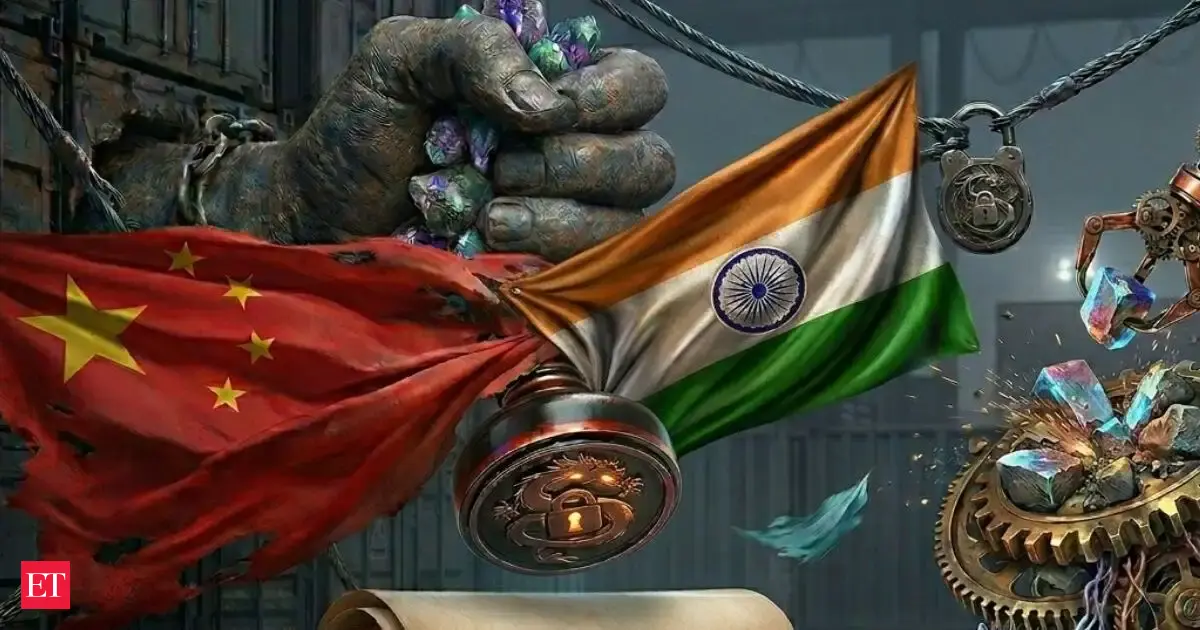
India has launched its first export-import (EXIM) shipping container for global deployment, marking its entry into a sector overwhelmingly dominated by China, which controls about 90-97% of global container manufacturing. View More
For decades, India has quietly relied on a product that is so basic to global trade that most people rarely notice it. The steel shipping container powers trade of everything from engineering goods to electronics, yet almost every steel box used by Indian trade comes from China. India has just taken a symbolic but significant step towards changing that reality with the rollout of its first export-import shipping container manufactured for global deployment. The move marks the beginning of an ambitious effort to enter an industry where China's dominance has remained virtually unchallenged for decades. ALSO READ | Maersk places order for 1,000 shipping containers with DCM Shriram Group A market China built and controls Few manufacturing sectors are as concentrated as container production. China accounts for close to 90-97 per cent of global container manufacturing capacity, depending on the segment and year. The dominance is so complete that shipping lines, exporters and logistics companies across the world have little choice but to source containers from Chinese factories. India's dependence on these imports was not merely a commercial issue. It reflected the absence of a domestic ecosystem capable of producing containers at scale and at globally competitive prices. While India emerged as one of the world's largest trading nations, it lacked meaningful capacity to manufacture the very steel boxes that move much of international trade. That imbalance became increasingly uncomfortable as geopolitical tensions rose and supply chains became more vulnerable to disruptions. Live Events The shock that changed thinking The push for container manufacturing in India can be traced directly to the pandemic years. As global trade patterns were disrupted, containers accumulated in some regions while becoming scarce in others. Exporters struggled to secure boxes. Freight rates surged and supply chains became unpredictable. Indian exporters and importers felt the impact sharply. The shortage highlighted the risks of depending on a single country for a critical piece of trade infrastructure. What had previously been viewed as a low-priority manufacturing segment suddenly acquired strategic significance. Policymakers began looking at container manufacturing not simply as another industrial activity but as an element of supply-chain security. The concern extended beyond Covid. Policymakers and industry executives increasingly worried that any future geopolitical conflict, trade dispute or major disruption involving China could once again leave India exposed. From idea to policy The government's response gathered pace over the past two years. Container manufacturing was identified as one of the strategic sectors that India wants to develop under its broader manufacturing push. The biggest policy intervention came in the Union Budget this year, which announced a Rs 10,000 crore Container Manufacturing Promotion Scheme. The objective is to create a globally competitive domestic ecosystem rather than merely establish a few isolated factories. The scheme proposes capital support for new manufacturing facilities, assistance for expansion of existing units and operational support to bridge the cost disadvantage faced by Indian manufacturers. It also includes provisions for research, testing, skilling and technology development. The government expects the initiative to increase domestic manufacturing capacity dramatically over the coming years and create the foundation for a viable industry. Why India struggles to compete Building containers may appear straightforward, but competing with China is another matter. Industry executives estimate that containers manufactured in India currently cost 30-40 per cent more than those produced in China. In many cases, the difference can be around $700-1,000 per container. Chinese manufacturers operate massive, highly automated facilities that benefit from economies of scale developed over decades. They also enjoy deep supply chains for steel, components and specialised equipment. Indian manufacturers are only beginning the journey. Land costs, smaller production runs and the absence of large-scale automation make it difficult to match Chinese prices. The challenge is not merely about producing containers. It is about producing them consistently, efficiently and at a cost that global shipping lines are willing to pay. Maersk's role in India's container ambitions The latest milestone would likely not have happened without the active involvement of global shipping giant AP Moller-Maersk. The company worked with DCM Shriram Group to develop prototype EXIM containers built to its specifications. Teams from Denmark and independent auditors evaluated Indian manufacturing capabilities and inspected facilities before the project moved ahead. The unveiling of the first India-manufactured EXIM container at Dadri in Uttar Pradesh last week represents an international validation of India's ability to meet global quality and safety standards. Maersk's decision to place an additional order for 1,000 containers is even more important. The order provides commercial credibility to India's emerging manufacturing effort and offers local producers the scale needed to improve capabilities and lower costs. India is caughgt in a classic chicken-and-egg problem. Large orders are needed to achieve efficiency, but efficiency is needed to attract large orders. Maersk's intervention helps break that cycle. More than an Atmanirbhar Bharat story Reducing dependence on imported China-made containers is the most obvious benefit, but it is far from the only one. A domestic container industry creates demand for steel, fabrication, welding, coatings, logistics services and specialised components. It encourages the development of ancillary industries such as corner castings, flooring systems and container paints. The government estimates that the sector could generate substantial direct and indirect employment while creating a market worth tens of thousands of crores over the next decade. The initiative also aligns with India's wider maritime ambitions. The country is investing heavily in ports, shipping infrastructure, shipbuilding and logistics networks. Container manufacturing fills an important gap within that broader ecosystem. For a country seeking to become a major manufacturing and export hub, ensuring reliable access to containers is increasingly viewed as a strategic necessity rather than a simple procurement issue. The long road ahead India's entry into container manufacturing remains at a very early stage. China retains overwhelming advantages in scale, technology, supply chains and cost competitiveness. No one in the industry expects that dominance to disappear anytime soon. Yet the significance of India's first globally certified EXIM container lies in what it represents. The country has moved from discussing the problem to producing a market-ready product for one of the world's largest shipping lines. Whether India ultimately becomes a major container manufacturing hub will depend on how quickly manufacturers can narrow the cost gap, improve productivity and secure sustained orders from global shipping companies. The journey could be difficult but after years of complete dependence on imported containers, India has finally taken its first meaningful step into one of the most strategically important segments of global trade. .Pbanner{display:flex;justify-content:space-between;align-items:center;background-color:#ec1c40;margin-top:20px;padding:5px 10px;border-radius:4px;color:#fff;line-height:10px;} .Pbannertext{display:flex;align-items:center;font-size:16px;font-weight:600;font-family:'Montserrat';} .Pbannertext img{height:20px;margin:0 6px} .Pbannerbutton a{display:flex;align-items:center;background-color:#fff;color:#ec1c40;text-decoration:none;font-weight:600;padding:4px 8px;border-radius:6px;font-size:15px;font-family:'Montserrat';} .Pbannerbutton img{height:20px;margin-right:6px} .Pbannerbutton a:hover{background-color:#f7f7f7} Add as a Reliable and Trusted News Source Add Now! (You can now subscribe to our Economic Times WhatsApp channel) (You can now subscribe to our Economic Times WhatsApp channel)
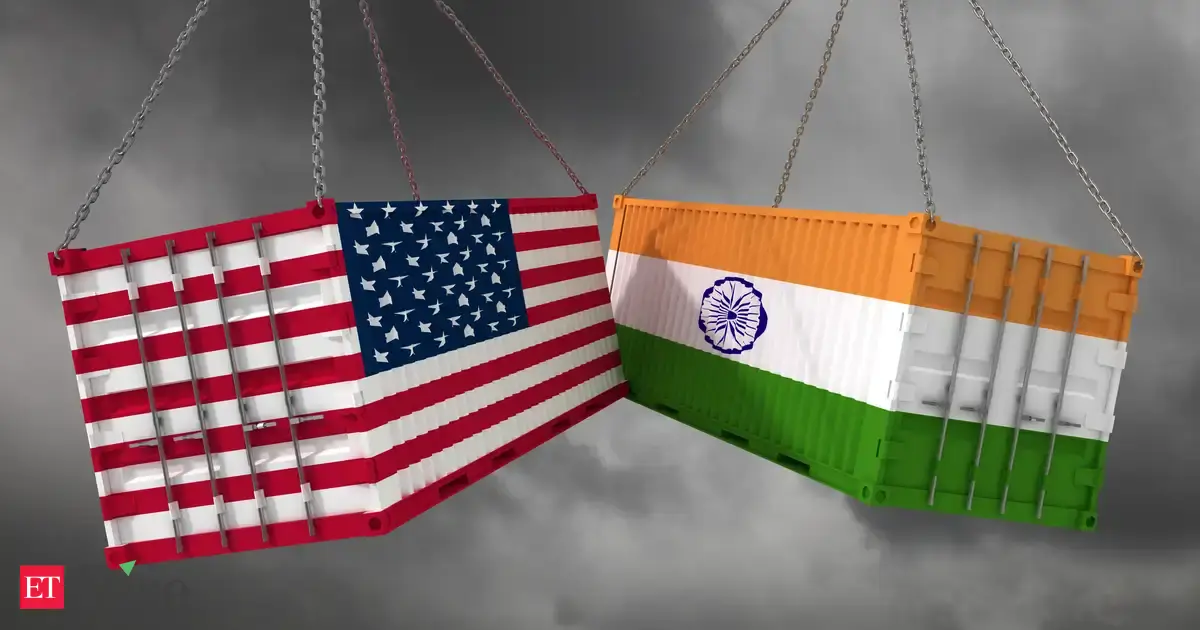
India-UK FTA success depends on improving competitiveness of Indian manufacturers, say industry experts. View More
The India-UK Comprehensive Economic and Trade Agreement (CETA), which will come into effect on July 15, is expected to provide a major boost to a wide range of sectors. Experts say the immediate duty-free access secured under CETA will significantly enhance the competitiveness of Indian exports in the UK market. They believe the agreement will generate new opportunities for farmers, fishermen, workers, MSMEs (micro, small, and medium enterprises), and manufacturers, while also strengthening India ’s integration into global value chains. India-UK bilateral merchandise trade rose to $23.1 billion in FY25 from $21.3 billion in FY24, marking a year-on-year growth of about 8.5%. India’s merchandise exports to the UK increased from $12.9 billion to $14.5 billion during the period, while merchandise imports rose from $8.4 billion to $8.6 billion, leaving India with a trade surplus of $5.9 billion in FY25. For FY26, merchandise bilateral trade stood at $15.31 billion up to November 2025. India’s major exports to the UK include electrical machinery, industrial machinery, mineral fuels, gems and jewellery , and pharmaceuticals, while key imports comprise precious stones and metals, machinery, electrical equipment, and iron and steel. The Economic Times Digital spoke to experts across several sectors to gauge the industry sentiments and assess the likely impact of the India-UK trade deal on their businesses. Ajay Srivastava, Founder, Global Trade Research Initiative (GTRI), describes the India–UK Free Trade Agreement as an important strategic step but cautions that tariff concessions alone will not automatically translate into higher exports for India. According to him, the UK already has relatively low import tariffs across many product categories, limiting the incremental market-access gains available to Indian exporters, while India's tariff reductions are likely to offer greater advantages to British exporters. “The agreement’s long-term success would, therefore, depend more on improving the competitiveness of Indian manufacturers than on preferential market access alone,” he says. Live Events Competitiveness, not tariff preferences alone, ultimately determines whether FTAs benefit India’s economy, he says. “Tariff concessions can open doors, but exporters succeed only when they remain globally competitive on cost, quality, and compliance,” he emphasises. He also cautions that the commercial gains from the India-UK FTA could be moderated by emerging non-tariff barriers. According to him, evolving carbon-related trade measures and sustainability requirements in developed markets could raise compliance costs for Indian exporters, offsetting part of the tariff advantage offered under the agreement. Elaborating further, he says that the government should closely monitor the pact’s implementation, including sector-wise utilisation, import trends, and its impact on domestic manufacturing, to ensure the agreement strengthens India’s industrial base rather than merely boosting imports. “Government procurement is one area where the India-UK FTA deserves closer scrutiny. While India has opened a large procurement market to UK companies, Indian firms are unlikely to receive comparable commercial opportunities in the UK, where public procurement remains difficult for foreign suppliers to access,” he highlights. Engineering exporters have also welcomed the India-UK free trade agreement but say its long-term benefits will depend on factors that extend beyond the headline tariff cuts. The UK is India’s sixth largest market for engineering exports, with the outbound shipments to the country growing 11.7% year-on-year in 2024-25, indicating strong momentum. Pankaj Chadha, Chairman of the apex industry body, Engineering Export Promotion Council (EEPC), thinks the India-UK free trade agreement is a “positive development” for engineering exporters because the industry’s objections to the UK’s proposed tariff-rate quota (TRQ) and countervailing duty (CVD) provisions for steel were taken into account during the negotiations. At the same time, Chadha cautions that while the agreement may be structurally positive, it remains vulnerable to a second wave of restrictions that fell outside the original scope of the negotiations. “As far as I am aware, India has not secured a clear exemption from the UK’s carbon-border levy. That means the tariff benefits under the FTA could eventually be diluted if carbon-related charges come into effect. While concerns around steel safeguard measures have been addressed to some extent, the bigger question is whether the agreement's promised gains will translate into actual trade once the UK's safeguard and carbon-related regulations are fully implemented,” Chadha says. The immediate gains for Indian steel exporters may be limited, believes Chadha, given relatively modest demand in the UK. He expects the biggest beneficiaries to be companies integrated into automotive supply chains, particularly those supplying to Tata-owned Jaguar Land Rover. “The FTA’s implementation date is now just a few days away, but we would like to highlight that we have flagged the concerns of CBAM-affected exporters to the government. However, we are yet to receive an official response,” he tells ET Digital. For those in the gem and jewellery sector, this trade pact signals a significant step forward for the jewellery business, as the reduction in import tariffs will make Indian jewellery more competitive and pave the way for improved exports. “It offers a positive environment to demonstrate the unique skills, rich heritage-based design ideas, and modern artistic creations of India to the whole world. Besides facilitating exports, this FTA will help boost collaborations across borders, foster innovation, and improve the level of investor confidence in the industry,” Dishi Somani, Founder of Dishis Designer Jewellery, says. Under the India-UK CETA, import duties on Indian gems and jewellery entering the UK have been slashed from 2.5-4% to zero. India’s total gem and jewellery exports to the UK are valued at $941 million, with $400 million coming from jewellery, as per the government data. “The FTA opens up a huge market as the UK imports approximately $3 billion worth of jewellery annually,” said the Commerce Ministry in a release. Shaunak Parikh, Vice Chairman of the industry body Gem & Jewellery Export Promotion Council (GJEPC), says that the India-UK FTA is far more than a tariff agreement; it is a growth agreement. “It gives Indian jewellers a stronger foothold in a premium global market and enhances the competitiveness of ‘Made in India’ jewellery. With improved market access and a level playing field, we expect exports to the UK to rise to around $2.5 billion and bilateral gem and jewellery trade to touch nearly $7 billion, creating new opportunities for manufacturing, value addition and employment across India's jewellery clusters,” he says. In the case of textiles, CETA will lead to zero-duty market access, down from the earlier 12% duty. The pact eliminates India’s long-standing tariff disadvantage against competitors such as Bangladesh, Pakistan, and Cambodia, which already had duty-free access to the UK market. Rohan Gupta, MD & CFO at Gargee Designer’s, says that the India-UK free trade agreement is going to be very transformative for the textiles and apparel industry in India. “The agreement will allow Indian fashion brands to have an easier time establishing their brand presence in one of the most important retail markets in the world. The removal of tariffs is going to allow the brands to compete in terms of quality and pricing, which is going to give them the ability to grow into more competitive industry players,” he says. Experts are of the view that the real significance of zero-duty access is that it removes a long-standing competitive disadvantage rather than creating an artificial advantage. “Indian exporters have historically competed against countries enjoying preferential market access to the UK, despite offering comparable quality and manufacturing capabilities. With tariff parity, buyer decisions are likely to be driven more by reliability, product innovation, compliance, and delivery performance. Equally important are the more flexible rules of origin under the agreement, which provide manufacturers greater operational flexibility while qualifying for preferential treatment,” Kanishk Maheshwari, Co-Founder and Managing Director, Primus Partners , says. .Pbanner{display:flex;justify-content:space-between;align-items:center;background-color:#ec1c40;margin-top:20px;padding:5px 10px;border-radius:4px;color:#fff;line-height:10px;} .Pbannertext{display:flex;align-items:center;font-size:16px;font-weight:600;font-family:'Montserrat';} .Pbannertext img{height:20px;margin:0 6px} .Pbannerbutton a{display:flex;align-items:center;background-color:#fff;color:#ec1c40;text-decoration:none;font-weight:600;padding:4px 8px;border-radius:6px;font-size:15px;font-family:'Montserrat';} .Pbannerbutton img{height:20px;margin-right:6px} .Pbannerbutton a:hover{background-color:#f7f7f7} Add as a Reliable and Trusted News Source Add Now!
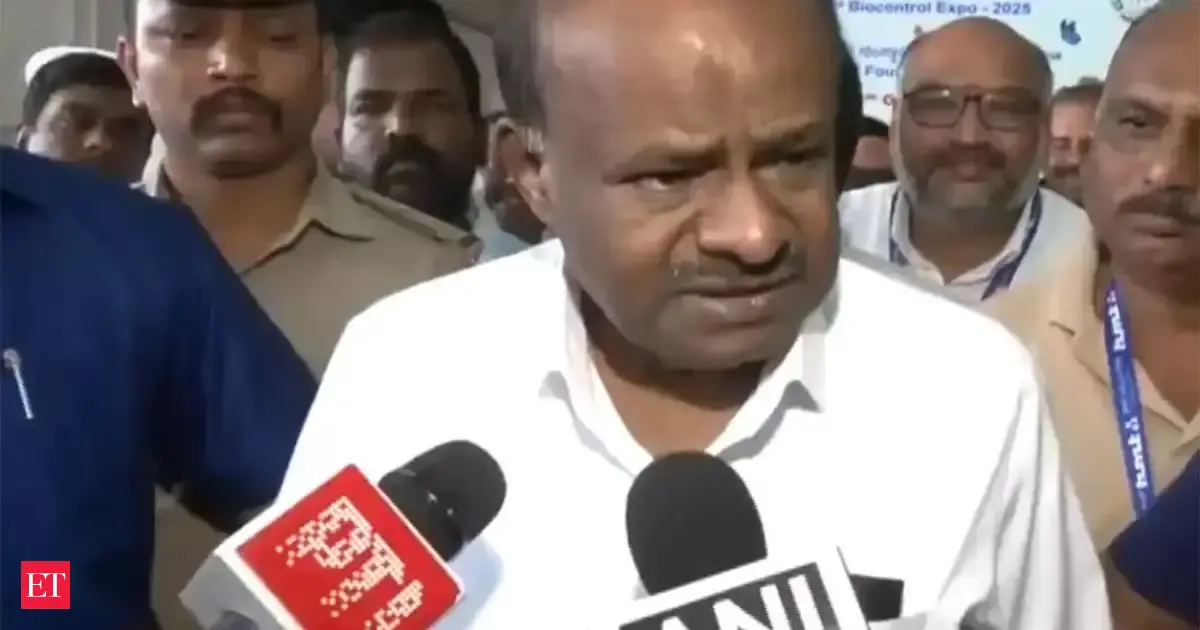
Union Minister HD Kumaraswamy has accused the Karnataka government of obstructing the revival of HMT by using the forest department to claim 430 acres of its land. He alleges this move, coinciding with a special revival package nearing finalization, is an attempt to interfere with judicial proceedings and benefit vested interests. Kumaraswamy vowed to challenge the order and assured HMT employees of the revival under Prime Minister Modi's leadership. View More
Bengaluru: Union Minister for Heavy Industries and Steel HD Kumaraswamy on Monday accused the state government of trying to derail the union government's efforts to revive HMT by unleashing the forest department to create obstacles just as a special revival package was nearing finalisation. The union minister, addressing a press conference, questioned the timing of a notice issued by the Bengaluru Urban deputy conservator of forests (DCF) directing HMT to surrender about 430 acres, which the department has identified as forest land. "The matter is pending before the court. Issuing such a notice and fixing a deadline at this stage amounts to interference with judicial proceedings," he said, adding that HMT would challenge the order in a court of law. Also Read: MEIL to pump in Rs 40,000 crore capex in 3 years, eyes Rs 2 lakh crore topline in 5 years Kumaraswamy, who represents Mandya in the Lok Sabha, said he had been working to secure a special package for the loss-making public sector undertaking and that discussions on the proposal were scheduled for next week. Live Events "Just when the package was close to being announced, the state government got such a notice issued," he alleged. Kumaraswamy claimed the land had been valued at nearly Rs 15,000 crore and alleged that vested interests were eyeing the property. He also accused previous governments of allowing large-scale sale and development of HMT land and said he had stopped further sales during his tenure as chief minister in 2006. "I was determined that HMT land should not fall into the hands of land grabbers or the real-estate mafia," he said. The minister said HMT remained an important manufacturer of machinery for sectors such as defence, space and research, and continued to enjoy demand in domestic and overseas markets. Also Read: Tata Technologies expands partnership with Tenneco in $100 million deal "Under the leadership of PM Modi, we will revive HMT. No one can stop us," he said, while assuring employees that they need not be anxious over the state government's action. Kumaraswamy also alleged that the Congress government had created hurdles for other central public sector initiatives, including efforts to strengthen Kudremukh Iron Ore Company . He contrasted Karnataka with Andhra Pradesh, saying neighbouring states worked more closely with the Centre to attract industrial investments and revival packages. "If the State Government itself creates a hostile environment, how will industries come to Karnataka" he asked. .Pbanner{display:flex;justify-content:space-between;align-items:center;background-color:#ec1c40;margin-top:20px;padding:5px 10px;border-radius:4px;color:#fff;line-height:10px;} .Pbannertext{display:flex;align-items:center;font-size:16px;font-weight:600;font-family:'Montserrat';} .Pbannertext img{height:20px;margin:0 6px} .Pbannerbutton a{display:flex;align-items:center;background-color:#fff;color:#ec1c40;text-decoration:none;font-weight:600;padding:4px 8px;border-radius:6px;font-size:15px;font-family:'Montserrat';} .Pbannerbutton img{height:20px;margin-right:6px} .Pbannerbutton a:hover{background-color:#f7f7f7} Add as a Reliable and Trusted News Source Add Now! (You can now subscribe to our Economic Times WhatsApp channel) (You can now subscribe to our Economic Times WhatsApp channel)