
Latest Sectors News

While the legislation is aimed at least partly at addressing affordability, experts say the benefits of the measure will take time to show up in the market. View More
watch nowVIDEO5:5505:55How the new housing law plans to fix the housing crisisMarkets and Politics Digital Original Video Bipartisan legislation intended to increase the U.S. housing supply and improve affordability is now law â but experts say homebuyers and sellers shouldn't expect fast relief.The 21st Century ROAD to Housing Act automatically became law on Saturday after President Donald Trump neither signed it nor vetoed it within a set timeframe. The legislation combines dozens of housing measures aimed at encouraging home construction, expanding access to financing and restricting purchases by large institutional investors. Read more CNBC personal finance coverageTrump Accounts for kids launch July 4: What parents need to knowTrump administrationâs limits on student loan forgiveness program are blockedDon't rely on AI for personal finance advice, study findsCNBC's Financial Advisor 100: Best financial advisors, top firms rankedCNBC Elite Advisors: Top ultra-high net worth wealth management firms for 2026 The legislation "will help expand the nation's housing supply by reducing regulatory barriers and encouraging local governments to reform zoning and land-use policies that have limited home building," said Bill Owens, chairman of the National Association of Home Builders, in a statement after the measure cleared Congress on June 23. Housing affordability continues to plague buyers The new law arrives as housing affordability remains strained. Home prices are near record highs and 30-year fixed mortgage rates continue to hover above 6.5%.The median price of an existing home in the U.S. reached $440,600 in June, up 49.2% from June 2020, according to data from the National Association of Realtors. There's also an estimated housing supply deficit of about 4 million homes, according to Realtor.com."This bill directly targets some of the biggest drivers of housing costs: land-use restrictions, permitting delays, financing constraints and regulatory hurdles," said Selma Hepp, chief economist at Cotality, a real estate data company."Unfortunately, homebuyers should not expect immediate relief," Hepp said, adding that "housing development takes time and many of the benefits would likely materialize gradually rather than overnight." Limits on institutional investor home purchases David Paul Morris | Bloomberg | Getty Images Among the new law's many technical and policy changes, several provisions are likely to matter most to consumers.A key provision would prohibit large institutional investors that own at least 350 single-family homes from purchasing additional single-family homes, subject to several exceptions. Those exceptions include certain build-to-rent and renovate-to-rent projects, as well as programs that help renters build credit and eventually purchase homes.Supporters say the measure could help limit competition from large corporate buyers in some housing markets, particularly in parts of the Sun Belt where institutional investors have been blamed for contributing to higher home prices. Economists, however, say institutional investors' purchase activity remains relatively light even in many of those markets. Broader definition of 'manufactured home' Another provision aims to reduce barriers to manufactured housing and encourage broader use of factory-built homes, which are often among the least expensive paths to homeownership. watch nowVIDEO0:3100:31Can you afford to buy a home?Personal Finance Specifically, the bill expands the federal definition of "manufactured home" to include houses that are built without a permanent steel chassis, the metal frame under manufactured and mobile homes that enabled easy transportation with a tow truck. However, few homes are moved after being placed, according to the Lincoln Institute of Land Policy.Among other benefits, the chassis requirement could reduce the cost of a manufactured home by $5,000 to $10,000, which could put homeownership within reach for more families, according to the Niskanen Center, a nonpartisan think tank. Pilot program aims to make small mortgages accessible The legislation also creates a four-year pilot program to expand the availability of small mortgages â those under $100,000 â which some lenders avoid due to compliance costs. Supporters say improving access to smaller loans could help buyers in lower-cost markets and those purchasing less expensive homes. The pilot program includes paying lenders a subsidy to originate those smaller mortgages and providing borrower grants for down payments and closing costs. Overall, the legislation may help the housing supply "more at the margin, and certainly not overnight," said John Walkup, co-founder at UrbanDigs, a New York City real estate pricing intelligence platform.Housing supply is ultimately a local issue, Walkup said."It's a complicated calculation that ropes in construction costs, labor availability, land prices, infrastructure constraints, local zoning rules, and community opposition that determines how much housing gets built," he said. "Legislation can help create incentives and remove obstacles, but it can't single-handedly solve a housing shortage that has been building for years."Trump had canceled a June 24 signing ceremony for the bipartisan bill hours before the event, saying he would not sign it until Congress passes the SAVE America Act, a Republican-backed election measure that would require proof of U.S. citizenship to register to vote. The move caught lawmakers in both parties off guard and delayed enactment of the legislation.House Speaker Mike Johnson, R-La., sent the housing bill to the White House on June 29, starting the clock for the president to take action. After 10 calendar days â excluding Sundays â because Trump neither vetoed the bill nor signed it, the measure became law without his signature. Choose CNBC as your preferred source on Google and never miss a moment from the most trusted name in business news.

Indian Metals and Ferro Alloys (IMFA) is set to achieve substantial cost reductions and boost its production. By relocating operations from Therubali to Kalinganagar, the company aims for a remarkable output increase of nearly ninety percent over the next two years. The Therubali facility will repurpose to accommodate a new ethanol production unit, enhancing overall operational capabilities. View More
Indian Metals and Ferro Alloys ( IMFA ) is eyeing cost savings of up to ₹100 crore as it gradually moves production of ferrochrome from its flagship plant in Odisha to a more cost-efficient location within the state, while increasing output by nearly 90% in two years. The largest producer of ferrochrome in India has three key manufacturing locations in Odisha-Therubali in the south which is its flagship plant, Choudwar closer to the eastern coast, and Kalinganagar, where it is setting up a greenfield plant and has also acquired Tata Steel 's ferrochrome operations. "Between Therubali and Choudwar, Therubali has a ₹5,000-6,000 per tonne disadvantage because of the inbound and outbound logistics and electricity transmission charges," managing director Subhrakant Panda said. "Kalinganagar, meanwhile, is even more cost competitive than Choudwar because it is closer to the mines," he said in an exclusive interaction with ET. The company will be moving output from Therubali to Kalinganagar. After adjusting for costs, including those related to transitioning the production, the overall output of the company will see a cost savings of ₹1,500-2,000 a tonne. With the acquired operations in Kalinganagar, its greenfield capacity and existing capacities, the company is aiming for an output of 400,000 tonnes in the current fiscal, and 475,000-500,000 tonnes in FY28; this compares to its output of 267,300 tonnes in FY26. Apart from the additional capacity that will come on board, the company has also improved the efficiency at its existing plants, increasing output by around 30% in the last few years. While gradually "deemphasising" production of ferrochrome at Therubali, Indian Metals is setting up a 120 kilo litres per day ethanol plant at the facility, for which it has invested over ₹150 crore. "For the past several years, we had been looking at what could be a viable business model to utilise the land and other infrastructure which is available (at Therubali)," Panda said. Live Events Given that the ethanol plant will be grain based, Therubali's geography works in its favour, he said. "Ethanol is also something we understand in the sense that it is a B2B industrial commodity, and it has certain adjacencies to our skill sets," he said. After the plant starts operations and is fully ramped up over the next few months, Indian Metals will take a call on whether it wants to invest further in the business. "We have dipped our toe in the ocean by committing to a small unit. If it makes sense to us, we will scale up that capacity." India is blending 20% ethanol with 80% petrol. Ethanol is manufactured by using sugarcane and grains. .Pbanner{display:flex;justify-content:space-between;align-items:center;background-color:#ec1c40;margin-top:20px;padding:5px 10px;border-radius:4px;color:#fff;line-height:10px;width: 100%;box-sizing: border-box} .Pbannertext{display:flex;align-items:center;font-size:16px;font-weight:600;font-family:'Montserrat';} .Pbannertext img{height:20px;margin:0 6px} .Pbannerbutton a{display:flex;align-items:center;background-color:#fff;color:#ec1c40;text-decoration:none;font-weight:600;padding:4px 8px;border-radius:6px;font-size:15px;font-family:'Montserrat';} .Pbannerbutton img{height:20px;margin-right:6px} .Pbannerbutton a:hover{background-color:#f7f7f7} Add as a Reliable and Trusted News Source Add Now! (You can now subscribe to our Economic Times WhatsApp channel) (You can now subscribe to our Economic Times WhatsApp channel)

JSW Steel is expected to give the group's paint company a huge advantage when it approaches customers who need industrial coatings. View More

The proposed investments are expected to create over 11,000 direct jobs while boosting Jharkhand’s manufacturing ecosystem and clean energy capacity View More

Salasar Techno Engineering targets twenty percent revenue growth this fiscal year. The company expects its revenue to reach approximately Rs 1,800 crore. This growth is supported by a substantial order book of about Rs 2,500 crore. Strong execution momentum is evident across key business verticals. View More
New Delhi, Salasar Techno Engineering Ltd , which provides infrastructure solutions across many sectors, is targeting 20 per cent growth in its revenue this fiscal to Rs 1,800 crore, driven by strong order book. The Noida-based company posted a Rs 1,511.89 crore revenue during FY26 from Rs 1,454.69 crore in the preceding year. Its profit, however, declined to Rs 17.21 crore from Rs 19.10 crore. "We are well placed to deliver around 20 per cent growth this fiscal, with revenue expected to reach about Rs 1,800 crore," Salasar Techno Engineering Managing Director Shashank Agarwal told PTI. The expected growth outlook is supported by an order book of about Rs 2,500 crore, he said, adding that there is a strong execution momentum across power transmission and distribution, railway electrification, telecom, and industrial fabrication. "Recent large order wins, including projects from RVNL , UPPTCL and TANGEDCO, are providing healthy visibility for the year ahead," Agarwal said. Live Events He said the company is well positioned for sustained growth this fiscal and beyond, because of a diversified business model, stronger technical qualifications, and execution across both domestic and select global markets. Salasar Techno Engineering was listed on the BSE and NSE in July 2017. In 2024, the company raised Rs 290.77 crore through preferential allotment, with a substantial portion deployed towards the acquisition of EMC Limited. Salasar has four plants in Hapur in UP, and Bhilai in Chhattisgarh to manufacture telecom towers and monopoles, transmission towers and monopoles, substations, railway OHE (Overhead Electrification) structures, civil and industrial steel structures, smart city poles, lighting poles, high masts, flag masts, portable towers and camouflaging solutions. Together, these facilities have a total installed annual capacity of 2.11 lakh tonnes. Salasar is into four core verticals: telecom; power; civil and Industry; and Urban and Smart Infra. .Pbanner{display:flex;justify-content:space-between;align-items:center;background-color:#ec1c40;margin-top:20px;padding:5px 10px;border-radius:4px;color:#fff;line-height:10px;width: 100%;box-sizing: border-box} .Pbannertext{display:flex;align-items:center;font-size:16px;font-weight:600;font-family:'Montserrat';} .Pbannertext img{height:20px;margin:0 6px} .Pbannerbutton a{display:flex;align-items:center;background-color:#fff;color:#ec1c40;text-decoration:none;font-weight:600;padding:4px 8px;border-radius:6px;font-size:15px;font-family:'Montserrat';} .Pbannerbutton img{height:20px;margin-right:6px} .Pbannerbutton a:hover{background-color:#f7f7f7} Add as a Reliable and Trusted News Source Add Now! (You can now subscribe to our Economic Times WhatsApp channel) (You can now subscribe to our Economic Times WhatsApp channel)

The TMT rebar segment was a key contributor to the company’s performance during the quarter, with sales volume doubling from 8,295 tonne to 18,677 tonne y-on-y View More

Vedanta Group's demerger aimed to unlock value across its separate entities, yielding significant operational performance in power sales, despite a 17% drop in oil and gas volumes. Various sectors showed mixed results, but Vedanta Power notably surged with a 245% increase in power sales. View More
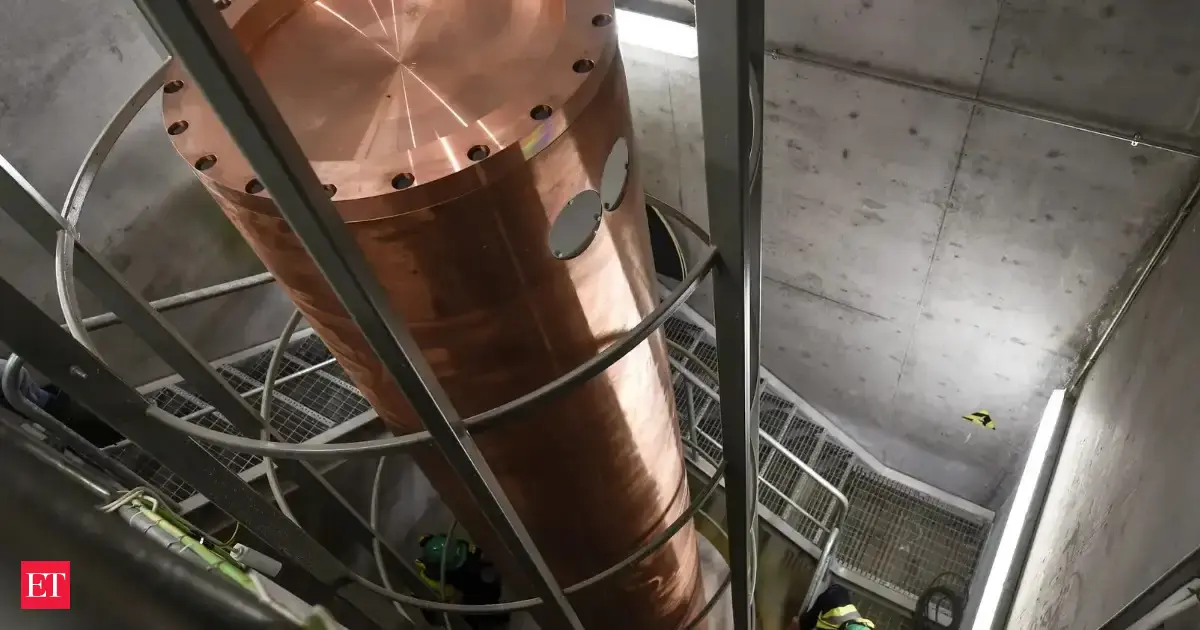
India's infrastructure boom fuels copper demand growth significantly higher than GDP. Copper demand is projected to rise nine to ten percent annually. This surge is driven by infrastructure, clean energy, and consumer electronics needs. India has become a net importer of copper after a smelter closure. New capacities are emerging, but a deficit is still expected. View More
Mumbai: India's infrastructure push has lifted copper demand growth to 1.2-1.3 times GDP growth, and the momentum is likely to continue until the end of the decade, according to Mayur Karmakar, managing director of the International Copper Association India . Before the " infrastructure investment era" began about five to six years ago, copper demand grew at 0.6-0.8 times GDP. In line with economic growth, copper demand is expected to rise 9-9.5% annually over the next few years, reaching 3 million tonnes by 2030, Karmakar said. ET BureauInfra push, energy transition to drive demand to 3 MT by 2030, says industry body "As a developing economy, we are at a phase where we require copper for almost all sectors of the economy-infrastructure projects, be it hospitals, metros or airports; clean energy transition; and from the consumer side, electric vehicles and air conditioners," he said. "All sectors of the economy will require copper to varying degrees." Also read: Govt seeks proposals for coal gasification projects under Rs 37,500-cr incentive scheme Live Events India, once a copper exporter, became a net importer for the first time in 18 years after Vedanta's Tamil Nadu smelter, which accounted for about half the country's supplies at the time, shut in 2018. Rising demand from infrastructure projects, electric vehicles and power transmission has since increased reliance on imports, particularly copper concentrate. India consumed 1.9 million tonnes of copper in fiscal 2025, up 9.3% from the previous year. Of this, more than 520,000 tonnes of semi-finished and refined products, worth more than $10 billion, were imported. "The government should look at increasing smelting-refining capacity; we require at least 500,000 tonnes of additional capacity every five years," Karmakar said. "We had a million tonnes of capacity before 2000, and then there was a long pause till Adani came." State-owned Hindustan Copper is the country's only integrated copper producer with captive mines. Aditya Birla Group 's Birla Copper is the largest domestic producer, while the Adani Group entered copper refining and smelting with Kutch Copper in 2024. Also read: Adani's Kutch Copper secures LME registration for 'Adani Copper' Grade A cathodes The JSW Group announced its entry into copper mining last year, while Gujarat-based Kiri Industries is setting up an integrated 500,000-tonne smelting and refining facility, which is expected to begin operations in 2027. Even with these additions, India is likely to remain in deficit. "A lot of countries did not have their own mines and have imported copper concentrates and raw copper in their development stage. It is also about the geography," Karmakar said. Chile, the Democratic Republic of the Congo and Peru are the world's largest copper producers, accounting for more than half of global output. .Pbanner{display:flex;justify-content:space-between;align-items:center;background-color:#ec1c40;margin-top:20px;padding:5px 10px;border-radius:4px;color:#fff;line-height:10px;width: 100%;box-sizing: border-box} .Pbannertext{display:flex;align-items:center;font-size:16px;font-weight:600;font-family:'Montserrat';} .Pbannertext img{height:20px;margin:0 6px} .Pbannerbutton a{display:flex;align-items:center;background-color:#fff;color:#ec1c40;text-decoration:none;font-weight:600;padding:4px 8px;border-radius:6px;font-size:15px;font-family:'Montserrat';} .Pbannerbutton img{height:20px;margin-right:6px} .Pbannerbutton a:hover{background-color:#f7f7f7} Add as a Reliable and Trusted News Source Add Now! (You can now subscribe to our Economic Times WhatsApp channel) (You can now subscribe to our Economic Times WhatsApp channel)
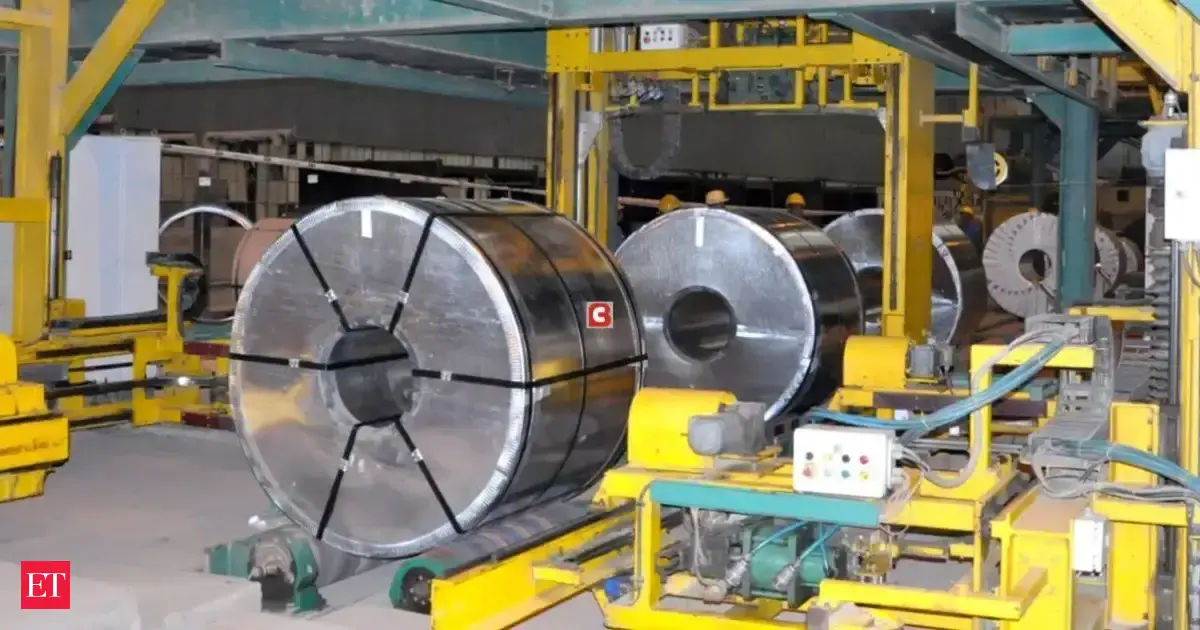
Bokaro Steel Plant will receive iron ore annually through a new slurry pipeline. This modern system will eliminate dependence on railway rakes for raw material transport. The plant's crude steel production capacity will increase significantly after expansion. This project involves a substantial capital investment and aims for completion in three and a half years. The expansion will enhance production capacity and global competitiveness for Bokaro Steel Plant. View More
Ranchi, SAIL's Bokaro Steel Plant on Thursday said it is set to receive 8.3 million tonnes (MT) of iron ore annually directly from SAIL mines through a modern slurry pipeline system. To achieve this, SAIL is developing the longest slurry pipeline in India's steel sector, the company said, adding that this will eliminate dependence on railway rakes for transporting iron ore. As part of an expansion project, the plant's crude steel production capacity will increase from the current 4.65 MT per annum (MTPA) to 7.25 MTPA, while its hot metal production capacity will be enhanced to 7.55 MTPA. The project involves a direct capital investment of approximately Rs 15,000 crore. "This (slurry pipeline) will be the first project of its kind for SAIL and marks a significant step towards ensuring a reliable and uninterrupted supply of raw materials to support Bokaro Steel Plant's future expansion," the company said. Under this system, iron ore will be finely ground at the mines, mixed with water to form a slurry, and transported directly to Bokaro Steel Plant through a pipeline. Live Events At present, the process involves rake availability, loading at the mines, rail transportation and unloading at the plant, making the supply chain heavily dependent on railway schedules and logistics. With the slurry pipeline, iron ore will reach the plant directly and continuously, ensuring a faster, more reliable and uninterrupted supply. "The pipeline will transport approximately 8.3 MT of iron ore annually from SAIL's Gua and Bolani mines to Bokaro Steel Plant. Iron ore from both mines will first be routed to Jamda, from where a 258-kilometre-long main pipeline will carry it to Bokaro. The pipeline has been designed with additional capacity and will be capable of transporting up to 16 MT of iron ore per year in the future, in line with the planned expansion of the plant," BSL said in the statement. Another key feature of the project is its sustainable water management system. The water used to transport the slurry will be returned to the mines through a separate pipeline for reuse, ensuring significant water conservation and efficient utilisation of natural resources. The project includes modern ore preparation facilities at the Gua and Bolani mines, pumping stations at both mines and at Jamda, as well as dedicated receiving facilities at Bokaro Steel Plant, the statement said. "Designed for an operational life of approximately 30 years, the project is targeted for completion in about three and a half years. Besides reducing transportation costs, the project will significantly ease pressure on the railway network," it said. The need for railway rake allocation and the associated loading, transportation and unloading operations will be virtually eliminated, enabling a seamless and uninterrupted supply of iron ore, the statement added. Compared to conventional rail and road transportation, it will significantly reduce dust generation, diesel consumption and carbon emissions, making it an important step towards cleaner, greener and more sustainable steel production, it claimed. Under SAIL Vision 2030, the proposed brownfield expansion project is set to usher Bokaro Steel Plant into a new era of enhanced production capacity, advanced technology, and global competitiveness, the company said. The expansion project envisages the installation of a new 4,500 cubic metre blast furnace, a modern steel melt shop, a state-of-the-art Thin Slab Casting and Direct Rolling (TSCDR) facility, a new air separation unit, an advanced raw material handling system, energy recovery systems, and Industry 4.0-based digital automation and Digital Twin technologies. "The expansion project is expected to generate substantial economic opportunities across construction, engineering, transportation, logistics, equipment manufacturing, small and medium enterprises (SMEs), the service sector, and other allied industries," it said. .Pbanner{display:flex;justify-content:space-between;align-items:center;background-color:#ec1c40;margin-top:20px;padding:5px 10px;border-radius:4px;color:#fff;line-height:10px;width: 100%;box-sizing: border-box} .Pbannertext{display:flex;align-items:center;font-size:16px;font-weight:600;font-family:'Montserrat';} .Pbannertext img{height:20px;margin:0 6px} .Pbannerbutton a{display:flex;align-items:center;background-color:#fff;color:#ec1c40;text-decoration:none;font-weight:600;padding:4px 8px;border-radius:6px;font-size:15px;font-family:'Montserrat';} .Pbannerbutton img{height:20px;margin-right:6px} .Pbannerbutton a:hover{background-color:#f7f7f7} Add as a Reliable and Trusted News Source Add Now! (You can now subscribe to our Economic Times WhatsApp channel) (You can now subscribe to our Economic Times WhatsApp channel)

Arkansas is the Most Improved State for Business in CNBC's annual Top States rankings, as working-age adults are attracted by low costs and quality of life. View More
In this articleWMTFollow your favorite stocksCREATE FREE ACCOUNT watch nowVIDEO2:4402:44America's Top States for Business 2026: Arkansas comes in as most improvedTop States for Business Kevin and Janeen Seguin decided it was time for a change of scene. And as fully remote workers for Utah-based Intermountain Health, they had every option in the world. "We both lived in Utah our entire lives," Kevin said. "I'm nearing retirement, and so we just started exploring different states to see what they had to offer." "We wanted somewhere warm," Janeen said. "We still wanted all of the seasons. We just wanted some place that didn't have the severe winters that Utah has." There were other considerations, of course. The Seguins have a teenage daughter, so the school situation was important. And there were financial concerns. "I knew there were better states to retire in that were more financially friendly â as far as taxes were concerned, Social Security tax, income tax â that would be a little more feasible to retire in," Kevin said. "So, that was kind of at the top of our list." And, said Janeen, "the cost of living in Utah keeps going up." The Seguins said they briefly considered Texas, but they wanted someplace greener. Finally, after a search that lasted about a year, they landed in Pea Ridge, Arkansas, near Bentonville, in March. "We just kind of went through an analytical list, and this is where we decided to call home, Northwest Arkansas," Kevin said. As fully remote workers based in Utah, Kevin and Janeen Seguin had every option in the world when they felt it was time to move. Attracted by low costs and what they felt was a high quality of life, they chose Arkansas.Courtesy: Kevin and Janeen Seguin They are not alone. Arkansas is America's Most Improved State in CNBC's annual America's Top States for Business study, jumping 13 spots to 28th place in 2026. And it has everything to do with couples like the Seguins. "I have people that have come from all over the United States, Canada, Mexico; I have people come from Europe," said realtor Anthony Mosley of Real Broker NWA, who helped the Seguins with their search. He said many are being transferred to the area by major employers including Walmart, Tyson Foods and J.B. Hunt Transport Services, all based in Northwest Arkansas. Others, like the Seguins, have the choice to live anywhere and are choosing Arkansas. "A lot of my clients are telling me that they're coming here because it's centrally located," Mosley said.  Why Arkansas is attracting working families If the Seguins stay in Arkansas and retire there, they will indeed do somewhat better financially than they would have in Utah. Utah's individual income tax rate is 4.45%, while Arkansas' tops out at 3.7%. Both states tax pension benefits, but in Arkansas, the first $6,000 is exempt. Utah taxes Social Security benefits as regular income, offering a partial credit to offset them. In Arkansas, Social Security payments are tax-free.  They are also getting the cost of living relief they sought, though the boom in Northwest Arkansas is causing prices to rise a bit. Arkansas finishes 19th in the Top States Cost of Living category in 2026 â down from 12th in 2025 â while Utah finishes 26th. Finances aside, the Seguins say Arkansas' biggest benefit comes down to one thing. "It's kind of all encapsulated in quality of life," Kevin said. "We wake up to the birds and the deer, and we go to bed listening to the birds and the deer. But if we need to get some place, it's a matter of 20 minutes," Janeen said. "We're in the middle of nowhere, in the middle of everywhere." Walmart signs on a museum building in downtown Bentonville, Arkansas. Peter Blottman Photography | Istock Unreleased | Getty Images The influx of working-age adults like the Seguins helps Arkansas climb 23 spots to No. 13 in the critical Workforce category of this year's Top States study, the third-most heavily weighted under this year's methodology, accounting for 13.8% of a state's total score. Arkansas is the fourth-best state for worker attraction, according to workforce analysis firm Lightcast, which provided data for the CNBC study.  That also helps Arkansas improve in the critical Economy category, with the state finishing in the top tier for job growth. Arkansas added nearly 16,000 jobs in 2025, while U.S. job growth largely stagnated. Arkansas jumps to 20th place in Economy, compared to 30th last year. "I've led economic trade missions around the world to secure deals that helped further establish our state as a leader in aerospace, defense, steel, energy, and advanced manufacturing, creating thousands of high-paying jobs for Arkansans," said Gov. Sarah Huckabee Sanders, a Republican, in her State of the State address in April. Arkansas is still far from being a Top State But for all its improvement, Arkansas is still in the bottom half of our rankings at No. 28 overall. The state finishes No. 36 for Technology and Innovation, ranking in the bottom ten for science research grants and for patents. It also finishes No. 36 in Education, with K-12 test scores and per-pupil spending in the bottom ten, though the state has one of the nation's most robust community college systems. Arkansas' education shortcomings also prevent an even bigger improvement in Workforce. The state has the fourth-least educated workforce in the country â just 16.3% of working-age adults have a bachelor's degree or higher, according to the Census Bureau. And just over 4% of the Arkansas workforce is employed in science, technology, engineering or math (STEM) occupations, according to the U.S. Bureau of Labor Statistics. That is the fourth-lowest concentration of those prized employees among the states. A worker on a container at the Port of Little Rock in Little Rock, Arkansas, US, on Thursday, April 3, 2025. Al Drago | Bloomberg | Getty Images But Arkansas' worst category is Quality of Life, the Seguins' glowing reviews notwithstanding. The state has one of the highest violent crime rates in the country, according to FBI statistics. Arkansas also does poorly on inclusiveness, with some of the weakest anti-discrimination protections in the country, according to data compiled by the National Conference of State Legislatures.  Gov. Sanders celebrates the state's near-total abortion ban, which has repeatedly landed Arkansas atop Americans United for Life's annual rankings of America's most pro-life states.  "I'm proud that for the past six years, Arkansas has ranked number one in the nation â not just in protecting the unborn, but in preserving life from conception to natural conclusion,"â¯Sanders said in October.  But with studies showing that abortion bans are increasingly causing workers to leave states that have instituted them, the measures count against the states in CNBC's rankings. Arkansas is among America's least healthy states (L) Shonda Grappe, a pediatric intensive care nurse, hands over supplies to(R) Brittany Rowell, CCRN, in the pediatric ICU at Arkansas Children's Hospital in Little Rock, Arkansas. Michael S. Williamson | The Washington Post | Getty Images A bigger factor in Arkansas' poor Quality of Life showing is health â among the worst of any state. More people in Arkansas suffer frequent physical and mental stress than in any other state, according to the United Health Foundation. And nearly 19% of Arkansans are food insecure. That is the highest percentage in the nation.  Arkansas also finishes in the bottom ten for primary care providers, and near the bottom for dentists. The Seguins agree that poor healthcare is one of the few drawbacks they have encountered in Arkansas. "Their healthcare system needs to change," said Kevin, who said he has been trying for four weeks to get in to see a specialist but has been unable to get a referral. "In Utah, we did away with referrals decades ago," he said. "On top of that," Janeen said, "Even if we did get into a specialty doctor, they're booked up clear until almost next year." Their realtor Mosley says Arkansas' infrastructure needs work as well. The state ranks No. 23 in the important CNBC category this year. "Our roads and our sewers and a lot of our infrastructure needs to really catch up to the growth that is happening here," he said. "We're far behind, in my opinion." In that respect, the Arkansas success story still leaves a lot of room for improvement. watch nowVIDEO15:1815:18Ohio is Americaâs Top State for Business in 2026Squawk Box Choose CNBC as your preferred source on Google and never miss a moment from the most trusted name in business news.