
Latest Sectors News

Economy is a key category in CNBC’s America’s Top States for Business study, and some states stand out for the wrong reasons. View More
In this articleIRMLMTWMBHASMARETRPOOLFollow your favorite stocksCREATE FREE ACCOUNT Most economists now seem to agree that the immediate threat of a recession has passed, but that does not mean there is not concern about inflation, geopolitical tensions or a bursting AI bubble knocking the economy off track. Some states are better situated to weather a downturn than others. Companies know that, so they look for states with stable economies when deciding where to set up shop. States know it, too, so many continue to market themselves as economic havens.  "Companies can thrive in a world-class business environment with the most diverse economy in the nation," Illinois' economic development site proclaims. "In Michigan, you'll find a global network of leading companies across numerous industries," its state site notes. "From Fortune 500 companies to fast-growing startups and hundreds of thousands of small businesses, companies of all sizes are driving economic opportunity in every corner of our state." CNBC analyzes every state's marketing pitch as part of our annual America's Top States for Business study. This year, we found the economy to be the second most frequently mentioned attribute (after infrastructure). So, under our methodology, the Economy category carries the second-heaviest weight in 2026âworth 16.6% of a state's total score. To measure each state's economy, we consider job growth, economic growth, and the number of major companies headquartered in the state. We also measure each state's fiscal health, including its budget situation, its long-term obligations and its debt ratings, as well as the health of the residential real estate market. We also consider the impact of tariffs, the potential impact of federal budget cuts, and small business survival rates. Some states clearly deliver on their economic promises, but these are not those states. Here are America's worst state economies in 2026. 10. Oklahoma Downtown Oklahoma City.Art Wager | Istock | Getty Images Oklahoma is among the most dependent on federal funding, according to the National Association of State Budget Officers. More than 40% of state spending in Oklahoma comes from Washington, D.C., putting the state in the top 10 for reliance on the feds. "That's not rugged individualism; that's a subsidy," wrote Shiloh Kantz of the Oklahoma Policy Institute in August. "And it means that the hard fiscal choices some of our leaders brag about are possible only because someone else is footing the bill."  It also leaves the Sooner State vulnerable to potential federal cuts. Economic growth was moderate last year, which is leaving the housing market under some stress. 2026 Economy score: 172 out of 415 points (Top States grade: D) Real GDP (2025): $213.5 billion (+1.5%) Debt Rating and outlook (Moody's): Aa1, Stable Share of state spending from federal funds: 40.4% International goods trade: $24.9 billion (9% of GDP) Major corporations: Paycom Software, ONEOK, The Williams Companies 9. North Dakota Oil well pumpjacks at work in the oil fields of North Dakota. John Coletti | Photodisc | Getty Images The days of North Dakota's oil frenzy back in the early 2000s and 2010s are long gone, and even the surge in oil prices at the start of the Iran war earlier this year was not enough to get companies to resume drilling in the Bakken Shale in a meaningful way. Economic growth in the Peace Garden State was the lowest in the nation last year. New business formations were also among the lowest. One thing the state did right was to build up its reserves during the flush times. The state could last nearly a year on its total fund balance if all else failed, according to the Pew Charitable Trusts. 2026 Economy score: 171 out of 415 points (Top States grade: D) Real GDP (2025): $63.6 billion (+0.3%) Debt Rating and outlook (Moody's): Aa1, Stable Share of state spending from federal funds: 34.5% International goods trade: $14.5 billion (17.6% of GDP) Major corporations: None 8. New Hampshire Aerial view of Concord and the New Hampshire State House. Ultima_gaina | Istock | Getty Images New Hampshire's fiscal situation is anything but rock solid. The Granite State's spending outpaces revenues, according to the most recent financial disclosures. New Hampshire's public employee retirement systems are underfunded to the tune of more than $5.5 billion, among the worst pension gaps in the country. Job growth is tepid, and the survival rate for new businesses is among the lowest in the country, according to data provided to CNBC by business research firm Construction Coverage. The state's economy is growing at a healthy pace, however, with the help of new residents fleeing higher taxes in neighboring states like Massachusetts. 2026 Economy score: 170 out of 415 points (Top States grade: D) Real GDP (2025): $96.87 billion (+2.1%) Debt Rating and outlook (Moody's): Aa1, Stable Share of state spending from federal funds: 39.4% International goods trade: $17.2 billion (13.7% of GDP) Major corporation: Iron Mountain 7. Alaska Alaska oil pipeline, Alaska range.Patrick J. Endres | Corbis Documentary | Getty Images Alaska is heavily dependent on the federal government, which accounts for more than 45% of state spending. Only Louisiana (48.6%) and Indiana (46.3%) rely more on Uncle Sam. The Last Frontier also has among the largest percentages of federal employees in its workforce. Alaska did turn in solid economic growth last year, even before the surge in oil prices this past February. And optimism is growing as the Trump administration moves to expand drilling in the North Slope and pursues an 807-mile natural gas pipeline to deliver gas from Prudhoe Bay on the North Slope to the Kenai Peninsula and the world.  "Alignment of state and federal leadership means potential for major moves in Alaska's mining and oil and gas development," wrote state economist Karinne Wiebold in January, though the pipeline â and any economic windfall that comes with it â is still years away. 2026 Economy score: 169 out of 415 points (Top States grade: Dâ) Real GDP (2025): $57.5 billion (+2.8%) Debt Rating and outlook (Moody's): Aa2, Stable Share of state spending from federal funds: 45.3% International goods trade: $9.8 billion (13.1% of GDP) Major corporations: None 6. South Dakota Mount Rushmore, South Dakota.©Anitaburke | Moment | Getty Images Economic growth was modest last year in South Dakota, but to hear state officials tell it, things are looking up â and they are not referring to the Mount Rushmore State's most famous, lofty attraction. Earlier this year, in her first-quarter economic update, Secretary of State Monae Johnson pointed to nearly 4,000 new business filings in the quarter, "surpassing first-quarter filing totals from each of the previous six years." She did not mention that the comparisons were relatively easy. According to Census data, South Dakota ranked 35th in new business formations per capita last year, growing only about 4% from 2024. Once businesses do get off the ground in South Dakota, however, they stand a good chance of surviving. The state ranks No. 15 in Construction Coverage's small business survival index. 2026 Economy score: 168 out of 415 points (Top States grade: Dâ) Real GDP (2025): $58.5 billion (+1.4%) Debt Rating and outlook (Moody's): Aaa, Stable Share of state spending from federal funds: 42.4% International goods trade: $4.88 billion (6% of GDP) Major corporations: None 5. Kansas Wichita, Kansas.Cweimer4 | Istock | Getty Images The housing market in Kansas is a study in contrasts. Inventory is tight, with around a two-month supply of homes on the market as of May, according to Redfin. Yet, price appreciation has been modest, and seller gains have been weak, according to ATTOM Data Solutions. It all means that the real estate market is not the economic engine it might normally be. One reason may be that the Sunflower State is not doing well in attracting workers, according to data from labor market analytics firm Lightcast. Job growth in the state is weak, though overall economic growth was reasonably good last year. 2026 Economy score: 162 out of 415 points (Top States grade: Dâ) Real GDP (2025): $185.1 billion (+2%) Debt Rating and outlook (Moody's): Aa2, Stable Share of state spending from federal funds: 27.4% International goods trade: $29.4 billion (12.2% of GDP) Major corporations: None 4. Louisiana French Quarter, Jackson Square, New Orleans.Andrey Denisyuk | Moment | Getty Images Louisiana faces serious exposure to a pair of stiff headwinds in the economy: tariffs, and a shrinking federal government in a state that disproportionately relies on Washington. No state has more of its spending funded by the federal government. And with nearly one-third of the Pelican State's GDP made up of international goods trade, Louisiana's tariff costs have skyrocketed, according to Washington, D.C.-based research firm Trade Partnership Worldwide, which provided data to CNBC. Perhaps as a result, Louisiana has seen some of the weakest economic growth in the nation. Overall job growth has been strong but uneven. The latest forecast from Louisiana State University's E.J. Ourso College of Business, through the first quarter of next year, calls for more job growth, "but employment in only 4 of the state's metro areas is forecast to grow at a rate of 1% or greater." The forecast calls for modest improvement in GDP, growing at a rate of about 1.5% into the beginning of 2027. 2026 Economy score: 160 out of 415 points (Top States grade: Dâ) Real GDP (2025): $259.9 billion (+1.1%) Debt Rating and outlook (Moody's): Aa2, Stable Share of state spending from federal funds: 48.6% International goods trade: $109.4 billion (32.2% of GDP) Major corporations: Pool, Entergy 3. West Virginia Residential street in downtown Charleston, West Virginia.Benedek | E+ | Getty Images West Virginia is not handling the transition from a coal-centered economy to whatever comes next well. The Mountain State's labor force participation rate is the lowest in the nation, even as prices rise â putting more and more everyday needs out of reach. Economic growth and job growth rank near the bottom. One potential bright spot â and maybe a lifeline â is the state's housing market. Inventory is near optimum, affordability is good, and yet prices are appreciating well. 2026 Economy score: 146 out of 415 points (Top States grade: F) Real GDP (2025): $83.2 billion (+0.5%) Debt Rating and outlook (Moody's): Aa2, Positive Share of state spending from federal funds: 20.5% International goods trade: $9.5 billion (8.7% of GDP) Major corporations: None 2. Maryland Baltimore, Maryland.Kruck20 | Istock | Getty Images Economic growth and job growth nearly flatlined in Maryland over the past year. The Old Line State's deep connection with the federal government next door has a lot to do with that, as Gov. Wes Moore pointed out in his State of the State address in February. "In just the last year, the federal government has fired around 25,000 Marylanders who have federal jobs in our state alone," said Moore, a Democrat. "It's the biggest federal job cut of any state in the country." But the Maryland Chamber of Commerce also blames "high costs, unpredictable taxes, and growing regulatory burdens." "If we want a stronger future, we must prioritize an economy that supports business investment, expansion, and long-term growth," the organization said. Whatever the reason, Maryland finds itself in a deep hole in 2026, with no easy way out of it. 2026 Economy score: 143 out of 415 points (Top States grade: F) Real GDP (2025): $436.17 billion (+0.7%) Debt rating and outlook (Moody's): Aa1, Stable Share of state spending from federal funds: 31.2% International goods trade: $56.6 billion (10% of GDP) Major corporations: McCormick and Company, Lockheed Martin, Marriott International 1. Rhode Island Providence, Rhode Island.Denistangneyjr | Istock | Getty Images To hear Rhode Island Gov. Dan McKee tell it, the state is about to have its moment. McKee, a Democrat, writes on a website devoted to what he calls the RI 2030 Plan that "National shifts in defense spending, the return of advanced manufacturing, and rapid technological innovation are aligning with Rhode Island's long-standing strengths in defense, ocean technology, and the life sciences." But if, indeed, the Ocean State's ship is about to come in, it is taking a long time getting there. In the meantime, economic growth was the ninth weakest in the country last year. Foreign direct investment was practically nonexistent, as were new business formations.  Rhode Island is also especially vulnerable to tariffs. Costs skyrocketed last year in a state where international goods trade makes up over 18% of nominal GDP. 2026 Economy score: 121 out of 415 points (Top States grade: F) Real GDP (2025): $64.2 billion (+1.1%) Debt rating and outlook (Moody's): Aa2, Stable Share of state spending from federal funds: 38.5% International goods trade: $15.5 billion (18.5% of GDP) Major corporations: Hasbro, Citizens Financial Group, CVS Health Choose CNBC as your preferred source on Google and never miss a moment from the most trusted name in business news.

The plea had assailed the Rules as being ultra vires to Articles 14 (right to equality) and 19(1)(g) (freedom to conduct business) of the Constitution View More

Gautam Malhotra, CEO of Jindal Steel, has resigned from his position. His resignation is effective from July 15, 2026, due to personal commitments. Malhotra expressed appreciation for the support received from colleagues and the board. The company's board will meet on July 24, 2026, to approve financial results. Jindal Steel has not yet announced a replacement for the chief executive. View More
New Delhi, Gautam Malhotra, the Chief Executive Officer of Jindal Steel , has resigned ahead of the company's board meeting scheduled for next week. Malhotra, who was serving as the CEO of the company since October 28 last year, has cited personal reasons for his resignation, which is effective from the close of business hours on July 15, 2026. "I hereby submit my request to be relieved from the services of the company due to personal commitments. I sincerely appreciate the guidance and support extended by your goodself, the Board of Directors, my colleagues, and the entire Jindal Steel team," Malhotra said in the resignation letter available on the exchanges. His resignation comes ahead of the meeting of the Board of Directors of Jindal Steel on July 24, 2026 to consider and approve the unaudited financial results of the company for the first quarter of FY27. The company has not named the new CEO yet. Live Events Jindal Steel is one of the leading steel making entities in the country. .Pbanner{display:flex;justify-content:space-between;align-items:center;background-color:#ec1c40;margin-top:20px;padding:5px 10px;border-radius:4px;color:#fff;line-height:10px;width: 100%;box-sizing: border-box} .Pbannertext{display:flex;align-items:center;font-size:16px;font-weight:600;font-family:'Montserrat';} .Pbannertext img{height:20px;margin:0 6px} .Pbannerbutton a{display:flex;align-items:center;background-color:#fff;color:#ec1c40;text-decoration:none;font-weight:600;padding:4px 8px;border-radius:6px;font-size:15px;font-family:'Montserrat';} .Pbannerbutton img{height:20px;margin-right:6px} .Pbannerbutton a:hover{background-color:#f7f7f7} Add as a Reliable and Trusted News Source Add Now! (You can now subscribe to our Economic Times WhatsApp channel) (You can now subscribe to our Economic Times WhatsApp channel)

Nexon Geochem will collaborate with Russia's Giredmet for rare-earth processing technology. This partnership aims to build integrated facilities for rare earth value chain development. The company plans a scalable sintered NdFeB permanent magnet manufacturing facility in Hyderabad. This initiative addresses India's critical gap in rare earth processing and magnet production. View More
New Delhi: Nexon Geochem , a Hyderabad-based advanced materials company, on Monday said it has joined hands with Russia's Giredmet to use its technology and research expertise to build integrated rare-earth processing and downstream facilities. Nexon Geochem has signed a Memorandum of Understanding (MoU) with Giredmet, the State Research and Design Institute of Rare Metal Industry under Russia's Rosatom State Corporation, to this effect, a company statement said. "The company is poised to hit a benchmark production capability of 1200 MTPA by FY 2033," the company added. Through this partnership, Nexon Geochem aims to bridge one of India's most critical gaps in the rare earth value chain by establishing an integrated, full-cycle platform spanning rare earth oxide inputs through to finished magnet production. As an immediate objective, Nexon Geochem plans to establish a highly scalable sintered NdFeB ( Neodymium Iron Boron ) permanent magnet manufacturing facility in Hyderabad, positioning itself as one of the first integrated rare earth oxide-to-magnet platforms. Live Events "Securing the critical mineral value chain is no longer just an economic goal, it is a necessity for global technological resilience. Bringing a fully integrated sintered NdFeB magnet manufacturing facility to life requires world-class technology transfer and collaborating with an institution that holds nearly a century of rare metal expertise is a massive milestone," Founder of Nexon Geochem Pvt Ltd Praveen Choudhary said. The development comes in the wake of India's push to build domestic rare-earth processing capability, instead of relying mainly on imports for critical inputs used in electric vehicles, wind turbines and defence systems. The pact covers joint research and development of deep-processing technologies for rare and rare-earth metal raw materials. The partnership includes development and validation of analytical control methodologies, scaling of technologies from laboratory to pilot production and joint academic and educational programmes. NdFeB permanent magnets are essential to electric vehicles, wind turbines, defence systems, robotics and advanced electronics, making them one of the most critical components driving the global energy and technology transition. Export curbs by China during 2025-26 exposed the vulnerability of India's EV, defence electronics and industrial manufacturing supply. While India possesses the world's third-largest rare earth reserves estimated at nearly 7 million tonnes, it still lacks commercial-scale rare earth separation, refining and industrial magnet manufacturing. .Pbanner{display:flex;justify-content:space-between;align-items:center;background-color:#ec1c40;margin-top:20px;padding:5px 10px;border-radius:4px;color:#fff;line-height:10px;width: 100%;box-sizing: border-box} .Pbannertext{display:flex;align-items:center;font-size:16px;font-weight:600;font-family:'Montserrat';} .Pbannertext img{height:20px;margin:0 6px} .Pbannerbutton a{display:flex;align-items:center;background-color:#fff;color:#ec1c40;text-decoration:none;font-weight:600;padding:4px 8px;border-radius:6px;font-size:15px;font-family:'Montserrat';} .Pbannerbutton img{height:20px;margin-right:6px} .Pbannerbutton a:hover{background-color:#f7f7f7} Add as a Reliable and Trusted News Source Add Now! (You can now subscribe to our Economic Times WhatsApp channel) (You can now subscribe to our Economic Times WhatsApp channel)

Rajiv Kumar, the CEO of Vedanta Aluminium Metal, is slated to succeed outgoing CEO Gautam Malhotra. Former Hindustan Zinc CFO Sandeep Modi is likely to join as the new CFO. View More

Earlier this week, the state-run steelmaker and the Indonesian company signed a memorandum of understanding to explore setting up a joint venture to manufacture stainless steel slabs to meet rising demand in India. View More
New Delhi: Steel Authority of India Ltd ( SAIL ) and Indonesia 's PT Krakatau Steel are exploring a stainless steel project with a capacity of 500,000 tonnes to 1 million tonnes under a proposed joint venture, a person with direct knowledge of the plans said. Earlier this week, the state-run steelmaker and the Indonesian company signed a memorandum of understanding to explore setting up a joint venture to manufacture stainless steel slabs to meet rising demand in India. .Pbanner{display:flex;justify-content:space-between;align-items:center;background-color:#ec1c40;margin-top:20px;padding:5px 10px;border-radius:4px;color:#fff;line-height:10px;width: 100%;box-sizing: border-box} .Pbannertext{display:flex;align-items:center;font-size:16px;font-weight:600;font-family:'Montserrat';} .Pbannertext img{height:20px;margin:0 6px} .Pbannerbutton a{display:flex;align-items:center;background-color:#fff;color:#ec1c40;text-decoration:none;font-weight:600;padding:4px 8px;border-radius:6px;font-size:15px;font-family:'Montserrat';} .Pbannerbutton img{height:20px;margin-right:6px} .Pbannerbutton a:hover{background-color:#f7f7f7} Add as a Reliable and Trusted News Source Add Now! (You can now subscribe to our Economic Times WhatsApp channel) (You can now subscribe to our Economic Times WhatsApp channel)
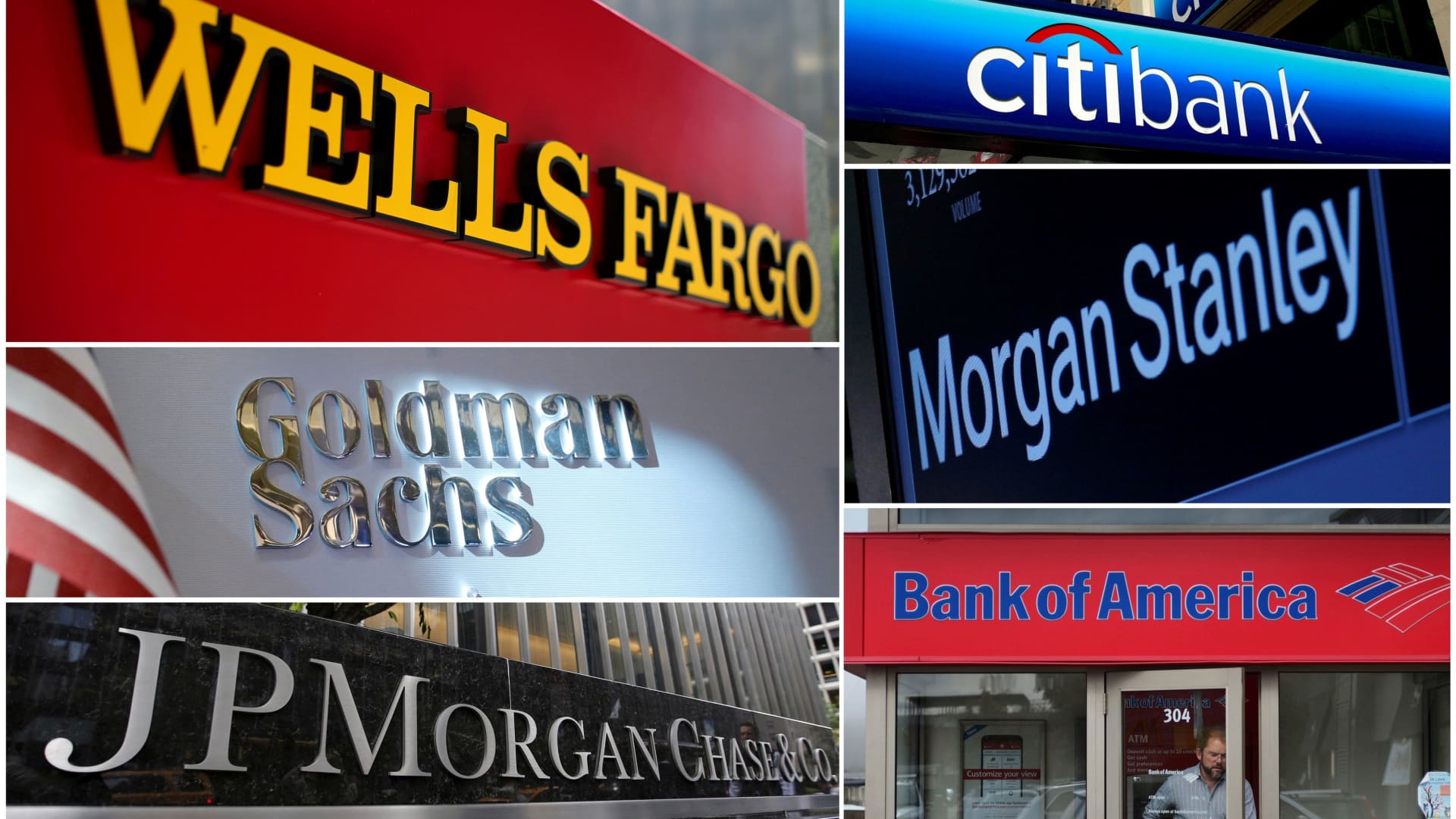
The state of the U.S. economy is in focus across bank earnings and inflation data. View More
The common thread linking this week's biggest market events is the state of the U.S. economy. The biggest day is Tuesday, when the nation's largest banks â JPMorgan , Bank of America and Citigroup , along with Club names Wells Fargo and Goldman Sachs â mark the start of second-quarter earnings season. As if that wasn't enough, the June consumer price index report is due out at 8:30 a.m. ET Tuesday, precisely when JPMorgan's influential conference call, led by CEO Jamie Dimon, is scheduled to begin. Across the rest of the week, non-banks with key insights into the economy and consumer behavior also deliver earnings, most notably trucking firm J.B. Hunt , Netflix , and United Airlines . The economic calendar also features a second inflation report â the wholesale producer price index â among other smaller updates. Let us not forget Club name Johnson & Johnson reports Wednesday morning, and our July Monthly Meeting is set for noon ET Thursday. Now, let's take a closer look at what to expect from our portfolio names and the inflation data. 1. Bank earnings: While macroeconomic reports are important in helping to better understand the economy at a higher level, nothing compares to the real-time commentary we receive on post-earnings conference calls. That is even more true when it comes to the banks. While all banks can, of course, provide information on their own operations, the larger ones â those in which we are invested â have unique insight into the global economy, given how much money flows through them on a daily, weekly, and quarterly basis. That flow of money can provide incredible insight into every level of economic activity. Both Wells Fargo and Goldman Sachs report before the bell Tuesday. Wells Fargo's conference call kicks off at 10 a.m. ET. Goldman starts a half hour earlier at 9:30 a.m. ET. For both banks â and, honestly, this goes for the rest of earnings season as well â we're interested in hearing about any quantifiable gains management is seeing from artificial intelligence implementation. We also want their thinking on AI spending levels as companies increasingly look to optimize their compute bills, shifting away from a blank-check attitude, known as "tokenmaxxing." Our latest Club Check-in video explores this shift. Between the two, Wells Fargo should be able to give us a bit more insight on the state of the consumer. Goldman Sachs should be able to provide a closer look at the state of corporate M & A and funding activities, such as the IPO pipeline, interest among public companies to raise debt or sell equity, and the market's willingness to fund those initiatives. This is a pivotal quarter for Wells, as far as our investment in the stock is concerned. After back-to-back disappointing quarters, we need to see the bank get back to beating Wall Street estimates. Along those lines, management must instill confidence that it's still on a clear path to deliver solid top-line growth, with return on tangible common equity (ROTCE) performance continuing to track to a sustainable 17% to 18% range). ROTCE is a key metric used to evaluate how well a bank uses its equity capital to generate profits. Additionally, Wells' efficiency ratio â operating expenses divided by net revenue â will be closely watched because it has trended in the wrong direction over the past two quarters. Revenue: $21.8 billion Earnings per share: $1.72 For Goldman Sachs, the revenue backdrop is clearly strong, given the plethora of deals, IPOs, and funding initiatives undertaken by corporations through the first half of the year. Most notably, Goldman led SpaceX's record-breaking IPO, which occurred in the second quarter and will be included in Tuesday's investment banking numbers. As a result, much of the focus will be on operational performance that points to sustainable ROTCE and earnings growth throughout the business cycle. Put another way, investors want to better understand how Goldman Sachs will perform in a normalized environment, not only when IPO and M & A activity heats up. ROTCE performance also tends to be what investors look at when determining what price-to-earnings multiple to assign to a financial stock. Revenue: $16.1 billion Earnings per share: $14.39 2. J & J earnings: Johnson & Johnson enters its earnings week hovering near all-time highs, thanks to a strong multiweek rally across the healthcare group. No doubt, some of J & J's strength is owed to the market's broader rotation into healthcare and away from red-hot AI stocks. But now, Wednesday's earnings report offers J & J a chance to show that its business warrants owning the stock for fundamental reasons. The flipside is that the rally raises the bar and could invite profit-taking, especially because the management team of CFO Joe Wolk and CEO Joaquin Duato isn't a promotional duo. Wolk, in particular, can be conservative with his forward guidance. Nevertheless, there's a lot to like about the J & J story as growth accelerates, driven by a healthy pipeline and commercial slate. The big drugs to watch for the quarter are blood-cancer therapy Darzalex and Tremfya, an injectable treatment for autoimmune conditions that affect the skin, such as plaque psoriasis, and the digestive tract, such as Crohn's disease and ulcerative colitis. Investors also want updates on the launch of Icotyde , a daily psoriasis pill approved by U.S. regulators in March; it's among J & J's most exciting new products to drive growth in the coming years. To be sure, analysts at Goldman Sachs told last clients last week they don't expect J & J to disclose an Icotyde revenue figure, "consistent with the company's reporting practice for early launches." Instead, the focus will be on prescription numbers and the kind of patients taking it. For J & J's medical devices segment, the leading growth drivers are heart-health products for cardiovascular disease treatment from Shockwave, which was acquired in 2024 , and Impella heart pumps. Keep in mind: J & J's pharma business is larger and faster-growing ($15.4 billion in sales and 7.4% organic growth last quarter) than its medical devices business ($8.6 billion and 4.6% organic growth). Here's what the Street is expecting on the top and bottom lines: Revenue: $25.05 billion Earnings per share: $2.85 3. Economic data: The biggest reports of the week are Tuesday morning's consumer price index report and Wednesday morning's producer price index. Both are for June. The inflation picture matters a great deal for the Federal Reserve's interest rate decisions in the coming months and into early next year. Thankfully, the steep decline in oil prices throughout the month of June eases some of the energy-led inflationary pressure on the U.S. economy â with WTI crude falling from the low $90s per barrel in early June to just below $70 by month-end. The caveat is that the reason for the decline (an interim peace agreement between the U.S. and Iran, which led to a partial reopening of the Strait of Hormuz) got a little muddier last week as tensions between the two sides heated back up; in response, tanker traffic through Hormuz slowed . Missiles and drones continued to fly over the weekend . So while we hope the June CPI report cooled from the 4.2% annual increase in May, what happens to oil prices going forward matters more to our view of inflation than this backward-looking data. For the CPI, as of Friday, economists polled by FactSet expect a 3.8% annual increase and a 0.2% month-over-month decline. The PPI, meanwhile, is considered a leading indicator for consumer inflation because it measures the prices that producers receive for their goods. If companies are paying more for their inputs, such as steel, they may look to pass those higher costs on to finished goods down the road. PPI is expected to show a 6.2% annual increase and a 0.2% monthly decline, according to FactSet on Friday. A few other economic reports to briefly mention: retail sales data for June helps us understand where consumers were spending their money, while Friday's housing starts data is relevant to our Home Depot position. The Federal Reserve's monthly look at industrial production and capacity utilization is also due out Friday, and the level of industrial activity in the country matters for Club name FedEx Freight . The more stuff being made, the better for FedEx Freight as North America's largest shipping provider of less-than-truckload services, which consolidates multiple customer shipments onto a single trailer. Week ahead Monday, July 13 Before the bell: No reports of note After the bell: AeroGrow International (AERO) Tuesday, July 14 Before the bell: Goldman Sachs (GS), Wells Fargo (EFC) , Citigroup (C), JPMorgan (JPM), Bank of America (BAC), Fastenal (FAST), Ericsson (ERIC) After the bell: Wednesday, July 15 Before the bell: Johnson & Johnson (JNJ) , ASML (ASML), Progressive (PGR), BlackRock (BLK), Conagra (CAG), Morgan Stanley (MS), Cintas (CTAS), PNC Financial (PNC), BNY Mellon (BNY), M & T Bank (MTB) After the bell: United Airlines (UAL), JB Hunt (JBHT) Thursday, July 16 Before the bell: UnitedHealth (UNH), Taiwan Semi (TSMC), GE Aerospace (GE), Abbott (ABT), Citizens Financial (CFG), State Street (STT), Prologis (PLD) After the bell: Netflix (NFLX), Alcoa (AA), Intuitive Surgical (ISRG) Friday, July 17 Before the bell: Regions Financial (RF), Truist Financial (TFC), Fifth Third Bancorp (FITB), Autoliv (ALV), Travelers (TRV) After the bell: No reports of note (Jim Cramer's Charitable Trust is long GS, WFC, JNJ, HD and FXDF. See here for a full list of the stocks.) As a subscriber to the CNBC Investing Club with Jim Cramer, you will receive a trade alert before Jim makes a trade. Jim waits 45 minutes after sending a trade alert before buying or selling a stock in his charitable trust's portfolio. If Jim has talked about a stock on CNBC TV, he waits 72 hours after issuing the trade alert before executing the trade. THE ABOVE INVESTING CLUB INFORMATION IS SUBJECT TO OUR TERMS AND CONDITIONS AND PRIVACY POLICY , TOGETHER WITH OUR DISCLAIMER . NO FIDUCIARY OBLIGATION OR DUTY EXISTS, OR IS CREATED, BY VIRTUE OF YOUR RECEIPT OF ANY INFORMATION PROVIDED IN CONNECTION WITH THE INVESTING CLUB. NO SPECIFIC OUTCOME OR PROFIT IS GUARANTEED.

Robust domestic demand and export-driven pipe makers kept finished steel imports rising faster than exports in the June quarter, even as the government tightened trade measures to protect local producers. View More

Capacity and investment plans will be finalised after feasibility studies and the formation of the proposed joint venture. View More

While the legislation is aimed at least partly at addressing affordability, experts say the benefits of the measure will take time to show up in the market. View More
watch nowVIDEO5:5505:55How the new housing law plans to fix the housing crisisMarkets and Politics Digital Original Video Bipartisan legislation intended to increase the U.S. housing supply and improve affordability is now law â but experts say homebuyers and sellers shouldn't expect fast relief.The 21st Century ROAD to Housing Act automatically became law on Saturday after President Donald Trump neither signed it nor vetoed it within a set timeframe. The legislation combines dozens of housing measures aimed at encouraging home construction, expanding access to financing and restricting purchases by large institutional investors. Read more CNBC personal finance coverageTrump Accounts for kids launch July 4: What parents need to knowTrump administrationâs limits on student loan forgiveness program are blockedDon't rely on AI for personal finance advice, study findsCNBC's Financial Advisor 100: Best financial advisors, top firms rankedCNBC Elite Advisors: Top ultra-high net worth wealth management firms for 2026 The legislation "will help expand the nation's housing supply by reducing regulatory barriers and encouraging local governments to reform zoning and land-use policies that have limited home building," said Bill Owens, chairman of the National Association of Home Builders, in a statement after the measure cleared Congress on June 23. Housing affordability continues to plague buyers The new law arrives as housing affordability remains strained. Home prices are near record highs and 30-year fixed mortgage rates continue to hover above 6.5%.The median price of an existing home in the U.S. reached $440,600 in June, up 49.2% from June 2020, according to data from the National Association of Realtors. There's also an estimated housing supply deficit of about 4 million homes, according to Realtor.com."This bill directly targets some of the biggest drivers of housing costs: land-use restrictions, permitting delays, financing constraints and regulatory hurdles," said Selma Hepp, chief economist at Cotality, a real estate data company."Unfortunately, homebuyers should not expect immediate relief," Hepp said, adding that "housing development takes time and many of the benefits would likely materialize gradually rather than overnight." Limits on institutional investor home purchases David Paul Morris | Bloomberg | Getty Images Among the new law's many technical and policy changes, several provisions are likely to matter most to consumers.A key provision would prohibit large institutional investors that own at least 350 single-family homes from purchasing additional single-family homes, subject to several exceptions. Those exceptions include certain build-to-rent and renovate-to-rent projects, as well as programs that help renters build credit and eventually purchase homes.Supporters say the measure could help limit competition from large corporate buyers in some housing markets, particularly in parts of the Sun Belt where institutional investors have been blamed for contributing to higher home prices. Economists, however, say institutional investors' purchase activity remains relatively light even in many of those markets. Broader definition of 'manufactured home' Another provision aims to reduce barriers to manufactured housing and encourage broader use of factory-built homes, which are often among the least expensive paths to homeownership. watch nowVIDEO0:3100:31Can you afford to buy a home?Personal Finance Specifically, the bill expands the federal definition of "manufactured home" to include houses that are built without a permanent steel chassis, the metal frame under manufactured and mobile homes that enabled easy transportation with a tow truck. However, few homes are moved after being placed, according to the Lincoln Institute of Land Policy.Among other benefits, the chassis requirement could reduce the cost of a manufactured home by $5,000 to $10,000, which could put homeownership within reach for more families, according to the Niskanen Center, a nonpartisan think tank. Pilot program aims to make small mortgages accessible The legislation also creates a four-year pilot program to expand the availability of small mortgages â those under $100,000 â which some lenders avoid due to compliance costs. Supporters say improving access to smaller loans could help buyers in lower-cost markets and those purchasing less expensive homes. The pilot program includes paying lenders a subsidy to originate those smaller mortgages and providing borrower grants for down payments and closing costs. Overall, the legislation may help the housing supply "more at the margin, and certainly not overnight," said John Walkup, co-founder at UrbanDigs, a New York City real estate pricing intelligence platform.Housing supply is ultimately a local issue, Walkup said."It's a complicated calculation that ropes in construction costs, labor availability, land prices, infrastructure constraints, local zoning rules, and community opposition that determines how much housing gets built," he said. "Legislation can help create incentives and remove obstacles, but it can't single-handedly solve a housing shortage that has been building for years."Trump had canceled a June 24 signing ceremony for the bipartisan bill hours before the event, saying he would not sign it until Congress passes the SAVE America Act, a Republican-backed election measure that would require proof of U.S. citizenship to register to vote. The move caught lawmakers in both parties off guard and delayed enactment of the legislation.House Speaker Mike Johnson, R-La., sent the housing bill to the White House on June 29, starting the clock for the president to take action. After 10 calendar days â excluding Sundays â because Trump neither vetoed the bill nor signed it, the measure became law without his signature. Choose CNBC as your preferred source on Google and never miss a moment from the most trusted name in business news.