
Latest Sectors News

The Middle East conflict has given China's economy a reflationary boost as energy and raw material disruptions deepened. View More
In this articleLVMUYLVMUYRLFollow your favorite stocksCREATE FREE ACCOUNT A customer shops for gold jewelry at a gold store in Hangzhou, Zhejiang Province, China, on June 3, 2026. Costfoto | Nurphoto | Getty Images China's wholesale prices rose at the fastest pace in nearly four years in May, driven by surging raw material costs due to the Iran war and an artificial intelligence investment boom, while consumer inflation came in below estimates.The producer price index jumped 3.9% from a year ago, the highest since July 2022, topping economists' forecast of 3.8%, and outpacing 2.8% in April, according to data released by the National Bureau of Statistics on Wednesday. Wholesale prices returned to growth in March as the input cost surge stemming from the Middle East conflict lifted the economy out of its longest deflationary streak in decades. The Iran war has throttled traffic through the Strait of Hormuz, disrupting energy and raw material flows. Factories' purchasing prices for fuel and power climbed 10% year on year in May, widening from 4.4% in April. Costs for non-ferrous metal materials and wires surged 22%.Aside from higher commodity costs, wholesale prices were also lifted by a growing demand for artificial intelligence computing power, pushing up prices for tech equipment and semiconductors. "The accelerating shift to electrification, deepening AI adoption and surging computing demand pushed up prices across non-ferrous metals, electrical machinery and computer hardware," Dong Lijuan, chief statistician at NBS, said in a statement Wednesday. Non-ferrous metal mining led gains at 36.5% year on year, with smelting up 24%.Consumer prices rose 1.2% in May from a year earlier, missing economists' estimates of 1.3% growth in a Reuters poll. On a month-on-month basis, consumer inflation dropped 0.1% from April. Gasoline prices for consumers rose 23.5% from a year earlier. Core CPI, excluding volatile food and energy prices, grew 1.1% in May from a year earlier, edging down from the 1.2% increase in April. Food prices declined 1.7% from a year earlier. "The inflationary pressure [from higher energy costs] in the consumer sector is not strong, as domestic demand remains weak," said Zhiwei Zhang, president and chief economist at Pinpoint Asset Management. CSI 300 index fell around 1% while the Hang Seng Index lost 0.8%. Yield on the 10-year Chinese government bond was little changed at 1.740%, LSEG data showed.China has cushioned the worst of the energy shock through its strategic oil stockpiles and a diversified mix of renewable energy sources. The world's largest oil importer has trimmed its crude imports by nearly 20% since the outbreak of the Iran war, according to official customs data compiled by Wind Information, capping global oil prices from trading even higher.Economists have warned that supply-driven reflation risks further pressuring companies' profit margins and dampening household consumption demand. "What we're seeing is Chinese factories being squeezed from both sides," said Josh Gilbert, lead analyst for APAC at trading platform eToro. Companies face rising costs but lack pricing power to pass them on, as weak demand and oversupply cap consumer inflation, Gilbert added. "Until domestic demand recovers, the squeeze on factory margins only builds from here," Gilbert said. China's export growth held up better than expected in May, growing 19.4% from a year earlier in U.S. dollar terms, the largest jump in three months, supported by soaring demand for renewable and AI-related goods. Consumer demand drags Consumers in China are "keeping a tight fist around their hard-earned renminbi," said Frederic Neumann, chief Asia economist at HSBC Bank, as the high household saving rate depressed spending at a time when the economy needs to find new drivers of growth besides exports.Latest earnings from global luxury brands, such as Ralph Lauren and LVMH Moet Hennessy Louis Vuitton, indicated recovering appetite for high-end beauty and fashion products in a market plagued by margin-eroding discounts in recent years. Economists, however, cautioned that the early signs of high-end revival â boosted by wealth effect from recent tech-driven equity market rally and last year's low base â may prove fragile."It would be premature to generalize the recent improvement as evidence of a broad-based recovery in consumer sentiment," said Neo Wang, lead China economist at Evercore ISI, amid a persisting property market slump and bleak jobs market. watch nowVIDEO5:2505:25China's factory inflation masks widening sector divergence: Credit AgricoleThe China Connection Choose CNBC as your preferred source on Google and never miss a moment from the most trusted name in business news.

The president's comments came after U.S. forces on Tuesday evening launched strikes against Iran. View More
watch nowVIDEO3:4603:46President Trump says Iran will âpay the priceâ for failing at peace dealSquawk on the Street U.S. President Donald Trump said Wednesday that Iran has taken too long to negotiate a peace deal and will now have to "pay the price.""Iran's Military is a complete and total mess," the president said in a post on Truth Social. "Much of it, like their Navy and Air Force, doesn't even exist anymore - They have been completely defeated. Iran is all talk and no action." Oil prices react Oil prices ticked higher and U.S. stock futures fell after Trump's comments. U.S. crude oil futures for July delivery jumped nearly 2% to $89.72 per barrel and Brent futures, the international benchmark, for August delivery, rose 1.3% to $92.74 per barrel.CNBC has reached out to the Iranian Foreign Ministry for comment.In a subsequent post on Truth Social, Trump denounced "The Fake News Media" for refusing to report how "EFFECTIVE the U.S. Naval BLOCKADE is, the most successful Blockade in the history of Naval Warfare."He added: "NOTHING GETS THROUGH unless we want it to. IT IS A STEEL WALL! Iran is doing ZERO business, not paying their military, or any of their bills, and quickly becoming a FAILED NATION! Lots of oil is getting out. Praise be to Allah!"The posts came just a day after Trump said that a deal could be reached in "two or three days" and that the critical Strait of Hormuz would reopen "immediately" after such a deal. The U.S. has sought to pressure Iran into a deal by imposing a naval blockade on its ports and vessels. According to analysts at JPMorgan Chase, more oil may be going through Hormuz than is publicly visible.Some 2 million barrels per day might be getting out on tankers that have switched off their transponders, according to the bank's estimates shared in a June 4 note.Tensions ramped up in the Middle East on Tuesday. U.S. forces launched strikes against Iran, which U.S. Central Command said were "in response to yesterday's downing of a U.S. Army Apache helicopter." watch nowVIDEO3:1103:11Iran launches retaliatory attacks following fresh U.S. strikesEurope Early Edition Iran has not directly claimed responsibility for shooting down the helicopter, and Iranian state broadcaster IRIB reported that no offensive military operations had been carried out in the strait in the last 24 hours.â CNBC's Spencer Kimball contributed to this report. Choose CNBC as your preferred source on Google and never miss a moment from the most trusted name in business news.

Semiconductor and technology stocks fell on Wednesday, tracking overnight losses on Wall Street. View More
In this article2317-TW3189-TW6857.T-JP6723.T-JP9984.T-JPNVDAMSFTGOOGLRPBPFRPBPFASMLFollow your favorite stocksCREATE FREE ACCOUNT A silicon wafer with chips etched into is seen as U.S. Vice President Kamala Harris tours a site where Applied Materials plans to build a research facility, in Sunnyvale, California, U.S., May 22, 2023. Pool | Reuters Global semiconductor and technology stocks resumed their slide Wednesday, tracking overnight losses on Wall Street after a brief rebound in chipmakers lost steam amid lingering concerns over stretched artificial intelligence-related valuations.Japan's Softbank Group plunged 8.3% amid a broader decline in tech names and after efforts to secure at least $6 billion through a margin loan backed by its OpenAI stake hit a snag, according to Bloomberg News. The Japanese tech investment giant is exploring alternative funding options, though it may revisit the loan at a later date.Japanese chip equipment makers Advantest and Renesas Electronics closed 4.2% lower and about 2% down, respectively.In South Korea, memory chip major SK Hynix dropped 7.5%, while Samsung Electronics fell 6.1%. Battery maker 3.6%, while display panel producer LG Display slid 7.6%.Taiwan's chip sector was also under pressure. The world's largest chipmaker, Taiwan Semiconductor Manufacturing Co., fell about 2%, while Apple supplier lost more than 5.2%. Why chip stocks fell The declines followed a weaker session on Wall Street, where the tech-heavy Nasdaq Composite fell 0.97% and the S&P 500 slipped 0.26%. A rally in semiconductor stocks that had helped fuel gains a day earlier quickly faded, with the iShares Semiconductor ETF dropping 1%.Ahead of Wednesday's regular trading session, Nvidia was down 2.1%, while the iShares Semiconductor fund was trading 2.7% lower. Microsoft and Google parent Alphabet were both more than 1% lower. watch nowVIDEO3:2803:28John Blank: Next stage of AI buildout may be anti-NvidiaSquawk Box Europe In Europe, London-listed computing firm Raspberry Pi was down more than 12% in early afternoon trading, while the Stoxx 600 Technology index led regional losses on a 1.6% drop. Dutch chipmaking equipment manufacturer ASML, which recently became Europe's most valuable public company, was 1.3% lower.AI-related fundraising appears to be diverting money away from existing technology stocks. Upcoming listings such as SpaceX, Anthropic and OpenAI could absorb investor capital that previously flowed into publicly traded tech companies, potentially weighing on the sector.OpenAI confidentially filed for an initial public offering on Monday, boosting excitement around AI-related investments. Meanwhile, SpaceX is scheduled to begin trading on Friday following what is expected to be the largest IPO on record. While some investors see the listing as another catalyst for the AI rally, others worry its $1.75 trillion valuation could signal overheating in the sector. What investors are watching next Andrew Jackson, equity strategist at Ortus Advisors, said the latest volatility in technology shares could prompt investors to rotate into defense names, particularly in Japan, where the government is expected to strengthen its focus on military preparedness. "With retail punters gnashing their teeth and looking for something new to play with, heavies could snap back into focus after their recent pullback," Jackson said, citing defense contractors Mitsubishi Heavy Industries, Kawasaki Heavy Industries, IHI Corp. and Japan Steel Works as potential beneficiaries."Yesterday's selloff on Wall Street didn't turn out to be too disastrous, with the Nasdaq clawing back much of its losses by the end of the session. That has helped to avoid contagion on the markets, albeit investors are slightly nervous about the heightened volatility this week," Dan Coatsworth, head of markets at AJ Bell, said in a Wednesday morning note. watch nowVIDEO4:0104:01HSBC's Neumann: AI-driven volatility 'huge concern' for central banksSquawk Box Europe He added that there are many reasons why markets are "wobbly" right now."The prospect of interest rates staying higher for longer, inflation fears, frustration that the Iran war is still going on and potential liquidation events if investors are trimming holdings to raise cash to back some mega IPOs on the horizon," he said. Money markets are currently pricing in a 98.2% chance that the Fed holds its key interest rate steady at its FOMC meeting next week, according to the CME's FedWatch tool. Traders now see a roughly 40% chance of a hike by the Fed's October meeting.The European Central Bank is also overwhelmingly expected to raise interest rates by 25 basis points at its own monetary policy meeting on Thursday, LSEG data shows.May inflation data for the U.S. is due on Wednesday morning. Annual inflation is expected to have hit 4.2% last month. Choose CNBC as your preferred source on Google and never miss a moment from the most trusted name in business news.

India rejects US trade representative’s allegations that structural excess capacity in its major industries had led to a trade surplus with the US View More

Shifting global trade routes from the Iran war drove a 62.5% surge in May imports, widening the trade deficit in finished steel even as domestic private sector production continued to grow. View More

This decline is attributed to cooling demand in larger vessel segments, particularly Capesizes, despite a strong first half of the year. An increase in vessels sailing without cargo signals weakening demand relative to supply. View More
A key measure of bulk shipping rates dropped for an eighth consecutive day as demand in the larger vessel segments cooled following a multi-month rally that pushed the market to its highest level since late 2023. The Baltic Dry Index fell 3.4% to 2,818 points on Tuesday, marking its longest losing streak since mid-January. The gauge tracks freight rates for Capesize, Panamax and Supramax ships transporting raw materials such as iron ore, coal and grain. “It’s attributed to the recent loss of momentum in the Capesize segment, but we should note that it has still delivered the strongest first half of the year in the past three years,” said Maria Bertzeletou, a senior market analyst at Signal Group. Bloomberg The index has been on a tear this year, supported by strong demand and volatility linked to the conflict in the Middle East. The Capesize segment accounts for about 40% of the Baltic Dry Index and is the vessel class most exposed to iron ore, a key steelmaking ingredient. Bertzeletou said the fall in the Capesize market coincides with a rise in the number of ballasters, or vessels sailing without cargo. A growing ballast fleet can signal weakening demand relative to vessel supply. The Panamax segment declined about 5% over the past week, with one of its key routes also appearing to accumulate a larger ballast fleet, she said. Iron ore futures in Singapore were up 0.1% at $100.80 a ton as of 10:42 a.m. local time. Elsewhere in the ferrous complex, yuan-priced coking coal on the Dalian Exchange was down 0.6%. Live Events .Pbanner{display:flex;justify-content:space-between;align-items:center;background-color:#ec1c40;margin-top:20px;padding:5px 10px;border-radius:4px;color:#fff;line-height:10px;} .Pbannertext{display:flex;align-items:center;font-size:16px;font-weight:600;font-family:'Montserrat';} .Pbannertext img{height:20px;margin:0 6px} .Pbannerbutton a{display:flex;align-items:center;background-color:#fff;color:#ec1c40;text-decoration:none;font-weight:600;padding:4px 8px;border-radius:6px;font-size:15px;font-family:'Montserrat';} .Pbannerbutton img{height:20px;margin-right:6px} .Pbannerbutton a:hover{background-color:#f7f7f7} Add as a Reliable and Trusted News Source Add Now!

GM is expanding efforts to capitalize on the expected growth of energy storage and data centers and the development of next-generation sodium-ion batteries. View More
In this articleGMFollow your favorite stocksCREATE FREE ACCOUNT A GM energy display is seen at the New York International Auto Show on April 16, 2025.Danielle DeVries | CNBC General Motors is expanding efforts to capitalize on the expected growth of energy storage and data centers by promoting different battery cell chemistries, while also offering more support for its electric vehicle owners to combat higher energy costs.The Detroit automaker detailed plans Tuesday to increase its vehicle-to-grid capabilities â in which a vehicle can provide energy to the electric grid â for its EV customers and develop next-generation sodium-ion batteries that GM's battery leader said "will reshape grid-scale energy storage."Both moves are meant to address concerns about rising energy costs amid an artificial intelligence boom. The stock market has speculated that vast sums of money will be spent on infrastructure to support a big data center buildout."Sodium-ion-powered energy storage systems have the potential to operate without active cooling and with much less system complexity," Kurt Kelty, GM's vice president of battery and sustainability, said Tuesday in a blog post. "In large energy storage systems, that matters."Not having to cool the battery cells could lead to lower upfront costs as well as operating costs, the automaker said. At a foundational level, a sodium-ion battery works much like a lithium-ion battery, but GM says it has the potential to perform across a wider range of temperatures and for more cycles.Courtesy GM GM is partnering with Denver-based startup Peak Energy on sodium-ion battery cell development, after the company already demonstrated how the chemistry can "translate into lower costs and greater reliability," Kelty said.The automaker expects the tie-up with Peak Energy will produce sodium-ion cells for customer use after 2028.The leadership team of Peak Energy â which was founded in 2023 â includes former employees of Tesla, Lockheed Martin and battery developer Northvolt, according to its website.A GM spokesman declined to comment on details or cost of the partnership with Peak Energy.Along with developing new sodium-ion battery cells, GM said it is continuing work on reusing its large EV batteries for energy storage systems with companies such as Redwood Materials and producing lower-cost lithium iron phosphate, or LFP, battery cells through a joint venture with LG Energy Solution. LFP batteries are viewed as a quick way for companies to take advantage of existing battery capacity, while GM said it sees the sodium-ion battery cells as a future solution for such systems."Our next-generation sodium-ion cell development will drive energy density higher, with the potential to outperform more mature chemistries, including LFP, over time. In a market increasingly shaped by cost pressure, energy demand growth, and geopolitical risk, that's a real differentiator," Kelty said.GM has spent billions of dollars in recent years to increase its research and development as well as battery cell production for exponential growth of all-electric vehicles that did not materialize as planned.GM, through its Ultium Cells joint venture, currently has about 90 gigawatt hours of production capacity at two plants, one in Ohio and one in Tennessee. Ultium Cells in March announced a $70 million investment to begin producing LFP batteries for energy storage systems at the Tennessee plant. watch nowVIDEO3:4003:40Why automakers are betting big on energy storageDigital Original Other automakers, including GM crosstown rival Ford Motor, have shifted to focus on energy storage to assist in filling capacity at multibillion-dollar battery plants in the U.S.For GM customers, the ability to have an EV be capable of sending energy back to the grid during peak hours, or to power their home, through an energy storage system from the Detroit automaker could help with reducing energy costs and grid usage.GM said it is seeking partnerships with utility companies nationwide to assist in offering such vehicle-to-grid services for customers. It's already working with utility companies in California and Michigan.Residential electricity prices in the U.S. have risen by nearly 48% since January 2020, from 12.76 cents per kilowatt-hour to 18.83 cents per kilowatt-hour in March 2026, and are expected to rise to around 19 cents per kilowatt-hour starting in March 2027, according to a recent forecast by the U.S. Energy Information Administration.GM on Tuesday also announced an "Energy Pass" that targets more seamless public charging for its EV customers, including when using Tesla Superchargers, and said all of the all-electric vehicles it produces as of the 2027 model year will include a North American Charging Standard charging port. Choose CNBC as your preferred source on Google and never miss a moment from the most trusted name in business news.

Also, the families of contract workers killed in the Vizag Steel Plant blast will receive ?45.75 lakh each as compensation, Pawan Kalyan said View More

The partnership will focus on talent development, applied research, technology transfer and industrial competitiveness View More
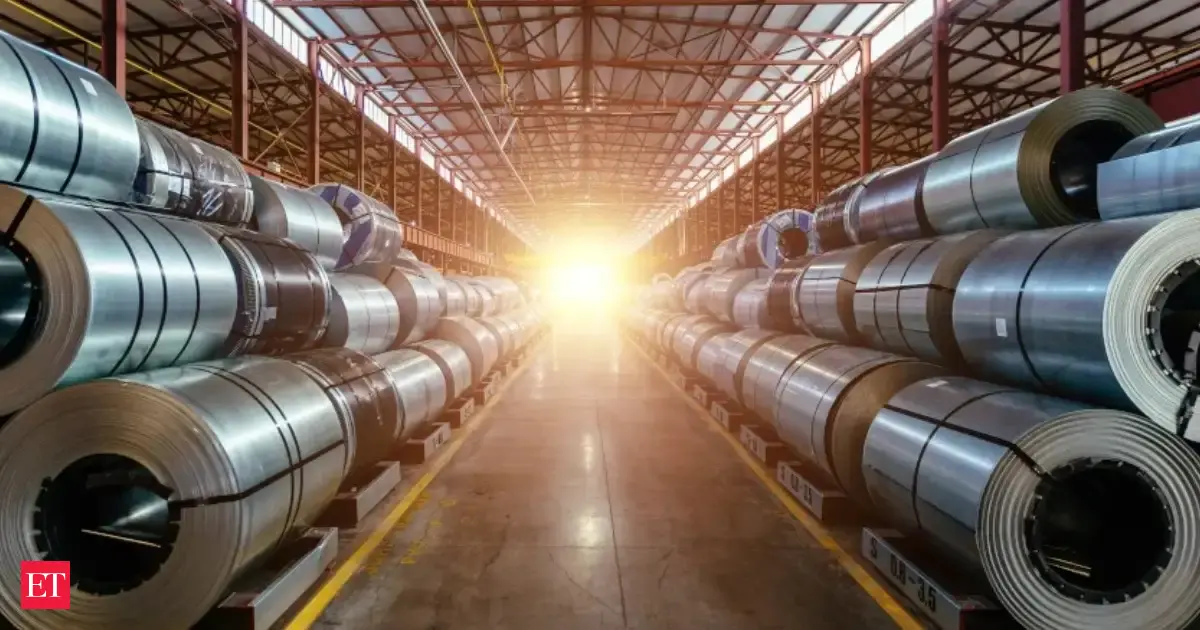
JSW Steel reported a significant 15 percent jump in crude steel production for May. The company produced 22.93 lakh tonnes, a notable increase from the previous year. This growth was fueled by the full operational capacity of the Dolvi unit and the ramp-up of JVML operations. JSW Steel USA-Ohio also saw a 20 percent rise in its output. View More
New Delhi: Sajjan Jindal-led JSW Steel on Tuesday said its crude steel production rose by 15 per cent to 22.93 lakh tonnes (LT) in May, driven by full operations of the Dolvi unit and fully ramped-up JVML operations . The company's crude steel output was 19.96 LT in May 2025. JSW Vijayanagar Metallics Ltd (JVML) is a wholly-owned subsidiary of JSW Steel. "Production was higher in May 2026 mainly due to full operations of the Dolvi unit (one of the blast furnaces was under planned maintenance shutdown in May 2025) and JVML operations fully ramped up," JSW Steel said in a regulatory filing. Blast furnace 3 at Vijayanagar is under shutdown for upgradation of capacity, and is expected to restart in the second fortnight of June 2026. Live Events The capacity utilisation for Indian operations for the month, excluding BF3 capacity, was at 98 per cent and including BF3 capacity was at 87 per cent. Also Read: Vizag Steel Plant accident: Centre announces Rs 25 lakh ex gratia, job for victims' kin Indian operations registered output of 21.98 lakh tonnes, up 15 per cent from 19.17 lakh tonnes in May last fiscal. JSW Steel USA-Ohio produced 0.95 lakh tonnes, registering a 20 per cent rise compared to 0.79 lakh tonnes in the same period of the last financial year. The steel business undertaking of Bhushan Power and Steel Limited (BPSL), a subsidiary of the company, was transferred on a slump-sale basis to JSW-JFE Steel Ltd (JV company) in March 2026. The production figures relating to the transferred undertaking have been reduced from the previous year's numbers for comparison, the filing said. JSW Steel is the flagship business of the diversified, USD 23 billion JSW Group. The JSW Group has interests in energy, infrastructure, cement, paints, realty, e-platforms, mobility, defence, sports, and venture capital. .Pbanner{display:flex;justify-content:space-between;align-items:center;background-color:#ec1c40;margin-top:20px;padding:5px 10px;border-radius:4px;color:#fff;line-height:10px;} .Pbannertext{display:flex;align-items:center;font-size:16px;font-weight:600;font-family:'Montserrat';} .Pbannertext img{height:20px;margin:0 6px} .Pbannerbutton a{display:flex;align-items:center;background-color:#fff;color:#ec1c40;text-decoration:none;font-weight:600;padding:4px 8px;border-radius:6px;font-size:15px;font-family:'Montserrat';} .Pbannerbutton img{height:20px;margin-right:6px} .Pbannerbutton a:hover{background-color:#f7f7f7} Add as a Reliable and Trusted News Source Add Now! (You can now subscribe to our Economic Times WhatsApp channel) (You can now subscribe to our Economic Times WhatsApp channel)