
Latest Sectors News

CNBC’s Jim Cramer said the successful debut of SpaceX could pave the way for more AI-related offerings and help create a more constructive backdrop for stocks. View More
In this articleSPCX.NDXCRWVVRSKCTSHINSMZSCHTRFollow your favorite stocksCREATE FREE ACCOUNT watch nowVIDEO2:1802:18Cramer: Never has an IPO captivated Wall Street as much as SpaceXMad Money with Jim Cramer CNBC's Jim Cramer on Friday said SpaceX's blockbuster debut could pave the way for a new wave of AI-related equity offerings and help create a more constructive backdrop for stocks."Never has one initial public offering captivated the minds of Wall Street and perhaps Main Street as much as Elon Musk's SpaceX," the "Mad Money" host said.Elon Musk's rocket company debuted Friday and finished the session at $161 per share, giving SpaceX a market value of roughly $2.1 trillion. Cramer said the success of the offering could encourage other companies to tap the market soon, particularly AI players such as Anthropic. The startup behind the Claude models confidentially filed for an IPO earlier this month. Additionally, he said companies including Microsoft, Meta and Amazon may decide it's a good time to sell stock to help fund their AI buildouts â similar to what Google parent Alphabet is doing. "Bankers work fast these days," Cramer said, explaining the idea would be to "strike while the iron is hot." "I don't know if they can resist selling stock after seeing how SpaceX played out," he added.Cramer also said investors should keep a close eye on developments in the Middle East. While he remains skeptical that peace is fully at hand, a lasting resolution could send oil prices lower and help ease inflation pressures. "If we get peace, the first thing you have to realize is the process toward lowering inflation will begin with a collapse in the price of oil," he said. Cramer said he initially worried the SpaceX offering could overwhelm the market, but now believes its successful debut could help support sentiment and set the stage for a constructive week ahead. "The success of today's placement of SpaceX is something to be studied for years," he said. "It's a win for the market, and if we get peace, it won't be stopped."With that backdrop, Cramer turned to the shortened trading week ahead. Monday Corporate news is relatively light, but Cramer said he'll be tuning into Dave & Buster's earnings call, which could offer valuable insight into consumer spending trends. Tuesday Tuesday's housing starts report will provide a key read on the housing market. Cramer said a soft housing starts report could strengthen the case for new Federal Reserve chief Kevin Warsh to cut rates. "I know lots of people have been saying that the economy is too strong and we need to raise rates," he said. "I think these people are dreaming." Wednesday Cramer plans to watch an analyst meeting hosted by oil services giant SLB for clues about whether producers are increasing drilling activity following the recent surge in crude prices. On Wednesday, investors will also get the latest retail sales data, offering another look at the health of the consumer and whether spending is beginning to soften. Cramer thinks "we'll also see some weaker retail sales this morning, again, favoring a rate cut."The biggest event of the day, though, belongs to the Fed meeting and Warsh's afternoon press conference."I predict Warsh will begin the process of setting us up for rate cuts, because the underlying problems in the economy are persistent, but inflation will go away once we make a deal with the Iranians." Thursday Before the bell, Kroger and Accenture report. Kroger continues to grapple with rising costs that are difficult to fully pass on to consumers, while Accenture faces growing concerns that AI tools from OpenAI and Anthropic are taking business from traditional consulting firms. Thursday will also mark the final trading session before a major Nasdaq-100 rebalance takes effect. New additions include Rocket Lab, Astera Labs, Teradyne, Nebius, and CoreWeave, while Verisk, Cognizant, Insmed, Zscaler, and Charter Communications will be removed from the index. Cramer noted that "these index admissions move things" as fund managers reposition portfolios ahead of the changes effective at Monday's open. watch nowVIDEO12:0912:09I was worried about the SpaceX deal, but they got it right: Jim CramerMad Money with Jim Cramer Jim Cramer's Guide to InvestingClick here to read Jim Cramer's Guide to Investing at no cost to help you build long-term wealth and invest smarter Sign up now for the CNBC Investing Club to follow Jim Cramer's every move in the market.DisclaimerQuestions for Cramer? Call Cramer: 1-800-743-CNBCWant to take a deep dive into Cramer's world? Hit him up! Mad Money Twitter - Jim Cramer Twitter - Facebook - InstagramQuestions, comments, suggestions for the "Mad Money" website? madcap@cnbc.com Choose CNBC as your preferred source on Google and never miss a moment from the most trusted name in business news.

Indian Railways is undergoing a massive digital overhaul, transforming the passenger and freight experience. From booking tickets on smartphones to real-time train tracking and advanced safety systems like Kavach, technology is now central. This digital shift, powered by data and AI, aims to create a more efficient and connected transportation network, though challenges like cybersecurity and digital literacy remain. View More

Coca-Cola may list on Indian stock exchanges next year, a significant shift after 50 years. This move could expose inflated valuations due to flawed Sebi IPO rules. Such practices may benefit the wealthy but weaken the rupee. Investors could see reduced returns. Sebi needs to revise its public float norms to ensure fair pricing and protect common investors. View More
Next year marks 50 yrs of Coca-Cola's exit from India in protest against the Janata Party government's 1977 order to list on domestic stock exchanges and keep its recipe with locals. 2027 may also be the year of a stunning reversal when Coca-Cola lists on Indian stock exchanges - voluntarily. A lot has happened over the last 50 yrs as to how India manages the economy. The state has slid from commanding heights of the economy to fringes. Animal spirits of private entrepreneurs have been unshackled, leading to the birth of thousands of enterprises. Even after liberalisation began in 1991, and until recently, while local businesses raised capital from investors to expand, MNCs such as Caterpillar, United Technologies and Atlas Copco bought out minority shareholders to enjoy 100% of the profits their local units generated instead of listing here. The Atlanta-headquartered aerated drinks company isn't suddenly turning generous. But it's joining the likes of Hyundai, Tenneco and LG that have minted fortunes by listing in Mumbai, money they probably would have taken scores of years to generate selling cars or TV sets. Indian market dynamics have changed. Valuations, though unjustifiably forced by the regulator, at which the likes of Hindustan Lever and Nestle were listed, complying with the government order in 1977, created millionaires out of the common man. But when Coke probably lists next year, it will be the other way round. Some may celebrate this as the arrival of India on the global stage, with savers choosing equity over bland FDs. But it would be showcasing how absurd local valuations are, especially for new listings. Live Events The carrot is that local businesses often get disproportionately valued. When Hyundai was listed in India, its P/E multiple was several times that of its parent company. Companies like BAT and Whirlpool sold down their stakes to repay debt at home. While the sales pitch is that Indian units are growing faster than their parents, reality is that Sebi's flawed IPO rules are puffing up valuations. Primary law of the market is that demand and supply determine price. When supply is constrained, prices soar, and vice versa. But Sebi seems to be blind to it. Most companies were permitted to list with just about 5% public float. Recently, it was further loosened to permit listing with just 1%, in what could be regulatory licence to rig valuations. Won't valuations dramatically fall if a company is to sell more to public? Isn't the low-float artificially inflating valuations? This fallacious provision not only leads to transfer of the common man's savings to wealth of the affluent who are primary investors in PE and VC funds, but it has also been one of the causes of weakening the Indian macro picture as it depreciated the rupee when PEs and VCs were the primary sellers in IPOs repatriating funds. It's not that India is not receiving FDI. But it's the outflow of FDI that's squeezing the currency. Gross FDI outflows of foreigners rose to $45 bn in 9 mths of FY26, from $27 bn in FY21. In the next few months, continued high valuations and faulty IPO rules could not only accelerate the offer for sale by existing shareholders, but can also pummel the already embattled rupee. PE and VC funds are estimated to own as much as $32 bn in listed entities alone, which could be sold. Furthermore, two behemoth listings by NSE and Reliance Jio with valuations of more than $200 bn could see billions flow out. Few can argue for any controls in an economy that has embraced the capitalist free-market model, where funds flow in and out freely. But a regulatory flaw should not tilt the scale in favour of the privileged at the expense of macro fundamentals and common investors. Ensuring the rupee doesn't slide is not just RBI's headache. Sebi needs to realise that a flaw in its framework is partly responsible for the currency's weakness. Over the years, when MNCs sought to delist and own 100% of their units, Sebi diluted the reverse book-building norms even if it meant shrinking of investible universe. Now, the tide has turned. MNCs want to list here, and that's good for investors as it will widen the pool. Listing of Hindustan Lever and Nestle created wealth for locals over decades. But the current wave could erode savers' returns unless the regulator wakes up. Sebi must raise the minimum public float to 20-25% for a fair price determination to not only help local investors, but also to do its bit to arrest the weakening of the economy. .Pbanner{display:flex;justify-content:space-between;align-items:center;background-color:#ec1c40;margin-top:20px;padding:5px 10px;border-radius:4px;color:#fff;line-height:10px;} .Pbannertext{display:flex;align-items:center;font-size:16px;font-weight:600;font-family:'Montserrat';} .Pbannertext img{height:20px;margin:0 6px} .Pbannerbutton a{display:flex;align-items:center;background-color:#fff;color:#ec1c40;text-decoration:none;font-weight:600;padding:4px 8px;border-radius:6px;font-size:15px;font-family:'Montserrat';} .Pbannerbutton img{height:20px;margin-right:6px} .Pbannerbutton a:hover{background-color:#f7f7f7} Add as a Reliable and Trusted News Source Add Now! (You can now subscribe to our ETMarkets WhatsApp channel) (You can now subscribe to our ETMarkets WhatsApp channel)
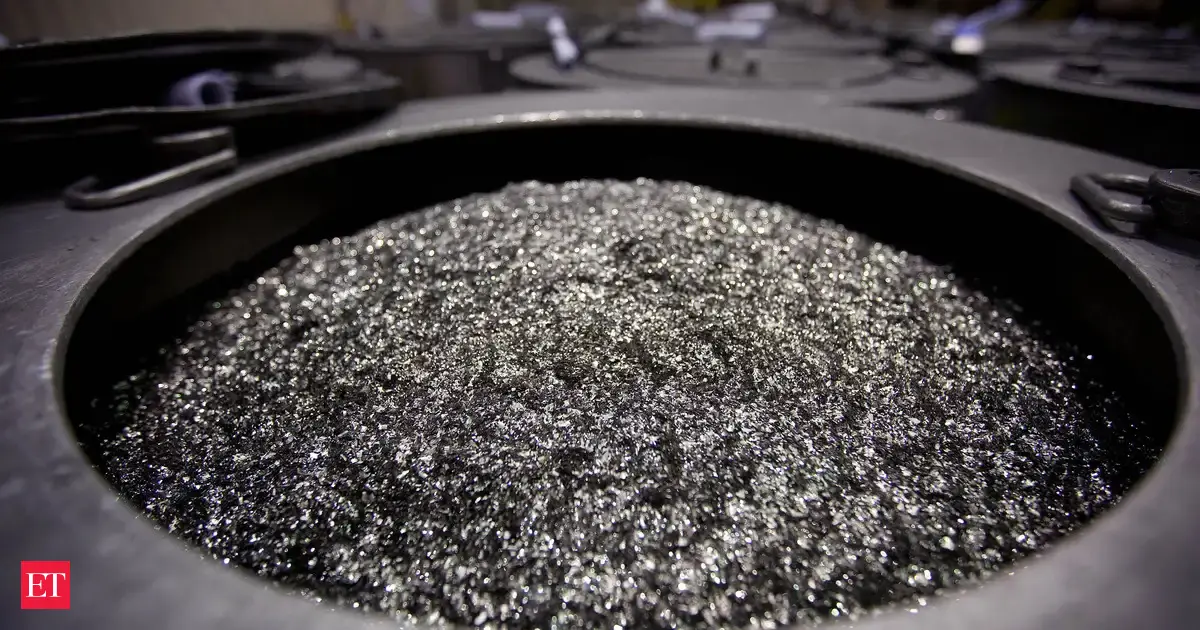
Indian conglomerates Reliance, Vedanta, and Adani are among ten companies expressing interest in developing rare-earth processing facilities in Andhra Pradesh. This move aligns with New Delhi's strategy to reduce reliance on China for these critical minerals, essential for electric vehicle motors and other high-tech applications. View More
NEW DELHI: Indian industrial groups Reliance , Vedanta and Adani have shown interest in developing facilities to process Andhra Pradesh state's significant reserves of increasingly important rare-earth minerals, according to two sources with knowledge of the matter. With New Delhi seeking to cut India's dependence on China for rare earths, the three companies are among about 10 who have expressed interest in setting up rare earth facilities in the southern state, one of the sources said. The sources declined to be identified as they were not authorised to speak to the media. Andhra Pradesh holds 211 million metric tons of beach sand mineral resources, including rare earths, across 16 identified coastal deposits, according to a draft document. India has 482.6 million tons of rare earth ore resources, according to the Geological Survey of India. RARE EARTH AMBITIONS The interest comes as New Delhi steps up efforts to build domestic rare earth mining, processing and magnet manufacturing capacity, while Andhra Pradesh aims to attract 500 billion rupees ($5.2 billion) in rare earth and titanium investments over the next decade. Live Events The plans were set out in a draft government document. The Andhra Pradesh government, Reliance Industries Ltd , Vedanta Ltd and Adani Enterprises Ltd did not respond to Reuters emails seeking comment. Andhra Pradesh was among four states identified in February's federal budget for the development of rare earth "corridors" covering mining, processing and magnet production. The initiative followed New Delhi's approval in November of a 73 billion rupee programme to support rare earth magnet manufacturing. Rare earth elements are essential for permanent magnets used in applications such as electric vehicle motors. While India holds substantial rare earth reserves, it lacks industrial-scale facilities capable of processing the minerals to high purity levels. CAPITAL INCENTIVES AND OTHER MEASURES Andhra Pradesh plans to issue tenders for rare earth facilities after securing cabinet approval for its rare earth corridor policy, which is expected within a month, the sources said. The state also plans to offer capital-linked incentives and additional benefits for projects with investments of 10 billion rupees or more, the sources said. Andhra Pradesh has been courting large-scale investments, attracting companies including Google and ArcelorMittal Nippon Steel, and aims to secure $1 trillion in investment commitments by 2029, a state minister told Reuters last November. .Pbanner{display:flex;justify-content:space-between;align-items:center;background-color:#ec1c40;margin-top:20px;padding:5px 10px;border-radius:4px;color:#fff;line-height:10px;} .Pbannertext{display:flex;align-items:center;font-size:16px;font-weight:600;font-family:'Montserrat';} .Pbannertext img{height:20px;margin:0 6px} .Pbannerbutton a{display:flex;align-items:center;background-color:#fff;color:#ec1c40;text-decoration:none;font-weight:600;padding:4px 8px;border-radius:6px;font-size:15px;font-family:'Montserrat';} .Pbannerbutton img{height:20px;margin-right:6px} .Pbannerbutton a:hover{background-color:#f7f7f7} Add as a Reliable and Trusted News Source Add Now! (You can now subscribe to our Economic Times WhatsApp channel) (You can now subscribe to our Economic Times WhatsApp channel)

The Middle East conflict has given China's economy a reflationary boost as energy and raw material disruptions deepened. View More
In this articleLVMUYLVMUYRLFollow your favorite stocksCREATE FREE ACCOUNT A customer shops for gold jewelry at a gold store in Hangzhou, Zhejiang Province, China, on June 3, 2026. Costfoto | Nurphoto | Getty Images China's wholesale prices rose at the fastest pace in nearly four years in May, driven by surging raw material costs due to the Iran war and an artificial intelligence investment boom, while consumer inflation came in below estimates.The producer price index jumped 3.9% from a year ago, the highest since July 2022, topping economists' forecast of 3.8%, and outpacing 2.8% in April, according to data released by the National Bureau of Statistics on Wednesday. Wholesale prices returned to growth in March as the input cost surge stemming from the Middle East conflict lifted the economy out of its longest deflationary streak in decades. The Iran war has throttled traffic through the Strait of Hormuz, disrupting energy and raw material flows. Factories' purchasing prices for fuel and power climbed 10% year on year in May, widening from 4.4% in April. Costs for non-ferrous metal materials and wires surged 22%.Aside from higher commodity costs, wholesale prices were also lifted by a growing demand for artificial intelligence computing power, pushing up prices for tech equipment and semiconductors. "The accelerating shift to electrification, deepening AI adoption and surging computing demand pushed up prices across non-ferrous metals, electrical machinery and computer hardware," Dong Lijuan, chief statistician at NBS, said in a statement Wednesday. Non-ferrous metal mining led gains at 36.5% year on year, with smelting up 24%.Consumer prices rose 1.2% in May from a year earlier, missing economists' estimates of 1.3% growth in a Reuters poll. On a month-on-month basis, consumer inflation dropped 0.1% from April. Gasoline prices for consumers rose 23.5% from a year earlier. Core CPI, excluding volatile food and energy prices, grew 1.1% in May from a year earlier, edging down from the 1.2% increase in April. Food prices declined 1.7% from a year earlier. "The inflationary pressure [from higher energy costs] in the consumer sector is not strong, as domestic demand remains weak," said Zhiwei Zhang, president and chief economist at Pinpoint Asset Management. CSI 300 index fell around 1% while the Hang Seng Index lost 0.8%. Yield on the 10-year Chinese government bond was little changed at 1.740%, LSEG data showed.China has cushioned the worst of the energy shock through its strategic oil stockpiles and a diversified mix of renewable energy sources. The world's largest oil importer has trimmed its crude imports by nearly 20% since the outbreak of the Iran war, according to official customs data compiled by Wind Information, capping global oil prices from trading even higher.Economists have warned that supply-driven reflation risks further pressuring companies' profit margins and dampening household consumption demand. "What we're seeing is Chinese factories being squeezed from both sides," said Josh Gilbert, lead analyst for APAC at trading platform eToro. Companies face rising costs but lack pricing power to pass them on, as weak demand and oversupply cap consumer inflation, Gilbert added. "Until domestic demand recovers, the squeeze on factory margins only builds from here," Gilbert said. China's export growth held up better than expected in May, growing 19.4% from a year earlier in U.S. dollar terms, the largest jump in three months, supported by soaring demand for renewable and AI-related goods. Consumer demand drags Consumers in China are "keeping a tight fist around their hard-earned renminbi," said Frederic Neumann, chief Asia economist at HSBC Bank, as the high household saving rate depressed spending at a time when the economy needs to find new drivers of growth besides exports.Latest earnings from global luxury brands, such as Ralph Lauren and LVMH Moet Hennessy Louis Vuitton, indicated recovering appetite for high-end beauty and fashion products in a market plagued by margin-eroding discounts in recent years. Economists, however, cautioned that the early signs of high-end revival â boosted by wealth effect from recent tech-driven equity market rally and last year's low base â may prove fragile."It would be premature to generalize the recent improvement as evidence of a broad-based recovery in consumer sentiment," said Neo Wang, lead China economist at Evercore ISI, amid a persisting property market slump and bleak jobs market. watch nowVIDEO5:2505:25China's factory inflation masks widening sector divergence: Credit AgricoleThe China Connection Choose CNBC as your preferred source on Google and never miss a moment from the most trusted name in business news.

The president's comments came after U.S. forces on Tuesday evening launched strikes against Iran. View More
watch nowVIDEO3:4603:46President Trump says Iran will âpay the priceâ for failing at peace dealSquawk on the Street U.S. President Donald Trump said Wednesday that Iran has taken too long to negotiate a peace deal and will now have to "pay the price.""Iran's Military is a complete and total mess," the president said in a post on Truth Social. "Much of it, like their Navy and Air Force, doesn't even exist anymore - They have been completely defeated. Iran is all talk and no action." Oil prices react Oil prices ticked higher and U.S. stock futures fell after Trump's comments. U.S. crude oil futures for July delivery jumped nearly 2% to $89.72 per barrel and Brent futures, the international benchmark, for August delivery, rose 1.3% to $92.74 per barrel.CNBC has reached out to the Iranian Foreign Ministry for comment.In a subsequent post on Truth Social, Trump denounced "The Fake News Media" for refusing to report how "EFFECTIVE the U.S. Naval BLOCKADE is, the most successful Blockade in the history of Naval Warfare."He added: "NOTHING GETS THROUGH unless we want it to. IT IS A STEEL WALL! Iran is doing ZERO business, not paying their military, or any of their bills, and quickly becoming a FAILED NATION! Lots of oil is getting out. Praise be to Allah!"The posts came just a day after Trump said that a deal could be reached in "two or three days" and that the critical Strait of Hormuz would reopen "immediately" after such a deal. The U.S. has sought to pressure Iran into a deal by imposing a naval blockade on its ports and vessels. According to analysts at JPMorgan Chase, more oil may be going through Hormuz than is publicly visible.Some 2 million barrels per day might be getting out on tankers that have switched off their transponders, according to the bank's estimates shared in a June 4 note.Tensions ramped up in the Middle East on Tuesday. U.S. forces launched strikes against Iran, which U.S. Central Command said were "in response to yesterday's downing of a U.S. Army Apache helicopter." watch nowVIDEO3:1103:11Iran launches retaliatory attacks following fresh U.S. strikesEurope Early Edition Iran has not directly claimed responsibility for shooting down the helicopter, and Iranian state broadcaster IRIB reported that no offensive military operations had been carried out in the strait in the last 24 hours.â CNBC's Spencer Kimball contributed to this report. Choose CNBC as your preferred source on Google and never miss a moment from the most trusted name in business news.

Semiconductor and technology stocks fell on Wednesday, tracking overnight losses on Wall Street. View More
In this article2317-TW3189-TW6857.T-JP6723.T-JP9984.T-JPNVDAMSFTGOOGLRPBPFRPBPFASMLFollow your favorite stocksCREATE FREE ACCOUNT A silicon wafer with chips etched into is seen as U.S. Vice President Kamala Harris tours a site where Applied Materials plans to build a research facility, in Sunnyvale, California, U.S., May 22, 2023. Pool | Reuters Global semiconductor and technology stocks resumed their slide Wednesday, tracking overnight losses on Wall Street after a brief rebound in chipmakers lost steam amid lingering concerns over stretched artificial intelligence-related valuations.Japan's Softbank Group plunged 8.3% amid a broader decline in tech names and after efforts to secure at least $6 billion through a margin loan backed by its OpenAI stake hit a snag, according to Bloomberg News. The Japanese tech investment giant is exploring alternative funding options, though it may revisit the loan at a later date.Japanese chip equipment makers Advantest and Renesas Electronics closed 4.2% lower and about 2% down, respectively.In South Korea, memory chip major SK Hynix dropped 7.5%, while Samsung Electronics fell 6.1%. Battery maker 3.6%, while display panel producer LG Display slid 7.6%.Taiwan's chip sector was also under pressure. The world's largest chipmaker, Taiwan Semiconductor Manufacturing Co., fell about 2%, while Apple supplier lost more than 5.2%. Why chip stocks fell The declines followed a weaker session on Wall Street, where the tech-heavy Nasdaq Composite fell 0.97% and the S&P 500 slipped 0.26%. A rally in semiconductor stocks that had helped fuel gains a day earlier quickly faded, with the iShares Semiconductor ETF dropping 1%.Ahead of Wednesday's regular trading session, Nvidia was down 2.1%, while the iShares Semiconductor fund was trading 2.7% lower. Microsoft and Google parent Alphabet were both more than 1% lower. watch nowVIDEO3:2803:28John Blank: Next stage of AI buildout may be anti-NvidiaSquawk Box Europe In Europe, London-listed computing firm Raspberry Pi was down more than 12% in early afternoon trading, while the Stoxx 600 Technology index led regional losses on a 1.6% drop. Dutch chipmaking equipment manufacturer ASML, which recently became Europe's most valuable public company, was 1.3% lower.AI-related fundraising appears to be diverting money away from existing technology stocks. Upcoming listings such as SpaceX, Anthropic and OpenAI could absorb investor capital that previously flowed into publicly traded tech companies, potentially weighing on the sector.OpenAI confidentially filed for an initial public offering on Monday, boosting excitement around AI-related investments. Meanwhile, SpaceX is scheduled to begin trading on Friday following what is expected to be the largest IPO on record. While some investors see the listing as another catalyst for the AI rally, others worry its $1.75 trillion valuation could signal overheating in the sector. What investors are watching next Andrew Jackson, equity strategist at Ortus Advisors, said the latest volatility in technology shares could prompt investors to rotate into defense names, particularly in Japan, where the government is expected to strengthen its focus on military preparedness. "With retail punters gnashing their teeth and looking for something new to play with, heavies could snap back into focus after their recent pullback," Jackson said, citing defense contractors Mitsubishi Heavy Industries, Kawasaki Heavy Industries, IHI Corp. and Japan Steel Works as potential beneficiaries."Yesterday's selloff on Wall Street didn't turn out to be too disastrous, with the Nasdaq clawing back much of its losses by the end of the session. That has helped to avoid contagion on the markets, albeit investors are slightly nervous about the heightened volatility this week," Dan Coatsworth, head of markets at AJ Bell, said in a Wednesday morning note. watch nowVIDEO4:0104:01HSBC's Neumann: AI-driven volatility 'huge concern' for central banksSquawk Box Europe He added that there are many reasons why markets are "wobbly" right now."The prospect of interest rates staying higher for longer, inflation fears, frustration that the Iran war is still going on and potential liquidation events if investors are trimming holdings to raise cash to back some mega IPOs on the horizon," he said. Money markets are currently pricing in a 98.2% chance that the Fed holds its key interest rate steady at its FOMC meeting next week, according to the CME's FedWatch tool. Traders now see a roughly 40% chance of a hike by the Fed's October meeting.The European Central Bank is also overwhelmingly expected to raise interest rates by 25 basis points at its own monetary policy meeting on Thursday, LSEG data shows.May inflation data for the U.S. is due on Wednesday morning. Annual inflation is expected to have hit 4.2% last month. Choose CNBC as your preferred source on Google and never miss a moment from the most trusted name in business news.

India rejects US trade representative’s allegations that structural excess capacity in its major industries had led to a trade surplus with the US View More

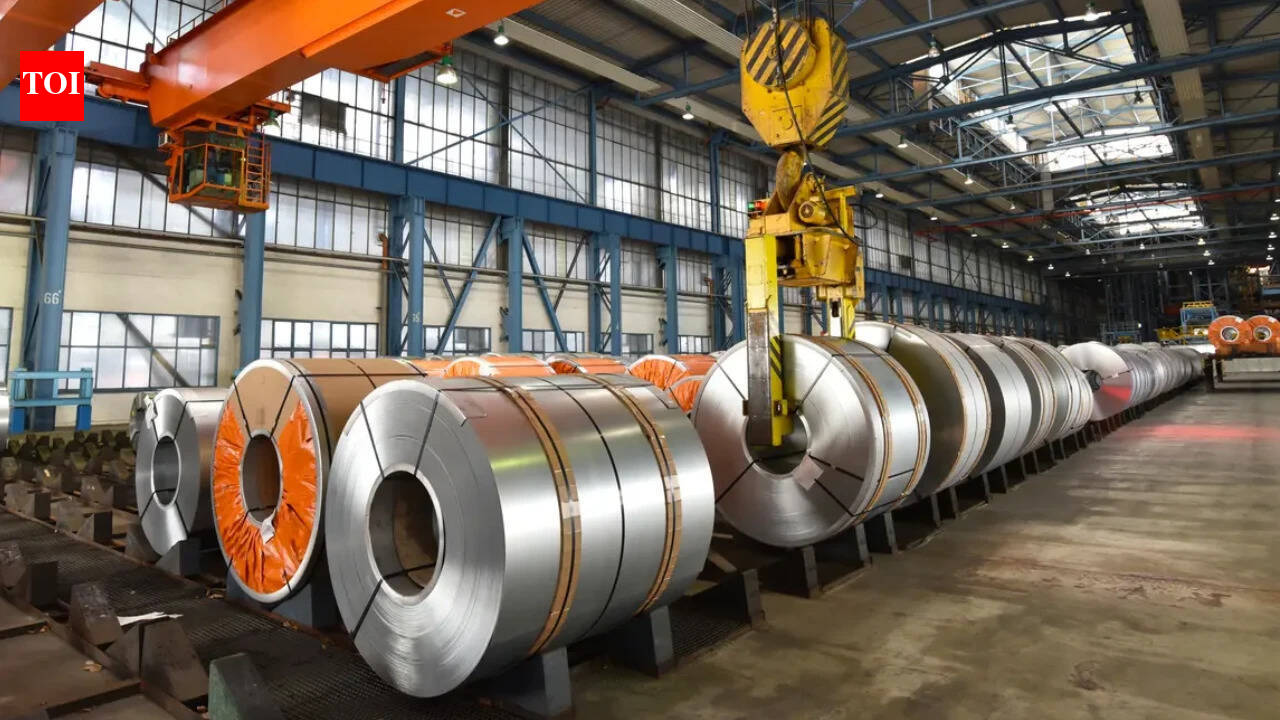
Shifting global trade routes from the Iran war drove a 62.5% surge in May imports, widening the trade deficit in finished steel even as domestic private sector production continued to grow. View More