
Latest Sectors News

India has secured protection for 85% of its steel exports to the UK under the upcoming free trade agreement, with the remaining shipments covered by country-specific quotas and other access schemes. This agreement resolves a key sticking point ahead of the Comprehensive Economic and Trade Agreement's operationalization on July 15. View More

Indian exporters of textiles, footwear, gems & jewellery to gain; social security pact to protect short-term expat workers from being double taxed View More
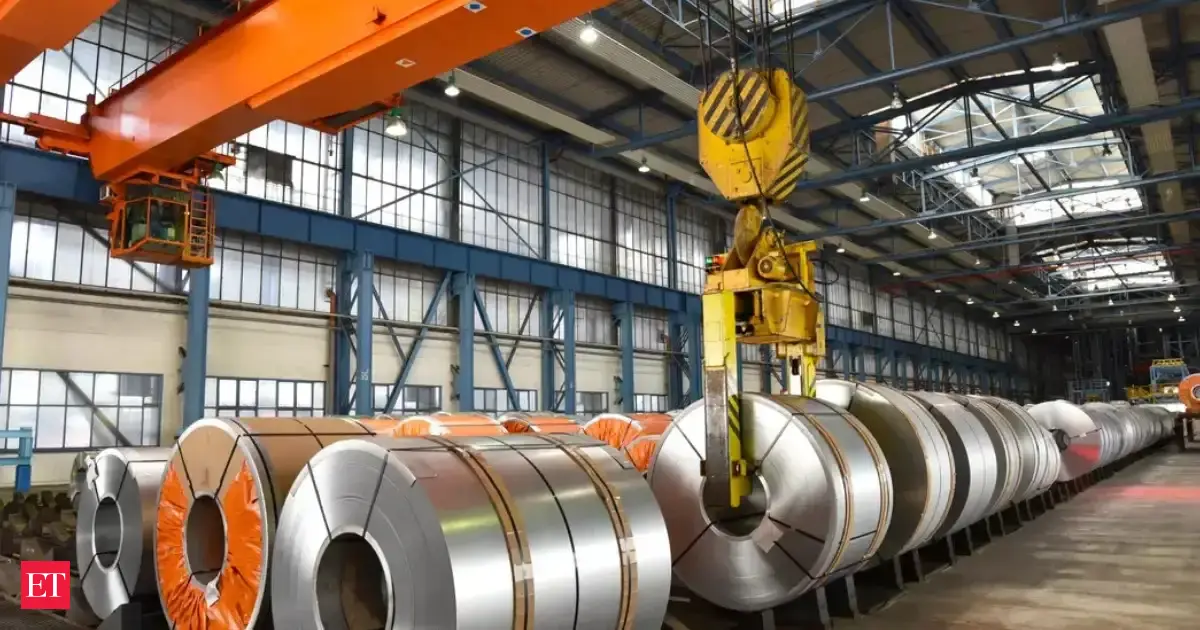
Vedanta Iron And Steel Ltd, newly listed, plans to be a leading integrated steel producer. The company will leverage its vast iron ore reserves for over 50 years. Expansion will focus on value-added products like silicon iron and ductile iron pipes. VISL's strategy is set to create long-term value across the iron ore and steel chain. View More
New Delhi: Newly-listed Vedanta Iron And Steel Ltd (VISL) on Wednesday said it aims to become a major resource-backed integrated steel platform mainly driven by long-life reserves and operational integration. The company said it is focused on expanding value-added product capacity across high-silicon iron, ductile iron pipes , wire rods and rebars. Also Read: Inside Anil Agarwal’s $100bn vision: Vedanta Resources plans to relist with US as a likely target The company said it is focused on expanding its capacity across silicon iron , ductile iron pipes, wire rods and rebars. Supported by approximately 4 billion tonnes of iron ore reserves and resources, providing more than 50 years of raw material security, the company is building a platform designed to create long-term value across the iron ore and steel value chain. Live Events "VISL's listing marks the beginning of a new growth phase for the company. We are building one of India's most integrated resource-backed iron ore and steel growth platforms, supported by long-life reserves, operational integration and a clearly defined expansion roadmap," Pankaj Kumar Sharma, CEO and Whole Time Director, VISL, said. On Monday, Vedanta Iron and Steel made its debut on the BSE and National Stock Exchange of India Ltd (NSE). Also Read: Vedanta readies $5.2 billion refinancing after rating upgrades India's steelmaking capacity is expected to increase to 300 million tonnes (MT) by 2030 against the current installed capacity of 200 MT, supported by sustained investments in infrastructure, railways, energy, defence and urbanisation. With domestic steel demand projected to grow at over 6-8 per cent annually, significantly ahead of global growth rates, the sector is expected to play a central role in India's economic development over the coming decade, the company said in a statement. With operations spanning India and Africa, VISL operates a diversified portfolio of mining and steelmaking assets, including Sesa Iron Ore, ESL Steel Ltd, and Western Cluster Ltd in Liberia, alongside associated industrial businesses. .Pbanner{display:flex;justify-content:space-between;align-items:center;background-color:#ec1c40;margin-top:20px;padding:5px 10px;border-radius:4px;color:#fff;line-height:10px;} .Pbannertext{display:flex;align-items:center;font-size:16px;font-weight:600;font-family:'Montserrat';} .Pbannertext img{height:20px;margin:0 6px} .Pbannerbutton a{display:flex;align-items:center;background-color:#fff;color:#ec1c40;text-decoration:none;font-weight:600;padding:4px 8px;border-radius:6px;font-size:15px;font-family:'Montserrat';} .Pbannerbutton img{height:20px;margin-right:6px} .Pbannerbutton a:hover{background-color:#f7f7f7} Add as a Reliable and Trusted News Source Add Now! (You can now subscribe to our Economic Times WhatsApp channel) (You can now subscribe to our Economic Times WhatsApp channel)
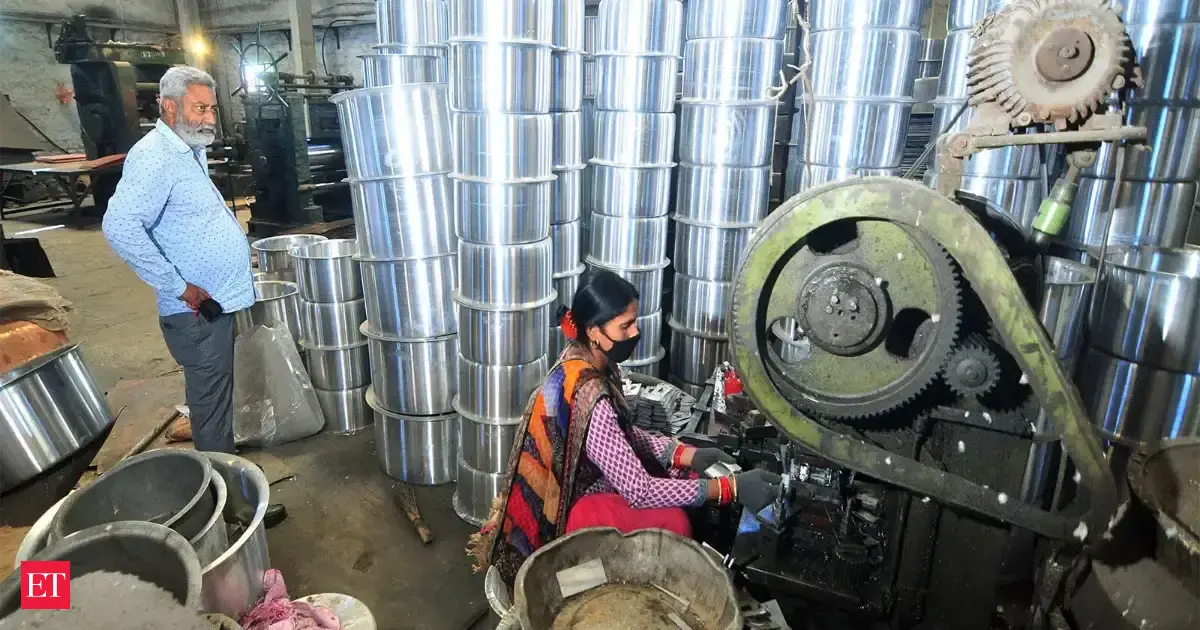
India's steel sector is booming, with demand showing impressive growth and factories running at high capacity. While steel prices have dipped a bit, hot-rolled coil prices are holding steady. This stability is expected to persist, leading to better profit margins for companies. The industry is optimistic about continued strong demand for years to come. View More
New Delhi: As India's steel demand remained robust in May, surging nearly 9 per cent on YoY, industry capacity utilisation is expected to stay above 90 per cent in the medium term, as per a report by Kotak Institutional Equities. Domestic steel demand grew 9 per cent year-on-year in May 2026 and 8.7 per cent in FY26-to-date, following 7.6 per cent growth in FY26 after four consecutive years of double-digit expansion. It further noted "exports increased 30 per cent YoY, on a weak base, to 0.5 million tons, but were outpaced by imports of 0.7 million tons in May 2026." According to the report, primary rebar prices have fallen by around Rs 7,000 per tonne, or 11 per cent, from their April 2026 peak. Meanwhile, domestic hot-rolled coil (HRC) prices have remained relatively stable, declining by only Rs 1,600 per tonne, or 2-3 per cent, amid seasonal weakness in the steel sector. Also Read: The new man of steel! India seen to fill in the void China may leave Additionally, HRC prices are still trading at a 7 per cent discount to China's import parity levels, limiting the risk of further declines. "Weak steel spreads in China due to cost inflation improve odds of higher regional prices going ahead," it added. Live Events The report noted that spot hard coking coal prices are 4 per cent higher than fourth-quarter FY26 levels, while global iron ore prices have largely remained range-bound. Additionally, the NMDC iron ore fines prices have increased by about 20 per cent as against March 2026 exit on higher domestic steel prices in 4QFY26. "We expect industry utilization to remain above 90% in the medium term, led by a robust demand CAGR of ~7% over FY2026-29E, outperforming capacity additions," it said. Also Read: World's top miners BHP, Rio Tinto see India emerging as steel's next growth frontier beyond China Furthermore, margins will likely improve on QoQ as a "portion of the sharp 14%/21% increase in trade prices in 4QFY26 gets reflected in 1QFY27E. This should more than offset the increase in coal and ore prices, leading to higher qoq margins for our ferrous coverage," the report added. .Pbanner{display:flex;justify-content:space-between;align-items:center;background-color:#ec1c40;margin-top:20px;padding:5px 10px;border-radius:4px;color:#fff;line-height:10px;} .Pbannertext{display:flex;align-items:center;font-size:16px;font-weight:600;font-family:'Montserrat';} .Pbannertext img{height:20px;margin:0 6px} .Pbannerbutton a{display:flex;align-items:center;background-color:#fff;color:#ec1c40;text-decoration:none;font-weight:600;padding:4px 8px;border-radius:6px;font-size:15px;font-family:'Montserrat';} .Pbannerbutton img{height:20px;margin-right:6px} .Pbannerbutton a:hover{background-color:#f7f7f7} Add as a Reliable and Trusted News Source Add Now! (You can now subscribe to our Economic Times WhatsApp channel) (You can now subscribe to our Economic Times WhatsApp channel)
India Steel Industry Growth 2026: Global steel demand is shifting from China to India and Southeast Asia. India's steel consumption is low, offering significant growth potential. Unlike China's property-driven boom, India's demand will stem from infrastructure, manufacturing, and urban development. This growth will be more gradual, influenced by execution challenges and a focus on greener production. View More
For more than two decades, China's breakneck urbanisation and construction boom dictated the fortunes of the global steel industry. Today, as Chinese steel demand slows and miners search for new growth markets, attention is increasingly shifting to India. Executives from BHP and Rio Tinto this week pointed to India and Southeast Asia as the next major centres of steel demand growth, arguing that infrastructure spending, industrialisation and urbanisation could help offset weaker consumption in China. Indians consumed just 108 kg of finished steel per person in 2024-25, less than one-fifth of China's 601 kg and roughly half the global average of 215 kg, according to data from the Joint Plant Committee under India's Steel Minstry showed. The gap underscores why global miners and steelmakers see India as the industry's one of the most important growth markets. But if India is poised to become the industry's next growth story, it is unlikely to follow the same script. Live Events A different starting point The optimism surrounding India stems from a simple reality: steel consumption remains relatively low for an economy of its size. India produced about 165 million tonnes of crude steel last year, according to the Steel Ministry 's report, and aims to raise capacity dramatically over the coming decades. Per-capita steel consumption remains a fraction of levels seen in China during its peak construction years, suggesting substantial room for growth as incomes rise and urbanisation accelerates. "India and ASEAN will decisively emerge as the next engines of steel demand growth," said Vinod Kumar, partner and manufacturing sector leader at PwC India. But, he added, the growth should be viewed as incremental rather than a replication of China's historic expansion. Unlike China in the early 2000s, India is not embarking on a once-in-a-generation property boom. Instead, steel demand is being driven by a broader mix of infrastructure projects, manufacturing expansion and urban development. Infrastructure remains the largest consumer of steel, accounting for roughly 60%-65% of demand, while manufacturing is emerging as an increasingly important contributor as companies expand production under government-backed industrial programmes. The execution challenge China's rise as a steel powerhouse was underpinned by an ability to rapidly mobilise land, capital and labour for industrial projects. India's growth story is likely to be more gradual. Large manufacturing and infrastructure projects frequently face delays linked to land acquisition, environmental approvals and local opposition. Property ownership can be fragmented, regulations vary across states and industrial projects often take years to move from approval to execution. The challenges are particularly visible in eastern India, home to some of the country's largest steel-producing regions and mineral reserves. Industry executives say these hurdles do not derail projects but often lengthen investment cycles in ways that China largely avoided during its period of industrial expansion. That means India's steel growth may ultimately prove more durable, but also less explosive. Investments in China “were made by state-owned enterprises that rapidly added capacity,” Rajat Gupta, a Mumbai-based senior partner at consultancy McKinsey & Co told Bloomberg. “India is substantially private-driven,” he added. Building factories, not apartments Perhaps the biggest difference lies in what will consume the steel. China's steel boom was overwhelmingly tied to residential construction and property development. Apartment complexes, commercial real estate and city-building projects drove enormous demand for steel products. India's growth is increasingly being shaped by manufacturing ambitions. Prime Minister Narendra Modi's "Make in India" initiative aims to transform the country into a global manufacturing hub, encouraging investments across automobiles, engineering goods, electronics and industrial equipment. The government's infrastructure push is equally significant. Capital expenditure allocations have risen steadily over the past decade, funding highways, ports, airports, freight corridors and high-speed rail projects. The result is a steel demand profile that is likely to be more diversified than China's was. The raw-material dilemma India's steel ambitions also face a challenge that China largely did not. The country has abundant iron ore reserves but remains heavily dependent on imported metallurgical coal, an essential ingredient for blast furnace steelmaking. India may be the world's second-largest steel producer, but the gap with China remains vast. India produced 149.4 million tonnes of crude steel in 2024, according to provisional World Steel Association data, compared with China's 1,005.1 million tonnes. In other words, China produced nearly seven times more steel than India last year. Japan and the United States, the third- and fourth-largest producers, manufactured 84 million tonnes and 79.5 million tonnes respectively, highlighting India's emergence as the clear second pillar of global steelmaking even as it remains far behind China in scale. Finished steel imports more than doubled to 9.55 million tonnes in 2024-25 from 4.75 million tonnes in 2020-21, while exports fell to 4.86 million tonnes from 10.78 million tonnes over the same period. As a result, India became a net importer of 4.69 million tonnes of finished steel in 2024-25, the largest trade deficit in the period. Preliminary data for April-July 2025-26, however, show a modest reversal, with exports of 1.70 million tonnes slightly exceeding imports of 1.67 million tonnes, making India a marginal net exporter once again. As steel production expands, Indian companies are increasingly looking abroad to secure supplies, with Australia remaining a major source alongside the United States, Canada, Mongolia, Russia and emerging suppliers such as Mozambique. The search for raw materials is becoming more urgent as the government pursues its long-term target of producing 500 million tonnes of steel by 2047. At the same time, declining ore quality, high mine premiums and auction-linked mining costs could create additional pressures on domestic producers. Unlike China, which spent decades securing overseas mineral assets as demand exploded, India is trying to build supply chains while simultaneously scaling production. Growth under a carbon microscope Another major distinction is timing. China built much of its steel industry before climate concerns became a central policy issue. India does not have that luxury. The country's steelmakers are being asked to expand production while simultaneously lowering emissions. According to a draft government policy reviewed by Reuters, India plans to reduce carbon emissions from steel production to about 2 tonnes of carbon dioxide per tonne of finished steel by the middle of the next decade, from current levels of roughly 2.65 tonnes. The pressure has intensified following the European Union's carbon border tariff, which imposes charges on imports of carbon-intensive products. As a result, future growth is expected to involve greater use of scrap steel, gas-based steelmaking and cleaner production technologies. India, in effect, is attempting to build a larger steel industry while also making it greener. Not a replacement, but a new chapter For miners such as BHP and Rio Tinto, India's rise offers an increasingly important source of future demand as China matures. Yet analysts caution against viewing India as a direct substitute for China. "China's share remains substantial enough to pull down global demand as it cannot be compensated by positive demand momentum from India and other Asian countries," said Sehul Bhatt, director at Crisil Intelligence. Even so, the industry sees little alternative. China's era of steel-led expansion is fading. India is where much of the next wave of demand growth will originate. But the country's rise will be shaped less by a property frenzy and more by manufacturing, infrastructure, resource security and decarbonisation. That makes India's steel story not a replay of China's, but an altogether different chapter in the evolution of the global steel industry. .Pbanner{display:flex;justify-content:space-between;align-items:center;background-color:#ec1c40;margin-top:20px;padding:5px 10px;border-radius:4px;color:#fff;line-height:10px;} .Pbannertext{display:flex;align-items:center;font-size:16px;font-weight:600;font-family:'Montserrat';} .Pbannertext img{height:20px;margin:0 6px} .Pbannerbutton a{display:flex;align-items:center;background-color:#fff;color:#ec1c40;text-decoration:none;font-weight:600;padding:4px 8px;border-radius:6px;font-size:15px;font-family:'Montserrat';} .Pbannerbutton img{height:20px;margin-right:6px} .Pbannerbutton a:hover{background-color:#f7f7f7} Add as a Reliable and Trusted News Source Add Now! (You can now subscribe to our Economic Times WhatsApp channel) (You can now subscribe to our Economic Times WhatsApp channel)
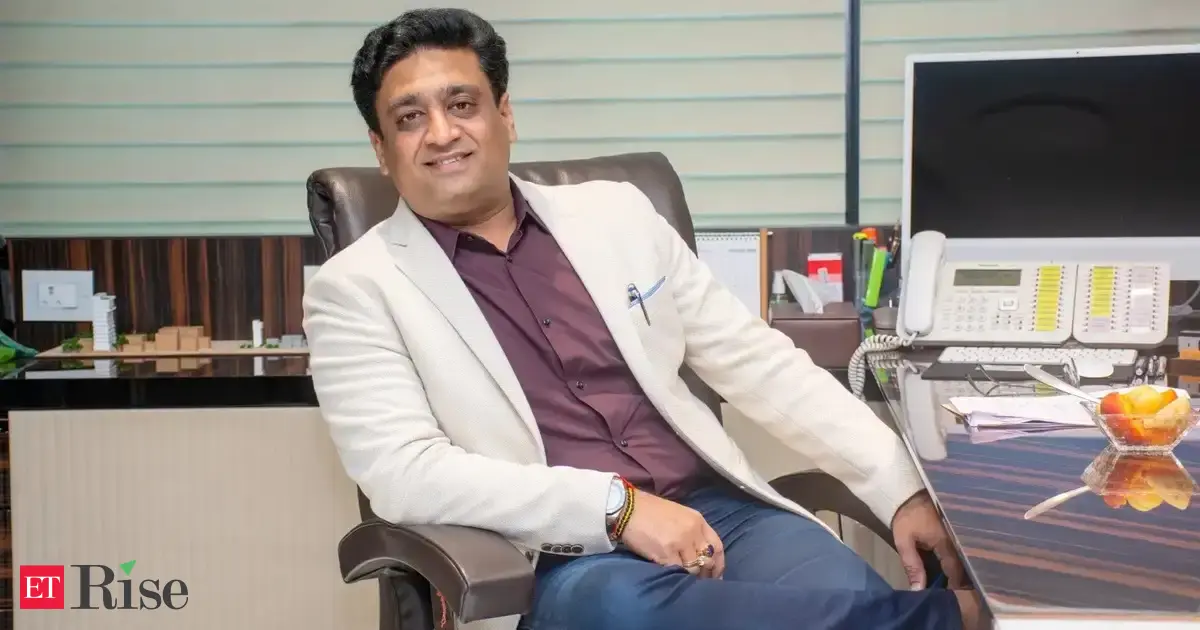
As India races ahead with metro expansion and urban infrastructure development, execution excellence is becoming the defining factor behind project success. View More
The intense urban development in India means that the attention is now on completing projects rather than just announcing them. Turning infrastructure vision into reality involves tunnelling under crowded cities and building intricate metro lines with little impact on people's lives. In this conversation with ET Digital, Dr. Nalin Gupta, Managing Director of J. Kumar Infraproject Ltd, talks about the company's role in shaping India's urban mobility landscape, managing large-scale underground projects, navigating cost pressures, and identifying the next wave of opportunities in metros, tunnels, coastal roads, and beyond. Edited excerpts. The Economic Times (ET): India's metro rail expansion has become one of the world's largest urban infrastructure programmes, but execution beneath dense, live cities is a different challenge altogether. What does running concurrent underground metro construction across Mumbai, Delhi, and Pune actually look like on a day-to-day operational level for J. Kumar Infraprojects?Nalin Gupta (NG): Running three cities simultaneously means we are never truly off, at any point, one city is in night shift while another is in planning review and a third is managing a critical excavation sequence. The practical reality is that our teams are dealing with ground conditions, live utilities, traffic diversions, client interfaces, and safety compliance all at the same time, across geographies with very different soil profiles and urban densities. What keeps this manageable is a centralised programme oversight system that flags deviations early, so issues at one site do not cascade into delays at another. What makes underground work fundamentally different from surface construction is that you cannot see the problem coming. You rely on instrumentation, experienced judgement, and pre-planned response protocols. Over four decades, we have built that institutional capability, our site teams know how to read ground behaviour, adapt face sequences, and keep progress on track without waiting for instructions from the top. That is what daily operations actually look like at J. Kumar Infraprojects. ET: Much of metro construction now happens beneath some of India's busiest urban corridors. How do you balance aggressive project timelines with the need to minimise disruption to traffic movement, utilities, businesses, and daily city life?NG: The honest answer is that disruption is unavoidable, what we can control is how much, for how long, and whether it was anticipated or not. We invest heavily in pre-construction planning: mapping every utility that crosses our alignment, running traffic simulations before proposing diversions, and consulting with local businesses and residents before we break ground. The effort we put in before the first excavation directly determines how smoothly the construction phase runs. On the ground, we limit our most disruptive activities, road closures, crane operations, concrete pours, to night windows wherever possible. We also keep the public and civic agencies informed in real time. When something unexpected happens, and underground it often does, our response is faster because we have already thought through the contingencies. Live Events Timelines and community sensitivity are not opposing goals; they both improve when the planning is honest and thorough. ET: India's metro network has expanded rapidly over the past decade, but industry experts often argue that execution capability has not scaled at the same pace as project announcements. Do you believe India currently has enough engineering talent, contractor depth, and project management capacity to sustain the infrastructure pipeline through FY27 and beyond?NG: Yes, and I say that with conviction, not optimism. India today has a generation of engineers and contractors who have built metro systems from scratch, driven TBMs through some of the most challenging urban geology in the world, and delivered projects of a scale and complexity that were entirely new to this country twenty years ago. That accumulated capability is real, and it is growing. The pipeline through FY27 is large, but so is the capacity that has been built to meet it. What we do need to continue investing in is the middle layer the project managers and site engineers who translate vision into daily execution. But that investment is happening, across companies like ours and across the industry. At J. Kumar Infraprojects, we have been building that talent pipeline deliberately for years, through structured training and mentorship embedded into every project. India has what it takes to sustain this infrastructure programme, and the track record of the last decade is the clearest proof of that. ET: J Kumar Infraprojects has spent over four decades building urban infrastructure. How has the company institutionalised execution knowledge so that project delivery depends on systems and processes rather than only on individual leadership or experience?NG: This is something we have worked on deliberately, because the risk of relying on individuals is very real in a company of our scale and complexity. What we have built over the years is a set of systems that carry forward the lessons from every project, what worked, what did not, how we handled specific ground conditions or client situations, what the early warning signs of a delay look like. A new project manager joining a metro contract today has access to the accumulated experience of dozens of projects before theirs. Beyond documentation, we have focused on how we structure leadership on projects. Senior professionals are expected to mentor, not just deliver. Our project directors are evaluated partly on the capability of the team they leave behind. The result is that when a senior person moves on, the project does not lose its institutional memory, because that memory has been embedded in the systems and the people around them. That is what forty years actually means in practice. ET: Underground metro projects are highly capital-intensive and technically demanding. Could you share the company's current order book position, the contribution of metro and tunnelling projects to the overall pipeline, and how you see this evolving over the next 2–3 years?NG: Our order book as of March 2026 stands at approximately Rs 18,554 crore, which gives us strong visibility for the next several years. Underground metro and tunnelling have become the strategic heart of that portfolio, not just by value but by the kind of work it represents. These are technically complex contracts that require genuine specialisation, and we have built that capability over many years including all the TBM breakthroughs completed under our execution across multiple cities. Over the next two to three years, we expect this segment to grow further. Several large corridors are in advanced stages of tendering, and urban road tunnels are emerging as a new category with significant opportunity. Our focus is on winning work that plays to our strengths, technically demanding, long-duration contracts where execution track record matters more than price. That is where we see the most meaningful growth, both in revenue and in the quality of our order book. ET: As metro projects become more complex, margins and cost management become critical. How is J Kumar Infraprojects managing inflation in raw materials, labour costs, equipment deployment, and financing while maintaining profitability and executionquality?NG: The single most important thing we do is own our equipment. When you own your TBMs, your batching plants, your heavy lifting fleet, you are insulated from the hire rate volatility that can severely impact margins on long-cycle projects. It also means you control maintenance standards and deployment scheduling in ways that third-party hire simply does not allow. That ownership model is expensive upfront but pays back significantly over the life of complex projects. Beyond equipment, our approach is about building stability into our supply chain before costs move. We maintain procurement partnerships with key material suppliers, concrete, steel, precast segments, with advance commitments that provide price predictability. We also manage our billing cycles tightly to avoid working capital gaps that eat into margins quietly. Profitability in infrastructure is not something you recover at the end of a project; it is built or lost in the day-to-day execution decisions. That is the discipline we have tried to embed at every level. ET: Could you provide some insight into the company's recent financial performance, including revenue growth, EBITDA margins, and the share of urban infrastructure projects in overall revenues? Which segments are emerging as the biggest growth drivers for the business?NG: FY26 was a steady year in a difficult environment. Revenue was broadly stable, and we maintained EBITDA margins of around 14.50%. I would say that holding those margins through a period of significant input cost pressure is a more meaningful achievement than headline revenue growth. It reflects the quality of our project mix and the discipline of our execution, not just market conditions. Urban infrastructure, metro, tunnelling, elevated corridors, coastal roads, now makes up the dominant share of our revenues, which is exactly where we want to be. The segments we expect to drive the next phase of growth are underground metro and coastal infrastructure. The metro pipeline across Indian cities is very large and the number of contractors who can credibly execute underground packages is limited, that is a structural advantage for us. Coastal road infrastructure is also an emerging growth vector where our Mumbai experience gives us a strong foundation. The strategic direction is clear: deeper focus on technically differentiated work, where we are not competing purely on price. ET: Looking ahead, where do you see the next wave of opportunities for J Kumar Infraprojects, underground metros, elevated corridors, coastal roads, multimodal transport systems, or other urban infrastructure categories? What kind of project mix would you ideally like the company to have over the next five years? NG: The biggest opportunity over the next five years is in underground metro expansion. Multiple cities are moving into new corridors, and the scale of that pipeline both in terms of tunnelling and underground station construction, is very large. Alongside that, urban road tunnels are emerging as a serious category as cities run out of surface-level options, and coastal road infrastructure continues to grow as the Mumbai Coastal Road model gets replicated elsewhere. We are also closely watching the bullet train programme the Mumbai-Ahmedabad corridor is just the beginning, and the civil packages it generates, particularly the underground and viaduct sections, require precisely the kind of specialised capability we have built. Beyond India, we are actively exploring overseas opportunities, where Indian infrastructure contractors are increasingly competitive and where urban mobility investment is growing rapidly. In terms of the mix we are working towards, we would like underground and tunnelling work to account for over half our portfolio by value within five years. These projects have higher technical barriers, stronger client relationships, and better long-term margin quality than standard civil work. Elevated construction will remain part of our portfolio, but our competitive edge lies underground, and that is where we intend to concentrate. The next decade of Indian urban infrastructure will reward contractors who can execute the complex work and we intend to be at the front of that. .Pbanner{display:flex;justify-content:space-between;align-items:center;background-color:#ec1c40;margin-top:20px;padding:5px 10px;border-radius:4px;color:#fff;line-height:10px;} .Pbannertext{display:flex;align-items:center;font-size:16px;font-weight:600;font-family:'Montserrat';} .Pbannertext img{height:20px;margin:0 6px} .Pbannerbutton a{display:flex;align-items:center;background-color:#fff;color:#ec1c40;text-decoration:none;font-weight:600;padding:4px 8px;border-radius:6px;font-size:15px;font-family:'Montserrat';} .Pbannerbutton img{height:20px;margin-right:6px} .Pbannerbutton a:hover{background-color:#f7f7f7} Add as a Reliable and Trusted News Source Add Now!
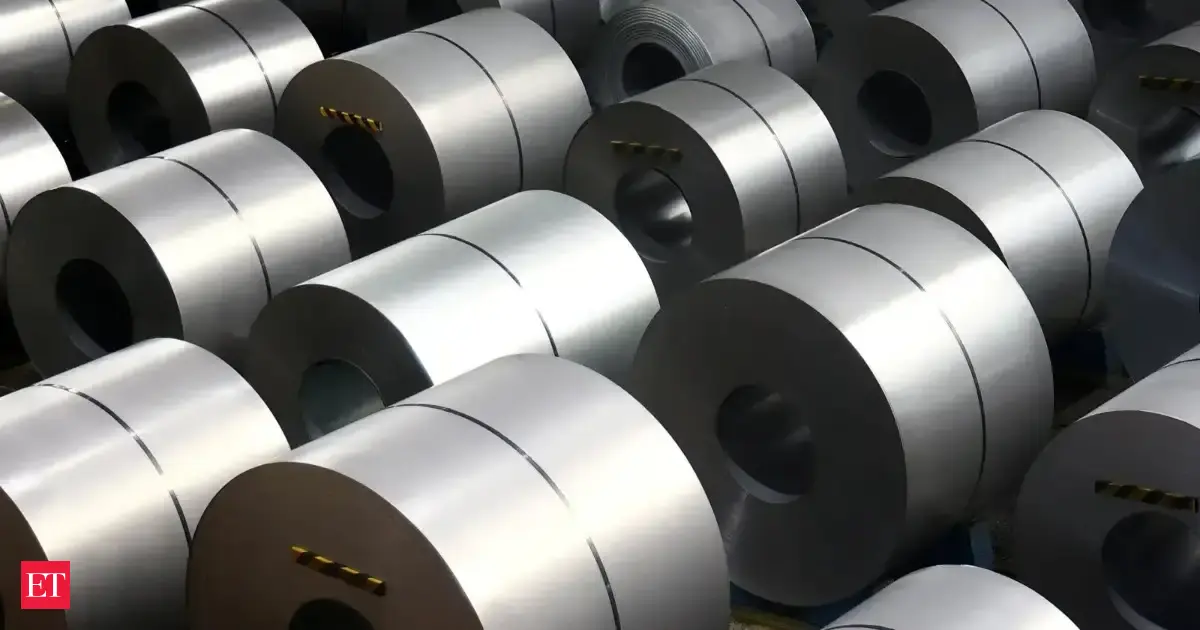
Global mining giants BHP and Rio Tinto are focusing on India for future steel demand. India's rapid urbanisation and infrastructure projects are driving growth. This expansion is expected to offset slowing demand from China. Both companies are well-positioned to support India's ambitious steel production targets. The Global South, particularly India, is becoming a key growth market. View More
BHP Group and Rio Tinto are increasingly looking to India as the next major engine of growth for the global steel industry , highlighting how the world's largest iron ore producers are positioning themselves for a future in which China no longer dominates demand growth. Senior executives from both mining giants said India's accelerating steel expansion, underpinned by rapid urbanisation and heavy infrastructure spending, could help cushion the impact of slowing growth in China, which has shaped global steel markets for more than two decades through its property-led boom. Also Read: Indian steelmakers grapple with resurgence of cheap Chinese imports "I was recently in India. All our customers are doubling capacity," Michiel Hovers, BHP's group sales and marketing officer, said during a presentation at Singapore International Ferrous Week on Tuesday. "It's happening. It's real." India is increasingly being viewed as the steel sector's most important growth market. The government has set an ambitious target of producing 500 million tonnes of steel by 2047 — more than three times the 165 million tonnes of raw steel it produced last year — although that would still be well below the 961 million tonnes manufactured by China. Live Events Despite being the world's most populous country, India's per capita steel consumption remains significantly lower than China's, suggesting substantial room for expansion. Rising urbanisation, industrial development and state-backed infrastructure investments are expected to fuel demand growth for years, creating fresh opportunities for suppliers of iron ore and metallurgical coal. "We're just in the early, early days of India's growth," Hovers said, adding that BHP was "well-positioned to support" this expansion. Rio Tinto struck a similar note. Also Read: Wars in West Asia and Ukraine are turning shipping costs into steel sector’s biggest headache In the coming decade, the iron ore market can expect "substantial demand growth from the Global South, especially from India and Asean" countries, Rio Tinto Chief Commercial Officer Bold Baatar said at the same event. Such growth would help offset the plateauing of Chinese demand, he said. Baatar estimated that the world would require roughly 950 million tonnes of new iron ore capacity over the next decade, not only to meet emerging demand centres but also to compensate for the depletion of existing mines. He argued that analysts had repeatedly underestimated the resilience of the iron ore market by failing to fully account for supply-side risks, the declining quality of iron ore deposits and the durability of China's steel output. The comments from BHP and Rio Tinto underscore a broader shift underway in commodity markets: while China will remain the industry's largest consumer by a considerable margin, miners are increasingly betting that the next chapter of steel demand growth will be written in India and other fast-growing economies across the Global South. .Pbanner{display:flex;justify-content:space-between;align-items:center;background-color:#ec1c40;margin-top:20px;padding:5px 10px;border-radius:4px;color:#fff;line-height:10px;} .Pbannertext{display:flex;align-items:center;font-size:16px;font-weight:600;font-family:'Montserrat';} .Pbannertext img{height:20px;margin:0 6px} .Pbannerbutton a{display:flex;align-items:center;background-color:#fff;color:#ec1c40;text-decoration:none;font-weight:600;padding:4px 8px;border-radius:6px;font-size:15px;font-family:'Montserrat';} .Pbannerbutton img{height:20px;margin-right:6px} .Pbannerbutton a:hover{background-color:#f7f7f7} Add as a Reliable and Trusted News Source Add Now! (You can now subscribe to our Economic Times WhatsApp channel) (You can now subscribe to our Economic Times WhatsApp channel)


He added ?that the company's ?portfolio is increasingly tilted towards copper and lithium ?growth funded ?by iron ore View More

Shares of Vedanta Ltd and its demerged entities showed mixed trading following their debut. While some businesses faced profit booking and fell, others like Vedanta Iron & Steel Ltd gained, indicating varied investor reactions to the restructuring exercise. View More