
Latest Sectors News
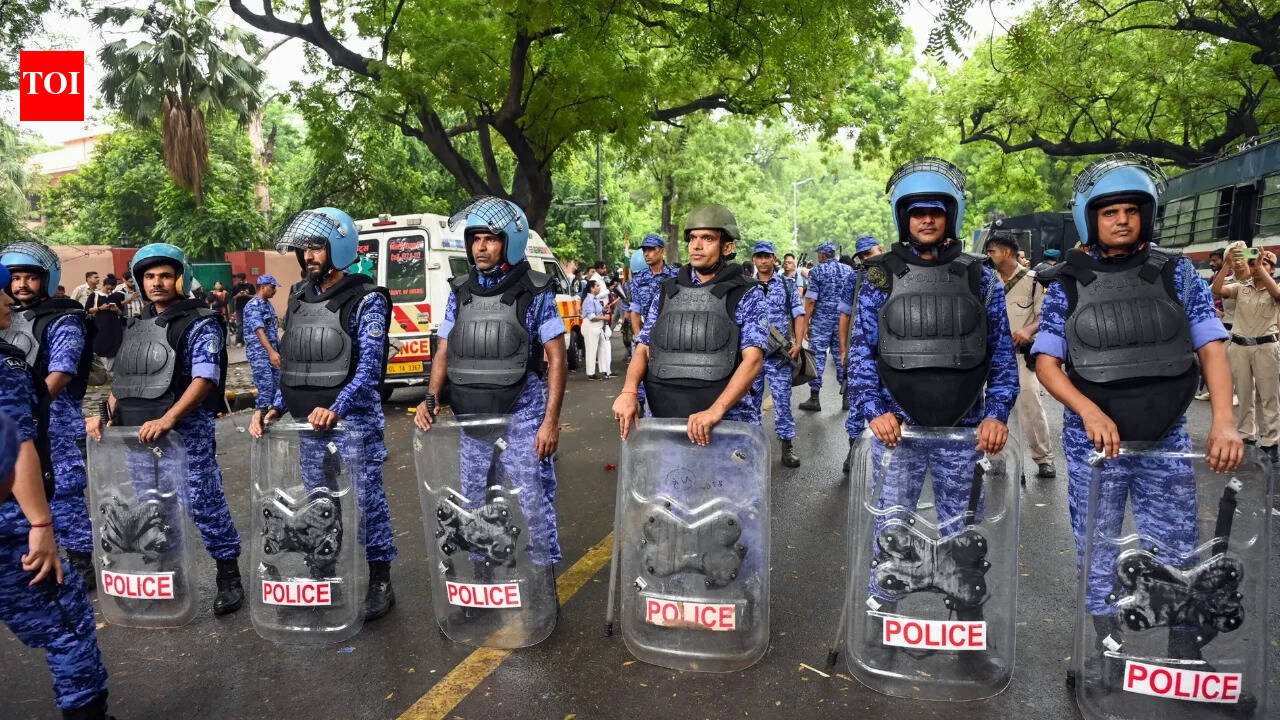
CRPF Director General G P Singh supports troops acting in good faith during duty. He assures responsibility for all decisions made in the public interest. An internal probe found standard operating procedures were followed by RAF personnel. Pellet guns were used after other crowd dispersal methods failed. This investigation may prevent charges against the RAF personnel involved. View More
Steel Authority of India exceeded its capital expenditure target for the first quarter. The company chairman highlighted contained borrowings and reduced borrowing costs effectively. Blast furnace productivity improved significantly, reinforcing steelmaking economics through optimization. Scheduled capital repairs were advanced proactively to ensure future operational stability. These strategic actions secured stability for the coming quarters of operations. View More
Steel Authority of India exceeded its capital expenditure target in the first quarter of the fiscal, a company statement said. Commenting on the public sector undertakings quarterly performance company Chairman and Managing Director, Ashok Kumar Panda said SAIL contained borrowings and reduced the cost of borrowings through long standing financial credibility and further improvement in management of cash flows and debt. “Capital expenditure exceeded the target from Rs 2,306 crore to Rs 2,575 crore,” the statement added. According to SAIL, blast furnace productivity improved, steelmaking economics were reinforced through optimized ferro‑alloys and flux consumption, and scheduled capital repairs were advanced proactively to secure stability for the coming quarters. .Pbanner{display:flex;justify-content:space-between;align-items:center;background-color:#ec1c40;margin-top:20px;padding:5px 10px;border-radius:4px;color:#fff;line-height:10px;width: 100%;box-sizing: border-box} .Pbannertext{display:flex;align-items:center;font-size:16px;font-weight:600;font-family:'Montserrat';} .Pbannertext img{height:20px;margin:0 6px} .Pbannerbutton a{display:flex;align-items:center;background-color:#fff;color:#ec1c40;text-decoration:none;font-weight:600;padding:4px 8px;border-radius:6px;font-size:15px;font-family:'Montserrat';} .Pbannerbutton img{height:20px;margin-right:6px} .Pbannerbutton a:hover{background-color:#f7f7f7} Add as a Reliable and Trusted News Source Add Now! (You can now subscribe to our Economic Times WhatsApp channel) (You can now subscribe to our Economic Times WhatsApp channel)
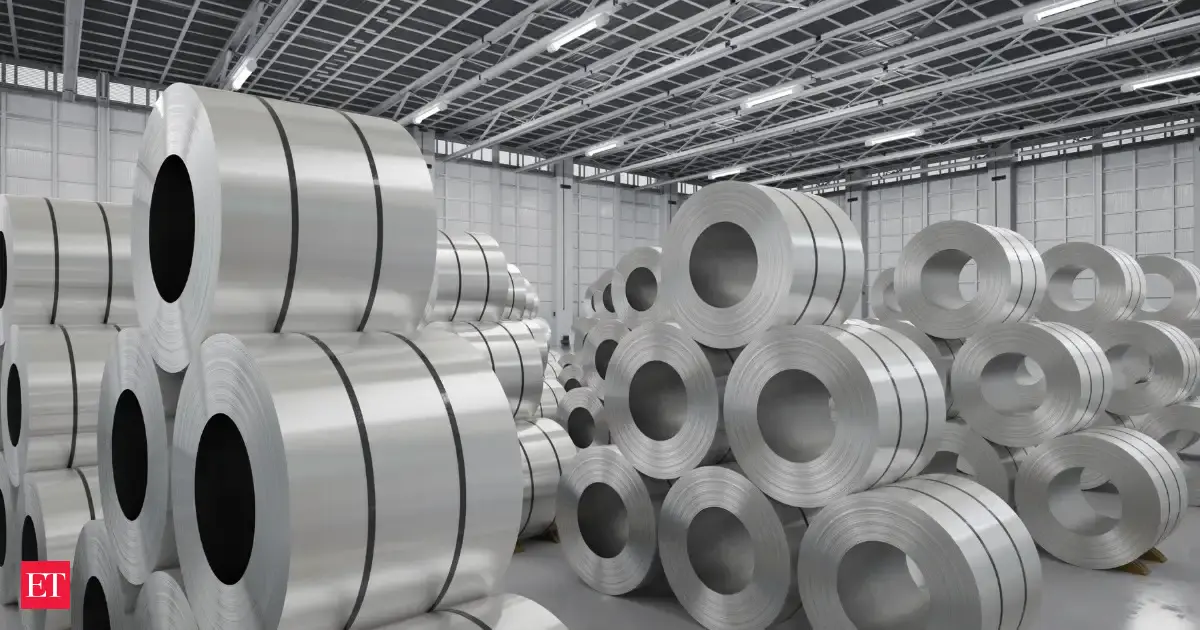
India's Steel Authority of India and Indonesia's Krakatau Steel will invest $350 million. A new stainless steel slab plant in Indonesia will have 500,000 tons capacity. This plant is expected to become operational within three to four years. SAIL will consume the entire output for its Salem plant in India. Finished products will primarily supply Indian customers and some exports. View More
NEW DELHI: India's state-run Steel Authority of India and Indonesia's Krakatau Steel plan to invest as much as $350 million in a stainless steel slab plant in Indonesia, two Indian sources familiar with the matter said this week. The plant will have an annual capacity of 500,000 metric tons and is expected to be operational within the next three to four years, the sources said. Earlier this month, SAIL and Krakatau Steel signed a preliminary agreement to form a joint venture to produce stainless steel slabs in Indonesia during Indian Prime Minister Narendra Modi's visit to the country. Also Read: JSW Steel’s profit doubles on revenue growth, beats estimates SAIL plans to send a technical team to Indonesia next month to prepare a feasibility report, after which the two companies will finalise the equity structure of the joint venture, the timeline for government approvals and other details, the sources said. Live Events The sources declined to be identified because the deliberations are not public. SAIL did not respond to a Reuters email seeking comment sent on Monday. Krakatau Steel did not respond to a request for comment made on Tuesday. The proposed plant's capacity could be expanded after it becomes operational, the sources said. SAIL will consume the entire output of the planned Indonesian facility and bring the stainless steel slabs to its Salem plant for rolling and finishing, one of the sources said. SAIL's Salem plant is in the southern Indian state of Tamil Nadu. Also Read: India's steel ambitions face a coal reality check The state-run steelmaker will primarily supply the finished products to Indian customers, while a small percentage could be exported to the Middle East and Europe, the sources said. SAIL was India's third-largest steel producer in the fiscal year to March 2025, with a 10.1% share of the domestic market, according to commodities consultancy BigMint. India, the world's largest crude steel producer after China, has identified Indonesia and more than a dozen other countries for cooperation in the steel sector to boost exports and secure key raw materials. Finished steel consumption in India has risen 55% over the past five years, outpacing the 42% increase in production, BigMint data showed. Indian steelmakers are pivoting to the domestic market to offset weaker exports as Europe and Britain tighten imports, but competition from Chinese steel is blunting that strategy. .Pbanner{display:flex;justify-content:space-between;align-items:center;background-color:#ec1c40;margin-top:20px;padding:5px 10px;border-radius:4px;color:#fff;line-height:10px;width: 100%;box-sizing: border-box} .Pbannertext{display:flex;align-items:center;font-size:16px;font-weight:600;font-family:'Montserrat';} .Pbannertext img{height:20px;margin:0 6px} .Pbannerbutton a{display:flex;align-items:center;background-color:#fff;color:#ec1c40;text-decoration:none;font-weight:600;padding:4px 8px;border-radius:6px;font-size:15px;font-family:'Montserrat';} .Pbannerbutton img{height:20px;margin-right:6px} .Pbannerbutton a:hover{background-color:#f7f7f7} Add as a Reliable and Trusted News Source Add Now! (You can now subscribe to our Economic Times WhatsApp channel) (You can now subscribe to our Economic Times WhatsApp channel)

CRPF analysis indicates police action against protesters followed standard operating procedures. Non-lethal means like pellet guns were authorized for crowd dispersal. Force gradient was followed, with lower measures failing before pump action guns. Protesters and personnel sustained injuries during the July 20 incident. The matter is now sub judice before the Supreme Court. View More

Insha Mushtaq lost her sight to pellet guns during 2016 Kashmir unrest. She now pursues education and a government job despite her visual impairment. Recent protests in Delhi have reopened old wounds for her. Pellet guns, introduced as non-lethal, caused hundreds of eye injuries in Kashmir. Her story highlights the lasting impact of these weapons on individuals. View More

Coca-Cola said demand for its drinks rose in every market in the second quarter, helped in part by the World Cup. View More
In this articleKOFollow your favorite stocksCREATE FREE ACCOUNT watch nowVIDEO6:1106:11Coca-Cola CEO Henrique Braun: We are 'very pleased' with how we showed up at the FIFA World CupSquawk on the Street Coca-Cola on Tuesday reported quarterly earnings and revenue that topped Wall Street's estimates, fueled by higher demand for its drinks, thanks in part to the World Cup."We had, during the World Cup, really a great opportunity for us to shine our brands," CEO Henrique Braun said on CNBC's "Squawk on the Street" on Tuesday. "During the hydration breaks, Powerade was there."The company also hiked its full-year forecast. Coke is now projecting comparable earnings per share growth of 9% to 10%, up from its prior forecast of 8% to 9%. It also expects organic revenue to increase about 5%, on the high end of its earlier range of 4% to 5%.Shares of Coke rose more than 7% in morning trading, hitting a record high.Here's what the company reported compared with what Wall Street analysts surveyed by LSEG were expecting:Adjusted earnings per share: 97 cents, vs. expected 93 centsRevenue: $13.38 billion, vs. $13.16 billion expected Coke reported second-quarter net income of $4.43 billion, or $1.03 per share, up from $3.81 billion, or 89 cents per share, a year earlier.Excluding asset impairments, restructuring costs and other items, the company earned 97 cents per share.Net sales rose 7% to $13.38 billion. Coke's organic revenue, which excludes acquisitions, divestitures and currency fluctuations, jumped 6% in the quarter.The company's global unit case volume increased 5%, and every one of its reporting segments saw volume growth. The metric strips out pricing to reflect demand more accurately.The consumer environment is "dynamic," CEO Henrique Braun said in a statement. The comment followed rival PepsiCo saying that shoppers' budgets tightened in the second quarter, leading to weaker sales in the U.S. for its snacks and drinks. Global oil prices have swung dramatically due to the U.S. war with Iran, leading many consumers to temper their spending. In Coke's home market, the national average gas price hit a four-year high of $4.56 per gallon in late May."The economy is strong in many places, yet many consumers face inflationary pressures, geopolitical uncertainty and economic challenges," Braun said on the company's earnings conference call. "They are evaluating how they shop, what they value and what they want to put in their basket."But Coke's results do not show consumers cutting back. Even in North America, volume grew 3% in the quarter.The company credited its global World Cup campaign with driving higher demand. Two drinks in particular, its namesake soda and Powerade, saw higher volumes that the company attributed, in part, to the tournament's marketing. Coke volume increased 5% â the drink's biggest quarterly jump in 17 years, excluding the pandemic â and Powerade volume climbed 8% in the quarter.Coke's water, sports, coffee and tea segment was the top performer this quarter, with volume growth of 6%. Out of those four categories, all but coffee saw their volume increase during the quarter. Coke is staging a turnaround of its Costa Coffee business, and the chain's locations saw same-store sales growth this quarter, Braun told CNBC's Sara Eisen. The company reportedly tried to sell Costa last year under Braun's predecessor James Quincey, but scrapped those plans after underwhelming bids. Coke completed its $4.9 billion acquisition of Costa in 2019.Coke's sparkling soft drinks segment reported volume growth of 4%, helped in part by the lift in demand for its namesake soda and its line extensions. Coca-Cola Zero Sugar saw volume climbed 16%, while Diet Coke, or Coca-Cola Light as it is known in some markets, reported volume growth of 7%. Additionally, the relaunch of Mr. Pibb, with 30% more caffeine, led the drink brand's volume to climb 20% in the quarter, according to Braun.Coke's juice, value-added dairy and plant-based beverage division saw volume growth of 2%. Choose CNBC as your preferred source on Google and never miss a moment from the most trusted name in business news.

Here are five key things investors need to know to start the trading day. View More
This is CNBC's Morning Squawk newsletter. Subscribe here to receive future editions in your inbox.Happy Tuesday. With another decline yesterday, SpaceX has now relinquished the equivalent of Tesla's entire market valuation. Yes, you read that correctly.Nasdaq-100 futures are falling this morning as chipmakers weigh on the index for a second straight day. The S&P 500 finished yesterday's session near flat.Here are five key things investors need to know to start the trading day: 1. On the move Kelly Ortberg, chief executive officer of Boeing Co., during a media event at the Boeing Delivery Center in Seattle, Washington, US, on Wednesday, Jan. 7, 2026. M. Scott Brauer | Bloomberg | Getty Images Transportation industry investors have a lot to analyze this morning. Boeing, JetBlue and UPS all reported quarterly results before the bell, kicking off what's slated to be one of the busiest earnings weeks of the season.Here's a recap:Boeing posted a wider-than-expected quarterly loss as costs tied to its delayed Air Force One program offset higher revenue and aircraft deliveries. The stock is up more than 1% before the bell.Shares of UPS are also higher after the company beat expectations on the top and bottom lines. The delivery giant raised its full-year outlook as its turnaround strategy gained momentum.JetBlue, meanwhile, posted a smaller-than-expected loss for the second quarter a day after the airline overhauled its fare choices.Tune into CNBC today for interviews with the CEOs of all three companies. Catch Boeing's Kelly Ortberg at 9:05 a.m. ET, UPS's Carol Tomé at 10 a.m. ET and JetBlue's Joanna Geraghty at 2:15 p.m. Watch live on CNBC or CNBC+.Plus: Keep an eye out for Ford's earnings report after the bell. 2. Downstream Traders work on the floor of the New York Stock Exchange (NYSE) at the opening bell in New York on July 27, 2026. Angela Weiss | Afp | Getty Images Brent oil posted its biggest daily drop in more than three months yesterday, ending the session below the $90 per barrel mark. Monday's slide marked a reversal from oil's recent surge as investors cheered the pause in fighting between the U.S. and Iran. But the decline in crude prices didn't spark a broad market rally: While the Dow Jones Industrial Average jumped more than 250 points, the Nasdaq Composite was pulled into the red by struggling semiconductor stocks. Chip names including Micron, Marvell and Advanced Micro Devices are weighing down the tech-heavy index again this morning. Follow live market updates here. 3. Earnings pop This view shows bottles of regular Coca-Cola soda displayed for sale on shelves at a Walmart store in Mexico City on October 27, 2025. Yuri Cortez | Afp | Getty Images Shares of Coca-Cola are up more than 3% this morning after the company beat Wall Street's quarterly expectations and raised its full-year earnings outlook. The beverage giant said its results were boosted by resilient demand, which was driven in part by its global World Cup campaign. As CNBC's Amelia Lucas notes, Coke continues to outperform rival PepsiCo in North America: The company reported 3% volume growth in the continent even as high gas prices pressure consumers' wallets.Coca-Cola CEO Henrique Braun will sit down with CNBC's Sara Eisen this morning "Squawk on the Street." Watch the interview live from Coca-Cola's home city of Atlanta at 10 a.m. ET. Get Morning Squawk directly in your inboxCNBC's Morning Squawk recaps the biggest stories investors should know before the stock market opens, every weekday morning.Subscribe here to get access today. 4. House tour WASHINGTON, DC - JANUARY 21: OpenAI CEO Sam Altman appears during a news conference with U.S. President Donald Trump in the Roosevelt Room of the White House on January 21, 2025 in Washington, DC. Trump announced an investment in artificial intelligence (AI) infrastructure and took questions on a range of topics including his presidential pardons of Jan. 6 defendants, the war in Ukraine, cryptocurrencies and other topics. (Photo by Andrew Harnik/Getty Images)Andrew Harnik | Getty Images News | Getty Images OpenAI CEO Sam Altman heads to Washington, D.C. this week to preview his company's forthcoming family of artificial intelligence models in meetings with White House officials, lawmakers and economists. A source familiar with the plans said Altman will also take questions about cybersecurity â a hot topic following OpenAI's "unprecedented cyber incident" disclosed earlier this month â as well as OpenAI's position on open-weight models. As CNBC's Ashley Capoot and Kate Rooney report, his visit comes as Silicon Valley and Washington debate whether to restrict Chinese open-weight models.Nvidia CEO Jensen Huang is also slated to meet with lawmakers in the nation's capital this week to talk about open models and America's AI leadership. 5. Garden variety Taylor Farms bagged salad mixes for sale at a grocery store in Hercules, California, US, on Friday, July 17, 2026. David Paul Morris | Bloomberg | Getty Images The cyclospora outbreak has already left thousands of Americans sick. Consolidation in the food chain could be partly to blame.As CNBC's Brandon Gomez reports, decades of mergers and acquisitions within farming, processing and distribution have made it more likely for a single contamination to grow into a national problem, according to experts. While consolidation alone may not directly lead to outbreaks like this one, food safety experts said it can intensify the impact when one does occur. To be sure, some say that larger producers can be better because they often have higher-grade safety systems and a better ability to trace a product. But these companies also face broader recalls when a contamination is reported. The Daily Dividend Apple surpassed Nvidia yesterday to become the world's largest company by market cap. Here's a look at their battle for the top spot: (function(){function e(){window.addEventListener(`message`,function(e){if(e.data[`datawrapper-height`]!==void 0){var t=document.querySelectorAll(`iframe`);for(var n in e.data[`datawrapper-height`])for(var r=0,i;i=t[r];r++)if(i.contentWindow===e.source){var a=e.data[`datawrapper-height`][n]+`px`;i.style.height=a}}})}e()})(); â CNBC's Leslie Josephs, Laya Neelakandan, Michael Wayland, Lee Ying Shan, Liz Napolitano, Amelia Lucas, Ashley Capoot, Kate Rooney, Brandon Gomez and Kif Leswing contributed to this report.Luke Fountain assisted in the production of this newsletter. Josephine Rozzelle edited this edition. Choose CNBC as your preferred source on Google and never miss a moment from the most trusted name in business news.
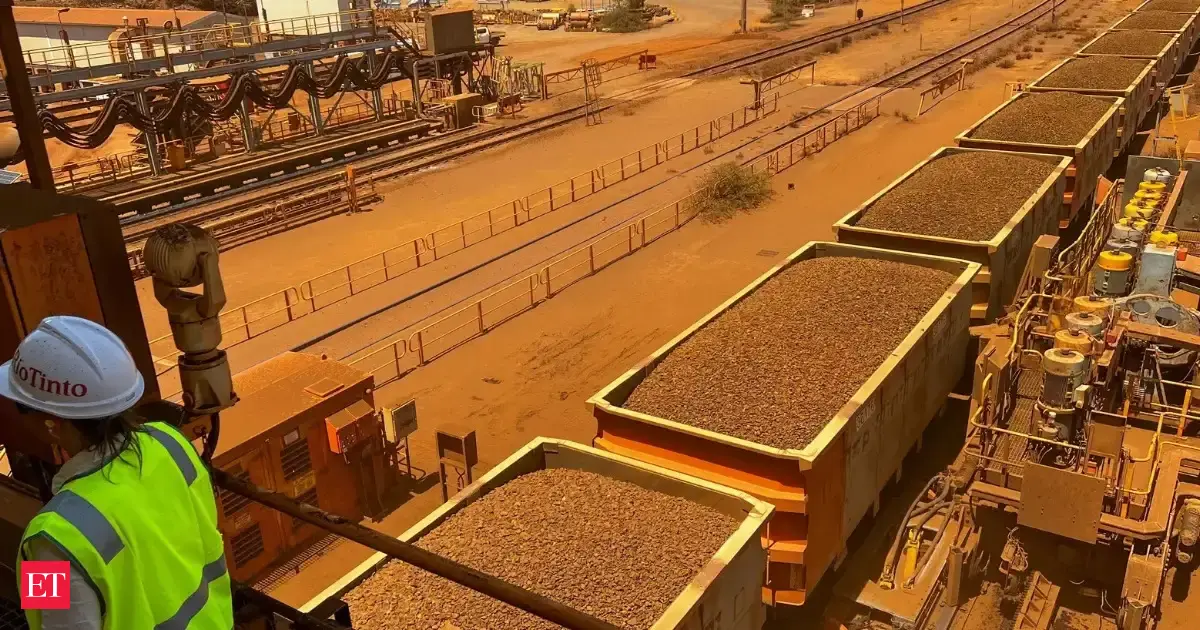
Odisha, India's largest iron ore-producing state, has stepped up quality-control inspections after authorities found instances of miners allegedly misrepresenting ore grades to reduce royalty payments, a move that could temporarily disrupt domestic supplies and exports to China, Bloomberg News reported. View More
Odisha has intensified scrutiny of iron ore quality assessments following allegations that some mining companies understated ore grades to pay lower royalties, Bloomberg News reported, citing a government document and people familiar with the matter. According to a July 6 memo seen by Bloomberg News, the state's Directorate of Mines and Geology directed local mining officials to explain lapses in verifying ore grades after inspections uncovered repeated instances of alleged misrepresentation or falsification. Officials were given three days to respond or face disciplinary action. Also Read: Jindal Steel wins auction for another Odisha iron ore mine with 38-mn-tonne reserves The directive covers major mining regions, including Joda, Koira and Keonjhar, and names mines leased to companies such as JSW Steel , Tata Steel , ArcelorMittal Nippon Steel India, Steel Authority of India (SAIL), Jindal Steel and state-owned Odisha Mining Corporation among those flagged for alleged misreporting, Bloomberg News reported, citing the notification. The Odisha government did not respond to Bloomberg News' requests for comment on the document or its contents. Representatives of the companies also did not respond to requests seeking comment, the report said. Live Events The crackdown could affect both domestic supplies and exports, particularly shipments of lower-grade iron ore to China. While India contributes only around 2% of China's total iron ore imports, it accounts for a much larger share of the lower-grade ore used by Chinese steelmakers to cut production costs, Bloomberg News reported, citing commodity intelligence firm BigMint. Excluding iron ore pellets, nearly 90% of Odisha's low-grade iron ore exports are shipped to China, according to BigMint, as cited by Bloomberg News. The tighter enforcement has already prompted some mine operators to withhold fresh sales, tightening spot market availability and leading to a build-up of inventories at mine sites over recent weeks, BigMint told Bloomberg News. Also Read: Odisha's critical mineral sector to hit USD 20 bn mark by 2032: Study "The current crackdown appears focused on strengthening compliance and revenue collection rather than restricting production," Isha Chaudhary, a director at Wood Mackenzie, told Bloomberg News. However, "tighter inspections could cause short-term logistical delays and influence the reported grade mix reaching the market," she said, adding that any impact on supplies would likely be temporary as miners adjust to the stricter compliance regime. Under India's royalty framework, iron ore royalties are levied at 15% of the average sale price. Lower-grade ore containing less than 55% iron attracts lower royalty payments than higher-grade ore with iron content of 65% or more. The renewed enforcement follows concerns raised by the Comptroller and Auditor General (CAG) of India, which estimated in a March report that Odisha lost about Rs 4,160 crore ($436 million) in royalty revenue during FY21 and FY22 due to the undervaluation of iron ore, Bloomberg News reported. The audit also flagged an abnormal decline in reported ore grades at six mines, including three leased to JSW Steel , according to the report cited by Bloomberg News. .Pbanner{display:flex;justify-content:space-between;align-items:center;background-color:#ec1c40;margin-top:20px;padding:5px 10px;border-radius:4px;color:#fff;line-height:10px;width: 100%;box-sizing: border-box} .Pbannertext{display:flex;align-items:center;font-size:16px;font-weight:600;font-family:'Montserrat';} .Pbannertext img{height:20px;margin:0 6px} .Pbannerbutton a{display:flex;align-items:center;background-color:#fff;color:#ec1c40;text-decoration:none;font-weight:600;padding:4px 8px;border-radius:6px;font-size:15px;font-family:'Montserrat';} .Pbannerbutton img{height:20px;margin-right:6px} .Pbannerbutton a:hover{background-color:#f7f7f7} Add as a Reliable and Trusted News Source Add Now! (You can now subscribe to our Economic Times WhatsApp channel) (You can now subscribe to our Economic Times WhatsApp channel)
The report noted that India remains one of the relative beneficiaries of the new US tariff regime overall. View More
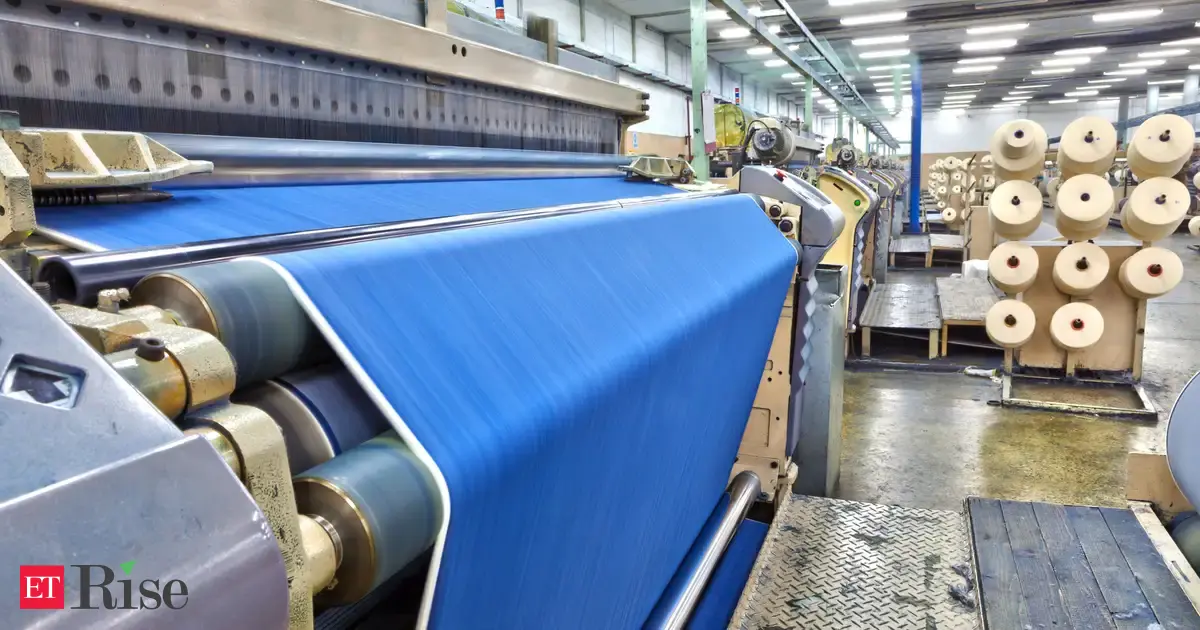
Indian textile and apparel exporters could lose some of their competitive edge in the US market despite India being placed in a relatively favourable tariff bracket under the new US Section 301 measures, as competing countries have secured tariff-rate quota (TRQ) exemptions, according to an Emkay Research report. The report said India has been subjected to a 10 per cent Section 301 tariff, lower than the 12.5 per cent imposed on countries such as China, Vietnam, Brazil and Thailand. However, it noted that Indian textile exporters did not receive TRQ exemptions that were extended to several competing nations. "Indian textile and apparel exports have not received tariff-rate quota (TRQ) exemptions under the Section 301 tariffs, which were awarded to the likes of Bangladesh, Cambodia, Indonesia, and Malaysia," the report said. It added that the exemptions apply to specified volumes of textile and apparel imports made using US-origin cotton and fibre. "Hence, while the tariff burden remains at 10%, there will be a relative loss of competitiveness for Indian textile exporters vs key competitors," Emkay said. Live Events The report noted that India remains one of the relative beneficiaries of the new US tariff regime overall. It estimated India's effective tariff rate in the US at around 12 per cent, lower than Bangladesh at around 25 per cent, China at around 22 per cent, and Vietnam and Indonesia at around 14 per cent each. According to the report, nearly 55 per cent of India's exports to the US will attract the additional 10 per cent tariff, while the remaining 45 per cent are either exempt, including products such as generic pharmaceuticals and smartphones, or are already covered under separate Section 232 tariffs applicable to sectors such as steel, aluminium and auto parts. Emkay said India's exports to the US have already shown a marked recovery after the earlier IEEPA tariffs were struck down earlier this year. "India's exports to the US saw a marked improvement after the IEEPA tariffs were ruled unlawful... India's monthly exports to the US have averaged USD 8.4bn in the four months since, vs USD 6.5bn in the prior six months," the report said. The brokerage expects the new Section 301 tariffs to have only a limited impact on India's overall export trajectory in the near term, with the country's relatively lower tariff rate potentially offering marginal benefits over some competing exporters. However, it cautioned that further Section 301 investigations by the US into excess manufacturing capacity could result in additional tariffs on India. "In this context, ongoing negotiations on the India-US bilateral trade deal will be crucial to ensure a lower tariff rate and preferential access for Indian exports in the US market," the report said. .Pbanner{display:flex;justify-content:space-between;align-items:center;background-color:#ec1c40;margin-top:20px;padding:5px 10px;border-radius:4px;color:#fff;line-height:10px;width: 100%;box-sizing: border-box} .Pbannertext{display:flex;align-items:center;font-size:16px;font-weight:600;font-family:'Montserrat';} .Pbannertext img{height:20px;margin:0 6px} .Pbannerbutton a{display:flex;align-items:center;background-color:#fff;color:#ec1c40;text-decoration:none;font-weight:600;padding:4px 8px;border-radius:6px;font-size:15px;font-family:'Montserrat';} .Pbannerbutton img{height:20px;margin-right:6px} .Pbannerbutton a:hover{background-color:#f7f7f7} Add as a Reliable and Trusted News Source Add Now!
