
Latest Sectors News

The conglomerate that Warren Buffett built rallied to an eight-month high this week. There could be more gains ahead if they play catch up with the S&P 500. View More
In this articleBRK.B.SPXAAPLKOBACBRK.BFollow your favorite stocksCREATE FREE ACCOUNT (This is the Warren Buffett Watch newsletter, news and analysis on all things Warren Buffett and Berkshire Hathaway. You can sign up here to receive it every Friday evening in your inbox.)Berkshire shares hit eight-month highBerkshire Hathaway shares rallied to an eight-month high this week and there could be more gains ahead if they continue to catch up to the S&P 500.The B shares closed Tuesday at $512.37, their highest level since November 28, when they finished at $513.81.They closed Friday at $511.54, down 5.2% from the all-time closing high of $539.80 on May 2 of last year, the day before Warren Buffett revealed he would step down as CEO at the end 2025. Zoom In IconArrows pointing outwards The Class A shares ended Tuesday at $768,010, also their highest close since November 28's $770,100.Friday's close of $766,600 was 5.3% below their all-time closing high of $809,350. Zoom In IconArrows pointing outwards A story in Barron's says Berkshire's rally "has room to run" since the stock remains "well behind" the benchmark S&P 500, which is 7.6 percentage points ahead.But Berkshire has erased more than half of its 17.5 percentage point deficit just two months ago. Zoom In IconArrows pointing outwards Berkshire is also lagging behind competitors in two key sectors: railroads ... Zoom In IconArrows pointing outwards ... and insurance. Zoom In IconArrows pointing outwards Another positive for Berkshire is the big gains for three of its biggest equity portfolio holdings.Number one Apple, now worth more than $70 billion, is up 13.6% so far this year.Coca-Cola, Berkshire's third largest position at $35 billion, has jumped 25% year-to-date. Earnings this week came in ahead of expectations and Coke raised its full-year outlook.Number four Bank of America is up 12.6% on the year. That stake is now valued at almost $32 billion. Zoom In IconArrows pointing outwards Berkshire's gain of around 3% on Tuesday may have been partially fueled by UBS analyst Brian Meredith raising his price target on the B shares to $585 from $570, and on the A shares to $877,848 from $854,596.While maintaining a "buy" rating, Meredith also edged his earnings estimates higher and welcomed a Barron's report two weeks ago that Berkshire appeared to have bought back as much as $11 billion of its stock in the second quarter.We'll get the actual number when Berkshire releases second-quarter results, expected on Saturday, August 8.BUFFETT & BERKSHIRE AROUND THE INTERNETSome links may require a subscription:Barron's on MSN: Warren Buffett's worst-ever deal benefits this place the mostBarron's on MSN: Why Berkshire Hathaway would win if the Fed lifts interest ratesThe Motley Fool: Why Berkshire's stake in Apple still matters more than people thinkThe Motley Fool: Warren Buffett's legacy oil bet is paying off under Greg Abel. Nobody's talking about it.HIGHLIGHTS FROM CNBC'S BUFFETT ARCHIVEWhy Buffett doesn't ask his friends for favors (2003)Warren Buffett responds to a request from an audience member to enlist the support of his "cousin" Jimmy Buffett in saving the trees in the Florida botanical garden and theme park Cypress Gardens. watch nowVIDEO0:0000:00Why Buffett doesn't ask his friends for favors2003 Berkshire Hathaway Annual Meeting AUDIENCE MEMBER: Several weeks from now I'll be before [Florida] Governor [Jeb] Bush with the Friends of Cypress Gardens. We have a website ... trying to keep a developer from clear-cutting the trees in Cypress Gardens, a national treasure.And my question is, would you consider contacting your "cousin," [musician] Jimmy Buffett, about possibly helping us in some way? ...WARREN BUFFETT: I get asked to contact â probably the one I get asked to contact the most is Bill Gates, but I get asked to contact all kinds of people.And I mean, everybody is slipping me envelopes with letters in them, sending things to the office and saying, "Won't you get this person?" and all they can say is no.I don't do â I don't make requests of my friends, basically, for anything.And I just â I would spend the rest of my life doing it. They would feel â I would never know â (applause) â you know, what they were doing âYou know, I would never know what they were doing because I was asking versus what they really felt.I mean it's an impossible â from my standpoint at least â that's an impossible game to get into, in terms of that.I mean when [Washington Post publisher] Kay Graham was alive, everybody, you know, wanted her for one reason or another. And they've all got causes.And, frankly, they, you know, they want to use me to get her, or Jimmy Buffett, or whomever, to say yes to something that they're saying yes to, partially, because they feel they don't want to say no to me.And I, you know, that â I just don't want to use my friendship for that purpose, frankly.And I don't do it, even for things that I strongly believe in, myself...I've never had one of those honorary dinners where they send out, you know, to all the suppliers to Berkshire and everything and start leaning on them and saying, you know, "We're honoring Warren."Well, hell, if they want to honor me, they can honor me without soliciting all my friends for money. I mean, I don't consider that much of an honor if the reason they picked me was because I got rich friends.So, I just don't do that.BERKSHIRE STOCK WATCHFour weeks Zoom In IconArrows pointing outwards Twelve months Zoom In IconArrows pointing outwards BRK.A stock price: $766600.01BRK.B stock price: $511.54BRK.B P/E (TTM): 15.23Berkshire market capitalization: $1,102,963,354,142Berkshire Cash as of March 31: $397.4 billion (Up 6.5% from Dec. 31)Excluding Rail Cash and Subtracting T-Bills Payable: $380.2 billion (Up 3.0% from Dec. 31)Berkshire repurchased $234 million of its shares in Q1 2026.(All figures are as of the date of publication, unless otherwise indicated)BERKSHIRE'S TOP EQUITY HOLDINGS - July 31, 2026 Zoom In IconArrows pointing outwards Berkshire's top holdings of disclosed publicly traded stocks in the U.S. and Japan, by market value, based on the latest closing prices.Holdings are as of March 31, 2026, as reported in Berkshire Hathaway's 13F filing on May 15, 2026, except for:Alphabet, which includes the $10 billion in shares that Berkshire agreed to buy directly from the company, as announced on June 1, 2026. Berkshire has not yet formally disclosed whether the transaction has been completed. The entry is a combination of Class A and Class C Alphabet shares. The market price is a weighted average of the prices of the two classes.Mitsubishi, which is as of April 30, 2026The full list of holdings and current market values is available from CNBC.com's Berkshire Hathaway Portfolio Tracker.QUESTIONS OR COMMENTSPlease send any questions or comments about the newsletter to me at alex.crippen@nbcuni.com. (Sorry, but we don't forward questions or comments to Buffett himself.)If you aren't already subscribed to this newsletter, you can sign up here.Also, Buffett's annual letters to shareholders are highly recommended reading. They are collected here on Berkshire's website.-- Alex Crippen, Editor, Warren Buffett Watch Choose CNBC as your preferred source on Google and never miss a moment from the most trusted name in business news.
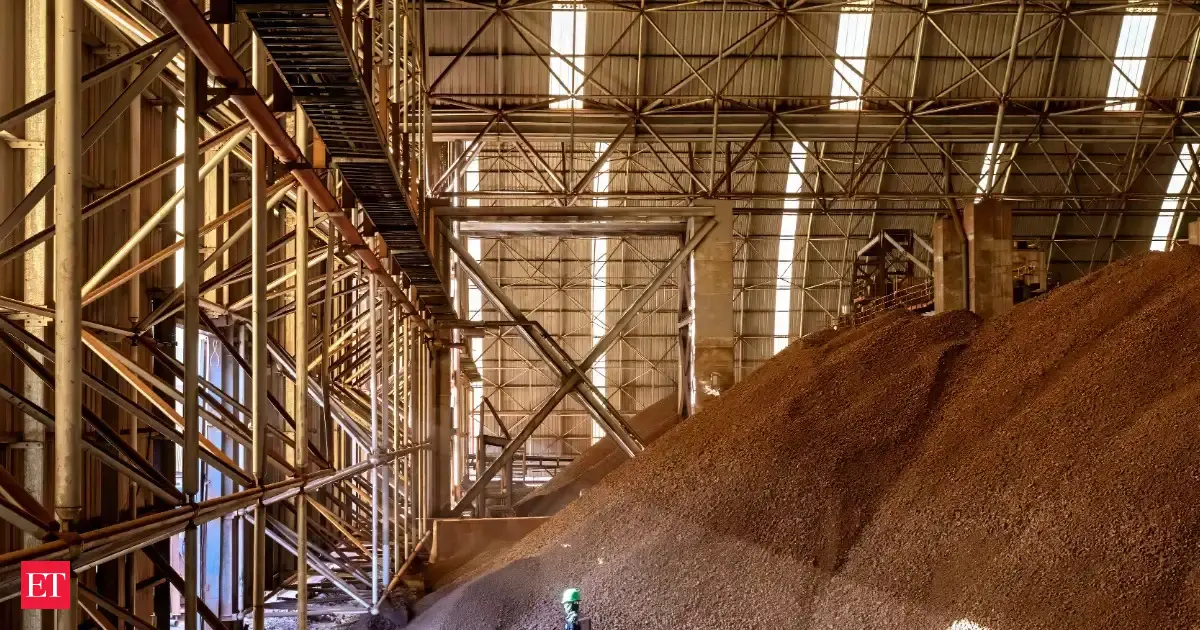
Major commodity traders are cutting ties with Radiant World amid concerns, which suggest the company provided falsified documents to banks for financing. Glencore and Cargill have ceased new business dealings with Radiant World. Banks like Intesa Sanpaolo are reviewing their exposure to the firm. Radiant World denies the claims. View More
In a corporate presentation in December 2024, Radiant World boasted of its “diverse network” of suppliers and counterparties. The company was barely known outside the insular world of iron ore trading , but it was flying high. Its net worth had tripled in five years, according to the presentation, and it was handling enough iron ore to make it one of the world’s largest traders of the commodity that’s critical to the global economy because of its use as the raw material for making steel. Among the logos featured in the presentation were those of Glencore Plc and Cargill Inc., two of the world’s biggest commodity traders. Now, however, those companies have pulled back from dealing with Radiant World amid concerns it provided banks with falsified documents about iron ore trades, Bloomberg reported on Friday. The developments, which Radiant World has denied, shine a harsh light on what had been a story of spectacular growth that took place largely out of the public eye. Radiant World has quietly become such a significant participant in the iron ore market that some traders had started to see it as a driver of the market in its own right, betting that any financial stress on the company could push iron ore prices lower, Bloomberg reported in October. (The company declined at the time to discuss the specifics of its business and performance.) Live Events Also read | How the quick fall from grace of a fund run by 'Nostradamus of AI' triggered a 24-hour race to salvage it Its scale has made it a major counterparty and borrower for many of the world’s largest traders, miners and banks, with some $12 billion of annual revenue. On Friday, Bloomberg reported that Intesa Sanpaolo SpA and Jefferies Financial Group Inc.’s Point Bonita fund were reviewing their exposure to the company, according to people familiar with the matter, who asked not to be identified due to the sensitivity of the issue. Intesa said in a statement to Bloomberg that it had taken a provision on its exposure to Radiant World. Corporate filings show that as many as two dozen banks and other creditors may have some exposure to the company. It’s not clear yet what kind of losses Intesa and Jefferies might sustain – Intesa has said its exposure is around €200 million ($231 million), while Point Bonita’s is less than $300 million, and people familiar with the matter in both cases say they hope to recover their money. And while checks with Radiant World counterparties have revealed discrepancies in some of the paperwork underpinning its financing, Jefferies at this point believes that the underlying trades are valid, a person familiar with the matter said. But the episode is another reminder of the risks that lurk within supposedly safe corners of finance, where credit is secured by documents such as invoices and shipping receipts. Cargill and Vitol Group have done no business with Radiant World for several months, while Glencore is no longer doing new business with the company, Bloomberg reported on Friday, citing people familiar with the matter. Also read | Trump's push for lower US interest rates faces setback as borrowing costs climb before midterms Two of the trading houses saw invoices or other documents that Radiant World had provided to its banks that were not valid, several of the people said, asking not to be identified due to the sensitivity of the matter. The third pulled back from dealing with Radiant World after its traders were told by colleagues in the industry about concerns about falsified documents that the company considered credible, one of the people said. Radiant World denies that. In a statement on its website after Bloomberg’s story was published, it said: “The claims are inaccurate and unsubstantiated. Radiant World conducts its business to the highest commercial and legal standards and complies with all due diligence requirements with its lending partners.” “Our business continues to operate normally,” it added. A Radiant World spokesperson had sent Bloomberg details of what he said were recent trades involving each of Vitol, Cargill and Glencore. However, people familiar with the matter in each case said that the trade details were incorrect and the contract numbers mentioned did not refer to any real trade involving Radiant World and those companies. Commodity traders typically use documents such as trade invoices and shipping receipts as security for credit lines from banks and other financiers. The falsified documents came to light when banks started contacting Radiant World’s counterparties to check invoices the company had used to raise financing, according to people familiar with the matter. In one instance reported by people with direct knowledge of it, invoices for iron ore trades with Vitol were used by Radiant World to raise financing with Intesa. However, when Intesa checked the details of the invoices with Vitol, it was told by Vitol that some of the underlying trades did not exist, the people said, asking not to be identified due to the sensitivity of the matter. Rapid Rise Radiant World started out in 2003, when founder Nahar was just 23, according to the company presentation seen by Bloomberg News. Initially focused on exporting iron ore from India, the company expanded later that decade into China — where a rapid industrialization and infrastructure boom had turned the steelmaking ingredient into one of the world’s hottest commodities. By 2008, Radiant World had formed relationships with Chinese steel mills, state-owned enterprises and huge international miners such as Vale SA, Rio Tinto Group, and BHP Group, according to the 2024 presentation. While most metals and minerals trading is dominated by two large merchants — Glencore and Trafigura Group — iron ore has not traditionally been a big business for the industry. Instead, the small group of huge miners that dominate supply have tended to sell directly through contracts with the Chinese steel mills that are their biggest customers. From 2012 onward, the company started to deepen its ties with major ferrous traders including Cargill, Prosperity Steel United, Trafigura and Glencore, according to the presentation. Radiant World’s growth in the ensuing years has been dramatic. From trading about 7 million tons of iron ore a year in 2014, according to comments Nahar made to Indian journalists at the time, by 2024 the presentation says the company’s volumes had surged to 43 million tons. Its business continued to expand through 2025, so that by October Bloomberg reported it was on track for annual volumes of around 65 million to 70 million tons of iron ore. It has also branched out into other metals like copper and aluminum. Yet while Radiant World became an increasingly important player in iron ore, it maintained such a low profile that even within the commodities industry few people had even heard of it. Nahar almost never speaks publicly; the last time he appears to have been quoted in the press was more than a decade ago, speaking at an iron ore conference in Singapore. People who know him have described Nahar as an intellectual and reserved family man, who enjoys playing chess. Beyond commodity trading , he has set up a wealth-management business, a charitable foundation, and a Bollywood film production company. Trading Disputes There is a long history of commodity-trading disputes where vast amounts of money changed hands on the basis of documents that later turned out to be misleading. Trafigura lost more than $500 million after finding that cargoes of nickel it was buying and selling from another trader actually contained other, near-worthless metals. In 2017, several banks faced sizable losses after discovering they’d received counterfeit warehouse receipts for nickel. Radiant World itself has been the subject of questions about the documents involved in its trades before. Bloomberg reported last year that Cooperatieve Rabobank UA had stopped financing Radiant World in early 2020, after an internal investigation at the bank — a copy of which was seen by Bloomberg — found that the trading house had been involved in multiple trades involving falsified shipping documents, known as bills of lading. Radiant World’s “level of involvement can leave no doubt as to their lack of integrity,” the Rabobank report concluded. At the time, Radiant World said that it had not been aware of the Rabobank investigation and that it had never been investigated or prosecuted by any regulatory authority. Still, the allegations cut across the image of itself the company presented. As the title of its December 2024 presentation put it: “Radiant World, Global Business Built on Trust since 2003.” .Pbanner{display:flex;justify-content:space-between;align-items:center;background-color:#ec1c40;margin-top:20px;padding:5px 10px;border-radius:4px;color:#fff;line-height:10px;width: 100%;box-sizing: border-box} .Pbannertext{display:flex;align-items:center;font-size:16px;font-weight:600;font-family:'Montserrat';} .Pbannertext img{height:20px;margin:0 6px} .Pbannerbutton a{display:flex;align-items:center;background-color:#fff;color:#ec1c40;text-decoration:none;font-weight:600;padding:4px 8px;border-radius:6px;font-size:15px;font-family:'Montserrat';} .Pbannerbutton img{height:20px;margin-right:6px} .Pbannerbutton a:hover{background-color:#f7f7f7} Add as a Reliable and Trusted News Source Add Now! (You can now subscribe to our Economic Times WhatsApp channel) (You can now subscribe to our Economic Times WhatsApp channel)

Tata Steel's focus is now on converting primary steel into higher-value products such as precision tubes, speciality steel wires, coated sheets and tinplates View More
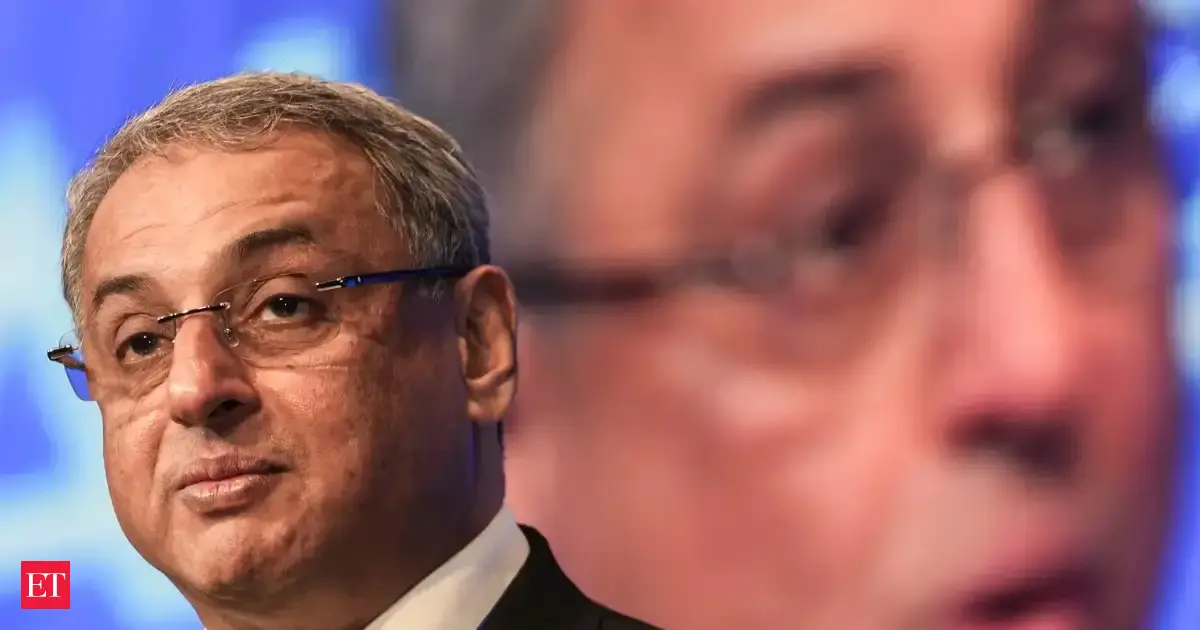
Tata Steel executives emphasize value-added products over mere production capacity. Changing market dynamics necessitate a focus on downstream opportunities for greater value. Expensive iron ore impacts cost structures, shifting strategic priorities for steel companies. Export markets are becoming more challenging due to protectionist policies and competition. The company is phasing growth and investing in value-added segments to capture market premiums. View More
Value for a steel producer may not necessarily be derived by its production capacity, according to Tata Steel chief executive TV Narendran and chief financial officer Koushik Chatterjee. Changing market dynamics are making it crucial for companies to look for value across the chain, making value-added products a "must-have" rather than a "good-to-have", they tell Nikita Periwal. Edited excerpts: A certain section of industry is looking at adding capacities while another wants to focus on value. What is Tata Steel's stance? TV Narendran: We want to have options and exercise them properly. Unlike earlier when land was a challenge, today we have the option to go to 50 million tonnes with our existing sites. If we include Maharashtra, where we are speaking to the government for 3,000 acres of land, we can build another 15 million tonnes. So, we have the option to go to 65 million tonnes, but do we want to build all that in a hurry? We will wait and see because the cost structure of the industry is changing very rapidly. Also Read: Tata Steel's T V Narendran says India's energy, critical minerals diversification pose new challenges How does cost impact these decisions? Narendran: The biggest advantage that the industry had is that iron ore was available in plenty and at a reasonable price. Today, it is expensive, so value is lost even before the ore is converted. So, we need to really look at where the value-creation opportunity is in the value chain. At one end, it is commoditised where we are always under the threat of China, and at the other end is more value-added and downstream. In some sense, you can unlock a lot of value with less capital in downstream. We look at the whole value chain and keep the optionality of growing upstream, but not necessarily pursue it blindly. Koushik Chatterjee: Optionality also means we are phasing growth. Capacities come in lumps while the market grows more linearly. We will grow with the market in bands. Our annual capex is now scaled up to about ₹20,000 crore a year. So we are putting money and growing, but there has to be a sequence in this madness. And this sequence is important to grow with the market where you can derive the premium. Live Events What about export markets? Narendran: Export markets are going to get tougher. The US and Europe have built walls, and in markets like the Middle East, you have to compete with the Chinese, who will continue to export 100-120 million tonnes of steel at prices which really make no sense. A few years back, the narrative in the steel industry was adding capacities. When did this change? How have policy changes played out? Narendran: Earlier, iron ore mines were being auctioned at 40-70% (premiums). But suddenly, all of us started bidding aggressively. So partly because of policies, and partly because the private sector has been a bit short-term in the approach, we have created a situation where we are losing value in our biggest advantage, iron ore, even before it is converted to steel. Chatterjee: For Tata Steel, downstream is not a new strategy. We have been in tinplate for 100 years, nearly 100 years in tubes and at least 50 years in wires. So, we have had a balance, and perhaps more focus on upstream than what we are having today. But the market is changing, and to ensure that we have a higher market share in value-added products rather than commodity products, it is important to change the game in downstream, especially at the high-end. Will growth parameters for the industry change from production capacity to heft in value-added products? Narendran: Yes. It is a long value chain with multiple applications, and you can decide how far you want to go down that value chain and where to stop. Our job is to look at the entire value chain, see where the pockets of value are and be a strong player. I may have a situation tomorrow where I have a downstream plant in the South and may buy hot-rolled coils from JSW. So, we can have a strategy which is independent of upstream. It is an evolving complex situation. The largest steel company in the world is not the most valuable, and the most valuable is not the largest steel company. Also Read: Tata Steel's T V Narendran says West Asia conflict is raising costs for steel industry Have you prioritised expansion at Neelachal Ispat over Kalinganagar because of relatively higher margins? Narendran: We have just finished the expansion at Kalinganagar and are ramping up there. The Neelachal site is ready, and we can start work faster there. That is the only reason. .Pbanner{display:flex;justify-content:space-between;align-items:center;background-color:#ec1c40;margin-top:20px;padding:5px 10px;border-radius:4px;color:#fff;line-height:10px;width: 100%;box-sizing: border-box} .Pbannertext{display:flex;align-items:center;font-size:16px;font-weight:600;font-family:'Montserrat';} .Pbannertext img{height:20px;margin:0 6px} .Pbannerbutton a{display:flex;align-items:center;background-color:#fff;color:#ec1c40;text-decoration:none;font-weight:600;padding:4px 8px;border-radius:6px;font-size:15px;font-family:'Montserrat';} .Pbannerbutton img{height:20px;margin-right:6px} .Pbannerbutton a:hover{background-color:#f7f7f7} Add as a Reliable and Trusted News Source Add Now! (You can now subscribe to our Economic Times WhatsApp channel) (You can now subscribe to our Economic Times WhatsApp channel)
Vedanta Aluminium Metal reported a threefold profit increase in the June quarter. The company announced an interim dividend of Rs 8 per share for shareholders. Consolidated revenue climbed 45% to an all-time high of Rs 21,105 crore. Earnings before interest, tax, depreciation, and amortisation more than doubled to Rs 10,499 crore. Aluminium production reached an all-time high of 632,000 tonnes last quarter. View More
Mumbai: Vedanta Aluminium Metal posted a more than threefold surge in consolidated net profit from a year earlier in the June quarter at Rs 6,597 crore, aided by strong revenue growth and profitability. The newly demerged company also announced an interim dividend of Rs 8 per share. This is the first quarterly earnings since the company's demerger in June. Vedanta Aluminium Metal, Vedanta Power , Vedanta Oil & Gas, and Vedanta Iron & Steel listed as independent entities in June, following the demerger from listed holding company Vedanta Ltd . Vedanta Aluminium Metal’s consolidated revenue climbed 45% year-on-year in the June quarter to an all-time high of Rs 21,105 crore, thanks to volume growth and higher prices. Aluminium prices rose 46% compared to the previous year. Earnings before interest, tax, depreciation and amortisation (EBITDA) more than doubled to a record Rs 10,499 crore, boosted by cost efficiencies, the company said in a statement. Vedanta Aluminium’s cost of production for the quarter fell 4% on-year and 3% sequentially to $1,698 per tonne. For the current fiscal year, the company anticipates cost of production in the range of $1,650 to $1,700 per tonne. Live Events The EBITDA made on each tonne of aluminium, meanwhile, rose to $1,804 per tonne, an all-time high. As a result, EBITDA margins for the quarter surged by nearly 19 percentage points to 50% from 31% a year ago. “We have commenced our new, independent chapter with robust operational and financial performance in this quarter, reflecting the success of our approach which merges business resilience, disciplined execution, and a long-term vision,” said Rajesh Kumar, chief executive at Vedanta Aluminium. The company’s aluminium production for the quarter rose 5% last quarter to 632,000 tonnes, an all-time high, while production of value-added products rose 14% to 389,000 tonnes, also a fresh high. Alumina production surged 41% to 826,000 tonnes last quarter. The company guided for an output of 2.6—2.7 million tonnes of aluminium in FY27, while alumina is likely in the range of 4.0—4.1 million tonnes. Vedanta Aluminium Metal will be commissioning its Kuraloi coal mine this quarter, and Sijimali bauxite mine and Ghogharpalli coal mine in the second half of the fiscal. It also plans to complete value-added projects this year. .Pbanner{display:flex;justify-content:space-between;align-items:center;background-color:#ec1c40;margin-top:20px;padding:5px 10px;border-radius:4px;color:#fff;line-height:10px;width: 100%;box-sizing: border-box} .Pbannertext{display:flex;align-items:center;font-size:16px;font-weight:600;font-family:'Montserrat';} .Pbannertext img{height:20px;margin:0 6px} .Pbannerbutton a{display:flex;align-items:center;background-color:#fff;color:#ec1c40;text-decoration:none;font-weight:600;padding:4px 8px;border-radius:6px;font-size:15px;font-family:'Montserrat';} .Pbannerbutton img{height:20px;margin-right:6px} .Pbannerbutton a:hover{background-color:#f7f7f7} Add as a Reliable and Trusted News Source Add Now! (You can now subscribe to our Economic Times WhatsApp channel) (You can now subscribe to our Economic Times WhatsApp channel)

The company expects steel consumption could grow up to 8 per cent if GDP grows at 6-7 per cent View More
“This rating is a recognition of the strength and resilience of JSW Steel’s business - our scale as India’s largest steel producer, our cost-competitive operations across multiple locations, and the quality of assets we have built over the years,” said Jayant Acharya, joint managing director and chief executive at JSW Steel. View More
MUMBAI: Moody’s Ratings has upgraded JSW Steel to Baa3 with a stable outlook, placing it at a global investment grade , the country’s largest steelmaker said. The rating agency also upgraded JSW Steel’s senior unsecured ratings and guaranteed senior unsecured revenue bonds issued by Jefferson County Port Authority to Baa3 from Ba1, withdrawing its earlier Ba1 corporate family rating. “This rating is a recognition of the strength and resilience of JSW Steel’s business - our scale as India’s largest steel producer, our cost-competitive operations across multiple locations, and the quality of assets we have built over the years,” said Jayant Acharya, joint managing director and chief executive at JSW Steel. “Global investment grade strengthens our access to international capital markets on more competitive terms. It also affirms the confidence that customers, partners and investors worldwide place in JSW Steel,” he said. The Baa3 rating by Moody’s follows other re-ratings secured by JSW Steel recently. Earlier in July, Fitch upgraded the company to ‘BB+’ from ‘BB’, while CARE Ratings upgraded it to CARE AA+ from CARE AA. ICRA also upgraded the company to AA+ from AA. JSW Steel said this marks a comprehensive endorsement of its deleveraging and financial discipline. “This rating is a validation of the discipline this organisation has practiced through a full business cycle, not just of the numbers on our balance sheet,” said Swayam Saurabh, chief financial officer. “Over the last few years, we made a conscious shift towards sharper capital allocation – being more selective about where we deploy capital, more deliberate about the pace of our growth while managing key financial ratios across cycles.” Live Events JSW Steel’s consolidated net debt fell to Rs 46,157 crore at the end of June from Rs 53,870 crore a quarter ago. Its net debt-to-equity ratio stood at 0.42 times at the end of June, improving from 0.51 times at the end of March. Net-debt-to- EBITDA ratio stood at 1.46 times, down from 1.81 times. .Pbanner{display:flex;justify-content:space-between;align-items:center;background-color:#ec1c40;margin-top:20px;padding:5px 10px;border-radius:4px;color:#fff;line-height:10px;width: 100%;box-sizing: border-box} .Pbannertext{display:flex;align-items:center;font-size:16px;font-weight:600;font-family:'Montserrat';} .Pbannertext img{height:20px;margin:0 6px} .Pbannerbutton a{display:flex;align-items:center;background-color:#fff;color:#ec1c40;text-decoration:none;font-weight:600;padding:4px 8px;border-radius:6px;font-size:15px;font-family:'Montserrat';} .Pbannerbutton img{height:20px;margin-right:6px} .Pbannerbutton a:hover{background-color:#f7f7f7} Add as a Reliable and Trusted News Source Add Now! (You can now subscribe to our Economic Times WhatsApp channel) (You can now subscribe to our Economic Times WhatsApp channel)

JSW Steel’s senior unsecured ratings and guaranteed senior unsecured revenue bonds issued by Jefferson County Port Authority have also been upgraded View More

European operations remained a drag; the UK narrowed its EBITDA loss to £27 million from £48 million in Q4, while Netherlands posted near-breakeven EBITDA of €4 million View More
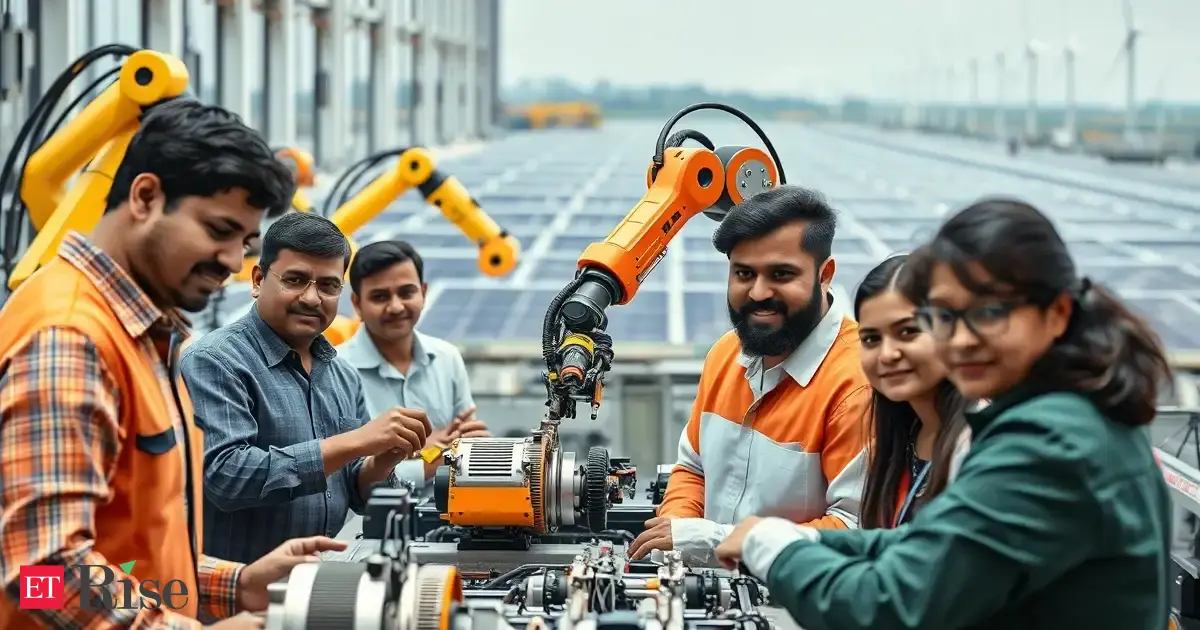
India is accelerating a broad-based industrial strategy that spans semiconductors, electronics, commercial space, green mobility, rare earths, shipbuilding and coal gasification, signalling a coordinated push to reduce import dependence, strengthen domestic manufacturing and build resilient supply chains amid an increasingly uncertain global environment. View More
New Delhi [India]: India is accelerating a broad-based industrial strategy that spans semiconductors, electronics, commercial space, green mobility, rare earths, shipbuilding and coal gasification, signalling a coordinated push to reduce import dependence, strengthen domestic manufacturing and build resilient supply chains amid an increasingly uncertain global environment. The July Monthly Economic Review says the country's strategic manufacturing initiatives gathered pace during the month through a series of policy decisions and project launches that together reinforce India's long-term industrial ambitions. The review notes that "strategic manufacturing initiatives gathered further momentum" with the inauguration of the CG Semi OSAT facility, approval of Semicon 2.0 and the Mobile Phone Manufacturing Scheme, progress in critical minerals, coal gasification and shipbuilding, alongside a landmark achievement in commercial space and the rollout of India's first hydrogen fuel cell-powered train. Commercial production has begun at the CG Semi Outsourced Semiconductor Assembly and Test (OSAT) facility in Sanand, Gujarat, developed under the India Semiconductor Mission. The facility will manufacture chips for automotive, telecom, artificial intelligence and consumer electronics, while also serving export markets. Building on that momentum, the Union Cabinet approved Semicon 2.0 with an outlay of Rs 1.27 lakh crore and simultaneously cleared a new Mobile Phone Manufacturing Scheme worth Rs 62,500 crore. The semiconductor programme covers chip design, fabrication, packaging, semiconductor equipment, research and workforce development, while the new electronics manufacturing scheme provides production-linked incentives and additional benefits for domestic sourcing and research and development. Live Events The review also highlights the growing emphasis on high-technology manufacturing through the commercial space sector. Skyroot Aerospace's Vikram-1 successfully became the first privately developed Indian rocket to reach orbit, marking what the report describes as "an important step in strengthening India's commercial space capabilities and advancing its high-technology manufacturing ecosystem." Beyond electronics and space, the government is simultaneously strengthening supply chains for strategic minerals. The Ministry of Heavy Industries is implementing a scheme to promote domestic manufacturing of Sintered Rare Earth Permanent Magnets, aimed at reducing dependence on imports while supporting electric vehicles, renewable energy, electronics, aerospace and defence manufacturing. Shipbuilding and maritime industries also received policy backing. India achieved the Maritime India Vision 2030 ship-recycling target five years ahead of schedule while implementation continued on the Rs 69,725 crore shipbuilding package designed to expand domestic shipbuilding capacity and promote higher value addition. In the energy sector, the government advanced coal gasification by laying the foundation stone for India's first commercial-scale coal-to-ammonium nitrate project in Odisha and moving ahead with implementation of the coal and lignite gasification promotion scheme. India's transition to cleaner transportation also entered a new phase with the introduction of the country's first hydrogen fuel cell-powered train on the Jind-Sonipat route in Haryana. Designed and developed indigenously, the train uses a hybrid propulsion system powered by hydrogen fuel cells and lithium iron phosphate batteries, emitting only water vapour. The report says regulatory reforms are complementing these manufacturing initiatives through easier compliance for Special Economic Zone manufacturers and a risk-based quality control framework. The broader significance of these developments, the review states: "Taken together, these developments reflect continued progress in strengthening domestic manufacturing capabilities, enhancing supply-chain resilience and reducing dependence on concentrated import sources across strategic sectors." .Pbanner{display:flex;justify-content:space-between;align-items:center;background-color:#ec1c40;margin-top:20px;padding:5px 10px;border-radius:4px;color:#fff;line-height:10px;width: 100%;box-sizing: border-box} .Pbannertext{display:flex;align-items:center;font-size:16px;font-weight:600;font-family:'Montserrat';} .Pbannertext img{height:20px;margin:0 6px} .Pbannerbutton a{display:flex;align-items:center;background-color:#fff;color:#ec1c40;text-decoration:none;font-weight:600;padding:4px 8px;border-radius:6px;font-size:15px;font-family:'Montserrat';} .Pbannerbutton img{height:20px;margin-right:6px} .Pbannerbutton a:hover{background-color:#f7f7f7} Add as a Reliable and Trusted News Source Add Now!