
Latest Sectors News
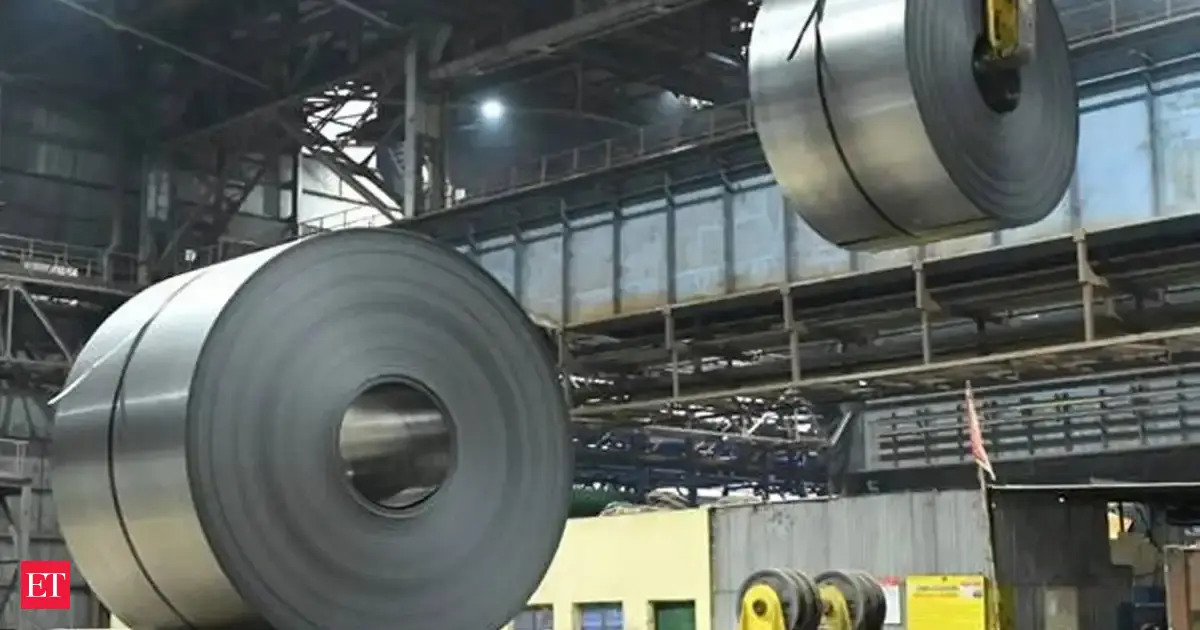
India's exports of key metal intermediates are experiencing a significant surge. Aluminium alloy exports climbed twenty-four percent, reaching one point two nine billion dollars. Insulated copper winding wire exports accelerated fifty-eight percent, with the United States as a leading destination. Refined lead exports also rose fifty-six percent, driven by Asian market demand. These gains reflect India's growing integration into global manufacturing supply chains. View More
New Delhi: Rising global demand for electrical equipment, electric vehicles, batteries, transformers, and renewable energy equipment is triggering a surge in India’s exports of key metal intermediates such as copper winding wire , aluminium alloys and refined lead. While aluminium alloy exports climbed 24% over the past two years to $1.29 billion in FY26, with Mexico—a key automotive manufacturing hub—emerging as the largest destination, those of insulated copper winding wire accelerated 58% between FY24 and FY26, with the US being the leading destination. “These gains reflect rising demand from regional manufacturing and metal processing industries as companies diversify supply chains across Asia,” said a government official. Also Read: India seeks EU scrap export relief as curbs threaten trade pact gains Similarly, India’s exports of refined lead rose 56% during FY24 and FY26 to $928.38 million, thanks to demand from Asian markets, led by Singapore, followed by South Korea and Vietnam. China, Bangladesh, and Thailand also emerged as new markets. Aluminium alloy exports to Southeast Asia are growing at a fast clip. Shipments to Vietnam spiralled to $81.6 million last fiscal from $8 million in FY24, and those to Malaysia increased to $57.8 million from $37.6 million during the same period. ET Bureau “Overall, India’s aluminium alloy exports are evolving from traditional commodity trade towards a diversified, high-value manufacturing export portfolio,” said the official cited above. “This highlights India’s integration into global automotive and electronics supply chains.” Live Events Also Read: India's finished steel exports jump 36.6% in April-February Exports of other industrial products such as ferro-silico-manganese and stranded aluminium wire also increased during the period under review. India’s exports of insulated copper winding wire—a critical intermediate input in many industries—saw sustained and broad-based growth over the last five years. Beyond the major markets, India’s export footprint broadened across emerging economies such as Lebanon, Türkiye and Djibouti, whereas Oman, Iraq, Egypt, Kenya, Indonesia, and Sri Lanka continued to provide steady demand. “The strong performance underscores India’s growing competitiveness in manufacturing high-quality electrical conductors used across power transmission, industrial machinery, automotive electronics and clean energy applications,” said a trade expert, adding the growth momentum is expected to sustain on accelerating global investment in electrification , grid modernisation and renewable energy. .Pbanner{display:flex;justify-content:space-between;align-items:center;background-color:#ec1c40;margin-top:20px;padding:5px 10px;border-radius:4px;color:#fff;line-height:10px;width: 100%;box-sizing: border-box} .Pbannertext{display:flex;align-items:center;font-size:16px;font-weight:600;font-family:'Montserrat';} .Pbannertext img{height:20px;margin:0 6px} .Pbannerbutton a{display:flex;align-items:center;background-color:#fff;color:#ec1c40;text-decoration:none;font-weight:600;padding:4px 8px;border-radius:6px;font-size:15px;font-family:'Montserrat';} .Pbannerbutton img{height:20px;margin-right:6px} .Pbannerbutton a:hover{background-color:#f7f7f7} Add as a Reliable and Trusted News Source Add Now! (You can now subscribe to our Economic Times WhatsApp channel) (You can now subscribe to our Economic Times WhatsApp channel)

India's Solar Energy Corporation (SECI) is on a mission to boost the production of green ammonia, targeting a significant reduction in the country's dependence on imported fertilizers. The corporation is set to issue tenders for an impressive additional one million metric tons each year, aligning with India's comprehensive green hydrogen ambitions. Furthermore, SECI is also gearing up to invite tenders for green methanol to promote domestic usages. View More
NEW DELHI, - State-owned Solar Energy Corporation of India is looking to supply an additional 1 million metric tons of locally produced green ammonia to fertiliser makers annually, its managing director said on Friday, as India seeks to reduce reliance on imports. This follows SECI's announcement in March that fertiliser companies and local suppliers, including clean energy solution company ACME Cleantech and NTPC Green, had signed offtake agreements for 724,000 tons of green ammonia - a derivative of green hydrogen - which could cover one third of the country's requirements of the low-carbon fuel. The 1-million-ton supply proposal will be based on tenders only, SECI's Akash Tripathi said. India's fertiliser sector uses about 20 million tons of grey hydrogen annually, imported or produced from imported natural gas, Tripathi said at a Confederation of Indian Industry event on Friday, whose supplies have been disrupted by the Iran war. Hydrogen extracted using renewable power such as solar is "green" while grey hydrogen is extracted from coal or natural gas using steam-methane reforming. Live Events Backed by incentives worth about $2.1 billion, India aims to produce 5 million tons of green hydrogen by 2030 in a quest to decarbonise industries and ensure its energy security . Its push comes as several Western countries have scaled back ambitious green hydrogen goals from the start of this decade on cost constraints and slower-than-expected demand growth. India has brought the price of producing green hydrogen as low as 279 Indian rupees (around $3) per kilogram, from around $5 per kilogram in 2023, when the government launched its National Green Hydrogen Mission. Under the initiative, industrial heavyweights including Larsen & Toubro, Bharat Petroleum Corp, GAIL and JSW Steel produce about 8,000 tons of green hydrogen and its derivatives annually. SECI pools demand and secures supplies. Tripathi said SECI was also preparing green methanol tenders targeted at the domestic market and expected to issue them within the next two months. .Pbanner{display:flex;justify-content:space-between;align-items:center;background-color:#ec1c40;margin-top:20px;padding:5px 10px;border-radius:4px;color:#fff;line-height:10px;width: 100%;box-sizing: border-box} .Pbannertext{display:flex;align-items:center;font-size:16px;font-weight:600;font-family:'Montserrat';} .Pbannertext img{height:20px;margin:0 6px} .Pbannerbutton a{display:flex;align-items:center;background-color:#fff;color:#ec1c40;text-decoration:none;font-weight:600;padding:4px 8px;border-radius:6px;font-size:15px;font-family:'Montserrat';} .Pbannerbutton img{height:20px;margin-right:6px} .Pbannerbutton a:hover{background-color:#f7f7f7} Add as a Reliable and Trusted News Source Add Now! (You can now subscribe to our Economic Times WhatsApp channel) (You can now subscribe to our Economic Times WhatsApp channel)
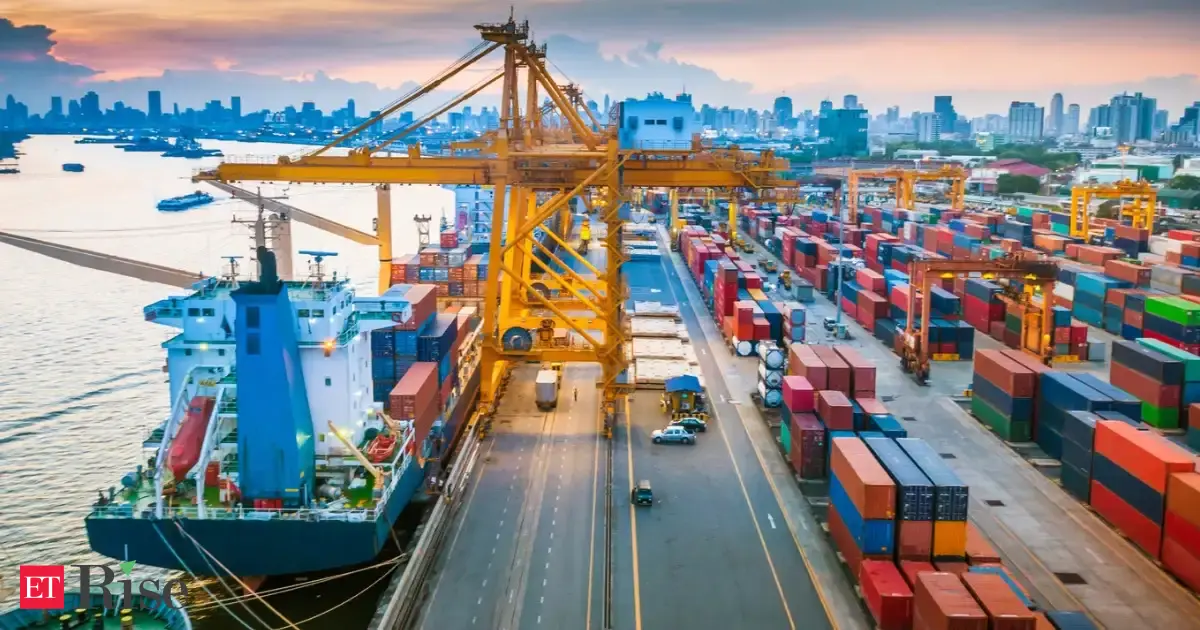
The escalating unrest near the Strait of Hormuz is causing a notable spike in shipping expenses for businesses in India. An increase in freight rates and additional war-risk charges are complicating overall costs, which are now trickling down to consumers. View More
Disruptions around the Strait of Hormuz are rapidly turning a shipping problem into a wider cost challenge for Indian businesses, with significantly higher freight rates, war-risk charges, and rising raw material costs beginning to permeate supply chains. Logistics industry officials The Economic Times Digital spoke to say the increase in landed costs, which include item price, shipping fees, customs, taxes, and charges for insurance and risk, can vary from 35 to 50% on some trade lanes, with extreme cases exceeding 200% after the recurring tension around Hormuz. The impact differs depending on destination, cargo value, and shipping route. However, as companies increasingly include clauses allowing them to pass on exceptional logistics costs, a growing share of the burden has begun to trickle down to end consumers. Jitendra Srivastava, CEO of Triton Logistics & Maritime, says freight rates to the Gulf on some routes have climbed to $3,400-$4,000 from $300-$400 before the latest disruption. Emergency and war-related surcharges are being added over and above base freight rates. “Maximum burden is going to [fall on] customers. Landed cost is continuously increasing. Depending on the destination, the increase in landed costs could range from 35% to 50%, and in some cases, it could be more than 200%,” he says. Live Events The increase is particularly severe on Gulf routes. Srivastava says that putting a single percentage on the increase becomes difficult when freight itself has moved from around $400 to $4,000. Europe has also seen a sharp increase. Rates that were earlier around $700-800 have climbed to roughly $4,500-$6,500 for several shipments, he says. Kaushik Datta Sharma, CEO-Liner Division, Parekh Global, points to a similar escalation. “Freight to Jeddah that was around $600-700 earlier has climbed to about $3,000, while Europe rates have risen from roughly $1,000 to around $4,000. On some of the US and European movements, rates for a 20-foot container have reached around $6,000 compared with $1,000-$1,100 earlier,” he says. The increase is even sharper for some refrigerated cargo. Rates for 40-foot reefer containers, which were around $2,000-$3,000 earlier, have reached $7,000-$10,000, says Sharma. While the exact landed-cost impact varies with the value of the cargo inside a container, Sharma estimates that logistics costs, which typically account for around 13-15% of cargo value, have risen to 25-30% or more in several cases. “Shipping line is a carrier only. They are not the owner of the goods,” he says, explaining that freight is generally determined by container type and route rather than the value of the goods inside it. This means the percentage impact on landed cost can differ substantially between a container carrying low-value goods and one carrying higher-value products. From freight shocks to consumer prices The pressure is no longer confined to transportation. Disruptions to energy and petrochemical supplies are creating a second layer of cost increases across Indian manufacturing. Chandrachur Datta, Partner at Vector Consulting Group, says disruption to crude oil, LNG , and petrochemical feedstocks is constraining CNG and PNG availability across industrial value chains. According to him, force majeure declarations by Gulf producers have disrupted around 47.4 mmscmd (million metric standard cubic meters per day), equivalent to about 25% of India’s total gas supply. And the experts believe that the spillover effect is cascading into energy-intensive industries. Datta says fertiliser plants have been receiving around 70% of their contracted gas supply, while production costs in glass, paper and pulp have increased by 20-30%, forcing some companies to curtail operations. Gas-dependent steel and metal processors have been able to meet only around 50-70% of customer demand, affecting the availability of alloy and special-grade steel used in automotive components. This is all because of the supply disruption linked to the ongoing US-Iran war. Petrochemicals are another pressure point for several Indian sectors. Domestic petrochemical output has declined by 21% year-on-year, pushing up polypropylene and PVC prices. “These materials feed directly into plastics and packaging, which in turn are widely used by FMCG, pharmaceuticals, and food-processing companies. This creates a broader transmission mechanism for inflation. Companies first absorb higher freight, fuel, insurance, and input costs. Suppliers then renegotiate contracts or revise prices. Manufacturers face higher packaging and production costs, which can eventually be reflected in wholesale and retail prices,” adds Datta. Srivastava says many companies are already renegotiating contracts signed before the latest escalation. New contracts are increasingly being written with clauses allowing extraordinary freight and other additional costs to be passed on. “Ultimately, the impact is falling on end consumers,” he says, adding that product prices could gradually begin rising as businesses become less willing to absorb unpredictable logistics costs. Freight rises 150-300% for textile exporters Home textile exporters are among the sectors facing pressure at both ends of the supply chain. Alongside higher outbound freight and longer transit times, domestic manufacturers depend on chemicals, petrochemical-derived materials, packaging, and other inputs, leaving them exposed to the rise in petrochemical and energy costs triggered by disruptions in the Gulf. Vikas Singh Chauhan, Director at the Home Textile Exporters’ Welfare Association (HEWA), estimates that freight rates have risen by an average of 150-300% across several destinations. Textile exporters are already facing the combination of rising shipping costs, longer delivery times, and raw material inflation. Europe-bound freight has risen from around $2,000-$2,500 to $7,000-$8,400, according to HEWA. Rates to Onne in Africa have increased from about $3,800 to $6,000, while Latin America routes that earlier cost around $2,500-$4,000 are now quoting roughly $7,000-$12,500. Freight to the port of Ashdod in Israel has risen from around $3,500 to $7,000-$8,000, Singh says. The Middle East has seen some of the steepest increases, with rates moving from around $300-$400 earlier to $4,000-$7,000, excluding some local destination charges. Exporters are also grappling with mounting shipping delays. Chauhan says vessel booking and availability, which earlier took around three to four days, can now take 20-30 days, without any certainty that space will ultimately be allocated. Transit time to Europe has increased from around 30 days to 60-70 days in several cases, according to HEWA. HEWA has advised textile exporters to be cautious while accepting orders on cost and freight, or CFR, terms because freight rates are changing rapidly. Exporters are simultaneously facing increases in cotton yarn prices, leaving them exposed to both raw material and transportation costs. The association has also advised exporters to plan container bookings around 30 days in advance and sought government support to ease the longer payment cycle caused by shipping delays. Supply chains redraw routes The severe cost escalation is forcing logistics companies to reassess how cargo moves through the region. According to Sharma of Parekh Global, cargo has been rerouted through Sohar, Jeddah, and Aqaba before being transported by road into parts of the Upper Gulf. The shift created trailer shortages and pushed road transportation costs to nearly three times normal levels. Longer routes around the Cape of Good Hope are adding both transit time and fuel costs. Sharma says diversions can add around 10-12 days to voyages in some cases. Srivastava says war-risk premiums are currently running at roughly $3,000-$5,000 on affected movements, while carriers are also levying emergency bunker and other surcharges. Even if geopolitical tensions ease, freight markets may not immediately normalise. Srivastava estimates that shipping conditions could take another three to six months to stabilise after the underlying disruption ends. Meanwhile, several exporters facing tight delivery schedules are increasingly evaluating air cargo. According to Venkatesh Iyer, Vice President-Commercial at Sharaf Cargo Pvt. Ltd, the uncertainty around maritime trade has already resulted in a noticeable modal shift, “especially for time-sensitive cargo”. “The shift has happened predominantly for Europe and the US because of the increase in transit time by sea,” Iyer says. He says that geopolitical developments have also affected airline operations, and rising fuel prices have translated into higher air freight rates. “Airlines are constantly exploring opportunities to add up capacities whenever possible, as this helps to keep the capacity constant in this volatile market. Exporters today have also factored longer transit in shipping, so we see an increase of about 20% in our air volumes bookings compared to pre-crisis levels,” he says. From just-in-time to just-in-case Beyond immediate freight decisions, companies are reconsidering how much inventory they hold and where they source critical inputs. Rahul Sanghvi, Managing Director and Partner at Boston Consulting Group (BCG), says energy-intensive and chemical-dependent companies are increasingly moving from just-in-time to just-in-case inventory for critical inputs, such as crude oil, LNG, and fertiliser feedstock, despite the additional working capital involved. Companies are also looking beyond the Gulf towards suppliers in West Africa, the US, and Latin America, while working with multiple shipping lines and pre-negotiating alternative routes. The disruption is influencing procurement decisions as well. Divya Kumar Gulati, Chairman of the Compound Livestock Feed Manufacturers Association of India, points to reports of Mangalore Refinery and Petrochemicals seeking crude supplies under terms that avoid both the Red Sea and the Strait of Hormuz. The broader industry view is that increased cost pressure ranges from above 30% compared to pre-crisis levels. Gulati says poultry, aquaculture, and dairy businesses are facing acute pressure from higher freight, fuel, and fertiliser costs due to their dependence on globally sourced feed ingredients and additives. "Our livestock members have no option but to pass this cost increase on to end customers. Also, higher fertiliser costs could also eventually feed into the prices of crops, such as maize and soybean,” he says. According to Gulati, the latest disruptions reinforce the need for India to accelerate logistics diversification, strengthen multimodal connectivity, and develop alternative trade corridors. Echoing the need for alternative trade and energy routes, Nisha Taneja, Senior Visiting Professor at the Indian Council for Research on International Economic Relations (ICRIER), says India has increasingly leveraged the Port of Fujairah in the UAE, located outside the Strait of Hormuz, as an important oil storage and bunkering hub to reduce risks associated with the maritime chokepoint. “We need more strategic steps like these,” she says. For logistics providers, the lesson from such developments means resilience is no longer measured solely by the ability to move cargo from one port to another. It increasingly depends on how quickly companies can reroute shipments, communicate with customers, and diversify transport options. As Sanghvi summed it up, resilience is “not a one-time fix—it’s an ongoing discipline of diversification, buffer capacity, and scenario planning. .Pbanner{display:flex;justify-content:space-between;align-items:center;background-color:#ec1c40;margin-top:20px;padding:5px 10px;border-radius:4px;color:#fff;line-height:10px;width: 100%;box-sizing: border-box} .Pbannertext{display:flex;align-items:center;font-size:16px;font-weight:600;font-family:'Montserrat';} .Pbannertext img{height:20px;margin:0 6px} .Pbannerbutton a{display:flex;align-items:center;background-color:#fff;color:#ec1c40;text-decoration:none;font-weight:600;padding:4px 8px;border-radius:6px;font-size:15px;font-family:'Montserrat';} .Pbannerbutton img{height:20px;margin-right:6px} .Pbannerbutton a:hover{background-color:#f7f7f7} Add as a Reliable and Trusted News Source Add Now!

While JSW Steel is expanding its production capacity aggressively through new projects and joint ventures, Tata Steel is betting on higher-margin, value-added products. Their strategies are more nuanced than stark and present different choices being made in a red-hot market for steel. View More
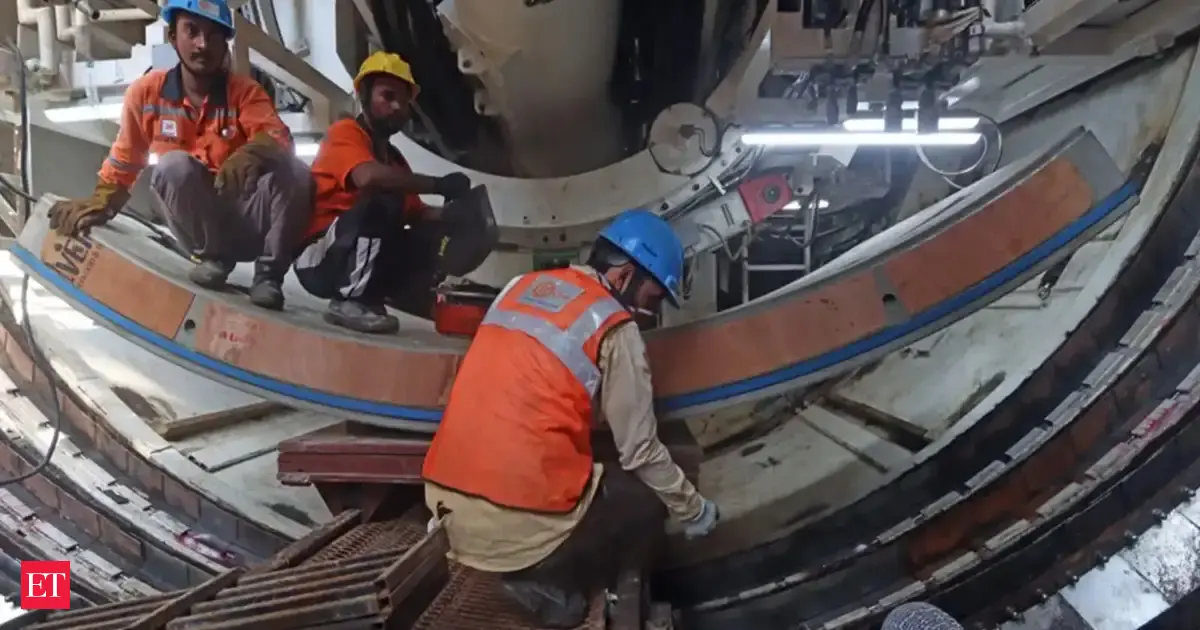
Primary steel producers expect steady operating profitability this fiscal year. Higher global steel prices and safeguard duties will support profit margins. Domestic steel demand is projected to grow between five and seven percent. This growth will be driven by infrastructure and other key sectors. Strong demand and steady profits will strengthen cash accruals for companies. View More
New Delhi: Primary steel makers are expected to maintain operating profitability of Rs 10,500-11,000 per tonne in the current fiscal despite higher input cost, a Crisil Ratings report said on Thursday. Higher global steel prices and the effect of the safeguard duty imposed last year will help keep profitability steady, the report said. This, coupled with healthy demand growth, is expected to strengthen cash accruals and support capex requirements while sustaining stable credit profiles, it said. "The operating profitability of primary steel producers, measured by EBITDA per tonne, is expected to remain resilient at Rs 10,500-11,000 per tonne this fiscal despite rising cost pressures," it said. The cost of production for primary steel producers - producers of steel predominantly through BF-BOF (blast furnace-basic oxygen furnace) route - is projected to rise by around Rs 2,000 per tonne this fiscal, to Rs 53,000 - 54,000 per tonne, owing to higher coking coal prices and elevated logistics and energy costs. Live Events Coking coal, which accounts for nearly 40 per cent of production costs, is expected to become 5-7 per cent costlier amid potential supply disruptions in key exporting regions and sustained demand from major steel producing countries. Higher freight, shipping and insurance costs, along with elevated power and fuel expenses, will further add to cost pressures. Crisil Ratings conducted a study of eight primary steel manufacturers which accounted for around half of India's total steel output last fiscal. Crisil Ratings Director Ankit Hakhu said, "Higher global steel prices, continued protection under the 11.5 per cent safeguard duty and healthy domestic demand growth are expected to support a 6-8 per cent increase in domestic steelprices this fiscal. This will offset rising cost pressures and keep profitability steady. Domestic steel demand is expected to remain healthy, growing 5-7 per cent this fiscal on the high base of fiscal 2026, supported by sustained investments in infrastructure and robust demand from the automotive, engineering and construction sectors. The long-term demand outlook also remains strong, with steel consumption expected to grow 6-8 per cent annually, aided by India's low per capita steel consumption of around 109.2 kg in 2025, which was significantly below the global average of 209 kg. JSW Steel , Jindal Steel , Steel Authority of India Ltd (SAIL), Tata Steel and AMNS India are some of the top steel-making entities in India. .Pbanner{display:flex;justify-content:space-between;align-items:center;background-color:#ec1c40;margin-top:20px;padding:5px 10px;border-radius:4px;color:#fff;line-height:10px;width: 100%;box-sizing: border-box} .Pbannertext{display:flex;align-items:center;font-size:16px;font-weight:600;font-family:'Montserrat';} .Pbannertext img{height:20px;margin:0 6px} .Pbannerbutton a{display:flex;align-items:center;background-color:#fff;color:#ec1c40;text-decoration:none;font-weight:600;padding:4px 8px;border-radius:6px;font-size:15px;font-family:'Montserrat';} .Pbannerbutton img{height:20px;margin-right:6px} .Pbannerbutton a:hover{background-color:#f7f7f7} Add as a Reliable and Trusted News Source Add Now! (You can now subscribe to our Economic Times WhatsApp channel) (You can now subscribe to our Economic Times WhatsApp channel)

The sale of the Amadea caps a turbulent and controversial history for the 348-foot yacht, which was seized from a sanctioned Russian oligarch. View More
watch nowVIDEO4:3004:30Superyacht 'Amadea' sold for $187 million: Here's what to knowSquawk Box A version of this article first appeared in CNBC's Inside Wealth newsletter with Robert Frank, a weekly guide to the high-net-worth investor and consumer. Sign up to receive future editions, straight to your inbox.A megayacht once valued at more than $300 million was sold by the U.S. government for $187 million to an Emirati billionaire whose family has a business partnership with the Trump Organization, according to government documents and yacht industry executives.Amadea, a 348-foot yacht seized by federal authorities in 2022, was part of a financial crackdown on Russian oligarchs following the country's invasion of Ukraine. After a lengthy legal battle, the yacht was auctioned off by order of the Justice Department in September.Neither the price nor the buyer was announced by the government, yet a government document reveals the purchase price was $187 million. The buyer was Abbas Sajwani, the 27-year-old son of Dubai property tycoon Hussain Sajwani, whose company DAMAC Properties has partnered with the Trump Organization.Hussain Sajwani appeared with President Donald Trump at Mar-a-Lago last year to announce a $20 billion investment in U.S. data centers by one of Sajwani's companies. At the press conference, Trump introduced Sajwani as "one of the most respected business leaders in the Middle East and indeed the world."Neither Hussain Sajwani, Abbas Sajwani nor DAMAC responded to requests for comment. The Department of Justice and White House declined to comment. CEO of DAMAC Properties Hussain Sajwani makes remarks next to U.S. President-elect Donald Trump, at Mar-a-Lago in Palm Beach, Florida, U.S. January 7, 2025.Carlos Barria | Reuters In 2022, the U.S. seized Amadea off the coast of Fiji as part of a crackdown on Russian oligarchs. The seizure was the highest profile test case for "Task Force KleptoCapture," a program created by the Biden administration to sanction Russian oligarchs and seize the assets of violators. The Justice Department alleged Amadea was owned by Suleiman Kerimov, a Russian mining tycoon who had been under sanctions since 2018.U.S. authorities hired a new crew and sailed Amadea to San Diego. It remained docked in San Diego Bay for three years during a lengthy legal battle over its ownership. To maintain the yacht and crew, and pay insurance and docking fees, the government spent between $600,000 to $1 million a month, or an estimated $36 million in total, during its time under U.S. control.After a forfeiture order from a U.S. District Court judge, Amadea was ordered to be auctioned on Sept. 10, 2025. The auction, which took place a month later, was overseen by the U.S. Marshals Service, a part of the Justice Department. The director of the Marshals Service is Gadyaces Serralta, who was appointed by Trump and sworn in on Aug. 1, weeks before the Amadea auction. The bids were sealed and submitted to the Marshals Service, which was in charge of selecting the winning bid.The Marshals Service never announced the winner. "The USMS does not routinely disclose or confirm the identity of the buyer when selling assets," a spokesperson for the Marshals Service said in a statement. "That information is withheld under federal privacy exemptions unless ordered released by federal courts."When it was seized, the Justice Department cited various valuations for Amadea. Early filings by the justice department cited a range of "between $300 million and $500 million" and similarly of "more than $300 million." In a 2024 filing, the Justice Department quoted an independent valuation of $230 million. Mega-yacht Amadea of sanctioned Russian oligarch Suleiman Kerimov, seized by the Fiji government at the request of the U.S., arrives at the Honolulu Harbor, Hawaii, on June 16, 2022.Eugene Tanner | AFP | Getty Images Registration documents showed that a month after the $187 million sale, Amadea was registered by Beyond Holding Group Ltd., a British Virgin Islands holding company that lists a headquarters address in Dubai that's the same as DAMAC's.The government hasn't announced a use for the Amadea proceeds. A U.S. aid package signed into law in May 2024 gave the government the ability to seize Russian state assets located in the U.S. and use the proceeds to benefit Ukraine.The sale caps a turbulent and controversial history for Amadea. Built in 2017 by Lurssen, the yacht has six decks and accommodates 16 guests and 36 crew. It has a glass "winter garden," infinity pool with a swim-up bar, movie theater with motion seats for a "4D experience" and a party deck with built-in speakers, lights and laser beams. It also boasts a spa with a hammam, sauna and chromotherapy pool as well as a lobster tank in the galley for fresh seafood.In June, Abbas Sajwani gave Forbes a tour of Amadea anchored off the coast of Monaco. Sajwani told Forbes he had rejected an offer from another buyer to buy Amadea "for much more, in the hundreds of millions.""I love the boat's interior, I love the style," he said. "It's beautiful."Amadea's most famous feature is a five-ton stainless-steel sculpture of an albatross figurehead wrapped around the bow. After his purchase, Sajwani converted the helipad on the bow deck into a pickleball court.The Forbes article doesn't discuss a sale price. Of the auction, it says: "As luck would have it, Sajwani prevailed. His undisclosed winning bid was only $1 million above the next highest." The article doesn't specify how Sajwani knew the value of the other bids. Get Inside Wealth directly to your inboxThe Inside Wealth newsletter by Robert Frank is your weekly guide to high-net-worth investors and the industries that serve them.Subscribe here to get access today. Demand for high-quality megayachts like Amadea has soared since the pandemic. With the number of billionaires in the world growing to over 3,500, and elite shipyards straining to meet demand with long waitlists, prices for preowned yachts continue to rise. In 2025, sales of preowned yachts of 30 meters or more rose 36%, to $6.44 billion, according to Fraser Yachts.Yacht tracking data provided to CNBC from VesselFinder shows that after the auction, Amadea sailed to Fort Lauderdale, Florida, and Charleston, South Carolina. Yacht industry executives said the trips were for minor repairs and upgrades to Amadea.In the Forbes interview, Sajwani said when he's not in Dubai he runs his real estate business from the Amadea."Many people say they go on a boat for a holiday," he told Forbes. "For me, it's not the case. It's more of a place to live."Abbas Sajwani's company, called AHS Properties, bought the Shangri-La Hotel in Dubai for a reported $300 million and is developing luxury properties along the Dubai Water Canal. Forbes estimates his net worth at $1.9 billion.Although the Iran war has slowed Dubai's once-hot property market, Sajwani told Forbes, "The Dubai market is still very healthy, there's a lot of demand."Sajwani's father, Hussain, is known as the "Donald of Dubai" for his glitzy real estate developments and ties to Trump. In 2013, DAMAC formed a partnership with the Trump Organization to build the first Trump-branded golf course in the Middle East. The course opened in 2017.According to The New York Times, DAMAC paid the Trump Organization millions of dollars before the golf course was built and subsequent management fees. A second Trump-branded golf course with DAMAC was planned but has been delayed. In April 2025, Hussain Sajwani shared photos of a breakfast at the White House, where he mingled with Elon Musk. Choose CNBC as your preferred source on Google and never miss a moment from the most trusted name in business news.
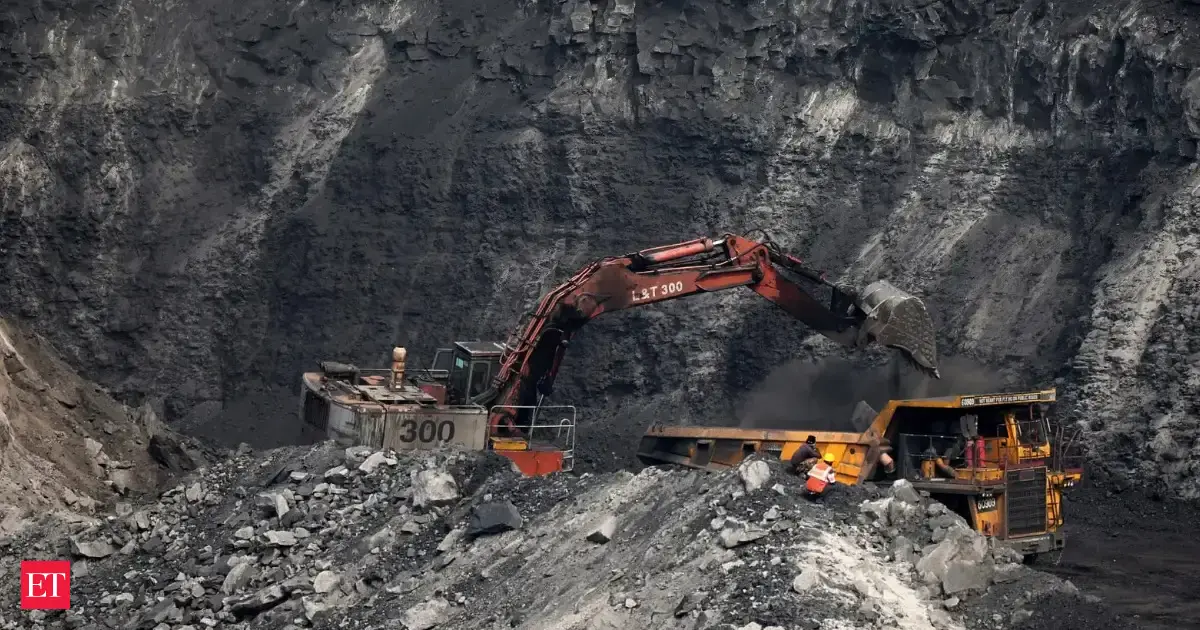
Coal India secured the Gadadharpur iron ore block in Odisha. This acquisition marks the state-run miner's entry into iron ore mining. India's iron ore production is projected to increase significantly by 2026-27. Odisha's rising output will support planned steel capacity additions. This will also bolster infrastructure and construction demand across the nation. View More
Coal India has won the Gadadharpur iron ore block in the eastern state of Odisha through a competitive auction, the state's director of mines and geology, Rohit Kumar Lenka, said on Thursday. The block contains 258 million tonnes of iron ore resources and marks the state-run miner's entry into iron ore mining, according to commodities consultancy BigMint. India, the world's second-largest crude steel producer after China, is expected to produce 340 million to 345 million metric tons of iron ore in 2026-27, up from about 316 million tons a year earlier, according to BigMint. Odisha is one of India's key mineral-producing states, and rising iron ore output is expected to support planned steelmaking capacity additions, as well as infrastructure and construction demand. .Pbanner{display:flex;justify-content:space-between;align-items:center;background-color:#ec1c40;margin-top:20px;padding:5px 10px;border-radius:4px;color:#fff;line-height:10px;width: 100%;box-sizing: border-box} .Pbannertext{display:flex;align-items:center;font-size:16px;font-weight:600;font-family:'Montserrat';} .Pbannertext img{height:20px;margin:0 6px} .Pbannerbutton a{display:flex;align-items:center;background-color:#fff;color:#ec1c40;text-decoration:none;font-weight:600;padding:4px 8px;border-radius:6px;font-size:15px;font-family:'Montserrat';} .Pbannerbutton img{height:20px;margin-right:6px} .Pbannerbutton a:hover{background-color:#f7f7f7} Add as a Reliable and Trusted News Source Add Now! (You can now subscribe to our Economic Times WhatsApp channel) (You can now subscribe to our Economic Times WhatsApp channel)

State-run Coal India emerged as the winning bidder for the Gadadharpur iron ore block in Odisha with a 114% premium, marking its entry into a sector dominated by NMDC View More

During the first four months of FY27, crude steel production stood at 56.3 Mt, up 2.6 per cent from the corresponding period last year View More

India's energy security now depends on manufacturing and resilient technology supply chains. The nation aims to become a global hub for clean energy technology production. Steel is identified as a crucial pillar supporting renewable infrastructure and battery projects. Government schemes support electric mobility, battery manufacturing, and critical mineral supply chains. Industry stakeholders are invited to collaborate for national self-reliance and economic development. View More
New Delhi: Union Minister for Steel and Heavy Industries H D Kumaraswamy on Thursday asserted that the definition of energy security has undergone a fundamental transformation, stating that national strength in today's evolving global landscape depends on manufacturing resilience and tech supply chains rather than simple resource access. Delivering a keynote speech at the Special Plenary Session on "Energy Security & Supply Chains" at the 7th CII International Energy Conference & Exhibition in New Delhi, the Minister outlined India's strategy to emerge as a global hub for clean technologies. He emphasized that industrial capability and energy security are now fundamentally linked. "Today, under the visionary leadership of Hon'ble Prime Minister Narendra Modi, India's energy security is no longer defined solely by access to energy resources. It is increasingly determined by our ability to manufacture, innovate and build resilient supply chains for the technologies that will power the future," the Minister said. Also read | India to remain among fastest-growing steel markets in FY27: India Ratings and Research Kumaraswamy noted that recent geopolitical disruptions and competition over critical minerals have shifted industrial priorities worldwide. He explained that India is responding through the vision of Aatmanirbhar Bharat by establishing competitive domestic capabilities while staying connected to global value chains. Live Events "India should not merely become one of the world's largest consumers of clean energy technologies. India must become one of the world's leading producers of the equipment, materials and technologies that will drive the global energy transition," he said. Highlighting the crucial role of Heavy Industries and Steel, Kumaraswamy described steel as the central pillar of the clean energy transition, pointing out that renewable infrastructure, battery factories, and hydrogen projects rely directly on steel. He noted that as the world's second-largest producer, India is well positioned to meet its expanding domestic needs while addressing global demand for sustainable steel. He reaffirmed the national target of reaching 300 million tonnes of steelmaking capacity by 2030 through eco-friendly practices. "Steel has become the backbone of the global energy transition. The future of the steel sector will not be defined only by production capacity but by sustainability, competitiveness and technological advancement," he remarked. The Minister detailed key central initiatives driving this industrial shift, including the PM E-DRIVE Scheme with an outlay of Rs 10,900 crore to build complete electric mobility ecosystems, and the Production Linked Incentive (PLI) Scheme for Advanced Chemistry Cell Batteries, committing Rs 18,100 crore for 50 GWh of battery capacity. He also pointed to the Rs 7,280 crore scheme for manufacturing Sintered Rare Earth Permanent Magnets to secure critical mineral supply chains. "Our objective is to build complete domestic manufacturing ecosystems that create value and generate employment. This is the essence of resilient supply chains in the twenty-first century," he said. The Union Minister urged industry, academia, and financial institutions to join hands with the government to advance national self-reliance and support long-term economic development goals. "I invite industry and all stakeholders to come forward and work with the Government to make India Aatmanirbhar and realise the vision of Viksit Bharat by 2047," the Minister said. .Pbanner{display:flex;justify-content:space-between;align-items:center;background-color:#ec1c40;margin-top:20px;padding:5px 10px;border-radius:4px;color:#fff;line-height:10px;width: 100%;box-sizing: border-box} .Pbannertext{display:flex;align-items:center;font-size:16px;font-weight:600;font-family:'Montserrat';} .Pbannertext img{height:20px;margin:0 6px} .Pbannerbutton a{display:flex;align-items:center;background-color:#fff;color:#ec1c40;text-decoration:none;font-weight:600;padding:4px 8px;border-radius:6px;font-size:15px;font-family:'Montserrat';} .Pbannerbutton img{height:20px;margin-right:6px} .Pbannerbutton a:hover{background-color:#f7f7f7} Add as a Reliable and Trusted News Source Add Now! (You can now subscribe to our Economic Times WhatsApp channel) (You can now subscribe to our Economic Times WhatsApp channel)