
Latest Sectors News
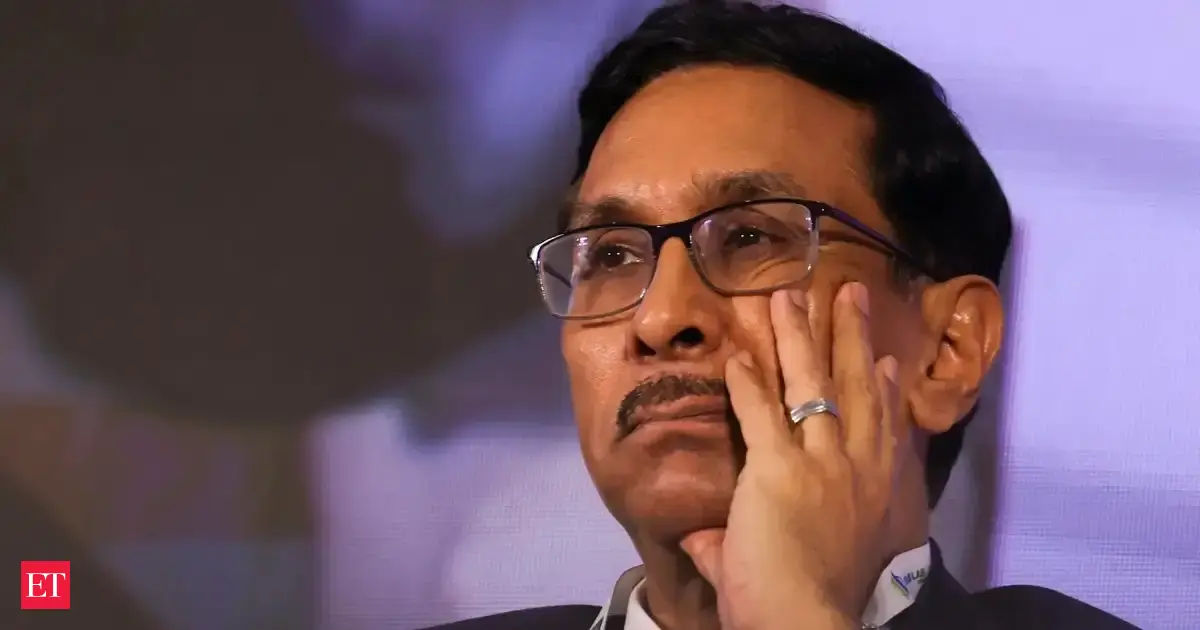
JSW Steel Joint Managing DirectorJayant Acharyasaid global reconstruction efforts, particularly in theMiddle East, Ukraine and Palestine, are expected to support steel demand and help stabilise global markets. He said India's steel demand remains strong, though rising imports are a concern, adding that government measures such as anti-dumping duties could help protect the domestic industry. View More
The demand for reconstruction globally, especially in the Middle East, will help stabilise steel markets, says Jayant Acharya, joint managing director at JSW Steel , in an interview with ET's Nikita Periwal. The country's largest steel-maker's volume growth and cost control, along with sustainable margins is likely to give it the cash flows needed to continue investing in capacities, while strengthening its balance sheet. Edited excerpts: What do you expect demand to look like for the rest of the fiscal? The demand in India remains strong, and is a tailwind for us, but it also attracts other sellers globally to come to India. The Middle East conflict also saw some steel being diverted to India, which we will need to watch. The government has examined and initiated anti-dumping measures for hot rolled coils, where we have seen a surge in imports and a possible threat of injury. The second half will see stronger growth as is usual.Given the current geopolitical movements, the government is also keen that India should be more self-reliant, and so steps will be taken to see that there is no structural damage because of surplus trade flows into India. How are you approaching the Middle Eastern markets given the reconstruction opportunities in the region? The Middle East will certainly provide a growth opportunity once the situation normalises. The steel going from Iran to the Middle East was also impacted, which will give India and other steel-producing countries an opportunity to play in that market. Either way, it will help balance demand, which would help us directly or indirectly. Whoever supplies steel to them - that steel will not look for different shores, and that will stabilise the market.The reconstruction demand in Ukraine and Palestine will also draw a lot of steel post stabilisation. Europe is also picking up their infrastructure and defence initiatives, so they will rebuild some of their infrastructure. There is a lot of reconstruction demand emerging globally, and that is the space we need to watch out for. Live Events Is the current demand environment the best that you have seen in several quarters? It is among the better quarters for sure after the super cycle we saw in 2022. The flare in commodities then because of the Russia-Ukraine war was more because of supply chain challenges. What we are seeing now is demand-based growth, which is sustainable and structural. I think this is a good era we are stepping into, and hopefully geopolitics will stabilise. How important is the ₹15,000-mark for EBITDA/tonne when companies are planning additional capacities? And what is the aspirational number you are looking at? It is important to have a sustainable EBITDA margin to be able to fund your operations and invest back into capacity expansion. Even at this ₹15,000 level, our EBITDA per tonne is only $158. In the last few years, we have said that $145-150 is level we should have, but because of rupee depreciation we are still at $158, even though in rupee terms we have touched ₹15,000 a tonne.$150 is a fair number. If you look at global steel pricing, India is very competitively priced as a country - it is an ideal, and according to me a very sustainable, steel price. For India to be able to grow its infrastructure, manufacturing and consumption, it is a sustainable, good number for the industry at large. Does this allow companies to commit to capital expenditure with confidence? Volatility in margins has prevented companies from going out more confidently and investing in the cycle. If you see a margin of $150 sustained over time, people naturally get the confidence to invest back. Long-term visibility of demand is one factor, but long-term visibility of sustainable margins is equally important.We have been able to deleverage our balance sheet and chart growth because we feel timing is equally important for putting up capacities in the country. Sustainable margins certainly improve the confidence of the industry to invest back, and that should be there for a few quarters at least in sequence. Tell us about the recent debt reduction and its impact on finance costs? At ₹46,157 crore as of June-end, net debt is the lowest in nearly seven years. We have renegotiated some of our loans, repaid expensive loans, and our upgrades are reflecting better on our negotiation capability to secure a lower rate of interest when refinancing. In fiscal 2026, the weighted average interest rate declined to 6.17% from 7.14% and further eased to 6.16% in quarter one this fiscal. .Pbanner{display:flex;justify-content:space-between;align-items:center;background-color:#ec1c40;margin-top:20px;padding:5px 10px;border-radius:4px;color:#fff;line-height:10px;width: 100%;box-sizing: border-box} .Pbannertext{display:flex;align-items:center;font-size:16px;font-weight:600;font-family:'Montserrat';} .Pbannertext img{height:20px;margin:0 6px} .Pbannerbutton a{display:flex;align-items:center;background-color:#fff;color:#ec1c40;text-decoration:none;font-weight:600;padding:4px 8px;border-radius:6px;font-size:15px;font-family:'Montserrat';} .Pbannerbutton img{height:20px;margin-right:6px} .Pbannerbutton a:hover{background-color:#f7f7f7} Add as a Reliable and Trusted News Source Add Now! (You can now subscribe to our Economic Times WhatsApp channel) (You can now subscribe to our Economic Times WhatsApp channel)

JSW Steel expects post-war reconstruction in West Asia to create fresh demand, while warning that surplus steel from China, Japan and Russia could be diverted to India. View More

Coal traffic is likely to post a compounding decline of 2-4% as domestic production and renewables rise, while iron ore traffic is expected to recover at a 5-7% CAGR during FY26-FY28 on higher coastal movement View More

Shyam Metalics and Energy has commissioned a new aluminium foil manufacturing facility. This facility in Sambalpur, Odisha, has an annual production capacity of eighteen thousand tonnes. The company invested approximately eight hundred crore rupees in downstream aluminium facilities. Their aluminium Flat Rolled Products facility is nearing completion and will launch by September. This expansion strengthens their value-added aluminium products portfolio and economic growth. View More
Mumbai: Shyam Metalics and Energy Ltd on Thursday announced the commissioning of an aluminium foil manufacturing facility with an annual production capacity of 18,000 tonnes at its Sambalpur plant in Odisha . The company has invested around Rs 800 crore in developing downstream aluminium facilities at the plant to strengthen value-added product portfolio. The company's step-down subsidiary, SMEL Steel Structural, has commenced commercial production at its aluminium foil manufacturing facility in Sambalpur, a statement said, adding that the plant is equipped to manufacture premium-grade foils in thickness range of 6-40 microns. SMEL also confirmed that its aluminium Flat Rolled Products (FRP) facility is in its final phase and is on track for commercial launch by September, further strengthening its presence in the value-added aluminium products segment. The FRP section will have an installed capacity of 60,000 TPA. Live Events Brij Bhushan Agarwal, Chairman and Managing Director, Shyam Metalics and Energy Ltd said, "by delivering high-quality, specialised products, we are well-positioned to serve high-growth economic segments, unlock new revenue streams, and simultaneously foster localised socio-economic and employment growth in Odisha." PTI .Pbanner{display:flex;justify-content:space-between;align-items:center;background-color:#ec1c40;margin-top:20px;padding:5px 10px;border-radius:4px;color:#fff;line-height:10px;width: 100%;box-sizing: border-box} .Pbannertext{display:flex;align-items:center;font-size:16px;font-weight:600;font-family:'Montserrat';} .Pbannertext img{height:20px;margin:0 6px} .Pbannerbutton a{display:flex;align-items:center;background-color:#fff;color:#ec1c40;text-decoration:none;font-weight:600;padding:4px 8px;border-radius:6px;font-size:15px;font-family:'Montserrat';} .Pbannerbutton img{height:20px;margin-right:6px} .Pbannerbutton a:hover{background-color:#f7f7f7} Add as a Reliable and Trusted News Source Add Now! (You can now subscribe to our Economic Times WhatsApp channel) (You can now subscribe to our Economic Times WhatsApp channel)
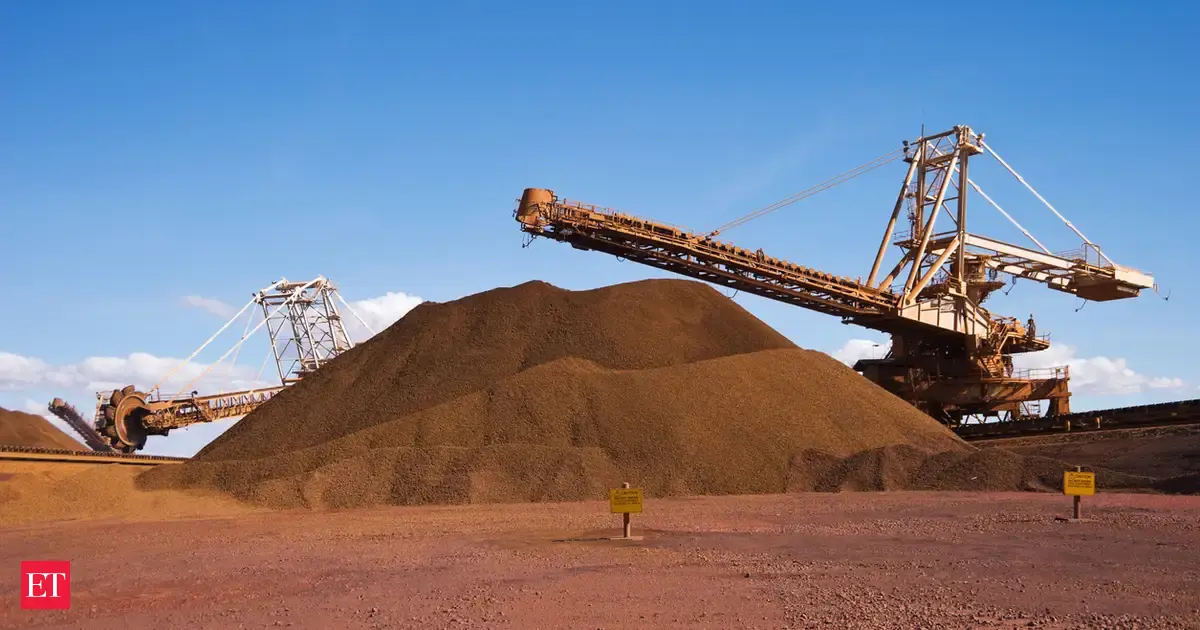
Iron ore has been added to the core sector industries list, expanding it to nine. The government will release a revised Index of Core Industries series on July 20. This new series will feature a base year of 2022-23, replacing the older 2011-12 base. Raw coal remains, but coal middlings and washed coal are excluded to prevent double counting. View More
New Delhi: The government on Friday included iron ore in the list of core sector infrastructure industries to help capture the performance of the economy in a better way. Consequently, the number of core industries has increased to nine from eight, the commerce and industry ministry said in a statement. The government will release a revised series of the Index of Core Industries (ICI) with a new base year of 2022-23 on July 20. The revised series will replace the existing 2011-12 base year series. "In view of the extensive use of iron ore in industrial production and its significant contribution to industrial development, iron ore has been included as a core industry in the revised ICI series," it said. In the coal sector , only raw coal has been retained in the revised ICI series. Coal middlings and washed coal have been excluded to eliminate double counting, as both are derived from raw coal. To ensure consistency with the IIP, the revised ICI series uses gross production data for compiling the Steel Index, replacing the net production data used in the ICI (2011-12) series, the statement said. Live Events Alongside the provisional reading for June 2026, the government will also publish a back series for 38 months from April 2023 to May 2026. The weights for the ICI (2022-23) series have been derived from the weights of the Index of Industrial Production (IIP) 2022-23 series released by the ministry of statistics and programme implementation. The weights of the ICI basket items, drawn from the IIP, have been redistributed on a pro-rata basis to total 100 for finalising the weights of the ICI item basket. India has already revised its Consumer Price index , Wholesale Price Index, Gross Domestic Product, and Index of Industrial Production data besides releasing a producer price index on a trial basis and an index of services production. .Pbanner{display:flex;justify-content:space-between;align-items:center;background-color:#ec1c40;margin-top:20px;padding:5px 10px;border-radius:4px;color:#fff;line-height:10px;width: 100%;box-sizing: border-box} .Pbannertext{display:flex;align-items:center;font-size:16px;font-weight:600;font-family:'Montserrat';} .Pbannertext img{height:20px;margin:0 6px} .Pbannerbutton a{display:flex;align-items:center;background-color:#fff;color:#ec1c40;text-decoration:none;font-weight:600;padding:4px 8px;border-radius:6px;font-size:15px;font-family:'Montserrat';} .Pbannerbutton img{height:20px;margin-right:6px} .Pbannerbutton a:hover{background-color:#f7f7f7} Add as a Reliable and Trusted News Source Add Now! (You can now subscribe to our Economic Times WhatsApp channel) (You can now subscribe to our Economic Times WhatsApp channel)

The Sajjan Jindal-led company reported a consolidated net profit of ?4,651 crore for the first quarter of FY27, up from ?2,184 crore a year earlier, according to an exchange filing on Friday. The profit exceeded the ?3,199-crore average estimate of seven analysts polled by Bloomberg. View More


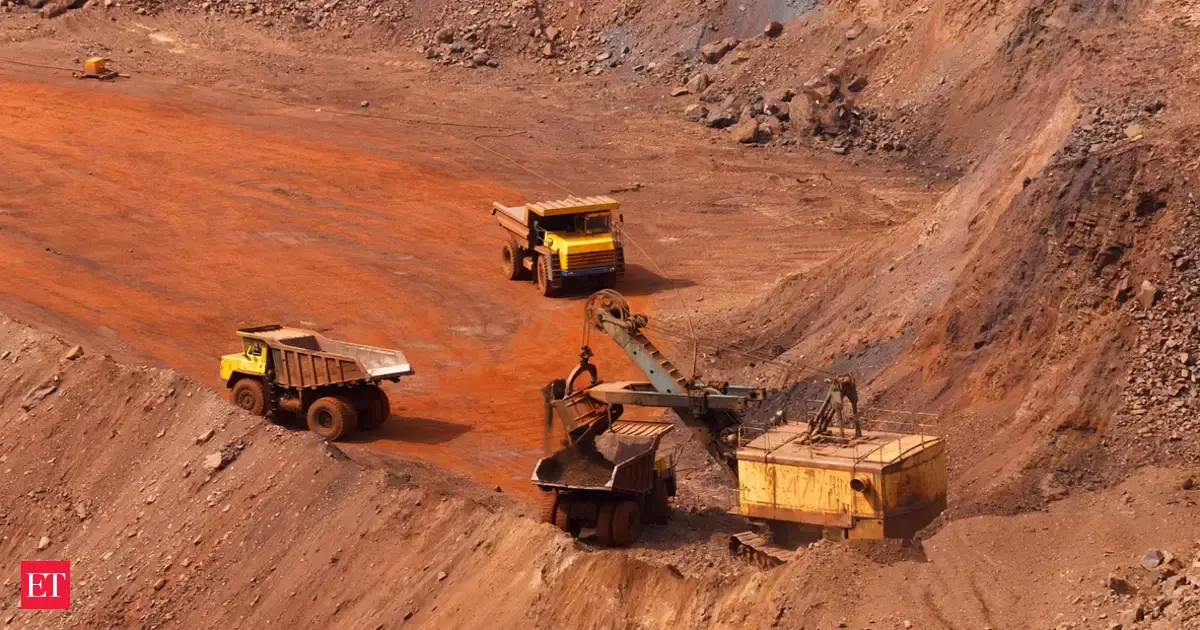
Iron ore has been added to the core sector infrastructure industries list. This inclusion increases the total number of key sectors from eight to nine. The new series, with base year 2022-23, will be released on July 20. Gross production data will now compile the steel index for consistency. Raw coal is retained in the coal sector, excluding derived products. View More
New Delhi: The government on Friday said it has included iron ore in the list of core sector infrastructure industries , a move which will help in capturing the performance of the economy in a better way. Consequently, the number of core industries has increased from eight to nine. Currently, the government evaluates the performance of eight key sectors - crude oil, petroleum refinery, cement, electricity, natural gas, fertiliser, finished steel and coal - on a monthly basis. "In view of the extensive use of iron ore in industrial production and its significant contribution to industrial development, Iron Ore has been included as a core industry in the revised ICI series," the Commerce and Industry Ministry said in a statement. The new series with base year 2022-23, containing data for nine key sectors, will be released on July 20 this year. Live Events The revised series will replace the existing Index of Core Industries (ICI) series with the base year 2011-12. The ministry also said that to ensure consistency with the IIP (Index of Industrial Production), the revised ICI series uses gross production data for compiling the Steel Index, replacing the net production data used in the ICI (2011-12) series. In the coal sector also, only Raw Coal has been retained in the revised series. Coal Middlings and Washed Coal have been excluded to eliminate double counting, as both are derived from Raw Coal, it added. In 2011, the government included two sectors: natural gas and fertiliser. Production growth of eight core infrastructure sectors slowed to a seven-month low of 0.5 per cent in May due to a fall in output of coal, crude oil and refinery products. .Pbanner{display:flex;justify-content:space-between;align-items:center;background-color:#ec1c40;margin-top:20px;padding:5px 10px;border-radius:4px;color:#fff;line-height:10px;width: 100%;box-sizing: border-box} .Pbannertext{display:flex;align-items:center;font-size:16px;font-weight:600;font-family:'Montserrat';} .Pbannertext img{height:20px;margin:0 6px} .Pbannerbutton a{display:flex;align-items:center;background-color:#fff;color:#ec1c40;text-decoration:none;font-weight:600;padding:4px 8px;border-radius:6px;font-size:15px;font-family:'Montserrat';} .Pbannerbutton img{height:20px;margin-right:6px} .Pbannerbutton a:hover{background-color:#f7f7f7} Add as a Reliable and Trusted News Source Add Now! (You can now subscribe to our Economic Times WhatsApp channel) (You can now subscribe to our Economic Times WhatsApp channel)

Industry flags inadequate duty-free quotas in six categories where India has strong export volumes, urging a review View More