
Latest Sectors News

Most battery cells currently rely on raw materials from China. GM is seeking to establish domestic supply chains both for EVs and energy storage. View More
In this articleGMFollow your favorite stocksCREATE FREE ACCOUNT Kurt Kelty, GM's vice president of battery and sustainability, speaks June 9, 2026, during the automaker's "Empower" event in which it announced the development of sodium-ion batteries for energy storage systems.Courtesy GMDETROIT â General Motors is in the early stages of developing next-generation battery cells that the company believes can reduce U.S. dependence on China, while boosting domestically sourced materials."We're developing a supply chain such that, two years from now, three years from now, it will be domestic," Kurt Kelty, GM vice president of battery and sustainability, told CNBC during an exclusive interview. "That's what we're aiming for â when we get into market, we've got a domestic source for that."Kelty was referring mainly to battery cells that the automaker expects to use in energy storage systems, or ESS, which are stationary devices for homes and businesses, including data centers. But the company plans to similarly prioritize domestic battery cell production for its future all-electric vehicles, a spokesperson reaffirmed to CNBC.Kelty's comments came days before GM's crosstown rival Ford Motor fielded criticism by the Trump administration for its ties to Chinese companies, including for domestic battery cell production.For ESS, GM has partnered with Denver-based startup Peak Energy to develop sodium-ion battery cells. The idea is to lower the need for materials that China dominates â such as lithium and ferrous sulfate, a byproduct of titanium production â and instead, use domestic-made batteries utilizing more prevalent materials in the U.S., such as sodium from soda ash.GM is working on a variety of battery chemistries for different applications of ESS as well as its EVs. Much like baking, each ingredient and the amount put into a battery cell can change the outcome of the product. In the case of battery cells, that can mean differences in performance, cost and stability.GM expects to launch commercial production of sodium-ion battery cells with Peak around 2029. In the meantime, it's producing other chemistries for ESS and EVs that use undisclosed amounts of materials from China. General Motors energy is seen at the New York International Auto Show on April 16, 2025. Danielle DeVries | CNBCMost battery cells currently rely on raw materials from China. The International Energy Agency reports the country produces about 85% of the world's EV battery cathode active material and more than 90% of anode active material, leading to an 80% control of battery production.  For example, China largely controls the sourcing and production of lithium iron phosphate, or LFP, batteries through its supply chains. GM currently manufactures LFP cells with its partner LG Energy Solution in the U.S. for ESS, while Ford has licensed technology from China's CATL for LFP battery cells for its EVs and ESS plans."It's a really good story, because you've got the resources [in the U.S.] that you can keep it totally domestic," Kelty said. "It's going to take some time to build this industry up, but the potential for sodium-ion is just much greater than LFP."At a foundational level, a sodium-ion battery works much like a lithium-ion battery, but GM says it has the potential to perform across a wider range of temperatures and for more cycles.Courtesy GMThe Trump administration has placed particular focus on building up the U.S. battery supply chain and reducing its reliance on China.And, earlier this week, Transportation Secretary Sean Duffy expressed "profound concern" over Ford's China ties, specifically citing the CATL licensing. That's despite Ford being the top-producing automaker of vehicles in the U.S.Kelty, days earlier, said of Ford, "they're following a different path." "We think it's more valuable to develop this all domestically, take advantage of domestic supply chains, and develop a technology that's actually better than the incumbent technology," said Kelty, a former battery executive with U.S. EV leader Tesla.'Leapfrog' China tech?Sam Abuelsamid, a battery expert and vice president of market research at Telemetry, noted it will likely take years to domesticate a battery supply chain. At the same time, China continues to develop and produce new types of chemistries, including sodium-ion."There's no reason why the LFP materials couldn't also be produced here," Abuelsamid said. "There's ways to do that, but ... the sodium-ion would be even cheaper and easier to do."watch nowVIDEO8:2508:25How much it will take for the U.S. to catch up to China's battery leadAutosKelty numerous times said GM hopes to "leapfrog" China's battery technologies, noting that competing directly with Chinese supply chains or mimicking what that market has already established would be difficult."The better thing to do is try to leapfrog, come up with a different technology that's actually better that we can actually source here," Kelty said. Kelty said he views sodium-ion as the best solution for ESS, because its chemistry and temperature tolerance allow for the cells to function without active cooling â a major source of cost and complexity associated with ESS. That improvement means lowering the cost of ownership for energy storage, he said.The Warren Battery Cell Innovation Center on General Motors' global tech and design campus in suburban Detroit.Photo by Steve Fecht for General MotorsThe Detroit automaker is spending $900 million on new battery lab facilities at its global tech campus in suburban Detroit. That includes a more-than-500,000-square-foot facility for prototyping manufacturing of cells that's set to begin operations later this year.Still, that funding amount is small compared with what would be needed to substantially loosen China's grip on the industry."We are purposely going down the path of having American-developed technology," Kelty said. "Batteries are really critical for a lot of different areas of of our economy here."â CNBC's Robert Ferris contributed to this report. Choose CNBC as your preferred source on Google and never miss a moment from the most trusted name in business news.
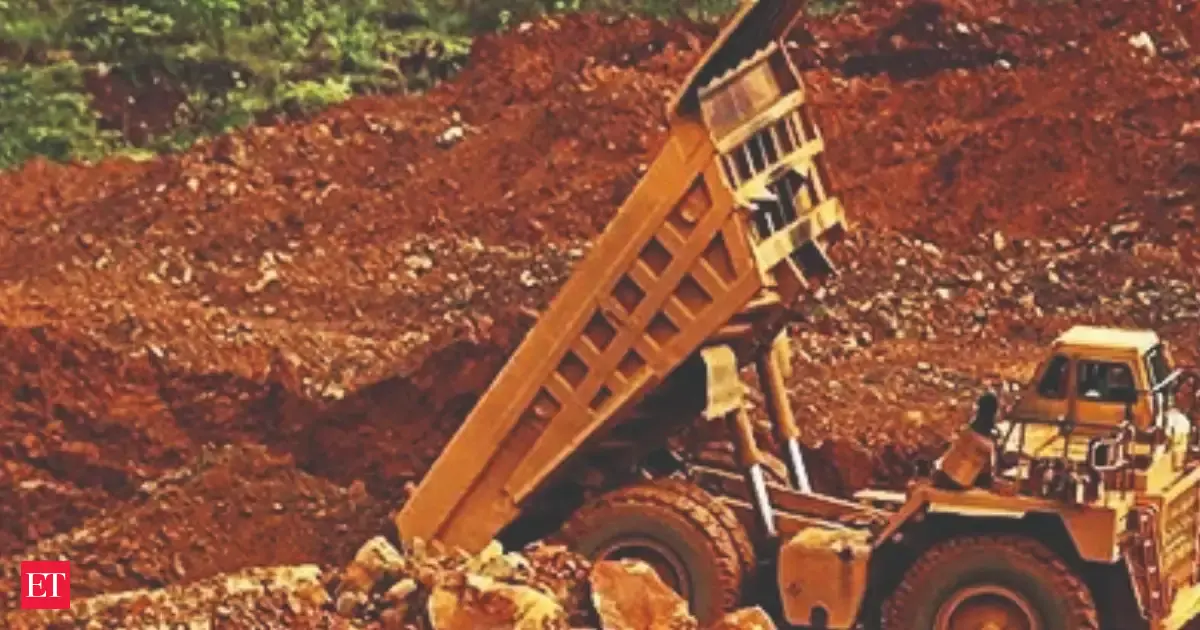
Monolithisch India has made a landmark purchase of a quartzite stone block for Rs 157 crore, marking a pivotal move towards enhancing its raw material supply chain through backward integration. Authorized for five years, this venture boasts considerable mining capacity, with commercial activities slated to kick off by February or March 2027. View More
New Delhi: Monolithisch India on Friday said it has secured a quartzite stone block in Nawada district through an e-auction conducted by Bihar's Mines and Geology Department for Rs 157 crore. The company produces premixed ramming mass, a key refractory material used in induction furnaces by the secondary steel industry. The acquisition marks the largest strategic milestone in the company's journey since inception and completes a significant step towards backward integration of its raw material supply chain, a company statement said. The block has been allotted for five years, with an approved mining capacity of 7,10,000 metric tonnes (MT) per annum, translating into a cumulative capacity of 35,50,000 MT over the lease period. The acquisition will provide greater control over the company's key raw material requirements and help hedge raw material prices for the next five years, as Monolithisch India expands its silica ramming mass manufacturing capacity. Live Events Consolidated group manufacturing capacity is expected to reach 5,76,000 MTPA. Subject to statutory approvals expected within 3-4 months, commercial operations are targeted to commence in February/March 2027. The Rs 157 crore consideration will be paid in tranches over five years in accordance with state government guidelines. Mining operations will be undertaken through experienced national mining contractors on a per-ton raising contract basis, limiting the company's direct infrastructure capital expenditure. A dedicated beneficiation and storage unit will also be established near the block to support quality management, R&D and product development. Harsh Tekriwal, Managing Director of Monolithisch India, said, "I am proud to announce that our backward integration is complete, with surplus raw material capacity, securing our needs that were supposed to grow rapidly with the commencement of our new greenfield project. The company is a major supplier of domestic integrated secondary steel clusters, especially in eastern and central India". Tekriwal is of the view that this strategic move will significantly strengthen the company's competitiveness in quality and cost in the coming years. This block belt was operational from 2015-2020, and the ore in this block was highly sought after by secondary steel cluster customers for its quality and consistency. This allotment will also accelerate the development of new products based on ore behaviour from a single, consistent supply source. He also said, "This acquisition is only the first step in our next phase of growth; we will pursue similar initiatives to secure raw materials before launching new product verticals". PTI .Pbanner{display:flex;justify-content:space-between;align-items:center;background-color:#ec1c40;margin-top:20px;padding:5px 10px;border-radius:4px;color:#fff;line-height:10px;width: 100%;box-sizing: border-box} .Pbannertext{display:flex;align-items:center;font-size:16px;font-weight:600;font-family:'Montserrat';} .Pbannertext img{height:20px;margin:0 6px} .Pbannerbutton a{display:flex;align-items:center;background-color:#fff;color:#ec1c40;text-decoration:none;font-weight:600;padding:4px 8px;border-radius:6px;font-size:15px;font-family:'Montserrat';} .Pbannerbutton img{height:20px;margin-right:6px} .Pbannerbutton a:hover{background-color:#f7f7f7} Add as a Reliable and Trusted News Source Add Now! (You can now subscribe to our Economic Times WhatsApp channel) (You can now subscribe to our Economic Times WhatsApp channel)

The shipping industry in Asia is grappling with unprecedented challenges as the typhoon season proves to be remarkably intense. Shanghai is currently facing extensive congestion, resulting in significant delays for vessels. Consequently, average waiting times at various Chinese ports have surged, disturbing the scheduled arrivals of container ships. View More
An unusually active typhoon season is disrupting shipping operations across Asia, with Shanghai particularly hard hit by snarled traffic and vessel delays. In an advisory published Wednesday, A.P. Moller-Maersk A/S warned that a string of severe typhoons in recent weeks had caused congestion at some of the region’s biggest ports “resulting in a decrease in on-time vessel arrivals.” The average waiting time at Chinese ports ticked up to 3.38 days per vessel, the longest this year so far, data from market intelligence firm Kpler showed. Shanghai, the world’s busiest container port, saw barely one-fifth of container ships arrive on time in July, according to analysis by Singapore-based maritime advisory firm Sea-Intelligence. Weather-related disruptions persisted into August, which saw 12 tropical cyclones form in the Northwest Pacific and the South China Sea, marking the highest number of such storms in a single month since 1961, according to the Hong Kong Observatory. Live Events Frequent tropical cyclones last month disrupted coastal bulk shipping, briefly raising freight rates for iron ore, coal and grains, according to a bulletin last week from China’s Ministry of Transport. Khalid Hashim, managing director of bulk carrier owner Precious Shipping Pcl, said his ships had encountered delays of 10 to 20 days when attempting to berth at Chinese ports. “Weather has been so bad on land, with typhoons hitting,” he said at an industry conference in Singapore on Thursday. “The most efficient place on Earth for dry-bulk discharges is facing congestion,” he added, referring to China. A rapidly strengthening El Niño is fueling East Asia’s intense typhoon activity. The climate phenomenon tends to enhance the formation of powerful storms in the Northwest Pacific. UK-based commercial forecaster Tropical Storm Risk expects the current typhoon season to be one of the most intense on record. El Niño also unleashes changes in the ocean and atmosphere that in turn cause tropical cyclones to form further east in the Pacific Ocean. That gives the storms more time to intensify over warm waters. It also nudges them to curve toward Japan, South Korea and central China, affecting the major sea lanes that link Asia and North America, said Todd Lanouette, business manager for shipping at commercial forecaster StormGeo. On the Wire China’s inflation rebound is revealing two very different stories. Energy, commodities and AI-related goods are getting more expensive, while prices tied more closely to domestic demand — from cars and home appliances to rent — remain under pressure. China could hold the key to the oil market’s next adjustment, with refinery runs down about 2.5 million barrels a day from early-year levels as policy constraints limit refiners’ ability to capture record regional margins, said Bloomberg Intelligence. China’s oil demand is expected to fall by 600,000 barrels a day in 2026 on the impact of the US-Iran war and spread of electric vehicles, according to the research arm of Sinopec Group, the top state-owned refiner. .Pbanner{display:flex;justify-content:space-between;align-items:center;background-color:#ec1c40;margin-top:20px;padding:5px 10px;border-radius:4px;color:#fff;line-height:10px;width: 100%;box-sizing: border-box} .Pbannertext{display:flex;align-items:center;font-size:16px;font-weight:600;font-family:'Montserrat';} .Pbannertext img{height:20px;margin:0 6px} .Pbannerbutton a{display:flex;align-items:center;background-color:#fff;color:#ec1c40;text-decoration:none;font-weight:600;padding:4px 8px;border-radius:6px;font-size:15px;font-family:'Montserrat';} .Pbannerbutton img{height:20px;margin-right:6px} .Pbannerbutton a:hover{background-color:#f7f7f7} Add as a Reliable and Trusted News Source Add Now!


Shares of Ratnaveer Precision Engineering ended 7% lower after a rally. Analysts foresee a 27.8% upside, bolstered by a recent rights issue and improving fundamentals. The stock closed at ?288.5, with a target price of ?388 for twelve months. View More

Tata Steel is using over 10,000 CCTV cameras and AI for proactive accident prevention. Connected workforce systems and remote operations are also being deployed across its facilities. This technology shift aims to move safety from post-incident investigation to real-time prevention. Driver fatigue monitoring and hazard detection are integrated into logistics and plant operations. View More
Ranchi: Global steel major Tata Steel is scaling up artificial intelligence , connected workforce systems and remote operations to make industrial safety more predictive, with the company already using more than 10,000 CCTV cameras and AI-enabled surveillance to identify unsafe behaviour and intervene before accidents occur, a top official said on Friday. "Most people use CCTVs for post-mortem after an incident. We want to do it proactively -- to prevent accidents. Tata Steel is scaling up AI, computer vision and remote operations to shift workplace safety from post-incident investigation to real-time accident prevention, with over 10,000 CCTV cameras across its operations," Rajiv Mangal, Vice President, Safety, Health and Sustainability, Tata Steel, told PTI. Over the past 15 years, Tata Steel has achieved a 38 per cent reduction in its lost time injury frequency rate (LTIFR) across the group. Also read: Tata Steel commissions India's 1st coke oven gas injection project at its Odisha plant The company is using AI-enabled surveillance to detect unsafe acts and generate immediate alerts for supervisors, instead of relying only on common practices to monitor thousands of camera feeds, Mangal said. Live Events Tata Steel is also deploying its Connected Workforce platform across the country. "AI-enabled gate passes and beacons installed inside plants track personnel movement and automatically flag deviations, helping ensure workers enter only authorised and safe areas," he said. The company is also expanding Integrated Remote Operation Centres (iRoCs), enabling hazardous operations either in mines or plants to be monitored and, where feasible, controlled remotely. CCTV feeds, plant and machinery data and other critical information are brought together on large screens, reducing workers' exposure to hazardous environments and improving coordination during emergencies. Mangal said remote operations could also help attract younger workers to the steel industry by reducing exposure to hot, humid and high-noise workplaces. "AI is being deployed in logistics safety as well. Around 8,000-10,000 trucks and trailers with raw materials or goods enter Tata Steel plants every day. Driver-fatigue monitoring systems use cameras to detect head movement and mobile-phone use, triggering alerts and automated warnings. Technology is also being used to prevent trucks from coming into contact with overhead cables," Mangal said. The company's digital safety systems include real-time hazard detection, IoT monitoring, predictive asset-health analysis, drones, smart surveillance and GenAI-enabled safety observation systems, he said. Tata Steel expects AI-powered hazard prediction, computer vision, digital twins, autonomous inspections, wearables and connected-worker technologies to become central to industrial safety by 2035, he said. Mangal, who is a member of the safety committee of global steel body World Steel Association, asserted that in Tata Steel, safety culture is always backed by its leadership. "Tata Steel's safety performance is reviewed through its board-level Safety, Health & Environment Committee, Risk Management Committee and other leadership forums, with safety risks integrated into enterprise risk management. Safety is not only driven by the safety department. If safety has to be genuinely implemented, the entire leadership team has to take ownership," he said. The company's Zero Harm philosophy applies equally to contract workers, who undergo mandatory induction, competency assessments, role-specific training, audits and performance monitoring, he said. Tata Steel has invested in two safety leadership development centres and benchmarks its practices against global steelmakers and other industries. Tata Steel is also expanding its safety agenda to mental health, heat stress, fatigue and ergonomics through a five-pillar wellness framework covering physical, emotional, occupational, social and financial wellbeing. On decarbonisation , Mangal said Tata Steel remains committed to Net Zero emissions by 2045 and is pursuing electric arc furnaces, renewable energy, biochar, HIsarna, EASyMelt and green-hydrogen technologies. The company has conducted a large-scale hydrogen injection trial in a blast furnace and found the technology technically feasible, but commercial deployment remains constrained by cost and availability. Hydrogen prices would need to fall to around USD 1.5-2 per kg from current levels of roughly USD 4 to 6 per kg for large-scale steelmaking applications to become viable, he said. The company estimates its existing Indian sites have land to support capacity of up to 40 million tonnes. Future investments, however, will focus increasingly on specialised products such as electrical steel, heavy plates for shipbuilding and high-end steel for pipelines, including hydrogen transportation. Mangal said India's abundant iron ore and growing steel demand provide significant scope for capacity expansion, but high logistics and infrastructure costs remain key challenges. Better road, rail, port and waterway connectivity will be crucial for sustaining India's steel growth, he said. The company spent Rs 802.17 crore on environment, safety and compliance projects in FY2025-26, compared with Rs 1,036.25 crore in FY2024-25. Tata Steel in the June quarter reported a 19 per cent year-on-year rise in consolidated net profit to Rs 2,385.24 crore on account of growth in revenues from India operations. Its total income rose to Rs 61,026.97 crore in Q1 FY27 from Rs 53,466.79 crore in the same quarter a year ago. Tata Steel was established in India as Asia's first integrated private steel company in 1907 and is now one of the leading global players. .Pbanner{display:flex;justify-content:space-between;align-items:center;background-color:#ec1c40;margin-top:20px;padding:5px 10px;border-radius:4px;color:#fff;line-height:10px;width: 100%;box-sizing: border-box} .Pbannertext{display:flex;align-items:center;font-size:16px;font-weight:600;font-family:'Montserrat';} .Pbannertext img{height:20px;margin:0 6px} .Pbannerbutton a{display:flex;align-items:center;background-color:#fff;color:#ec1c40;text-decoration:none;font-weight:600;padding:4px 8px;border-radius:6px;font-size:15px;font-family:'Montserrat';} .Pbannerbutton img{height:20px;margin-right:6px} .Pbannerbutton a:hover{background-color:#f7f7f7} Add as a Reliable and Trusted News Source Add Now! (You can now subscribe to our Economic Times WhatsApp channel) (You can now subscribe to our Economic Times WhatsApp channel)

India's mining sector is projected to contribute half a trillion dollars over twenty years. This vital industry is expected to create three crore new jobs for the nation's economy. Mineral security is now intrinsically linked with energy security for global stability. Emerging technologies like AI and quantum computing depend heavily on mineral resources. Vidarbha is poised to become a significant engine for India's mining-led economic growth. View More
Nagpur: The mining sector could contribute USD half a trillion to the Indian economy over the next 20 years and create three crore jobs, Maharashtra Chief Minister Devendra Fadnavis said on Friday. He was addressing a gathering at the 36th National Convention of Mining Engineers and National Seminar on 'Mining for Viksit Bharat @2047', which has been organised by the Nagpur Local Centre of The Institution of Engineers (India). Also Read: Northern Coalfields ramps up coal production after rains ease Vidarbha has the potential to emerge as a major engine of India's mining-led economic growth and contribute significantly to the vision of Viksit Bharat 2047 , the CM added. "The entire world is looking at energy security. But, at the same time, energy security is now coupled with mineral security. Without mineral security, energy security is not possible anymore," he said. Live Events The emerging world talks about semiconductors, AI and quantum, and these three things, which are going to shape the new world order, are deeply dependent on power and minerals, Fadnavis pointed out. Also Read: Coal India-arm NCL output rises 67%, supplies by 75% as rains ease Looking at the fragmented supply chain across the world today, it is imperative that every country creates a very vibrant mining ecosystem and achieve security in the minerals sector, he asserted. The country is progressing due to several missions being led by the Union government, and the mission of critical minerals and rare earths is reshaping the country's mining industry, the CM said. While the country's mining industry is centred predominantly around coal, limestone and iron ore, which are flourishing, India, as a developing nation, also requires steel, cement and energy, Fadnavis said. The CM said lithium, cobalt, copper, several other critical minerals and rare earths are also now required to steer the country's economy, he said. "If we look at the world order, the only thing that is creating disruption in the world order is to have mineral resources in possession. Today most of the wars across the world are only around minerals and mineral security. Amidst that, I think India's new mission is creating opportunities which we have never seen," he said. "This mining industry is going to contribute USD half a trillion dollar in the next 20 years. And it will add three crore jobs to our economy, which is a very conservative estimate," he said. Technology has changed the entire space of mining, and with AI, exploration has become conveniently easy and also sustainable, he said. Speaking about the importance of coal gasification, the CM said four of the first eight coal-gasification projects under the new national mission have been awarded in Vidarbha. Highlighting Vidarbha's vast mineral wealth, particularly the iron ore reserves of Gadchiroli, Fadnavis said investments of around Rs 5 lakh crore and steel making capacity of nearly 50 MTPA are being developed in the region. "Gadchiroli, along with Chandrapur, Bhandara, Nagpur, Gondia and Yavatmal, will develop into a new steel ecosystem. Green steel, clean technologies and improved logistics connectivity will create large scale employment and economic opportunities in the region, Maharashtra and the country," the CM said. Meanwhile, a release by the organisers said Union Minister for Coal and Mines G Kishan Reddy, who could not attend the function physically, sent a message stating that securing critical minerals such as lithium and rare earth elements are vital for India's green energy transition and resource security. Reddy stressed sustainable, technology driven mining, progressive mine closure and high safety standards, and called for greater collaboration among academia, industry and policymakers. "Automation, AI and advanced exploration technologies will help unlock India's mineral wealth safely and efficiently," Reddy said. .Pbanner{display:flex;justify-content:space-between;align-items:center;background-color:#ec1c40;margin-top:20px;padding:5px 10px;border-radius:4px;color:#fff;line-height:10px;width: 100%;box-sizing: border-box} .Pbannertext{display:flex;align-items:center;font-size:16px;font-weight:600;font-family:'Montserrat';} .Pbannertext img{height:20px;margin:0 6px} .Pbannerbutton a{display:flex;align-items:center;background-color:#fff;color:#ec1c40;text-decoration:none;font-weight:600;padding:4px 8px;border-radius:6px;font-size:15px;font-family:'Montserrat';} .Pbannerbutton img{height:20px;margin-right:6px} .Pbannerbutton a:hover{background-color:#f7f7f7} Add as a Reliable and Trusted News Source Add Now! (You can now subscribe to our Economic Times WhatsApp channel) (You can now subscribe to our Economic Times WhatsApp channel)

Global steel major Tata Steel is scaling up artificial intelligence, connected workforce systems and remote operations to make industrial safety more predictive, with the company already using more than 10,000 CCTV cameras and AI-enabled surveillance to identify unsafe behaviour and intervene before accidents occur, a top official said on Friday.
"Most people use CCTVs for post-mortem after an incident. We want to do it proactively -- to prevent accidents. Tata Steel is scaling up AI, computer vision and remote operations to shift workplace safety from post-incident investigation to real-time accident prevention, with over 10,000 CCTV cameras across its operations," Rajiv Mangal, Vice President, Safety, Health and Sustainability, Tata Steel, told PTI.
Over the past 15 years, Tata Steel has achieved a 38 per cent reduction in its lost time injury frequency rate (LTIFR) across the group.
The company is using AI-enabled surveillance to detect unsafe acts and generate immediate alerts f View More

Tata Steel shares fell nearly 3% amid weak market trends, with a decline of up to 7.65% over three months. Analysts caution over consolidation and possible support levels. The company recently initiated a sustainable project and received a favorable ruling from the Supreme Court in a GST case. View More

A meeting with Prime Minister Narendra Modi would be the clearest test yet of the tentative post-2020 reset between Asia’s two largest economies. View More
Chinese President Xi Jinping and Indian Prime Minister Narendra Modi meet on the sidelines of the BRICS summit in Kazan, Russia, on Oct. 23, 2024.China Daily via ReutersWhen the BRICS summit gets underway tomorrow in India, the meeting between Chinese President Xi Jinping and Indian Prime Minister Narendra Modi will be among the most keenly watched events. Beijing confirmed Xi's attendance at the event on Thursday, marking the Chinese president's first visit to India since 2019, and since ties deteriorated following deadly border clashes in 2020."This is a really crucial moment," Vrinda Sahai, research analyst in the Security Studies Program at Carnegie India, told CNBC. "It's a great opportunity to use the BRICS summit as an excuse to have a really substantive bilateral meeting."The meeting comes amid thawing relations between New Delhi and Beijing, and follows Modi's visit to China last year for the SCO summit, although border disputes and trade imbalance remain sticking points between the the two countries. Border worriesBorder issues between New Delhi and Beijing are expected to be on the agenda, a dispute that goes back decades and saw the two countries go to war in 1962. While the 2020 conflict plunged relations into a deep freeze, the relationship between the two sides has improved markedly over the past year. "The meeting between Modi and Xi is likely to further advance the ongoing reset in bilateral relations and build confidence. A meeting in August between the Chinese foreign minister and Indian national security advisor made notable progress on their longstanding border dispute," Chietigj Bajpaee, senior research fellow for South Asia at Chatham House, said in an article earlier this week.Chinese Foreign Minister Wang Yi and India National Security Advisor Ajit Doval had met in August, and "expressed satisfaction at the steady resumption of people-to-people and cross-border exchanges" including border trade and pilgrimages through Himalayan passes. Signaling improving ties, India and China have resumed direct flights, with New Delhi also relaxing rules around Chinese investment in India.New Delhi's rapprochement with China come as relations with the second Trump administration have been strained over trade and tariffs, leading India to proactively invest in other relationships. Modi and Xi met on the sidelines of the Shanghai Cooperation Organisation in Kyrgyzstan last week, and signed the Bishkek Declaration along with Russian President Vladimir Putin and other members, condemning military attacks against Iran, without naming the U.S. Experts previously told CNBC that they expect New Delhi to use its presence at the SCO and BRICS summits to highlight the strength of its multi-polar alignment. The 11-member bloc also includes Iran, with President Masoud Pezeshkian set to attend the summit. Bajpaee said "recent Indian government actions confirm India's continuing commitment to strategic hedging." He pointed at resources deals the country had struck with Australia, Indonesia and Uzbekistan, and trade deals with the United Kingdom and European Union.However, in a sign that distrust between India and China continues despite a thaw in relations, Beijing in August reportedly denied Indian Army access to key patrolling points and encroached on land in the northeastern Indian border state of Arunachal Pradesh. Carnegie India's Sahai said that it was important that observers manage expectations. "[BRICS is] a group that came into being [for] bringing reforms in the existing financial and global governance architectures. It was not something that was aimed at solving geopolitical issues ... It gets conflated with Russia and China's border issues, but that is not what the group is trying to solve," she pointed out.Trade imbalanceTrade between the two countries is also expected to be high on the agenda, especially for New Delhi. India has a massive trade deficit with China, and has been dependent on exports from the world's second-largest economy. China is India's largest business partner, with total trade at a record $151.1 billion in the year ending March 2026. But New Delhi's deficit with Beijing has also risen to a record to $112.16 billion, up from $99.21 billion.Last year, India had urged members at the BRICS summit to address their trade imbalances with New Delhi, and market access to address that distortion is expected to be on the agenda this year.When it comes to Beijing, India is particularly vulnerable because of it reliance on Chinese goods to boost domestic sectors. For example, India's push for green energy infrastructure predominantly relies on Chinese batteries, granting Beijing the power to scuttle New Delhi's ambitions. China has has used rare earth export controls as leverage against the U.S., and has reportedly employed measures detrimental to India's growth, with prominent Indian think tank the Observer Research Foundation calling it a "national security challenge." For sectors where India is closer to self-sufficiency such as aluminium foil and electrical steel, New Delhi has also imposed trade restrictions on China. Meanwhile, China is wary of technology transfers to India as it could undermine Beijing's role in key global supply chains.India, for example, is already emerging as a key supplier for Apple smartphones after the company started diversifying its manufacturing base away from China. As per the Indian government, the country is already the world's second-largest mobile phone maker. China's ban on engineers and equipment last year had disrupted iPhone production, according to several media outlets.As such, while any potential investment ties would be viewed positively, foreign direct investment liberalization between the two sides will proceed "cautiously, with guardrails remaining closely tied to geopolitical developments," said Radhika Rao, senior economist at DBS Bank. Reuters reported last month that Xi will travel to India with a delegation of about 400 officials, more than double the number from his 2019 delegation.â CNBC's Priyanka Salve contributed to this report. Choose CNBC as your preferred source on Google and never miss a moment from the most trusted name in business news.