
Latest Sectors News
Tata group stocks may see gains after recent declines. Investors anticipate Tata Sons' upcoming public listing and its impact. Several listed companies hold significant stakes in the group's holding company. These stakes are valued at substantial amounts relative to their market capitalizations. The potential listing is expected to influence the valuation of these group entities. View More
ET Intelligence Group: The stocks of Tata group companies including Tata Steel , Tata Motors PV , and Tata Chemicals are likely to gain momentum after losing 8-22% on the bourses in three months. Investors are expected to price in stakes of these companies in Tata Sons as it inches closer to listing publicly following the RBI 's instructions to comply with the regulations governing the upper-layer investment companies. Each of these three companies hold 2.5-3% stake in Tata Sons, the group's holding company. In all, seven listed and two unlisted group companies hold between 0.4% and 3.1% stake each in Tata Sons. ET Bureau For Tata Chemicals, the estimated value of its 2.5% stake in Tata Sons is around ₹30,000 crore, nearly two-times its market cap of ₹15,597 crore. The stock has lost 18% in three months and 20% year-to-date. Read more: Nifty may rebound to 23,800; Rupak De picks Apollo, Laurus Labs and Eternal for the week Tata Sons' market valuation is estimated to be ₹11.9 lakh crore based on the value of its stakes in group companies. Live Events Each of Tata Steel and Tata Motors PV owns around 3.1% stake in Tata Sons, amounting to ₹36,348 crore or 16% and 33% of their respective market caps in that order. Read more: Inside NSE IPO journey: Why India's largest exchange took 10 long years to reach Dalal Street Other group companies including Indian Hotels, Tata Consumer and Tata Power hold 0.4-1.6% stake in Tata Sons. Together, these six companies hold an estimated ₹1.4 lakh crore worth of shares in Tata Sons. .Pbanner{display:flex;justify-content:space-between;align-items:center;background-color:#ec1c40;margin-top:20px;padding:5px 10px;border-radius:4px;color:#fff;line-height:10px;width: 100%;box-sizing: border-box} .Pbannertext{display:flex;align-items:center;font-size:16px;font-weight:600;font-family:'Montserrat';} .Pbannertext img{height:20px;margin:0 6px} .Pbannerbutton a{display:flex;align-items:center;background-color:#fff;color:#ec1c40;text-decoration:none;font-weight:600;padding:4px 8px;border-radius:6px;font-size:15px;font-family:'Montserrat';} .Pbannerbutton img{height:20px;margin-right:6px} .Pbannerbutton a:hover{background-color:#f7f7f7} Add as a Reliable and Trusted News Source Add Now! (You can now subscribe to our ETMarkets WhatsApp channel) (You can now subscribe to our ETMarkets WhatsApp channel)
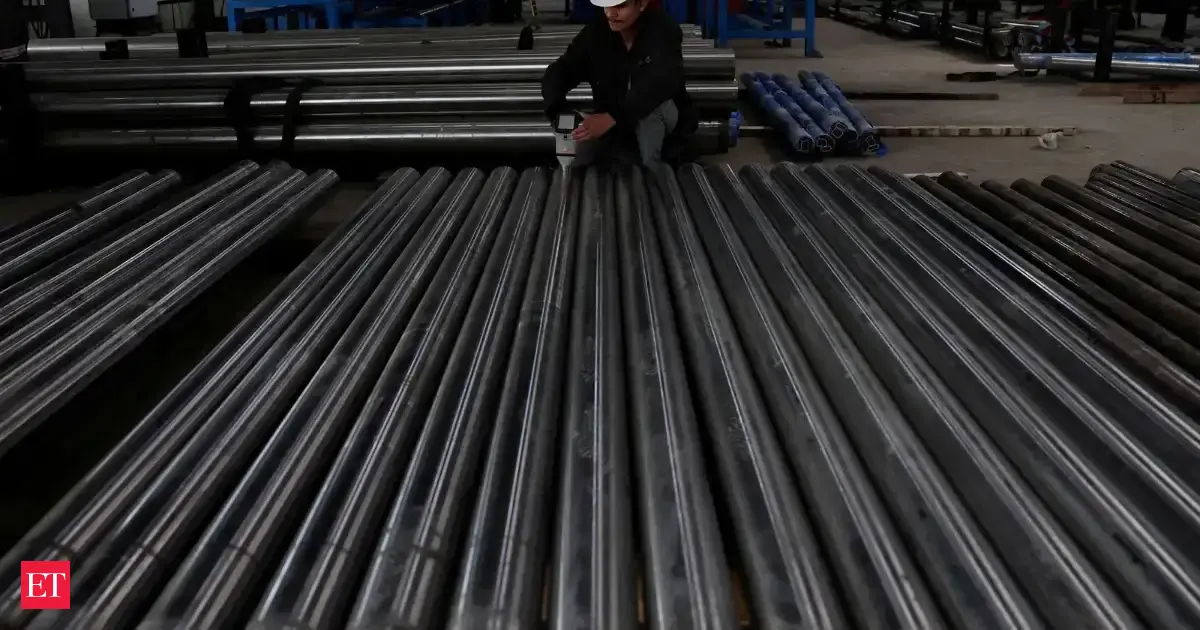
India will receive country-specific tariff-rate quotas for steel exports to the European Union. These quotas total 1.64 million tonnes annually, covering various steel product categories. The European Union formally submitted its proposal to sign the free trade agreement soon. This agreement is expected to come into force in the first quarter of next year. Steel imports from India outside these quotas will face applicable base-rate duties. View More
New Delhi: India will get country-specific tariff-rate quotas (TRQs) of 1.64 million tonnes annually to export steel products to the EU. Under the country-specific quotas, India gets 946,616 tonne under the Most Favoured Nation (MFN) component and 694,853 tonne under the FTA component. The quotas cover stainless steel products, pipes and tubes, non-alloy and alloy hot-rolled sheets and strips, metallic-coated sheets, and cold-rolled sheets, among others. The rest of the 940,000 tonnes are under the most favoured nation (MFN) component. The two sides concluded the talks for an FTA in January, which is expected to be signed later this year and come into force the first quarter of next year. ET Bureau The European Commission Friday formally submitted its proposal to the European Council to sign and finalise the FTA with India, marking a major step towards implementing the "mother of all deals". At present, India exports about four million tonnes of steel annually to the EU. As per the text, the largest country-specific quota is for non-alloy and other alloy hot-rolled sheets and strips at 5.09 lakh tonnes, followed by cold-rolled sheets with a total quota of 2.18 lakh tonnes and metallic-coated sheets with 1.97 lakh tonnes. It added that the TRQs relating to imports into the EU of steel products originating in India shall take effect on the date the EU Steel Regulation starts applying. The TRQs follow the EU's Steel Overcapacity Regulation, which came into force on July 1 this year which aims at ensuring protection for the bloc's steel industry against the effects of global overcapacity. It sets free-of-duty quotas at 18.3 million tonnes, with a 50% duty for out-of-quota imports and a melt-and-pour regime to enhance transparency. Live Events Steel imports from India outside these quotas will attract the applicable base-rate duties under the EU's tariff commitments. "If the European Union amends the Product Specific Rules (PSRs) for products covered under the EU Steel Regulation, the European Union shall consult with India immediately upon the proposal for such an amendment," the text said. The EU would administer the TRQs, it said, in a transparent, objective and non-discriminatory manner so as to be conducive to trade and facilitate, to the extent feasible, their effective utilisation. This includes making publicly available in a timely and continuous manner all relevant information concerning the administration of those TRQs. It added that India will also get access to additional quota volumes in categories where India has a country-specific quota. Those additional volumes will be allocated through competition among EU FTA partners that have country-specific quotas in those categories. For product categories where India does not have a country-specific quota, it will have access to residual quotas, including general residual quotas open to eligible trading partners and preferential quotas reserved for EU FTA partners. The agreement also provides for periodic reviews of the quotas, with the first review to be initiated one year after the FTA comes into force and subsequent reviews every five years. .Pbanner{display:flex;justify-content:space-between;align-items:center;background-color:#ec1c40;margin-top:20px;padding:5px 10px;border-radius:4px;color:#fff;line-height:10px;width: 100%;box-sizing: border-box} .Pbannertext{display:flex;align-items:center;font-size:16px;font-weight:600;font-family:'Montserrat';} .Pbannertext img{height:20px;margin:0 6px} .Pbannerbutton a{display:flex;align-items:center;background-color:#fff;color:#ec1c40;text-decoration:none;font-weight:600;padding:4px 8px;border-radius:6px;font-size:15px;font-family:'Montserrat';} .Pbannerbutton img{height:20px;margin-right:6px} .Pbannerbutton a:hover{background-color:#f7f7f7} Add as a Reliable and Trusted News Source Add Now! (You can now subscribe to our Economic Times WhatsApp channel) (You can now subscribe to our Economic Times WhatsApp channel)

The total country-specific quota of 16,41,470 tonnes comprises 9,46,616 tonnes under the MFN (most favoured nation) component and 6,94,853 tonnes under the FTA component View More
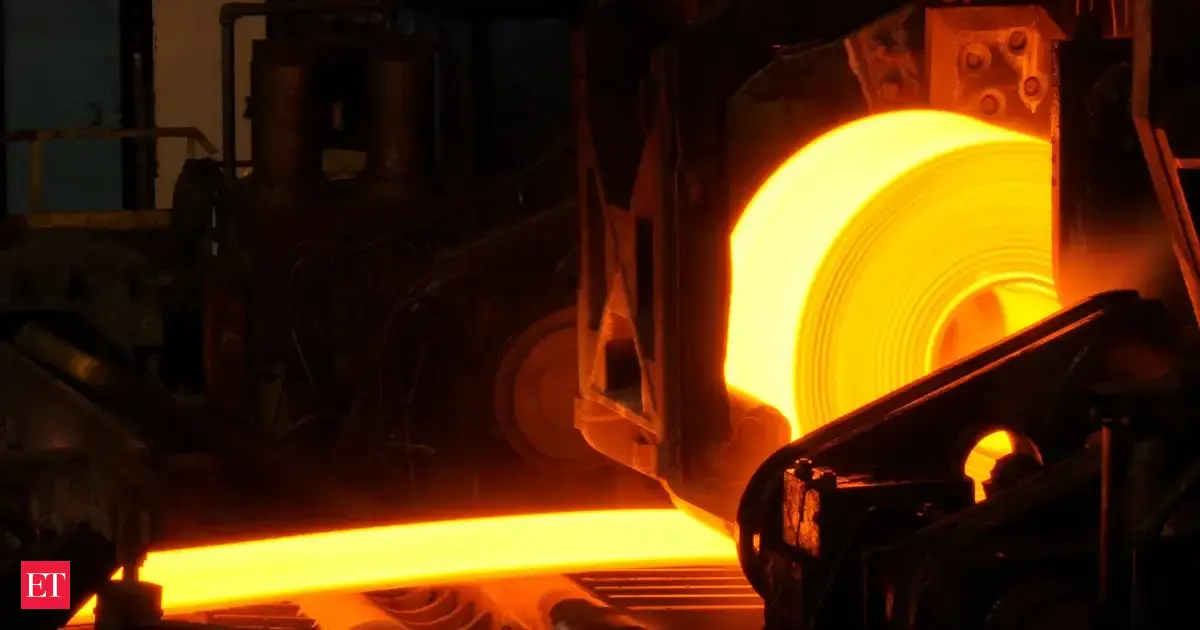
India will receive substantial tariff-rate quotas for steel exports to the European Union. These quotas total 1.64 million tonnes annually, with a portion under a free trade agreement. The European Union's new regulation aims to protect its domestic steel industry from overcapacity. India's exports outside these quotas will face applicable base-rate duties. The agreement includes provisions for periodic reviews of these allocated quotas. View More
New Delhi: India will get country-specific tariff-rate quotas (TRQs) totalling 1.64 million tonnes annually for exporting steel products to the European Union, of which 6,94,853 tonnes will be under the free trade agreement, according to the draft text of the pact released by the EU. The total country-specific quota of 16,41,470 tonnes comprises 9,46,616 tonnes under the MFN (most favoured nation) component and 6,94,853 tonnes under the FTA component. The quotas cover a wide range of steel products, including non-alloy and alloy hot-rolled sheets and strips, cold-rolled sheets, metallic-coated sheets, organic-coated sheets, tin mill products, stainless steel products, merchant bars and light sections, rebars, wire rods, pipes and tubes. Read more: Jindal Steel builds world’s longest steel slag road, enters Guinness World Records India at present exports about four million tonnes of steel per year to the EU. Live Events The TRQs follow the European Union's Steel Overcapacity Regulation, which came into force on July 1 this year. It is aimed at ensuring protection for the EU's steel industry against the effects of global overcapacity. It sets free-of-duty quotas at 18.3 million tonnes, with a 50 per cent duty for out-of-quota imports and a melt-and-pour regime to enhance transparency. According to the text, the largest country-specific quota is for non-alloy and other alloy hot-rolled sheets and strips at 5,09,605 tonnes, comprising 2,99,197 tonnes under the MFN component and 2,10,408 tonnes under the FTA component. Read more: Tata Steel scaling up AI, connected workforce systems to boost industrial safety This is followed by cold-rolled sheets with a total quota of 2,18,658 tonnes and metallic-coated sheets with 1,97,860 tonnes. Other major quotas include 1,86,038 tonnes for organic-coated sheets, 1,81,835 tonnes for non-alloy and other alloy quarto plates, 85,157 tonnes for another category of metallic-coated sheets and 79,278 tonnes for stainless steel bars and light sections. It added that the TRQs relating to imports into the European Union of steel products originating in India shall take effect on the date the EU Steel Regulation starts applying. Steel imports from India outside these quotas will attract the applicable base-rate duties under the EU's tariff commitments. "If the European Union amends the Product Specific Rules (PSRs) for products covered under the EU Steel Regulation, the European Union shall consult with India immediately upon the proposal for such an amendment," the text said. The EU would administer the TRQs, it said, in a transparent, objective and non-discriminatory manner so as to be conducive to trade and facilitate, to the extent feasible, their effective utilisation. This includes making publicly available in a timely and continuous manner all relevant information concerning the administration of those TRQs. It added that India will also get access to additional quota volumes in categories where India has a country-specific quota. Those additional volumes will be allocated through competition among EU FTA partners that have country-specific quotas in those categories. For product categories where India does not have a country-specific quota, it will have access to residual quotas, including general residual quotas open to eligible trading partners and preferential quotas reserved for EU FTA partners. The agreement provides for periodic reviews of the quotas, with the first review to be initiated one year after the FTA comes into force and subsequent reviews every five years. India and the EU announced the conclusion of negotiations for the pact on January 27. It is expected to be signed by the end of this year and likely to be implemented next year. .Pbanner{display:flex;justify-content:space-between;align-items:center;background-color:#ec1c40;margin-top:20px;padding:5px 10px;border-radius:4px;color:#fff;line-height:10px;width: 100%;box-sizing: border-box} .Pbannertext{display:flex;align-items:center;font-size:16px;font-weight:600;font-family:'Montserrat';} .Pbannertext img{height:20px;margin:0 6px} .Pbannerbutton a{display:flex;align-items:center;background-color:#fff;color:#ec1c40;text-decoration:none;font-weight:600;padding:4px 8px;border-radius:6px;font-size:15px;font-family:'Montserrat';} .Pbannerbutton img{height:20px;margin-right:6px} .Pbannerbutton a:hover{background-color:#f7f7f7} Add as a Reliable and Trusted News Source Add Now! (You can now subscribe to our Economic Times WhatsApp channel) (You can now subscribe to our Economic Times WhatsApp channel)

The project showcases Jindal Steel’s commitment to sustainability and sets a precedent for future infrastructure by demonstrating the economic and environmental benefits of using industrial by-products in construction. View More

Jindal Steel has received recognition from the Guinness World Records for constructing the world's longest road using steel slag aggregates.
Steel slag is a waste by-product of the steel manufacturing process.
Jindal Steel Limited, in collaboration with CSIR-Central Road Research Institute (CSIR-CRRI), has achieved a Guinness World Records title for constructing the longest road built exclusively with processed steel slag aggregates at Raigarh in Chhattisgarh, a company statement said Saturday.
Around 2 lakh tonnes of processed steel slag has been used to build the 1.85-km four-lane road, replacing natural aggregates and reducing dependence on quarrying.
Naveen Jindal, Chairman, Jindal Steel Limited, said: "The achievement shows how science, technology and industry can transform industrial co-products into valuable resources for nation-building."
India's growth must be powered by innovation that creates economic value while protecting the environment. Waste-to-wealth is one of the View More
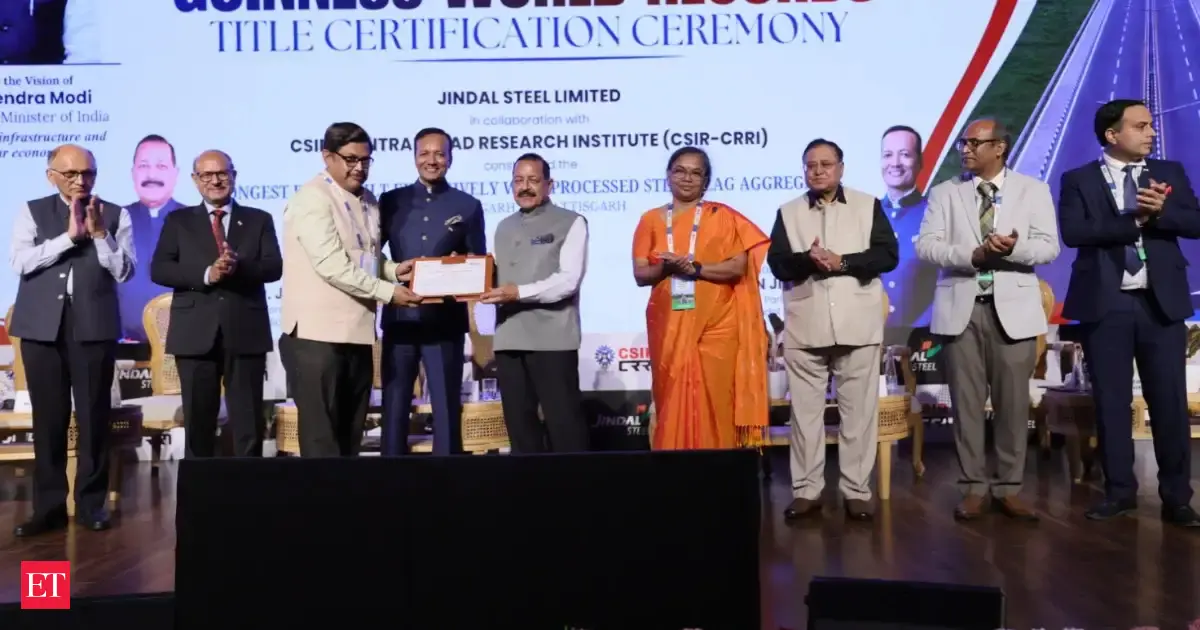
Jindal Steel achieved a Guinness World Records title for constructing the world's longest road. This 1.85-km four-lane road was built exclusively with processed steel slag aggregates. Around two lakh tonnes of steel slag replaced natural aggregates, reducing quarrying dependence. Scientifically processed steel slag offers cost-effectiveness and durability compared to traditional road materials. India's steel ministry promotes this technology for large-scale industrial by-product utilization. View More
New Delhi: Jindal Steel has received recognition from the Guinness World Records for constructing the world's longest road using steel slag aggregates. Steel slag is a waste by-product of the steel manufacturing process. Jindal Steel Limited , in collaboration with CSIR-Central Road Research Institute (CSIR-CRRI), has achieved a Guinness World Records title for constructing the longest road built exclusively with processed steel slag aggregates at Raigarh in Chhattisgarh, a company statement said Saturday. Around 2 lakh tonnes of processed steel slag has been used to build the 1.85-km four-lane road, replacing natural aggregates and reducing dependence on quarrying. Naveen Jindal, Chairman, Jindal Steel Limited, said: "The achievement shows how science, technology and industry can transform industrial co-products into valuable resources for nation-building." Live Events India's growth must be powered by innovation that creates economic value while protecting the environment. Waste-to-wealth is one of the focus areas of the government to support the circular economy , Jindal, who is also the President of the industry body Indian Steel Association (ISA), said. Jitendra Singh, Minister of Science & Technology, Government of India, said the road is a strong demonstration of India's ability to translate scientific innovation into practical infrastructure solutions. By transforming steel slag into a high-value resource for road construction, the project showcases the potential of indigenous technology to address real-world challenges, he said. Scientifically processed steel slag for roads provides significant advantages over traditional construction materials. The steel slag roads are about 30 to 40 per cent more cost-effective and can last up to three times longer than standard bitumen roads, reducing repair and maintenance needs. Their strength makes them suitable for diverse climate conditions- from coastal regions to rugged terrains. Steel slag generation is expected to reach 60 million tonnes in the next few years, considering the ongoing capacity augmentation in Indian steel plants with an aim to produce 300 million tonnes of steel by 2030-31. The steel ministry is promoting the usage of steel slag road technology and actively collaborating with the Ministry of Science & Technology and the Ministry of Road Transport & Highways to facilitate the large-scale utilisation of the industrial by-product. .Pbanner{display:flex;justify-content:space-between;align-items:center;background-color:#ec1c40;margin-top:20px;padding:5px 10px;border-radius:4px;color:#fff;line-height:10px;width: 100%;box-sizing: border-box} .Pbannertext{display:flex;align-items:center;font-size:16px;font-weight:600;font-family:'Montserrat';} .Pbannertext img{height:20px;margin:0 6px} .Pbannerbutton a{display:flex;align-items:center;background-color:#fff;color:#ec1c40;text-decoration:none;font-weight:600;padding:4px 8px;border-radius:6px;font-size:15px;font-family:'Montserrat';} .Pbannerbutton img{height:20px;margin-right:6px} .Pbannerbutton a:hover{background-color:#f7f7f7} Add as a Reliable and Trusted News Source Add Now! (You can now subscribe to our Economic Times WhatsApp channel) (You can now subscribe to our Economic Times WhatsApp channel)
The RBI reportedly rejected Tata Sons’ request for exemption from rules requiring upper-layer NBFCs to list publicly. The decision could intensify pressure on the Tata Group holding company to launch an IPO, despite its efforts to remain private. View More
India’s central bank is said to have rejected Tata Sons Pvt.’s plea to get a waiver from a regulatory rule that requires it go for a public listing. The entity that sits at the heart of the $185 billion Tata Group empire that spans IT services, steel, hospitality and consumer goods has resisted a stock exchange listing for years as this would subject it to tighter regulatory oversight and force it to reveal more of the group’s internal dealings. But the pressure has been mounting in recent months. The Reserve Bank of India tweaked the definition of shadow lenders in May, reviving the debate on whether Tata Sons could be forced to list. In June, the regulator reaffirmed a framework for identifying systemically important shadow lenders, keeping Tata Sons on the hook. The latest RBI missive makes it even harder for the Tata family to hold out against a listing and the closer scrutiny of its affairs that this would entail. Minority shareholders in the company’s various businesses will be watching as an IPO could affect Tata’s ability to shift capital between its cash-rich established businesses and newer, less profitable ventures. What is Tata Sons?Tata Sons is a holding company of the Tata Group that comprises 26 listed companies, including industrial heavyweight Tata Steel Ltd., IT firm Tata Consultancy Services Ltd., automaker Tata Motors Ltd. and utility Tata Power Company Ltd. Live Events Agencies Approximately 66% of Tata Sons’ equity capital is owned by the philanthropic Tata Trusts , while Tata Group companies — some of which are engaged in lending activities — hold about 13%. The RBI classifies Tata Sons as a systemically important core investment company within the broader category of non-banking financial companies (NBFCs), or shadow banks, as it is involved in allocating capital to group companies. Why is Tata Sons facing pressure to list?After an Indian shadow lender defaulted on its debts in 2018, the RBI, which oversees the country’s financial system, laid down new rules to try to ensure that such crises don’t endanger the country’s wider financial system. In 2022, it classified Tata Sons as an “upper-layer” NBFC under the rules. This meant it now deemed the company, with a balance sheet exceeding 1.5 trillion rupees ($15.7 billion), big enough to pose a systemic risk. The RBI’s rules require such businesses to list their shares on the stock market within three years as a way to force them to be more transparent about their activities and financial performance. Since then, Tata Sons’ owners have taken various steps to convince the RBI that it should not be categorized as a shadow lender so it can avoid going public. In 2024, it applied to surrender its NBFC license and cleared its outstanding debts. However, the latest rule changes introduced earlier this year by the RBI, which are due to take effect on July 1, gave Tata Sons less wiggle room to dodge a listing. The revised framework applies not just to companies that lend to or borrow from listed businesses in the same group, but to any holding company that invests in group companies that do so themselves. While Tata Sons has pared its own debts, its affiliated companies, including wholly-owned subsidiary Tata Capital , are still raising money from individuals and institutions. The RBI circular stipulated that an NBFC can’t de-register if it deals directly with customers in its day-to-day business. This is not the case with Tata Sons, but it is with Tata Capital. How did the company respond to the RBI’s circular?Trustees at Tata Trusts, chaired by Noel Tata, were making intense efforts to maintain the private status of Tata Sons, arguing that the work that had been done to strengthen the company’s balance sheet should exempt it from a mandatory listing, according to people familiar with the matter. Tata Sons has not responded to a request for comment on whether they’ll go ahead with a listing. A representative for RBI didn’t respond to a query on whether it has rejected Tata Sons’ petition for an IPO waiver . How did Tata Sons avoid an IPO so far?Tata Sons originally faced a deadline of September 2025 to launch an initial public offering of its shares, which it missed. Following discussions with the RBI, the company’s leadership halted the preparations in the expectation that they would get an official extension to the deadline. Instead, RBI has piled additional pressure on the Tata family to list the business since its May circular. Why does the Tata family prefer keeping Tata Sons private?Tata Sons sits at the center of the Tata empire and its status as a private company controlled by Tata Trusts has helped to cement the family’s authority over the group’s array of businesses. An IPO could substantially loosen Tata Trusts’ grip on Tata Sons and make it harder for Tata Sons’ directors to block unwanted takeover attempts. Tata Sons has plowed billions of dollars into Tata Group businesses including its digital services arm and a venture into semiconductors. It has also helped to prop up the unprofitable national flag carrier Air India, which reported record losses for the year to March following a plane crash in June 2025 and airspace closures due to the Iran war. A listing of the holding company would force it to make regular disclosures on its operations and financial dealings, showing how money is channeled through the Tata empire and ultimately forcing its owners to be more accountable for how its capital is spent. If Tata Sons lists, who wins?A significant minority shareholder of Tata Sons — Shapoorji Pallonji Group — is calling for a public listing of the Tata Group holding company, insisting that such a move is essential to unlock the company’s value for investors. It’s not the first time that SP Group has locked horns with the Tatas. Former Tata patriarch Ratan Tata and Tata Sons then-chairman Cyrus Mistry, a scion of the founding family that runs SP Group, were entangled in a year-long feud in 2016. SP Group needs to monetize its stake in Tata Sons, which is worth billions, to pay down a pile of costly private debt. If Tata Sons’ shares are listed, it will be easier for SP Group to get a good price for its stake and repay that debt. .Pbanner{display:flex;justify-content:space-between;align-items:center;background-color:#ec1c40;margin-top:20px;padding:5px 10px;border-radius:4px;color:#fff;line-height:10px;width: 100%;box-sizing: border-box} .Pbannertext{display:flex;align-items:center;font-size:16px;font-weight:600;font-family:'Montserrat';} .Pbannertext img{height:20px;margin:0 6px} .Pbannerbutton a{display:flex;align-items:center;background-color:#fff;color:#ec1c40;text-decoration:none;font-weight:600;padding:4px 8px;border-radius:6px;font-size:15px;font-family:'Montserrat';} .Pbannerbutton img{height:20px;margin-right:6px} .Pbannerbutton a:hover{background-color:#f7f7f7} Add as a Reliable and Trusted News Source Add Now! (You can now subscribe to our ETMarkets WhatsApp channel) (You can now subscribe to our ETMarkets WhatsApp channel)

Most battery cells currently rely on raw materials from China. GM is seeking to establish domestic supply chains both for EVs and energy storage. View More
In this articleGMFollow your favorite stocksCREATE FREE ACCOUNT Kurt Kelty, GM's vice president of battery and sustainability, speaks June 9, 2026, during the automaker's "Empower" event in which it announced the development of sodium-ion batteries for energy storage systems.Courtesy GMDETROIT â General Motors is in the early stages of developing next-generation battery cells that the company believes can reduce U.S. dependence on China, while boosting domestically sourced materials."We're developing a supply chain such that, two years from now, three years from now, it will be domestic," Kurt Kelty, GM vice president of battery and sustainability, told CNBC during an exclusive interview. "That's what we're aiming for â when we get into market, we've got a domestic source for that."Kelty was referring mainly to battery cells that the automaker expects to use in energy storage systems, or ESS, which are stationary devices for homes and businesses, including data centers. But the company plans to similarly prioritize domestic battery cell production for its future all-electric vehicles, a spokesperson reaffirmed to CNBC.Kelty's comments came days before GM's crosstown rival Ford Motor fielded criticism by the Trump administration for its ties to Chinese companies, including for domestic battery cell production.For ESS, GM has partnered with Denver-based startup Peak Energy to develop sodium-ion battery cells. The idea is to lower the need for materials that China dominates â such as lithium and ferrous sulfate, a byproduct of titanium production â and instead, use domestic-made batteries utilizing more prevalent materials in the U.S., such as sodium from soda ash.GM is working on a variety of battery chemistries for different applications of ESS as well as its EVs. Much like baking, each ingredient and the amount put into a battery cell can change the outcome of the product. In the case of battery cells, that can mean differences in performance, cost and stability.GM expects to launch commercial production of sodium-ion battery cells with Peak around 2029. In the meantime, it's producing other chemistries for ESS and EVs that use undisclosed amounts of materials from China. General Motors energy is seen at the New York International Auto Show on April 16, 2025. Danielle DeVries | CNBCMost battery cells currently rely on raw materials from China. The International Energy Agency reports the country produces about 85% of the world's EV battery cathode active material and more than 90% of anode active material, leading to an 80% control of battery production.  For example, China largely controls the sourcing and production of lithium iron phosphate, or LFP, batteries through its supply chains. GM currently manufactures LFP cells with its partner LG Energy Solution in the U.S. for ESS, while Ford has licensed technology from China's CATL for LFP battery cells for its EVs and ESS plans."It's a really good story, because you've got the resources [in the U.S.] that you can keep it totally domestic," Kelty said. "It's going to take some time to build this industry up, but the potential for sodium-ion is just much greater than LFP."At a foundational level, a sodium-ion battery works much like a lithium-ion battery, but GM says it has the potential to perform across a wider range of temperatures and for more cycles.Courtesy GMThe Trump administration has placed particular focus on building up the U.S. battery supply chain and reducing its reliance on China.And, earlier this week, Transportation Secretary Sean Duffy expressed "profound concern" over Ford's China ties, specifically citing the CATL licensing. That's despite Ford being the top-producing automaker of vehicles in the U.S.Kelty, days earlier, said of Ford, "they're following a different path." "We think it's more valuable to develop this all domestically, take advantage of domestic supply chains, and develop a technology that's actually better than the incumbent technology," said Kelty, a former battery executive with U.S. EV leader Tesla.'Leapfrog' China tech?Sam Abuelsamid, a battery expert and vice president of market research at Telemetry, noted it will likely take years to domesticate a battery supply chain. At the same time, China continues to develop and produce new types of chemistries, including sodium-ion."There's no reason why the LFP materials couldn't also be produced here," Abuelsamid said. "There's ways to do that, but ... the sodium-ion would be even cheaper and easier to do."watch nowVIDEO8:2508:25How much it will take for the U.S. to catch up to China's battery leadAutosKelty numerous times said GM hopes to "leapfrog" China's battery technologies, noting that competing directly with Chinese supply chains or mimicking what that market has already established would be difficult."The better thing to do is try to leapfrog, come up with a different technology that's actually better that we can actually source here," Kelty said. Kelty said he views sodium-ion as the best solution for ESS, because its chemistry and temperature tolerance allow for the cells to function without active cooling â a major source of cost and complexity associated with ESS. That improvement means lowering the cost of ownership for energy storage, he said.The Warren Battery Cell Innovation Center on General Motors' global tech and design campus in suburban Detroit.Photo by Steve Fecht for General MotorsThe Detroit automaker is spending $900 million on new battery lab facilities at its global tech campus in suburban Detroit. That includes a more-than-500,000-square-foot facility for prototyping manufacturing of cells that's set to begin operations later this year.Still, that funding amount is small compared with what would be needed to substantially loosen China's grip on the industry."We are purposely going down the path of having American-developed technology," Kelty said. "Batteries are really critical for a lot of different areas of of our economy here."â CNBC's Robert Ferris contributed to this report. Choose CNBC as your preferred source on Google and never miss a moment from the most trusted name in business news.
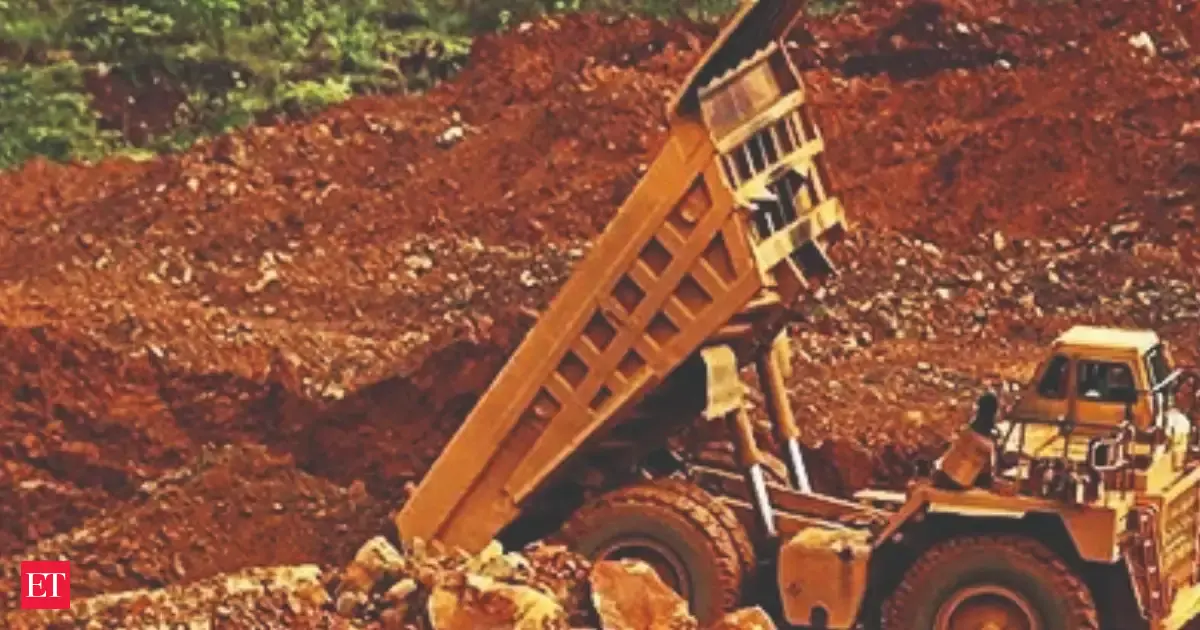
Monolithisch India has made a landmark purchase of a quartzite stone block for Rs 157 crore, marking a pivotal move towards enhancing its raw material supply chain through backward integration. Authorized for five years, this venture boasts considerable mining capacity, with commercial activities slated to kick off by February or March 2027. View More
New Delhi: Monolithisch India on Friday said it has secured a quartzite stone block in Nawada district through an e-auction conducted by Bihar's Mines and Geology Department for Rs 157 crore. The company produces premixed ramming mass, a key refractory material used in induction furnaces by the secondary steel industry. The acquisition marks the largest strategic milestone in the company's journey since inception and completes a significant step towards backward integration of its raw material supply chain, a company statement said. The block has been allotted for five years, with an approved mining capacity of 7,10,000 metric tonnes (MT) per annum, translating into a cumulative capacity of 35,50,000 MT over the lease period. The acquisition will provide greater control over the company's key raw material requirements and help hedge raw material prices for the next five years, as Monolithisch India expands its silica ramming mass manufacturing capacity. Live Events Consolidated group manufacturing capacity is expected to reach 5,76,000 MTPA. Subject to statutory approvals expected within 3-4 months, commercial operations are targeted to commence in February/March 2027. The Rs 157 crore consideration will be paid in tranches over five years in accordance with state government guidelines. Mining operations will be undertaken through experienced national mining contractors on a per-ton raising contract basis, limiting the company's direct infrastructure capital expenditure. A dedicated beneficiation and storage unit will also be established near the block to support quality management, R&D and product development. Harsh Tekriwal, Managing Director of Monolithisch India, said, "I am proud to announce that our backward integration is complete, with surplus raw material capacity, securing our needs that were supposed to grow rapidly with the commencement of our new greenfield project. The company is a major supplier of domestic integrated secondary steel clusters, especially in eastern and central India". Tekriwal is of the view that this strategic move will significantly strengthen the company's competitiveness in quality and cost in the coming years. This block belt was operational from 2015-2020, and the ore in this block was highly sought after by secondary steel cluster customers for its quality and consistency. This allotment will also accelerate the development of new products based on ore behaviour from a single, consistent supply source. He also said, "This acquisition is only the first step in our next phase of growth; we will pursue similar initiatives to secure raw materials before launching new product verticals". PTI .Pbanner{display:flex;justify-content:space-between;align-items:center;background-color:#ec1c40;margin-top:20px;padding:5px 10px;border-radius:4px;color:#fff;line-height:10px;width: 100%;box-sizing: border-box} .Pbannertext{display:flex;align-items:center;font-size:16px;font-weight:600;font-family:'Montserrat';} .Pbannertext img{height:20px;margin:0 6px} .Pbannerbutton a{display:flex;align-items:center;background-color:#fff;color:#ec1c40;text-decoration:none;font-weight:600;padding:4px 8px;border-radius:6px;font-size:15px;font-family:'Montserrat';} .Pbannerbutton img{height:20px;margin-right:6px} .Pbannerbutton a:hover{background-color:#f7f7f7} Add as a Reliable and Trusted News Source Add Now! (You can now subscribe to our Economic Times WhatsApp channel) (You can now subscribe to our Economic Times WhatsApp channel)