
Latest Sectors News

Compounding transforms ?30 lakh invested over 30 years into ?5.23 crore, with the first crore achieved after 13 years. Check how your investment, lump sum or SIP, jumps because of the power of compounding. View More
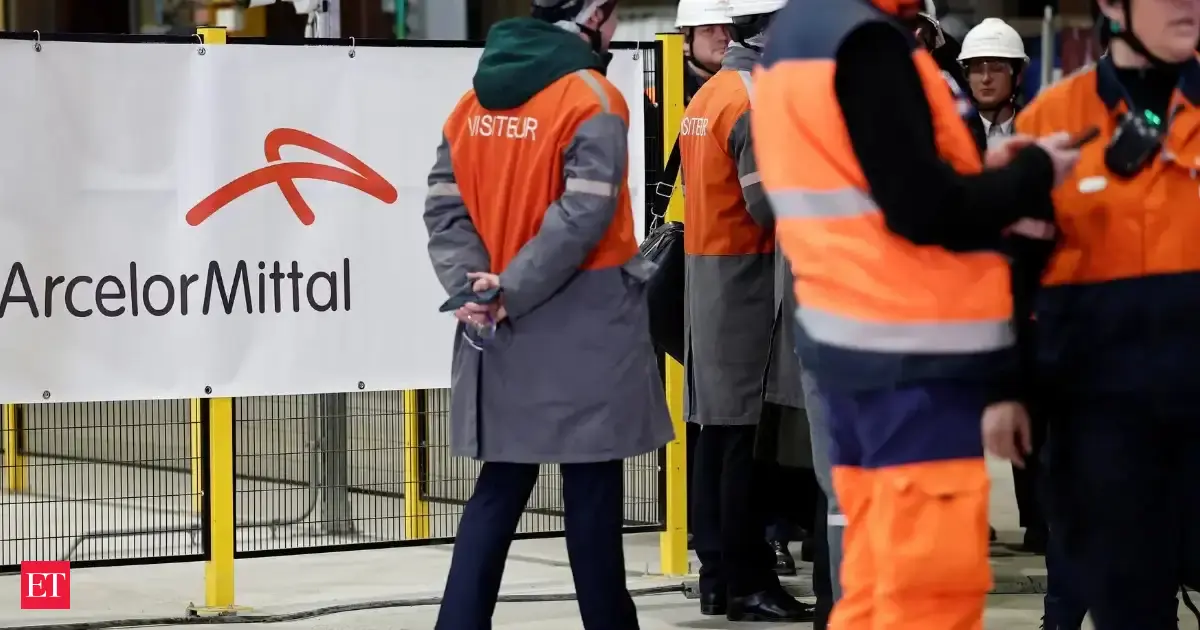
A ballistic missile strike hit ArcelorMittal Kryvyi Rih plant on Saturday. Two contractors were killed and two employees were injured in the incident. The plant's ironmaking area sustained damage from the missile strike. Primary steel production has been suspended while repairs are assessed. It remains too early to estimate when operations can resume. View More
Steelmaker ArcelorMittal said on Monday a ballistic missile strike hit its Ukrainian steel plant ArcelorMittal Kryvyi Rih on Saturday, killing two contractors and injuring two employees. The strike damaged the plant's ironmaking area and suspended primary steel production while the company assesses repairs, ArcelorMittal said, adding it was too early to estimate when operations could resume. .Pbanner{display:flex;justify-content:space-between;align-items:center;background-color:#ec1c40;margin-top:20px;padding:5px 10px;border-radius:4px;color:#fff;line-height:10px;width: 100%;box-sizing: border-box} .Pbannertext{display:flex;align-items:center;font-size:16px;font-weight:600;font-family:'Montserrat';} .Pbannertext img{height:20px;margin:0 6px} .Pbannerbutton a{display:flex;align-items:center;background-color:#fff;color:#ec1c40;text-decoration:none;font-weight:600;padding:4px 8px;border-radius:6px;font-size:15px;font-family:'Montserrat';} .Pbannerbutton img{height:20px;margin-right:6px} .Pbannerbutton a:hover{background-color:#f7f7f7} Add as a Reliable and Trusted News Source Add Now! (You can now subscribe to our Economic Times WhatsApp channel) (You can now subscribe to our Economic Times WhatsApp channel)

The combined quota is equivalent to about 68.4% of India’s 2.4 million tons of steel exports ?to the EU ?in 2025, up from 39.4% under the existing quota View More
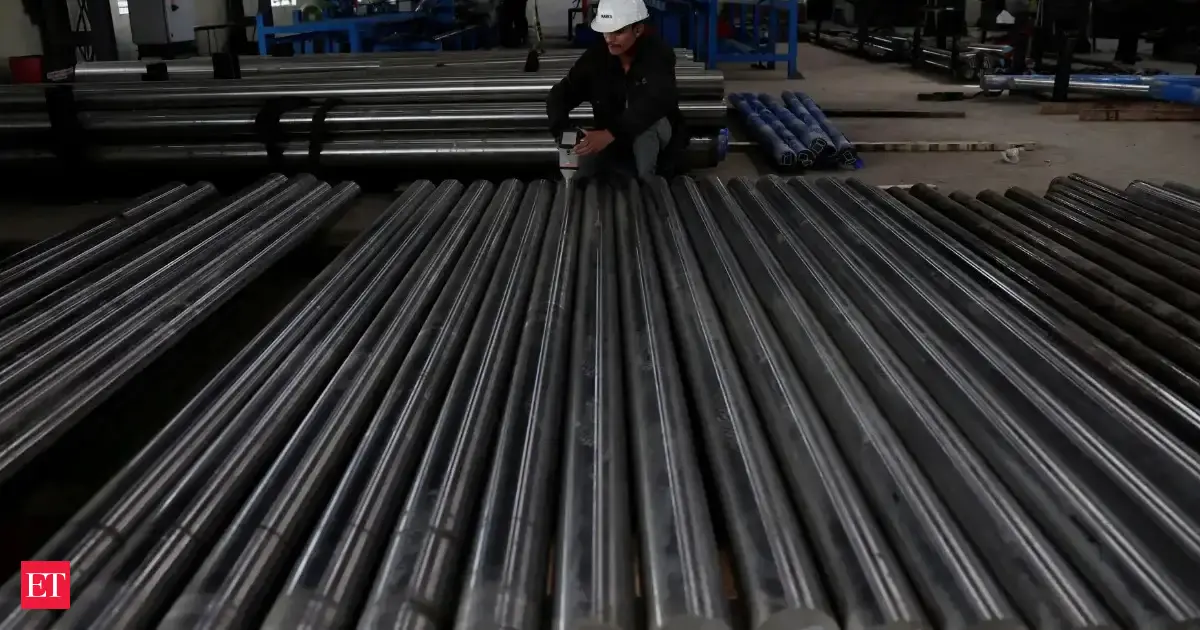
India will export up to 1.64 million tons of steel annually to the European Union. This includes an additional preferential quota of 694,853 tons, enhancing market access. Shipments exceeding this quota will incur a 50% European Union tariff. Indian steel exports will still be subject to the EU's Carbon Border Adjustment Mechanism. The agreement's preferential quota is expected to become available by year end. View More
India will be able to export up to 1.64 million metric tons of steel a year to the European Union under a free trade agreement, but exporters will still face carbon-related costs, according to the legal text of the pact. The agreement provides India with an additional preferential quota of 694,853 tons of steel, on top of an existing 946,616-ton WTO quota. The combined quota is equivalent to about 68.4% of India’s 2.4 million tons of steel exports to the EU in 2025, up from 39.4% under the existing quota. The Indian steel industry is seeking 29-35% higher quotas across products from the EU, according to a steel note written by representatives of the steel industry and reviewed by Reuters. "India's total guaranteed country-specific quota under the agreement is smaller than its current total entitlement, putting the country in an unfavourable position with regard to market access," the note submitted to the trade ministry, which is handling the EU negotiations, said. Live Events India's trade ministry did not respond immediately to a request for comment. Steel shipments above the quota will be subject to the EU’s 50% tariff, according to an analysis by India-based think tank Global Trade Research Initiative (GTRI) of the legal text of the agreement, which was released on Friday and could still be revised. The preferential quota does not exempt Indian steel from the EU's Carbon Border Adjustment Mechanism, which applies to all steel imports, and which GTRI estimates could average around 35% of the value once fully phased in. Most of India’s quota is allocated to flat-steel products, with hot-rolled sheets and strips receiving the largest allocation of 509,605 tons. The additional quota will become available once the India-EU FTA enters into force, expected by year end, and will remain subject to product coverage, rules of origin and quota availability. .Pbanner{display:flex;justify-content:space-between;align-items:center;background-color:#ec1c40;margin-top:20px;padding:5px 10px;border-radius:4px;color:#fff;line-height:10px;width: 100%;box-sizing: border-box} .Pbannertext{display:flex;align-items:center;font-size:16px;font-weight:600;font-family:'Montserrat';} .Pbannertext img{height:20px;margin:0 6px} .Pbannerbutton a{display:flex;align-items:center;background-color:#fff;color:#ec1c40;text-decoration:none;font-weight:600;padding:4px 8px;border-radius:6px;font-size:15px;font-family:'Montserrat';} .Pbannerbutton img{height:20px;margin-right:6px} .Pbannerbutton a:hover{background-color:#f7f7f7} Add as a Reliable and Trusted News Source Add Now! (You can now subscribe to our Economic Times WhatsApp channel) (You can now subscribe to our Economic Times WhatsApp channel)

Tata Steel has stepped up its partnership with Lloyds Metals as it looks to secure access to key raw materials and strengthen its mining and steelmaking operations. View More

Amit Gupta alleged that neither the security personnel nor the other parking staff present at the spot came to his rescue. He said that even the police didn't come for another half hour. View More
Tata group stocks may see gains after recent declines. Investors anticipate Tata Sons' upcoming public listing and its impact. Several listed companies hold significant stakes in the group's holding company. These stakes are valued at substantial amounts relative to their market capitalizations. The potential listing is expected to influence the valuation of these group entities. View More
ET Intelligence Group: The stocks of Tata group companies including Tata Steel , Tata Motors PV , and Tata Chemicals are likely to gain momentum after losing 8-22% on the bourses in three months. Investors are expected to price in stakes of these companies in Tata Sons as it inches closer to listing publicly following the RBI 's instructions to comply with the regulations governing the upper-layer investment companies. Each of these three companies hold 2.5-3% stake in Tata Sons, the group's holding company. In all, seven listed and two unlisted group companies hold between 0.4% and 3.1% stake each in Tata Sons. ET Bureau For Tata Chemicals, the estimated value of its 2.5% stake in Tata Sons is around ₹30,000 crore, nearly two-times its market cap of ₹15,597 crore. The stock has lost 18% in three months and 20% year-to-date. Read more: Nifty may rebound to 23,800; Rupak De picks Apollo, Laurus Labs and Eternal for the week Tata Sons' market valuation is estimated to be ₹11.9 lakh crore based on the value of its stakes in group companies. Live Events Each of Tata Steel and Tata Motors PV owns around 3.1% stake in Tata Sons, amounting to ₹36,348 crore or 16% and 33% of their respective market caps in that order. Read more: Inside NSE IPO journey: Why India's largest exchange took 10 long years to reach Dalal Street Other group companies including Indian Hotels, Tata Consumer and Tata Power hold 0.4-1.6% stake in Tata Sons. Together, these six companies hold an estimated ₹1.4 lakh crore worth of shares in Tata Sons. .Pbanner{display:flex;justify-content:space-between;align-items:center;background-color:#ec1c40;margin-top:20px;padding:5px 10px;border-radius:4px;color:#fff;line-height:10px;width: 100%;box-sizing: border-box} .Pbannertext{display:flex;align-items:center;font-size:16px;font-weight:600;font-family:'Montserrat';} .Pbannertext img{height:20px;margin:0 6px} .Pbannerbutton a{display:flex;align-items:center;background-color:#fff;color:#ec1c40;text-decoration:none;font-weight:600;padding:4px 8px;border-radius:6px;font-size:15px;font-family:'Montserrat';} .Pbannerbutton img{height:20px;margin-right:6px} .Pbannerbutton a:hover{background-color:#f7f7f7} Add as a Reliable and Trusted News Source Add Now! (You can now subscribe to our ETMarkets WhatsApp channel) (You can now subscribe to our ETMarkets WhatsApp channel)
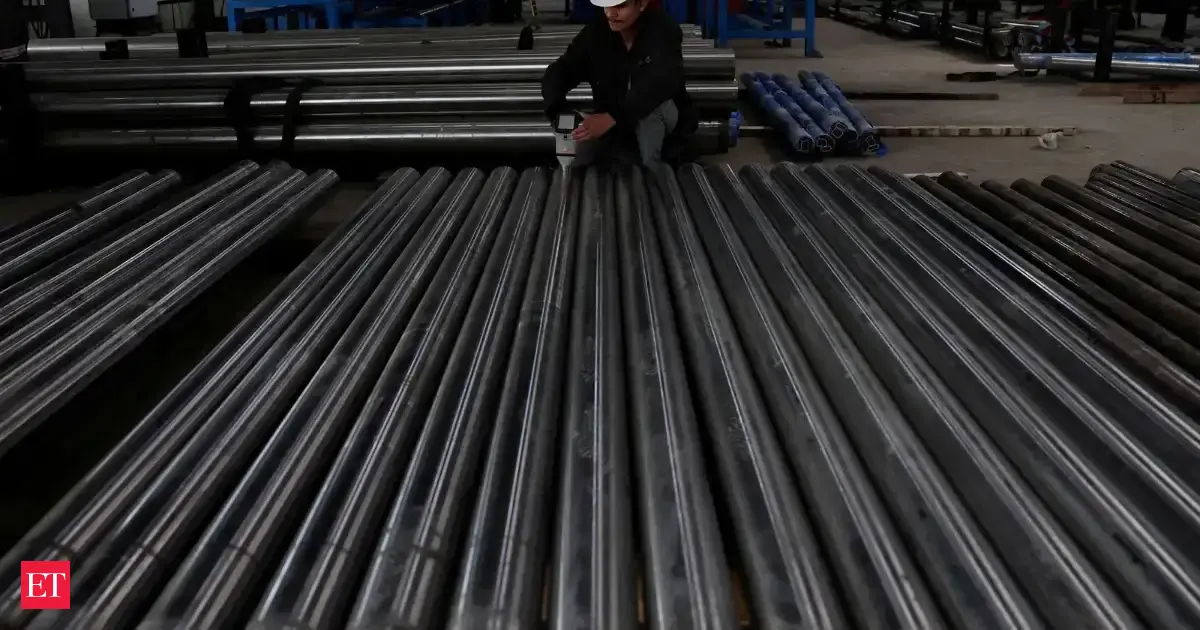
India will receive country-specific tariff-rate quotas for steel exports to the European Union. These quotas total 1.64 million tonnes annually, covering various steel product categories. The European Union formally submitted its proposal to sign the free trade agreement soon. This agreement is expected to come into force in the first quarter of next year. Steel imports from India outside these quotas will face applicable base-rate duties. View More
New Delhi: India will get country-specific tariff-rate quotas (TRQs) of 1.64 million tonnes annually to export steel products to the EU. Under the country-specific quotas, India gets 946,616 tonne under the Most Favoured Nation (MFN) component and 694,853 tonne under the FTA component. The quotas cover stainless steel products, pipes and tubes, non-alloy and alloy hot-rolled sheets and strips, metallic-coated sheets, and cold-rolled sheets, among others. The rest of the 940,000 tonnes are under the most favoured nation (MFN) component. The two sides concluded the talks for an FTA in January, which is expected to be signed later this year and come into force the first quarter of next year. ET Bureau The European Commission Friday formally submitted its proposal to the European Council to sign and finalise the FTA with India, marking a major step towards implementing the "mother of all deals". At present, India exports about four million tonnes of steel annually to the EU. As per the text, the largest country-specific quota is for non-alloy and other alloy hot-rolled sheets and strips at 5.09 lakh tonnes, followed by cold-rolled sheets with a total quota of 2.18 lakh tonnes and metallic-coated sheets with 1.97 lakh tonnes. It added that the TRQs relating to imports into the EU of steel products originating in India shall take effect on the date the EU Steel Regulation starts applying. The TRQs follow the EU's Steel Overcapacity Regulation, which came into force on July 1 this year which aims at ensuring protection for the bloc's steel industry against the effects of global overcapacity. It sets free-of-duty quotas at 18.3 million tonnes, with a 50% duty for out-of-quota imports and a melt-and-pour regime to enhance transparency. Live Events Steel imports from India outside these quotas will attract the applicable base-rate duties under the EU's tariff commitments. "If the European Union amends the Product Specific Rules (PSRs) for products covered under the EU Steel Regulation, the European Union shall consult with India immediately upon the proposal for such an amendment," the text said. The EU would administer the TRQs, it said, in a transparent, objective and non-discriminatory manner so as to be conducive to trade and facilitate, to the extent feasible, their effective utilisation. This includes making publicly available in a timely and continuous manner all relevant information concerning the administration of those TRQs. It added that India will also get access to additional quota volumes in categories where India has a country-specific quota. Those additional volumes will be allocated through competition among EU FTA partners that have country-specific quotas in those categories. For product categories where India does not have a country-specific quota, it will have access to residual quotas, including general residual quotas open to eligible trading partners and preferential quotas reserved for EU FTA partners. The agreement also provides for periodic reviews of the quotas, with the first review to be initiated one year after the FTA comes into force and subsequent reviews every five years. .Pbanner{display:flex;justify-content:space-between;align-items:center;background-color:#ec1c40;margin-top:20px;padding:5px 10px;border-radius:4px;color:#fff;line-height:10px;width: 100%;box-sizing: border-box} .Pbannertext{display:flex;align-items:center;font-size:16px;font-weight:600;font-family:'Montserrat';} .Pbannertext img{height:20px;margin:0 6px} .Pbannerbutton a{display:flex;align-items:center;background-color:#fff;color:#ec1c40;text-decoration:none;font-weight:600;padding:4px 8px;border-radius:6px;font-size:15px;font-family:'Montserrat';} .Pbannerbutton img{height:20px;margin-right:6px} .Pbannerbutton a:hover{background-color:#f7f7f7} Add as a Reliable and Trusted News Source Add Now! (You can now subscribe to our Economic Times WhatsApp channel) (You can now subscribe to our Economic Times WhatsApp channel)

The total country-specific quota of 16,41,470 tonnes comprises 9,46,616 tonnes under the MFN (most favoured nation) component and 6,94,853 tonnes under the FTA component View More
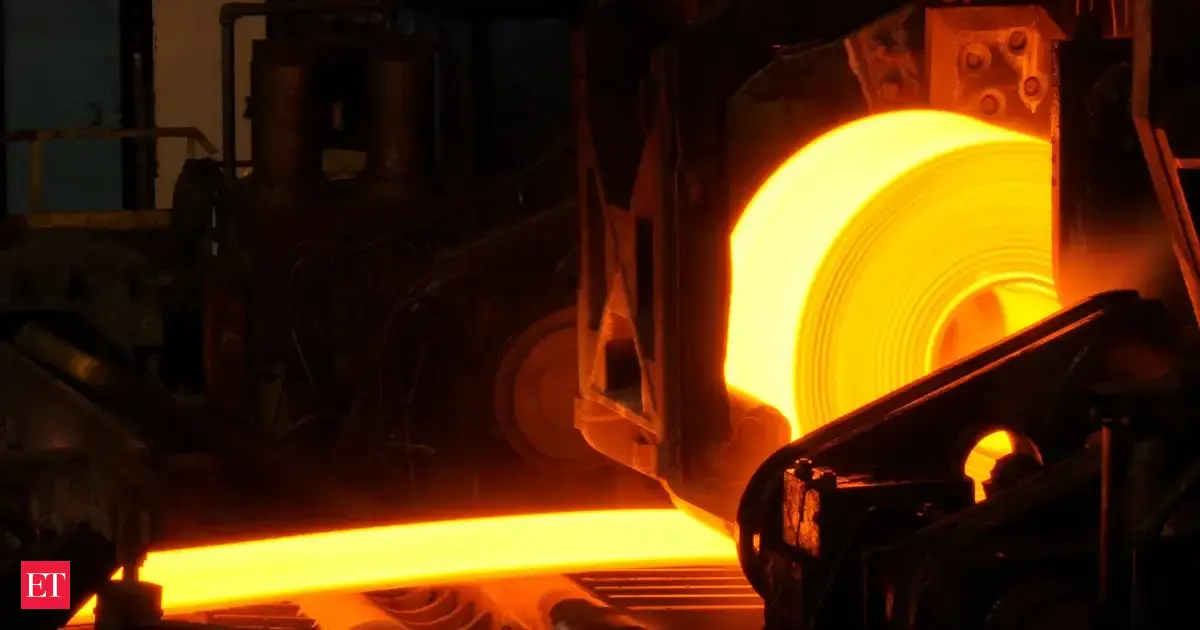
India will receive substantial tariff-rate quotas for steel exports to the European Union. These quotas total 1.64 million tonnes annually, with a portion under a free trade agreement. The European Union's new regulation aims to protect its domestic steel industry from overcapacity. India's exports outside these quotas will face applicable base-rate duties. The agreement includes provisions for periodic reviews of these allocated quotas. View More
New Delhi: India will get country-specific tariff-rate quotas (TRQs) totalling 1.64 million tonnes annually for exporting steel products to the European Union, of which 6,94,853 tonnes will be under the free trade agreement, according to the draft text of the pact released by the EU. The total country-specific quota of 16,41,470 tonnes comprises 9,46,616 tonnes under the MFN (most favoured nation) component and 6,94,853 tonnes under the FTA component. The quotas cover a wide range of steel products, including non-alloy and alloy hot-rolled sheets and strips, cold-rolled sheets, metallic-coated sheets, organic-coated sheets, tin mill products, stainless steel products, merchant bars and light sections, rebars, wire rods, pipes and tubes. Read more: Jindal Steel builds world’s longest steel slag road, enters Guinness World Records India at present exports about four million tonnes of steel per year to the EU. Live Events The TRQs follow the European Union's Steel Overcapacity Regulation, which came into force on July 1 this year. It is aimed at ensuring protection for the EU's steel industry against the effects of global overcapacity. It sets free-of-duty quotas at 18.3 million tonnes, with a 50 per cent duty for out-of-quota imports and a melt-and-pour regime to enhance transparency. According to the text, the largest country-specific quota is for non-alloy and other alloy hot-rolled sheets and strips at 5,09,605 tonnes, comprising 2,99,197 tonnes under the MFN component and 2,10,408 tonnes under the FTA component. Read more: Tata Steel scaling up AI, connected workforce systems to boost industrial safety This is followed by cold-rolled sheets with a total quota of 2,18,658 tonnes and metallic-coated sheets with 1,97,860 tonnes. Other major quotas include 1,86,038 tonnes for organic-coated sheets, 1,81,835 tonnes for non-alloy and other alloy quarto plates, 85,157 tonnes for another category of metallic-coated sheets and 79,278 tonnes for stainless steel bars and light sections. It added that the TRQs relating to imports into the European Union of steel products originating in India shall take effect on the date the EU Steel Regulation starts applying. Steel imports from India outside these quotas will attract the applicable base-rate duties under the EU's tariff commitments. "If the European Union amends the Product Specific Rules (PSRs) for products covered under the EU Steel Regulation, the European Union shall consult with India immediately upon the proposal for such an amendment," the text said. The EU would administer the TRQs, it said, in a transparent, objective and non-discriminatory manner so as to be conducive to trade and facilitate, to the extent feasible, their effective utilisation. This includes making publicly available in a timely and continuous manner all relevant information concerning the administration of those TRQs. It added that India will also get access to additional quota volumes in categories where India has a country-specific quota. Those additional volumes will be allocated through competition among EU FTA partners that have country-specific quotas in those categories. For product categories where India does not have a country-specific quota, it will have access to residual quotas, including general residual quotas open to eligible trading partners and preferential quotas reserved for EU FTA partners. The agreement provides for periodic reviews of the quotas, with the first review to be initiated one year after the FTA comes into force and subsequent reviews every five years. India and the EU announced the conclusion of negotiations for the pact on January 27. It is expected to be signed by the end of this year and likely to be implemented next year. .Pbanner{display:flex;justify-content:space-between;align-items:center;background-color:#ec1c40;margin-top:20px;padding:5px 10px;border-radius:4px;color:#fff;line-height:10px;width: 100%;box-sizing: border-box} .Pbannertext{display:flex;align-items:center;font-size:16px;font-weight:600;font-family:'Montserrat';} .Pbannertext img{height:20px;margin:0 6px} .Pbannerbutton a{display:flex;align-items:center;background-color:#fff;color:#ec1c40;text-decoration:none;font-weight:600;padding:4px 8px;border-radius:6px;font-size:15px;font-family:'Montserrat';} .Pbannerbutton img{height:20px;margin-right:6px} .Pbannerbutton a:hover{background-color:#f7f7f7} Add as a Reliable and Trusted News Source Add Now! (You can now subscribe to our Economic Times WhatsApp channel) (You can now subscribe to our Economic Times WhatsApp channel)