
Latest Sectors News

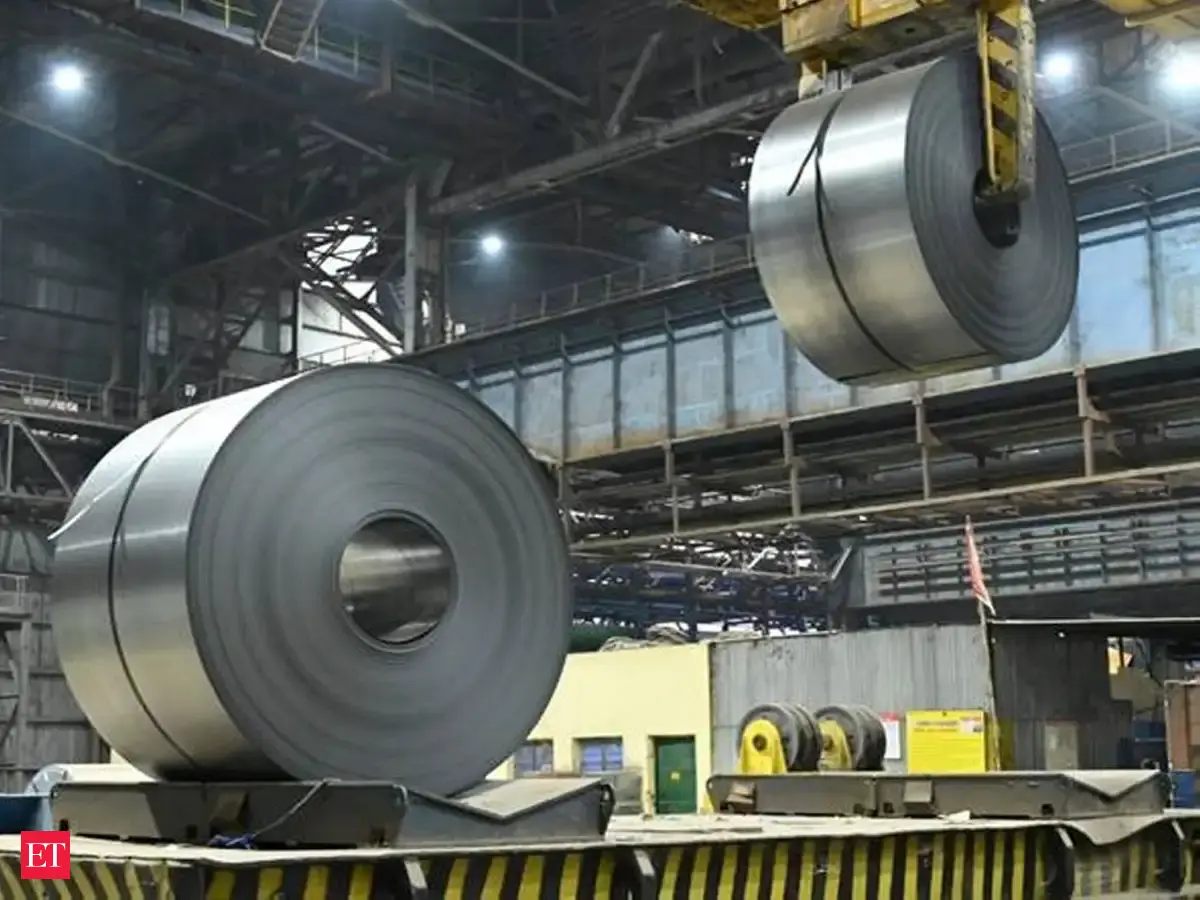
Sitharaman said India raised crude steel output by 10% in 2025 to 165 million tonnes and by 6% in January-August 2026, even as world output declined. India's share of world steel production has risen to about 9% from 5.2% in 2014, she added. View More
New Delhi: India's steel industry is expanding even as global output declines, with domestic demand supported by infrastructure spending keeping pace with production, finance minister Nirmala Sitharaman said on Monday, highlighting the country's growing role in the global steel market. Speaking at the World Steel Association 's (Worldsteel) General Assembly here, Sitharaman said India raised crude steel output by 10% in 2025 to 165 million tonnes and by 6% in January-August 2026, even as world output declined. India's share of world steel production has risen to about 9% from 5.2% in 2014, she added. Demand has expanded alongside production, making India the fastest-growing major steel market in the world, with a public investment programme and a green steel framework in place, the finance minister said. Finished steel consumption in the country more than doubled over a decade to 164 million tonnes in FY26. For two successive years, consumption has exceeded production, she added. Sitharaman invited Worldsteel to "consider establishing an office in India" to strengthen its presence in the country. Investments in infrastructure such as railway, national highways, ports and high-speed rail networks create sustained demand for steel across construction, transport, energy and industrial infrastructure, she said. The task is to ensure that the growth in steel production is matched by advances in raw-material security, specialised manufacturing, technological sophistication, and environmental performance, the finance minister said. "Small modular reactors, being developed under our Nuclear Energy Mission, also hold promise for the steel sector," she said. As these technologies mature and are deployed, they can provide reliable, round-the-clock, low-carbon electricity, complementing renewable energy and supporting the steel industry's decarbonisation, Sitharaman said. A practical priority is to expand scrap-based steelmaking and use renewable electricity to power it, she said. .Pbanner{display:flex;justify-content:space-between;align-items:center;background-color:#ec1c40;margin-top:20px;padding:5px 10px;border-radius:4px;color:#fff;line-height:10px;width: 100%;box-sizing: border-box} .Pbannertext{display:flex;align-items:center;font-size:16px;font-weight:600;font-family:'Montserrat';} .Pbannertext img{height:20px;margin:0 6px} .Pbannerbutton a{display:flex;align-items:center;background-color:#fff;color:#ec1c40;text-decoration:none;font-weight:600;padding:4px 8px;border-radius:6px;font-size:15px;font-family:'Montserrat';} .Pbannerbutton img{height:20px;margin-right:6px} .Pbannerbutton a:hover{background-color:#f7f7f7} Add as a Reliable and Trusted News Source Add Now! (You can now subscribe to our Economic Times WhatsApp channel) (You can now subscribe to our Economic Times WhatsApp channel)

Nirmala Sitharaman urged the World Steel Association to establish a local base amid rising domestic demand, warning that unilateral tools like the EU's CBAM only redirect excess global capacity without fixing overproduction. View More


Finance Minister Nirmala Sitharaman urged steelmakers to cut emissions and boost domestic specialty steel production to reduce import dependence. She highlighted rising domestic demand, a ?6,300 crore PLI scheme and public investment as key growth drivers. View More

India’s rising steel production and infrastructure-led consumption are strengthening its role in the global industry, even as worldwide capacity pressures persist View More

The partnership will be supported by almost £1.9 million from the UK Government, matched by £1 million from Tata Steel, bringing critical industrial expertise to the programme View More

India’s steel demand is forecast to grow 7.9% in 2026 and 8% in 2027, driven by infrastructure, real estate, manufacturing and renewable energy projects. View More
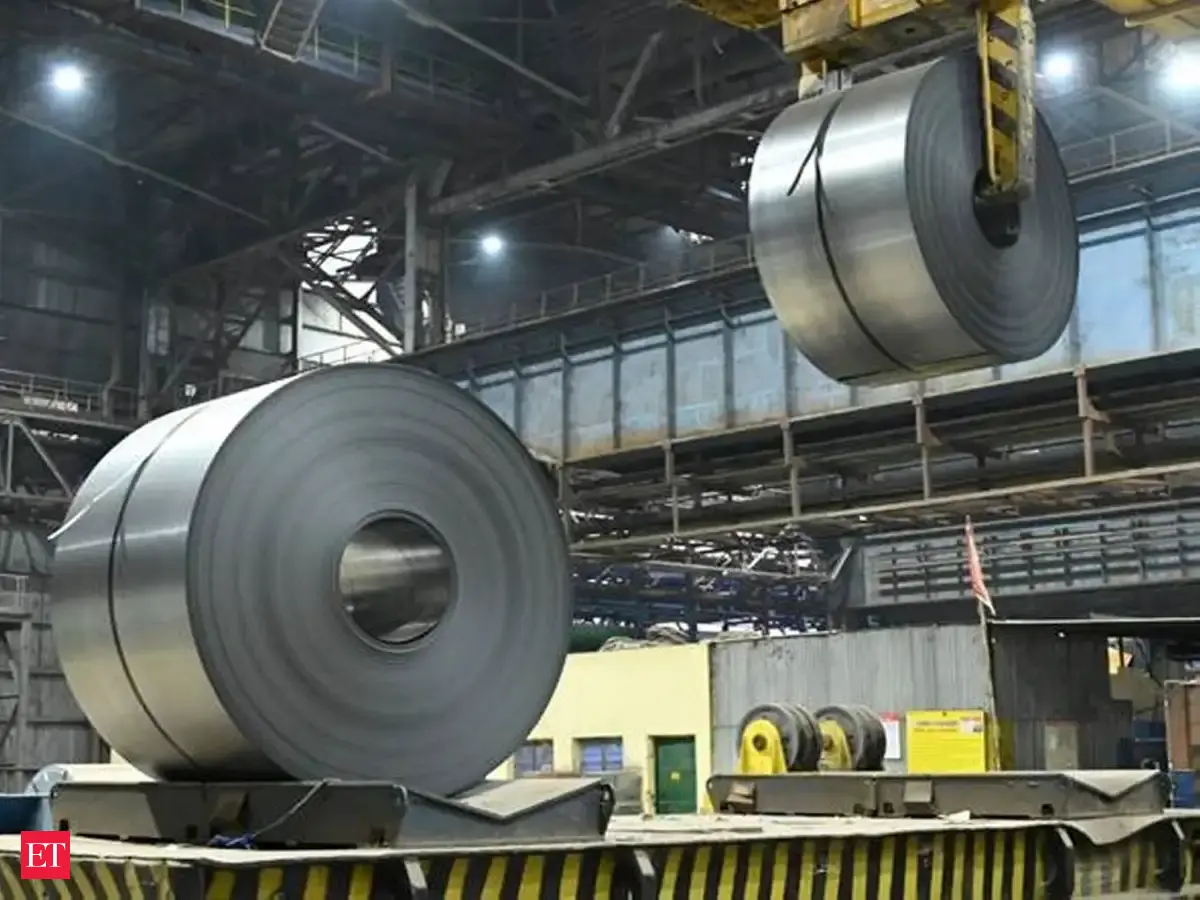
India's steel demand is projected to grow by 7.9 percent in 2026 and by 8 percent in 2027. This growth is driven by infrastructure projects, manufacturing expansion, and strong real estate demand. Conversely, steel demand in China is expected to experience a decline of 2 percent in 2026, followed by a lesser contraction in 2027. View More
New Delhi: India remains the world's fastest-growing major steel market, with demand projected to expand by 7.9 per cent to 172.4 million tonnes in 2026, the World Steel Association (worldsteel) said on Monday. The country's demand is expected to rise by 8 per cent in 2027 to 186.2 million tonnes (MT), the industry body said in its 'Short Range Outlook October 2026'. worldsteel said it forecasts global steel demand will remain essentially unchanged at 1,722 MT in 2026 before returning to 1.7 per cent growth in 2027 to reach 1,752 MT. However, steel demand in China - the world's largest steel-producing nation - is likely to drop by 2 per cent in 2026. In 2027, contraction in China is also expected to narrow to 1 per cent, the Belgium-based industry body said. India remains the world's fastest-growing major steel market, with demand estimated to expand by 7.9 per cent in 2026 to 172.4 MT and by 8 per cent in 2027 to 186.2 per cent. Live Events Growth continues to be broad-based. Infrastructure-led construction remains the primary driver. Private real estate demand is robust. Healthy manufacturing growth, a substantial renewable energy project pipeline and continued expansion of manufacturing capacity are lifting electrical and mechanical machinery, while automotive output is buoyed by domestic demand, export momentum, and policy support. Steel demand in the Gulf should recover strongly once the uncertainty clears, the Strait of Hormuz reopens, and the supply chains normalise. Reflecting this optimistic scenario, worldsteel said the sector is likely to witness an 11.3 per cent rebound in 2027, taking regional demand back to its 2025 level. Steel demand in the US is projected to grow by 2 per cent in 2026. Growth has been underpinned by strong investment in data centres and energy infrastructure, including power generation, renewables, and oil and gas, together with incremental support from selected manufacturing sectors. For Europe, it said, "We now expect EU apparent steel use to decline by 0.3 per cent in 2026 before growing by 3.1 per cent in 2027, a downward revision of 1.5 percentage points for this year. The 2025 outturn was stronger than we had forecast, but a significant part of that strength was stock building ahead of CBAM taking effect in 2026". The construction recovery is proving slower and more fragmented than expected, with residential permits showing signs of bottoming out while completions remain in recession, and automotive continues to drag, worldsteel said. .Pbanner{display:flex;justify-content:space-between;align-items:center;background-color:#ec1c40;margin-top:20px;padding:5px 10px;border-radius:4px;color:#fff;line-height:10px;width: 100%;box-sizing: border-box} .Pbannertext{display:flex;align-items:center;font-size:16px;font-weight:600;font-family:'Montserrat';} .Pbannertext img{height:20px;margin:0 6px} .Pbannerbutton a{display:flex;align-items:center;background-color:#fff;color:#ec1c40;text-decoration:none;font-weight:600;padding:4px 8px;border-radius:6px;font-size:15px;font-family:'Montserrat';} .Pbannerbutton img{height:20px;margin-right:6px} .Pbannerbutton a:hover{background-color:#f7f7f7} Add as a Reliable and Trusted News Source Add Now! (You can now subscribe to our Economic Times WhatsApp channel) (You can now subscribe to our Economic Times WhatsApp channel)

The stock touched an intraday high of ?177.25 before paring gains, with sell orders outweighing buys — 63.56 per cent of the order book was on the sell side versus 36.44 per cent on the buy side. View More