Latest Sectors News

KFC is switching from PepsiCo to Coca-Cola as its beverage supplier for U.S. restaurants. View More
In this articleYUMFollow your favorite stocksCREATE FREE ACCOUNT A view of a KFC restaurant in Vallejo, California.Justin Sullivan | Getty ImagesKFC's U.S. restaurants will ditch PepsiCo and switch to Coca-Cola beverages next year, marking the first time in decades that the Yum Brands chain has changed its drink supplier, the restaurant company said Thursday.Some of KFC's international markets serve Coke products, but the chain's U.S. restaurants have stuck with PepsiCo drinks ever since Pepsi bought KFC in 1986. At the time of the acquisition, KFC was Coke's second-largest fountain account, trailing only McDonald's. Pepsi later spun off KFC, along with sister chains Pizza Hut and Taco Bell â but even as the combined Yum Brands, the company stayed loyal to its previous owner. Without Pepsi, Taco Bell would not serve its iconic Mountain Dew Baja Blast.The change comes as KFC aims to win back U.S. diners, who have ditched the fried chicken chain for rivals such as Chick-fil-A or Popeyes. "This decision is a critical step in the Kentucky Fried Comeback," KFC U.S. President Catherine Tan-Gillespie wrote in a memo to franchisees and employees obtained by CNBC. "A new beverage offering, with a new partner in Coca-Cola, gives us a platform to innovate, meet changing tastes and give customers more reasons to choose us."Beverage cups stacked inside a Yum Brands KFC restaurant in Shelbyville, Kentucky, Jan. 29, 2021.Luke Sharrett | Bloomberg | Getty ImagesFor many fast-food chains, beverages have become a critical way to attract consumers. A number of restaurants, including McDonald's and Taco Bell, have broadened their drink offerings with options such as refreshers or "dirty soda." For its part, KFC recently unveiled new drinks, including iced coffees and shakes, at Open House, its innovation restaurant in McKinney, Texas. Coke told CNBC earlier this year that the company has helped many of its restaurant partners create new drinks.KFC expects to be pouring Coke beverages in all of its U.S. restaurants by the end of the first quarter of 2027, Tan-Gillespie said.Tan-Gillespie also said that Pepsi remains an important partner for KFC's parent company and the chain's international markets.For decades, Coke and Pepsi have tussled over important restaurant partners, which represent both a sales opportunity and the chance to grow the visibility of their beverage brands. It is unusual for large restaurant chains to switch beverage providers, but not unprecedented. In 2024, Pepsi poached Subway, the largest U.S. restaurant chain by number of locations, from Coke. Besides KFC, Coke has wooed away a number of notable Pepsi customers in recent years, including Culver's, Arby's and Panda Express. Choose CNBC as your preferred source on Google and never miss a moment from the most trusted name in business news.

Hungary, a small country in central Europe, has played a major part in the movie business since the late 19th century. View More
The movie 'Ashes to Iron' was largely shot in Hungary. Actors are shown in a scene set in the Rothschild Hospital in Vienna, filmed on location at Budapest's University of Technology and Economy.Ashes To IronThink of Academy Award-winning movies such as "Poor Things," "Blade Runner 2049" and "The Brutalist" and you might assume they were made in Los Angeles. But instead of being produced in California's famous studios, they were all shot largely in one central European country: Hungary. Huge production complexes, a variety of land and cityscapes and generous incentives have made Hungary a hub for Hollywood.Arnold Schwarzenegger, Tom Cruise, Eddie Redmayne, Liam Hemsworth, Anne Hathaway and Dakota Fanning were all reportedly seen in Hungary's capital Budapest and its surrounding areas this year.Hungary's history of movie-makingHungary has been involved with cinema since its earliest days. The Lumière brothers, makers of the cinematograph device, brought their invention to Budapest's Grand Hotel Royal in 1896 â just months after its Paris debut â and had camera operators film landmarks in the city the same year.When Budapest's artists and writers saw the early movies they "lost their minds in a good way, and almost immediately started creating their own films," according to movie director Justin Reardon, who runs production firm The Royal Budapest Film Company with his wife Barbara. The first Hungarian film staged for the screen was shot in 1901 on the rooftop of the Uránia, a Budapest palace that hosted science presentations, which is now a "cathedral"-like movie theater, he said.A scene of the movie "Hunyadi" (Rise of the Raven) shot at Hungary's National Film Institute's new studio complex close to Budapest on January 30, 2025.Attila Kisbenedek | Afp | Getty ImagesHungarians have also had an outsized influence on the American movie industry. Adolph Zukor, born in the then Austro-Hungarian empire, emigrated at 16 to the U.S., and in 1912 co-founded Paramount Pictures, while William Fox â born Vilmos Fried â was the Hungarian-American founder of the Fox Film Corporation that became Twentieth Century-Fox in 1935. Actors Zsa Zsa Gabor, Tony Curtis, Rachel Weisz and Adrien Brody have Hungarian roots, while Budapest-born Gábor Csupó founded a Hollywood studio that produced early seasons of "The Simpsons."'Different looks'With its grand architecture as well as areas that appear a little more gritty, Budapest has doubled for European cities such as Paris, Berlin and Rome in movies including "Evita," "Max," and "Inferno.""It's got many different looks," said producer Barbara Reardon. It's also easy to get around, and international movie executives feel at home, she said. "Budapest is equipped with a little bit of everything. You can find your green juices and healthy salads ... and a lot of studio heads and and actors, they like that," she told CNBC by video call. Budapest has doubled for Paris, Berlin and Rome in movies including 'Evita,' 'Max,' and 'Inferno.'Karol Czinege | 500px Plus | Getty ImagesFor author Judy Laufer, Budapest as a movie location has a personal connection: her family escaped from the city during the 1956 Hungarian Revolution, fleeing across the border to Austria before emigrating to Canada. Laufer is the producer of an independent movie, "Ashes to Iron," which tells her family's story and was shot in Hungary. "Unless there's a specific thing that tells you you're in Budapest, like the big synagogue, for instance ... you really could be anywhere," Laufer said, referring to a large synagogue on Dohány Street, the thoroughfare where she lived for the first year-and-a-half of her life. Laufer is submitting the movie to film festivals including Sundance and Berlin and will hold a private screening in Budapest to mark the 70-year anniversary of the revolution later this month. Other locations for "Ashes to Iron" include a small airport and a nature trail outside Budapest. Barbara Reardon said the country is also attractive for filming because of the proximity to multiple different types of landscapes. "Outside of the city, you have the lake that you can double for a sea," she said, referring to Lake Balaton, central Europe's largest freshwater lake. "Maybe we don't have mountains, but nowadays that's an easy fix, [as] the surrounding countries do."'Stable' incentivesWhile the Hungarian studios can't compete in size with California's Warner Bros. Studios Burbank or Universal Studios, they can compete on price. Production costs are around 30% to 50% cheaper than in the U.S., according to Barbara Reardon.About a 20-minute drive north of Budapest is Origo Studios, a complex where large chunks of U.S. movies including "Dune," "Dune: Part Two" and "Inferno" were shot. The studio has 11 stages plus 4 acres of backlot (where movie sets for outdoor scenes are built) and was founded in 2010 in a partnership with U.S. production company Raleigh Studios, run by American studio executive Michael Moore at the time.When CNBC visited Origo Studios in August, it was quiet. CEO Márta Fekszi Horváth described it as a "transition period," but added that she was "very optimistic" about forthcoming productions. Much of the movie 'Ashes To Iron' was filmed on location in Hungary.Ashes To IronHungary's movie industry was thrown into disarray after former Hungarian Prime Minister Viktor Orbán paused an incentive scheme that provided a 30% rebate on all production spend in the country. While the scheme was restarted in December, the former government also put a cap on the value of productions for the first half of 2026, adding to the uncertainty as producers tend to plan budgets a year ahead or more.The new government has submitted proposals to supplement the rebate by 63 billion Hungarian forints ($193 million), Horváth said, and last month, Hungary's Deputy Prime Minister and Foreign Minister Anita Orbán sought to reassure the movie industry further, saying that the new administration aimed to provide a "stable and predictable framework" for the incentive system. The government wanted to bring "even more" international productions to the country, she added.Local talentOne large-scale production that was shot in Hungary and is set for release in the U.S. and U.K. this month is "Wicker," starring Olivia Colman as an ostracized, single fisherwoman and Alexander SkarsgÃ¥rd as her custom-ordered husband crafted out of willow. It was filmed on two medieval backlots at Korda Studios and the National Film Institute, to the west and north of the city respectively, according to Barbara Reardon, a local co-producer.Hollywood studios often want to bring in their own teams to oversee certain functions, or may take post-production back home, according to the Reardons. But Barbara said she's seen a shift. "'Wicker' ... was one of the first big international films with big international stars that hired [a] local production designer, local costume designer, local hair and makeup designer," she said. The movie's writer-directors, Eleanor Wilson and Alex Huston Fischer, set the film "outside of a specific time and place, which meant we got to invent our own culture," Fischer said in production notes seen by CNBC. The movie's costume designers, András Dániel Tóth and Attila Godena-Juhász, who are Hungarian, were inspired by Hungary's traditional clothing, such as bridal headpieces with layered veils, and Wilson said the country's folk art and traditions shaped how "Wicker" looks.For a "tiny little" country, Hungary punches above its weight, Justin Reardon said. "You don't expect in a very small market to have such a robust group of people that are able to to accomplish so much." Choose CNBC as your preferred source on Google and never miss a moment from the most trusted name in business news.
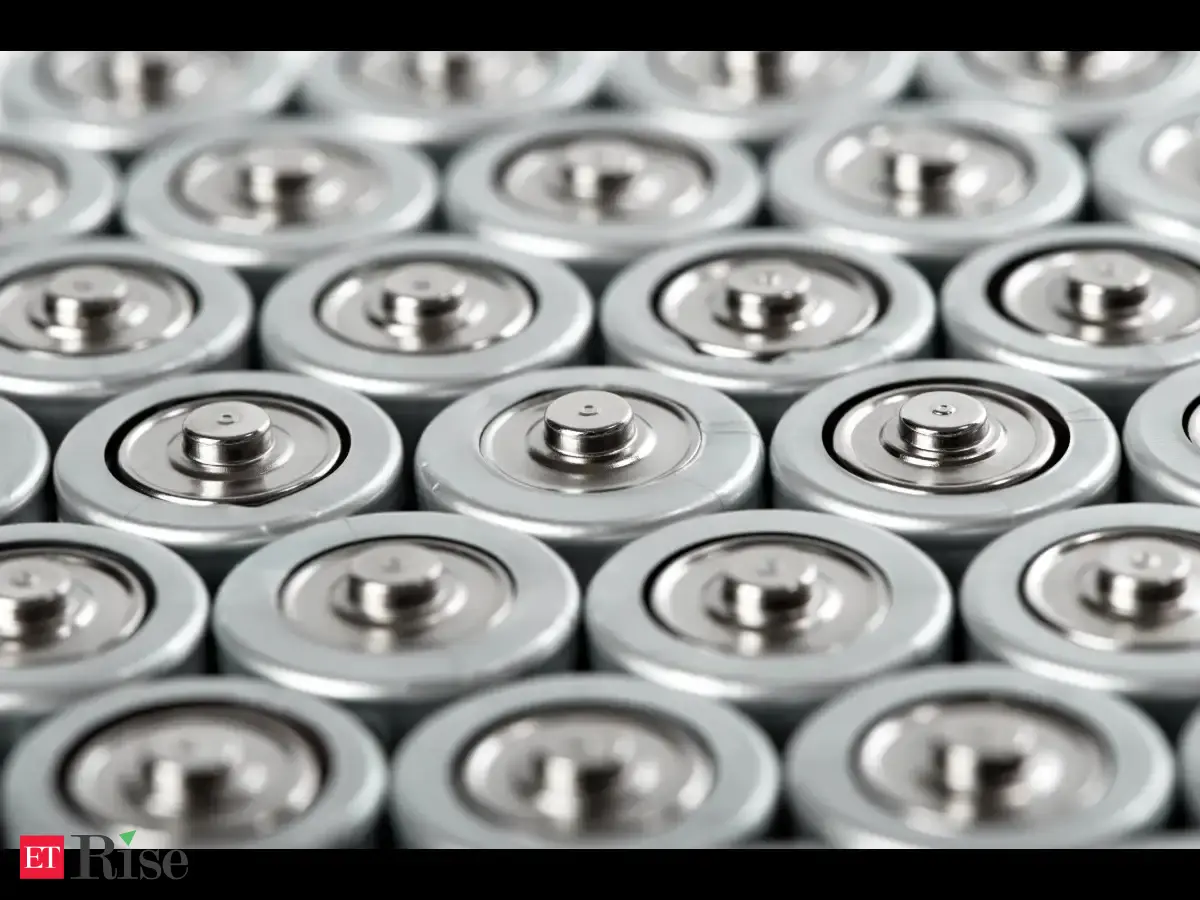
Recent surveys suggest that India's battery energy storage sector is transforming towards non-lithium technologies. These include sodium-ion, vanadium redox flow, and zinc-based batteries which could reduce import dependence. View More
NEW DELHI: Non-lithium energy storage technologies like sodium-ion batteries are poised to cut India's storage imports by 50 per cent by 2035, according to a survey by the NetZero Energy Transition Association (Netra). According to a Netra statement, India’s battery energy storage sector is undergoing significant transformation, with nearly 90 per cent of current storage and lithium-ion battery requirements still met through imports. However, rapid adoption of vanadium redox flow, sodium-ion, zinc-based, and iron-based batteries and indigenous manufacturing could enable India to reduce its battery storage import dependence to just 50–52 per cent by 2035, a recent survey by NETRA, a global platform for driving the energy transition by enabling new and advanced technologies, said. The survey was conducted among various industry leaders, representatives from utilities, battery manufacturers, project developers, researchers, and manufacturers across Delhi, Mumbai, Bengaluru, Chennai, and Hyderabad. This survey report will be officially revealed at the BEYOND LITHIUM SUMMIT 2026, to be held on October 24, 2026, in New Delhi. Live Events This first-of-its-kind platform in India is dedicated to battery technologies beyond lithium-ion, where over 100 companies and research organisations will gather to map the future of India’s multi-chemistry storage ecosystem and showcase the latest advances in non-lithium energy storage technologies. Industry estimates suggest that the compound annual growth rate (CAGR) for India’s Battery Energy Storage System (BESS) sector stood at 91 per cent between FY26 and FY32. Cumulative capacity is set to rise from 6.3 GWh to 302 GWh in that period, driven by ambitious renewable integration and round-the-clock power needs. Yet, 89-91 per cent of battery storage systems and lithium-ion batteries are currently sourced from abroad, exposing India to global supply shocks and price volatility. In the past year alone, lithium battery prices fluctuated by more than 25 per cent in India, influenced by raw material constraints, currency swings, and international market pressures. About 61 per cent of respondents believe that scaling up domestic innovation and manufacturing of vanadium redox flow, sodium-ion, zinc-based, and iron-based batteries can significantly reduce India’s reliance on imported solutions. Over half (54 per cent) expect that, with commercial-scale deployment and targeted investment, India's storage import share could fall to 50–52 per cent by 2032. The shift is already underway. Leading Indian research institutions, including ARCI, IMMT, NCL , and IIT Bombay, are advancing indigenous sodium-ion cell technology, while companies such as Rechargion, HPCL , Oden Energy, Macsen Energy, and Uneverse are developing cell and pack solutions tailored to grid and industrial applications. Globally, sodium-ion cell manufacturing capacity has crossed 10 GWh this year, with further expansion planned. On the vanadium flow front, companies like VFT (formerly Vflowtech) and Delectrik Systems are installing vanadium redox flow battery (VRFB) systems both in India and internationally, targeting long-duration storage and grid flexibility. Rahul Walawalkar, President of NETRA, said, "India’s energy security will depend not only on how much storage we deploy, but on the diversity and indigenisation of the technologies behind it". Zinc-based batteries offer India a strategic opportunity to achieve energy security through indigenous manufacturing and by eliminating dependence on imported lithium, said Saroj Sahu, CEO & Co-Founder, Golden Gate Battery, Inc. NETRA’s findings align with government and industry calls for a technology-agnostic approach to energy storage. -- .Pbanner{display:flex;justify-content:space-between;align-items:center;background-color:#ec1c40;margin-top:20px;padding:5px 10px;border-radius:4px;color:#fff;line-height:10px;width: 100%;box-sizing: border-box} .Pbannertext{display:flex;align-items:center;font-size:16px;font-weight:600;font-family:'Montserrat';} .Pbannertext img{height:20px;margin:0 6px} .Pbannerbutton a{display:flex;align-items:center;background-color:#fff;color:#ec1c40;text-decoration:none;font-weight:600;padding:4px 8px;border-radius:6px;font-size:15px;font-family:'Montserrat';} .Pbannerbutton img{height:20px;margin-right:6px} .Pbannerbutton a:hover{background-color:#f7f7f7} Add as a Reliable and Trusted News Source Add Now!

In this articleCLFFollow your favorite stocksCREATE FREE ACCOUNT watch nowVIDEO5:0605:06Options for this steel company make a compelling sale, says Mike KhouwOptions ActionFool me once, shame on you. Fool me twice, shame on me. That seems to be the refrain for Cleveland-Cliffs investors as the steel giant prepares to report earnings.Cleveland-Cliffs steps into the earnings spotlight on Oct.19, and options traders are bracing for impact. After a massive, nearly 16% one-day price jump following its July quarterly report â nearly double its long-term historical average move of slightly over 8% â short-term implied volatility (IV) has been aggressively bid up as traders fear a repeat. And who could blame them? Short interest is running close to 14%, and the CEO is famous for fighting the naysayers, noting that he likes boil them "like frogs" and that they are "messing with the wrong guy."With rhetoric like that, it's little wonder options traders are bracing for big moves. For strategic premium sellers, this inflated near-term fear creates a compelling opportunity to deploy what I call a "strangle-swap." You'll sometimes see traders or strategists refer to this as a "double-diagonal" spread. This structure allows traders to capitalize on the anticipated post-earnings decline in implied volatility (aka "vol crush") without taking on the unlimited risk of a naked short strangle.The TradeTo execute this strangle-swap, you sell a shorter-dated strangle and buy a longer-dated strangle to define your risk.Sell to Open: Sell November 11 Puts @ $0.43Sell November 17 Call @ $0.25) Buy January 10 Put for $0.49Buy January 18 Call for $0.43Total net debit = $0.24 Net Cost: $24 per spread (recall each contract represents 100 shares)The key to this trade is the differential in IV decay between the shorter-dated November expirations being sold and the longer-dated January options being purchased. Traders are heavily bidding November options on concerns that the sharp move from the last quarterly earnings release may repeat. Whether it does or doesn't, that binary uncertainty vanishes after CLF reports on the 19th, causing November implied volatility (IV) to collapse, a phenomenon commonly known as "vol crush."Stock Chart IconStock chart iconCleveland-Cliffs, YTDBecause the January options have significantly more days to expiration, they are less sensitive to this immediate IV crush and suffer much slower time decay (theta).This trade is most profitable if CLF stays between $11 and $17 after the report. In this scenario, the November short strangle rapidly bleeds value. A trader can then buy back the short legs for a fraction of the $0.80 initially collected, or let them expire worthless. This leaves the trader holding a long January 10/18 strangle for virtually nothing, providing "free" exposure to future price swings through year-end.When it falters: risk and rewardThis strategy loses money if CLF repeats or exceeds its explosive July fireworks. Because the short strikes (11/17) are narrower than the long strikes (10/18), a massive directional move will cause the short options' intrinsic value to expand faster than the long options can offset it in the short term.However, the risk/reward profile is highly asymmetrical. The long January wings strictly define catastrophic risk.Maximum Downside Risk: The width of the put spread ($1.00) plus the net debit ($0.24) = $1.24 ($124 per contract).Maximum Upside Risk: The width of the call spread ($1.00) plus the net debit ($0.24) = $1.24 ($124 per contract).By risking up to ~$124 to capture elevated front-month premium, the double-diagonal offers a cheap, defined-risk vehicle to fade the market's recent earnings trauma while maintaining long-term optionality.Disclosures: Disclosures: Tidal owns/holds all the securities mentioned in the article.All opinions expressed by CNBC Pro contributors are solely their opinions and do not reflect the opinions of CNBC, or its parent company or affiliates, and may have been previously disseminated by them on television, radio, internet or another medium. This content is provided as part of our editorial output for informational purposes only and does not constitute financial, investment, tax or legal advice or a recommendation to buy any security or other financial asset. The content is general in nature and does not reflect any individual's unique personal circumstances. The above content might not be suitable for your particular circumstances. Before making any financial decisions, you should strongly consider seeking advice from your own financial or investment advisor.THIS CONTENT IS PROVIDED FOR INFORMATIONAL PURPOSES ONLY AND DOES NOT CONSTITUTE FINANCIAL, INVESTMENT, TAX OR LEGAL ADVICE OR A RECOMMENDATION TO BUY ANY SECURITY OR OTHER FINANCIAL ASSET. THE CONTENT IS GENERAL IN NATURE AND DOES NOT REFLECT ANY INDIVIDUAL'S UNIQUE PERSONAL CIRCUMSTANCES. THE ABOVE CONTENT MIGHT NOT BE SUITABLE FOR YOUR PARTICULAR CIRCUMSTANCES. BEFORE MAKING ANY FINANCIAL DECISIONS, YOU SHOULD STRONGLY CONSIDER SEEKING ADVICE FROM YOUR OWN FINANCIAL OR INVESTMENT ADVISOR.Click here for the full disclaimer. Choose CNBC as your preferred source on Google and never miss a moment from the most trusted name in business news.

The ongoing geo-political uncertainty has pushed up cost on imported key raw materials including coking and thermal coal, ferro-alloys besides the rise in shipping cost View More
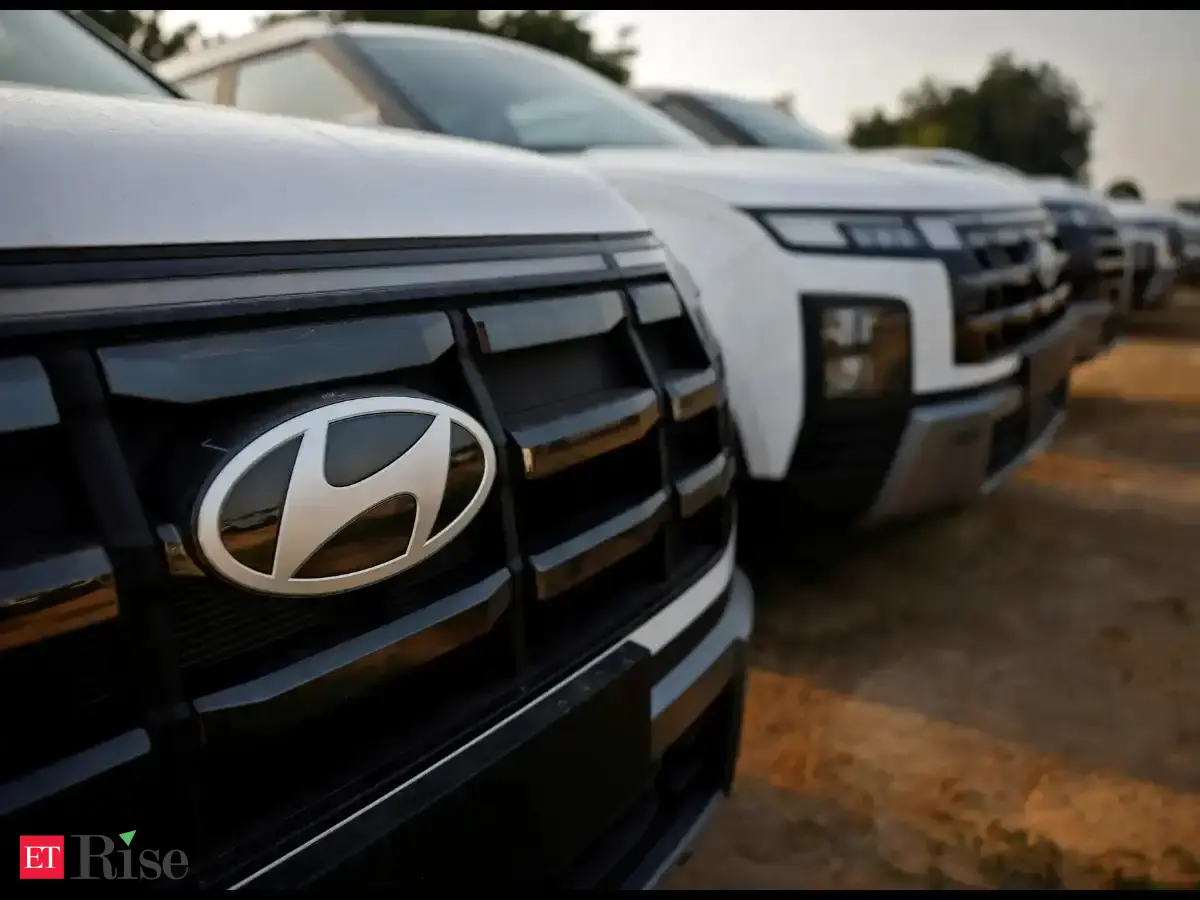
Hyundai Motor Company is expanding its investment in India as it prepares to introduce 26 new vehicles. The company plans to electrify about 50 percent of its vehicles by 2030, including various electric options. Hyundai's global CEO emphasized the importance of consistent regulation to ensure long-term investments. View More
NEW DELHI: Hyundai Motor Company is expanding its investment footprint in India, its global chief executive José Muñoz said on Tuesday, describing the country as essential to navigating global trade uncertainties and shifting automotive policies. Speaking at the Bloomberg New Economy Forum, Muñoz said India is an example of the company's long-term investment strategy, which it believes is essential to navigating geopolitical tensions, shifting trade policies and changes in the automotive industry. Hyundai plans to have about 50 per cent of its vehicles in India electrified by 2030, including CNG vehicles, electric vehicles, fuel-cell vehicles and hybrids, Muñoz, President and CEO of Hyundai Motor Co, said. "So you need to stay the course, and then that's why we have decided to make these investments in India, and then this is how we have become a kind of a global player doing the same type of thing that we learn here in India. It's a kind of blueprint, right? So becoming local in all the markets," he said. "We celebrate tomorrow our 30th anniversary in India, and we're going to make a big announcement in our new plant in Pune, our third one for the group, our second for Hyundai Motor Company," Muñoz said. Live Events The executive said the company was continuing with its electrification strategy even as some competitors had decided against pursuing it, adding that long-term planning and consistent execution were important in an environment marked by uncertainty. On managing trade and tariff uncertainties, Muñoz said Hyundai relied on a comprehensive strategy backed by an integrated business ecosystem spanning vehicle manufacturing, steel, logistics, distribution, robotics, autonomous driving, construction and data centres. The group also builds nuclear power plants, which provide energy to data centres, he said, describing the interconnected businesses as a platform that helps it respond to changing market conditions. He added that the group was developing the ability to plan ahead while remaining agile enough to respond to sudden changes. Referring to Hyundai's India plans, he said the company was preparing to introduce 26 new vehicles, including electric vehicles across different segments. "So, for example, now India is the star by having different elements of the strategy by being competitive, by launching EVs. Nobody thought that EVs would be relevant in this market just a couple of years ago. "We saw it and we invested, and then we we are going to have the entry EV. We're going to have an SUV EV. We're going to have off-road vehicles. So 26 new vehicles in India. Who saw that, right?" he said. Muñoz said the company would adapt quickly if circumstances changed, while stressing that an integrated ecosystem was crucial to managing risks across markets. He also called for consistency in regulations, particularly in industries requiring investments with long gestation periods. "We operate in 200 countries, and then we have to fulfill regulations in every single country, and we always do. What is very important is the consistency of the regulation. When it changes very, very fast in an environment where you make investments that are going to last 30, 40 years, that's that's a big harm," he said. On artificial intelligence, Muñoz described Hyundai as a "physical AI company", saying it was focused on applying the technology to practical business requirements rather than treating it as a standalone concept. He said Hyundai's Atlas humanoid robots were scheduled to begin production in the United States by 2028, with a total capacity of 30,000 units, and would be deployed on production lines to improve productivity, quality and costs. "Our Atlas robots are going to be starting to be produced by 2028 in the United States, with a total capacity of 30,000 of them, and we want to put them into our line to help us increase productivity, improve quality, and reduce costs," he said. Muñoz said AI applications needed careful management, with companies identifying useful applications and removing those that did not work. He also called for common rules to prevent countries from exploiting regulatory gaps. .Pbanner{display:flex;justify-content:space-between;align-items:center;background-color:#ec1c40;margin-top:20px;padding:5px 10px;border-radius:4px;color:#fff;line-height:10px;width: 100%;box-sizing: border-box} .Pbannertext{display:flex;align-items:center;font-size:16px;font-weight:600;font-family:'Montserrat';} .Pbannertext img{height:20px;margin:0 6px} .Pbannerbutton a{display:flex;align-items:center;background-color:#fff;color:#ec1c40;text-decoration:none;font-weight:600;padding:4px 8px;border-radius:6px;font-size:15px;font-family:'Montserrat';} .Pbannerbutton img{height:20px;margin-right:6px} .Pbannerbutton a:hover{background-color:#f7f7f7} Add as a Reliable and Trusted News Source Add Now!

Infrastructure, real estate, manufacturing and renewable energy projects to drive consumption; global demand outlook subdued by China’s slowdown View More

According to the draft, the imports of sub-standard or non-conforming steel, sudden import surges and possible circumvention of trade measures pose significant challenges for domestic producers View More
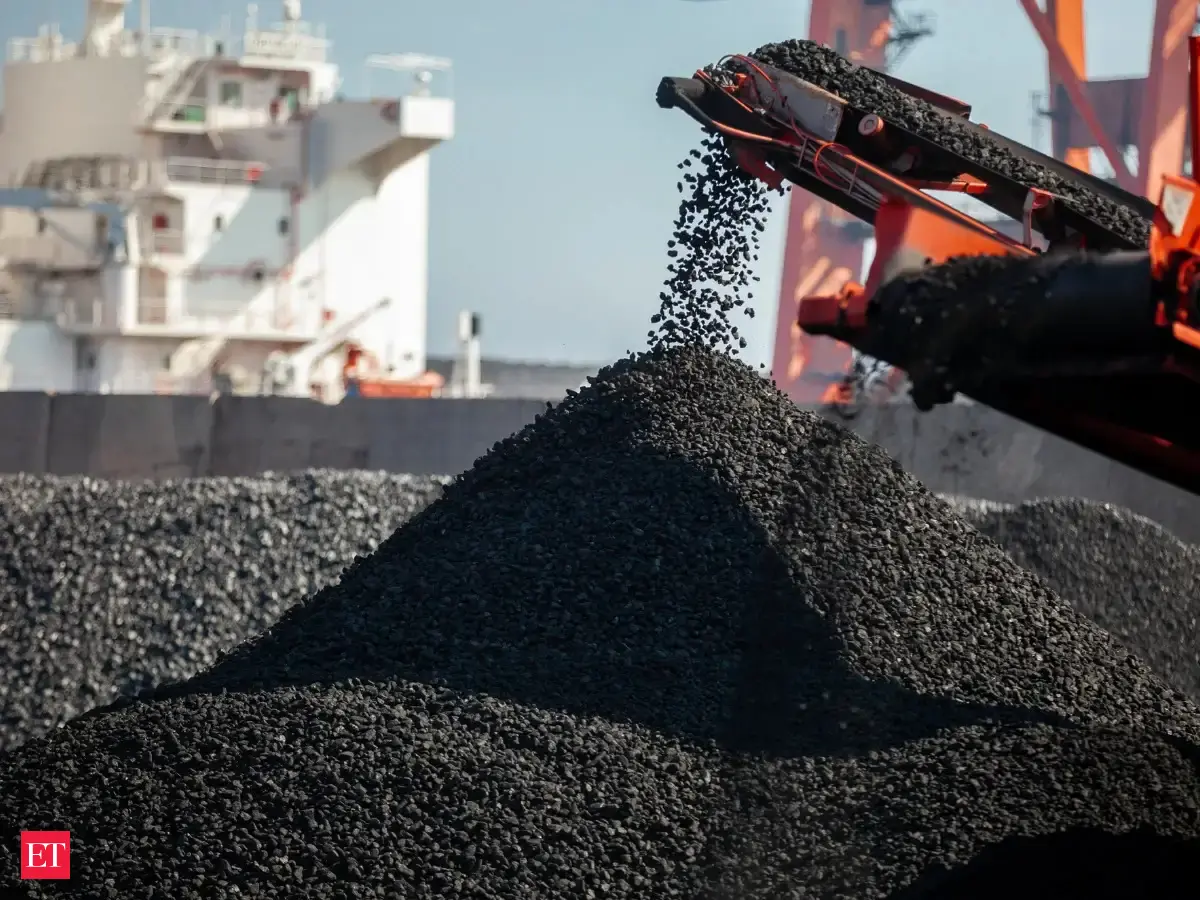
Shyam Metalics Group has secured strategic mining rights for the Phutamura coal block in Chhattisgarh. The investment in Alom Solar Private Limited aims to ensure a stable, long-term and cost-effective coal supply for its captive power generation and steel manufacturing operations. The investment also underscores the group's focus on sustainable growth and long-term value creation for stakeholders. View More
Kolkata: Shyam Metalics Group has secured strategic mining rights for the Phutamura coal block in Chhattisgarh through its investment in Alom Solar Private Limited , the successful bidder for the block, the company said on Tuesday. Located in the Mand Raigarh coalfield in Raigarh district, the block covers around 7.32 sq km and has estimated coal reserves of about 170 million tonnes, it said in a statement. Mining operations and coal production are expected to begin in July 2027, according to the company. Read more: Blackouts hit Indian factories as coal crunch feeds into economy The investment is part of the group's backward integration strategy to ensure a stable, long-term and cost-effective coal supply for its captive power generation and steel manufacturing operations , it said. Live Events Access to the reserves is expected to strengthen raw material security, improve operational self-sufficiency and reduce dependence on external coal supplies, the company said. Read more: India wastes 1.8 billion units of renewable power amid shortages and dwindling coal stocks: Report The investment also underscores the group's focus on sustainable growth and long-term value creation for stakeholders, it added. .Pbanner{display:flex;justify-content:space-between;align-items:center;background-color:#ec1c40;margin-top:20px;padding:5px 10px;border-radius:4px;color:#fff;line-height:10px;width: 100%;box-sizing: border-box} .Pbannertext{display:flex;align-items:center;font-size:16px;font-weight:600;font-family:'Montserrat';} .Pbannertext img{height:20px;margin:0 6px} .Pbannerbutton a{display:flex;align-items:center;background-color:#fff;color:#ec1c40;text-decoration:none;font-weight:600;padding:4px 8px;border-radius:6px;font-size:15px;font-family:'Montserrat';} .Pbannerbutton img{height:20px;margin-right:6px} .Pbannerbutton a:hover{background-color:#f7f7f7} Add as a Reliable and Trusted News Source Add Now! (You can now subscribe to our Economic Times WhatsApp channel) (You can now subscribe to our Economic Times WhatsApp channel)