Latest Sectors News
In the September quarter, Vedanta Iron and Steel reported a consolidated loss of Rs 324 crore despite a decrease in expenses, which fell by more than 9% to Rs 3,129 crore due to various operational difficulties. The company produced 532,000 tonnes of steel, reflecting a year-on-year increase of 4%. This showcases a notable enhancement in financial metrics amidst persistent issues in the iron ore sector. View More
MUMBAI: Vedanta Iron and Steel ’s consolidated loss narrowed to Rs 324 crore in the September quarter from a loss of Rs 477 crore last year, helped by lower expenses. Total expenses for the period fell more than 9% to Rs 3,129 crore. It slipped to a from a profit in the June quarter, as seasonal iron ore disruptions and plant shutdowns hit operations. In Apr-Jun, the company made a profit of Rs 121 crore on a revenue of Rs 3,662 crore. The Vedanta group company clocked in a revenue of Rs 2,788 crore, down 2% on year. It produced 532,000 tonne of steel during the quarter, up 4% on year. Earnings before interest, tax, depreciation and amortization (EBITDA) for the quarter stood at Rs 83 crore, up 56% on year, while EBITDA margins improved by 112 basis points on year to 3%. Performance for the quarter was affected by seasonal disruptions in iron ore production , planned plant shutdowns and higher input and conversion costs, the company said in a statement. These factors weighed on operating profitability during the quarter, it said. For the first half of the year, Vedanta Iron and Steel had a revenue of Rs 6,450 crore, up 8% on year, an EBITDA of Rs 598 crore, up 54% on year and a loss of Rs 203 crore, which compares to a loss of Rs 622 crore in the year ago period. It produced 1.1 million tonne of steel during the first half of the year, up 4% on year. Live Events It has a net debt of Rs 2,763 crores at the end of the September quarter, marginally higher from Rs 2,733 crore at the end of the June quarter. Vedanta Iron and Steel announced its earnings after market hours on Tuesday, and its shares closed at Rs 28 on the BSE, up 5% from the previous close. .Pbanner{display:flex;justify-content:space-between;align-items:center;background-color:#ec1c40;margin-top:20px;padding:5px 10px;border-radius:4px;color:#fff;line-height:10px;width: 100%;box-sizing: border-box} .Pbannertext{display:flex;align-items:center;font-size:16px;font-weight:600;font-family:'Montserrat';} .Pbannertext img{height:20px;margin:0 6px} .Pbannerbutton a{display:flex;align-items:center;background-color:#fff;color:#ec1c40;text-decoration:none;font-weight:600;padding:4px 8px;border-radius:6px;font-size:15px;font-family:'Montserrat';} .Pbannerbutton img{height:20px;margin-right:6px} .Pbannerbutton a:hover{background-color:#f7f7f7} Add as a Reliable and Trusted News Source Add Now! (You can now subscribe to our Economic Times WhatsApp channel) (You can now subscribe to our Economic Times WhatsApp channel)


Coca-Cola stock has climbed about 32% so far this year, raising the beverage company's market cap to roughly $398 billion. View More
In this articleKOFollow your favorite stocksCREATE FREE ACCOUNT Multipacks of Coca-Cola Original Taste glass bottles, 4x200ml, line a supermarket shelf in Bari, Italy, on September 15, 2026. Matteo Della Torre | Nurphoto | Getty ImagesCoca-Cola on Tuesday raised its full-year outlook for the third straight quarter, despite lackluster demand in its home market.For the full year, Coke now expects comparable earnings per share to grow at least 11%, up from its prior forecast of an increase in the range of 9% to 10%. The beverage giant also anticipates that its organic revenue will climb at least 5%, a slight increase from its previous outlook of approximately 5% growth.CEO Henrique Braun attributed the company's strong results to its "speed and discipline" despite the "uneven environment," he said on the company's earnings conference call. Looking ahead to 2027, the company expects consumer behavior to remain unchanged, CFO John Murphy said. In recent quarters, Braun and other executives have said North American shoppers are under pressure, stretched thin by inflation and economic uncertainty, and looking for value. But the beverage giant has also said consumers are still buying its drinks, from premium brands like Fairlife to its namesake soda. Shares of the company fell less than 1% in morning trading on its gloomy forecast for the consumer environment.Here's what the company reported compared with what Wall Street analysts surveyed by LSEG were expecting: Earnings per share: 91 cents adjusted vs. 88 cents expectedRevenue: $13.4 billion vs. $12.92 billion expected Coke reported fiscal third-quarter net income attributable to shareholders of $4.01 billion, or 93 cents per share, up from $3.7 billion, or 86 cents per share, a year earlier.Excluding transaction gains and other items, Coke earned 91 cents per share.Net sales rose 7% to $13.4 billion. Coke's organic revenue, which strips out acquisitions, divestitures and foreign currency, also climbed 7% in the quarter.For the second straight quarter, the company's unit case volume increased 5%, helped by higher demand outside of North America. Coke's home market reported flat volume. However, the company's North American business would have reported volume growth if not for the timing of the Fourth of July holiday and the monthslong shortage of Topo Chico, a sparkling water brand Coke owns, Murphy told CNBC."The underlying momentum remains quite strong," he said. "Consumer sentiment is largely unchanged in the sense that, wherever you are on the income scale, you're looking for value, and I think our system here has done a good job interpreting that."In North America, Coke's at-home business is faring better than its away-from-home segment, which includes restaurants, movie theaters and amusement parks. The restaurant industry is still under pressure, and Coke expects that to continue through the rest of the year, Murphy told analysts on the company's earnings conference call.Globally, Coke's sparkling soft drinks business saw volume increase 5% during the quarter, lifted by growth of Coke, Coke Zero Sugar and Diet Coke. Diet Coke is having a "resurgence," Murphy told CNBC. Gen Z consumers in the U.S. have nicknamed it a "fridge cigarette," while consumers in India threw Diet Coke parties as shortages tied to the U.S.-Israeli war with Iran have made the drink scarce."It's a brand that's almost reinventing itself with the next generation of consumers," he said.Coke has also gained market share as rival PepsiCo sees its soda business struggle, according to Murphy. Still, some of Coke's soda brands, like Sprite, have "some work to do."Coke's water, sports, coffee and tea division also saw volume climb by 5%. Increased demand for its water, which includes its premium Smartwater brand, fueled the growth. Demand for its tea and coffee was flat, while sports drinks declined.The company's juice, value-added dairy and plant-based beverages business reported flat volume, despite growth in brands like Fairlife and Minute Maid. Choose CNBC as your preferred source on Google and never miss a moment from the most trusted name in business news.

The company said it is exploring a potential public listing of Hindustan Coca-Cola Holdings, the parent of Hindustan Coca-Cola Beverages View More

The Indian steel producer also expects margin pressure to ease with efficiencies including larger blast furnaces, better raw material mix and cost management View More

Aditya Birla Money sees a durable upcycle for Indian steel, driven by tightening supply, resilient demand and trade protection. It rates JSW Steel and SAIL Buy, and assigns Add to Tata Steel and Jindal Steel. It also initiates Positive coverage of ArcelorMittal. View More

Achievable milestones are needed to make the steel policy’s 2047 goal for cleaner output meaningful. Success should be measured not only by how much steel can be produced, but also by whether the industry can get there without leaving a far larger carbon burden for future generations. View More

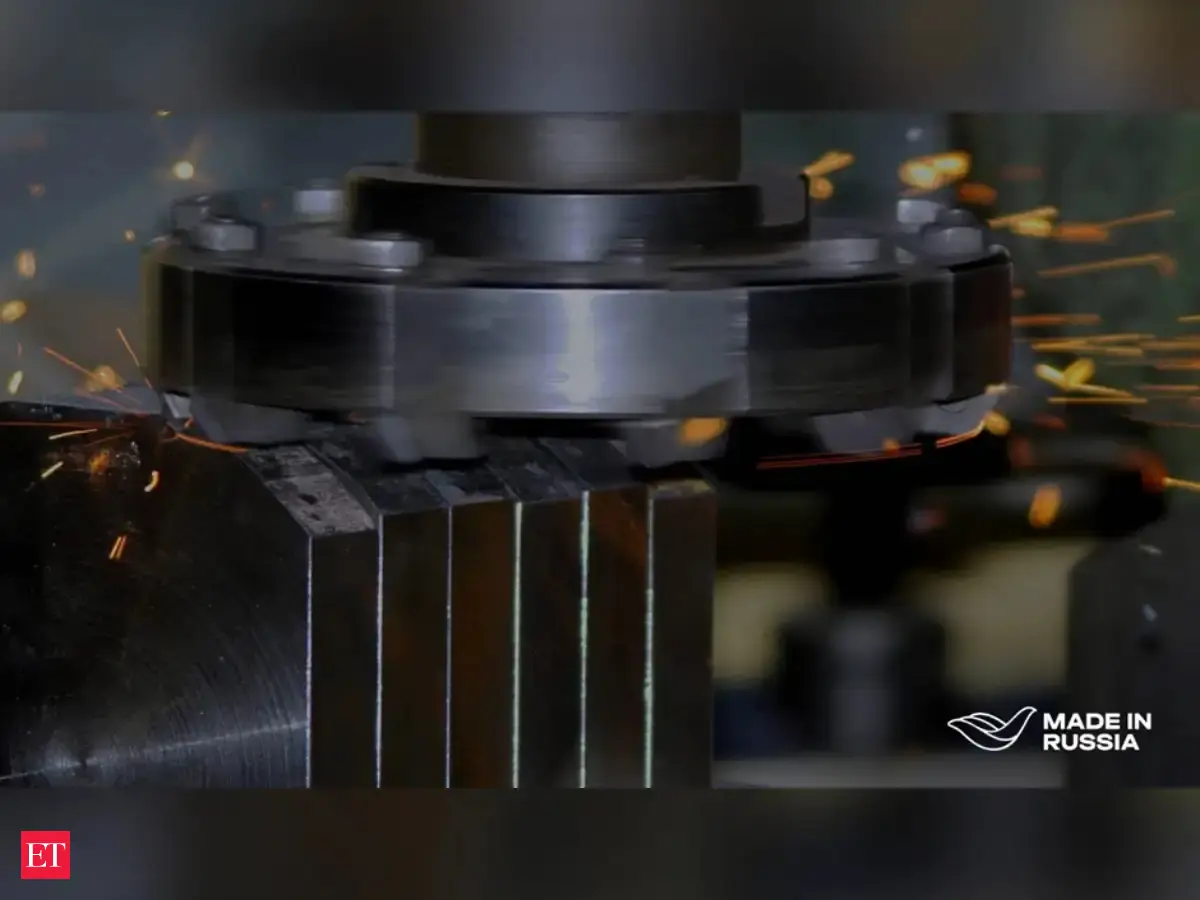
Metal swarf is often viewed as mere waste, yet it holds potential for efficient recycling into briquettes for steel production. Based in Orenburg, SteelCom specializes in converting swarf through advanced crushing and pressing technologies. This process not only streamlines metal recycling but also minimizes handling expenses and conserves vital resources. Their adaptable technology caters to businesses of all sizes, showcasing their expertise and reliability in addressing recycling challenges. View More
Metal swarf is very good at disguising itself as a minor nuisance. A single curl weighs almost nothing, yet beside lathes and milling machines it soon grows into a tangled, springy mass. It takes up space, snags on tools and resists even feeding. The metal has already lived one production life, but to return to the furnace it needs to be put in order. Orenburg-based Stalnaya Kompaniya, which operates under the brand SteelCom , builds that order in two stages. First, the swarf is crushed to a specified fraction; then, where necessary, it is pressed into dense briquettes. The company knows the process from both sides, it manufactures the equipment and uses it in its own metal-recycling operations. In other words, its engineering solutions pass acceptance testing and are then proven under everyday workshop loads. What happens to the swarf The raw material usually resembles a tangle of stiff metal wire. In a swarf-crushing complex, it is first taken in by a shredder, where knife-fitted shafts grip the long curls, tear them apart and break them down roughly. A conveyor then feeds the material into a hammer crusher, where it becomes a free-flowing fraction. The SteelCom range includes complexes of different capacities, entry-level models process 1–2 tonnes per hour, while more powerful ones handle up to 20 tonnes, depending on the type and bulk density of the swarf. Cutting tips, bolts or fragments of gears sometimes find their way into the feed alongside the swarf. For a crusher, this is no minor irritation but a risk of damage and downtime, so the design includes removal of non-crushable items, and the automation monitors the drives for overload. The cycle can be controlled from a central console, but the equipment works in both manual and automatic modes. Once crushed, the material is easier to dose, store and pass on. The next step is briquetting. The press compresses the loose mass into compact blocks of higher density, so a container holds more metal and less empty space, and the feedstock behaves more predictably when loaded into a melting unit. In short, a briquette does not change the chemical nature of the metal, but it does change the economics of handling it Live Events ET Spotlight Why this topic resonates in India India’s steel industry is paying growing attention to recycled raw materials. The national policy on steel scrap management sets rules for organised, safe collection and processing, and links them with resource conservation. India’s Ministry of Steel explicitly names scrap as one of the charge materials for electric arc and induction furnaces . Alongside large recycling centres, there is an intermediate stage where machining waste is turned into material that is convenient to melt: Briquettes for steelmaking furnaces and loose swarf for ferroalloy production. A small company that collects swarf from a handful of workshops will be well served by a compact complex that is simple to maintain. A large enterprise, by contrast, will want to integrate crushing and pressing into a continuous line, link the units with conveyors and match capacity to the flow of waste. SteelCom can cater for both approaches: Its catalogue offers equipment for different volumes, and the configuration is tailored to the properties of the raw material and the layout of the site. Russian origin offers a strong practical argument here. European suppliers have traditionally been strong in industrial recycling, but the purchase price is only the first line of expenditure. There are also spare parts, service lead times, adaptation of the automation, installation and training. SteelCom designs, manufactures and upgrades its equipment at its own sites in Orenburg and Orsk, so it can discuss the line layout directly with the customer, without a long chain of intermediaries. The company already supplies its products abroad. In 2026, SteelCom’s method of crushing metal swarf and its automated complex received the national ‘Made in Russia’ brand certificate under the reliability criterion. Behind this mark stands the voluntary certification of the Russian Export Centre, and for the buyer it is one more document for the project’s technical file. Money is no longer lying underfoot The phrase ‘production waste’ often sounds like an ending: the part has moved on, and the swarf has been left behind. In metalworking, however, it is more like a badly placed comma. After crushing and briquetting, the material returns to circulation, which reduces storage volumes and the number of haulage trips while also helping to prepare the furnace charge more carefully. There is an environmental benefit too: Less empty space, less haphazard storage and more metal in every batch. SteelCom has a fine answer to the question every industrial buyer will inevitably ask: “Have you worked with this yourselves?” Yes, they have, because the company’s equipment is in use in its own production operations. For an Indian enterprise, this is an opportunity to discuss not an abstract scheme but the behaviour of the line under load, from the tangled clump beside the machine to the dense briquette that is ready to meet the furnace once more. Disclaimer - The above content is non-editorial, and TIL hereby disclaims any and all warranties, expressed or implied, relating to it, and does not guarantee, vouch for or necessarily endorse any of the content. .Pbanner{display:flex;justify-content:space-between;align-items:center;background-color:#ec1c40;margin-top:20px;padding:5px 10px;border-radius:4px;color:#fff;line-height:10px;width: 100%;box-sizing: border-box} .Pbannertext{display:flex;align-items:center;font-size:16px;font-weight:600;font-family:'Montserrat';} .Pbannertext img{height:20px;margin:0 6px} .Pbannerbutton a{display:flex;align-items:center;background-color:#fff;color:#ec1c40;text-decoration:none;font-weight:600;padding:4px 8px;border-radius:6px;font-size:15px;font-family:'Montserrat';} .Pbannerbutton img{height:20px;margin-right:6px} .Pbannerbutton a:hover{background-color:#f7f7f7} Add as a Reliable and Trusted News Source Add Now! (You can now subscribe to our Economic Times WhatsApp channel) (You can now subscribe to our Economic Times WhatsApp channel)

The average trading volume at Steel Strips Wheels counter jumped over 10-fold, with a combined 24.33 million shares representing 15.5% of the company's total equity changing hands on the NSE and BSE. View More