Latest Sectors News

Initial experiments carried out by ICAR-IARI with tailings from ArcelorMittal Nippon Steel show higher yield, lower use of fertilizers View More

PL Capital named Apollo Hospitals, DLF, GE Vernova, HBL Engineering, Jindal Steel, Marine Electricals, Shilpa Medicare, Syrma SGS Technology, TARIL and TD Power Systems as its top Diwali 2026 stock picks. View More
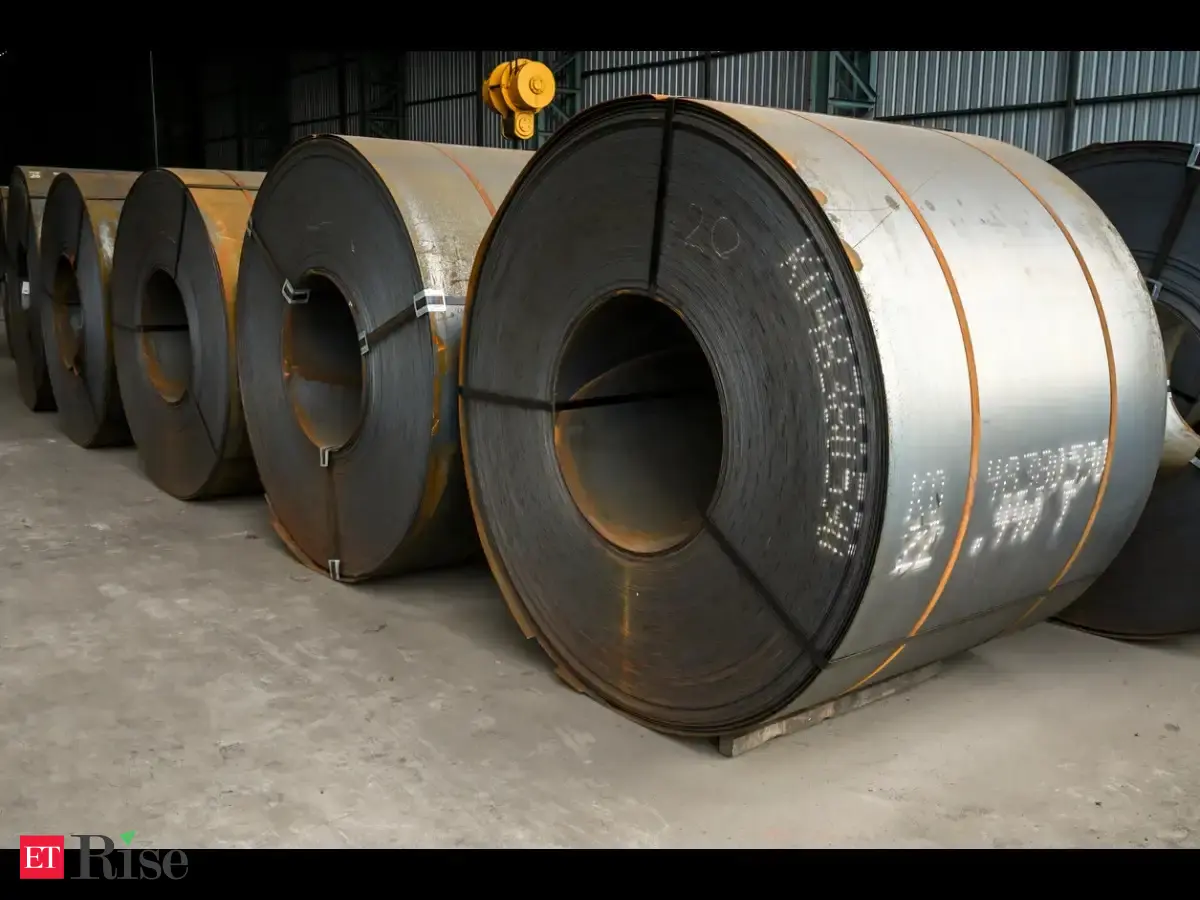
Smaller Indian steel exporters say they are struggling to obtain emissions data from raw-material suppliers and bear the cost of carbon accounting and verification under the EU’s carbon border rules. View More
Micro, small, and medium enterprises (MSMEs) in India’ steel industry are facing a growing compliance challenge under the European Union’s carbon border rules. Gaps in emissions data from steel suppliers, along with the rising cost of carbon accounting, audits, and verification could further make it harder for these businesses to compete in the European market, India’s largest destination for iron and steel exports. India, the second-largest producer of crude steel with 220 million tonnes per annum capacity, is among the fastest growing steel market. MSMEs account for 38-47% of the country’s total crude steel production, according to the government’s data. For these smaller manufacturers, the challenge begins even before any carbon-related cost is calculated. Many downstream units depend on primary and secondary steel producers for emissions data but struggle to get the information needed to calculate their products’ carbon footprint. Even when the data is available, measuring emissions, maintaining records, and third-party verification can be expensive, particularly for businesses without dedicated compliance teams. ET Online “The immediate challenge is getting reliable carbon-footprint data from steel producers. Without it, MSMEs cannot calculate their total emissions accurately and may have to rely on default values,” says Arun Kumar Garodia, Managing Director of Kolkata-based Corona Steel and former chairman of the Engineering Export Promotion Council of India (EEPC India). “Primary and secondary producers are not giving carbon footprint certificates. Without them, MSMEs can’t calculate total emissions,” Garodia adds. Live Events Industry representatives say the challenge calls for targeted financial and technical assistance from the government, including affordable verification facilities, simplified emissions-reporting systems, and support for smaller units to meet overseas buyers’ requirements. The EU’s Carbon Border Adjustment Mechanism (CBAM) entered its definitive phase on January 1, 2026, following a transitional reporting period that began in October 2023. It initially covers specified goods in six sectors: iron and steel, aluminium, cement, fertilisers, electricity, and hydrogen. Under the mechanism, EU importers are responsible for reporting emissions linked to covered imports and meeting the related certificate obligations. Indian exporters do not have to meet these obligations directly. However, European customers may still ask them to give reliable emissions data, particularly if they want to use actual emission figures rather than prescribed default values. More than 80% of India’s steel production is dependent on coal-based direct reduced iron (DRI) and blast furnace-basic oxygen furnace methods, as per Global Energy Monitor. This dependence on coal is reflected in the industry’s carbon footprint. India’s average carbon intensity estimated at 2.55 tonnes of CO₂ per tonne of steel by ICRA, which is much higher than the global average of around 1.85 tonnes and the EU’s blast furnace benchmark of 1.37 tonnes. ET Online Notably, the European Commission set CBAM certificate prices at €75.36 per tonne of carbon dioxide for the first quarter of 2026, €75.28 for the second quarter and €82.32 for the third quarter. From 2027, certificate prices will be calculated weekly instead of quarterly. As per industry data, the EU imported about €3.9 billion worth of iron and steel from India in 2024, and iron and steel account for roughly 90% of India’s CBAM-exposed exports to the bloc. The first annual declaration and certificate-surrender deadline, covering imports in 2026, is September 30, 2027. Certificate purchases through the EU’s common platform are scheduled to begin in February 2027, leaving MSMEs a few months to address CBAM-related challenges. Supplier data gaps could increase compliance burden Garodia says manufacturers must account for emissions associated with the steel they purchase and those generated during further processing. Without supplier-level information, establishing the product’s overall carbon footprint becomes difficult. “If we must pay on higher default values, it will be very tough. We first need certificates from producers,” he says. Smaller manufacturers could face a disadvantage when they depend on larger raw-material suppliers for emissions information, says Ajay Srivastava, Founder of the Global Trade Research Initiative (GTRI). “MSMEs often source steel and aluminium from large producers, where most production emissions occur. If these suppliers do not share the necessary data, CBAM liability may be calculated using default values,” he says. According to his estimates, preparing a factory to collect and report emissions-related information could cost Rs 20 lakh or more, depending on the facility, production process, and product category. Separate industry estimates suggest that recurring administrative expenses, including emissions measurement, reporting systems, software and third-party verification, could reach Rs 15-20 lakh annually for some MSME units. While these are industry estimates, not representative survey findings, and should not be treated as standard costs for every exporter, these estimates indicate the additional financial burden staring at MSMEs. These expenses are also separate from any certificate costs borne by EU importers and the investment that MSME exporters may need to upgrade their manufacturing technology. Rising costs add to pressure on smaller exporters The cost of establishing emissions-monitoring systems and obtaining verification comes at a time when some Indian exporters are reporting greater caution among European customers. The uncertainty surrounding CBAM had begun influencing purchasing decisions among some European clients, says Digvijay Singh Chauhan, Managing Partner, UNISPARES India, a Noida-based machinery parts manufacturer and exporter. iStockThe EU’s Carbon Border Adjustment Mechanism (CBAM) entered its definitive phase on January 1, 2026, following a transitional reporting period that began in October 2023. “The impact is already visible. I know a few exporters whose European clients have clearly indicated that they do not want to deal with another issue like this. Some clients have reduced their orders, while others are not placing new orders,” says Chauhan. He says smaller businesses often lacked the resources to hire advisers and understand the requirements. “Many businesses do not even know what requirements they need to meet. Those who have the resources are hiring advisers and seeking recommendations, but smaller companies may not be able to afford this support,” he adds. A director of a Jamshedpur-based steel manufacturer says some smaller European customers, who previously bought one or two containers of steel products, typically 15-20 tonnes each, have withdrawn from the market; enquiries from potential buyers have also declined. The company manufactures around 40,000 tonnes annually and exports approximately 20,000 tonnes, primarily flanges, tubes and pipes. The director says some European buyers are exploring sourcing arrangements involving finished products, rather than raw materials , partly because of additional compliance expenses. However, he cautions that it is too early to quantify the full impact of CBAM. Rajbir Singh, an industrialist from Fatehgarh Sahib (Punjab), whose company Modern Steel exports around 60,000 tonnes annually against production of approximately 80,000 tonnes, also says the precise impact of CABM remained unclear. While these company-level accounts point to emerging concerns, they do not establish a sector-wide decline in European orders. The impact is likely to vary depending on product, its emissions intensity, customer requirements, and supply-chain arrangements. Compliance support emerges as a key demand Industry representatives say government intervention needs to extend beyond awareness programmes to practical assistance with emissions measurement, verification, and reporting. Gulzar Didwania, Partner at Deloitte India, says industry estimates suggest approximately 25,000-30,000 MSMEs across steel, foundry, forging, fasteners, and aluminium value chains could face indirect emissions-data and reporting requirements from European customers and importers. This is an industry estimate, not an official government count of MSMEs directly covered by CBAM. The number of firms directly affected depends on the goods they export, their customs classifications and the applicable EU rules. Other businesses may face indirect commercial pressure through supply-chain requests. Didwania also points out to the limited access to recognised verification agencies as a concern. He says that domestic accreditation alone does not guarantee that a verifier will meet the EU’s requirements under CBAM, making it important for exporters to ensure that their verification arrangements are accepted under the relevant rules. He calls for simplified emissions-monitoring tools, cluster-based facilities, and better access to verification services to help spread compliance costs across smaller manufacturers. India is developing its domestic emissions-measurement and reporting ecosystem through initiatives such as the Carbon Credit Trading Scheme and the Green Steel Taxonomy. Exporters must nevertheless ensure that the information and verification they provide meet the EU's specific requirements. India also has broader green-transition programmes, including MSE-GIFT, which supports financing for cleaner technologies, and MSE-SPICE, which promotes circular-economy investments among smaller enterprises. Neither programme was specifically designed as a CBAM-compliance scheme. Namrata Rana, Partner and National Head for ESG at KPMG in India, says carbon-related border measures were adding pressure on manufacturers already operating on thin margins. “Specifically, for MSMEs who are already working on thin margins, this is an additional cost that they would rather not incur,” Rana adds. She says more work is needed on training, emissions monitoring, and verification to strengthen India’s domestic carbon-market ecosystem. She also calls for incentives to help businesses manage compliance costs and potential disruptions from carbon-related trade measures. Srivastava says financial assistance could help exporters collect emissions data, arrange verification, and maintain documentation required by overseas customers. He also argues that consignment-level export data held by the Directorate General of Commercial Intelligence and Statistics could help establish how EU-bound shipments were changing before and after CBAM implementation. An email seeking details of measures being taken to help MSMEs address CBAM-related challenges has been sent to the Union MSME Ministry. A response is awaited. Technology upgrades pose a further challenge Beyond emissions data and verification, smaller manufacturers may also struggle to finance cleaner production technologies. Badish Jindal, President of the World MSME Forum, says larger manufacturers were better positioned to absorb the investment required to upgrade technology, while smaller units faced financing constraints. “The government is only doing advisory sessions and some financial assistance for certifications but not providing any financial support to upgrade the technology as per EU norms,” Jindal says. The cost of technology upgrades is separate from the expense of emissions reporting and verification, and the requirements will vary across products and manufacturing processes. The broader trade exposure makes these challenges significant. According to industry estimates cited by NITI Aayog, the EU accounts for 39.3% of India’s iron and steel export exposure. This does not mean that the same proportion of all Indian steel production or MSME exports is subject to CBAM. So far, India’s overall finished steel exports remain strong. Steel ministry data show that exports reached 6.94 lakh tonnes, valued at Rs 5,541.2 crore, in August 2026, up 31.3% in volume and 41.5% in value from a year earlier. During April-August, exports rose 34.1% in volume to 29.86 lakh tonnes and 32% in value to Rs 23,646.6 crore. These figures cover all destinations and do not isolate EU-bound shipments or exports by MSMEs. ET Online But a June 2026 working paper by ICRIER estimates that CBAM could reduce India’s steel exports to the EU by around 24% under the model’s assumptions. For Indian MSMEs, the immediate priority is to secure reliable emissions information from suppliers and make compliance affordable. Access to supplier-level data, recognised verification services, simplified reporting tools, and targeted financial assistance could help smaller manufacturers retain access to European markets while preparing for tighter carbon-related trade requirements. Whether the new rules will lead to a wider loss of orders or market share remains to be seen. This will become clearer as more EU-specific export data and company-level evidence emerge. For now, industry representatives say that without practical support, the cost of demonstrating a product’s carbon footprint could become an additional competitive hurdle for India's smaller exporters. .Pbanner{display:flex;justify-content:space-between;align-items:center;background-color:#ec1c40;margin-top:20px;padding:5px 10px;border-radius:4px;color:#fff;line-height:10px;width: 100%;box-sizing: border-box} .Pbannertext{display:flex;align-items:center;font-size:16px;font-weight:600;font-family:'Montserrat';} .Pbannertext img{height:20px;margin:0 6px} .Pbannerbutton a{display:flex;align-items:center;background-color:#fff;color:#ec1c40;text-decoration:none;font-weight:600;padding:4px 8px;border-radius:6px;font-size:15px;font-family:'Montserrat';} .Pbannerbutton img{height:20px;margin-right:6px} .Pbannerbutton a:hover{background-color:#f7f7f7} Add as a Reliable and Trusted News Source Add Now!

Reddit posts third-quarter earnings and reveals plans to require all users to create official accounts as Google search traffic shrinks View More
In this articleRDDTFollow your favorite stocksCREATE FREE ACCOUNT Steve Huffman, co-founder and CEO of Reddit, speaks during the WSJ Tech Live conference hosted by The Wall Street Journal at the Montage Laguna Beach in Laguna Beach, California, on Oct. 21, 2024.Frederic J. Brown | Afp | Getty ImagesReddit plans to require all users to create official accounts to access the social media platform, marking a major departure for the site known as "the front page of the internet." The company revealed the change Thursday as part of its third-quarter earnings, in which it beat on the top and bottom lines, but provided weak fourth-quarter sales guidance. The company's shares dropped over 15% after its numbers were released.Here's how the company did compared with LSEG estimates:Earnings per share: $1.40 vs. $1.35 expectedRevenue: $895 million vs. $878 million expectedReddit CEO Steve Huffman told CNBC in an interview that the company's shrinking search-referral traffic from Google went "down meaningfully in this quarter" due to the "shift to AI mode and AI overviews." The traffic decline played a role in Reddit's planned efforts to require people to become logged-in users. A previous Google search update designed to surface "authentic" content from internet forums helped Reddit grow its user base over the past few years, but the search giant's continued push on AI overviews and related chatting features has negatively impacted referral traffic."I think fundamentally that relationship between Google and the rest of the internet is evolving, and so for us, this means a continued focus on our core users that come to Reddit directly," Huffman said.  Previous Google algorithm changes would "kind of come and go," Huffman said, but the company's AI efforts represent "a fundamental shift in how the Google product works, from being a traffic driver to whatever's going on now."Huffman didn't provide any specific timing on when Reddit plans for the platform registration change, saying only that implementing it through the site would involve a lot of complexity. The company will begin testing in the fourth quarter outside of the U.S.He said that Reddit is still determining what parts of the service logged-out users will be able to see, and will iron out the details as part of its upcoming testing.Reddit said that daily active uniques, or DAUq, rose 12% year-over-year to 130.3 million in the third quarter, trailing Wall Street estimates of 133.7 million. U.S.-specific DAUq dropped 2% year-over-year to 50.7 million, which was below analyst projections of 53.5 million.Read more CNBC tech newsAI build-out hits snag as Google and Microsoft put off raising capex forecastsAlphabet earnings miss reflects first real sign that AI is taking a bite out of searchAs Waymo expands overseas, it remains a niche cash-burning businessHands-on with Appleâs first touchscreen laptop: Touch is totally optionalHuffman said that "search referral traffic is down meaningfully in this quarter" and that the trend will continue in the fourth quarter.He said that Reddit is continuing its effort to make its platform "a daily habit" for users. "So that's where our focus is: growing those app users and logged-in users," Huffman said.Reddit, which derives the bulk of its overall sales from online advertising, is able to monetize logged-ln users better than logged-out users, because those registered users are more active and valuable to advertisers itching to deliver more targeted ads."The vast majority of our revenue comes from our app users and logged-in users are direct traffic, and both of those are up Q. over Q. and so that's where our focus is," Huffman said.The company's third-quarter sales grew 53% year-over-year, marking an end to the eight-straight quarters of revenue growth eclipsing 60% that it reported in July as part of its second-quarter earnings.Reddit said that fourth-quarter sales will come in a range of $1 billion to $1.03 billion, which was below Wall Street estimates of $1.05 billion."It's still a strong guide," Huffman said about its revenue guidance. "We are still growing at an industry leading rate, and that's despite the headwinds from search referrals."Reddit's third-quarter average revenue per user, or ARPU, came in at $6.87, which was higher than the $6.50 that analysts were expecting.The company's "other revenue" segment, which includes its data-licensing business, jumped 35% year-over-year to $48 million in the third quarter. Reddit's two biggest data-licensing partners are OpenAI and Google.Huffman said that Reddit remains "in negotiations" with Google over its data-licensing agreement, and said that it is "only going to do a deal that makes sense for Reddit," if it chooses to continue the partnership."I think there's a lot of strategic considerations that goes into that," Huffman said.Huffman called the required registration plan a "big change" for himself, considering he "grew up on the open Internet.""Reddit is the last platform to provide basically unfettered logged-out access, and that's largely because of me, I've been holding that line," Huffman, a Reddit co-founder, said. "I think users will probably go through the same understanding that I have, which is that it's a sign of the times. It's an evolution of how these platforms work."Huffman later expanded on the significance of AI's impact on Reddit's user growth in an earnings call with analysts, and explained that the company plans to continue spending on marketing efforts intended to offset search-referral declines. "This is a consequential time for Reddit, and this period does remind me of about 11 years ago when I came back to the company," Huffman told analysts, referring to when he rejoined Reddit in 2015 following it's then-chief Ellen Pao stepping down. "We had a lot of conversations then about what is Reddit and what is Reddit for, and what is our place in this ecosystem. And we've been having those conversations at Reddit recently." "Reddit's mission is to create community and belonging for everyone in the world, and while there's overlap between Reddit and other players in the ecosystem, whether we're talking about social media or AI search, fundamentally, Reddit is communities and conversations," Huffman said.WATCH: Rotations in the market are likely to continue.watch nowVIDEO3:2803:28Rotations in the market are likely to continue, says Schwab Center's Liz Ann SondersSquawk on the Street Choose CNBC as your preferred source on Google and never miss a moment from the most trusted name in business news.

The company’s revenue rose 6% year-on-year to ?2,488 crore. Profit attributable to shareholders was ?746 crore, compared with a loss of ?91 crore a year earlier. View More

SBI Securities expects a gradual recovery in Indian equities in Samvat 2083 and names 11 stocks as potential opportunities. Its picks span metals, hotels, finance, engineering, power, electronics and automotive components. View More
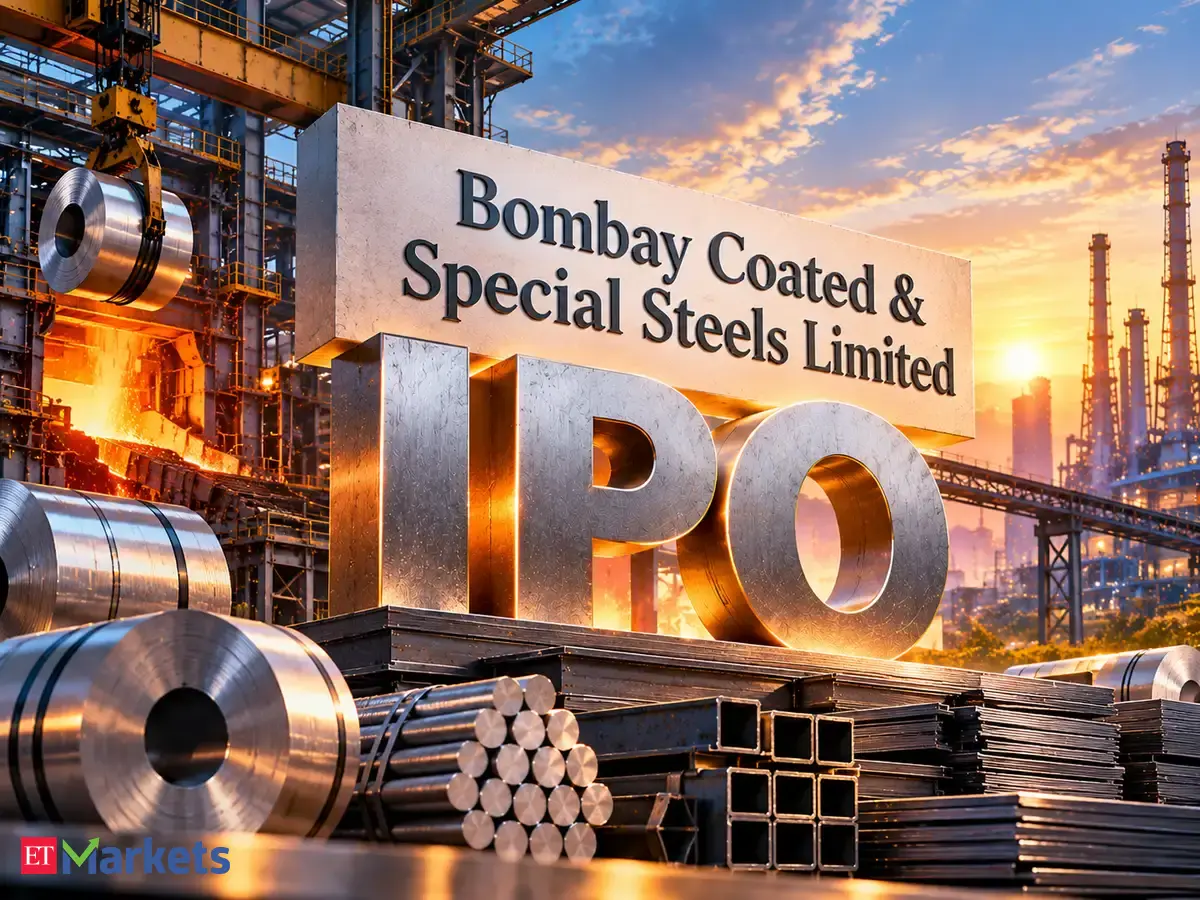
Bombay Coated & Special Steels’ Rs 183.06-crore IPO opens on October 29, 2026, with a price band of Rs 78–82 and an 11% grey market premium. The company reported 20% revenue growth and 7% profit growth in FY26. Anand Rathi recommends subscribing for long-term investment, citing reasonable valuation and growth prospects. View More
Bombay Coated & Special Steels IPO opens for subscription on Thursday, and will remain open for three days until November 2. The issue commands a grey market premium (GMP) of 11%, indicating positive expectations for its listing, although grey market trends are unofficial and do not guarantee listing gains. The Rs 183.06 crore IPO is entirely a fresh issue of 2.23 crore shares. The price band has been fixed at Rs 78–82 per share, with a lot size of 182 shares. Retail investors need to invest a minimum of Rs 14,924 to apply for one lot at the upper end of the price band. The IPO allotment is expected to be finalised on November 3, while the shares are tentatively scheduled to list on the NSE and BSE on November 5, 2026. Smart Horizon Capital Advisors Pvt. Ltd. is the book-running lead manager, and KFin Technologies Ltd. is the registrar to the issue. Bombay Coated & Special Steels IPO GMP Today Bombay Coated & Special Steels IPO is commanding a grey market premium (GMP) of Rs 9, or 11%, over the upper price band of Rs 82 per share. This indicates an estimated listing price of Rs 91 per share. Should you subscribe? According to Anand Rathi’s research report, Bombay Coated & Special Steels is valued at 16.9 times its FY26 price-to-earnings (P/E) ratio and 9.8 times its FY26 EV/EBITDA at the upper price band of Rs 82 per share, implying a post-issue market capitalisation of around Rs 515.2 crore. Compared with listed peers BMW Industries (15 times P/E), Manaksia Coated Metals & Industries (31 times) and Shiv Aum Steels (98.5 times), the brokerage considers the IPO reasonably priced, citing the company’s scale, growth trajectory, expanding processing capacity and return on net worth of 25.1%. Live Events The brokerage has assigned a “Subscribe – Long Term” rating to the IPO, indicating a positive view of the company’s long-term prospects. Bombay Coated & Special Steels IPO: Objects of the Issue Bombay Coated & Special Steels Ltd. plans to utilise the IPO proceeds to repay or prepay, in full or in part, certain borrowings worth Rs 125 crore. The company will allocate Rs 15.77 crore towards financing the cost of acquiring capital equipment under existing lease arrangements with Siemens Financial Services Pvt. Ltd. The remaining proceeds will be used for general corporate purposes. Financial Performance Bombay Coated & Special Steels Ltd. reported a 20% year-on-year increase in total income to Rs 1,270 crore in FY26, compared with Rs 1,059 crore in FY25. The company’s profit after tax (PAT) rose 7% to Rs 31 crore in FY26 from Rs 29 crore in the previous financial year. About Bombay Coated & Special Steels Ltd. Incorporated in December 2019, Bombay Coated & Special Steels Ltd. is a steel processing centre that converts steel coils into value-added products for original equipment manufacturers (OEMs) and original design manufacturers (ODMs). Its product portfolio includes slit coils, blanks and embossed steel products, catering to industries such as home appliances, automotive, electrical equipment, pharmaceuticals, ventilation systems and general engineering. The company also provides logistics, inventory management and just-in-time delivery services. The company operates four manufacturing facilities in Wada and Bhiwandi in Maharashtra, Ghiloth in Rajasthan, and Sri City in Andhra Pradesh, with an aggregate installed processing capacity of 1,23,153 metric tonnes per annum as of June 30, 2026. It has an authorised service partnership with JSW Steel Coated Products Ltd. and/or its holding company since 2021. Its customers include Haier Appliances India, IFB Refrigeration, Dixon Electro Manufacturing, Amber Enterprises India and Western Refrigeration. As of June 30, 2026, the company had 164 personnel, including 160 permanent employees and four on retainership. Disclaimer: The views/recommendations mentioned in this article, wherever applicable, are those of the respective SEBI-registered Research Analyst/brokerage and have been reproduced/reported with due attribution. They should not be construed as the views or recommendations of The Economic Times Digital or the journalist. Readers are advised to consider the original research report and make their investment decisions based on their own assessment. Brokerage disclaimers here .Pbanner{display:flex;justify-content:space-between;align-items:center;background-color:#ec1c40;margin-top:20px;padding:5px 10px;border-radius:4px;color:#fff;line-height:10px;width: 100%;box-sizing: border-box} .Pbannertext{display:flex;align-items:center;font-size:16px;font-weight:600;font-family:'Montserrat';} .Pbannertext img{height:20px;margin:0 6px} .Pbannerbutton a{display:flex;align-items:center;background-color:#fff;color:#ec1c40;text-decoration:none;font-weight:600;padding:4px 8px;border-radius:6px;font-size:15px;font-family:'Montserrat';} .Pbannerbutton img{height:20px;margin-right:6px} .Pbannerbutton a:hover{background-color:#f7f7f7} Add as a Reliable and Trusted News Source Add Now! (You can now subscribe to our ETMarkets WhatsApp channel) (You can now subscribe to our ETMarkets WhatsApp channel)
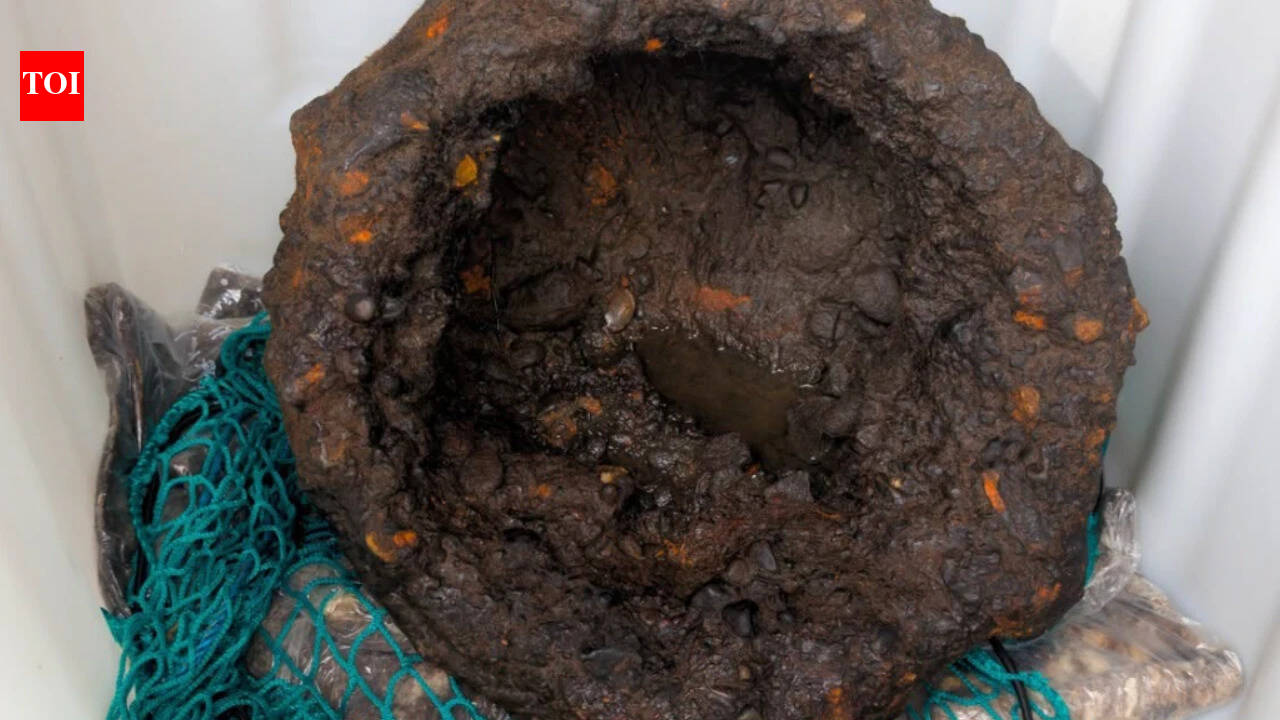
An ancient iron cauldron, potentially from the medieval or Iron Age, was found submerged under water. Underwater archaeologist Gary Bankhead led a team of divers in this ambitious recovery mission. Experts are currently investigating the cauldron's design and historical relevance. This intriguing find prompts speculation about its origin and journey into the river, with plans underway for a public exhibition at a nearby museum. View More
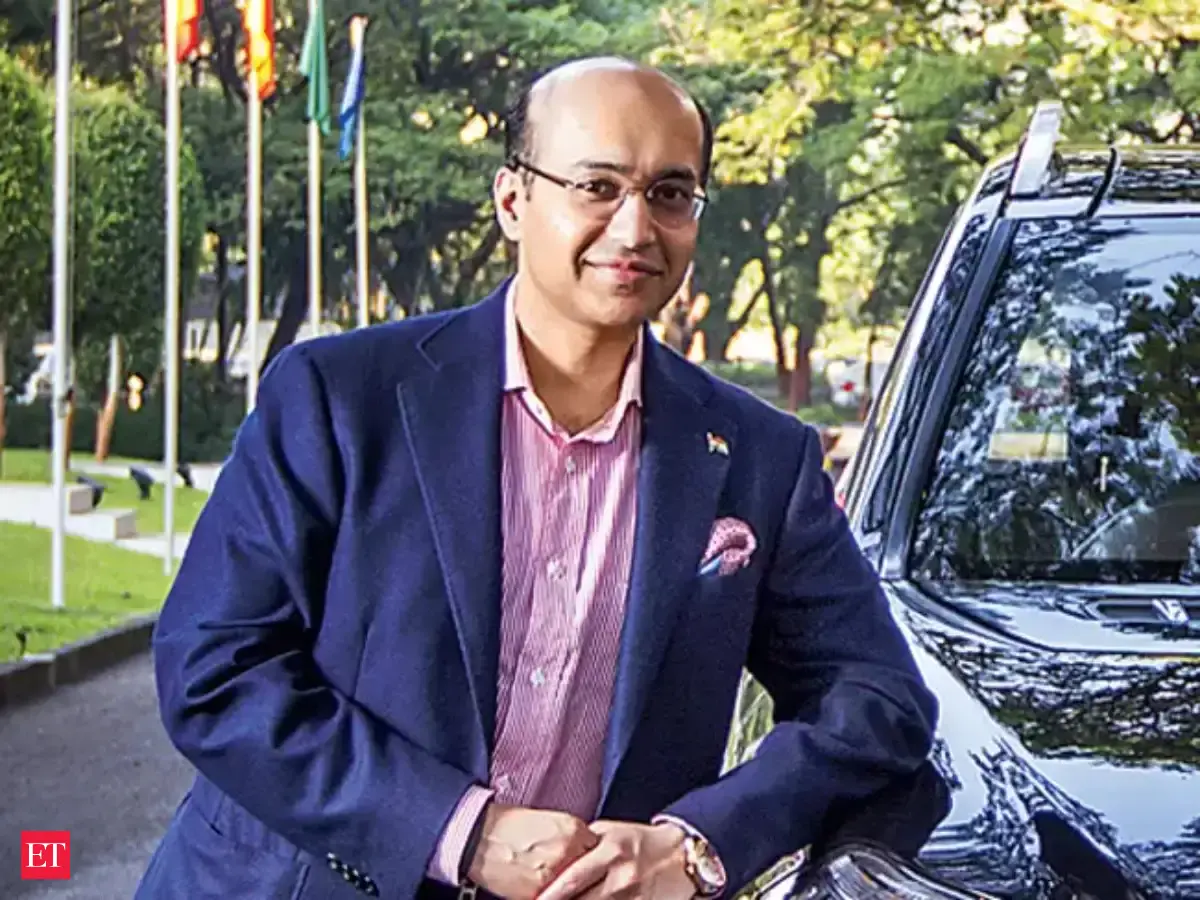
Amit, who is the Vice Chairman and Joint Managing Director of Bharat Forge Ltd, has been closely associated with the Kalyani Group's businesses for over 25 years and has led the Group's expansion into aerospace, defence, electric mobility and advanced materials, a statement said. View More
Mumbai: Kalyani Group firm Kalyani Steels Limited on Wednesday announced the appointment of Amit Kalyani as chairman of the board in a planned leadership transition from Babasaheb Kalyani , who has chaired the company since its incorporation in 1973. His appointment to the post is effective at the close of business hours on October 28, the company said in a statement. Also read | India has navigated impact on costs and supply chains well: JSW Steel CEO Jayant Acharya The company also said that Babasaheb will continue to offer his counsel to the Board, reinforcing the Group's vision of nation building through manufacturing excellence. The leadership transition positions the company for growth in green steel , advanced materials and global markets, Kalyani Steels said. Live Events Amit, who is the Vice Chairman and Joint Managing Director of Bharat Forge Ltd, has been closely associated with the Kalyani Group's businesses for over 25 years and has led the Group's expansion into aerospace, defence, electric mobility and advanced materials, it said. Over several years, he has worked closely with R K Goyal, Managing Director, Kalyani Steels, to shape and drive the company's growth strategy, as per the statement. "Institutions endure when leadership evolves with the times. Amit's active engagement has made a significant impact on the company's growth strategy, and I am confident that under his leadership, Kalyani Steels will build on its foundations and set new benchmarks for the industry," said Babasaheb Kalyani. Also read | JSW Steel and Japan's JFE to add 5 MT steel capacity at Odisha JV plant with Rs 7,500 cr investment "As India's manufacturing ambitions demand materials that are greener, smarter and world-class, we will accelerate our journey in green steel, advanced materials and digitalised operations, deepen our presence in strategic sectors and global markets, and set new benchmarks for the Indian steel industry," said Amit Kalyani, Chairman (Designate), Kalyani Steels Ltd. .Pbanner{display:flex;justify-content:space-between;align-items:center;background-color:#ec1c40;margin-top:20px;padding:5px 10px;border-radius:4px;color:#fff;line-height:10px;width: 100%;box-sizing: border-box} .Pbannertext{display:flex;align-items:center;font-size:16px;font-weight:600;font-family:'Montserrat';} .Pbannertext img{height:20px;margin:0 6px} .Pbannerbutton a{display:flex;align-items:center;background-color:#fff;color:#ec1c40;text-decoration:none;font-weight:600;padding:4px 8px;border-radius:6px;font-size:15px;font-family:'Montserrat';} .Pbannerbutton img{height:20px;margin-right:6px} .Pbannerbutton a:hover{background-color:#f7f7f7} Add as a Reliable and Trusted News Source Add Now! (You can now subscribe to our Economic Times WhatsApp channel) (You can now subscribe to our Economic Times WhatsApp channel)
The metals-to-oil conglomerate's profit in Q2 was boosted by higher base metal prices. Vedanta attributed its robust Q2 show to higher commodity prices and favourable foreign exchange movements, among other things. View More
Vedanta Ltd delivered its strongest quarterly financial performance in the September quarter, with record revenue, earnings and profit reflecting robust operating performance across its businesses, earnings numbers released on October 28 showed. The metals-to-oil conglomerate's profit in Q2 was boosted by higher base metal prices. Vedanta attributed its robust Q2 show to higher commodity prices and favourable foreign exchange movements, among other things. Also read | Vedanta Iron and Steel’s loss narrows on year in September quarter A reduction in debt help Vedanta strengthen its balance sheet during the quarter. Q2 cash generation helped it cut net debt by Rs 4,624 crore during the quarter to Rs 3,675 crore at the end of September, compared with Rs 8,299 crore in June 2026. The net debt-to-EBITDA ratio improved to 0.1 times from 0.3 times in Q1 FY27. Live Events Free cash flow before capital expenditure stood at Rs 5,803 crore in Q2 FY27, compared with Rs 4,412 crore in the preceding quarter. Cumulative first-half free cash flow before capex reached Rs 10,215 crore. The company invested Rs 1,135 crore in growth capital expenditure during the September quarter, taking the first-half total to Rs 2,283 crore. Cash and cash equivalents increased to Rs 26,622 crore from Rs 19,992 crore at the end of Q1 FY27. Vedanta Ltd's overall borrowing cost remained at about 8.3% a year. Both ICRA and CRISIL reaffirmed the company's credit rating at AA+/Stable. During the first half of FY27, Vedanta Resources Ltd (VRL) secured $2.15 billion through international bonds at an average coupon rate of 7.4% and an average maturity of 7.6 years. It also tied up $1.85 billion in syndicated term loans at SOFR plus 265 basis points, with an average maturity of three years. Also read | Amid supply chain issues, India's strategic mining in critical state VRL's credit ratings reached a decade high, with S&P and Fitch Ratings assigning BB/Stable and Moody's assigning Ba3/Positive. Vedanta Ltd also declared its first interim dividend of Rs 5 per share. Vedanta Ltd Q2 revenue and EBITDA The company's revenue rose 57% year-on-year and 10% sequentially to an all-time high of Rs 25,812 crore in Q2, while profit after tax (PAT) surged 151% from a year earlier to Rs 6,202 crore. Earnings before interest, tax, depreciation and amortisation (EBITDA) more than doubled, climbing 106% year-on-year and 17% quarter-on-quarter to a record Rs 9,938 crore. The EBITDA margin expanded by 1,055 basis points year-on-year and 293 basis points sequentially to 60%. The strong quarterly performance lifted the company's first-half revenue to a record Rs 49,268 crore, up 54% year-on-year. EBITDA for the six months ended September stood at Rs 18,407 crore, an increase of 103%, while PAT rose 151% to an all-time high of Rs 11,496 crore. Zinc, other businesses see operating milestones Zinc India recorded its highest-ever quarterly mined metal production at 271 kilotonnes (kt), up 5% year-on-year. First-half production rose 3% to a record 539 kt. Silver output increased 20% to 173 tonnes in Q2 and 10% to 321 tonnes in H1 FY27. The zinc cost of production reached its lowest level since the transition to underground mining, at $703 per tonne, down 29% year-on-year and 17% sequentially. Zinc International produced 53 kt of mined metal in Q2, down 12% year-on-year but up 9% quarter-on-quarter. First-half production fell 13% to 102 kt. The commissioning of Gamsberg Phase II during Q2 FY27 added 200 ktpa of metal-in-concentrate capacity, taking total Zinc International capacity to 500 ktpa. Copper India sales increased 16% year-on-year to 52 kt in Q2, while first-half sales rose 9% to 105 kt. Copper International sales declined 74% year-on-year and 43% sequentially to 6 kt in Q2, with first-half sales falling 64% to 16 kt, impacted by the closure of the Strait of Hormuz. The 155 ktpa copper rod plant in Saudi Arabia is progressing towards commissioning in Q3 FY27. FACOR achieved record quarterly ore production of 50 kt, up 6% year-on-year, and record first-half output of 202 kt, up 31%. Ferrochrome production rose 26% to 24 kt in Q2 and 13% to 53 kt in H1. The business also successfully extracted underground ore from the Ostapal Mines to strengthen ore supply security. At the Vizag General Cargo Berth, quarterly dispatch volumes reached a record 1.74 million metric tonnes (MMT), up 26% year-on-year, while first-half volumes rose 18% to 3.39 MMT. Discharge volumes increased 22% to 1.83 MMT in Q2 and 32% to 4.19 MMT in H1. Record mining, strong engines drive growth Arun Misra, executive director of Vedanta Ltd, said the company had sustained strong operating performance, including record first-half mined metal production at Zinc India for the sixth consecutive year and record first-half refined metal production. He also highlighted the commissioning of Gamsberg Phase II, record chrome ore production and 100% ore procurement at FACOR, and the highest quarterly cathode production at Copper India. Misra said the growth investment was advancing capacity expansion, mine development and resource security initiatives across the portfolio. Ajay Goel, group chief financial officer of Vedanta, said the record financial results and strong cash generation had enabled further debt reduction. Goel added that the company's businesses across Hindustan Zinc, Zinc International, FACOR, Copper and Ports, alongside its portfolio of critical mineral blocks, positioned it for further growth while maintaining financial discipline and creating long-term value. .Pbanner{display:flex;justify-content:space-between;align-items:center;background-color:#ec1c40;margin-top:20px;padding:5px 10px;border-radius:4px;color:#fff;line-height:10px;width: 100%;box-sizing: border-box} .Pbannertext{display:flex;align-items:center;font-size:16px;font-weight:600;font-family:'Montserrat';} .Pbannertext img{height:20px;margin:0 6px} .Pbannerbutton a{display:flex;align-items:center;background-color:#fff;color:#ec1c40;text-decoration:none;font-weight:600;padding:4px 8px;border-radius:6px;font-size:15px;font-family:'Montserrat';} .Pbannerbutton img{height:20px;margin-right:6px} .Pbannerbutton a:hover{background-color:#f7f7f7} Add as a Reliable and Trusted News Source Add Now! (You can now subscribe to our Economic Times WhatsApp channel) (You can now subscribe to our Economic Times WhatsApp channel)