
Latest Sectors News

Runaway treasury yields and the bond market selloff create sizable tax-loss harvesting trades for investors to offset big gains from stocks. View More
In this articleBNDFollow your favorite stocksCREATE FREE ACCOUNT Kent Nishimura | ReutersThe bond market selloff has many investors licking their wounds, but it could also be a good time to take your losses as a tax advantage.With the 10-year treasury yield seeing a massive single-day spike on Wednesday, hitting its highest level since 2007, and bond prices continuing to fall, investors who bought bond mutual funds or ETFs when yields were lower may be sitting on unrealized losses within their portfolio. Investors often wait until December to tax-loss harvest â or sell investments at a loss and use their losses to offset gains in other investments. But you don't have to wait. The very thing hurting your bond ETF today â higher yields â can potentially give you both a tax asset and an opportunity to reinvest at a higher yield."Tax-loss harvesting is often treated as a year-end exercise. But markets don't follow the calendar," senior portfolio managers Joseph Gotelli and Jason Greenblath wrote in a recent report for American Century Investments. "Today's fixed-income landscape offers compelling potential opportunities to harvest losses, manage tax liabilities and improve yield and tax efficiency."Taking a look at this tax strategy more often has been recommended in recent years amid persistent bond underperformance. "It's sensible to do tax-loss harvesting in client portfolios on a regular basis when opportunities arise," Vanguard Group wrote in an ETF industry perspective in the fourth quarter of last year. Vanguard cited bond price declines and record stock market highs, with the latter making any tax-loss harvesting in equities, "just about impossible to find." Here's what bond investors need to know about tax-loss harvesting to take advantage of the bond market selloff.Vanguard, iShares bond funds are among tax loss targetsThe recent selloff has given many investors an opportunity for tax-loss harvesting. Consider for instance, that the Vanguard Total Bond Market Index Fund ETF (BND) and the iShares Core U.S. Aggregate Bond ETF (AGG) are both down more than 3.5% year to date."It's an opportunity to strike while the iron's hot because there's no guarantee that these losses are going to stick around," said Conor Kelly, a partner and senior financial advisor with Prime Capital Financial in Overland Park, Kansas. "You don't want to wait until year-end because these losses could disappear or at least shrink."Stock Chart IconStock chart iconPerformance of Vanguard Total Bond Market ETF and iShares Core U.S. Aggregate Bond Fund year-to-date in 2026. Kristin Larson, founder and wealth advisor at NewSpring Wealth Partners in Minnetonka, Minn., said tax-loss harvesting in bonds is especially relevant now given the double-digit returns in stocks. The S&P 500, for instance, is up about 13% year-to-date. "For a lot of clients, the bond side of the portfolio is the only side that's down right now," Larson said.Cost basis analysis of the shares you hold is criticalDon't look only at the current price of your fund to decide whether or not to sell. "It's not automatic that you'll have a tax loss just because an ETF has a negative price return for the year," said Bill Schwartz, managing director in the Potomac, Maryland, office of Wealthspire. For instance, if you bought the Vanguard Total Bond Market Index Fund ETF on Jan. 2 and didn't reinvest dividends or interest, you'd have a tax loss for the year to date because it has gone down in price. The ETF closed at 74.04 on Jan. 2 and was 71.40 on Sept. 21. "However, if you made multiple purchases over multiple years, there are no guarantees you'll have a tax loss," Schwartz said.ETF Strategist full coverage:Here's a look at other stories offering insight on ETFs for investors.The little-known freight fund that gained over 3,600% from war in IranBond market may be near 'escape velocity.' What that means for investors Where investors who have soured on bonds are searching for incomeThe best way to invest in the S&P 500 in 2026 isn't the core indexDon't sell the large-cap stock market, but do build around it. Here's howFor Gen X investors nearing retirement, the dotcom bubble looms largeJamie Dimon made a bearish treasuries call. Investors were all over itHow to prepare a tech-heavy portfolio with record gains for an inevitable downturnTrump Accounts are good start, but shouldn't be a child's only investmentStart by looking at the cost basis, or the purchase price of the shares plus any brokerage commissions or fees paid. Then, look at the difference between the current market value and the cost basis to determine whether you've had a gain or a loss on the sale. Keep in mind that when you reinvest dividends and interest, you're buying more shares of an investment, so your overall cost basis for the investment will increase. Your brokerage firm should keep track of this for you. It's important because it will help you determine which bonds to sell for tax-loss harvesting purposes.For simplicity, people might sell the entire position. Or, if they don't want the same exposure, they may want to switch to a different fund with a different credit quality or underlying index, said Mitch Schlesinger, chief investment strategist at Evermay Wealth Management in Arlington, Virginia. In this case, they'll look at the fund's aggregate cost basis, which is the average of all the purchases, plus dividends and interest.Identify specific positions that make for attractive tax-loss salesMore commonly, however, advisors recommend investors look more granularly within the funds they own for tax-loss harvesting opportunities. Depending on when you bought the fund and reinvestments you've made, your portfolio could show an overall gain, but you might have specific positions that you can sell and use for tax-loss harvesting purposes. Let's say an investor owns 100 shares of XYZ bond ETF. You may have bought some shares two years ago and purchased more later on. In that simplified example, you'd have two different tax lots. Even if your entire position shows a gain, specific lots inside the broader position could be sitting at a loss â and it's those you want to address. "That's why it's critical that you can see the tax lot detail and not just the overall gain or loss," Larson said.Stock Chart IconStock chart iconPerformance of the iShares 20+ Year Treasury Bond ETF since inception.Picking and choosing which lots to sell can be important based on when you bought the fund and your reinvestment patterns. An investor who bought an ETF in 2007, for example, might overall have some pretty substantial gains, Schlesinger said. "You need to look carefully at the individual lots that were purchased." Your financial advisors can help you determine which lots to sell. Or, if you don't work with an advisor, check your online statement for a detailed view of your cost basis for specific lots within a particular fund. If the information isn't readily available online, contact your custodian to ask how to get these specific details. Many online brokers have a tax optimization setting where it will automatically pick the most optimal lots for maximizing loss or minimizing gain, or you can manually select which lots you want, Schlesinger said.Be careful of the IRS wash-sale ruleWhen you tax-loss harvest, you have to be careful about the wash sale rule, an IRS regulation that disallows a tax deduction for a loss on the sale of a security if you purchase a substantially identical security within a 61-day window (30 days before or after the sale).It involves making an investment decision on top of the tax decision, said Wealthspire's Schwartz. For instance, if you really like the position you're in and don't have a substantially different alternative, you might not want to sell shares. You can wait the 31 days and buy it back, but "you won't know the opportunity cost until those 31 days are up," he said.ETFs can make this investment sale and purchase process easier to complete.That said, there's less downside in bonds to sitting on the sidelines for a short window. It's easier to sell the bond positions with losses, even if they are small, because the downside to sitting in cash is limited compared with capturing losses in certain volatile stocks, said Prime Capital's Kelly. "In fixed income, simply sitting in cash for 30 days before repurchasing is much easier than sweating out sitting out of a stock for 30 days and seeing it jump up and move against you."Don't try to time the marketYields, which had dipped in recent days, could keep rising again, especially given the Federal Reserve's decision to raise interest rates last week and an indication of at least one more hike this year. Yields spiked on Wednesday after the latest economic data came in hot. Some investors may want to try and hold off a bit on harvesting losses, but it's hard to time."You certainly could wait, and if rates continue to rise and bond prices fall further, you may have another opportunity to harvest an even larger loss," Schlesinger said. But he stressed that the loss you have today is known; the loss you might have tomorrow isn't. "Harvesting a loss today doesn't mean you're done for the year. If rates continue rising and new losses develop in other holdings or in the replacement investment, there may be additional opportunities later. Tax-loss harvesting opportunities are something to monitor throughout the year, not a single trade where you have to pick the perfect moment," he said.Schlesinger also pointed out that the Fed's actions are usually focused on a very short-term interest rate, or the Fed Funds rate, whereas longer-term Treasury yields are set by the market, not the Fed, and reflect expectations about inflation, economic growth and where investors think interest rates will be years from now. "So even if the Fed tells us more rate hikes are coming, the yield on a five- or 10-year bond doesn't necessarily have to rise. In fact, if investors believe additional Fed hikes will ultimately slow the economy and bring inflation down, longer-term yields could stay where they are or even decline. If that happens, bond prices could recover and today's tax-loss harvesting opportunity could shrink or disappear," Schlesinger said. "I wouldn't try to perfectly time the bottom in bond prices. If there's a meaningful loss today and we can harvest it while maintaining the investment exposure we want for our clients, there's value in taking the opportunity that's in front of us today," he added.watch nowVIDEO4:2204:22Rising yields are an unbelievable opportunity, says Blackrock's Russ BrownbackClosing Bell: Overtime Choose CNBC as your preferred source on Google and never miss a moment from the most trusted name in business news.

Multiple stocks, including Aptus, KRBL, Tata Steel, Radico Khaitan, and GNFC, show potential for breakout as recommended by Sumeet Bagadia from Choice Broking, highlighting technical indicators such as bullish reversal signals and volume confirmation. View More
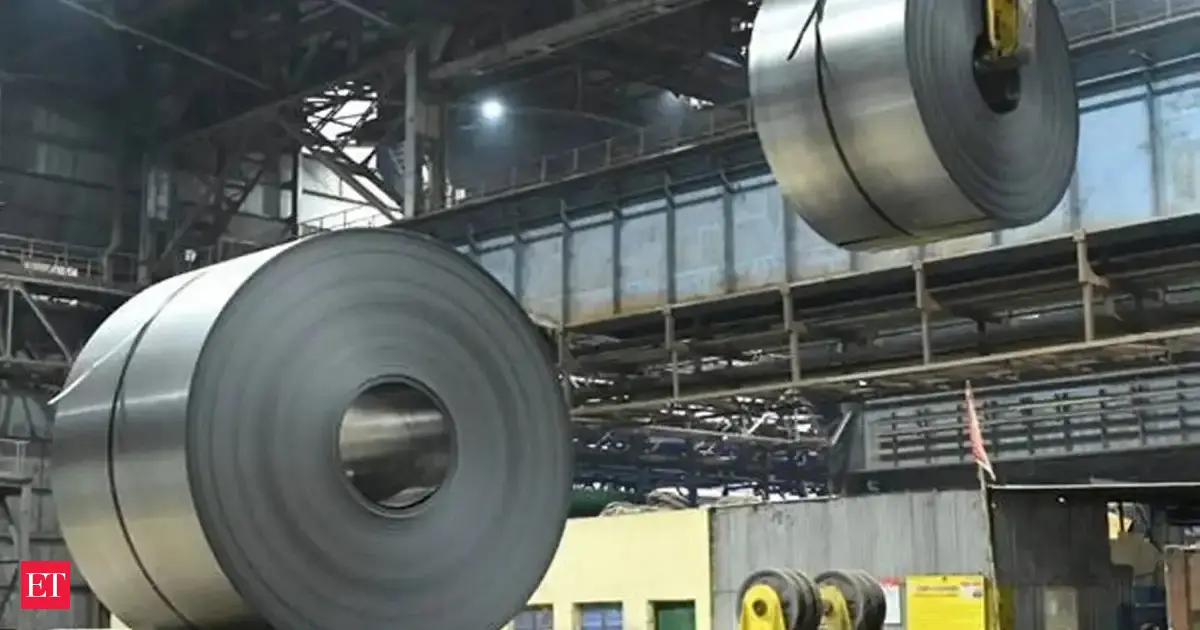
Domestic steel prices are forecasted to remain strong in the coming months due to tight supply constraints. Dealers are actively building inventory in anticipation of further price hikes as demand surpasses supply. While demand is generally healthy, significant factors include rising prices and lower allocations from primary producers. The festive season may cause temporary demand fluctuations, particularly in Gujarat. View More
New Delhi: Domestic steel prices are expected to remain firm in the near term as tight supply, import duties and elevated raw material costs encourage dealers to build inventory in anticipation of further price increases, brokerage firm Centrum Broking said in a report based on dealer interactions. Centrum said any correction in steel prices is likely to be limited and could be deferred until late November or early December. The report noted that supply remains tight, with allocations from primary producers falling short of demand and dealers often receiving only 50-75 per cent of the volumes they request. Also Read: Steel prices at 4-year high; trend to continue in H2: Report "Steel dealers have shifted from need-based purchasing to actively building inventory in anticipation of further price increases," the report said, adding that this has supported strong channel demand, although part of the recent strength reflects inventory accumulation. The report further added that domestic flat steel prices have remained on a sustained uptrend, supported by supply constraints, maintenance shutdowns, import duties and elevated raw material costs, particularly coking coal. Live Events The channel behaviour has also changed in recent months. According to Centrum, dealers were largely following a need-based procurement strategy earlier, but rising prices and tighter availability have resulted in inventory build-up across the distribution channel. "While current channel activity is strong, the dealer's comments suggest that part of the recent demand strength is driven by advance buying and inventory accumulation, rather than solely by underlying end-use consumption," the report said. Also Read: Domestic steel prices likely to stay firm as demand recovery, supply constraints support market: Report At the same time, the report indicated that demand remains healthy, with dealers buying steel ahead of requirements as they expect prices to rise further. The report said demand in Gujarat could soften during October-November due to festivals and holidays. However, demand typically strengthens from January-February as the festive period ends, while potential disruptions to imported or Chinese material around the Chinese New Year could further tighten availability and support domestic mills. In the steel pipe segment, the report said multiple price increases had taken cumulative hikes to around Rs 6-7 per kg, with a further Rs 1.5 per kg increase announced from October 1. .Pbanner{display:flex;justify-content:space-between;align-items:center;background-color:#ec1c40;margin-top:20px;padding:5px 10px;border-radius:4px;color:#fff;line-height:10px;width: 100%;box-sizing: border-box} .Pbannertext{display:flex;align-items:center;font-size:16px;font-weight:600;font-family:'Montserrat';} .Pbannertext img{height:20px;margin:0 6px} .Pbannerbutton a{display:flex;align-items:center;background-color:#fff;color:#ec1c40;text-decoration:none;font-weight:600;padding:4px 8px;border-radius:6px;font-size:15px;font-family:'Montserrat';} .Pbannerbutton img{height:20px;margin-right:6px} .Pbannerbutton a:hover{background-color:#f7f7f7} Add as a Reliable and Trusted News Source Add Now! (You can now subscribe to our Economic Times WhatsApp channel) (You can now subscribe to our Economic Times WhatsApp channel)
Recent IPOs are turning into a headache for investors, as nearly all are now falling beneath their initial listing highs. For instance, Vibhor Steel Tubes and Mamata Machinery have seen drastic declines from their early performances. While a few stocks maintain values above their original prices, many investors find themselves grappling with losses due to inflated entry costs. View More
Investors who chased the hottest listings of the last two years have mostly been punished. Ace Equity data on IPOs that delivered multibagger gains on listing shows that all 10 of 10 stocks are now trading below their listing-day highs. The fall from those highs is as steep as 75%, showing how costly it can be to buy into the frenzy after a stock has already doubled on debut. Vibhor Steel Tubes has borne the brunt of this trend. The stock was issued at Rs 151 and listed at Rs 421 in February 2024, giving a listing gain of 179%. It touched a listing-day high of Rs 442. But by September 18, 2026, the stock was at Rs 112.35. That is a fall of about 75% from its listing-day high and about 26% below its IPO price. Mamata Machinery also gave a huge debut. The stock listed at Rs 600 against an issue price of Rs 243, a gain of 147%. It touched Rs 629.95 on listing day. The stock now trades at Rs 403.45, down 36% from that high, though still 66% above its issue price. The same pattern is visible in several other IPO winners. BLS E-Services listed at Rs 309 against an issue price of Rs 135, a 129% gain. It hit Rs 370.75 on listing day and now trades at Rs 316, down nearly 15% from that high. Live Events Also Read: Beyond NSE IPO buzz: MSEI, CSE unlisted shares rally up to 108% in 2026 Premier Energies listed at Rs 991 against an issue price of Rs 450, a gain of 120%. It is now at Rs 903, around 9% below its listing-day high of Rs 993.45, but still more than double its issue price. Bajaj Housing Finance , one of the most closely tracked IPOs of 2024, listed at Rs 150 against its issue price of Rs 70. The stock touched Rs 164.99 on listing day. It now trades at Rs 85.49, down 48% from the listing-day high. Unicommerce eSolutions shows how quickly listing euphoria can fade. The stock was issued at Rs 108 and listed at Rs 230, a gain of 113%. It touched Rs 256.15 on debut. It is now at Rs 83.35, down 67% from the high and 23% below its issue price. Hamps Bio, Jungle Camps India and Luxury Time have also fallen sharply from their debut highs. Hamps Bio is down about 55% from its listing-day high, Jungle Camps is down about 69%, and Luxury Time has fallen about 62%. The only clear exception in the list is KRN Heat Exchanger and Refrigeration. The stock listed at Rs 470 against an issue price of Rs 220 and touched Rs 513.40 on listing day. It now trades at Rs 1,447.85, far above both its issue price and listing-day high. It remains the rare case where buying after a hot listing would still have worked. Is chasing listing day high costly? Listing-day multibaggers are often priced for perfection within hours of trading. At that point, the buyer is no longer getting IPO pricing. He is buying a stock after the market has already marked it up 90-180%. The data also shows an important split. Not all IPO investors lost money. Several stocks are still above issue price. KRN Heat Exchanger is up 558% from issue price, BLS E-Services is up 134%, Premier Energies is up 101%, Tempsens Instruments is up 77%, Mamata Machinery is up 66%, Indobell Insulations is up 53%, Bharat Coking Coal is up 42%, and Bajaj Housing Finance is up 22%. The damage is more damning for investors who bought at debut highs. In several cases, they entered at prices that the stock has never regained. Data: Ritesh Presswala Disclosure: This article has been written by Podishetti Akash, who is not a SEBI-registered Research Analyst or an Investment Adviser. Podishetti Akash and her ‘relative(s)’ (as defined under Section 2(77) of the Companies Act, 2013) do not hold any financial interest in the companies mentioned in this article as of the date of publication. The views/recommendations mentioned in this article, wherever applicable, are those of the respective SEBI-registered Research Analyst/brokerage and have been reproduced/reported with due attribution. They should not be construed as the views or recommendations of The Economic Times Digital or the journalist. Readers are advised to consider the original research report and make their investment decisions based on their own assessment. Brokerage disclosures here. .Pbanner{display:flex;justify-content:space-between;align-items:center;background-color:#ec1c40;margin-top:20px;padding:5px 10px;border-radius:4px;color:#fff;line-height:10px;width: 100%;box-sizing: border-box} .Pbannertext{display:flex;align-items:center;font-size:16px;font-weight:600;font-family:'Montserrat';} .Pbannertext img{height:20px;margin:0 6px} .Pbannerbutton a{display:flex;align-items:center;background-color:#fff;color:#ec1c40;text-decoration:none;font-weight:600;padding:4px 8px;border-radius:6px;font-size:15px;font-family:'Montserrat';} .Pbannerbutton img{height:20px;margin-right:6px} .Pbannerbutton a:hover{background-color:#f7f7f7} Add as a Reliable and Trusted News Source Add Now! (You can now subscribe to our ETMarkets WhatsApp channel) (You can now subscribe to our ETMarkets WhatsApp channel)

A curious dynamic is happening in shares of Nvidia ahead of two potential catalysts this month. View More
In this articleNVDAFollow your favorite stocksCREATE FREE ACCOUNT watch nowVIDEO4:4104:41AI is in focus ahead of U.S.-China talks. Here's how it could sway shares of NvidiaOptions ActionA curious dynamic is happening in shares of Nvidia ahead of two potential catalysts this month, and it's presenting an unique opportunity for options traders. As shares of the AI giant have surged, the stock's forward multiple, a measure of how expensive it is relative to the market, has fallen as the chip maker continues to rake in money. Also falling? The price of Nvidia options.  Nvidia shares have rallied 24% in 2026, rising five straight sessions with the stock sitting just 3.5% below its all-time closing high of $235.74 back in May. However, several potential catalysts in the days ahead may reverse or accelerate Nvidia's trajectory from here. According to CNBC, Nvidia CEO Jensen Huang is expected to attend a state dinner for Chinese President Xi Jinping when he travels to Washington to meet with President Trump this Thursday. AI is expected to be a main topic of discussion when Xi meets with Trump. Then September 30, the following week, Micron is expected to report fiscal Q4 earnings, a barometer for AI memory demand that may have ripple effects on Nvidia.Stock Chart IconStock chart iconNvidia, YTDDespite these potential catalysts and Monday's volatility among prominent chip names, Nvidia's option prices are unusually cheap. Nvidia's implied volatility, derived from current options prices, is sitting near its lowest level of the past year. That basically means the market isn't pricing in much movement over the coming weeks, and options prices are lower to reflect that. For options traders anticipating a large move in Nvidia, either because of Nvidia-specific catalysts or near-term shifts in the semiconductor sector, those options can now be traded at a discount relative to the past year.Trade: Buying the Oct 16 210/220 put spread and the Oct 16 235/245 call spread, for a total debit of roughly $4.86This is a reverse iron condor, a directionally neutral strategy structured to profit from a large move in Nvidia in either direction before October 16th. The core bet is in buying the 220 put and the 235 call, the two strikes closest to Nvidia's current price, which are relatively cheap given Nvidia's low implied volatility. Selling the 210 put and 245 call, each 10 points further from the money, generates a credit that partially finances the trade. This lowers the cost of the trade and increases the position's theoretical probability of profit to ~56%. The max loss of the position is $486, hit if Nvidia remains between $220 and $235 and the long legs expire worthless. The max gain is $514 on either side, realized if Nvidia closes at or beyond $210 on the downside or $245 on the upside. Breakevens sit at $215.14 and $239.86, meaning Nvidia needs roughly a 5% to 6% move from current levels by October 16th for the trade to turn a profit.The semiconductor sector has a proven, recent history of moving fast. This was on display Monday, when AMD surged more than 9% to cross a $1 trillion market cap and Intel and Arm each jumped double digits on renewed enthusiasm for AI chip demand. With cheap options, a stock sitting near its highs, and multiple catalysts still ahead, this setup is an example of how to use options for positioning into anticipated volatility.As with any defined risk options spread, consider closing this position out before expiration rather than holding into settlement to avoid potential assignment risk.Disclosures: Spina owns this trade.All opinions expressed by CNBC Pro contributors are solely their opinions and do not reflect the opinions of CNBC, or its parent company or affiliates, and may have been previously disseminated by them on television, radio, internet or another medium. This content is provided as part of our editorial output for informational purposes only and does not constitute financial, investment, tax or legal advice or a recommendation to buy any security or other financial asset. The content is general in nature and does not reflect any individual's unique personal circumstances. The above content might not be suitable for your particular circumstances. Before making any financial decisions, you should strongly consider seeking advice from your own financial or investment advisor.THIS CONTENT IS PROVIDED FOR INFORMATIONAL PURPOSES ONLY AND DOES NOT CONSTITUTE FINANCIAL, INVESTMENT, TAX OR LEGAL ADVICE OR A RECOMMENDATION TO BUY ANY SECURITY OR OTHER FINANCIAL ASSET. THE CONTENT IS GENERAL IN NATURE AND DOES NOT REFLECT ANY INDIVIDUAL'S UNIQUE PERSONAL CIRCUMSTANCES. THE ABOVE CONTENT MIGHT NOT BE SUITABLE FOR YOUR PARTICULAR CIRCUMSTANCES. BEFORE MAKING ANY FINANCIAL DECISIONS, YOU SHOULD STRONGLY CONSIDER SEEKING ADVICE FROM YOUR OWN FINANCIAL OR INVESTMENT ADVISOR.Click here for the f Choose CNBC as your preferred source on Google and never miss a moment from the most trusted name in business news.

The Mines Ministry will soon launch an incentive scheme to promote domestic processing of lithium and nickel as India seeks to build an integrated critical mineral value chain and reduce dependence on imported processed materials. The government has also cleared critical mineral processing parks in Gujarat, Maharashtra, Odisha and Andhra Pradesh, while flagging concerns over auctioned mining blocks that remain idle despite securing clearances and leases. View More
New Delhi: The Mines Ministry will soon introduce an incentive scheme to promote the domestic processing of lithium and nickel, Mines Secretary Keshav Chandra said on Tuesday. The initiative is intended to support the creation of an integrated critical mineral value chain in the country and lower India's dependence on imported processed materials. Also Read: India's state-owned KABIL expects to start lithium production in Argentina in 4-5 years "Very soon, we will be launching our scheme for lithium and nickel," Chandra said at the 60th Annual General Meeting of the Federation of Indian Mineral Industries (FIMI). The government has also cleared proposals for setting up critical mineral processing parks in Gujarat, Maharashtra, Odisha and Andhra Pradesh. Live Events Chandra said he had recently assessed the progress made by the four states and expressed satisfaction with their preparations. "All of them are doing a fantastic job. Within a short period, they have identified the sources of minerals, the manner in which they will be processed and the downstream industries that can be developed," he said. He said the states had identified mineral sources, processing methods and the downstream industries that could be developed around the proposed parks. The secretary also flagged concerns over mining blocks that have not begun operations even after the completion of auctions, receipt of statutory clearances and execution of mining leases. Also Read: India to soon unveil incentives for lithium, nickel processing with around Rs 3,000 crore outlay, sources say Referring to the practice as "squatting", Chandra said the government was not comfortable with companies holding on to mining blocks without commencing operations. "Somebody has secured a mining block, all clearances have been obtained, and the lease has been signed, but operationalisation has still not commenced," he said. Chandra urged FIMI members to address the issue seriously, saying the government was concerned about such instances. Lithium is an important input for lithium-ion batteries used in electric vehicles, consumer electronics and battery energy-storage systems. Its light weight and high electrochemical potential help batteries store greater amounts of energy. Nickel, widely used in stainless steel manufacturing, is also important for high-energy-density lithium-ion batteries. Nickel-rich cathode chemistries can increase battery energy density and reduce reliance on cobalt, supporting their use in electric vehicles and stationary energy-storage systems. .Pbanner{display:flex;justify-content:space-between;align-items:center;background-color:#ec1c40;margin-top:20px;padding:5px 10px;border-radius:4px;color:#fff;line-height:10px;width: 100%;box-sizing: border-box} .Pbannertext{display:flex;align-items:center;font-size:16px;font-weight:600;font-family:'Montserrat';} .Pbannertext img{height:20px;margin:0 6px} .Pbannerbutton a{display:flex;align-items:center;background-color:#fff;color:#ec1c40;text-decoration:none;font-weight:600;padding:4px 8px;border-radius:6px;font-size:15px;font-family:'Montserrat';} .Pbannerbutton img{height:20px;margin-right:6px} .Pbannerbutton a:hover{background-color:#f7f7f7} Add as a Reliable and Trusted News Source Add Now! (You can now subscribe to our Economic Times WhatsApp channel) (You can now subscribe to our Economic Times WhatsApp channel)

German Green Steel and Power Ltd will hit the primary market on September 25 with a Rs 304-crore initial public offering (IPO), as the iron and steel maker seeks funds to expand its manufacturing capacity and invest in renewable power.
In a public announcement, the Gujarat-based company has fixed a price band of Rs 132-139 per equity share for its IPO, which is scheduled to close on September 29.
The IPO comprises a fresh issue of equity shares worth up to Rs 290 crore and an Offer for Sale (OFS) of 10 lakh equity shares valued at Rs 13.9 crore.
At the upper end of the price band, the issue size works out to around Rs 304 crore.
The company has reduced its issue size as the earlier IPO plan comprised a fresh issue of up to Rs 450 crore and an OFS of up to 20 lakh equity shares.
Proceeds from the fresh issue will be utilised for the expansion of the company's manufacturing facility at Samakhiyali, Kutch, Gujarat, and a hybrid wind and solar power plant, repayment of debt, and gener View More

Orient Cables has priced its IPO at ?258-272 per share, AceVector at ?30-32, and German Green Steel and Power at ?132-139; all three issues open on September 25 View More
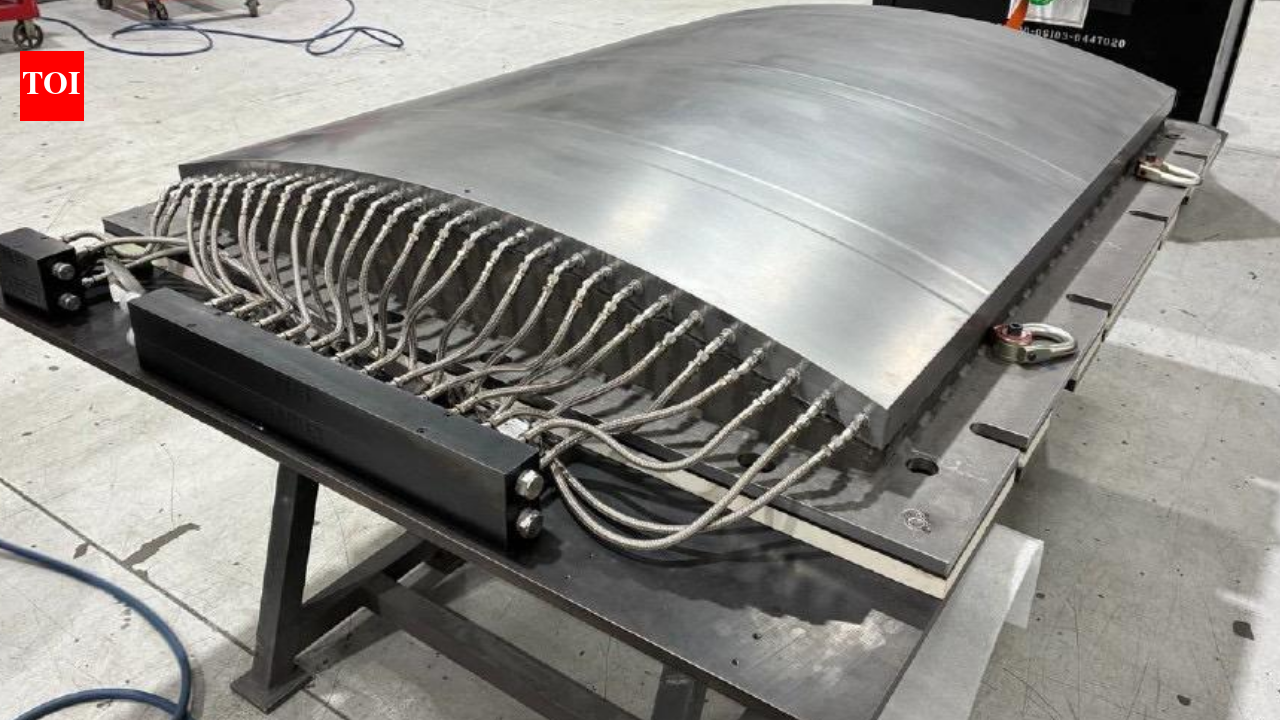
A team at the US Department of Energy’s Oak Ridge National Laboratory (ORNL) has spent eight weeks 3D-printing a massive steel mold that stands 6 feet tall, measures 4 feet wide and weighs nearly 2 tons. The tool, developed with Boeing, is designed for manufacturing thermoplastic composite aircraft components and will contribute to NASA’s Hi-Rate Composite Aircraft Manufacturing (HiCAM) project. View More

The government plans to operationalise India’s first mineral exchange by the next financial year, aiming to enable transparent trading and market-based price discovery. The move comes as the mining sector expands, with mineral production rising to ?1.86 lakh crore in FY26. View More
New Delhi: India's first mineral exchange, which would create a transparent, electronic delivery-based trading platform for minerals, is likely to be registered and operationalised by the next financial year, according to a top government official. This comes after the mines ministry's notification of the Mineral Exchange Rules, 2026 in June. The exchange would create a transparent, electronic delivery-based trading platform for minerals, facilitate market-based price discovery and reduce information asymmetry between producers and buyers. Also read: India’s mining, metals sector needs technology shift to strengthen supply chains: Report "We expect to register and operationalise the first Mineral Exchange by the next financial year. Work on the registration of the exchange is currently under way," Mines Additional Secretary Veena Kumari Dermal said during 60th Annual General Meeting of Federation of Indian Mineral Industries (FIMI). Live Events The ministry notified the Mineral Exchange Rules in June to create a state-of-the-art platform with transparent price discovery and standardised quality assessment, she said. The exchange will also feature risk-management mechanisms to prevent market manipulation and protect participants, Dermal said, adding that it would provide producers and buyers with a reliable and globally competitive marketplace for minerals. She further said that minerals form the backbone of the infrastructure, manufacturing, and national energy security. As the country advances towards the vision of Viksit Bharat 2047, India's primary objective is to build a self-reliant economy. The gravity of this task is underscored by the country's import figure. In financial year 2025-26 alone, India imported minerals valued at Rs 10,12,000 crore. To reduce this heavy burden on the national exchequer, the industry has to expand, increase the domestic capacity, increase the production, and optimise its local resources. In the last decade, the mining sector has seen exceptional growth. The value of mineral production in 2013-14 was Rs 49,900-50,000 crore and it grew to Rs 1.86 lakh crore in 2025-26, showing a cumulative annual growth rate of 11.6 per cent. And this growth is driven by the policy reforms taken up by Ministry of Mines, she added. The production of iron ore also increased from 152 million tonne in 2013-14 to 312 million tonne last year. The limestone production increased from 280 MT to 483 MT and bauxite from 22 MT to 26 MT. "We are seeing the increase in mineral production, but that is not sufficient to meet the aspiration of the country," she explained. .Pbanner{display:flex;justify-content:space-between;align-items:center;background-color:#ec1c40;margin-top:20px;padding:5px 10px;border-radius:4px;color:#fff;line-height:10px;width: 100%;box-sizing: border-box} .Pbannertext{display:flex;align-items:center;font-size:16px;font-weight:600;font-family:'Montserrat';} .Pbannertext img{height:20px;margin:0 6px} .Pbannerbutton a{display:flex;align-items:center;background-color:#fff;color:#ec1c40;text-decoration:none;font-weight:600;padding:4px 8px;border-radius:6px;font-size:15px;font-family:'Montserrat';} .Pbannerbutton img{height:20px;margin-right:6px} .Pbannerbutton a:hover{background-color:#f7f7f7} Add as a Reliable and Trusted News Source Add Now! (You can now subscribe to our Economic Times WhatsApp channel) (You can now subscribe to our Economic Times WhatsApp channel)