Latest Sectors News

The facility is projected to create up to 1,750 permanent jobs and use iron ore from a new Minnesota mine View More

Trump's announcement with Mesabi Metallics comes as Americans' souring views of the economy are poised to shape the upcoming midterm election. View More
President Donald Trump on Monday announced a steel-making company's plan to invest about $15 billion to build what would be the largest plant of its kind in U.S. history.The Oval Office announcement with Mesabi Metallics came just weeks before the November midterm election, which is poised to be shaped by Americans' increasingly sour views of Trump's handling of the economy.The steel plant is planned to be built in Iowa and aims to begin production in 2030, a White House official told CNBC on condition of anonymity ahead of the Oval Office event.The Wall Street Journal first reported the announcement earlier Monday morning.Mesabi Metallics, based in Nashwauk, Minnesota, told CNBC the project will deliver "100% American steel: mined, melted and poured in Minnesota and Iowa."The steel plant will use iron ore from Mesabi's mine on Minnesota's Iron Range, a more than $2.5 billion project that is just beginning production after roughly two decades in development. That project was beset by controversies and setbacks, including Essar Steel Minnesota filing for bankruptcy in 2016. Mesabi is part of the Essar Group, an Indian conglomerate.The first phase of the Iowa steel plant is estimated to produce some 7.5 million tons per year, supporting up to 6,000 construction jobs, according to the White House. It is slated to eventually ramp up to 10 million tons annually and support at least 1,750 permanent jobs, the official told CNBC. The Minnesota mine project has reportedly created 200 full-time jobs out of an anticipated 350 total, according to Minnesota Public Radio.Trump was joined in the Oval Office by Mesabi Metallics' CEO Joe Broking and Chairman Rewant Ruia, as well as Commerce Secretary Howard Lutnick, Energy Secretary Chris Wright, Export-Import Bank Chairman John Jovanovic and a number of Iowa elected officials.Read more CNBC politics and policy coverageTexas turning blue may hinge on Democrats harnessing data center oppositionTrump faces Xi as strains with allies complicate U.S. pressure on ChinaIran's president blames U.S., Israel for global instability in defiant UN speechTrump slapped 25% tariffs on steel and aluminum imports near the start of his second term, and then doubled them to 50%. The president, who strongly dislikes trade deficits and has criticized free-trade deals, has doled out a variety of heavy import duties as he seeks to boost domestic manufacturing.Critics say the tariffs have played a major role in raising U.S. steel prices, which have recently hit multi-year highs. But numerous steel trade groups on Friday sent a letter to Trump, crediting his steel tariffs with driving $47 billion in "announced and underway investment." They urged him not to weaken those tariffs, arguing that doing so would "put that progress at risk."Lutnick said in the Oval Office that the plan is a "done deal." But complex, long-term construction projects can change drastically, or face insurmountable roadblocks, over their development cycles. Construction on the Minnesota iron mine, for instance, was supposed to finish by 2016, prior to the company behind the project filing for bankruptcy, Minnesota Public Radio reported.As president, Trump has previously touted projects that did not live up to their initial hype. In his first term, Trump attended Taiwan electronics manufacturer Foxconn's groundbreaking for a planned $10 billion factory in Wisconsin, and praised the project as "the eighth wonder of the world." But in 2021, Foxconn reduced its planned investment to $672 million and cut the number of new jobs down to 1,454 from 13,000.White House spokeswoman Taylor Rogers told CNBC in a statement on Monday's factory announcement, "President Trump is delivering on his promise to rebuild American industry, reshore manufacturing, and create new jobs.""Today's announcement underscores the President's historic efforts to revitalize the U.S. steel industry âsupporting local communities, strengthening supply chains, and protecting our national security," Rogers said. "After decades of decline, this President is restoring America's industrial competitiveness and securing trillions of dollars in new investment." Choose CNBC as your preferred source on Google and never miss a moment from the most trusted name in business news.

Sen. Elizabeth Warren is asking the leaders of Meta, Google, Amazon and Microsoft about AI and data center subsidies authorized by GOP legislation. View More
In this articleMETAFollow your favorite stocksCREATE FREE ACCOUNT Sen. Elizabeth Warren, D-Mass., speaks with CNBC on June 24, 2026.CNBCSenate Democrats are seeking information on how artificial intelligence and data center spending by Meta, Amazon, Alphabet and Microsoft has been subsidized by tax breaks authorized in the 2025 tax cutting and spending package passed by Republicans at the behest of President Donald Trump.Sen. Elizabeth Warren, D-Mass., led the letters, which were sent Sunday night and shared exclusively with CNBC, to the CEOs of the four companies asking for information on tax deductions they've claimed related to AI and data center development and on their lobbying efforts in the lead-up to the passage of the 2025 legislation, known more commonly as the "one big beautiful bill" act.Sens. Tina Smith, D-Minn., Jeff Merkley, D-Ore., Elissa Slotkin, D-Mich., Bernie Sanders, I-Vt., and Richard Blumenthal, D-Conn., joined the letters."Americans across the country are worried about the impacts of artificial intelligence (AI) on their lives âfrom increased utility bills to threats of job losses and cyberattacks," the lawmakers wrote in the letters. "But rather than meaningfully regulate Big Tech companies and slow down the mad rush to deploy this new technology, Republicans in Washington have passed tax subsidies for AI development and AI data centers."Spokespeople for all four companies did not respond to a request for comment. White House spokesperson Kush Desai said Democrats are "more sour about President Trump winning than they are happy for American workers and families.""The Great One Big Beautiful Bill's pro-growth provisions like full equipment processing are driving historic job, investment, and wage growth across industries and sectors, from technology to steel to pharmaceuticals," Desai told CNBC by email.The probe comes as Washington grapples with how to deal with AI and data center development, as public backlash has become increasingly intense heading into the 2026 midterm election.Democrats are hoping to win back a majority in the House and Senate â though Republicans are still favored in most projections to retain the upper chamber â and have tried to distinguish themselves as the more pro-regulation party.Democratic 2028 presidential hopefuls like California Gov. Gavin Newsom have made statements and issued executive orders. And Democratic congressional candidates â including state Rep. James Talarico, the Democratic nominee for Senate in Texas, and Sherrod Brown, the Democrat running for Senate in Ohio â have hit at their GOP opponents for their past support of data centers.Read more CNBC politics and policy coverageTexas turning blue may hinge on Democrats harnessing data center oppositionTrump faces Xi as strains with allies complicate U.S. pressure on ChinaIran's president blames U.S., Israel for global instability in defiant UN speechRepublicans, meanwhile, have called out Senate Democrats for blocking the quick passage of legislation that would create a framework states could choose to adopt to address rising data center-related utility costs. Sen. Martin Heinrich, D-N.M., blocked the legislation because he said it didn't go far enough to protect consumers. The measure, dubbed the Ratepayer Protection Act, may be taken up by the Senate again this week.Warren has previously called for increased taxes on AI and data center developers and investigated ties between private equity and data centers.Her letter on Monday follows reporting that corporate tax payments are falling this year amid rising revenue, as tech companies make use of AI tax incentives. Corporate tax payments are down 25 percent this year, according to Warren's letter, which cites Politico's reporting quoting budget forecasters. The nonpartisan Congressional Budget Office in February projected that the federal government would collect 10.6% less in corporate income tax in 2026 compared with a year earlier, with the total projected to fall from $452 billion to $404 billion.Meta, for one, paid $2.8 billion in federal income tax in 2025, down from $9.6 billion in 2024, while earning roughly the same profit both years. "This enormous tax cut appears to have been driven in significant part by President Trump and Republicans' tax breaks subsidizing your spending on AI," the lawmakers wrote in their letter to Meta CEO Mark Zuckerberg. "[Y]our company's capital expenditures, the 'vast majority' of which constitute data center construction and other AI spending amounted to an extraordinary $72 billion last year â much of which you may have been able to immediately deduct using OBBBA's corporate tax handouts."Amazon, Meta and Microsoft are the top three data center companies in the U.S. by active IT capacity, according to the technology advising firm ABI Research. Google Cloud, which is part of Alphabet, is 10th.Pointing to corporate filings with the Securities and Exchange Commission, the lawmakers in their letter note Microsoft's current federal income tax expense dropped by over $11 billion from fiscal year 2025 to 2026; Amazon's federal income tax payment dropped by nearly $8 billion from fiscal 2024 to 2025; and Alphabet's combined current federal and state income tax expense dropped by over $7 billion in the same period.The companies contributed $1 million each to Trump's inauguration and spent millions lobbying Congress and federal agencies in the lead-up to the passage of the 2025 tax and spending bill, according to the letter."Your company has spent lavishly to stay on the good side of President Trump, and it appears that you are now seeing your investment bear fruit," the lawmakers wrote.They requested answers from each company by Oct. 12. Choose CNBC as your preferred source on Google and never miss a moment from the most trusted name in business news.

Canadian steelmaker Stelco plans to suspend some operations in Hamilton, Ontario, citing the impact of US tariffs and trade disruptions on the Canadian steel industry. View More

The commissioned project comprises three components: a new iron ore processing plant at Bacheli, a 135-kilometre, 15 MTPA slurry pipeline, and the 2 MTPA pellet plant at Nagarnar. View More
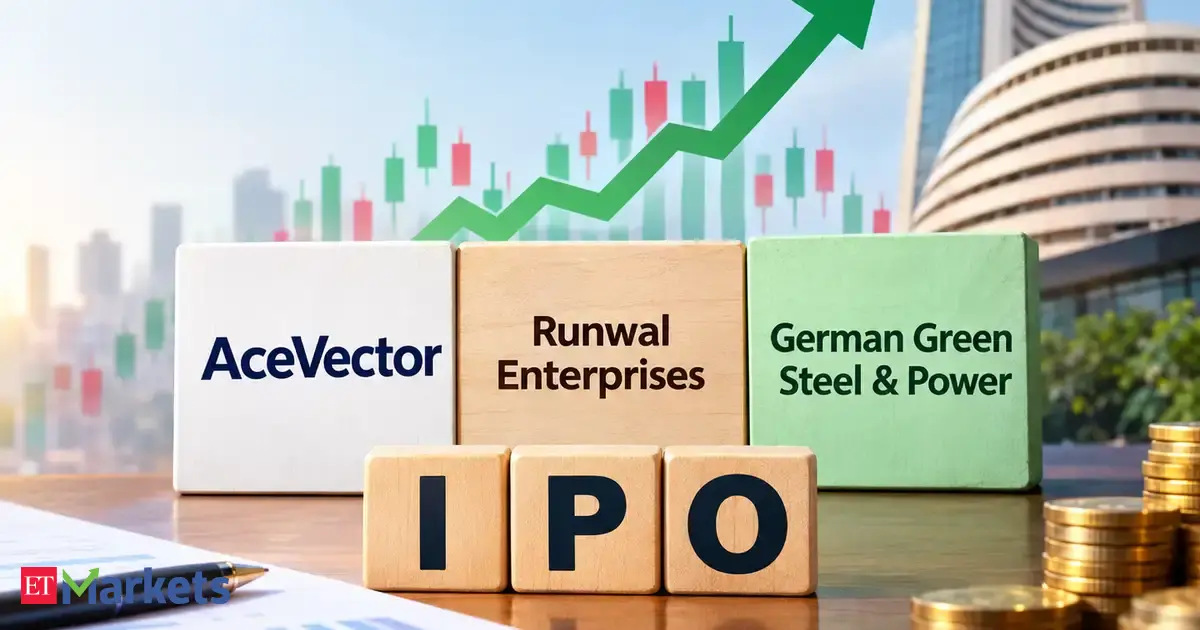
Three mainboard IPOs: AceVector, Runwal Enterprises and German Green Steel & Power, entered their second bidding day with strong investor interest. German Green Steel’s issue was subscribed 3.14 times, while AceVector and Runwal Enterprises were each 37% subscribed. Meanwhile, 20 IPOs are scheduled to launch next week, targeting combined proceeds of Rs 1,292 crore. View More
Three mainboard IPOs , AceVector (Snapdeal), Runwal Enterprises and German Green Steel & Power, entered their second day of bidding on Monday, with all three drawing strong investor interest, according to exchange data. AceVector Ltd., the parent company of Snapdeal, commanded a grey market premium (GMP) of 3.12%, indicating a modest Rs 1 premium over its issue price. The book-built IPO comprises a fresh issue of 8.97 crore shares worth Rs 287 crore and an offer for sale (OFS) of 4.16 crore shares aggregating to Rs 133 crore. Runwal Enterprises commanded a GMP of around 4% in the grey market, indicating expectations of a potential premium over the issue price at listing. The Rs 499.83 crore IPO consists entirely of a fresh issue of 1.64 crore shares and does not have an OFS component. German Green Steel & Power's Rs 303.90 crore IPO comprises a fresh issue of 2.09 crore shares worth Rs 290 crore and an OFS of 10 lakh shares aggregating to Rs 13.90 crore. The issue commanded a 21% premium in the grey market, signalling strong expectations around its listing. AceVector IPO subscription status AceVector's IPO was subscribed 37% by 12.20 pm, according to NSE's consolidated data. Retail investors led the demand, subscribing to 97% of the portion reserved for them. The non-institutional investor quota was subscribed 68%, with investors bidding for 1.40 crore shares against the 2.05 crore shares allotted to them. Qualified institutional buyers (QIBs) were yet to subscribe to the issue. Live Events Runwal Enterprises IPO subscription status Runwal Enterprises' IPO was also subscribed 37% by 12.20 pm, NSE data showed. QIBs led the bidding, subscribing to 96% of the portion reserved for them. Retail investors had subscribed to 30% of their allotted quota, while the non-institutional investor portion was booked 35%. Investors bid for 9.06 lakh shares against the 25.68 lakh shares reserved for the category. German Green Steel IPO Day 2 status German Green Steel & Power's IPO was subscribed 3.14 times by the afternoon, according to NSE's consolidated data. The QIB portion was subscribed 1.33 times, with investors bidding for 60.70 lakh shares against the 45.78 lakh shares reserved for the category. The retail portion was subscribed 3.63 times, while the non-institutional investor quota was booked 4.38 times, with bids received for 1.50 crore shares against the allotted 34.45 lakh shares. IPOs in September India's primary market will stay busy next week, with 20 IPOs opening for subscription and looking to raise a combined Rs 1,292 crore. The week will be led by four mainboard IPOs: SRIT India, Vishal Nirmiti, Nityas Gems & Jewellery and Shah Investor’s Home, which together plan to raise Rs 595 crore. The rest of the action will come from the SME segment, where 16 companies are expected to raise about Rs 697 crore. SRIT India will be the biggest mainboard IPO opening next week. The company plans to raise Rs 218 crore through a fresh issue of 1.68 crore shares. The IPO will open on September 28 and close on September 30. The price band has been fixed at Rs 123-130 per share. Investors can bid for a minimum of 115 shares, making the minimum retail application Rs 14,950 at the upper price band. Vishal Nirmiti will open its Rs 178 crore IPO on September 30. The issue will close on October 5. The IPO is a mix of fresh issues and offers for sale. The company will raise Rs 145 crore through a fresh issue, while the OFS component will be Rs 33 crore. Nityas Gems and Jewellery will also open on September 30 and close on October 5. The company plans to raise Rs 108 crore through a fresh issue. The price band has been fixed at Rs 70-75 per share, and the lot size is 200 shares. The minimum retail application is Rs 15,000 at the upper price band. Shah Investor's Home will open its Rs 90.17 crore IPO on September 28 and close on September 30. The issue is entirely a fresh issue of 53.99 lakh shares. The price band has been fixed at Rs 159-167 per share. Investors can bid for a minimum of 85 shares, making the minimum retail application Rs 14,195 at the upper price band. Disclaimer: This article has been written by Veer Sharma, who is not a SEBI-registered Research Analyst or an Investment Adviser. Veer Sharma and his ‘relative(s)’ (as defined under Section 2(77) of the Companies Act, 2013) do not hold any financial interest in the companies mentioned in this article as of the date of publication. The views/recommendations mentioned in this article, wherever applicable, are those of the respective SEBI-registered Research Analyst/brokerage and have been reproduced/reported with due attribution. They should not be construed as the views or recommendations of The Economic Times Digital or the journalist. Readers are advised to consider the original research report and make their investment decisions based on their own assessment. Brokerage disclaimers here. .Pbanner{display:flex;justify-content:space-between;align-items:center;background-color:#ec1c40;margin-top:20px;padding:5px 10px;border-radius:4px;color:#fff;line-height:10px;width: 100%;box-sizing: border-box} .Pbannertext{display:flex;align-items:center;font-size:16px;font-weight:600;font-family:'Montserrat';} .Pbannertext img{height:20px;margin:0 6px} .Pbannerbutton a{display:flex;align-items:center;background-color:#fff;color:#ec1c40;text-decoration:none;font-weight:600;padding:4px 8px;border-radius:6px;font-size:15px;font-family:'Montserrat';} .Pbannerbutton img{height:20px;margin-right:6px} .Pbannerbutton a:hover{background-color:#f7f7f7} Add as a Reliable and Trusted News Source Add Now! (You can now subscribe to our ETMarkets WhatsApp channel) (You can now subscribe to our ETMarkets WhatsApp channel)
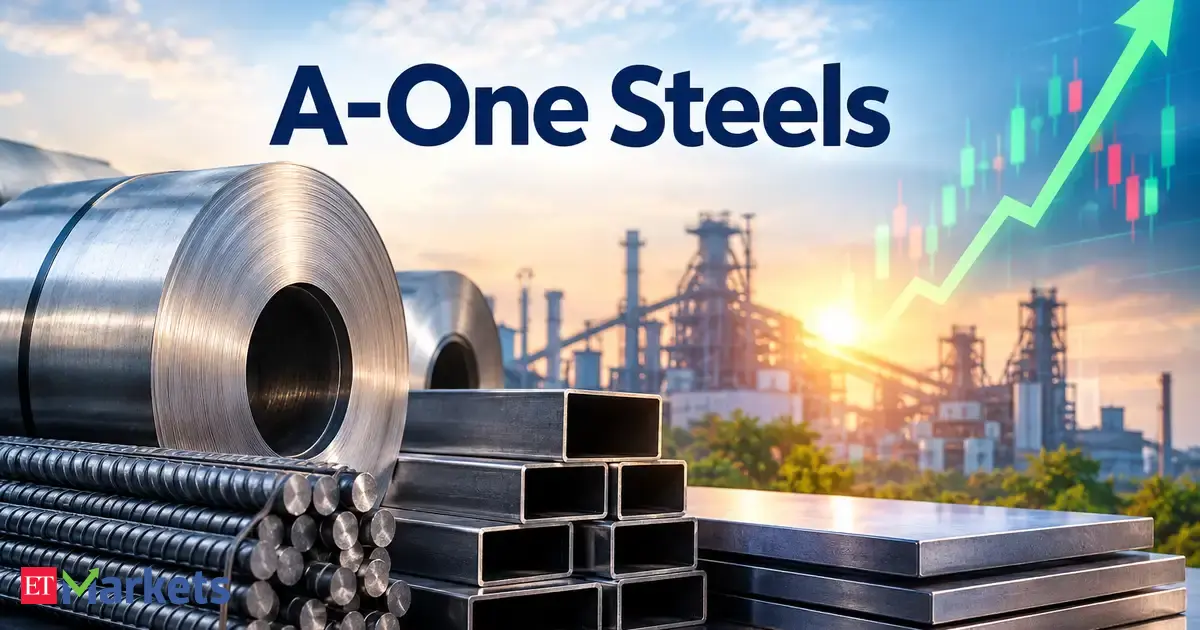
A-One Steels IPO has received significant interest from investors, oversubscribing 11.61 times overall. The retail portion was subscribed 1.76 times, indicating strong demand among individual investors. The IPO offers a price band of Rs 385 to Rs 405 per share, with a minimum investment of Rs 14,985. Financial performance showed an 18% increase in total income and a remarkable rise in profit after tax. View More
A-One Steels IPO received a decent response from investors, with the issue getting oversubscribed 11.61 times overall against the 73.84 lakh shares on offer, according to NSE data. If the prevailing GMP holds, the premium indicates the possibility of a listing price above the IPO’s upper price band. At the end of Day 2, the issue was subscribed 1.35 times against the 73.84 lakh shares on offer. The retail investor portion was subscribed 1.76 times against the 36.63 lakh shares reserved for the category. The Rs 405 crore public issue is a book-built offering comprising a fresh issue of 87.65 lakh shares worth Rs 355 crore and an offer for sale (OFS) of 12.35 lakh shares aggregating to Rs 50 crore. The IPO opened for subscription on September 24 and will close on September 28, 2026. The basis of allotment is expected to be finalised on September 29, while the shares are proposed to list on both the NSE and BSE on October 1, 2026, subject to applicable approvals and timelines. The price band has been fixed at Rs 385–Rs 405 per share, with a lot size of 37 shares. At the upper price band, retail investors will need to invest a minimum of Rs 14,985 for one lot. Live Events The floor price is 38.5 times the face value, while the cap price is 40.5 times the face value. Each equity share has a face value of Rs 10. Investors can bid for a minimum of 37 shares and in multiples of 37 shares thereafter. Based on diluted FY26 EPS, the company’s P/E ratio stands at 20.84x at the lower price band of Rs 385 and 21.92x at the upper price band of Rs 405. The average P/E ratio of the company’s industry peer group for FY26 stands at 45.20x. Eligible employees applying under the employee reservation portion will be entitled to a discount of Rs 38 per equity share. PL Capital Markets Pvt. Ltd. and Khambatta Securities Ltd. are the book-running lead managers for the issue, while Bigshare Services Pvt. Ltd. is the registrar to the issue. A-One Steels IPO Subscription Status The Retail Individual Investors (RIIs) category was subscribed 8.64 times against 36.63 lakh shares reserved for the category. The Non-Institutional Investors (NIIs) category was subscribed 24.51 times against 15.70 lakh shares on offer. The Qualified Institutional Buyers (QIBs) category was subscribed 7.30 times against 20.93 lakh shares reserved for the category. A-One Steels IPO GMP Today The A-One Steels IPO GMP stands at Rs 56, representing a premium of around 14% over the upper price band of Rs 405 per share. Based on the prevailing GMP, the estimated listing price works out to around Rs 461 per share. However, the grey market premium (GMP) is an unofficial and unregulated market indicator and is not part of the formal IPO price discovery process. GMP can fluctuate before listing and does not guarantee the actual listing price or investor returns. IPO Objects of the Issue A-One Steels India Ltd. plans to use the net proceeds from the IPO primarily for pre-payment or partial repayment of certain outstanding borrowings, with an estimated allocation of Rs 250 crore. Any remaining proceeds will be used for general corporate purposes, subject to applicable laws and regulations. A-One Steels Financial Performance A-One Steels India Ltd. reported an 18% increase in total income, rising from Rs 3,570 crore in FY25 to Rs 4,202 crore in FY26. Profitability also improved sharply, with profit after tax (PAT) rising 1,552% to Rs 127 crore in FY26, compared with Rs 8 crore in FY25. About A-One Steels India Ltd. Incorporated in 2012, A-One Steels India Ltd. is a backward-integrated steel manufacturer with a diversified portfolio of long and flat steel products, as well as industrial products such as met coke, silicon manganese and ferrosilicon. The company manufactures sponge iron, MS billets, TMT bars, HR/CR coils, HR/CR pipes and galvanised tubes, catering to sectors including construction, infrastructure, automotive, power and other industries. A-One Steels operates six manufacturing facilities across Karnataka and Andhra Pradesh, with locations positioned close to iron ore sources and major ports to support raw material sourcing and product transportation. The company also focuses on renewable energy, backed by long-term solar and wind power purchase agreements. Its TMT bars are CII-certified green products and are manufactured in multiple sizes. The company produces sponge iron at its Koppal and Bellary facilities and is also setting up a 10 MW waste-heat-recovery power plant. As of November 30, 2024, A-One Steels had 2,459 employees: 1,377 permanent and 1,082 contractual, including 63 personnel in sales and marketing. Disclaimer: The views/recommendations mentioned in this article, wherever applicable, are those of the respective SEBI-registered Research Analyst/brokerage and have been reproduced/reported with due attribution. They should not be construed as the views or recommendations of The Economic Times Digital or the journalist. Readers are advised to consider the original research report and make their investment decisions based on their own assessment. Brokerage disclaimers here .Pbanner{display:flex;justify-content:space-between;align-items:center;background-color:#ec1c40;margin-top:20px;padding:5px 10px;border-radius:4px;color:#fff;line-height:10px;width: 100%;box-sizing: border-box} .Pbannertext{display:flex;align-items:center;font-size:16px;font-weight:600;font-family:'Montserrat';} .Pbannertext img{height:20px;margin:0 6px} .Pbannerbutton a{display:flex;align-items:center;background-color:#fff;color:#ec1c40;text-decoration:none;font-weight:600;padding:4px 8px;border-radius:6px;font-size:15px;font-family:'Montserrat';} .Pbannerbutton img{height:20px;margin-right:6px} .Pbannerbutton a:hover{background-color:#f7f7f7} Add as a Reliable and Trusted News Source Add Now! (You can now subscribe to our ETMarkets WhatsApp channel) (You can now subscribe to our ETMarkets WhatsApp channel)

NMDC's new project includes a new iron ore processing plant at Bacheli, a 15 million tonne per annum (MTPA) slurry pipeline and a 2 MTPA pellet plant at Nagarnar. View More

Indian stock market: Ganesh Dongre of Anand Rathi believes the Nifty 50 index may witness a period of sideways consolidation during the upcoming monthly expiry week View More
The ASSOCHAM report indicates that the Production Linked Incentive Scheme has attracted significant investment across various sectors. It emphasizes the need for better implementation, compliance, and incentive disbursement processes. View More
The Production Linked Incentive (PLI) Scheme has attracted significant investment and supported the expansion of manufacturing capacity across 14 strategic sectors, according to a report by ASSOCHAM Global Research. The report, “Ease of Doing Business in India’s Promising Manufacturing Sectors: Assessing the Production Linked Incentive (PLI) Scheme Across 14 Sectors”, highlights that, by March 2026, total investments under the scheme had reached Rs 2.40 lakh crore, with more than 836 approved applicants investing across the 14 sectors and incremental production and sales had crossed ₹20 lakh crore (December 2025). The ASSOCHAM study finds that progress has varied across sectors. Electronics, pharmaceuticals and bulk drugs, telecom and food products have made strong progress, while ACC batteries and solar PV modules are experiencing steady improvements. IT hardware, textiles and speciality steel have recorded relatively moderate incentive disbursement. The report observes that these differences reflect variations in technology, capital requirements, project timelines and industry structure. “The PLI Scheme has succeeded in generating substantial interest from industry and mobilising investment in strategically important sectors. The next challenge is to ensure that these investments move smoothly through the stages of project implementation, production, compliance, claim submission and incentive disbursement,” said Nirmal Kumar Minda, President, ASSOCHAM, in a statement. “The effectiveness of PLI depends not only on the size of the incentives, but also on how easy it is for a compliant company to use the scheme. Clear rules, predictable processes, simpler compliance and better coordination have helped reduce the time and cost involved in moving from investment to production and finally to incentive realisation,” said Saurabh Sanyal, Secretary General, ASSOCHAM. Live Events The sector-wise analysis identifies approval timelines, testing and certification, claim verification, skilled manpower, eligibility thresholds and supporting infrastructure as important Ease of Doing Business ingredients. The report notes that these need further facilitation to strengthen ease of doing business. “PLI performance therefore needs to be assessed through a combination of investment, production, exports, domestic value addition and incentive disbursement rather than through any single indicator,” said S.P. Sharma, Chief Economist, ASSOCHAM. The report recommends simpler, more predictable claim processes; standardised certification; smoother approvals; better testing infrastructure; sector-aligned eligibility requirements; and stronger coordination among relevant agencies. It concludes that PLI and Ease of Doing Business need to be more synchronised. While PLI provides the incentive to invest and produce in India, an efficient and predictable business environment will help further convert these investments into productive capacity, higher domestic value addition, exports and stronger manufacturing capabilities. .Pbanner{display:flex;justify-content:space-between;align-items:center;background-color:#ec1c40;margin-top:20px;padding:5px 10px;border-radius:4px;color:#fff;line-height:10px;width: 100%;box-sizing: border-box} .Pbannertext{display:flex;align-items:center;font-size:16px;font-weight:600;font-family:'Montserrat';} .Pbannertext img{height:20px;margin:0 6px} .Pbannerbutton a{display:flex;align-items:center;background-color:#fff;color:#ec1c40;text-decoration:none;font-weight:600;padding:4px 8px;border-radius:6px;font-size:15px;font-family:'Montserrat';} .Pbannerbutton img{height:20px;margin-right:6px} .Pbannerbutton a:hover{background-color:#f7f7f7} Add as a Reliable and Trusted News Source Add Now!