
Latest Sectors News

The results come as the company pursues ongoing investments, including capacity expansions at Neelachal Ispat Nigam and downstream projects View More

Tata Steel management expects the second half of FY27 to be stronger than the first, supported by higher volumes, improved realisations and seasonally stronger demand. View More
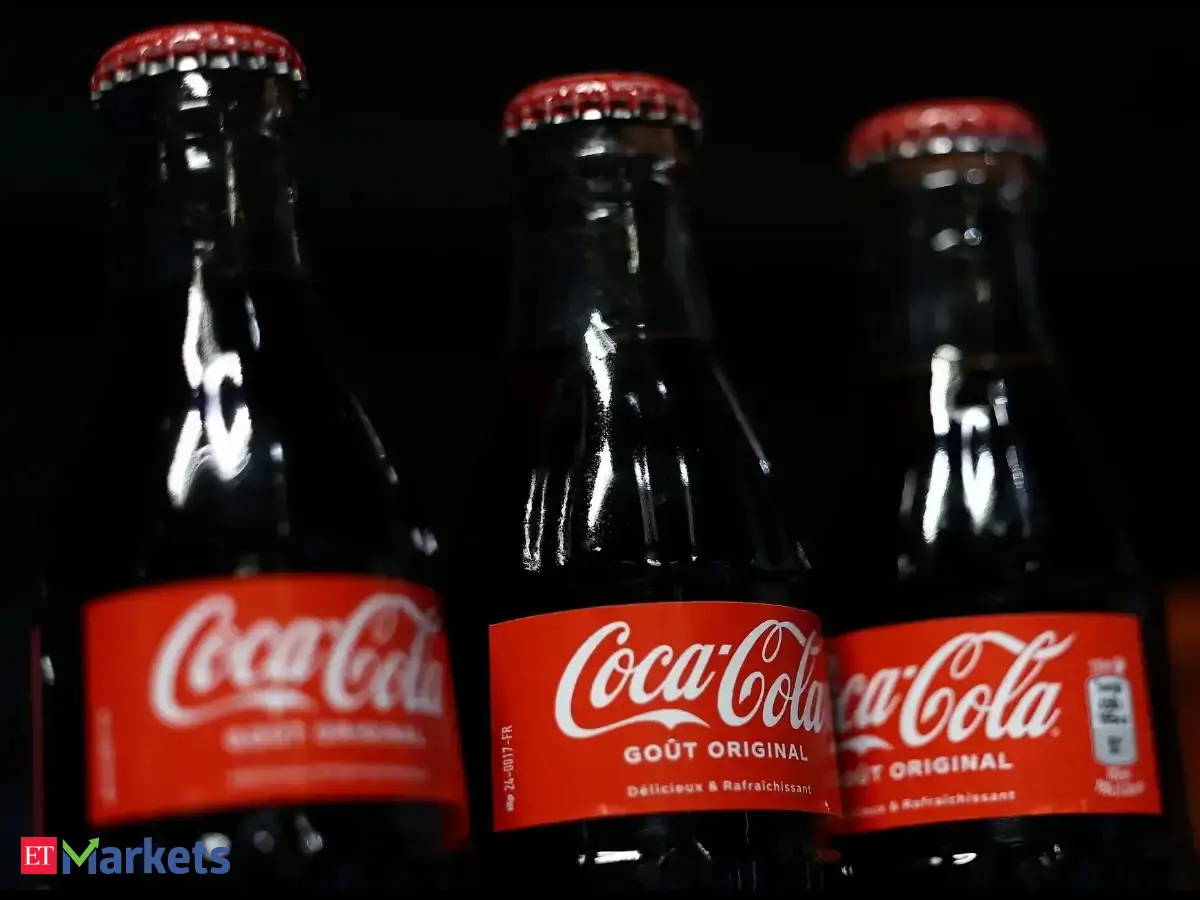
Hindustan Coca-Cola Holdings Limited has submitted its Draft Red Herring Prospectus to SEBI for an IPO. This IPO will involve an Offer for Sale of nearly one billion equity shares by the promoter. Coca-Cola India aims to enhance its asset-light operating model while focusing on brand development and digitization. The company has shown impressive revenue growth in its recent financial performance. View More
New Delhi: Coca-Cola India ’s bottling arm Hindustan Coca-Cola Holdings Limited (HCCH), has filed its Draft Red Herring Prospectus (DRHP) with SEBI for its proposed IPO . The offer is entirely an Offer for Sale (OFS) of up to 997,461,456 equity shares of face value Rs 10 each by Hindustan Coca-Cola Overseas Holdings Pte Ltd, the promoter selling shareholder. The equity shares are proposed to be listed on BSE and NSE. The listing plans follow Coca-Cola’s global strategy to follow an asset-light operating model and focus on strategy, brand building and digitisation. Also read: IPO plans for Indian bottling arm’s on track: Coca-Cola India is a core growth bastion for Coca-Cola and among the Atlanta-based beverage maker’s five largest markets globally. Coca-Cola India leads India’s Rs 60,000-crore packaged beverages market, with a portfolio of brands that include Coke, Thums Up and Sprite aerated drinks, Kinley water, Minute Maid juices, Maaza juice drink and Georgia coffee. It has an operating footprint of 14 manufacturing plants, along with eight co-pack units. The rest of Coca-Cola’s bottling is split between multiple independent bottlers. HCCH operates through its subsidiary, Hindustan Coca-Cola Beverages Private Limited (HCCB). Live Events Rival PepsiCo’s bottling partners Varun Beverages Ltd (VBL) had listed a decade back. Coca-Cola had announced plans to list HCCH in June this year, less than a year after it divested 40% stake in its bottling business to Jubilant Bhartia Group for close to Rs 12,500 crore. Jubilant Bhartia’s group company, Jubilant FoodWorks Ltd , operates quick service restaurant chain Domino’s Pizza in India. The consolidation is widely seen as a development aimed at unlocking significant synergies between the two entites. Jubilant FoodWorks’ rival firms Devyani International and Sapphire Foods are also merging to bring together KFC and Pizza Hut under Devyani International, which will jointly operate more than 3,000 stores, further heating up competition in the sector. ET had first reported the development in its January 15 edition. For the three-month period ended June 30, 2026, HCCH's retained units recorded revenue from operations of Rs 4,310.17 crore, with year-on-year growth of 20.46%, while total sales volume increased by 18.61%. EBITDA margin (excluding other income and exceptional items) increased to 17.20% from 13.76% in the corresponding period of the previous year. Kotak Mahindra Capital, Citigroup Global Markets, J.P. Morgan, Morgan Stanley India, Axis Capital , Goldman Sachs (India) Securities and IIFL Capital Services Limited are the book running lead managers to the IPO. KFin Technologies Limited is the registrar to the offer. .Pbanner{display:flex;justify-content:space-between;align-items:center;background-color:#ec1c40;margin-top:20px;padding:5px 10px;border-radius:4px;color:#fff;line-height:10px;width: 100%;box-sizing: border-box} .Pbannertext{display:flex;align-items:center;font-size:16px;font-weight:600;font-family:'Montserrat';} .Pbannertext img{height:20px;margin:0 6px} .Pbannerbutton a{display:flex;align-items:center;background-color:#fff;color:#ec1c40;text-decoration:none;font-weight:600;padding:4px 8px;border-radius:6px;font-size:15px;font-family:'Montserrat';} .Pbannerbutton img{height:20px;margin-right:6px} .Pbannerbutton a:hover{background-color:#f7f7f7} Add as a Reliable and Trusted News Source Add Now! (You can now subscribe to our ETMarkets WhatsApp channel) (You can now subscribe to our ETMarkets WhatsApp channel)

Consolidated revenue increased 11.5 per cent to Rs 65,436 crore, while EBITDA rose 14 per cent sequentially to Rs 10,665 crore, led by stronger India operations View More

The Cybertruck and its polarizing design gained a niche following, but it did not achieve mass-market sales and Tesla has issued several voluntary recalls. View More
In this articleTSLAFollow your favorite stocksCREATE FREE ACCOUNT A Tesla Cybertruck at the company's store in Colma, California, US, on Monday, April 21, 2025. David Paul Morris | Bloomberg | Getty ImagesTesla CEO Elon Musk on Friday said the electric vehicle maker will "be winding down" production of the Cybertruck at its Texas gigafactory around the middle of next year.Musk, who hailed the Cybertruck as the future of the pickup truck segment, said in a post on X early Friday morning that the end of production at the massive facility would make room for manufacturing of its Cybercab robotaxi.The Cybertruck is exclusively produced at the company's plant in Texas alongside the Tesla Model Y and two-seat Cybercab, which Musk has touted as a crucial product for the automaker moving forward.Musk did not say whether the company would produce the Cybertruck at a different facility, but he later responded to a user on X who called the update an "end of an era" and said the Cybertruck was the "best vehicle Tesla has ever made.""True, but the Cybertruck fleet will be around for a long time," Musk said. Tesla began Cybertruck deliveries in late 2023. The company did not immediately respond to a request for comment from CNBC.watch nowVIDEO12:2312:23Why Cybertruck sales have struggledAutosThe Cybertruck and its polarizing design gained a niche following, but it did not achieve mass-market sales, despite Musk's pre-launch prediction that annual sales would eventually total 250,000."Trucks have been the same for a very long time," Musk said when the truck was unveiled in 2019. "Like 100 years. Trucks have been basically the same. We want to try something different."While Tesla does not break out its sales by model or region, Cox Automotive estimated sales of the Cybertruck last year at 20,237 units in the U.S., down 48% from 38,965 in 2024.One big buyer of the Cybertruck last year was Musk's aerospace and tech conglomerate, SpaceX, which spent $131 million buying up the angular steel trucks at Tesla's suggested retail price, according to a SpaceX financial filing.The distinct look of the vehicle made some owners a target of rude gestures and more serious road rage, one owner told CNBC last May, after Musk became the biggest funder of Donald Trump's presidential campaign and led the so-called Department of Government Efficiency, an effort to slash the federal workforce and regulations.Wired wrote in an October 2025 feature story, "There is likely no object that feels more emblematic of US president Donald Trump's return to the White House than the Tesla Cybertruck." The magazine interviewed owners who described being spit on and sworn at due to their choice of vehicle. The Cybertruck's specifications also fell short of those Tesla advertised early on, and in some cases fell short of those offered by leading fuel-burning pickups. There have also been many quality and production problems associated with the vehicles.The 2024 Tesla Cybertruck was the subject of 11 voluntary recalls, according to the National Highway Traffic Safety Administration website. Issues ranged from a "trapped" acceleration pedal risk that could cause unintended acceleration, to software defects and an inverter fault that could result in sudden loss of drive power. Choose CNBC as your preferred source on Google and never miss a moment from the most trusted name in business news.

India's Union Minister G Kishan Reddy announced plans to boost steel production significantly by 2047. The goal is to reach 300 million tonnes by 2030 and 500 million tonnes by 2047. Steel is essential for construction, linking to the aspirations of people for housing. The government also aims to increase iron ore production and improve raw material availability for the steel industry. View More
Panaji: India aims to increase its annual steel production to 300 million tonnes by 2030 and 500 million tonnes by 2047, Union Minister G Kishan Reddy said on Friday. The Union Minister for Coal and Mines stressed that higher production would help make steel affordable for the common man. Addressing a press conference after the two-day Mining Ministers' Conference here in the presence of Chief Minister Pramod Sawant, Reddy said India currently produces around 168 million tonnes of steel annually. "The government is working to significantly increase production to meet the country's growing demand. Prime Minister Narendra Modi has set a target of increasing steel production to 300 million tonnes by 2030 and 500 million tonnes by 2047," Reddy said. The minister said the growing demand for steel is linked to the aspirations of people across income groups to own a house, with steel being an essential component of construction. Live Events Whether it is a house built under the Pradhan Mantri Awas Yojana or an individual home, affordable availability of steel and cement is crucial to fulfilling this dream, the Union minister asserted. "The Centre is also making efforts to increase iron ore production across the country to ensure adequate raw material availability for the steel industry. Goa could play an important role in this effort by expanding its mining activities, subject to applicable Supreme Court restrictions," he said. The minister also called for the utilisation of old mining dumps in Goa, pointing out that considerable quantities of iron ore could still be extracted from them. The Centre will extend all possible assistance to the Goa government to increase mining activities, generate employment and strengthen the state's contribution to the country's mineral and steel sectors, Reddy added. .Pbanner{display:flex;justify-content:space-between;align-items:center;background-color:#ec1c40;margin-top:20px;padding:5px 10px;border-radius:4px;color:#fff;line-height:10px;width: 100%;box-sizing: border-box} .Pbannertext{display:flex;align-items:center;font-size:16px;font-weight:600;font-family:'Montserrat';} .Pbannertext img{height:20px;margin:0 6px} .Pbannerbutton a{display:flex;align-items:center;background-color:#fff;color:#ec1c40;text-decoration:none;font-weight:600;padding:4px 8px;border-radius:6px;font-size:15px;font-family:'Montserrat';} .Pbannerbutton img{height:20px;margin-right:6px} .Pbannerbutton a:hover{background-color:#f7f7f7} Add as a Reliable and Trusted News Source Add Now! (You can now subscribe to our Economic Times WhatsApp channel) (You can now subscribe to our Economic Times WhatsApp channel)

Florence Coke runs a Caribbean takeaway in Stockport, where she offers free meals for the needy. She has been inspired by her parents' tradition of helping the poor in Jamaica. During the COVID-19 crisis, she continued to feed struggling families with free meals and food parcels. Recently, she was recognized with a Local Hero award for her community service efforts. View More

ArcelorMittal reported a net loss of USD 391 million for the September quarter due to rising energy costs. The company's sales increased to USD 16,466 million while steel production saw a slight rise. Adjusted net income grew to USD 0.9 billion, indicating improvement in earnings capacity over time. AMNS India, its joint venture with Nippon Steel, also reported increased EBITDA for the same period. View More
New Delhi: Global steel giant ArcelorMittal on Thursday reported loss of USD 391 million in the September quarter due to higher energy costs in Europe. The Luxembourg-based steel giant, which also has a presence in India, had posted a net income of USD 377 million in the same period a year ago. Also Read: NCDEX partners with BigMint to enhance price transparency in steel scrap market The company follows a January-December financial year. "3Q 2026 reported net loss ...included impairment and exceptional items related to the idling of ArcelorMittal Kryvyi Rih (Ukraine)," it said. Live Events While adjusted net income increased to USD 0.9 billion compared with an adjusted net income of USD 0.7 billion in 2Q 2026. Its sales increased to USD 16,466 million in the September quarter, from USD 15,657 million a year ago. Also Read: Kalyani Steels appoints Amit Kalyani as board's chairman Steel output was at 13.7 million tonnes as against 13.6 million tonne. ArcelorMittal Chief Executive Officer Aditya Mittal said, "Our third quarter performance provides further evidence of the structural improvement in ArcelorMittal's earnings capacity. We continue to generate healthy margins, with EBITDA per tonne of USD 155 (USD 44 higher year-on-year) reflecting the benefits of the actions we have taken over several years to enhance our asset portfolio and invest in strategic growth." "Headwinds during the quarter included higher energy costs in Europe and weather-related disruption and lower pricing impacting our mining business . There are encouraging signs in both areas. Higher energy costs in Europe are increasingly being reflected in steel pricing, and we expect our Liberian mining operation to reach nameplate capacity in the fourth quarter, supporting confidence in its future contribution." In India, AMNS India -- its joint venture with Japan-based Nippon Steel -- reported an EBITDA of USD 266 million in the July-September quarter, as against USD 217 million in the third quarter of 2025. ArcelorMittal is one of the world's leading steel and mining companies, with a presence in 60 countries. .Pbanner{display:flex;justify-content:space-between;align-items:center;background-color:#ec1c40;margin-top:20px;padding:5px 10px;border-radius:4px;color:#fff;line-height:10px;width: 100%;box-sizing: border-box} .Pbannertext{display:flex;align-items:center;font-size:16px;font-weight:600;font-family:'Montserrat';} .Pbannertext img{height:20px;margin:0 6px} .Pbannerbutton a{display:flex;align-items:center;background-color:#fff;color:#ec1c40;text-decoration:none;font-weight:600;padding:4px 8px;border-radius:6px;font-size:15px;font-family:'Montserrat';} .Pbannerbutton img{height:20px;margin-right:6px} .Pbannerbutton a:hover{background-color:#f7f7f7} Add as a Reliable and Trusted News Source Add Now! (You can now subscribe to our Economic Times WhatsApp channel) (You can now subscribe to our Economic Times WhatsApp channel)

The likely defeat of the California billionaire tax may energize Democrats in Congress to propose federal tax hikes on high earners, according to tax experts. View More
La Palma, CA, - October 05, 2026: People attend a rally against Proposition 40 at the Iron Workers Apprenticeship Training Center on Monday, Oct. 5, 2026 in La Palma, CA. California Proposition 40 is a ballot initiative on the November 3, 2026 general election ballot that proposes a one-time 5% wealth tax on California billionaires.(Eric Thayer / Los Angeles Times via Getty Images)Eric Thayer | Los Angeles Times | Getty ImagesA version of this article appeared in CNBC's Inside Wealth newsletter, a weekly guide to the high-net-worth investor and consumer. Sign up to receive future editions, straight to your inbox.The likely defeat of the California billionaire tax may energize Democrats in Congress to propose federal tax hikes on high earners along with a potential federal wealth tax, according to tax experts.While the votes in California are still being counted, 56% of the state's voters have voted "no" on the billionaire tax while 44% voted "yes." The ballot measure requires a majority of votes for approval, so election experts say a defeat is likely. The tax, known as Proposition 40, would have imposed a one-time levy of 5% on the net worth of Californians worth over $1 billion.Two ballot measures designed as poison pills against the billionaire tax are garnering strong support. Proposition 41 and Proposition 42, which limit revenue use and prevent any state taxation of personal assets, are both showing majority "yes" votes. If either gets more votes than the billionaire tax, the billionaire tax is defeated.Service Employees International Union-United Healthcare Workers West, the healthcare union that sponsored the billionaire tax proposal, all but conceded defeat Tuesday night, saying they will try again in 2028 unless the legislature takes action to "make billionaires pay their fair share."Proposals to raise income taxes on the wealthy fared better in other states. In Washington State, voters supported a new "millionaire tax," which would impose a 9.9% tax rate on household income of more than $1 million a year. In Colorado, the passage of a plan to replace the flat tax of 4.4% with a graduated income tax with a top rate of 8.4% on income over $1 million, is too close to call.With Democrats now set to control both the House and the Senate, tax experts expect a flurry of new tax proposals aimed at raising taxes on high earners to cut taxes for lower- and middle-income taxpayers."It is clear Democrats will try to lower taxes for middle-income households and raise taxes on certain businesses and high-income households," said Howard Gleckman, nonresident fellow at the Tax Policy Center. "But it is much too soon to know how."The proposals could include plans like those floated last year by Senators Chris Van Hollen, D-Md, and Cory Booker, D-N.J. Van Hollen's plan calls for a new graduated surtax on those earning more than $1 million, starting with a 5% surtax for those making between $1 to $2 million and rising to 12% for those earning more than $5 million a year. The new top rate would be 49% under the existing 37% top marginal rate.The hikes would be offset by a tax cut on middle- and lower-income taxpayers, creating a new exemption equal to $46,000 for single filers and $92,000 for joint filers. Van Hollen has also proposed increasing the capital gains top tax rate from 23.8% to 35.8%.WASHINGTON, DC - AUGUST 04: U.S. Sen. Cory Booker (D-NJ) speaks as members of the Senate Judiciary Committee gather to vote on the nomination of Todd Blanche to be U.S. Attorney General on Capitol Hill on August 04, 2026 in Washington, DC. Blanche's nomination had been previously postponed after Sens. John Cornyn (R-TX) and Thom Tillis (R-NC) raised concerns over the Justice Departmentâs $1.8 billion "Anti-Weaponization Fundâ which Blanche rescinded earlier this week. (Photo by Win McNamee/Getty Images)Win Mcnamee | Getty Images News | Getty ImagesBooker's plan is similar, but would increase the top rate to 43% and more than double the standard deduction to $37,500 for single filers and $75,000 for joint filers.While taxing the wealthy has proven popular among Democrats, pairing the tax hikes with tax cuts for lower or middle-income taxpayers could prove challenging given the deficits, tax experts say."A key question is the debate about how much to prioritize further cuts at all, given the revenue needs for the deficit situation and the Democrats' spending priorities," said Garrett Watson, vice president of federal tax policy at the Tax Foundation. He said those priorities include reversing Trump-era tax cuts as well as expanding spending.Plans for a federal wealth tax or tax on unrealized gains could also get more attention. Congressman Ro Khanna, D-Calif., who campaigned for the California billionaire tax and whose Silicon Valley district is home to substantial tech wealth, teamed up with Sen. Bernie Sanders, I-Vt, on what they call the "Make Billionaires Pay Their Fair Share Act."The plan would impose a 5% tax on total net worth of those worth more than $1 billion. Yet unlike California's tax, which was a one-time levy, the Khanna-Sanders plan would be an annual tax.Of course, President Trump would likely veto any Democratic tax plan, especially if it takes aim at the Trump tax cuts passed in 2017 and extended and expanded last year. But tax experts say any Democratic plans introduced in the next two years could influence tax policy in the 2028 election and highlight the party's priorities."Proposals made in 2027 will shape the direction of policy in the future," the Tax Foundation said in a report. "While their ambitions to raise taxes will be limited by President Trump's veto, these proposals will serve as messaging and discussion vehicles over the next two years on the direction of the tax code."Get Inside Wealth directly to your inboxThe Inside Wealth newsletter by Robert Frank is your weekly guide to high-net-worth investors and the industries that serve them.Subscribe here to get access today. Choose CNBC as your preferred source on Google and never miss a moment from the most trusted name in business news.

Beijing is building a system of agencies and state-backed vehicles to own more of the metals it depends on, while keeping its edge in processing skills. View More
SHENZHEN, CHINA - SEPTEMBER 25: In this photo illustration, a metal cube model labeled with yttrium's chemical symbol, atomic number and atomic weight rests on a mirrored surface, with reflections of the model and a Chinese national flag visible in the mirror, on September 25, 2026, in Shenzhen, Guangdong Province, China. Cheng Xin | Getty Images News | Getty ImagesChina is mobilizing state-linked companies to take bigger ownership stakes in mines overseas, seeking to strengthen its stranglehold over the metals vital for electric vehicles, semiconductors and jet enginesThe state-led push could give Beijing greater leverage over global supplies of critical minerals and who gets access to them, analysts say. "China is rolling out a state-coordinated global mining strategy" to replace firm-level decision-making, said Dan Wang, China director at Eurasia, adding that the model would allow for larger, better-aligned global mining investments.In April, a dedicated overseas bureau was set up to oversee investments abroad by central state-owned enterprises. Several government agencies, ministries and policy banks have been mobilized to steer overseas mining deals.Later in July, a mining investment vehicle was created to coordinate overseas deals, advising Chinese companies on compliance, risk management, and market conditions as they face growing geopolitical tensions and regulatory hurdles abroad.The push for greater centralization could curb disorderly competition among Chinese firms and strengthen their hand against Western competitors and newer entrants, such as Saudi Arabia and India, Wang said, though a longer review and approval process could also raise corruption risks and weigh on investment returns. Chinese firms have invested heavily in overseas mining for two decades, making big bets in places avoided by Western miners, from Tajikistan to the Democratic Republic of Congo. The push has gained urgency as governments increasingly view critical minerals as a source of geopolitical leverage. Chinese mineral acquisitions abroad reached $8.8 billion in the first three quarters this year â already the highest annual total since at least 2018, according to a Rhodium Group report released Wednesday. "Acquisitions have mostly been concentrated in minerals that China lacks domestically," said Armand Meyer, senior research analyst at Rhodium, naming lithium, nickel and cobalt during the electric-vehicle boom in the mid-2010s and gold in recent years. Safe rangeOutbound investment in upstream critical minerals will likely roughly double from the 2021-2025 period, according to Eurasia, as China doubles down on overseas push to secure access and reserves that it lacks domestically. Beijing treats 70% import dependence as an implicit red line â which puts copper, lithium, cobalt, nickel, bauxite and iron ore under a hard national security constraint to expand supply abroad, Wang said. Even where reliance is lower, Beijing wants more. For gold, which sits within the 50% "safe" range, the government still seeks additional access to high-grade resources, Wang said. That pursuit of scale and "ultimately geopolitical strength" could override decisions over investment risk and profitability, she added. Processing 'monopoly'But the push is facing growing resistance as host governments demand more local processing, a stage China dominates and has turned into a key supply-chain chokepoint. More resource-rich countries are restricting exports of unprocessed minerals and requiring foreign partners to refine them locally.Countries have long shipped rare earths to China for processing because refining carries high environmental costs, allowing Beijing to build out massive processing capacity across the country. The U.S. has abundant supplies of rare earths, but it relies on China to refine them.China now produces about 92% of the world's refined rare earths, according to the International Energy Agency. If a rival builds a new [mineral] refinery, China can produce more, oversupply the market and push prices below economic levelsBrad HandlerDirector, Energy Finance Lab at the Payne InstituteThat gives Beijing the ability to withhold supply or flood the market to influence prices and project power, said Brad Handler, director of Energy Finance Lab at the Payne Institute. "If a rival builds a new refinery, China can produce more, oversupply the market and push prices below economic levels," he said.China has curbed exports of seven medium and heavy rare earths since last year, requiring exporters to obtain licenses. Japan has been among the hardest hit, reportedly coming within months of running out of yttrium. The element, used for screen displays and semiconductors, is produced as a byproduct during the extraction of other rare earth metals.China's exports of yttrium oxide to Japan collapsed to 4,000 kilograms in September from 51,000 kilograms a year earlier, according to Chinese customs data. And the oxide's price reportedly surged to about $1,150 a kilogram outside China â roughly 179 times its level two years earlier â compared with about $9 a kilogram inside the country. Japan spent 16 years building stockpiles after China's 2010 restrictions, yet "there is virtually no yttrium or lutetium separation capacity outside of China," Bedford said.watch nowVIDEO4:4504:45U.S. needs to control China's access to advanced chips: Former Pentagon officialAccess Middle EastBut Chinese companies have adapted in recent years, ramping up greenfield investment and setting up processing capacity near the mines, instead of outright acquisitions, according to Rhodium. "That is most visible where host governments require local processing," said Meyer, pointing to Indonesia's ban on nickel ore exports that has led Chinese firms to build smelting and refining capacity in the Southeast Asian country, instead of shipping them back to China. Choose CNBC as your preferred source on Google and never miss a moment from the most trusted name in business news.