Latest Sectors News
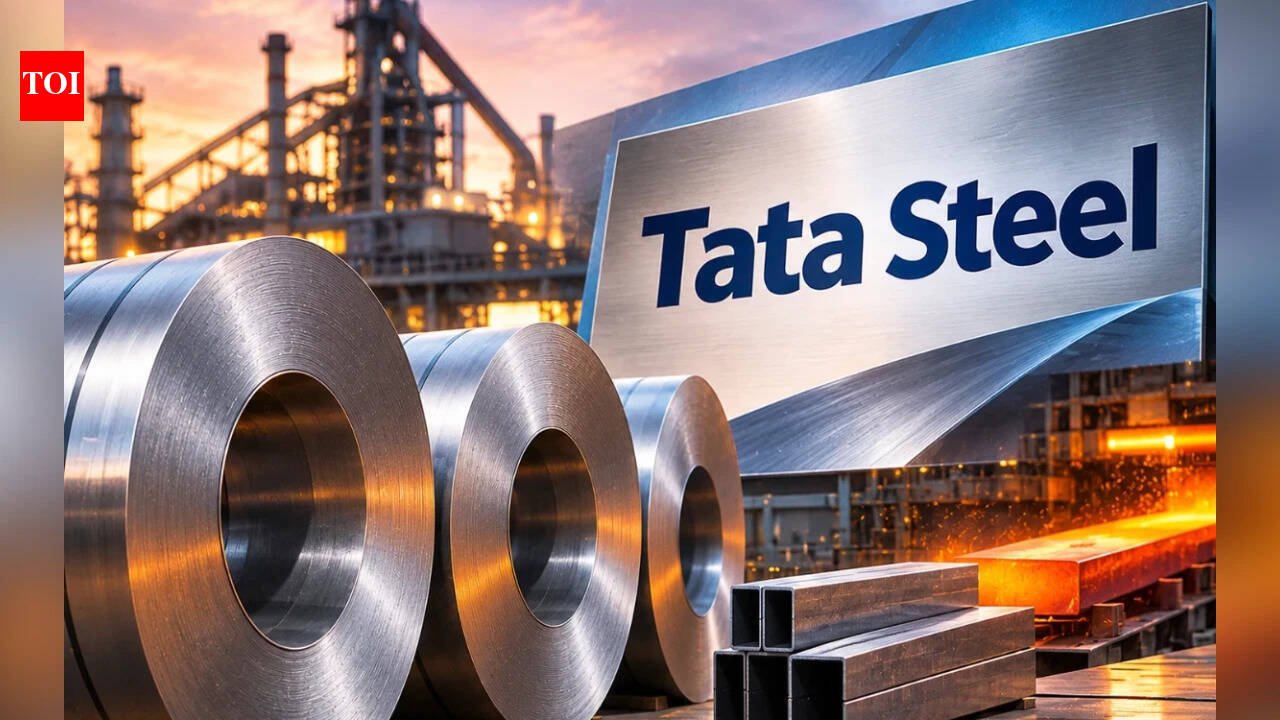
Tata Steel plans to finalize the merger of Neelachal Ispat Nigam Ltd (NINL) this financial year. The National Company Law Tribunal (NCLT) will review the proposed merger soon. Tata Steel has previously acquired NINL's assets for Rs 12,100 crore to enhance production capacity. The company aims to add 5 million tonnes of capacity at the facility located near Kalinganagar steel plant. View More

NINL assets were acquired by the steel giant through its erstwhile subsidiary Tata Steel Long Products (TSLP). View More

Tata Steel is looking to complete the amalgamation process of Neelachal Ispat Nigam Ltd (NINL) in this financial year, a top company official said.
NINL assets were acquired by the steel giant through its erstwhile subsidiary Tata Steel Long Products (TSLP) for Rs 12,100 crore.
"The amalgamation of NINL with Tata Steel remains on track for completion this financial year," Koushik Chatterjee, Executive Director and Chief Financial Officer (CFO) of Tata Steel, said.
However, the amalgamation remains subject to final approval from the National Company Law Tribunal (NCLT), which is scheduled to hear the matter later this month, he said.
The approval will pave the way for the proposed Rs 40,000 crore expansion plan at NINL.
Tata Steel, which acquired NINL's 1 million tonnes per annum (MTPA) steel manufacturing unit in July 2022, plans to add around 5 million tonnes of capacity to the facility, located about 5-10 km from its Kalinganagar steel plant.
"We have... announced another 5 mil View More

With household budgets already squeezed by persistent inflation, some residents are seeking emergency help with heating oil bills before winter begins. View More
In this article@HO27GFollow your favorite stocksCREATE FREE ACCOUNT An oil tank stands outside a residence at a mobile home cooperative in Veazie, Maine, Oct. 31, 2026.Taylor Coester | ReutersWinter heating bills can strain household budgets. This year, a spike in heating oil prices could make the season especially difficult for households that depend on the fuel and have little financial wiggle room. The national average price of heating oil was roughly $5.91 a gallon as of Nov. 9, up about $2.19, or 59%, from a year earlier, according to the U.S. Energy Information Administration.In Maine, the average price per gallon is roughly $5.83, up about $2.49 from a year earlier, or about 75%. The state is among those whose residents may feel the price rise acutely â about 50% of homes there use heating oil.The jump "is crushing folks," said Jason Parent, CEO of AVEC Community Action, a nonprofit agency based in Presque Isle, Maine, that provides heating assistance and other social services in three of the state's 16 counties. Many residents face immediate crises, he said, such as empty fuel tanks or reliance on unsafe heating sources."My fear is that there are households out there who have secondary fuel sources like wood stoves, pellet stoves and other things that are no longer operating and functioning in a safe way," Parent said.Read more CNBC personal finance coverageIRS announces 2027 401(k) contribution limits, raises savings capWhy Nvidia stock drop isn't a big deal for many ETF, mutual fund investorsSocial Security could pay benefits until 2059 if payroll kept pace with GDP: AARPCNBC's Financial Advisor 100: Best financial advisors, top firms for 2026 rankedCNBC Elite Advisors: Top ultra-high net worth wealth management firms for 2026The price surge comes on the heels of years of high overall inflation that has already squeezed household budgets, he said."The cost of living has made it impossible for households who had been figuring out how to get by without [financial help]," Parent said. Why the price has jumpedThe price spike comes amid a tight global market for refined fuels, a category that includes heating oil and diesel. Supply shocks tied to the Iran war and the Russia-Ukraine war, low inventories and limited refining capacity have constrained supplies and added upward pressure on fuel prices, according to recent research from the Federal Reserve Bank of Kansas City.The EIA predicts that a warmer winter in the Northeast will reduce consumption, helping to offset higher prices. In October, the agency forecast that the average household using heating oil will spend $2,115 from November through March, about 21% more than last year.A heating oil truck near the New York Stock Exchange in New York, March 30, 2026.Michael Nagle | Bloomberg | Getty ImagesMeanwhile, homes primarily heated with natural gas are expected to spend an average of $640 this winter, down 9%, while those using propane are forecast to spend an average of $1,246, down 3%, according to the EIA's October forecast. Households using electricity for heating are expected to spend an average of $1,196, up 4% from a year ago. These are national figures.How residents seek financial helpRoughly 4.1 million U.S. households use heating oil as their primary means of heating their homes, according to the EIA. Most of them â close to 3.4 million â are located in the Northeast.Unlike electricity or natural gas, heating oil is delivered in large quantities. Payment terms vary, but some dealers require a minimum delivery or charge extra for smaller orders. In Maine, for example, ordering at least 100 gallons for a standard 275-gallon tank can avoid a surcharge, according to the state attorney general's office. At current prices, that 100 gallons would cost about $600 â a tall order for some households.AVEC's Home Energy Assistance Program, or HEAP, provides financial assistance to qualifying households, based primarily on income and the number of people living in the home. Funding originates with the federal Low Income Home Energy Assistance Program, or LIHEAP, which is run by the U.S. Health and Human Services Department and overseen by state agencies, often working with local organizations such as AVEC.watch nowVIDEO1:4201:42More Americans say they are living paycheck-to-paycheckFast MoneyMaine and tribal grantees in the state received about $38 million from LIHEAP in October, according to a press release from outgoing Republican Sen. Susan Collins. AVEC administers about $4 million of that through HEAP, Parent said. AVEC also gets donations from community fundraising to help residents cover heating costs.A component of HEAP is the Energy Crisis Intervention Program, which serves qualifying families who face an energy crisis, such as a potential electric shutoff or an empty oil tank and no financial means to replenish the supply.AVEC began taking calls for that program on Nov. 2, Parent said."In the first hour alone, there were 150 voicemail messages on our emergency fuel line," Parent said. "People were in crisis before the program opened up."Charitable donations help residents in crisisCatherine Lafleche of Hersey, Maine, describes AVEC as a lifeline. The 65-year-old is guardian to two grandchildren, ages 11 and 6, and is living mostly on about $1,100 in monthly Social Security benefits and state guardianship assistance, after shattering her upper-arm bone in a fall in April. Her injury required reverse shoulder replacement surgery, from which she continues to recover. Before that fall, she had worked as a substitute teacher and bookkeeper. "I'm $6,000 short of income at this point in the year," Lafleche said.Hersey is in Maine's northernmost county, Aroostook, where January and February bring average high temperatures in the 20s and average lows in the single digits, based on National Oceanic and Atmospheric Administration data from 1991 to 2020 recorded at a Caribou Municipal Airport weather station. Last winter, the area experienced severe cold snaps, including on Jan. 24, when the high was minus 2 degrees Fahrenheit.When the oil man came, I cried.Catherine LaflecheResident of Hersey, MaineLafleche applied to HEAP through AVEC in August, but a backlog meant potentially waiting until November for assistance. Unable to afford more fuel when it became chilly, she ran out of heating oil in early October and relied on a small wood stove to keep part of her house warm, burning Amazon boxes collected from other local residents because she didn't have enough firewood. In late October, an AVEC representative called to say a charitable donation would cover 100 gallons of heating oil."When the oil man came, I cried," Lafleche said.Benefits through AVEC don't stretch as far this yearFor residents in Maine who need help covering the cost to heat their homes and are seeking out help, "the need is outpacing the benefits," said Parent, of AVEC.The average benefit through HEAP is about $750 per household this season, up from roughly $550 a year ago, Parent said. "That $750 is going less far than the $550 did last season" for heating oil, he said. "It's buying fewer gallons because of the precipitous increase."The benefits are generally paid directly to the fuel supplier as a credit on the household's account. Even if a household qualifies, funding may run out."We're in a world of hurt now ... but it's going to be crisis time again in January or February," Parent said.Trump administration takes step to bring down costUcg | Universal Images Group | Getty ImagesThe Trump administration, in an effort to bring down heating oil prices, said it would release 300,000 barrels of heating oil from the Northeast Home Heating Oil Reserve, according to a Nov. 4 release from the U.S. Energy Department.Whether adding this extra heating oil to the market will reduce prices for residents depends at least partly on how it gets doled out, said Jonathan Rubin, director of the Margaret Chase Smith Policy Center and a professor of economics at the University of Maine."No one really knows the economic impact, because will the home-heating oil distributors release it in one month, which would make it about 10% to 12% of a single month's supply? Or will they release it over the entire season, in which case it's only about one and a half percent of the entire season's home heating oil supply?" Rubin said."I would say that this is a modest short-term buffer," he said.Lawmakers call for extra funding for heating assistanceCongressional lawmakers have called for increased LIHEAP funding this year due to rising energy costs, including heating oil. Dozens of House lawmakers â mostly Democrats â signed an Oct. 14 letter to the House Appropriations Committee seeking an additional $3 billion in emergency supplemental funding for LIHEAP.That followed an Oct. 1 letter from a group of Democratic senators and Sen. Bernie Sanders, I-Vt., to Robert F. Kennedy Jr., secretary of the Health and Human Services, also asking that he seek at least $3 billion more for LIHEAP.Already, the government released roughly $3.63 billion in LIHEAP funding nationwide on Oct. 9 â 90% of the roughly $4 billion available under a continuing resolution that is currently funding federal agencies. The timing for disbursing the remainder depends on when Congress either passes full-year funding for the 2027 fiscal year â which started Oct. 1 and runs through Sept. 30, 2027 â or passes another stopgap measure to keep the government running. If lawmakers do neither by Dec. 11, a federal shutdown would begin.Whether the additional $3 billion requested for LIHEAP will be considered in any upcoming congressional appropriations process is uncertain.Lafleche, the Hersey resident, said the 100 gallons of heating oil donated to her, along with some firewood she has now purchased, should keep her home warm until early December. She hopes to receive approval for benefits by then through HEAP, which has helped her in past years."We're not in this position by choice. Most of us made every plan to the contrary, but it stacked up to be not enough. And I feel like we don't deserve to be cold," she said. Choose CNBC as your preferred source on Google and never miss a moment from the most trusted name in business news.

CNBC's Arjun Kharpal, who interviewed Huang just a few weeks ago at GTC Berlin, unpacks how everything came crashing down for the popular CEO. View More
In this articleNVDAAAPLGOOGLMSFTCRWVFollow your favorite stocksCREATE FREE ACCOUNT CNBC's Arjun Kharpal interviewing former Nvidia CEO Jensen Huang at the company's GTC event in Berlin, Germany on Oct. 22, 2026.Mike Green | CNBCI was the last person at CNBC to do a live broadcast interview with Jensen Huang. At the time, Huang still seemed untouchable. But weeks later, Nvidia is confronting a question investors hadn't had to confront in more than 30 years: What does the company look like without him?  I sat down with the company founder on Oct. 22 at Nvidia's GTC event in Berlin, Germany, just weeks before he admitted to an affair with a woman that U.S. intelligence alleges could be a spy for China. "Jensenmania," as I like to call it â which had come to characterize the CEO's appearances â was in full force at the Berlin event. The Nvidia merchandise store featured clothing with Huang's face on it, huge cheers erupted when he appeared on stage, and attendees were doing their best to secure a picture with the Nvidia founder. Huang had somewhat of a rockstar persona with a fandom to match in every city he visited around the world. In 2025, I followed Huang around on his visit to Europe. At an event in London, an attendee who was eagerly waiting to catch a glimpse of Huang compared the Nvidia boss to "Iron Man," referencing the popular character of the Marvel superhero and tech billionaire inventor Tony Stark. These moments that I experienced really embodied what Huang had become â a larger-than-life personality who was central to the excitement around artificial intelligence. Less CEO, more AI hype man, evangelical about the technology and its transformative power. He had the credentials to back it up. Since he co-founded Nvidia in the early 90s, Huang helped shape the company from a startup taking on incumbents to a dominant player for AI chips. Over the last three decades, he saw the shifts coming, investing to turn what were initially chips designed for rendering gaming graphics â GPUs â into general-purpose AI computing semiconductors, along with the software that gave Nvidia its strong position. Huang's AI visionThe near 500% rally in Nvidia's shares over the past five years has been driven by its incredible growth, but also the backing of Huang's vision. "Nvidia without Jensen is something which we've never really considered," Storm Uru, co-head of the global innovation team at Liontrust Asset Management, which has been invested in Nvidia since 2017, told me.  Now it is a reality. Huang is out and he has left some of the biggest shoes to fill in tech history â without a clear succession plan in place.  But perhaps it's the right time for someone new, such an operator-type leader. We've seen it before at tech giants like Apple or Alphabet, where visionary leaders step down, and new CEOs take over, bringing the businesses to new heights â at least if you look at the share prices. Sure, they may not be the flamboyant founders, but they innovate in other ways.  watch nowVIDEO5:5805:58Nvidia's Jensen Huang: AI is like a baby, you have to contain and monitorMorning CallNvidia's roadmap of new products is set for the next few years. The reality is that AI firms and hyperscalers are still yearning for computing power, which is in short supply. Nvidia also remains the gold standard for its AI chips. Yes, there is rising competition, but the market dynamics that have supported Nvidia are not going to disappear overnight. That gives any permanent successor some breathing space.  "While he and the company must respond to his actions, he has already left an indelible mark on Nvidia and it will be successful in many years to come as a result," Ben Barringer, head of technology research at Quilter Cheviot, told me.  This report is from this week's The Tech Download newsletter. Like what you see? You can subscribe here.News editAlice Huang, the alleged Chinese spy with whom Huang had an affair, owned stakes in businesses benefiting Chinese competitor Huawei while she was in business with Nvidia, CNBC's Eamon Javers exclusively learned.Microsoft suffered a widespread outage Thursday and Friday that impacted Outlook and other services across multiple regions.Amazon's Ring unveiled an indoor home security drone camera and a patrol robot for businesses in its latest foray into the intelligence sphere.Ukrainian defense tech startup UFORCE is now valued at $6 billion after raising $700 million in its latest funding round, showcasing investor appetite for battle-tested autonomous drones.CoreWeave CEO Michael Intrator told CNBC that he has cancelled his planned share sale program, also known as a 10b5-1. He faced criticism for his stock sales amid the company's recent struggles.Nvidia's interim CEO will be Colette Kress, the current CFO and a 13-year veteran at the company.One more thingJensen Huang's exit from Nvidia raises serious questions about the future of the AI industry, and not just because of his status as a "singular figure." Nvidia's interconnected status as the "central bank of AI" raises the possibility that trouble inside the chip giant could have wide-reaching implications for the AI boom, my colleague Matt Peterson writes. Nvidia has made, or committed to, hundreds of billions of dollars in investments to firms in the industry, including OpenAI and Intel.If Nvidia can't honor its commitments, this circular financing model could spell trouble for AI companies supported by Nvidia and banks that lent money in the AI buildout. â Caleigh Keating, Digital Rotational Associate Choose CNBC as your preferred source on Google and never miss a moment from the most trusted name in business news.

Unions spent millions of dollars and mobilized thousands of members to get out the vote for Democrats in the midterm election. Now they want to see action. View More
watch nowVIDEO5:0705:07The union vote is changing. Here's what it means for DemocratsMarkets and Politics Digital Original VideoWhen Brody Rutledge wasn't working 60-hour weeks or raising his four children this year, he was busy helping secure political victories for Democrats.The 25-year-old was part of a group of Ohio union members who planned social-media blitzes in support of Amy Acton's campaign for governor and Sherrod Brown's effort to reclaim a Senate seat. On his lunch hour, during break times and after his kids went to sleep, the electrician created posts and videos to help raise the profiles of the two candidates among blue-collar voters. The posts attracted more than 15,000 views.Rutledge's efforts paid off: Acton and Brown won their respective races, part of the blue wave that swept Democrats to power in Washington and in state houses across America â including in many states, like Ohio, that had been considered Republican-leaning, or reliably Republican."People are realizing that there needs to be a change," Rutledge told CNBC. "We are extremely excited with the results."Rutledge was a part of what organized labor considered one of its biggest political efforts yet. Unions spent millions of dollars and mobilized thousands of members to get out the vote for Democrats in the midterm election. Now, they expect newly elected politicians to deliver. Democrats, they say, need to get a handle on inflation, enact worker protections and deliver union jobs.Historic mobilizationThe AFL-CIO launched a seven-figure paid media campaign for the election and said its members since Labor Day had engaged with nearly 15 million voters. By the AFL-CIO's count, more than 600 members of unions themselves were elected in the midterm, including dozens heading to Washington and hundreds who are bound for statehouses.The CNBC Voter Poll shows midterm voters who were union members or lived in a union household went for Democrats over Republicans by a margin of 22 percentage points, the highest of the last four election cycles. That's more than double the margin for the rest of the electorate: When looking at voters in non-union households, the gap shrunk to 10 percentage points."We are very proud of the impact that the labor movement made on this election," said Liz Shuler, president of the AFL-CIO, a federation of unions that represents almost 15 million workers. "It was our biggest and boldest effort ever."In some cases, unions got involved before party nominees had been decided. In Michigan, the United Auto Workers organized behind Democrat Abdul El-Sayed ahead of what became a contentious primary race for U.S. Senate that he eventually won against Haley Stevens. The union believes that about one out of every 10 early voters in the August primary were UAW members."It was incredibly impactful," Connor Farrell, a progressive fundraiser who worked with El-Sayed, said of the UAW's endorsement. "I'm not sure we would have won without them."United Auto Workers members rally on the eve of the mid-term election with Abdul El-Sayed and other top Democratic candidates.Jim West | UCG | Universal Images Group | Getty ImagesEl-Sayed and Jocelyn Benson â the Democratic nominee for Michigan governor, who also had early backing from the UAW â cruised to victory in last week's general election. It was a sharp reversal for the Wolverine state, which backed President Donald Trump in 2016 and 2024.The UAW held a rally on the eve of Election Day headlined by El-Sayed and Benson, along with other Democrats running for statewide office. The Detroit-based union said its volunteers knocked on more than 100,000 doors and made half a million phone calls for the election.The CNBC Voter Poll showed union households made up about 22% of the electorate in Michigan in the 2026 midterm, above the 16% mean nationwide. Union households in Michigan broke for El-Sayed and Benson by higher-than-average margins of 25 and 27 points, respectively. "There's a direct correlation between a ballot box and a bread box," said UAW President Shawn Fain, who described the union's 2026 political efforts as the largest in his lifetime. "What we bargain for today can be taken away in the legislative halls tomorrow."In Nevada, another swing state, members of AFL-CIO unions canvassed for a list of candidates including Aaron Ford, the Democrat who unseated Republican Gov. Joe Lombardo. Down ballot, the AFL-CIO endorsed candidates in state assembly, mayoral and city council races.Vladimir Ortega, a member of the National Association of Letter Carriers living in North Las Vegas, said displeasure with how Republicans had managed the economy led him to volunteer to canvas with the AFL-CIO for the first time. The 34-year-old met Ford and other candidates at political events, and he plans to volunteer for candidates backed by AFL-CIO again in 2028."People felt like they had to be there," Ortega said. "Their money hurt, and they want to do something about it."Vladimir Ortega poses for a picture with Nevada Governor-Elect Aaron Ford.Courtesy: Vladimir OrtegaBreaking malaiseFor generations, union voters and their families were a core bloc of the Democratic base. But the party's iron grip on organized labor had slipped in recent election cycles as union members, like other working-class voters, grew frustrated by high inflation and affordability challenges, according to Paul Clark, a Pennsylvania State University professor.The National Election Pool's Poll showed union households voted for Democrats by a margin of 16 and 15 percentage points in the 2020 and 2022 contests, respectively. That narrowed to just 8 points in 2024, when voters' economic frustrations led Republicans to win a trifecta of power in Washington: the presidency and both houses of Congress.The Teamsters declined to back either Trump or former Vice President Kamala Harris in 2024, snapping a long history of Democratic endorsements. The union, with more than one million members, said internal polling showed members preferred Trump over Harris. Teamsters General President Sean O'Brien said on social media that he voted for Ashley Moody, the victorious Republican candidate for U.S. Senate in Florida, in the 2026 midterm. The Teamsters didn't respond to a CNBC request for comment. "Obviously, 2024 was very disappointing for unions and the American labor movement," said Clark at Penn State, who has authored books on collective bargaining and organized labor. "That caused some introspection on the part of unions in terms of their political strategies and how they communicate with their members about politics."Democratic senatorial candidate for Michigan Abdul El-Sayed speaks during a campaign rally at UAW Local 600 in Dearborn, Michigan, on Oct. 30, 2026.Jeff Kowalsky | AFP | Getty ImagesThis time around, there appeared to be more excitement among card-carrying union members heading to the polls. AFL-CIO polling showed 83% of union voters were "very motivated" to vote, an increase of 10 points from the last midterm election in 2022.Following their midterm defeat, Clark said he wouldn't be surprised to see Republicans courting unions ahead of the 2028 presidential election. But that could be an uphill battle, given the party's history of advocating for business interests over workers, Clark said. Great expectationsLooking ahead, organized labor has big expectations for Democrats after helping the party to power in Washington and state capitols across the country. In Ohio, Rutledge said that his International Brotherhood of Electrical Workers chapter is focused on ensuring new data center construction projects use union labor. In Michigan, UAW President Fain said the union expects a majority-Democrat state legislature to approve a law guaranteeing unemployment insurance for striking workers. "The days of just blindly giving our endorsements to people because of party affiliation are over," Fain said. "They're going to earn our support."President of the United Auto Workers union Shawn Fain speaks during a midterm election night party for Democrat senatorial candidate Abdul El-Sayed at The Department at Hudson's in Detroit, Michigan, Nov. 3, 2026.Jeff Kowalsky | AFP | Getty ImagesIf Democrats don't act when they have legislative majorities in Washington, union leaders warn that they will pull their support in 2028 and beyond.Across the nation, Shuler, the AFL-CIO president, said union voters went to the polls last week in hopes of enacting policy that will level the economic playing field. The CNBC Voter Poll found that 70% of respondents believed the U.S. economy favors the wealthy over the middle- and working class. "Republican, Democrat, independent, we'll be with you if you're with us," Shuler said. "It just so happens that we had a big wave of Democratic candidates who were talking about working-class issues." Choose CNBC as your preferred source on Google and never miss a moment from the most trusted name in business news.

This Diwali, Indians turned to the quick commerce platform for last-minute festive preparations. Their purchases included gold, silver and sweets while also ordering party supplies and gifting items. View More

Says the company could not achieve its planned savings in H1, but expects the second half to be significantly better View More

The steelmaker is monetizing surplus mining capacity while testing imported ore blends ahead of 2030 mine expirations and targeting up to ?10,000 crore in annual India cost savings. View More
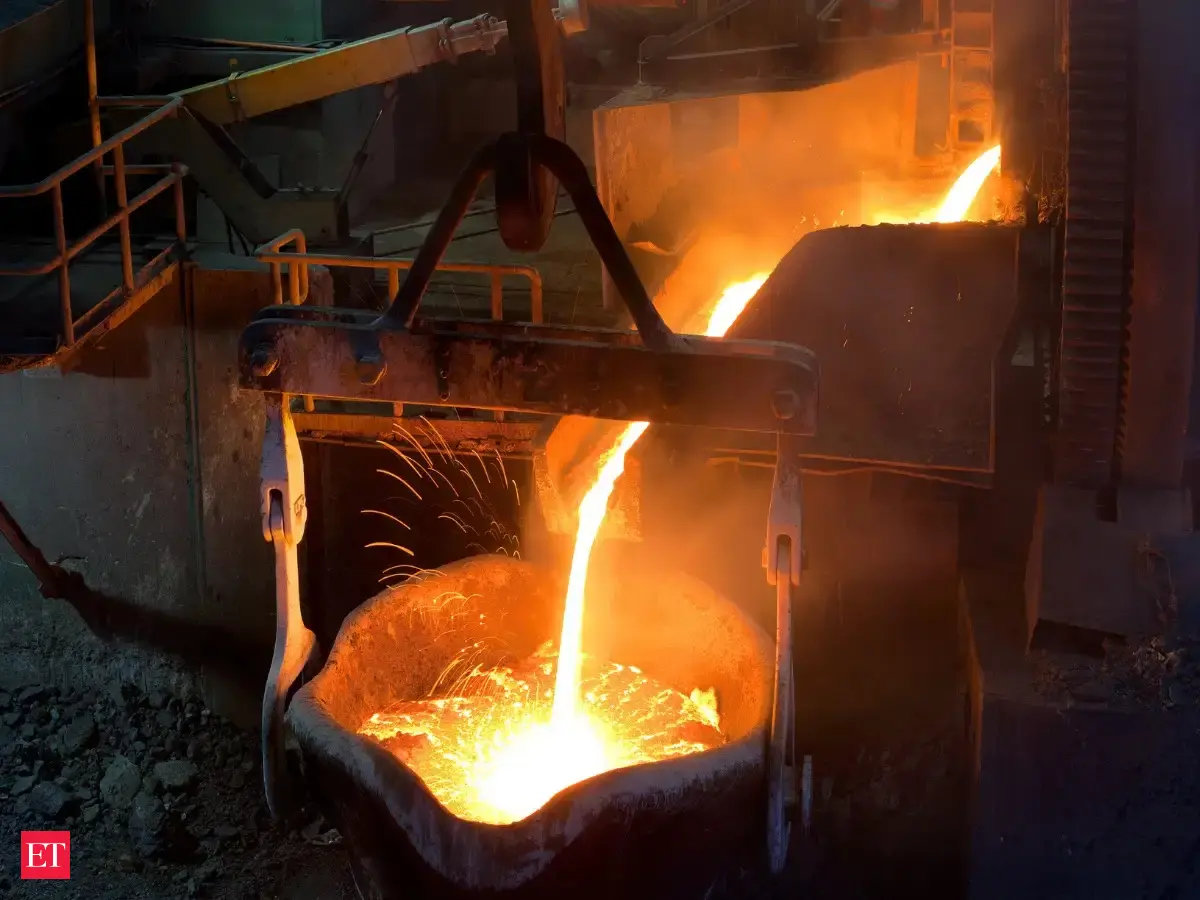
Adani Group's Kutch Copper Ltd has signed an MoU with Chile's state-owned Codelco to explore the Kaburkaala copper project in northern Chile. The partnership aims to combine Adani's investment and technical capabilities with Codelco's geological expertise, potentially securing long-term copper supplies for the group's Mundra smelter as India seeks to strengthen its domestic copper supply chain. View More
Adani Group 's Kutch Copper Ltd (KCL) on Thursday signed a Memorandum of Understanding (MoU) with Chile's state-owned copper producer Corporación Nacional del Cobre de Chile ( Codelco ) to establish a strategic exploration partnership for the Kaburkaala copper project in northern Chile. The agreement sets out the key terms of cooperation for exploring the project, located in the Calama copper belt in the Antofagasta region, one of the world's most prolific copper-producing districts. The MoU was signed during LME Week 2026 in London in the presence of Kutch Copper Director Jeet Adani, Adani Natural Resources CEO Vinay Prakash and Codelco Chairman Bernardo Fontaine. ET Online Adani-Codelco partnership: What does the copper exploration deal involve? Under the proposed partnership, Adani will contribute capital, technology-led exploration capabilities and large-scale project execution expertise to advance the Kaburkaala project. Codelco will bring its geological expertise and international experience in copper exploration. Read more - China’s army-linked university was served Nvidia chips despite US sanctions For Adani Group, the partnership is part of its strategy to build an integrated and globally diversified copper value chain, connecting upstream resources in Chile with its copper smelting complex at Mundra in Gujarat. Live Events The arrangement could also provide Adani with long-term access to copper, a critical mineral used in electrification, renewable energy, infrastructure, advanced manufacturing and the global energy transition. For Codelco, the proposed collaboration is part of its efforts to unlock value from its exploration portfolio through public-private partnerships, share project risks and accelerate the development of promising copper assets. Jeet Adani on securing India's copper supply Commenting on the agreement, Jeet Adani said securing access to global copper resources was important for India's long-term economic and industrial growth. "Critical resources, led by copper, are at the very heart of our future transformation. More than just a mining asset, we view this strategic partnership as a long-term investment in India's future," he said. "By securing robust access to global copper resources, we are building supply chain resilience for the critical industries driving our nation's growth, spanning renewable energy, advanced manufacturing, infrastructure, and technology. This partnership is a testament to our commitment to enhancing India's resource security and supporting its journey to becoming a global economic powerhouse," Adani added. What Codelco said about its partnership with Adani Codelco chairman Bernardo Fontaine said the agreement marked an important step in the company's engagement with Adani Group over the past year. "This MoU represents an important step in the work we have carried out with Adani over the past year. This process demonstrates Codelco's ability to attract world-class partners and create value from its exploration portfolio, while safeguarding the long-term interests of the company and the State of Chile," Fontaine said. The proposed collaboration is also expected to strengthen India-Chile cooperation in critical minerals, as both countries look to secure reliable supplies of resources needed for their industrial and energy transitions. Why is Adani Group looking at copper resources in Chile? India relies on copper imports to meet domestic demand, with consumption supported by infrastructure development, electrification, renewable energy projects and manufacturing. Adani's proposed exploration partnership with Codelco could help strengthen its access to overseas copper resources and support its downstream operations in India. By linking the Kaburkaala project in Chile with its Mundra copper smelting complex, the group is looking to develop a more integrated copper supply chain. .Pbanner{display:flex;justify-content:space-between;align-items:center;background-color:#ec1c40;margin-top:20px;padding:5px 10px;border-radius:4px;color:#fff;line-height:10px;width: 100%;box-sizing: border-box} .Pbannertext{display:flex;align-items:center;font-size:16px;font-weight:600;font-family:'Montserrat';} .Pbannertext img{height:20px;margin:0 6px} .Pbannerbutton a{display:flex;align-items:center;background-color:#fff;color:#ec1c40;text-decoration:none;font-weight:600;padding:4px 8px;border-radius:6px;font-size:15px;font-family:'Montserrat';} .Pbannerbutton img{height:20px;margin-right:6px} .Pbannerbutton a:hover{background-color:#f7f7f7} Add as a Reliable and Trusted News Source Add Now! (You can now subscribe to our Economic Times WhatsApp channel) (You can now subscribe to our Economic Times WhatsApp channel)