
Latest Sectors News


The company is also exploring the possibility of setting up a plant at Chiroli in Maharashtra, with discussions underway with the state government View More

Coal India's proposed Mahanadi Coalfields IPO could unlock an estimated Rs 8,964 crore for the mining giant at the upper end of the price band. The offer marks the third subsidiary listing in 2026, following Bharat Coking Coal and CMPDI. Here's a look at the IPO and Coal India's potential gains. View More
The state-owned Maharatna PSU Coal India Limited is set to witness another major windfall with the proposed initial public offering (IPO) of its subsidiary, Mahanadi Coalfields Limited (MCL), marking the third listing of a Coal India subsidiary in 2026. The IPO could unlock an estimated surplus of nearly Rs 8,964 crore for the mining giant, based on the upper end of the price band, after accounting for the employee discount and the historical acquisition cost of the shares. The proposed listing follows the market debuts of two other Coal India subsidiaries, Bharat Coking Coal Limited (BCCL) and Central Mine Planning and Design Institute (CMPDI), earlier this year. BCCL made its Dalal Street debut on January 19, 2026, after raising Rs 1,070 crore through its IPO. CMPDI subsequently listed on March 30, 2026, following an IPO through which it raised Rs 1,842 crore. With Mahanadi Coalfields joining the list, Coal India is set to take another subsidiary to the stock market within the same calendar year, while offering investors an opportunity to participate in the country's coal mining sector. Coal India could pocket Rs 8,964 crore from Mahanadi Coalfields IPO Coal India is offering 66,18,36,300 shares, or approximately 66.18 crore shares, through an offer for sale (OFS) in the Mahanadi Coalfields IPO. Live Events According to the red herring prospectus filed by the company, Coal India's weighted average cost of acquisition of these shares stands at Rs 0.26 per share. This puts its total acquisition cost at approximately Rs 17.21 crore. Mahanadi Coalfields has fixed its IPO price band at Rs 129-Rs 136 per share. The company has also reserved 3,30,91,815 shares for eligible employees, who will receive a discount of Rs 6 per equity share. Taking the employee reservation and discount into account, Coal India's potential realisation will depend on the final issue price. At the lower end of the price band of Rs 129, eligible employees will be able to subscribe to shares at Rs 123 apiece after the discount. Assuming the entire employee reservation is subscribed, this portion would generate approximately Rs 407.03 crore. The remaining 62,87,44,485 shares, offered at Rs 129 apiece, would generate approximately Rs 8,110.80 crore. This takes the total estimated proceeds from the OFS to around Rs 8,517.83 crore. After deducting the estimated acquisition cost of Rs 17.21 crore, Coal India's indicative surplus would stand at approximately Rs 8,500.63 crore, before applicable taxes and transaction-related expenses. At the upper end of the price band of Rs 136, eligible employees would be offered shares at Rs 130 apiece after the discount. The employee reservation would generate approximately Rs 430.19 crore, while the remaining shares would fetch approximately Rs 8,550.92 crore. This would take the total estimated proceeds to approximately Rs 8,981.12 crore. After deducting the acquisition cost of Rs 17.21 crore, Coal India's indicative surplus would work out to approximately Rs 8,963.91 crore, before applicable taxes and transaction-related expenses. These calculations assume full subscription of both the employee reservation and the remaining OFS. The actual realisation will depend on the final issue price and the number of shares successfully sold. Mahanadi Coalfields IPO details Mahanadi Coalfields' IPO is a book-building issue aggregating up to Rs 8,981.12 crore. The issue comprises entirely an offer for sale of 66.18 crore shares, with no fresh issue component. The IPO will open for subscription on November 19, 2026, and close on November 23, 2026. The allotment is expected to be finalised on November 25, while the shares are tentatively scheduled to list on the BSE and NSE on November 27, 2026. The company has set the price band at Rs 129-Rs 136 per share, with a lot size of 110 shares. Retail investors will need a minimum investment of Rs 14,960, based on the upper end of the price band. The face value of each equity share is Rs 2. The company has also announced an employee discount of Rs 6 per share. SBI Capital Markets, Axis Capital , BOB Capital Markets, IDBI Capital Markets & Securities, and IIFL Capital Services are the book-running lead managers to the issue. KFin Technologies has been appointed as the registrar. ALSO READ: Mahanadi Coalfields Rs 8,981 crore IPO to open on November 19; GMP at 5%. Check key details About Mahanadi Coalfields Incorporated in April 1992, Mahanadi Coalfields Limited is India's largest coal producer in terms of production. The company is primarily engaged in mining and producing non-coking coal, with operations concentrated in the Talcher and Ib Valley coalfields in Odisha. Mahanadi Coalfields produces various grades of coal, including washed and beneficiated coal. Its output caters primarily to the power sector, as well as industries such as cement, sponge iron, steel, aluminium and paper. The company operates a network of opencast and underground mines, supported by coal handling plants, rapid loading systems, silos and coal evacuation infrastructure. It is a wholly owned subsidiary of Coal India Limited and was established to enhance coal production and meet India's growing energy requirements. Disclosure: This article has been written by Kumar Gaurav, who is not a Sebi-registered Research Analyst or an Investment Adviser. Gaurav and their ‘relative(s)’ (as defined under Section 2(77) of the Companies Act, 2013) do not hold any financial interest in the companies mentioned in this article as of the date of publication. The views/recommendations mentioned in this article, wherever applicable, are those of the respective Sebi-registered Research Analyst/brokerage and have been reproduced/reported with due attribution. They should not be construed as the views or recommendations of The Economic Times Digital or the journalist. Readers are advised to consider the original research report and make their investment decisions based on their own assessment. Brokerage disclaimers here .Pbanner{display:flex;justify-content:space-between;align-items:center;background-color:#ec1c40;margin-top:20px;padding:5px 10px;border-radius:4px;color:#fff;line-height:10px;width: 100%;box-sizing: border-box} .Pbannertext{display:flex;align-items:center;font-size:16px;font-weight:600;font-family:'Montserrat';} .Pbannertext img{height:20px;margin:0 6px} .Pbannerbutton a{display:flex;align-items:center;background-color:#fff;color:#ec1c40;text-decoration:none;font-weight:600;padding:4px 8px;border-radius:6px;font-size:15px;font-family:'Montserrat';} .Pbannerbutton img{height:20px;margin-right:6px} .Pbannerbutton a:hover{background-color:#f7f7f7} Add as a Reliable and Trusted News Source Add Now! (You can now subscribe to our ETMarkets WhatsApp channel) (You can now subscribe to our ETMarkets WhatsApp channel)

Tata Steel anticipates improved performance in the second half of the fiscal year due to strong demand. The company is expanding its steel production capacity while exploring new plant locations in India. Operational challenges were faced earlier, but stabilisation is expected moving forward. The geopolitical situation remains a significant concern impacting operations. A gathering of tribal communities will take place, promoting cultural exchange and dialogue. View More
Jamshedpur: Tata Steel expects to perform significantly better in the second half of the current fiscal than in the first six months, CEO and Managing Director TV Narendran said. He said steel demand remains strong and market conditions are favourable, while growth in key customer segments such as automobiles and construction has also been encouraging, helping the company post a reasonably good performance in the first half. However, the conflict in West Asia has had an impact of around Rs 1,000 crore per quarter on the company and about Rs 1,400 crore globally, Narendran said during an interaction with the press on the sidelines of the inauguration of the five-day pan-India tribal conclave 'Samvaad' in Jamshedpur on Sunday. He acknowledged operational challenges at the company's Kalinganagar and Meramandali plants in Odisha during the first half, but expressed confidence that production and operations would stabilise in the second half. On expansion plans , Narendran said Tata Steel had announced a capacity addition of 5 million tonnes at Neelachal Ispat Nigam Ltd and was also considering setting up a couple of scrap-based steel plants in southern and western India, on the lines of its facility in Ludhiana. Live Events There was limited scope for further expansion at the Jamshedpur plant, he said, adding that the company's focus there would be on downstream facilities such as Tinplate and Combimills, as well as adopting new technologies, including Hisarna Steelmaking and EASyMelt, to reduce carbon emissions. "Tata Steel has around 6,000 acres of land at Kalinganagar and Neelachal for expansion, and plans to increase its overall capacity to 40 million tonnes. Several projects to achieve the target over the next few years have already been initiated," he said. Narendran said the proposed scrap-based plants in southern and western India would require around 100-150 acres of land and could be set up within one to two years, with an investment of about Rs 3,000 crore for a plant with a capacity of 0.8 million tonnes. Though such plants are more expensive than iron ore-based steel facilities, they can be located closer to sources of scrap generation, he said. The company was also exploring the possibility of setting up a plant at Chiroli in Maharashtra, with discussions underway with the state government, he added. Asked about the challenges facing Tata Steel, Narendran said the geopolitical situation was a major concern beyond the company's control. "External issues are beyond our control, but cost and productivity are areas we are focusing on," he said. Around 2,500 participants representing 353 tribal communities from 26 states and Union Territories are taking part in the 13th edition of the conclave, which will continue till November 19, for cultural exchange and dialogue. .Pbanner{display:flex;justify-content:space-between;align-items:center;background-color:#ec1c40;margin-top:20px;padding:5px 10px;border-radius:4px;color:#fff;line-height:10px;width: 100%;box-sizing: border-box} .Pbannertext{display:flex;align-items:center;font-size:16px;font-weight:600;font-family:'Montserrat';} .Pbannertext img{height:20px;margin:0 6px} .Pbannerbutton a{display:flex;align-items:center;background-color:#fff;color:#ec1c40;text-decoration:none;font-weight:600;padding:4px 8px;border-radius:6px;font-size:15px;font-family:'Montserrat';} .Pbannerbutton img{height:20px;margin-right:6px} .Pbannerbutton a:hover{background-color:#f7f7f7} Add as a Reliable and Trusted News Source Add Now! (You can now subscribe to our Economic Times WhatsApp channel) (You can now subscribe to our Economic Times WhatsApp channel)

Tata Steel expects to perform significantly better in the second half of the current fiscal than in the first six months, CEO and Managing Director TV Narendran said.
He said steel demand remains strong and market conditions are favourable, while growth in key customer segments such as automobiles and construction has also been encouraging, helping the company post a reasonably good performance in the first half.
However, the conflict in West Asia has had an impact of around Rs 1,000 crore per quarter on the company and about Rs 1,400 crore globally, Narendran said during an interaction with the press on the sidelines of the inauguration of the five-day pan-India tribal conclave 'Samvaad' in Jamshedpur on Sunday.
He acknowledged operational challenges at the company's Kalinganagar and Meramandali plants in Odisha during the first half, but expressed confidence that production and operations would stabilise in the second half.
On expansion plans, Narendran said Tata Steel had announ View More

Coal India subsidiary Mahanadi Coalfields Ltd (MCL) will launch its Rs 8,981.2 crore IPO on November 19, with the issue closing on November 23. Priced at Rs 129–136 per share, the IPO comprises an offer for sale of 66.18 crore shares by existing shareholders. View More
Coal India 's subsidiary Mahanadi Coalfields Ltd (MCL) is set to launch its Rs 8,981.2 crore initial public offering (IPO) on November 19, 2026. The company has fixed the price band at Rs 129–136 per share. Meanwhile, the IPO is commanding a grey market premium (GMP) of around 5% over its upper price band of Rs 136. The Mahanadi Coalfields IPO will remain open for subscription from November 19 to November 23, 2026. The issue is priced in the range of Rs 129–136 per share. The IPO is a book-built issue of 66.18 crore equity shares and comprises entirely an offer for sale (OFS) by existing shareholders. Since the issue is a 100% OFS, the company will not receive any proceeds from the IPO; the entire amount goes to the selling shareholders. The allotment for the Mahanadi Coalfields IPO is expected to be finalised on November 25, 2026. The company's shares are proposed to be listed on the BSE and NSE, with a tentative listing date of November 27, 2026. Mahanadi Coalfields has fixed the IPO price band at Rs 129–136 per equity share, with a face value of Rs 2 each. The floor price is 64.50 times the face value, while the cap price is 68 times the face value. Live Events Investors can bid for a minimum of 110 equity shares and in multiples of 110 shares thereafter. At the upper end of the price band, a retail investor will need to invest Rs 14,960 for a minimum lot, subject to applicable investor-category allocation rules. Based on diluted earnings per share (EPS) for FY26, the company's price-to-earnings (P/E) multiple stands at 8 times at the floor price and 8.43 times at the cap price. This compares with the average industry peer group P/E ratio of 11.57 times for FY26. Eligible employees bidding under the employee reservation portion will receive a discount of Rs 6 per equity share. The company's weighted average return on net worth for the last three years stood at 61.25%. SBI Capital Markets Ltd., Axis Capital Ltd. , BOB Capital Markets Ltd., IDBI Capital Markets & Securities Ltd. and IIFL Capital Services Ltd. are the book-running lead managers to the issue. KFin Technologies Ltd. is the registrar. Mahanadi Coalfields IPO GMP Today The grey market premium (GMP) for the Mahanadi Coalfields IPO stands at Rs 7, or around 5%, over the upper price band of Rs 136 per share. Based on the current GMP, the estimated listing price is Rs 143 per share, indicating a potential listing gain of approximately 5.15% for investors. Financial performance Mahanadi Coalfields Ltd. reported a 3% year-on-year increase in total income to Rs 33,899 crore in FY26, compared with Rs 33,029 crore in FY25. However, its profit after tax (PAT) declined 1% to Rs 10,698 crore from Rs 10,825 crore in the previous financial year. About Mahanadi Coalfields Ltd. Incorporated in April 1992, Mahanadi Coalfields Ltd. (MCL) is India's largest coal producer and a wholly owned subsidiary of Coal India Ltd. The company is primarily engaged in mining and producing non-coking coal across the Talcher and Ib Valley coalfields in Odisha. It supplies coal to the power sector and industries such as cement, steel, aluminium, sponge iron and paper. As of June 30, 2026, MCL operated 17 mines, comprising 14 opencast and three underground mines. MCL follows a highly mechanised mining model and operates coal handling, rapid loading and evacuation infrastructure, along with the 10-million-tonne-per-annum Ib Valley Coal Washery. Its coal transportation network includes railway connectivity, dedicated corridors and road infrastructure. The company supplies coal to customers across multiple states through long-term Fuel Supply Agreements (FSAs). It focuses on operational efficiency, technological advancement, research and development, and sustainable practices, including solar power projects. As of September 30, 2026, it had 20,526 permanent employees. Disclaimer: The views/recommendations mentioned in this article, wherever applicable, are those of the respective SEBI-registered Research Analyst/brokerage and have been reproduced/reported with due attribution. They should not be construed as the views or recommendations of The Economic Times Digital or the journalist. Readers are advised to consider the original research report and make their investment decisions based on their own assessment. Brokerage disclaimers here .Pbanner{display:flex;justify-content:space-between;align-items:center;background-color:#ec1c40;margin-top:20px;padding:5px 10px;border-radius:4px;color:#fff;line-height:10px;width: 100%;box-sizing: border-box} .Pbannertext{display:flex;align-items:center;font-size:16px;font-weight:600;font-family:'Montserrat';} .Pbannertext img{height:20px;margin:0 6px} .Pbannerbutton a{display:flex;align-items:center;background-color:#fff;color:#ec1c40;text-decoration:none;font-weight:600;padding:4px 8px;border-radius:6px;font-size:15px;font-family:'Montserrat';} .Pbannerbutton img{height:20px;margin-right:6px} .Pbannerbutton a:hover{background-color:#f7f7f7} Add as a Reliable and Trusted News Source Add Now! (You can now subscribe to our ETMarkets WhatsApp channel) (You can now subscribe to our ETMarkets WhatsApp channel)
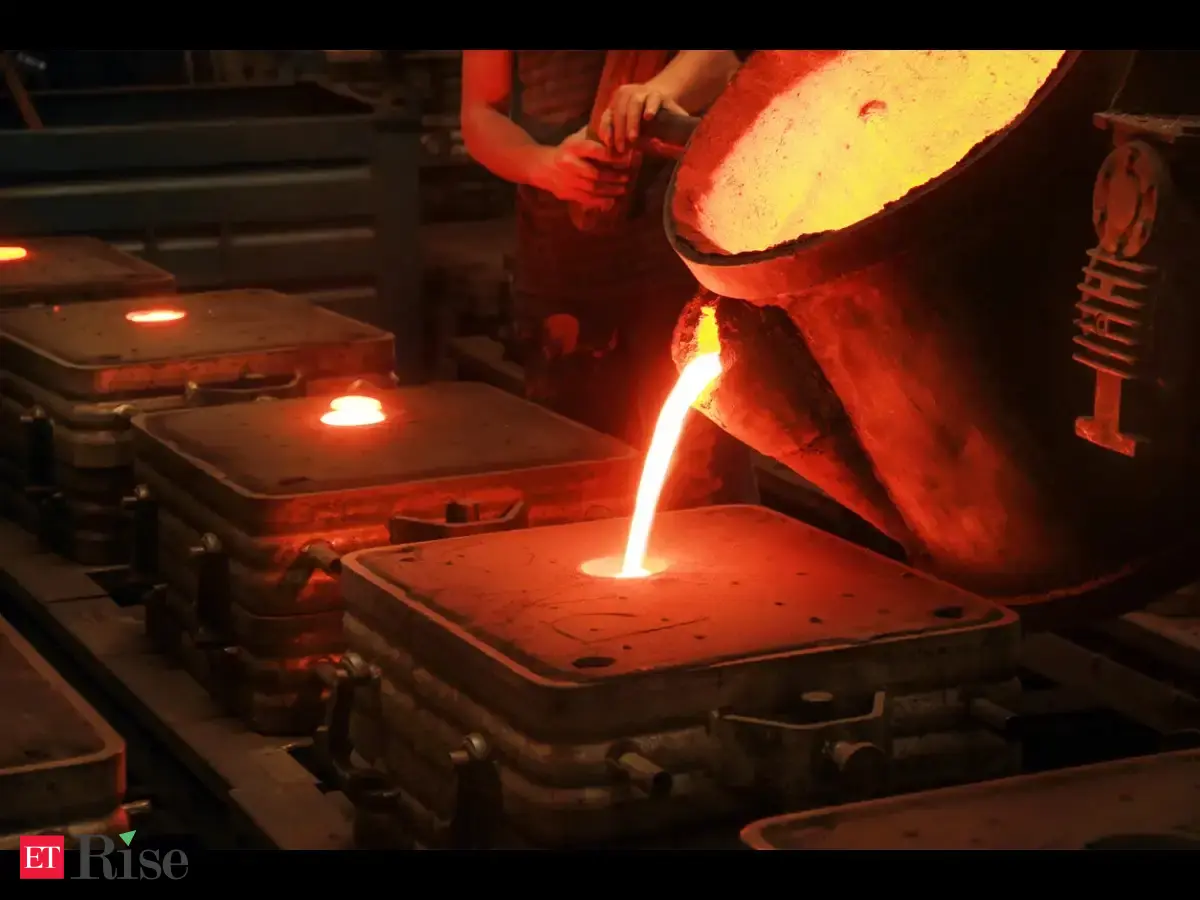
India meets more than 90% of its coking coal requirement for steelmaking through imports. Despite abundant natural resources, the country also struggles to produce enough usable coking coal for its steel industry. What will it take for the world’s second-largest crude steel producer to address these challenges as it expands steel production? View More
India’s industrialisation drive seems to have a raw-material paradox at its core. The country needs more steel to build infrastructure, expand its manufacturing base, and support its development ambitions. But producing that steel requires coking coal, a critical raw material that India still sources in large quantities from overseas. Coking coal, a key category of metallurgical coal used in iron and steel production, is one of the key inputs for the blast furnace-basic oxygen furnace (BF-BOF) method used by integrated steelmakers in India, the world’s second-largest producer of crude steel. The country produces around 41% of its steel using this method, as per Joint Plant Committee data cited by the steel ministry. During steelmaking, coking coal is heated in the absence of air to produce coke. The coke acts as a fuel and reducing agent in the blast furnace, where iron ore is converted into molten iron. This molten iron is then processed in the basic oxygen furnace to produce steel. The cost and availability of coking coal, therefore, directly impact the economics of blast furnace-based steelmaking. For India, the scale of this raw material’s import is a concerning factor. In FY26, the country imported 66.33 million tonnes (MT) of coking coal, meeting 91.79% of its total requirement of 72.26 MT through imports, according to provisional data provided by the Ministry of Coal in the Lok Sabha. At current international prices, this import volume represents a considerable outflow of foreign exchange for Indian steelmakers. India’s domestic coking coal, meanwhile, has a relatively high ash content, which makes it unsuitable for direct use in coke-making. Therefore, it must be washed to remove impurities and reduce ash levels before it is converted into coke. Washed domestic coal can also be blended with imported, lower-ash coking coal to meet steelmakers’ quality requirements. Live Events In FY26, India produced just 5.93 MT of washed coking coal, meeting barely 8.2% of the country’s total coking coal requirement of 72.26 MT, according to the coal ministry. This has left Indian steelmakers heavily dependent on overseas supplies to meet their coking coal requirements. The dependence persists, even with India’s estimated 37.37 billion tonnes of geological coking coal resources. This highlights the gap between the country’s resource potential and its ability to produce usable metallurgical coal. So, the main challenge for the steelmakers is not the absence of coal, but the limited availability of low-ash, washed coking coal suitable for modern coke-oven batteries. The coal ministry has identified limited domestic availability of high-grade coking coal as a reason for continued imports. High import volumes pose another challenge for the domestic steel industry. Anil Kumar Chaudhary, Ex-chairman of Steel Authority of India Ltd (SAIL), says dependence on imported coking coal adds significantly to steelmakers’ costs and could become a potential bottleneck to the industry’s expansion. “Coking coal is one of the biggest constraints on India’s steel industry, accounting for a substantial share of production costs and exposing producers to international price volatility,” says Chaudhary. He adds that this dependence also leaves steelmakers vulnerable to disruptions in supplies from major exporting countries. In FY26, India’s coking coal imports rose 15.2% to 66.33 million tonnes from 57.58 million tonnes in FY25, underlining how import dependence has widened with the expansion of domestic steel production. As per the steel ministry’s data, India produced 170.15 MT of crude steel in FY26, compared to 152.18 MT in FY25 and 144.30 MT in FY23. With steel production increasing, the need for coking coal will increase further. ET Online The price volatility is equally significant, given that coking coal accounts for nearly 40% of steel production costs, as per industry experts. The draft National Steel Policy puts the price of Australian hard coking coal at $278 per tonne FOB in September 2026, compared with an average of $236 per tonne during January-July 2026, according to Reuters. The increase has a direct bearing on steelmakers’ costs. Every $10 per tonne rise in coking coal prices adds an estimated $7-9 per tonne to steelmaking costs, an executive at a large Indian steel mill told the publication. Rananjay Singh, Chief Operating Officer of Enso Group, a diversified natural resources and energy group, describes this dependence as a structural vulnerability for the Indian steel industry. “Coking coal is one of the clearest structural vulnerabilities in India’s steel growth story,” he says, adding that the high import share leaves producers exposed to international market movements, which derail their operational planning. The domestic coal gap The gap between geological resources and usable coal is central to India’s import-dependence problem. A NITI Aayog report on domestic coking coal availability notes that the high ash content of Indian coal makes washing necessary before it can be blended with imported low-ash coal for coke-making. In other words, India’s challenge is not merely mining more coking coal but upgrading it to the low-ash specification required for coke-making. The NITI Aayog’s report states that domestic coal generally contains 34-38% ash, and it must be washed to lower the ash level to 16-18% for this purpose. Enso Group’s Singh argues that the immediate priority for the industry should be to improve the quality and recovery of domestic coal rather than focusing only on higher raw production. “The quickest domestic opportunity is not simply producing more coal; it is producing more usable metallurgical coal. If we can do that, we can, to some degree, move towards reducing our import dependence,” he says. The country’s washing figures cited in the draft National Steel Policy underline the severity of the issue and show the need to work urgently on domestic capacity building. The document puts India’s operational coking coal washing capacity at around 39 million tonnes per annum (MTPA), but estimates washed output at about 6 MT from nearly 17 MT of feed coal. This implies average yields of around 30%. These figures point to a gap between installed capacity and the quantity of usable washed coal being recovered across the country. Making domestic coal usable SAIL’s Ex-chairman identifies domestic mining and the development of washeries as key measures to address the challenge. He also points to improvements in coal-blending technology to increase the contribution of indigenous coal to steelmaking. “Domestic coking coal must contribute meaningfully to the blend; complete import substitution is neither realistic nor necessary,” he says. His assessment reflects the limits of a strategy based solely on replacing imports with domestic supplies. The industry will continue to need imported coal, but improving the quality of indigenous material could allow steelmakers to use a larger domestic share in their blends. Ashis Mahapatro, CEO (Steel) at Greta Energy, also sees washeries and blending technology as critical to improving the usability of Indian coal, which ultimately can cut the country’s coking coal import dependence, too. Mahapatro believes improving the quality and usability of domestic coking coal could help steelmakers reduce their reliance on imported supplies. He sees expanded washeries, research and development (R&D), and technology-led blending as critical to this effort. “Indian coal can play a larger role if expanded washeries, sustained R&D, and AI-enabled blending maintain the coke quality that blast furnaces depend on,” Mahapatro says. Greta Energy is developing an integrated, low-carbon green steel complex in Maharashtra. Enso’s Singh also points to better coal beneficiation, improved washery performance, and more effective blending as ways to increase the usable share of domestic coking coal. Imports to remain part of the supply mix Until domestic washing and blending improve, coking coal will remain one of the most exposed links in India’s steel supply chain. A spike in global prices, a disruption at a major exporting country, or a slowdown in Australian supply can quickly translate into higher steelmaking costs. For an industry central to India’s infrastructure and manufacturing ambitions, managing that exposure is becoming as important as expanding capacity. Even with improvements in domestic production and processing, industry officials do not expect imports to disappear. Chaudhary says complete import substitution is neither realistic nor necessary, while Mahapatro argues that diversified sourcing and long-term supply arrangements will remain important for steelmakers. The coal ministry’s import data shows the concentration of India’s overseas sourcing. In FY26, Australia, whose coking coal contains only 8-10% of ash, accounted for 27.32 MT of India’s coking coal imports, followed by the US at 9.91 MT and Russia at 9.25 MT, according to official government data. However, there has been a visible diversification in the source mix in recent years. Australia’s share in India’s coking coal imports declined to about 54% in 2025 from 73% in 2019, while the US, Russia, and other suppliers gained share, according to a steel ministry submission to a parliamentary standing committee. This diversification offers steelmakers some protection against supply disruptions or price shocks in any single exporting market. However, it does not reduce the industry's underlying dependence on overseas supplies. Pranav Bansal, Managing Director and CEO of Bansal Wire Industries , a manufacturer of quality stainless steel wires, says dependence on imported coking coal also creates raw-material cost and supply risks for downstream steel-consuming industries. “Reducing raw-material vulnerability remains a key challenge, particularly as India imported 66.33 MT of coking coal in FY26. Greater domestic availability, diversified sourcing and efficient resource utilisation can only help manage costs and mitigate supply risks,” he says. The stakes for steelmakers are likely to rise significantly in the coming times. Around 78% of India’s tracked steelmaking capacity under development is based on the basic oxygen furnace (BOF) route, compared with a much smaller share for electric arc and induction furnaces, Global Energy Monitor’s data show. With this, India’s demand for coking coal will increase further. The coal ministry’s import-substitution strategy estimates that India will need about 161 MT of coking coal by 2030-31 to support a 300 MTPA steelmaking capacity target, including 181 MTPA through the blast furnace route. For now, imported coking coal will remain central to India’s steelmaking. But industry officials agree that the priority is not complete import substitution; the aim should be to enhance the value of domestic coal by improving washing, increasing recovery, and blending in a way that maintains coke quality. As SAIL’s Chaudhary puts it, domestic coking coal must contribute meaningfully to the blend, even if it cannot replace imports altogether. .Pbanner{display:flex;justify-content:space-between;align-items:center;background-color:#ec1c40;margin-top:20px;padding:5px 10px;border-radius:4px;color:#fff;line-height:10px;width: 100%;box-sizing: border-box} .Pbannertext{display:flex;align-items:center;font-size:16px;font-weight:600;font-family:'Montserrat';} .Pbannertext img{height:20px;margin:0 6px} .Pbannerbutton a{display:flex;align-items:center;background-color:#fff;color:#ec1c40;text-decoration:none;font-weight:600;padding:4px 8px;border-radius:6px;font-size:15px;font-family:'Montserrat';} .Pbannerbutton img{height:20px;margin-right:6px} .Pbannerbutton a:hover{background-color:#f7f7f7} Add as a Reliable and Trusted News Source Add Now!

The IPO is a book-built issue of 66.18 crore equity shares and comprises entirely an offer for sale (OFS) by existing shareholders. Since the issue is a 100% OFS, the company will not receive any proceeds from the IPO; the entire amount goes to the selling shareholders. View More
Mahanadi Coalfields Ltd. has fixed the price band for its Rs 8,981.2 crore initial public offering (IPO) at Rs 129–136 per share. The public issue will open for subscription on November 19, 2026, and close on November 23, 2026. The IPO is a book-built issue of 66.18 crore equity shares and comprises entirely an offer for sale (OFS) by existing shareholders. Since the issue is a 100% OFS, the company will not receive any proceeds from the IPO; the entire amount goes to the selling shareholders. The allotment for the Mahanadi Coalfields IPO is expected to be finalised on November 25, 2026. The company's shares are proposed to be listed on the BSE and NSE, with a tentative listing date of November 27, 2026. Mahanadi Coalfields IPO price band and other details Mahanadi Coalfields has fixed the IPO price band at Rs 129–136 per equity share, with a face value of Rs 2 each. The floor price is 64.50 times the face value, while the cap price is 68 times the face value. Investors can bid for a minimum of 110 equity shares and in multiples of 110 shares thereafter. At the upper end of the price band, a retail investor will need to invest Rs 14,960 for a minimum lot, subject to applicable investor-category allocation rules. Live Events Based on diluted earnings per share (EPS) for FY26, the company's price-to-earnings (P/E) multiple stands at 8 times at the floor price and 8.43 times at the cap price. This compares with the average industry peer group P/E ratio of 11.57 times for FY26. Eligible employees bidding under the employee reservation portion will receive a discount of Rs 6 per equity share. The company's weighted average return on net worth for the last three years stood at 61.25%. SBI Capital Markets Ltd., Axis Capital Ltd. , BOB Capital Markets Ltd., IDBI Capital Markets & Securities Ltd. and IIFL Capital Services Ltd. are the book-running lead managers to the issue. KFin Technologies Ltd. is the registrar. Financial performance Mahanadi Coalfields Ltd. reported a 3% year-on-year increase in total income to Rs 33,899 crore in FY26, compared with Rs 33,029 crore in FY25. However, its profit after tax (PAT) declined 1% to Rs 10,698 crore from Rs 10,825 crore in the previous financial year. About Mahanadi Coalfields Ltd. Incorporated in April 1992, Mahanadi Coalfields Ltd. (MCL) is India's largest coal producer and a wholly owned subsidiary of Coal India Ltd. The company is primarily engaged in mining and producing non-coking coal across the Talcher and Ib Valley coalfields in Odisha. It supplies coal to the power sector and industries such as cement, steel, aluminium, sponge iron and paper. As of June 30, 2026, MCL operated 17 mines, comprising 14 opencast and three underground mines. MCL follows a highly mechanised mining model and operates coal handling, rapid loading and evacuation infrastructure, along with the 10-million-tonne-per-annum Ib Valley Coal Washery. Its coal transportation network includes railway connectivity, dedicated corridors and road infrastructure. The company supplies coal to customers across multiple states through long-term Fuel Supply Agreements (FSAs) and focuses on operational efficiency, technological advancement, research and development and sustainable practices, including solar power projects. As of September 30, 2026, it had 20,526 permanent employees. Disclaimer: The views/recommendations mentioned in this article, wherever applicable, are those of the respective SEBI-registered Research Analyst/brokerage and have been reproduced/reported with due attribution. They should not be construed as the views or recommendations of The Economic Times Digital or the journalist. Readers are advised to consider the original research report and make their investment decisions based on their own assessment. Brokerage disclaimers here .Pbanner{display:flex;justify-content:space-between;align-items:center;background-color:#ec1c40;margin-top:20px;padding:5px 10px;border-radius:4px;color:#fff;line-height:10px;width: 100%;box-sizing: border-box} .Pbannertext{display:flex;align-items:center;font-size:16px;font-weight:600;font-family:'Montserrat';} .Pbannertext img{height:20px;margin:0 6px} .Pbannerbutton a{display:flex;align-items:center;background-color:#fff;color:#ec1c40;text-decoration:none;font-weight:600;padding:4px 8px;border-radius:6px;font-size:15px;font-family:'Montserrat';} .Pbannerbutton img{height:20px;margin-right:6px} .Pbannerbutton a:hover{background-color:#f7f7f7} Add as a Reliable and Trusted News Source Add Now! (You can now subscribe to our ETMarkets WhatsApp channel) (You can now subscribe to our ETMarkets WhatsApp channel)

AUSTRALIA-STOCKS/ MIDDAY:Australian shares slip to near one-week low as weaker copper, iron ore weigh on miners View More
Tata Steel plans to finalize the merger of Neelachal Ispat Nigam Ltd (NINL) this financial year. The National Company Law Tribunal (NCLT) will review the proposed merger soon. Tata Steel has previously acquired NINL's assets for Rs 12,100 crore to enhance production capacity. The company aims to add 5 million tonnes of capacity at the facility located near Kalinganagar steel plant. View More