Latest Sectors News

Berkshire's widely held B shares are now running 16.3 percentage points behind the benchmark index year-to-date, the biggest gap so far in 2026. View More
In this articleBRK.B.SPXCSXBRK.BFollow your favorite stocksCREATE FREE ACCOUNT (This is the Warren Buffett Watch newsletter, news and analysis on all things Warren Buffett and Berkshire Hathaway. You can sign up here to receive it every Friday evening in your inbox.) Berkshire trails red-hot S&P by biggest margin so far this year With hot tech stocks fueling its solid 5.1% gain in May, the S&P 500 closed Friday at a fresh record high.In a sharp contrast, shares of Berkshire Hathaway were close to unchanged for the month.As a result, Berkshire's widely held B shares are now running 16.3 percentage points behind the benchmark index year-to-date, the biggest gap so far in 2026. Zoom In IconArrows pointing outwards At the end of March, Berkshire had a small winning margin of 1.8 percentage points over the S&P.But then the S&P zoomed more than 35% higher in April and May while Berkshire fell almost 11%. Zoom In IconArrows pointing outwards Great expectations for AI profits, and massive spending to build the infrastructure needed to generate all that future artificial intelligence, have been sending the tech stocks that dominate the market-capitalization-weighted S&P sharply higher.Berkshire, on the other hand, is extremely conservative with minimal exposure to AI, nearly $400 billion in cash, and solidly profitable, but not spectacular, operating companies.If enthusiastic AI investments turn out to be a bubble, (the concept has its own Wikipedia page), as some have been warning (for months), that caution may well pay off over time, as it did when Warren Buffett avoided the high-flying internet stocks of the late 1990s.While its overall AI exposure remains relatively small, it does appear new CEO Greg Abel did, in a decidedly un-Buffett-like move, triple the company's Alphabet stake during the first quarter. At almost $22 billion, it is the fifth largest equity holding in the portfolio. Zoom In IconArrows pointing outwards Berkshire shares are now down 12% since their all-time closing high in May of last year, just before Buffett revealed he planned to step down as CEO at the end of 2025.According to a chart analysis by 22V Research, as reported by CNBC.com, Berkshire's relative performance ratio vs. the S&P has dropped to its lowest levels since 2007.In a note to clients, the firm said, "Berkshire Hathaway was a good bellwether for the S&P, but that relationship appears to be changing." Regulatory delay for railroad merger opposed by Berkshire's BNSF The U.S. Surface Transportation Board is pausing its review of the proposed $85 billion merger between Union Pacific and Norfolk Southern.The regulator, which has final say over whether the companies will be able to create the country's first transcontinental freight railroad, wants more information from them by late July on how the tie-up would affect competition.UNP and NSC already had to file a revised application in April after their first proposal was rejected in January.Now the STB says, "Several aspects of the revised application... are unclear or underdeveloped and require supplementation at this stage."A final decision may be delayed until the fall of 2027. A display for the BNSF Railway at the Berkshire Hathaway Annual Shareholder Meeting in Omaha, Nebraska.Yun Li | CNBC Berkshire's BNSF, which has been critical of the merger from the start as anti-competitive, is part of the Stop the Rail Merger Coalition recently formed by rival railroads, customers, and labor unions.Last August, BNSF announced a "collaboration" with CSX to provide "seamless, efficient, coast-to-coast solutions to ship between the western and eastern U.S."A few days later, Buffett shot down speculation Berkshire would counter the UNP-NSC deal with a bid to acquire CSX, telling CNBC the company was not in the market to buy any railroad. BUFFETT & BERKSHIRE AROUND THE INTERNET Some links may require a subscription:Wall Street Journal on MSN: He's Berkshire Hathaway's other Charlie, the heir to its insurance juggernautReuters: Berkshire-owned Jazwares must face trademark lawsuit over Squishmallows 'Hug Mees'Bloomberg: Warren Buffett's Shareholder Letters Make a Surprisingly Great Book TheStreet: Berkshire Hathaway's latest stock purge sends a clear messageSnopes: Did Warren Buffett warn of Trump declaring martial law and 'canceling' democracy? Here's the truth [No]Fortune on MSN: Warren Buffett says 'you're giving up your potential' if you don't have this one skillâand it has nothing to do with the stock market HIGHLIGHTS FROM CNBC'S BUFFETT ARCHIVE 'I don't have to bet' on technology companies (1999) As the dotcom bubble was inflating, Warren Buffett said he would rather invest in traditional companies like Coca-Cola instead of techs like Microsoft because he's "perfectly willing to trade away a big payoff for a certain payoff." watch nowVIDEO0:0000:00"I don't have to bet" on technology companies1999 Berkshire Hathaway Annual Meeting AUDIENCE MEMBER: I know you like to buy into success stories, but you don't like to buy high tech.And it seems to me, say, in the case of Microsoft, that 10 years from now they'll be doing software development, just like 10 years from now Coke will be selling sugared water.And what I'm wondering is, why you feel that way when it seems certain companies, high-tech companies, are predictable...WARREN BUFFETT: I think it's much easier to predict the relative strength that Coke will enjoy in the soft drink world than the strength â the amount of strength â that Microsoft will possess in the software world.That's not to knock Microsoft at all. If I had to bet on anybody, I'd certainly bet on Microsoft, bet heavily if I had to bet. But I don't have to bet. And I don't see that world as clearly as I see the soft drink world.Now somebody that has a lot of familiarity with software may very well see it that way and they're entitled to â if it's true they have superior knowledge and they act on it, they're entitled to make money from that superior knowledge. There's nothing wrong with that.I know I don't have that kind of knowledge, and I simply â and I do think that it's â that if you have a general knowledge of business over decades, that you would regard the industry they're in as less predictable than the soft drink industry.Now it may also be that even though it's less predictable that there's a whole lot more money to be made, so that if you're right, that the payoff is much larger.But we are perfectly willing to trade away a big payoff for a certain payoff. And that's the way we're put together.It does not knock the ability of other people to make those decisions.I mean, I asked â first time I met Bill Gates in 1991, I said, "If you're going to go away on a desert island for 10 years, you had to put your stock in two companies in the high-tech business, which would they be?"And he named two very good stocks. And if I'd bought both of them, we'd have made a lot more money than we made, even buying Coca-Cola.But he also would have said at the same time that if he went away, he'd rather buy Coca-Cola, because he would have felt sure about that happening.It's â you know, different people understand different businesses. And the important thing is to know which ones you do understand and when you're operating within what I call your "circle of competence."And the software business is not within my circle of competence, and I don't think it's within in Charlie's.Charlie?CHARLIE MUNGER: Well, I certainly agree with that. I think there are interesting questions, too, about how far the whole field can go...I don't know what happens once you get unlimited bandwidth into the house and way more options, and âBeyond a certain point, it strikes me that there might be a surfeit of anybody's interest in the field.I don't know where that point is, whether it's 20 years out or 30 years out, but it would affect me a little.â BERKSHIRE STOCK WATCH Four weeks Zoom In IconArrows pointing outwards Twelve months Zoom In IconArrows pointing outwards BRK.A stock price: $710,900.00BRK.B stock price: $474.48BRK.B P/E (TTM): 14.13Berkshire market capitalization: $1,022,973,515,650Berkshire Cash as of March 31: $397.4 billion (Up 6.5% from Dec. 31)Excluding Rail Cash and Subtracting T-Bills Payable: $380.2 billion (Up 3.0% from Dec. 31)Berkshire repurchased $234 million of its shares in Q1 2026.(All figures are as of the date of publication, unless otherwise indicated) BERKSHIRE'S TOP EQUITY HOLDINGS - May 29, 2026 Zoom In IconArrows pointing outwards Berkshire's top holdings of disclosed publicly traded stocks in the U.S. and Japan, by market value, based on the latest closing prices.Holdings are as of March 31, 2026, as reported in Berkshire Hathaway's 13F filing on May 15, 2026, except for:Mitsubishi, which is as of April 30, 2026The full list of holdings and current market values is available from CNBC.com's Berkshire Hathaway Portfolio Tracker. QUESTIONS OR COMMENTS Please send any questions or comments about the newsletter to me at alex.crippen@nbcuni.com. (Sorry, but we don't forward questions or comments to Buffett himself.)If you aren't already subscribed to this newsletter, you can sign up here.Also, Buffett's annual letters to shareholders are highly recommended reading. There are collected here on Berkshire's website.-- Alex Crippen, Editor, Warren Buffett Watch Choose CNBC as your preferred source on Google and never miss a moment from the most trusted name in business news.
The approval positions Andhra Pradesh as the first state to roll out an industry partnership under PM-SETU View More
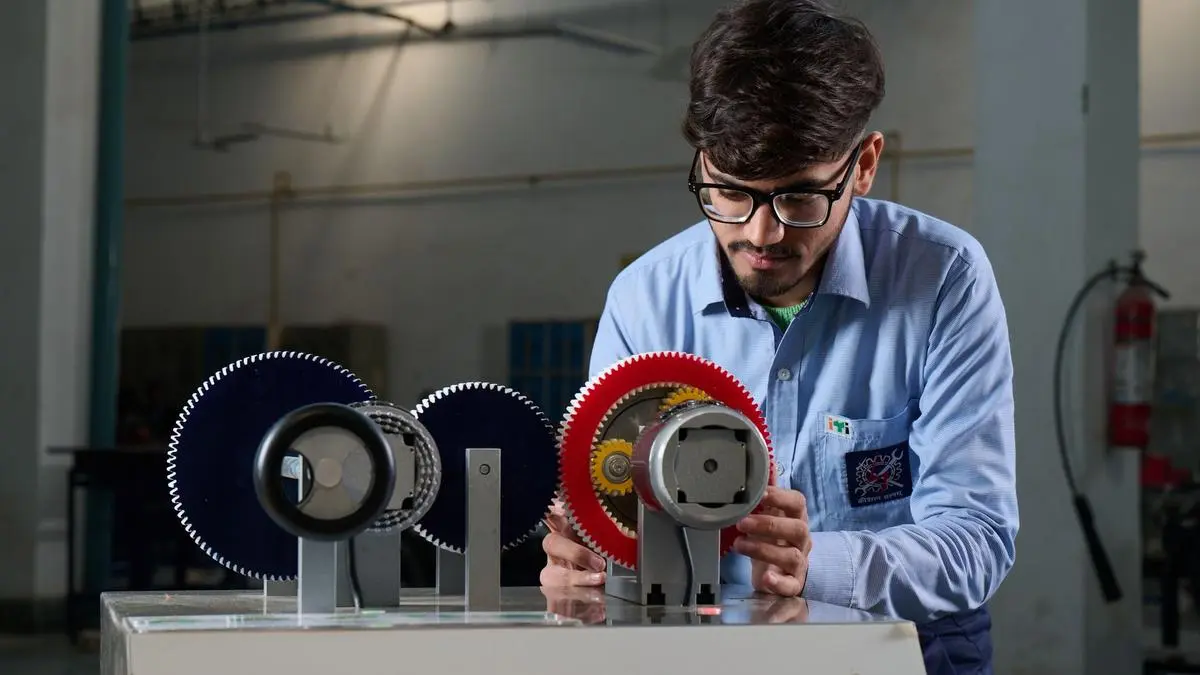
ArcelorMittal Nippon Steel India secured the first Strategic Investment Plan approval under the Pradhan Mantri Skilling and Employability Transformation through Upgraded ITIs scheme. This marks a significant step in modernizing vocational education through industry partnerships. Andhra Pradesh leads as the first state to operationalize an industry partnership under the PM-SETU initiative. The program aims to transform 1,000 government ITIs nationwide. View More
New Delhi: ArcelorMittal Nippon Steel India (AM/NS India) has become the first company to secure approval for a Strategic Investment Plan (SIP) under the Centre's Rs 60,000-crore Pradhan Mantri Skilling and Employability Transformation through Upgraded ITIs ( PM-SETU ) scheme, marking a key milestone in the government's push to modernise vocational education through industry partnerships. The National Steering Committee (NSC), chaired by Skill Development and Entrepreneurship Secretary Debashree Mukherjee, approved the SIP for the Visakhapatnam ITI Cluster in Andhra Pradesh during its third meeting held at Kaushal Bhawan in New Delhi. With the approval, Andhra Pradesh becomes the first state to operationalise an industry partnership under PM-SETU and onboard an Anchor Industry Partner (AIP), setting the stage for industry-led management of government Industrial Training Institutes (ITIs). The move is significant as PM-SETU seeks to transform 1,000 government ITIs across the country through a hub-and-spoke model that places industry at the centre of curriculum design, infrastructure development and workforce training. The Visakhapatnam cluster is expected to serve as a pilot for future collaborations between state governments and industry players, demonstrating how vocational institutions can be aligned more closely with evolving labour market requirements. Live Events The NSC meeting was attended by senior officials from the Directorate General of Training (DGT), Capacity Building Commission (CBC), National Council for Vocational Education and Training (NCVET), and ministries including Commerce and Industry, Heavy Industries, and Labour and Employment. Industry representatives from companies such as Hindustan Aeronautics Ltd , Hero MotoCorp , Bajaj Auto , ITC and AM/NS India also participated, along with development partners including the Asian Development Bank and the World Bank. The committee reviewed the progress of PM-SETU implementation across states and discussed measures to strengthen industry participation, improve institutional governance and enhance the financial sustainability of Special Purpose Vehicles (SPVs) that will manage the projects. According to the Ministry of Skill Development and Entrepreneurship, the approval of the Visakhapatnam cluster marks the first concrete implementation step under PM-SETU and is expected to encourage other states to accelerate their own industry-led skilling initiatives. The government said PM-SETU aims to create a future-ready workforce by modernising training infrastructure, improving employability outcomes and establishing National Centres of Excellence in high-growth sectors such as advanced manufacturing and emerging technologies. Implementation momentum is gathering pace. So far, 32 states and Union Territories have constituted State Steering Committees, while 12 states and UTs have issued Requests for Proposals (RFPs) to invite industry participation for selecting Anchor Industry Partners. Several of these selection processes are nearing completion. The ministry expects more Strategic Investment Plans to come up for approval in the coming months as the programme moves from the planning stage to large-scale execution, supporting the government's broader vision of building a skilled workforce for Viksit Bharat 2047. .Pbanner{display:flex;justify-content:space-between;align-items:center;background-color:#ec1c40;margin-top:20px;padding:5px 10px;border-radius:4px;color:#fff;line-height:10px;} .Pbannertext{display:flex;align-items:center;font-size:16px;font-weight:600;font-family:'Montserrat';} .Pbannertext img{height:20px;margin:0 6px} .Pbannerbutton a{display:flex;align-items:center;background-color:#fff;color:#ec1c40;text-decoration:none;font-weight:600;padding:4px 8px;border-radius:6px;font-size:15px;font-family:'Montserrat';} .Pbannerbutton img{height:20px;margin-right:6px} .Pbannerbutton a:hover{background-color:#f7f7f7} Add as a Reliable and Trusted News Source Add Now! (You can now subscribe to our Economic Times WhatsApp channel) (You can now subscribe to our Economic Times WhatsApp channel)

Stocks to buy for long term: ICICI Securities' Pankaj Pandey recommends five quality stocks poised for long-term gains. From Artemis Medicare, EIL to Tata Steel, discover the compelling reasons behind these picks and how they can bolster your investment portfolio in the coming years. View More
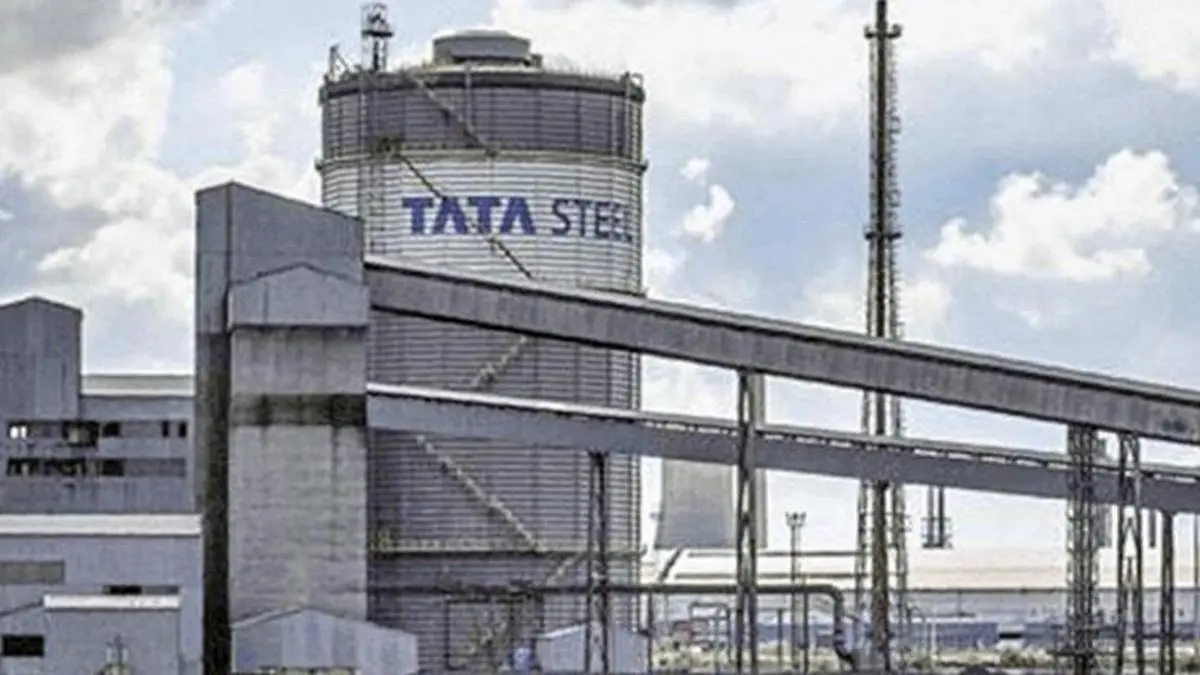
The rating reflects expectation of extraordinary support from its parent Tata Sons in a stress scenario. View More
Sebi has approved IPOs for Renny Strips, Krishna Buildspace, and Rodec Pharmaceuticals. Renny Strips, a structural steel manufacturer, intends to raise Rs 300 crore through its public issue. Explore wellness memberships at [link removed]. View More
Three companies, including Ludhiana-based Renny Strips, have received final observations from capital markets regulator Sebi, clearing the way for their IPOs. Renny Strips, Krishna Buildspace and Rodec Pharmaceuticals have secured the regulator's approval and can now proceed with their public issues within the prescribed timeline. Renny Strips, which filed its draft papers with Sebi in December 2025, plans to raise up to Rs 300 crore through a fresh issue of shares. The IPO will also include an offer for sale of up to 1.2 crore shares by promoters Dev Raj Gupta and Usha Gupta. Incorporated in 1996, the company operates as a vertically integrated structural steel products manufacturer with a presence across multiple stages of the steel value chain . According to a CRISIL report cited in its draft papers, the company manufactures products ranging from mild steel billets, wire rods and hot-rolled coils to electric resistance welded pipes and tubes, precision-fabricated products, scaffolding systems and formwork solutions. Its products cater to industries including construction, infrastructure, automotive, railways, oil and gas, agriculture, shipbuilding and heavy engineering. Live Events The company follows a cascading production model that eliminates reheating between manufacturing stages, helping improve energy efficiency and lower production costs. It also uses automation and digital quality monitoring systems across operations. Renny Strips has built a diversified customer base spanning 15 states and union territories in India and 21 international markets. As of September 2025, the company had served more than 225 customers, including Jindal Supreme India, BR Green Industries, KNL Driveline Parts and Mittal Sales Corporation. The company primarily operates as a business-to-business manufacturer, supplying structural steel products to industrial and infrastructure customers. Alongside Renny Strips, Sebi has also granted approval to Krishna Buildspace and Rodec Pharmaceuticals. .Pbanner{display:flex;justify-content:space-between;align-items:center;background-color:#ec1c40;margin-top:20px;padding:5px 10px;border-radius:4px;color:#fff;line-height:10px;} .Pbannertext{display:flex;align-items:center;font-size:16px;font-weight:600;font-family:'Montserrat';} .Pbannertext img{height:20px;margin:0 6px} .Pbannerbutton a{display:flex;align-items:center;background-color:#fff;color:#ec1c40;text-decoration:none;font-weight:600;padding:4px 8px;border-radius:6px;font-size:15px;font-family:'Montserrat';} .Pbannerbutton img{height:20px;margin-right:6px} .Pbannerbutton a:hover{background-color:#f7f7f7} Add as a Reliable and Trusted News Source Add Now! (You can now subscribe to our ETMarkets WhatsApp channel) (You can now subscribe to our ETMarkets WhatsApp channel)
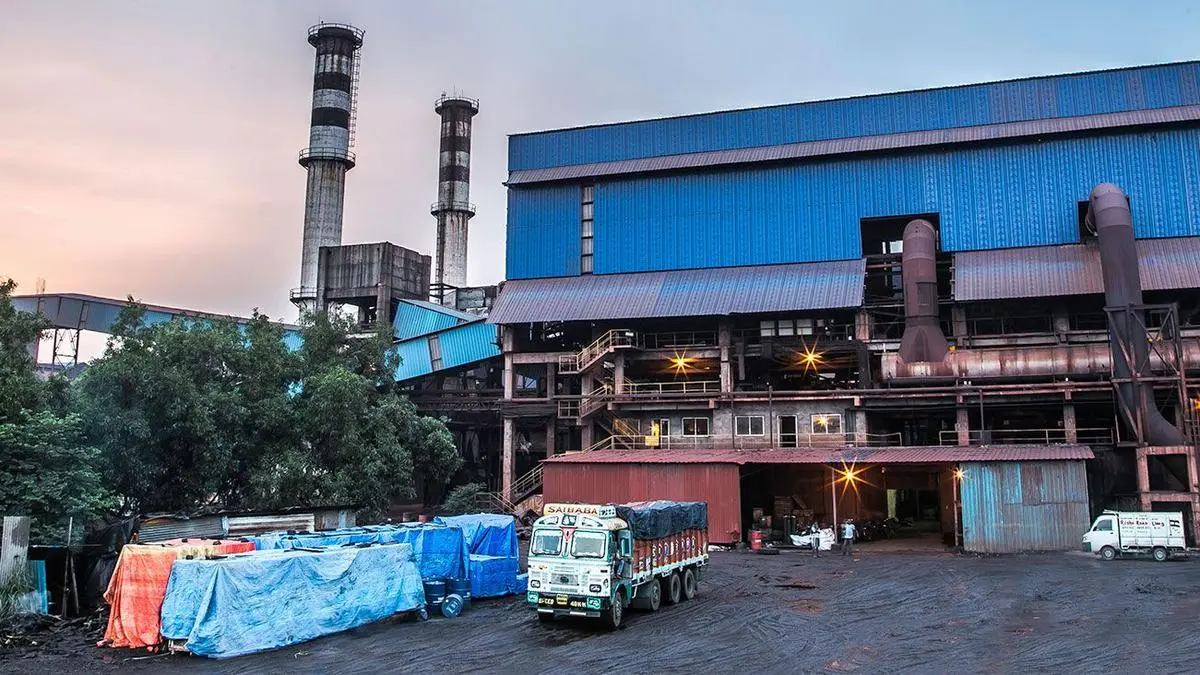
The investment includes over Rs 30,000 crore for expanding steel manufacturing capacity and Rs 5,000 crore for operationalising coal mines, with projects spread across multiple districts in the state View More
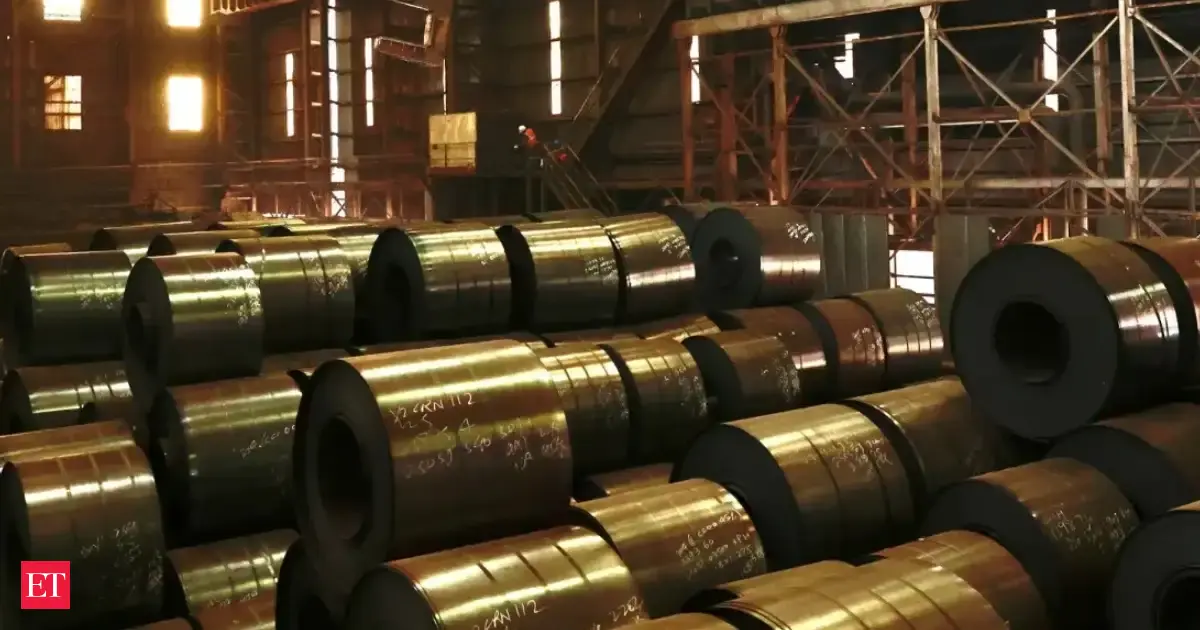
JSW, Tata, SAIL, JSPL are set to hike capex up to 65%; spending surge defies West Asia cost pressures. View More
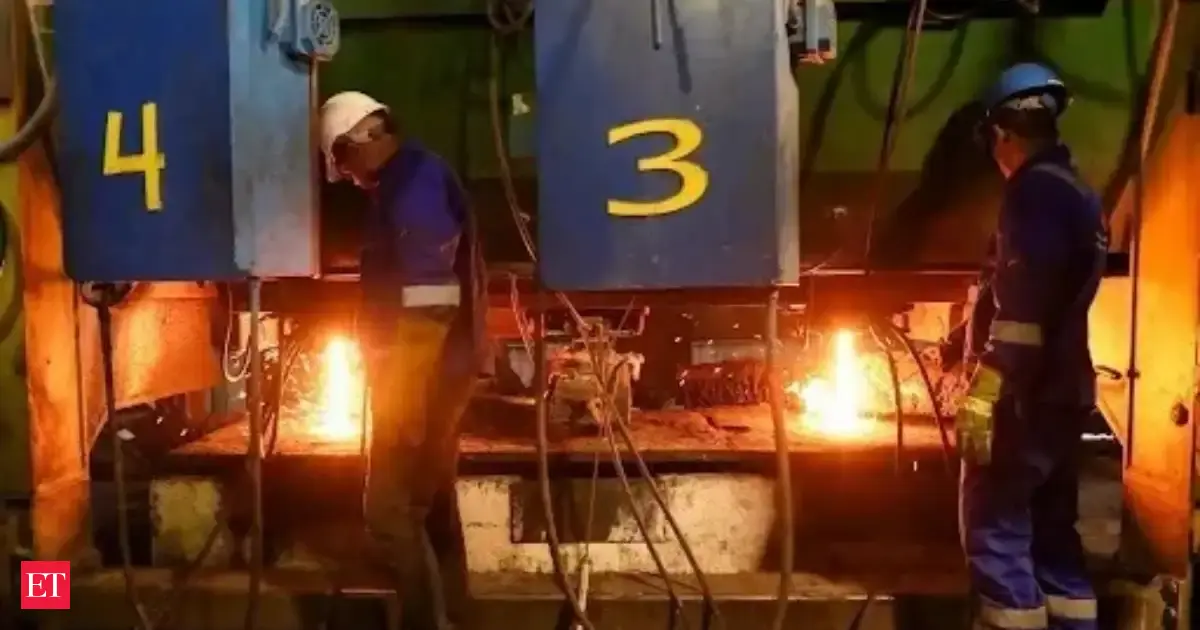
Mumbai: Five largest Indian steelmakers are estimated to together spend a record ₹75,000 crore at least this fiscal as they continue to add capacity in the world's second-largest consumer of the alloy, pointing to early signs of revival in private-sector capex in the primary infrastructure industry. Spearheaded by market leader JSW Steel , steel majors Tata Steel , Jindal Steel , and state-owned Steel Authority of India will be spending up to 65% more this year as compared to the last. Capex plans of these companies have remained undeterred despite the near-term cost pressures stemming from the West Asia crisis. While specific investment numbers for AM/NS India were not available, the company is likely to spend at least ₹10,000 - 15,000 crore this fiscal, analysts said. The joint venture between ArcelorMittal and Nippon Steel is setting up a greenfield plant in Andhra Pradesh apart from expanding capacity at its plant in Hazira. A response sent to the company remained unanswered until the publication of this report. India, which appears to be largely insulated from direct spillovers of the conflict in West Asia, is set to maintain its position as the world's fastest-growing major steel market, the World Steel Association said in its latest forecast. It sees demand in India growing by 7.4% this year, and further accelerating to 9.2% in 2027. Live Events Also read | Tax ruling can set off a game of thorns for gaming company directors In FY26, India had a crude steel production capacity of around 220 million tonne, while it produced around 168 million tonne of steel. Expansion Target As per the National Steel Policy, India aims to have a production capacity of 300 million tonne by 2030. "India is going through a nation-building phase with steel being a key building block for growth," Jayant Acharya, the chief executive officer of JSW Steel, said recently. "This creates a long runway for steel demand to outpace the real GDP growth in the country," he said. Also read | Supreme Court seeks govt, RBI response to plea for audit of banks' realty exposure Acharya sees India's share of steel consumption rising to around 16% in a decade from 9% currently, and said that the growth in production is likely to lag growth in consumption. The record capex by steel-makers is coming on the back of robust profits and cash flows in fiscal 2026. While JSW Steel's consolidated profit was at an all-time high in fiscal 2026, that of Tata Steel and Steel Authority of India were at a four-year high. "Steel demand in India is expected to remain reasonably strong, supported by infrastructure development and construction activity," Gautam Malhotra, the chief executive officer of Jindal Steel said. " Steel prices have shown recovery in recent months and are expected to remain supportive in the near term," he said. .Pbanner{display:flex;justify-content:space-between;align-items:center;background-color:#ec1c40;margin-top:20px;padding:5px 10px;border-radius:4px;color:#fff;line-height:10px;} .Pbannertext{display:flex;align-items:center;font-size:16px;font-weight:600;font-family:'Montserrat';} .Pbannertext img{height:20px;margin:0 6px} .Pbannerbutton a{display:flex;align-items:center;background-color:#fff;color:#ec1c40;text-decoration:none;font-weight:600;padding:4px 8px;border-radius:6px;font-size:15px;font-family:'Montserrat';} .Pbannerbutton img{height:20px;margin-right:6px} .Pbannerbutton a:hover{background-color:#f7f7f7} Add as a Reliable and Trusted News Source Add Now! (You can now subscribe to our Economic Times WhatsApp channel) (You can now subscribe to our Economic Times WhatsApp channel)

Rep. Ro Khanna wasn't in the Rust Belt to campaign. But he could be soon. View More
U.S. Rep. Ro Khanna visits Ultium Cells, an electric vehicle battery manufacturing plant in Warren, Ohio.Garrett Downs | CNBC PENNSYLVANIA, OHIO and MICHIGAN â U.S. Rep. Ro Khanna was riding shotgun in a black Chevrolet Suburban hurtling down an Ohio highway. His mind was on the economy. "I do think I have the right economic vision for this country," Khanna, D-Calif., told CNBC, taking a break from answering one of the hundreds of text messages he receives each day. "The question is just whether I will get behind someone who can help adopt it, or whether I'll do it myself."The Silicon Valley representative had just left Magnet, a nonprofit industrial consulting firm and talent incubator and a stop on his three-day tour through the Rust Belt. He was speaking to the question that many were asking here: whether the former co-chair of the 2020 Bernie Sanders campaign would mount his own bid for the White House in 2028. "It's a natural question, and the truth is that I've said I'm going to consider it after the midterms," he said when CNBC asked whether he ever gets tired of reporters asking him if he's running. The question has become more natural lately. Khanna, a progressive long seen as ambitious in Washington circles, has found himself joining the list of potential 2028 hopefuls in the eyes of oddsmakers after his successful push to release the Epstein files, which exploded into the biggest news story of 2025. He's turned that win into a populist bazooka, railing against the "Epstein class" as he calls for progressive, populist policies that could reshape the U.S. economy.Khanna has a liberal track record and endorsed self-described democratic socialist New York Mayor Zohran Mamdani. But in the industrial U.S., he talked more middle-of-the-road economic issues and pitched well-worn Democratic ideas such as cutting defense spending and finding money to pay for social programs by targeting waste, fraud and abuse.While recent polling suggests he'd be a long-shot candidate, Khanna's ability to champion progressive causes while representing one of the wealthiest congressional districts in the nation has not gone unnoticed. And his economic ideas could take root in any campaign Democrats run. Despite the buzz, Khanna was not in Ohio to campaign explicitly. He was here for the "Heartland Tour," a swing through the industrial Rust Belt for his post as the top Democrat on the House's China select committee. Undergirding the tour was a dual purpose: pitching and honing his profile-raising platform of a "New Economic Patriotism," a 13-point plan he says will revive U.S. manufacturing and solve the country's economic woes, while hearing about the threats China poses to workers and businesses in this region.CNBC rode with Khanna through Pennsylvania, Ohio and Michigan as he toured steel mills, factories and farms. At each of the 12 stops, he was introduced to people trying to revive manufacturing in the U.S.' industrial nerve center and shared his plan to help spur an industrial renaissance, which he said has been an obsession of his since his time in the Obama administration's Commerce Department. Khanna describes his vision as a "Marshall Plan for America" â a nod to the post-World War II process the U.S. and its allies undertook to rebuild Europe's economy. He, or any Democrat pursuing a presidential bid, will need this region's voters to believe in their economic promise after years of deindustrialization and job loss that have fomented anger against the political establishment and twice delivered President Donald Trump to the White House."We need to offer what an economic future vision is for places like the heartland," Khanna told CNBC. "What do Democrats stand for in terms of the building of economic opportunity in places that have been hollowed out and shafted?" Read more CNBC politics coverageJudge tosses Kilmar Abrego Garcia charges, calls prosecution 'vindictive'Trump skipping wedding of son Donald Jr. to Bettina AndersonTulsi Gabbard resigning as Trump's intelligence chiefKevin Warsh sworn in as Fed chair as Trump seeks interest rate cutsNew lawsuits against Trump's DOJ 'lawfare' fund Camille Rivera, a Democratic strategist and partner at New Deal Strategies who has advised both Mamdani's campaign and the presidential bid of Sen. Elizabeth Warren, D-Mass., said Khanna is laying good groundwork for a potential bid in a populist, progressive lane. "Populism can be leveraged and utilized, and so I think Democratic Party nominees for president should start really thinking about how to lean in and not hedging their bets," Rivera said. "He's being very clear about his positioning around big corporations and issues related to foreign policy." A 'Marshall Plan for America' Khanna's plan to revive the nation's industrial economy includes well-trod progressive thoroughfares that are unlikely to be successful, such as calling for universal healthcare or taxing the rich. But what really excites him, particularly on the road in the Rust Belt, are the pieces of the plan that he believes are critical to bolstering the manufacturing economy and fending off the China threat. First among those is creating a "national industrial bank." The bank, Khanna said, would provide capital to businesses trying to build or produce things critical to the national interest, whether that's steel, autos or energy. Khanna's second stop on the trip was JM Steel in Leetsdale, Pennsylvania, a plant turning hulking steel coils into solar tracker tubes for the company Nextpower. Executives running the facility told Khanna and Rep. Chris Deluzio, D-Pa., that manufacturers want and need industrial tax credits to build out their industry. Democrats under the Biden administration legislated a set of tax credits in the 2022 Inflation Reduction Act to spur industry to build clean energy in the U.S. Only some of those credits survive after Trump and Republicans took a knife to them in the 2025 tax and spending bill, and the credits largely failed to excite voters, raising questions about whether credits are a policy that can survive political pendulum swings in the long run.On the way to the next stop, a Tenaris steel plant that produces pipes for drilling oil and gas wells, Khanna suggested his industrial bank would be less vulnerable to political attacks that undermined some of the tax credit regimes that came before. He also argued that projects the bank would fund should be technology-neutral, after many of the 2022 law's tax credits were doomed to the dustbin of climate politics after Trump returned to the White House.The dynamic came up again after a visit to Ultium Cells, a mammoth factory in Warren, Ohio, where General Motors and LG Energy Solution are building batteries for electric vehicles. Some of the state-of-the-art factory now sits idle due to EV demand cratering after Trump and Republicans revoked consumer tax credits for the cars."It's transforming the economy of this area. It's gotten people moving back, going to restaurants, going to support local business," Khanna said after leaving the factory. "[Now] it's idled precisely because of the big ugly bill that took away the EV tax credits."The EV slowdown in the U.S. comes as China is on the march in the electric vehicle and renewable energy sectors. The industrial bank has some support from experts in industrial policy. "I think the idea is a very good one that we need to explore and experiment with as a country," said Elisabeth Reynolds, a professor at Massachusetts Institute of Technology and former special assistant to President Joe Biden for manufacturing and economic development.The country needs "to be strategic and have a long-term perspective. We need durability in our policies, and we want a range of policy tools," she said. "We know that if we leave it to the market, maybe we'll get some of what we want, but, frankly, I don't think we have the luxury right now to wait and see." A 'token tax' Of course, standing up an industrial program â and a bank â would cost money, and the U.S. government is already close to $40 trillion in debt, exceeding the U.S. gross domestic product for the first time in early March. Khanna says he has a plan for that, too. To pay for his programs, Khanna said, he would start by siphoning hundreds of billions of dollars from the annual defense budget. That money could be sent to the industrial bank to fund an entrepreneur starting a business to build a product that is critical to the national interest.Khanna met one of those entrepreneurs in Ohio during the visit to Magnet. Michael Canty is the CEO of Alloy Precision Technologies, which makes steel bellows used in machines such as natural gas-fired turbine engines. Canty said he's unable to procure a certain type of thin-walled seamless tubing for his products from the U.S. and would start a business making it if he had the capital."I'd start one, and I'd steal all the business from overseas," Canty said on the tour. "That would create a lot of jobs."Khanna said he would also fund the program by introducing a tax on billionaires, a proposal he has made in Congress, prompting attacks from some of his longtime tech industry backers. If he can't get that, he said, he'd step up the estate tax, look at a financial transaction tax on Wall Street speculation and increase the corporate tax rate. Khanna said he would also look at a novel tax that he thinks would hit pay dirt: A levy on artificial intelligence tokens, the units that AI companies use to charge for each chunk of text and data processing. It's an idea that leans on Khanna's Silicon Valley prowess â he said he had discussed the idea with "Dario [Amodei] at Anthropic, Jensen [Huang, at Nvidia], and people at OpenAI, Chris Lehane.""They're open to that kind of taxation on enterprise software, a token tax," he said. "Right now, we are taxing workers more than we tax AI; like, why shouldn't we tax AI more than we tax workers?"He says the result would be worth the costs and could help address some of the country's social tumult as well as the economy. "You have a lot of people who are angry at the system, shafted by the system, who feel a resentment," Khanna said. "If they see economic hope coming back to their communities, economic activity coming back to their communities, I think they will be more hopeful about America, less angry about America, less angry about government and wanting to tear down all the institutions." From Bucks County to Silicon Valley U.S. Rep. Ro Khanna visits the Port of Cleveland in Cleveland, Ohio.Garrett Downs | CNBC Khanna, 49, was raised in Bucks County, Pennsylvania. His father was a chemical engineer, which he said instilled in him the value of manufacturing jobs. "I always had a sense of making things mattering, and obviously [it] gave my own family a middle-class life," he said. "I didn't have to lack for things growing up. I had healthcare, I was able to play the Little League sports, I was able to have a comfortable life, and I saw that directly tied to manufacturing."He also saw what he called the deindustrialization of Bucks County, recalling a manufacturing plant closing "right when I was graduating high school.""I saw the impact of that," he said. After graduating from Council Rock High School, Khanna attended the University of Chicago and Yale Law School. He later moved to Silicon Valley and saw what he calls the economy of the future. He was appointed deputy assistant Commerce secretary by President Barack Obama, holding the post until he took a job at a Silicon Valley law firm in 2011. He first ran for Congress in California unsuccessfully in 2004. Ten years later, he tried again, taking on longtime Democratic Rep. Mike Honda in 2014 and losing. His second try against Honda, in 2016, was successful, and he defeated Honda by more than 20 percentage points. Khanna's wife is from Cleveland, and he was married there. On the trip, he visited the Port of Cleveland with Rep. Shontel Brown, D-Ohio, noting his "Cleveland roots" and that he has to listen to refrains that the Cleveland Browns "are going to win every year."His background, he said, gives him "an economic credibility.""I've spent 10 years representing Silicon Valley," Khanna said. "I've seen the future, but I want to make sure that economic future is possible for the kids I grew up with, the families I grew up with, the families my wife grew up with." U.S. Rep. Ro Khanna, D-Calif., speaks during a National Press Club Headliners Newsmaker event in Washington, April 14, 2026.Alex Wong | Getty Images Rivera, the political consultant, pointed to Khanna's willingness to take risks by endorsing progressive candidates across the country, which would gain him allies in a potential presidential bid. Khanna has endorsed a number of liberal candidates in the past year, including Mamdani, Rep. Analilia Mejia, D-N.J., Michigan Senate candidate Abdul El-Sayed and California gubernatorial candidate Tom Steyer. "It is pretty clear that he is doing the work to ensure at least that there are allies in every single city that he feels he needs, so that he can win the primary," Rivera said. Khanna's talk on the economy has also caught the attention of the current occupant of 1600 Pennsylvania Avenue. After Khanna appeared on Fox News recently, Trump lashed out at him in a set of Truth Social posts. He called Khanna a "Sleazebag, Radical Left Congressman from the failed State of California.""He is similar, but worse than [House Minority Leader] Hakeem Jeffries, only with a somewhat higher IQ," Trump said. "This morning he tried, on behalf of the Dumacrats, to take credit for the Steel Industry pouring back into the U.S., knowing full well that the Dumbs virtually destroyed it, and I SAVED IT, through strong Tariffs." Betting on the farm After the visit to Magnet, Khanna's caravan left Cleveland and headed southwest toward Toledo. He was on his way to deep-red Shelby County, where the land begins to get flat, the rows of corn extend over the horizon, and Trump 2024 flags still fly. Specifically, he was headed toward the farm of Chris Gibbs, the Shelby County Democratic Party chair. Gibbs, who was once chair of the county Republican Party and defected to the Democrats in 2019, was hosting Khanna for a dinner with the Ohio Farmers Union.A farm is not exactly Khanna's home turf. He arrived at the Gibbs farm in a navy blue suit and black penny loafers, a getup more appropriate for a boardroom than a corn, soybean and 75-to-100-head cattle operation. The event, like the whole trip, was officially apolitical. But it was here, in a barn filled with some 50 farmers that could have been mistaken for a stop on the campaign trail ahead of the Iowa caucuses, that Khanna delivered his most complete pitch for his economic plan. U.S. Rep. Ro Khanna speaks at the farm of Chris Gibbs, the chair of the Shelby County Democratic Party, in Shelby County, Ohio.Garrett Downs | CNBC "How many people here want to live in Silicon Valley?" Khanna asked the room, after decrying the "hollowing out of industry after industry and broken promises" that followed China's accession to the World Trade Organization and the signing of the North American Free Trade Agreement. Nobody raised their hand. "People want to live in the communities they grew up in, and we never did anything to bring economic opportunity for the communities that were devastated," he said. "The question is, are we going to have a nation that has islands of economic prosperity and seas of stagnation and despair, or are we going to be a nation that has economic success and independence in every community for every family?"He closed his remarks with the two lines he seems to be eager to foist into the political lexicon: The "Marshall Plan for America" and "New Economic Patriotism.""I say we need a Marshall Plan not for Europe, we need a Marshall Plan for the United States of America," he said, to nodding heads and a few cheers. "If we understand the frustration and danger for many Americans who just want economic security and dignity, if we come together across divides to build an economic renewal strategy for America, what I call economic patriotism, I believe we can bring this country together around a new national focus."Khanna then engaged in a lengthy question-and-answer session with the assembled farmers, who shared with him their fears about low crop prices, failing export markets due to tariffs, and the high price of running a farm in today's economy. Gibbs, the night's host and emcee, in an interview after the event, said he was impressed. "He was very well received here," Gibbs said, emphasizing that the night was not a political event but designed to help Khanna hear from farmers to "help the congressman as he goes back to Washington to formulate policy." Asked about Khanna himself, however, Gibbs was less circumspect. "Ro Khanna is a thought leader," he said. "And I think he's going to do more." Choose CNBC as your preferred source on Google and never miss a moment from the most trusted name in business news.