
Latest Sectors News

The move is in line with the government's broader effort to improve the ease of doing business and reduce compliance burdens on industry while maintaining product quality and safety standards. View More
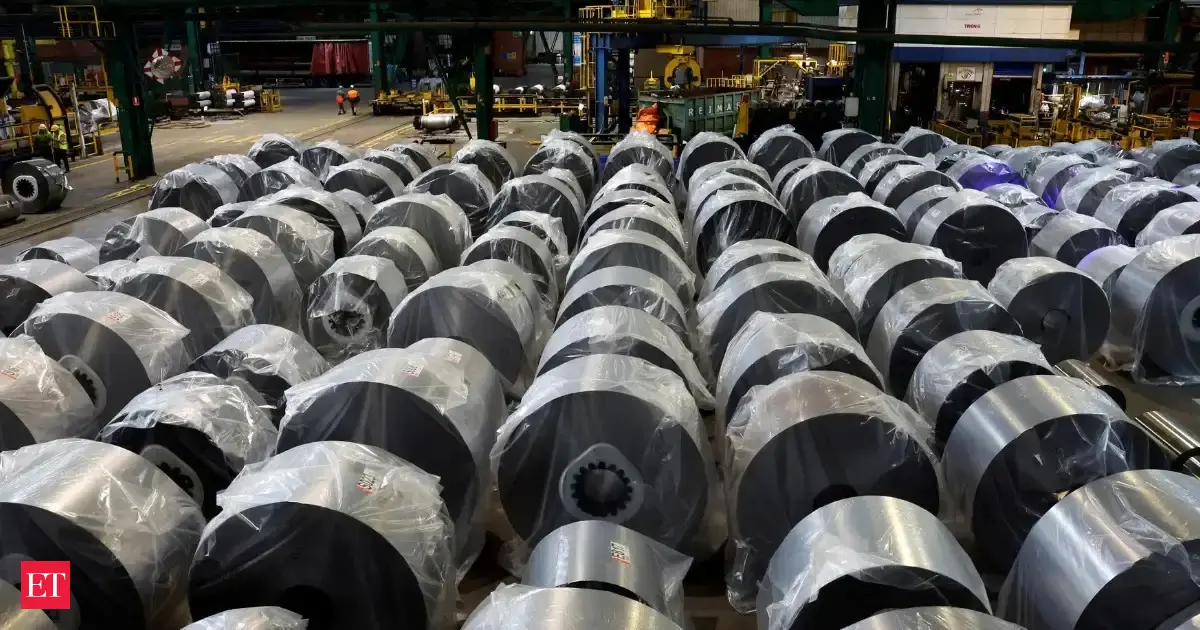
India is closely watching steel imports, particularly from China, for another two months before deciding on further actions. Despite a three-year import tariff imposed in December, the nation remained a net steel importer in May, with finished steel imports exceeding the recent average. Concerns are rising among domestic steelmakers as Chinese exports to India hit a two-year high in April, suggesting existing tariffs may not be sufficient protection. View More
NEW DELHI: India will monitor steel imports for at least two more months before considering whether further measures are needed to curb the flow of shipments primarily from China, a source with direct knowledge of the matter told Reuters. In December, New Delhi had imposed a three-year import tariff on select products to curb cheap shipments from China. But India, the world's second-biggest crude steel producer, remained a net importer for a second straight month in May, when finished steel imports reached 0.7 million metric tons, above the last six months' average, a government report reviewed by Reuters said. Exports of finished steel in May were 0.5 million metric tons, below the average of the last six months, the government report said. "We will have to see for at least two months how things pan out," the source said, declining to be identified due to the sensitive nature of the matter. Live Events There was no decision yet whether it would be anti-dumping duties or other measures, the source added. The federal Ministry of Steel did not respond to a Reuters email seeking comments. CHINESE IMPORTS HIT TWO-YEAR HIGH IN APRIL In April, China's finished steel exports to India more than doubled to the highest in at least two years. That raised concerns among India's steelmakers that the imposition of import tariffs has not done enough to protect them from cheaply priced imports, Reuters reported earlier this month. Separately, the source said the steel ministry had requested the finance ministry withdraw a provisional anti-dumping duty on low-ash metallurgical coke , a steelmaking raw material, but a final decision was yet to be taken. India's steel ministry had made the request, citing inadequate domestic supplies and higher prices, Reuters had reported last month, citing a government document. The finance ministry did not respond to a Reuters email seeking comments. .Pbanner{display:flex;justify-content:space-between;align-items:center;background-color:#ec1c40;margin-top:20px;padding:5px 10px;border-radius:4px;color:#fff;line-height:10px;} .Pbannertext{display:flex;align-items:center;font-size:16px;font-weight:600;font-family:'Montserrat';} .Pbannertext img{height:20px;margin:0 6px} .Pbannerbutton a{display:flex;align-items:center;background-color:#fff;color:#ec1c40;text-decoration:none;font-weight:600;padding:4px 8px;border-radius:6px;font-size:15px;font-family:'Montserrat';} .Pbannerbutton img{height:20px;margin-right:6px} .Pbannerbutton a:hover{background-color:#f7f7f7} Add as a Reliable and Trusted News Source Add Now! (You can now subscribe to our Economic Times WhatsApp channel) (You can now subscribe to our Economic Times WhatsApp channel)
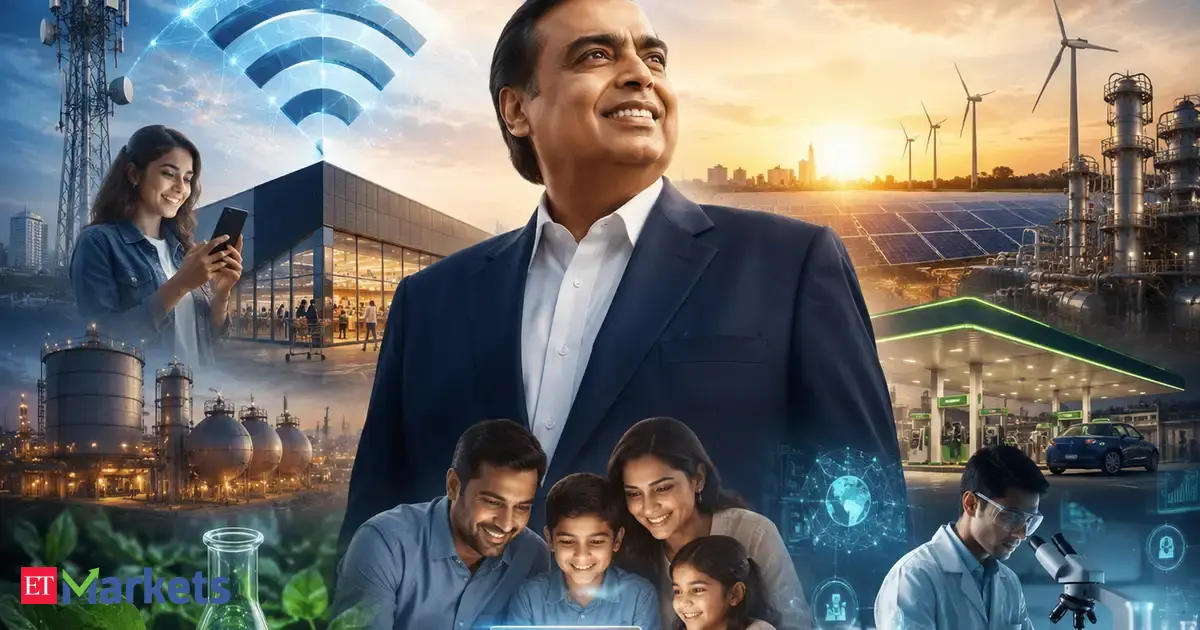
Reliance Industries is charting a new course to boost its stock for 44 lakh investors, moving beyond a potential Jio IPO. Billionaire Mukesh Ambani has unveiled five key growth drivers, including revitalizing the O2C business, scaling up new energy ventures, building India's AI backbone, expanding FMCG operations to a Rs 1 lakh crore target, and becoming a major export hub. View More
Reliance Industries Ltd ( RIL ), India’s most valuable conglomerate and its largest stock by market capitalization, is facing a pivotal moment. With its share price down 18% from its recent peak, billionaire Mukesh Ambani is pivoting beyond the highly anticipated Jio Platforms IPO to restore momentum for the company’s 44 lakh anxious shareholders. RIL shares are stuck near the -1 standard deviation band on its long-term forward EV/EBITDA chart, implying near-zero value ascribed to the company's new growth engines, according to Jefferies. At last week’s AGM, Ambani announced that RIL is targeting more than a doubling of consolidated EBITDA over the next five years — a repeat of what the company achieved in the previous five. The question every analyst is now wrestling with is which of the five growth levers Ambani laid out will actually move the needle first. Here is how the triggers stack up, in order of what matters most to markets right now: 1) Ambani’s old warhorse O2C The oil-to-chemicals (O2C) business remains the largest single contributor to Reliance's consolidated EBITDA at roughly 34%, and it has been the single biggest drag on the stock. Middle East supply disruptions hit refining throughput and margins hard in FY26, with crude throughput sliding to 70.7 million tonnes from 73.7 million in FY25. Also Read | Rs 35,000 crore Jio IPO may not be a jackpot for Reliance investors. Here's why The near-term fix is geopolitical rather than operational. BOB Capital Markets’ research analyst Sukhwinder Singh notes that O2C will likely regain momentum "as soon as supply side constraints normalize from the Middle East," with management expressing confidence that the business will recover once the geopolitical situation improves. Jefferies adds a more structural tailwind: average petrochemical margins for PE, PP and PET are currently running about 140% above pre-conflict levels, partly because two of the largest petrochemical facilities in Iran and two in Saudi Arabia have sustained damage, keeping naphtha exports to North-East Asia from normalizing. Longer term, Reliance is pivoting the business toward higher-value output. The company is executing a 3 million tonne PTA facility at Dahej, building a carbon fibre facility at Hazira that management describes as poised to become one of the world's largest and most advanced, and expanding PVC and CPVC capacity including a 1.2 million tonne PVC plant at Nagothane. The stated ambition is to convert all crude oil processed into high-value materials — carbon fibre, specialty chemicals and green chemicals — which would structurally improve margins and reduce cyclicality. Live Events Singh, however, is cautious on the EBITDA doubling target precisely because of O2C's weight in the mix: "With O2C contributing 34% of overall EBITDA and facing volatility in prices/supply, we expect the target to double EBITDA in 5 years to be a bit optimistic." Citi is more constructive, expecting O2C EBITDA to improve once geopolitical conditions normalize, and sees the pivot to advanced materials as reducing the business's long-run cyclicality. Also Read | Jio IPO explained: What a fresh issue and no OFS in India's biggest public offer means for investors 2) New energy: From construction to cash flows FY27 is the year Reliance's new energy business is finally supposed to start generating revenue, and the AGM provided the clearest timeline yet on what that looks like. Solar PV cell and module manufacturing lines are now operational. Nearly 1 gigawatt of Heterojunction Technology modules have been produced, offering roughly 2% higher energy yield, 15% better temperature performance and 25% lower degradation than conventional modules. The company has achieved India's first ALMM listing for HJT technology and is building toward 20 gigawatts of fully integrated capacity spanning polysilicon, ingots, wafers, cells, modules and glass. On batteries, the first phase of the 40 gigawatt-hour BESS and Cell Giga Factory is on track for commissioning this year, with all equipment already delivered at the site. Crucially, Reliance has now raised its battery capacity commitment to 120 gigawatt-hours annually — a threefold increase from guidance given just two years ago, and a scale that would make it one of the world's largest manufacturers of lithium iron phosphate batteries. Morgan Stanley calls out the market opportunity explicitly, projecting global energy storage system installation additions will post a 55% compound annual growth rate from 500 gigawatt-hours in 2025 to 3,000 gigawatt-hours by 2030, with India expected to add 125 gigawatt-hours and requiring associated capital expenditure of $17 billion. The commercial validation is already in place: Reliance has signed a $3 billion long-term green ammonia supply agreement with Samsung C&T, which analysts describe as among the largest green ammonia offtake contracts in the world. Advanced discussions are underway for similar offtake commitments from Japan, Korea and Europe. The entire ecosystem is being anchored at a 550,000-acre renewable energy hub in Kutch, Gujarat, designed to deliver round-the-clock power by integrating solar and battery storage. Once fully operational, the hub is expected to generate over 40 billion units of green electricity annually, approximately 3% of India's annual electricity requirement. Kotak Institutional Equities flags that FY26 marked the transition of the Dhirubhai Ambani Green Energy Giga Complex "from construction to commissioning" — a phrase that signals the inflection point markets have been waiting for. Morgan Stanley sees potential for up to $60 billion in value creation from the new energy and AI infrastructure verticals combined. 3) Reliance Intelligence: India's sovereign AI backbone Reliance Intelligence, established as a dedicated AI subsidiary under the Reliance Industries parent, is building what Ambani has described as India's sovereign AI backbone and the scale of infrastructure being deployed is significant enough that multiple brokerages flagged it as a potential multi-billion-dollar value creator currently ascribed zero value in sum-of-the-parts models. The first 120 megawatts of AI data centre capacity will be commissioned by end-2026, powered entirely by renewable energy from the Kutch solar platform. The company is operationalizing an initial fleet of Nvidia GB300 GPUs — next-generation chips that CLSA notes are equivalent to more than 75,000 H100 GPUs on an AI-inference basis. Once the first 120-megawatt capacity is fully operational, this can scale to over 200,000 H100-equivalent GPUs. The infrastructure is not being built in isolation. Reliance is building MW-scale AI-ready data centres for Google and Meta. The Google partnership provides free access to Google AI Pro powered by Gemini to hundreds of millions of users. The Meta partnership, structured as a joint venture, operationalizes the LLaMA open-source AI for Indian enterprises with sovereign hosting within India. Additionally, 168 megawatts of the 1 gigawatt total AI data centre capacity Reliance is building has been underwritten by Meta. Jefferies describes Reliance's position as favorable given its "access to capital, fibre connectivity and cheap captive renewable-energy," and views the data centre opportunity as a key potential re-rating catalyst. CLSA goes further, noting that the integration of new energy manufacturing with AI data centre infrastructure "has few global peers" globally. The application layer is being built in parallel — AI services covering education, healthcare, small business and agriculture, accessible in 22 Indian languages, under brands including JioBharatIQ, AI Vyapar, JioHealthIQ, JioLearnIQ and JioKrishiIQ. 4) Rs 1 lakh crore target for FMCG The consumer products business, Reliance Consumer Products Limited , or RCPL, is perhaps the most ambitious of the five growth engines in absolute revenue terms. The company reported revenues of Rs 220 billion in FY26, doubling year-on-year from Rs 115 billion in FY25. The target: Rs 1 lakh crore (trillion) in revenues by FY30. That is a roughly 4.5x increase in four years, and Reliance is backing the ambition with capital. The company has already invested Rs 100 billion in manufacturing capacity, with beverage production spanning 12 states through high-speed bottling lines. A further Rs 300 billion is earmarked over the next three years to build what management describes as Asia's largest network of integrated food parks — AI-driven, robotics-enabled, and engineered for cost leadership. The brand portfolio is gaining traction. Campa, the largest brand in the portfolio, achieved Rs 47 billion in gross sales in FY26 and is now India's fourth-largest carbonated soft drinks brand. Independence, the daily essentials brand, delivered Rs 26 billion in revenue. RCPL's packaged water brand has made it India's third-largest player in branded packaged water. International expansion is accelerating. RCPL products are now present in more than 40 countries through exports and franchise sales, with early traction specifically in Europe and Africa. Jefferies expects approximately 14% revenue CAGR in retail over FY26-28, while Kotak forecasts Reliance Retail's EBITDA to compound at roughly 16% over FY26-29. 5) Exports: The anchor institution play The most strategically novel announcement at the AGM was Reliance's ambition to become an anchor institution for a multi-sector export hub. The target: enabling $125-150 billion in exports by 2032. For context, Reliance's consolidated exports in FY26 were approximately $29 billion, implying the company is targeting a roughly 4-5x increase. BOB Capital notes that Reliance has historically been India's largest merchandise exporter with what it describes as a world-class platform for energy exports. The new ambition extends this platform across consumer brands, green energy products and new materials. This trigger is the longest-dated of the five and currently contributes nothing to near-term earnings estimates. But it is the one that, if executed, would most fundamentally change how global investors think about Reliance's structural role in India's economy. What the market is pricing in and what it isn't The stock's current valuation tells the story of a market that believes in legacy businesses and almost nothing else. CLSA's sum-of-the-parts target price of Rs 1,800, the most bullish among major brokerages, explicitly states that the target "does not assign any value to Reliance's AI, FMCG, media, new materials or export plans." Any visible progress in these areas, the brokerage notes, would be a catalyst. Jefferies puts its price target at Rs 1,675, implying 28% upside from current levels, and describes the stock as discounting "lower growth trading at -1 SD on LT forward EV/EBITDA and imputing near-zero value to New Energy, data-center, etc." Citi has a target of Rs 1,680, BofA Securities Rs 1,650, and Nuvama Rs 1,765 with almost every major brokerage that covers the stock having a Buy or Outperform rating. (Disclaimer: Recommendations, suggestions, views and opinions given by the experts are their own. These do not represent the views of The Economic Times) .Pbanner{display:flex;justify-content:space-between;align-items:center;background-color:#ec1c40;margin-top:20px;padding:5px 10px;border-radius:4px;color:#fff;line-height:10px;} .Pbannertext{display:flex;align-items:center;font-size:16px;font-weight:600;font-family:'Montserrat';} .Pbannertext img{height:20px;margin:0 6px} .Pbannerbutton a{display:flex;align-items:center;background-color:#fff;color:#ec1c40;text-decoration:none;font-weight:600;padding:4px 8px;border-radius:6px;font-size:15px;font-family:'Montserrat';} .Pbannerbutton img{height:20px;margin-right:6px} .Pbannerbutton a:hover{background-color:#f7f7f7} Add as a Reliable and Trusted News Source Add Now! (You can now subscribe to our ETMarkets WhatsApp channel) (You can now subscribe to our ETMarkets WhatsApp channel)
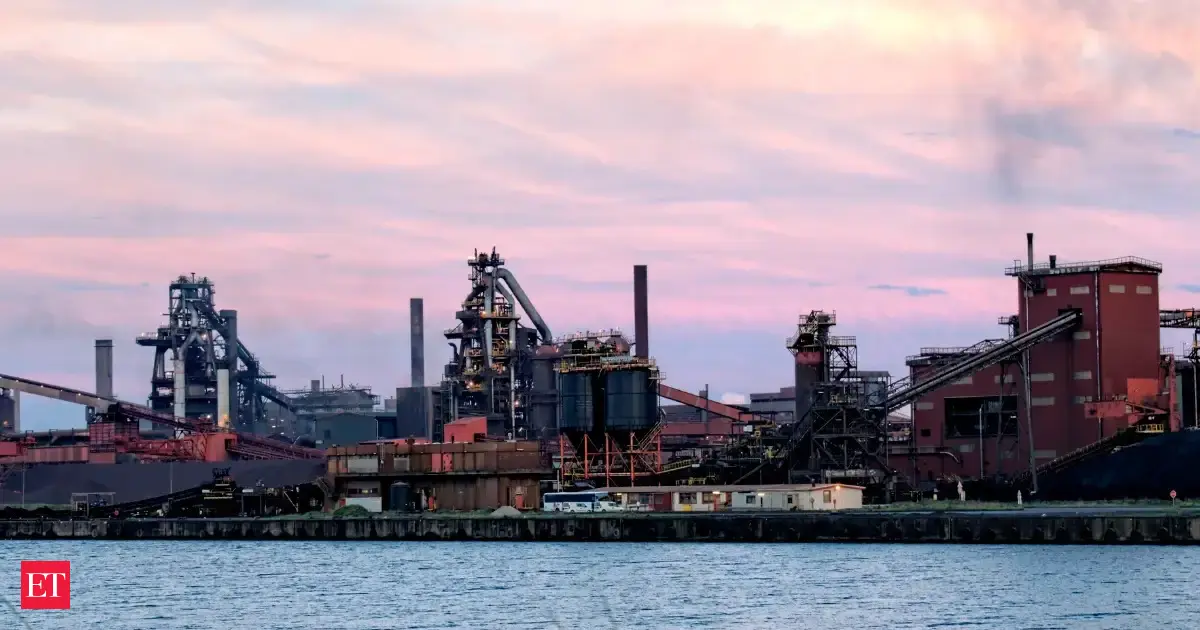
Steel giant ArcelorMittal is joining forces with Amazon Web Services (AWS) to revolutionize its global operations. By integrating AWS's cloud and AI capabilities, the company aims to enhance safety, improve asset reliability, and boost energy efficiency across its manufacturing processes. This strategic partnership will leverage advanced technologies like industrial IoT and machine learning to enable predictive maintenance and optimize production, marking a significant step towards digitally enabled, sustainable steelmaking. View More
New Delhi: ArcelorMittal on Monday said it has partnered with Amazon Web Services ( AWS ) to automate its global operations through the US tech major's cloud and AI capabilities. "The collaboration brings AWS cloud and AI capabilities directly to ArcelorMittal's manufacturing processes , providing opportunities for further optimisation and improvement of safety, asset reliability and energy efficiency ," the steel major, which also has a presence in India, said in a statement. The company said it will converge some of its operational technology (OT) and information technology (IT) on AWS infrastructure, designed for security and scale, extending cloud and AI to the edge of its production environments. Read More: ArcelorMittal Nippon Steel India gets first PM-SETU nod; Andhra Pradesh leads industry-driven ITI overhaul Using AWS services across industrial IoT , real-time sensor data and machine learning, the company will deploy AI at the point of production, enabling predictive maintenance , computer-vision quality control, process optimisation and digital twins of its physical assets and production lines. Live Events Further, to advance digital and artificial intelligence adoption at scale, AWS will design and deliver a comprehensive education programme for ArcelorMittal's global workforce. "By converging our operational and information technology on a single secure platform, we are moving to digitally enabled operations - safer for our people, more reliable in output, and more sustainable by design. This is how we industrialise AI at scale across the steelmaking value chain ," said Nik Puri, Group CIO & CISO at ArcelorMittal. Read More: India to lead next phase of global steel demand, says Lakshmi Mittal ArcelorMittal is one of the world's leading integrated steel and mining companies with a presence in 60 countries and primary steelmaking operations in 14 countries. .Pbanner{display:flex;justify-content:space-between;align-items:center;background-color:#ec1c40;margin-top:20px;padding:5px 10px;border-radius:4px;color:#fff;line-height:10px;} .Pbannertext{display:flex;align-items:center;font-size:16px;font-weight:600;font-family:'Montserrat';} .Pbannertext img{height:20px;margin:0 6px} .Pbannerbutton a{display:flex;align-items:center;background-color:#fff;color:#ec1c40;text-decoration:none;font-weight:600;padding:4px 8px;border-radius:6px;font-size:15px;font-family:'Montserrat';} .Pbannerbutton img{height:20px;margin-right:6px} .Pbannerbutton a:hover{background-color:#f7f7f7} Add as a Reliable and Trusted News Source Add Now! (You can now subscribe to our Economic Times WhatsApp channel) (You can now subscribe to our Economic Times WhatsApp channel)

A surge in pipeline investment in West Asia is lifting demand for Indian steel pipes—but also pushing manufacturers to import specialized steel inputs, creating an unusual trade loop. View More

India is collaborating with Russian oil giant Rosneft to explore Siberia's rare earth deposits, aiming to secure vital mineral supplies. These elements are crucial for electric vehicle motors and advanced electronics, areas where India currently depends on imports. Following past export disruptions, this partnership, initiated during the India-Russia summit, seeks to develop processing technologies and potentially produce essential rare-earth magnets. View More
New Delhi: India is in talks with Russian oil producer Rosneft to study the mineral composition of its rare earth deposits in Siberia, according to an official, as part of efforts to secure supplies of critical minerals. Rare earth elements are essential for producing permanent magnets, which are essential for electric vehicle motors and find application across new-age electronics. India relies on imports of these elements to meet its domestic needs, as it does not have commercial-scale facilities for refining and separating. Also Read: Japan company to set up rare earths magnet unit in Andhra Pradesh The country faced an acute shortage of rare earth magnets after China, its largest supplier, clamped down on exports. During the annual India-Russia summit in December, the two countries had decided to launch collaboration in the rare earth and critical minerals sector. Russia holds some of the world's largest reserves of rare earth elements, primarily in Siberia and the Murmansk region. Rosneft had acquired the deposit in Siberia's Tomtor region last year. In May, JSC Giredmet, a unit of Rosatom's scientific division, signed a memorandum of understanding with India's Nexon Geochem for research and development of technologies for processing raw materials of rare earths. Live Events Also Read: India, US seal critical minerals and rare earths pact amid global supply chain race Giredmet also signed a letter of intent with India's Technology Innovation in Exploration & Mining Foundation (TEXMiN), part of the Indian Institute of Technology (Indian School of Mines). The agreement provides for joint research and development of technologies for producing neodymium-iron-boron (NdFeB) rare-earth permanent magnets, including the full metallurgical cycle and pilot validation of Giredmet technologies. .Pbanner{display:flex;justify-content:space-between;align-items:center;background-color:#ec1c40;margin-top:20px;padding:5px 10px;border-radius:4px;color:#fff;line-height:10px;} .Pbannertext{display:flex;align-items:center;font-size:16px;font-weight:600;font-family:'Montserrat';} .Pbannertext img{height:20px;margin:0 6px} .Pbannerbutton a{display:flex;align-items:center;background-color:#fff;color:#ec1c40;text-decoration:none;font-weight:600;padding:4px 8px;border-radius:6px;font-size:15px;font-family:'Montserrat';} .Pbannerbutton img{height:20px;margin-right:6px} .Pbannerbutton a:hover{background-color:#f7f7f7} Add as a Reliable and Trusted News Source Add Now! (You can now subscribe to our Economic Times WhatsApp channel) (You can now subscribe to our Economic Times WhatsApp channel)

NetJets is not speculating on what caused one of its planes to crash onto a highway in Laredo, Texas late Tuesday, killing a prominent tech entrepreneur. View More
In this articleBRK.BGOOGBRK.BFollow your favorite stocksCREATE FREE ACCOUNT (This is the Warren Buffett Watch newsletter, news and analysis on all things Warren Buffett and Berkshire Hathaway. You can sign up here to receive it every Friday evening in your inbox.) NetJets' first fatal crash kills influential Texas VC founder NetJets says it will not speculate on what caused one of its planes to crash onto a highway in Laredo, Texas late Tuesday, killing a prominent tech entrepreneur.Joshua Baer was the 50-year-old founder of Capital Factory, a VC company in Austin that specializes in tech startups.NetJets did say in a statement, "Safety is, and has always been, the foundation of everything we do." It will "cooperate fully" with investigators from the National Transportation Safety Board.It is the first fatal crash for the Berkshire Hathaway subsidiary, and the first for any company that provides fractional ownership of private jets, a business model NetJets originated in 1986 before it was acquired by Berkshire in 1998.The Cessna Citation Latitude plane was traveling from San José del Cabo, a resort city in Mexico, to Austin when its pilots reported it was low on fuel and asked for an emergency landing at Laredo's airport. Firefighters at the site of a NetJets plane crash in Laredo, Texas, June 16, 2026.Laredo Police Department/Handout via REUTERS Reports and videos from the scene show bystanders helping to rescue the two pilots and three teenaged passengers who survived.Laredo's mayor told reporters, "While the loss of life is deeply regrettable, it is nothing short of a miracle that this tragedy did not become a mass fatality event."A witness described the scene for CNN as her husband joined the rescue effort.Former FAA and NTSB investigator Jeff Guzzetti tells the AP the final minutes of the flight suggest it was trying to glide into Laredo's airport after both engines lost power. "I think they just ran out of altitude and airspeed toward the end there."Mary Schiavo, a former inspector general for the U.S. Transportation Department speculates to the AP there may may have been a fuel leak since the jet's 3000 miles range is around three times the distance of its planned flight.The NTSB says the plane's cockpit voice recorder and flight data recorder are being sent to Washington for analysis. Google's parent edges out Coca-Cola for third place in Berkshire's equity portfolio Berkshire Hathaway has not yet told us whether it has actually purchased the $10 billion of Alphabet shares it agreed to buy directly from Google's parent in a deal announced on June 1.But if those new shares are combined with its holdings of GOOGL and GOOG as of March 31, as disclosed by Berkshire in its Q1 13F filing with the SEC last month, their total market value is now slightly more than Berkshire's long-time stake in Coca-Cola that Warren Buffett purchased after the 1987 market crash.Here's the math:Alphabet's news release said Berkshire had agreed to buy $5 billion of its Class A shares (GOOGL) for $351.81 each and $5 billion of its Class C shares (GOOG) for $348.20 each.That works out to more than 14 million shares of each class: Zoom In IconArrows pointing outwards Adding the new shares to the existing holdings gives Berkshire 68.5 million Class A shares and 17.9 million Class C shares: Zoom In IconArrows pointing outwards Using Thursday's closing prices, the Class A shares are valued at just under $25.2 billion and the Class C shares are worth almost $6.6 billion for a total of $31.79 billion: Zoom In IconArrows pointing outwards That puts Alphabet into third place in Berkshire's equity portfolio by a razor-thin margin of $34 million ahead of Coke: Zoom In IconArrows pointing outwards Last Friday, Coca-Cola was ahead by almost $2 billion, but its shares fell nearly 4% this week while Alphabet gained close to 2%. Zoom In IconArrows pointing outwards Stay tuned! Famous footballer recounts embarrassing conversation with 'Buffett' Jimmy Buffett with Warren Buffett at the 2016 Berkshire meeting.Lacy O'Toole | CNBC In what appears to be an outtake from his "New Heights" podcast that was posted on Instagram this week, Travis Kelce, an extremely well-known football player for the Kansas City Chiefs who is planning to marry pop star Taylor Swift, possibly next month, recounted what he called an embarrassing encounter with a man he thought was Warren Buffett:I have face blindness. You guys know I have face blindness?Yeah, well, this is an episode of face blindness.I go to â I go to New York, and there's a huge festival, a music festival, out in the Hamptons, and I'm a huge music lover, as you guys know. (Applause)And I go with a bunch of guys from New York in the money world, so it's like a connection and like, finances and I'm thinking that I'm going to be around a bunch of guys in finances at this music festival.So, I get up there and I immediately start having beverages, which is kind a thing, the Kelce way of going about things.And I get shit faced. (Laughter)Get shit faced. Don't even really know who's on, who's performing at the concert. I'm just kind of up there, like, hey, you got any more tequila? (Laughter)And a guy comes up and says, "Dude. Buffett's here. He wants to meet you."I'm like, "Holy shit. That's big money." (Laughter)"My god, I'm way too hammered to say hello to this guy and start talking finances."I got to go â get it together â get a water, where's the water, where's the water? Kansas City Chiefs tight end Travis Kelce (87) runs the ball in for a touchdown against the Tampa Bay Buccaneers during the first quarter at Raymond James Stadium, Oct. 2, 2022.Kim Klement | USA Today Sports | Reuters So, I get a water, I go over to meet Buffett. I shake his hand and man, we have the best conversation I've ever had in my life. The man is literally smiling from ear to ear. I'm thinking I'm going to be rich here soon. He's going to (unintelligible) these investments.And he's starts telling this story in high school when he picked up the guitar for the first time. (Laughter)And I was like, right to his face, "No way! Warren Buffett played the guitar?" (Laughter and applause)And his face went from smiling ear to ear to not smiling at all.And then he got tapped on the shoulder because he had to go sing Margaritaville. (Laughter and applause)So, I was his biggest cheerleader singing Margaritaville on the side.So, I have an episode of face blindness at least once a month, and that was my â that was me mistaking Jimmy Buffett â the late, great, unbelievable Jimmy Buffett for â thinking Warren Buffett was going to be at a music festival in the Hamptons. (Laughter)That's probably the most embarrassing story I have for you guys.There is no family relationship between the two Buffetts but they were friends, referring to themselves as "Cousin Warren" and "Cousin Jimmy."Jimmy Buffett regularly attended Berkshire's annual meeting, even opening the 2007 gathering with a rendition of "Margaritaville" featuring rewritten lyrics about "Wasting away in Berkshire Hathaway-a-ville / Searchin' for some good companies to buy."He died of a rare form of skin cancer in 2023 at the age of 76. BUFFETT & BERKSHIRE AROUND THE INTERNET Some links may require a subscription:The Times of London (subscription): Warren Buffett was right: never bet against AmericaBarron's on MSN: Buffett could halt gifts to Gates Foundation after Epstein disclosuresBarron's on MSN: Bill Berkley took Warren Buffett's route to building a successful insurerInvestopedia: Warren Buffett's Strategy for Minimizing Investment Losses and Safeguarding Your MoneyMorningstar: What Stands Out Most About Berkshire Hathaway's Latest Stock PurchasesNikkei Asia (subscription): Tokio Marine to team with Berkshire on M&A in Australia, Canada, CEO says HIGHLIGHTS FROM CNBC'S BUFFETT ARCHIVE How NetJets cost Berkshire hundreds of millions of dollars (2010) Warren Buffett outlines the mistakes made at NetJets, Berkshire's aviation subsidiary. But he and Charlie Munger say they will generally continue to trust the managers of their subsidiaries. watch nowVIDEO0:0000:00Why NetJets has cost Berkshire hundreds of millions of dollars2010 Berkshire Hathaway Annual Meeting WARREN BUFFETT: The biggest mistake made with NetJets is essentially we kept â we were buying planes at prices that were fictitious, in terms of the price at which we would later be able to sell them. And there's a certain time lapse involved in buying fractional shares.There's a lot of explanations for it. But in the end, we didn't properly prepare for what was obviously happening. And we lost a lot of money, a good bit of which was attributable to the write-down of planes, which you could call is our inventory, where we bought them at X and we couldn't sell them at X or 90 percent of X.Some of those were new planes that we should not have taken on, and many of them were planes coming back from owners.We also let our operating costs get out of line with recurring revenues.But, you know, I've made plenty of mistakes. I stayed in the textile business for 20 years. I knew it was a lousy business. Charlie was telling me it was a lousy business in the first year, the second year.And 20 years later, I woke up. I was like Rip Van Winkle. I mean, it's kind of depressing when you think about it. (Laughter)But the one thing we will guarantee, we'll make some mistakes. It was a big mistake at NetJets, $711 million is the figure...CHARLIE MUNGER: If we buy 30 big businesses and generally let the people who run them successfully in â before, run them with very little interference from headquarters, and it works out 95 percent of the time very well, and we have one episode when the basic franchise was protected but we lost profit opportunities for a while, it's not a big failure record.Nor does it indicate that we should stop being pretty easy with the remarkable people who join us with their companies.WARREN BUFFETT: No, it is not going to change â it does not change our management approach at all.I think that we have gotten performance, overall, from managers that are beyond the dreams I would have had when I was first putting this company together.So, it's been a â we let managers do their stuff. BERKSHIRE STOCK WATCH Four weeks Zoom In IconArrows pointing outwards Twelve months Zoom In IconArrows pointing outwards BRK.A stock price: $733,609.77BRK.B stock price: $489.46BRK.B P/E (TTM): 14.57Berkshire market capitalization: $1,055,405,905,430Berkshire Cash as of March 31: $397.4 billion (Up 6.5% from Dec. 31)Excluding Rail Cash and Subtracting T-Bills Payable: $380.2 billion (Up 3.0% from Dec. 31)Berkshire repurchased $234 million of its shares in Q1 2026.(All figures are as of the date of publication, unless otherwise indicated) BERKSHIRE'S TOP EQUITY HOLDINGS - Jun. 19, 2026 Zoom In IconArrows pointing outwards Berkshire's top holdings of disclosed publicly traded stocks in the U.S. and Japan, by market value, based on the latest closing prices.U.S. stock markets are closed today, Friday, for Juneteenth National Independence Day.Holdings are as of March 31, 2026, as reported in Berkshire Hathaway's 13F filing on May 15, 2026, except for:Alphabet, which includes the $10 billion in shares that Berkshire agreed to buy directly from the company, as announced on June 1, 2026. Berkshire has not yet formally disclosed whether the transaction has been completed. The entry is a combination of Class A and Class C Alphabet shares. The market price is a weighted average of the prices of the two classes.Mitsubishi, which is as of April 30, 2026The full list of holdings and current market values is available from CNBC.com's Berkshire Hathaway Portfolio Tracker. QUESTIONS OR COMMENTS Please send any questions or comments about the newsletter to me at alex.crippen@nbcuni.com. (Sorry, but we don't forward questions or comments to Buffett himself.)If you aren't already subscribed to this newsletter, you can sign up here.Also, Buffett's annual letters to shareholders are highly recommended reading. There are collected here on Berkshire's website.-- Alex Crippen, Editor, Warren Buffett Watch Choose CNBC as your preferred source on Google and never miss a moment from the most trusted name in business news.

The India–UK Comprehensive Economic and Trade Agreement delivers a projected 7-10 per cent tariff advantage in the UK market View More

About half of the world’s planned green steel projects have already been delayed, while governments have committed just $20 billion ?of the $1.5 trillion needed to decarbonise the sector View More