Latest Sectors News
John Cockerill India secured an order worth approximately Rs 200 crore from A1 Iron & Steel Tanzania for steel processing equipment at its plant in Dodoma, Tanzania. View More
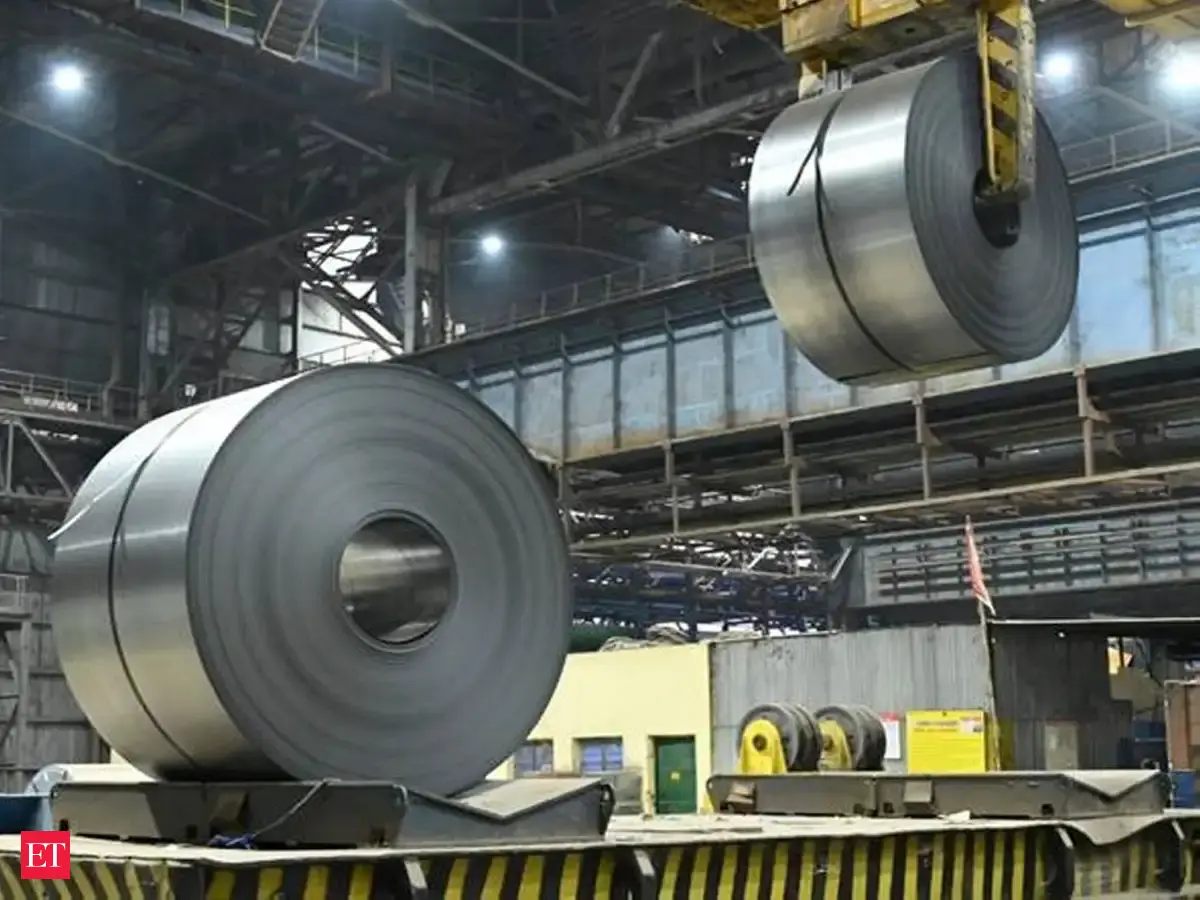
Domestic steel demand is projected to remain strong, exceeding capacity additions through FY2029. Robust consumption trends are supported by healthy industrial and infrastructure activity across India. Long steel prices have recovered significantly and are expected to rise further with favorable seasonality. Flat steel prices are currently at a discount to import parity, with regional prices potentially increasing. View More
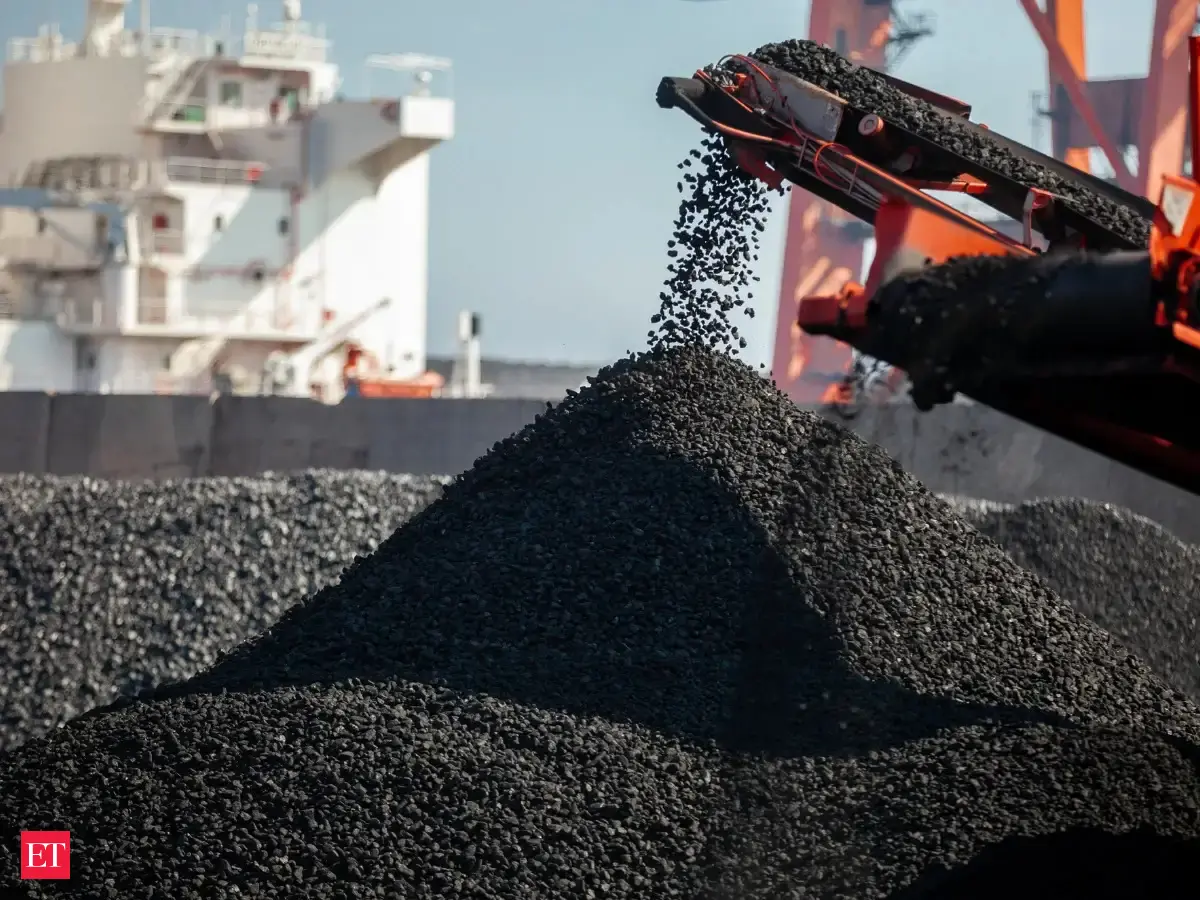
New Delhi: Domestic to remain above 90 per cent over the medium term, led by robust demand, ~7 per cent CAGR over FY2026-29E, outperforming capacity additions, according to a research report by Kotak Institutional Equities . The report noted that consumption trends across the country continue to show stability, supported by healthy industrial and infrastructure activity. "Domestic demand continues to be healthy at 7.8 per cent yoy growth in YTDFY27. This follows 7.7 per cent yoy growth in FY2026 after four successive years of double-digit growth," the report stated. Also Read: Monsoon tests India's steelmakers as prices head in opposite directions On the external trade front, outbound shipments rose sharply off a lower base, while inbound shipments recorded a higher volume over the same duration. Live Events "Exports increased 35 per cent yoy on a weak base to 2.3 mn tons, but were outpaced by imports of 2.8 mn tons, +36.7 per cent yoy YTDFY27," the report added, highlighting that trade remedies remain underway. "Ongoing investigations into anti-dumping duty against imports should keep imports in check." Regarding product pricing, long steel prices show a visible rebound over recent weeks, reversing the downturn witnessed during the early part of the monsoon. "Long steel prices have recovered by 12 per cent over the past month, reversing the sharp correction during June-July 2026. Domestic market tightness and favorable seasonality with a receding monsoon should elevate prices further," the report said. The report highlighted that spot primary and secondary rebar prices gained around Rs 5,600 per ton, reaching Rs 53,900 per ton and Rs 47,900 per ton, respectively. Although these levels remain about Rs 6,000 per ton below the highs recorded in April 2026, improving seasonal conditions provide further price support. In the flat steel segment , domestic hot rolled coil (HRC) prices trade at Rs 58,800 per ton, sitting at an approximate 3 per cent discount to import parity. The report pointed out that weak Chinese steel spreads caused by cost inflation raise the probability of higher regional steel prices in the coming period. Meanwhile, input costs display divergent trends across raw material categories. Coking coal prices gained around 5 per cent over first-quarter levels due to supply constraints, including mine accidents in China and lower Russian production stemming from diesel shortages. Also Read: Indian steel mills face margin squeeze as global coking coal prices rise In contrast, domestic iron ore fines prices fell by approximately 7 per cent from June exit levels, matching the broader softness in seaborne iron ore markets. "We expect steel margins to soften sequentially in 2QFY27E; however, recent price recovery and operating leverage should help margins to recover in 2HFY27E," the report stated, adding that lower iron ore prices provide relief to non-integrated producers while companies such as JINDALST and SAIL stand to benefit from the ongoing long steel recovery. .Pbanner{display:flex;justify-content:space-between;align-items:center;background-color:#ec1c40;margin-top:20px;padding:5px 10px;border-radius:4px;color:#fff;line-height:10px;width: 100%;box-sizing: border-box} .Pbannertext{display:flex;align-items:center;font-size:16px;font-weight:600;font-family:'Montserrat';} .Pbannertext img{height:20px;margin:0 6px} .Pbannerbutton a{display:flex;align-items:center;background-color:#fff;color:#ec1c40;text-decoration:none;font-weight:600;padding:4px 8px;border-radius:6px;font-size:15px;font-family:'Montserrat';} .Pbannerbutton img{height:20px;margin-right:6px} .Pbannerbutton a:hover{background-color:#f7f7f7} Add as a Reliable and Trusted News Source Add Now! (You can now subscribe to our Economic Times WhatsApp channel) (You can now subscribe to our Economic Times WhatsApp channel)
Tempsens Instruments ended a 609-day drought in India’s mainboard IPO market, delivering a 111.3% listing gain on debut. The Rs 650 crore issue listed at Rs 634 against an issue price of Rs 300. While listing gains have improved in 2026, retail investors have become increasingly selective. View More
It has been more than 20 months, or 609 days, since the mainboard segment of India’s IPO market last saw a stock deliver a listing-day gain of more than 100%. That long dry spell is finally over. Tempsens Instruments ’ Rs 650 crore IPO made a bumper debut, listing at Rs 634, a massive premium of 111.3% over its issue price of Rs 300 per share. Official stock exchange data shows that before Tempsens Instruments, Mamatha Machinery was the last mainboard IPO to deliver a listing gain of more than 100%, making its debut at a 147% premium on December 27, 2024. That year saw six other mainboard IPOs more than double investors’ money on debut. Vibhor Steel Tubes led the pack with a 181.5% listing premium, followed by BLS E-Services at 126%, Premier Energies at 120%, KNR Heat Exchanger at 118%, Unicommerce eSolutions at 117% and Bajaj Housing Finance at 114%. The contrast with last year could hardly be starker. The previous year was one to forget for the primary market, with not a single mainboard IPO doubling investors’ money on debut. Highway Infrastructure delivered the highest listing gain, debuting at a 65% premium to its issue price. The stock is currently down 35% from its issue price. Live Events Urban Company was next, listing at a 57.5% premium, followed by Aditya Infotech, which debuted at a 50% premium and has since taken its total present gains to a staggering 435%. LG Electronics and GNG Electronics also debuted at 50%, while Meesho posted a listing-day gain of just over 46%. The IPO market has shown stronger listing gains so far in 2026, although Tempsens’ debut stands out. Coal India subsidiary Bharat Coking Coal made a stellar debut, listing at about a 96% premium to its issue price. Beharilal Engineering followed with a 64% premium, while IndoMIM and CMG Green Technologies listed at premiums of 44% and 40%, respectively. Dhoot Transmission and Advit Jewels listed at about 37% premiums. What are analysts saying about Tempsens IPO? According to a research report by Anand Rathi, Tempsens Instruments is valued at an implied P/E multiple of 35.4x and an EV/EBITDA multiple of 25.64x based on FY26 earnings at the upper end of the IPO price band. The brokerage believes the company’s strong revenue growth, diversified product portfolio and expanding international presence could support a valuation premium. However, at the upper price band, the IPO appears to be fully valued. Despite the premium valuation, Anand Rathi has initiated a “Subscribe: Long Term” rating on the IPO, suggesting that investors with a long-term investment horizon may consider the issue. Tempsens Instruments (India) delivered a strong financial performance in FY26, continuing the growth momentum seen in the previous year. The company’s total income increased to Rs 455.86 crore in FY26 from Rs 382.47 crore in FY25, representing a 19% year-on-year growth. The growth in revenue also translated into improved profitability. The company’s Profit After Tax (PAT) rose to Rs 71.07 crore in FY26 from Rs 62.56 crore in FY25, registering a 14% year-on-year increase. IPO trend in 2026 While listing gains have returned to the primary market, retail investors are becoming increasingly selective. Data compiled by ET showed that retail bidders did not even fully subscribe to the quota of stock earmarked for them in nearly a third of the 42 mainboard share listings this year, while the equity portion dedicated to this category was fully subscribed in only 30 offerings. Furthermore, only 16 of the 42 initial public offerings (IPOs) of 2026 have seen retail subscriptions exceed five times the quota. That accounts for 38% of issues, down sharply from 63% in 2025 and 68% in 2024. Retail bidders had fully subscribed to their allotted quota in all 50 IPOs of 2024 and in 44 out of 49 issues, or 90%, last year. Even the median retail subscription to IPOs until mid-August has fallen to just 2.32 times the quota across the 42 cases, compared with an astonishing 17.59 times across the 45 IPOs of 2024 and 8.35 times across the 45 issues last year. “The selective approach of retail investors is a sign of a maturing market,” said Arka Mookerji, co-head of the equity capital markets, JSA Advocates. The IPO road ahead A successful IPO listing depends on several factors, including a better business model, future growth potential, return ratios and, of course, the valuations at which the IPOs are priced, said Narendra Solanki, Head of Fundamental Research on Investment Services at Anand Rathi Shares and Stock Brokers. Also read: Tempsens Instruments shares make blockbuster debut, list at 111% premium Looking ahead, Solanki believes sentiments are much better now than they were at the start of the year. With the much-awaited IPOs of NSE and Jio lined up, he believes the positive momentum in India’s primary market is likely to continue. (Disclaimer: Recommendations, suggestions, views and opinions given by the experts are their own. These do not represent the views of The Economic Times) .Pbanner{display:flex;justify-content:space-between;align-items:center;background-color:#ec1c40;margin-top:20px;padding:5px 10px;border-radius:4px;color:#fff;line-height:10px;width: 100%;box-sizing: border-box} .Pbannertext{display:flex;align-items:center;font-size:16px;font-weight:600;font-family:'Montserrat';} .Pbannertext img{height:20px;margin:0 6px} .Pbannerbutton a{display:flex;align-items:center;background-color:#fff;color:#ec1c40;text-decoration:none;font-weight:600;padding:4px 8px;border-radius:6px;font-size:15px;font-family:'Montserrat';} .Pbannerbutton img{height:20px;margin-right:6px} .Pbannerbutton a:hover{background-color:#f7f7f7} Add as a Reliable and Trusted News Source Add Now! (You can now subscribe to our ETMarkets WhatsApp channel) (You can now subscribe to our ETMarkets WhatsApp channel)
Lloyds Metals has environmental clearance for a 4.5 mtpa steel plant at Konsari in Maharashtra but is studying a scale-up to as much as 8 mtpa as iron ore production rises. View More
China's industrial profits growth in July slowed to its weakest pace this year, as soft demand and a broader slowdown in the economy weighed on manufacturers. View More
Employees work on the assembly line of an intelligent factory of SERES Automobile Co., Ltd in Chongqing, China on July 19, 2022. Vcg | Visual China Group | Getty Images China's industrial profits growth in July slowed to its weakest pace this year, expanding 11.2% from a year earlier, as soft demand and a broader slowdown in the economy weighed on manufacturers. For the first seven months of this year, profits climbed 17.6% from a year earlier, according to National Bureau of Statistics data released Thursday, loosing momentum following the 18.7% growth in the first half-year. Industrial corporate profitability, however, has seen a notable turnaround, swinging from barely positive growth last year to double-digit gains this year. That recovery was largely helped by a global artificial intelligence boom that fueled demand for computing and electronics equipment manufacturing. The integrated circuit industry, led by computing and storage chip manufacturers, saw profits expand 18.5% in the January-July period from a year earlier, contributing over 80% of the profit gains across the electronics sector, according to the official release. A more than that fivefold increase in profits in the optical fiber manufacturing also boosted overall industrial gains in advanced manufacturing. Raw materials manufacturers also saw profits expand 55.2% this year as of end-July from a year earlier. Petroleum processing industry turned a profit over the seven months as supply disruptions in the Middle East pushed up prices for lower-stream chemical products. "Decelerating growth was primarily dragged down by falling investment in property and infrastructure, evidenced by worsening profits in steel and cement industries," said Tianchen Xu, senior economist at Economist Intelligence Unit. Raw materials and AI supply chain remained resilient while consumer-facing industries struggled, Xu added. Profit decline in furniture manufacturing steepened to 58.2% for the first seven months of the year, worse than the 52.7% recorded as of June. China's producer prices in June grew at their fastest pace in almost four years after rebounding in March from a multi-year slump that began in October 2022, according to LSEG data.But the reflation boost appears to be petering out as much of the price recovery has been driven by surging global energy costs, while domestic demand lags. The factory-gate inflation slowed to three-month low of 3.5% in July.Growth in the world's second-largest economy also weakened in the second quarter to its slowest pace in more than three years. An activity tracker compiled by the Bank of America research team indicated "broad-based loss of growth momentum" in the economy in July. Real exports growth slowed to 5.5% from 11.6% in June, and other indicators including retail sales, port throughput and electricity production weakened further. watch nowVIDEO6:0606:06UBS: Confident about Chinaâs domestic AI compute growthThe China Connection Economists expect Chinese authorities to step up targeted support to stabilize corporate profitability, as consolidation accelerates in sectors grappling with sluggish demand, fierce competition and bruising price wars.The deployment of existing fiscal resources will likely accelerate over the coming months, with potential additional easing steps if growth continues to slow, said Sophie Altermatt, economist at Julius Baer."This should provide some near-term stabilisation and put a floor under growth," Altermatt noted, but a "strong cyclical rebound" remains unlikely as the property market slump, sluggish household confidence and subdued private investment constrain the recovery. Choose CNBC as your preferred source on Google and never miss a moment from the most trusted name in business news.
Lumino Industries plans a ?700 crore initial public offering to reduce debt and boost manufacturing capacity. The company expects to benefit from increased demand for wires and cables. However, its debt has risen significantly due to expansion and working capital needs. Raw material price volatility and customer concentration present key operational risks. The issue is suitable for long-term investors with higher risk tolerance. View More
ET Intelligence Group: Lumino Industries, a power cable manufacturer and EPC contractor , plans to raise ₹500 crore through a fresh issue to repay debt and expand capacity, and ₹200 crore through offer for sale. The promoter stake will fall to 71.9% after the IPO from 100%. The company has reported strong growth in the order book. It is expected to benefit from increasing demand for wires and cables, supported by robust investments in power infrastructure and network expansion projects. However, its debt burden has increased due to capacity expansion and elongated working capital cycle. Additionally, raw-material price volatility and customer concentration remain key operational risks. Given these factors, the issue appears to be suitable for long-term investors with a higher risk tolerance. ET BureauGrowth Equation Power-sector capex offers the firm room to grow, but raw-material price volatility and customer concentration temper outlook Business Incorporated in 2005, Lumino Industries is an integrated engineering, procurement, and construction (EPC) company. It manufactures and supplies conductors, power cables, electrical wires, and specialised components to the power transmission and distribution industry. Manufacturing contributed nearly 70% of revenue in FY26, while EPC accounted for the rest. The company operates two manufacturing facilities in Howrah, West Bengal, with a combined capacity of 40,000 MT. The company had a closing order book of ₹3,149.9 crore as of March 31, 2026, comprising ₹1,991.9 crore of EPC orders and ₹1,157.90 crore of manufacturing orders. The government entities accounted for 53% of FY26 revenue, posing concentration risk. It is also exposed to metal prices volatility as it uses aluminium, copper and steel as raw material. Financials Revenue grew 20% annually to ₹2,041.1 crore in FY26 from ₹1,407.3 crore in FY24. Operating profit before depreciation and amortisation (Ebitda) increased to ₹238.9 crore from ₹145.1 crore while the Ebitda margin improved to 11.7% from 10.3% during the period. It is within the peer range of 3.5-14%. Net profit rose 36% annually to ₹160 crore in FY26 from ₹86.6 crore in FY24. Return on equity increased to 24.6% in FY26 from 21.5% in FY24 compared with peer range of 1%-15.8%. Total debt rose sharply to ₹384 crore in FY26 from ₹40.9 crore in FY24 amid higher capital expenditure and increasing working-capital requirements. Its working capital cycle widened to 86 days in FY26 from 11 days in FY24. Read more: Tata Power loses challenge to $490 million arbitration award Valuation The company demands a price-earnings (P/E) multiple of 15.6 on post-IPO basis compared with a P/E of 18.9 for KEC International , 57.6 for KEI Industries and 73.1 for Apar Industries . .Pbanner{display:flex;justify-content:space-between;align-items:center;background-color:#ec1c40;margin-top:20px;padding:5px 10px;border-radius:4px;color:#fff;line-height:10px;width: 100%;box-sizing: border-box} .Pbannertext{display:flex;align-items:center;font-size:16px;font-weight:600;font-family:'Montserrat';} .Pbannertext img{height:20px;margin:0 6px} .Pbannerbutton a{display:flex;align-items:center;background-color:#fff;color:#ec1c40;text-decoration:none;font-weight:600;padding:4px 8px;border-radius:6px;font-size:15px;font-family:'Montserrat';} .Pbannerbutton img{height:20px;margin-right:6px} .Pbannerbutton a:hover{background-color:#f7f7f7} Add as a Reliable and Trusted News Source Add Now! (You can now subscribe to our ETMarkets WhatsApp channel) (You can now subscribe to our ETMarkets WhatsApp channel)
Tata Steel gets relief as Supreme Court quashes ?890.52 crore GST demand, equal penalty and interest in the tax dispute. View More
Here are five key things investors need to know to start the trading day. View More
This is CNBC's Morning Squawk newsletter. Subscribe here to receive future editions in your inbox.Happy Wednesday. I saw "Maybe Happy Ending" on Broadway last night. The musical about robots got me wondering whether humanoid robots will be able to sing.Stock futures are flat this morning after a positive day for all three major indexes.Here are five key things investors need to know to start the trading day: 1. Sense of scale Jensen Huang, chief executive officer of Nvidia Corp., departs after speaking at the Nvidia GTC conference in San Jose, California, US, on Wednesday, March 18, 2026. David Paul Morris | Bloomberg | Getty Images All eyes are on Nvidia ahead of the chipmaker's earnings report due after the bell. As CNBC's Kif Leswing writes, investors are eager to see whether Nvidia is growing more or less dependent on hyperscalers Amazon, Google and Microsoft amid concerns about customer concentration.Here's what to know:While the artificial intelligence darling has repeatedly beaten analyst expectations over the past year, Nvidia's stock has often been penalized by investors after reporting results.The chipmaker's results and any subsequent stock move could have broader market implications. CNBC's Nick Wells took a look at the stocks that tend to move in sympathy with Nvidia.Shares of Nvidia rose about 2% yesterday, snapping its longest losing streak in four years and helping power a broader advance for stocks.CEO Jensen Huang will speak with CNBC's Jim Cramer tonight on "Mad Money" at 6 p.m. ET. Watch live on CNBC or CNBC+.The blockbuster earnings report isn't the only event on today's calendar: July's PCE price index and second-quarter GDP data are due out this morning, followed by additional quarterly results from Salesforce and Okta after the bell.Follow live market updates here. 2. Tit for tat Dominic LeBlanc, Minister of Internal Trade of Canada speaking on CNBC's Squawk Box on Aug. 25th, 2026.CNBC Canada officially announced its promised retaliatory tariffs on the U.S. yesterday, saying it would match the Trump administration's 50% duties "dollar for dollar."As CNBC's Kevin Breuninger reports, the new batch of tariffs set to take effect Sept. 8 cover more than 700 U.S. goods and amount to around $20 billion. Canada notably slapped a 50% tariff on American steel and aluminum, doubling the current rate.President Donald Trump had signaled that the U.S. and its northern neighbor were closing in on a trade deal last week, but talks fell apart as both sides accused the other of making last-minute changes. Canadian Finance Minister François-Philippe Champagne said yesterday that the U.S. "asked too much and offered too little." 3. Clear the way Vessels near the Strait of Hormuz, as seen from Musandam, Oman, Aug. 24, 2026.Stringer | Reuters Iran and Oman discussed a proposal to create a temporary, joint shipping route through the Strait of Hormuz yesterday as tanker traffic remains sharply below prewar levels. Sayyid Badr bin Hamad Albusaidi, Oman's foreign minister, said he was hopeful a route and "practical arrangements to restore safe navigation" could be announced soon.The two countries also considered a mission to clear mines from the passageway, contradicting Trump, who said in a Truth Social post earlier Tuesday morning that "all mines have been removed and/or detonated" from the strait.Crude prices are lower this morning after falling more than 3% in yesterday's session. Get Morning Squawk directly in your inboxCNBC's Morning Squawk recaps the biggest stories investors should know before the stock market opens, every weekday morning.Subscribe here to get access today. 4. Food for thought The logo for the Food and Drug Administration is seen ahead of a news conference at the Health and Human Services Headquarters in Washington, April 22, 2025.Nathan Posner | Anadolu | Getty Images The Department of Health and Human Services is planning to form two new deputy commissioner roles at the Food and Drug Administration, sources told CNBC's Annika Kim Constantino.Current senior advisor to the FDA Jared Seehafer is the leading candidate for a new position focused on technology and the intersection of health and AI. CNBC could not find a frontrunner for the second deputy commissioner position, which is focused on drugs.The two positions would report to Heidi Overton, Trump's pick for FDA commissioner, who has yet to receive Senate confirmation. Sources told CNBC that some within the Trump administration are seeing the new roles, which would be appointed by HHS officials, as an effort by the Robert F. Kennedy Jr.-led department to exert more influence over the FDA. 5. New road map Waymo robotaxi driven by a safety specialist in New York, April 9, 2026.Michael M. Santiago | Getty Images Waymo is entering its third international market, announcing on Tuesday that it plans to launch driverless rides in Germany by the end of 2027.The Alphabet-owned robotaxi company said it would begin "phased" testing in Munich in the coming weeks to adapt its software to the city's "distinct driving conditions." Waymo â which operates in 11 U.S. cities with plans to expand to 19 more â is already testing its vehicles in London and Tokyo, but Munich marks the company's first EU market."Munich is a world-class hub for mobility and engineering, and becoming part of this city marks an important milestone in our global expansion," Waymo co-CEO Tekedra Mawakana said in a blog post yesterday. The Daily Dividend Bitcoin jumped above the $81,000 mark on Tuesday, the latest sign that the crypto rally is picking up steam. Here's what the move looked like: Loading chart... â CNBC's Tobias Burns, Kif Leswing, Fred Imbert, Nick Wells, Sean Conlon, Kevin Breuninger, Spencer Kimball, Annika Kim Constantino, Samantha Subin and Lee Ying Shan contributed to this report.Luke Fountain assisted in the production of this newsletter. Josephine Rozzelle edited this edition. Choose CNBC as your preferred source on Google and never miss a moment from the most trusted name in business news.
The South Korean automaker wants to keep going by ramping up production at a new $7.6 billion plant in Georgia to capture more sales and market share. View More
watch nowVIDEO4:4804:48Why Hyundai is doubling down on the U.S.Digital Original SAN FRANCISCO â Hyundai Motor Co. CEO José Muñoz smiled and nodded as a fellow executive discussed the automaker's "mueos-ideun ganeunghada" philosophy during the reveal of its new flagship Genesis GV90 SUV.The term means "anything is possible" in Korean. It's a mantra for the South Korean automaker that has proved to be true for the company's U.S. ambitions as well as for Muñoz himself, a Spanish-U.S. dual national who is the first non-Korean executive to lead the automaker.Hyundai has experienced rapid growth in the U.S. so far this decade despite an onslaught of geopolitical changes and a slowing market. And it's hoping to keep that going. The company is ramping up production at a new $7.6 billion plant in Georgia to continue to capture more sales and market share."My top three priorities are U-S-A," Muñoz told CNBC during an interview last week after the Genesis reveal. "USA is helping us to really make good progress, not only in the most important market and the most competitive market in the world, but also elsewhere." (function(){function e(){window.addEventListener(`message`,function(e){if(e.data[`datawrapper-height`]!==void 0){var t=document.querySelectorAll(`iframe`);for(var n in e.data[`datawrapper-height`])for(var r=0,i;i=t[r];r++)if(i.contentWindow===e.source){var a=e.data[`datawrapper-height`][n]+`px`;i.style.height=a}}})}e()})(); Hyundai Motor Group, which includes its namesake vehicles as well as the Kia and luxury Genesis brands, has increased its market share this decade more than any major automaker in the U.S., according to data from Mobility Global.The group has grown its U.S. market share from 8.4% in 2020 to 11.2% through last year, and its sales have grown 50% over that period, making the South Korean company the fourth best-selling automaker in the country. Its market share is up to 11.8% through the first half of this year, according to auto intelligence firm Mobility Global.No other major automaker is even close to such market share gains, with most flat to down during that timeframe. Electric vehicle manufacturer Tesla, at an estimated 2.1 percentage point increase in market share, is the only company even close, according to Mobility Global.Hyundai's U.S. performance has helped it become the third best-selling automaker globally and the second most profitable based on operating income, Munoz said. watch nowVIDEO32:2032:20Hyundai CEO José Muñoz on U.S. expansion and its new luxury Genesis EVNews Videos Hyundai Motor Group Executive Chair Euisun Chung downplayed the company's rapid rise when speaking last week to CNBC: "It's important, but speed doesn't matter. How we grow in the right way [is what matters]. I think that's more important."But investors have definitely taken notice of the growth, with shares of the company on the Korea stock exchange up nearly 250% since 2020. Hyundai's $26 billion U.S. plan Hyundai expects its growth to continue with a $26 billion investment plan through 2028 that could include making its new Metaplant in Georgia the largest vehicle assembly plant in the country.Muñoz told CNBC the company is considering plans to increase the expected production capacity at the plant from 500,000 units to between 700,000 and 800,000 units by 2028. It currently produces the all-electric Hyundai Ioniq 5 and Ioniq 9 as well as the Kia Sportage hybrid, with additional vehicles expected in the coming years. Jose Munoz, chief executive officer of Hyundai Motor Co., speaks at the Busan International Mobility Show in Busan, South Korea, on Friday, June 26, 2026. SeongJoon Cho | Bloomberg | Getty Images The goal is for Hyundai to produce at least 80% of the vehicles it sells in the U.S. domestically by the end of this decade, up from roughly 40% in 2024."For that purpose, we need to add more capacity," Muñoz said. "We are ramping up as fast as we can."The investment is the largest in the company's U.S. history, as it aims to increase sales to 5.55 million vehicles globally under a "Bold 2030 Vision" plan outlined by Muñoz last year at the company's first investor day ever held in the U.S.The plan is an ambitious outline to increase sales by roughly 35% from last year to 2030. That includes entering new markets globally, with the U.S. as an anchor for continued profitable growth.Muñoz on Wednesday reconfirmed those plans during the company's 2026 CEO investor day, including a 6% targeted global market share for Hyundai and Genesis. Muñoz last week said President Donald Trump's tariffs, including 15% on autos from South Korea, have played a role in the company accelerating its U.S. production plans."Tariffs are helping accelerate our localization plan. That's very, very simple," he said. "The good thing is that we had already started before tariffs were announced. So in a way it's helping us to accelerate."The Georgia plant is key for Hyundai and Kia, both of which have grown sales roughly 45% in the U.S. since 2020. The Hyundai Metaplant is seen on Sept. 9, 2025, in Ellabell, Georgia. Elijah Nouvelage | Afp | Getty Images "This decade's been about a brand transformation, and the growth has been phenomenal. We've really transformed everything," Eric Watson, Kia America vice president of sales operations, said during an interview. "We continue to plan to grow."Kia's growth plans include increasing U.S. sales to 1.02 million vehicles in the U.S. by 2030, the company's CEO, Ho Sung Song, said earlier this year. That is expected to be assisted by Kia's entry into pickup trucks and more capable SUVs that are known as "body-on-frame" vehicles."We think that's an important segment to be involved in, a body on frame vehicle/truck," Watson said. "It'll be an important piece of our growth strategy that we'll look forward to announcing more in the future."Hyundai also plans to add such vehicles, including a midsize pickup truck. The company earlier this year debuted a rugged concept vehicle called the Boulder, which could mean additional production capacity in the U.S. for body-on-frame models."It's a new unexplored territory for us," Muñoz said. "We are always, always assessing the opportunities that we have in the market." From 'cheap' to luxury, value Hyundai entered the U.S. market in 1986, followed by Kia in 1993 with cheaper options than American consumers could get from U.S. automakers and aiming to compete against growing Japanese companies such as Toyota Motor.Since then, Hyundai executives said several transformations â from overhauling quality and design to logos and dealer showrooms â have led the brands to where they are today as quality value plays. Kia TasmanCourtesy Kia "Both Kia and Hyundai are really good at being able to offer more in the vehicle than the consumer expects, and that they expect at that price point," said Stephanie Brinley, associate director of Mobility Global's AutoIntelligence. "It's not about being a 'cheap car.' It's just being able to offer a little bit more than expected."Muñoz attributed Hyundai's success to its customer focus and its ability to surprise buyers, many of whom are new to the brand, with the capabilities and features of its vehicles. He also said the global reach of Hyundai, which also owns steel plants and other suppliers, is paramount to its progress."We have determined that being competitive is a key element for the American consumer. So, affordability is something that we fully understand and we apply," he said. "We want to offer the customer the right product, the right features at the right level of price."That "right level" has been widening for the automaker in the U.S. It continues to sell entry-level vehicles that start in the $20,000s for Kia and Hyundai, while growing the top-end sales for both brands. Its Genesis luxury brand, meanwhile, has models that reach $100,000 or more.Hyundai on Wednesday said it is planning more than 100 vehicle launches and refreshes across Hyundai and Genesis by 2030, including 58 in North America. It also will significantly increase its electrified vehicle offerings, including extended-range hybrids. Genesis GV90 SUV EVCourtesy Genesis Genesis, which launched a decade ago in the U.S., has seen a particularly rapid growth, to become the fastest-selling luxury brand to 1 million sales globally, according to the company.Executives described its newest GV90 flagship SUV, including a model with coach doors and rotating lounge seats, as a new chapter for the Genesis brand, reiterating that "anything is possible.""From the very beginning, the world took notice of Genesis," Genesis North America Chief Operating Officer Tedros Mengiste said at the GV90 reveal as Muñoz nodded. "And tonight you will see mueos-ideun ganeunghada â anything is possible â come to life." Choose CNBC as your preferred source on Google and never miss a moment from the most trusted name in business news.