
Latest Sectors News

President Donald Trump’s moves on housing, FISA, Iran and Washington projects are creating new headaches for Republicans trying to show voters they can govern. View More
President Donald Trump, alongside Senate Majority Leader John Thune, R-S.D., speaks to the press on the way to a lunch meeting with Senate Republicans at the Capitol in Washington, June 24, 2026.Saul Loeb | AFP | Getty Images President Donald Trump is turning a series of would-be Republican wins into political headaches for his own party, complicating GOP efforts to show voters they can govern as they head into the July 4 congressional recess, critics say. In the last two weeks, Trump delayed his own director of national intelligence pick, effectively derailing talks over a key foreign surveillance program that lapsed, then on Wednesday scrapped at the last minute a planned signing of a bipartisan housing bill aimed at affordability. He's repeatedly pressed Senate Republicans to gut the filibuster to clear a path for a voter-ID and noncitizen voting bill that lacks the votes to pass. And even an Iran peace deal has become harder for some Republicans to defend amid complaints that Congress was left in the dark and an $87.6 billion White House request to pay for the war. And often in his recent public remarks, Trump returns to the failed reflecting pool renovation.The fallout has spread across Capitol Hill. The Senate, in response to the dysfunction, started its July 4 recess early and left town Wednesday night. The House, meanwhile, is paralyzed as hardliners have taken up Trump's mantle and refused to vote for GOP priorities until the election bill, the SAVE America Act, is passed. House members also headed back to their districts early, though they're due back next week.What could have been a Republican victory lap on Wednesday â a bipartisan housing bill that reins in private equity and could boost housing supply and affordability â instead became chaos.The episodes are not identical. But they point to a pattern: Republicans get close to a win. Trump turns it into a loyalty test. The win becomes another fight.Some Republicans are now saying so publicly."He's been destructive," Rep. Don Bacon, R-Neb., said of Trump's handling of the housing bill. "He had a good bill that he could have signed and couldn't take a win."Bacon said Trump appeared to be acting "spur of the moment" and by the "seat of the pants," complicating a bill that "was a win for Congress and for him.""It was a mistake," Bacon told CNBC on Thursday. In response to a request for comment Thursday, the White House referred to comments the president made from the Oval Office Wednesday night. After a meeting with NATO chief Mark Rutte, Trump defended his decision to halt the housing bill and lashed out at Democrats for opposing the SAVE America Act. He said "we're doing great" on affordability and that his administration is "reducing prices a lot."Rep. Brian Fitzpatrick, R-Pa., who also supported the housing bill that passed with overwhelming bipartisan support, said the frustration among Republicans was real."You had 85% of voting House members support it. You had 90% of voting Senate members support it," Fitzpatrick told CNBC. "You can't get that on the naming of a post office, let alone a comprehensive housing affordability package."Fitzpatrick said the episode "is another example of the president using New York real estate tactics as leverage to try to extract other concessions.""Of course, it's frustrating," Fitzpatrick said. Sen. Bill Hagerty, R-Tenn., attends a press conference in favor of the proposed SAVE America Act, which would require proof of U.S. citizenship in registering to vote and a photo ID for casting ballots, at the U.S. Capitol in Washington, March 18, 2026.Nathan Howard | Reuters Fissures in Congress Not all congressional Republicans are upset at the president's recent actions. House Speaker Mike Johnson, R-La., in particular, has been supportive of the president and met with Trump at the White House Thursday afternoon. Later Thursday, he transmitted the housing bill to the White House, a procedural step that could lead to Trump signing it, to a veto or to it becoming law automatically without his signature.And conservative members of the House have echoed Trump, saying they will withhold their support from any legislation until the Senate passes the SAVE America Act, the conservative election bill that advanced out of the lower chamber in February."The president did the right thing yesterday by canceling the bill signing, unless the SAVE Act is attached," Rep. Ralph Norman, R-S.C., said at a Freedom Caucus press conference Thursday morning, referring to the housing bill. "I personally think we should not have any more legislation until the Senate comes back in session. And they're out for two weeks, ironically." Rep. Anna Paulina Luna, R-Fla., who is leading the GOP blockade of the House floor as a SAVE America Act proponent, similarly suggested that the bill be attached to larger, must-pass legislation, like the Foreign Intelligence Surveillance Act or the National Defense Authorization Act.But doing so could imperil both pieces of legislation.A key section of FISA, the spy bill that allows the U.S. to surveil people outside the U.S., including when they are communicating with Americans, expired earlier this month amid Democratic opposition to Trump's temporary pick for director of national intelligence, Bill Pulte.Pulte leads the Federal Housing Finance Agency and is a loyal ally of Trump's. His willingness to use his perch atop the FHFA to investigate Trump opponents raised concerns among Democrats and some congressional Republicans. Trump, in response to those concerns, tapped U.S. Attorney for the Southern District of New York Jay Clayton as the permanent DNI, and lawmakers tried to fast-track the nomination process. But hours before Clayton was due to testify before Congress last week, Trump posted on Truth Social that Clayton should stay home, in yet another attempt to force through the SAVE America Act.Democrats, meanwhile, have seized on Trump's handling of the housing bill as proof that the president doesn't care about affordability, the foremost issue heading into the 2026 midterm elections in which Republicans are attempting to hold narrow majorities in both the House and Senate. "Voters have seen this over and over and over again, that he doesn't care," Rep. Suzan DelBene, D-Wash., chair of the Democratic Congressional Campaign Committee, told CNBC. "And that's why they are demanding better representation, and a huge reason why we're going to take back the House."Brittany Martinez, a former aide to House Speaker Kevin McCarthy, R-Calif., and executive director at Principles First, which positions itself as an alternative to the Conservative Political Action Conference, said Trump's recent actions lacked "strategic discipline.""Republicans had an opening to talk about affordability and housing â issues voters actually care about â and instead the story became Trump canceling a housing vote, muddying the waters around his own intelligence pick and injecting more instability into FISA negotiations," Martinez told CNBC. "If Republicans continue to dismiss or downplay the affordability crisis instead of addressing it, voters are going to notice," she said.Matt Dallek, a George Washington University professor who studies the modern conservative movement, said that "without Democrats controlling either branch of Congress, Trump doesn't have a strong enemy, so he seems to be picking fights within his party.""When it comes to midterm messaging, Republican infighting could make the party lose focus and sight of the real prize that is control of Congress," Dallek said. Members of the National Guard patrol near fencing that is staged around the perimeter of the Lincoln Memorial Reflecting Pool in Washington, June 23, 2026.Tyler M. Andrews | The Washington Post | Getty Images Vanity projects The problems aren't limited to Capitol Hill. Trump has spent much of his political capital remaking Washington's most visible civic spaces around his own image.Trump has been focused in recent weeks on the reflecting pool in front of the Lincoln Memorial, following controversy over adding his name to the Kennedy Center and construction of a White House ballroom that Trump ordered before running into legal trouble.Trump personally pushed to renovate the reflecting pool ahead of America's 250th birthday, including directing that its bottom be painted what he called "American flag blue." The project was intended to be a patriotic showcase and a visible symbol of national renewal.Instead, it became another political headache. After the renovation came in more than $4 million over budget, according to federal contracts, the pool was hit by algae blooms, and the new coating appeared to peel. Trump blamed unspecified vandals, claimed people had damaged the liner, said arrests had been made and ordered the pool fenced off."It's such a waste of taxpayer money ⦠how much more money is it going to cost to fix an issue that didn't exist in the first place," Martinez said on MS NOW Tuesday. "He can't fix the algae, so he's threatening handcuffs." Democrats have also seized on the episode to question the administration's competence and demand answers about the contracts, costs and execution of the project.â Emily Wilkins contributed to this report. Choose CNBC as your preferred source on Google and never miss a moment from the most trusted name in business news.

President Donald Trump has attempted to spruce up Washington in advance of the country's 250th anniversary. View More
Workers clean the Lincoln Memorial Reflecting Pool on the National Mall on June 25, 2026, in Washington.Anna Moneymaker | Getty Images A group of Senate Democrats is probing President Donald Trump's troubled renovation of the reflecting pool in Washington that has drawn scrutiny for running over budget and rapidly deteriorating. The Democrats, in a Thursday letter led by Senate Energy and Natural Resources Committee ranking member Martin Heinrich, D-N.M., and addressed to Interior Secretary Doug Burgum, argued the "American people deserve to know why the rehabilitation project has failed and the corrective actions the Department is taking to address this ongoing issue.""Since announcing the renovations, the project has been plagued with a number of issues â raising serious questions about project management, contracting practices, quality control, and fiscal responsibility," the senators wrote. Read more CNBC politics coverageSens. Warren, Kelly press Trump administration on effects of tariffs on manufacturingFive things to watch in Tuesday's primary elections in New York, Maryland, UtahRo Khanna challenges Elon Musk to televised debate after online DOGE battle Trump's renovation of the reflecting pool has captured national attention, as his "American flag blue" resurfacing began peeling and algal blooms flourished. The renovation was intended to enhance the reflective qualities of the pool and reduce algae growth and was touted by the White House as a success despite apparent problems. Trump has acknowledged issues with the paint and the algae, but has, without evidence, blamed the shallow pool's problems on vandals. On Wednesday, Trump posted a photo of the surface of the pool to his Truth Social account and said, "This is the hard rubber surface â No Paint â Before the Vandals cut and pulled it apart!" Chipped paint and algae in the Lincoln Memorial Reflecting Pool after it was painted blue, June 22, 2026.Aaron Schwartz | Bloomberg | Getty Images The Democrats noted that while Trump initially said the reflecting pool renovation would cost $1.8 million, it has now ballooned to more than $16 million, ABC News reported last week, citing federal contracting documents."The issues now facing the reflecting pool are not simply maintenance concerns, but failures in project execution and government oversight," they wrote. "Following the award of a no-bid contract and a drastic increase in project costs, the public was assured that the rehabilitation project would restore one of the nation's most visible landmarks. Sadly, that has not happened."The pool is now expected to be drained again for additional repairs. "If a project this costly and of this magnitude cannot remain functional for an entire month after its completion, serious questions must be raised regarding the planning, execution, inspection process, and the Department's acceptance of the completed work," they continued. The senators demanded answers from Burgum about the project. The Interior Department houses the National Park Service, which manages the National Mall and its monuments. The Interior Department, when asked by CNBC for comment on the letter, responded "What failure?" and included a link to an X post from the official White House account featuring four pictures of the reflecting pool reflecting the Washington Monument and Lincoln Memorial.Among the answers the senators are seeking is how much the project is now expected to cost and why the project has exceeded its initial $1.8 million estimate, along with a full accounting of the funds used for the project and their sources. Workers turn a valve at the Lincoln Memorial Reflecting Pool following the completion of recent renovations in Washington, June 22, 2026.Kent Nishimura | AFP | Getty Images The lawmakers are also seeking a full list of expected further repairs, answers to why the department chose to award a no-bid contract for the job and whether that contractor will be held accountable. They also asked whether the department "conducted an independent engineering, architectural, or construction quality review regarding the reported peeling, cracking, and failure of the coating system," or an investigation into the algal blooms. The White House, in a Thursday press release, argued that Trump has been proven correct in his vandalism claims by pointing to a surveillance video of an alleged vandal the Park Police are attempting to identify. The video shows the person reach into the pool and appear to remove something from it. It's unclear from the video what exactly the person removed. Trump has repeatedly claimed that vandals have cut the surface and lifted it. "This isn't random mischief â it's targeted sabotage by anti-American crackpots who despise a strong, proud, and beautiful country," the White House press release said. "President Trump won't be deterred from making our Reflecting Pool beautiful." Choose CNBC as your preferred source on Google and never miss a moment from the most trusted name in business news.

On a month-on-month basis, imports were 69% higher compared to 59,917 metric tonnes in March 2026 View More

MSMEs from Tier II, III, and beyond now constitute a significant portion of platform users and transaction volume. This digital financing ecosystem is expanding rapidly, reaching thousands of new locations and empowering businesses nationwide with crucial working capital, transforming how small enterprises access funds. View More
M1xchange , an RBI-licensed leading TReDS platform , today released its first 'Working Capital Pulse Report', highlighting the role of Tier II, Tier III and beyond markets in formal receivables financing . The report reveals that 71% of MSMEs registered on the platform originate from these emerging business centres and contribute 67% of the platform’s total throughput, signaling the reach of digital, formal financing beyond metropolitan markets. The report also highlights the geographical reach of the TReDS ecosystem. Nearly 2,000 new pin codes were added in FY26, taking M1xchange’s reach to over 9,000 pin codes from more than 2500 cities. Far-of cities such as Kollam, Malappuram, Kannur, Thrissur, Jammu, Daman, Aizawl, Kargil and Baramulla are becoming part of the formal financing ecosystem, reflecting new business hubs across the country with access to working capital. Today, the TReDS ecosystem facilitates invoice financing of over Rs 4 lakh crore annually. The report highlights that the rise in average tenors from 71 days to 87 days over the past few years reflects growing ecosystem maturity and financier confidence rather than payment stress. While MSMEs receive payments within 24 hours, buyers can optimize their working capital by utilizing full credit tenors. The reliance on receivables financing is further evident from the fact that over 80% of MSMEs undertake repeat transactions, with 78% remaining active across multiple months. Sundeep Mohindru, Founder & Promoter, M1xchange, said in a statement, "The democratization of working capital finance is one of the most significant shifts we are witnessing in the MSME ecosystem today. Access to liquidity is no longer limited by geography, with businesses from Tier-II and Tier-III cities increasingly embracing digital financing solutions. The growing adoption of TReDS is helping address long-standing challenges around delayed payments while creating a more inclusive and efficient credit ecosystem. By combining technology, transparency, and institutional participation, digital receivables financing enabling businesses to access funds faster and focus on growth with greater confidence." The ecosystem has seen participation from both corporate buyers and financiers. The number of financiers participating in invoice discounting has grown from 13 in FY18 to 78 currently, while active buyers have grown from just 26 in FY18 to over 13,000 in FY26. Live Events Notably, more than 7,000 buyers were added in FY26, supported by innovations such as S2S financing, which enables MSMEs to participate as buyers on the platform and leverage payable discounting solutions. This has expanded the reach of the ecosystem, bringing more MSMEs into formal financing channels and facilitating deeper-tier financing across supply chains. Average volume per buyer has increased from Rs 12.12 crore in FY18 to Rs 100.45 crore in FY26, indicating use of TReDS by corporates for managing payables. The average time taken to receive the first bid is close to four hours, while auto-bidding can generate bids in as little as 10 seconds. Infrastructure, electricals and electronics, steel and metals, auto and auto ancillaries, and agro are among the top sectors contributing to invoice financing activity. The report also points to seasonal patterns across sectors such as Agro and textiles that witness higher activity around harvest and festive cycles, while jewellery, trading and FMCG see increased activity during wedding and festive periods. Ceramics and tiles show higher activity after the monsoon and towards the end of the financial year. The findings underline how digital receivables financing is evolving from an alternative funding mechanism into a critical pillar of India's MSME ecosystem, helping address the longstanding challenge of delayed payments while expanding access to timely working capital across the country's emerging economic centres. .Pbanner{display:flex;justify-content:space-between;align-items:center;background-color:#ec1c40;margin-top:20px;padding:5px 10px;border-radius:4px;color:#fff;line-height:10px;} .Pbannertext{display:flex;align-items:center;font-size:16px;font-weight:600;font-family:'Montserrat';} .Pbannertext img{height:20px;margin:0 6px} .Pbannerbutton a{display:flex;align-items:center;background-color:#fff;color:#ec1c40;text-decoration:none;font-weight:600;padding:4px 8px;border-radius:6px;font-size:15px;font-family:'Montserrat';} .Pbannerbutton img{height:20px;margin-right:6px} .Pbannerbutton a:hover{background-color:#f7f7f7} Add as a Reliable and Trusted News Source Add Now!
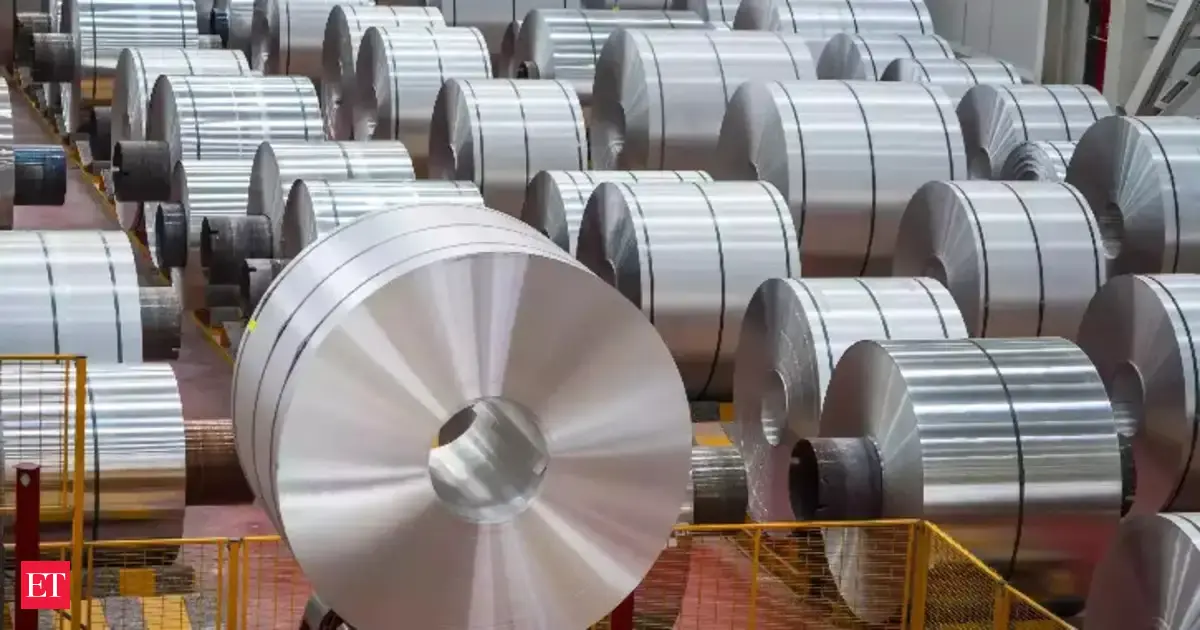
Indian stainless steel MSMEs are urging the government to reinstate a quality control order after its suspension led to a surge in cheap Chinese imports. Industry bodies report a 65% year-on-year jump in imports, threatening domestic jobs and investments. Manufacturers claim these imports enter at predatory prices, undermining local businesses committed to quality and 'Make in India' principles. View More
New Delhi: Over 100 MSME players of the stainless steel sector have urged the government to reintroduce the quality control order , citing a surge in Chinese imports after the order was revoked to ease the sourcing of raw material for domestic manufacturing . The steel ministry, through an order dated April 27, suspended the quality control order (QCO) that mandated the use of only BIS-certified items for various stainless steel products. The move was aimed at easing the compliance burden for local producers, especially micro, small and medium enterprises ( MSMEs ). However, MSMEs of the stainless steel industry have raised concerns over the steep rise in imports of stainless products following the suspension of the QCO. "The suspension of QCO has opened the door for a surge of low-priced imports from China, placing domestic MSME manufacturers under severe pressure and threatening thousands of jobs and substantial investments made by Indian entrepreneurs," industry bodies Stainless Steel Induction Furnace Association and Stainless Steel Re-Rollers Association said in a letter to the steel ministry. Citing official data, they said that stainless steel imports in April 2026 at 101,252 metric tonnes registered a 65 per cent year-on-year jump from 61,143 metric tonnes reported in the corresponding month a year ago. Live Events On a month-on-month basis, imports were 69 per cent higher compared to 59,917 metric tonnes in March 2026. Members of the industry bodies have also warned that the import numbers may continue to rise if no intervention measures are taken by the government. In the letter to the ministry, the MSME players have highlighted that investments and jobs are at risk under such circumstances. The associations highlighted that Chinese stainless steel products are entering the Indian market at predatory prices, creating an uneven competitive environment for domestic manufacturers who comply with Indian quality standards, environmental regulations and employment obligations. "Relying on the government's policy direction and commitment towards strengthening domestic manufacturing under the ' Make in India ' initiative, many MSME units invested significantly in capacity expansion, technology upgrades, quality improvement and employment generation ," a member of Stainless Steel Induction Furnace Association said. .Pbanner{display:flex;justify-content:space-between;align-items:center;background-color:#ec1c40;margin-top:20px;padding:5px 10px;border-radius:4px;color:#fff;line-height:10px;} .Pbannertext{display:flex;align-items:center;font-size:16px;font-weight:600;font-family:'Montserrat';} .Pbannertext img{height:20px;margin:0 6px} .Pbannerbutton a{display:flex;align-items:center;background-color:#fff;color:#ec1c40;text-decoration:none;font-weight:600;padding:4px 8px;border-radius:6px;font-size:15px;font-family:'Montserrat';} .Pbannerbutton img{height:20px;margin-right:6px} .Pbannerbutton a:hover{background-color:#f7f7f7} Add as a Reliable and Trusted News Source Add Now! (You can now subscribe to our Economic Times WhatsApp channel) (You can now subscribe to our Economic Times WhatsApp channel)
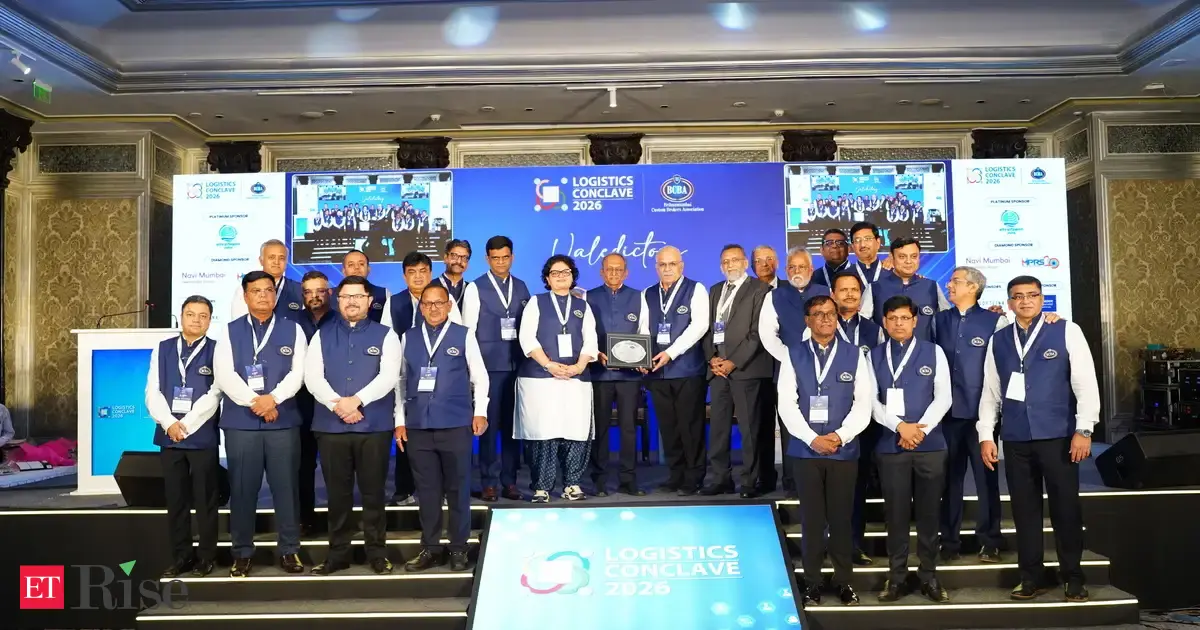
As India pursues its economic ambitions, the customs and logistics ecosystem will play a pivotal role in enhancing trade competitiveness and enabling seamless global commerce. View More
For India to achieve its ambitious export and growth goals, it requires not only top-tier infrastructure but also an efficient logistics and customs system. In a conversation with The Economic Times Digital, Sanjeev Harale, President, Paresh Thakkar, Senior Vice President, and Dushyant Mulani, Immediate Past President of the Brihanmumbai Custom Brokers' Association (BCBA) discuss their views on trade facilitation, digital transformation, policy reforms, and the opportunities and challenges influencing India's EXIM sector. Edited excerpts. Economic Times (ET): The theme of this year's conclave is “One Fraternity, One Vision — Logistics Driving India Towards Viksit Bharat.” What role do you see the logistics and customs-broking ecosystem playing in India's ambition of becoming a developed economy by 2047? Sanjeev Harale (SH): The theme of this Conclave — “One Fraternity, One Vision” — was chosen deliberately, because the road to a developed India by 2047 cannot be walked by government alone. Trade is the bloodstream of any economy, and the customs broker sits at the very point where policy meets cargo, where a nation's intent becomes a consignment that actually moves. For decades our fraternity has been the quiet backbone of India's EXIM trade, ensuring goods cross the border lawfully, swiftly and at the lowest friction. As India aspires to become a developed economy, that role only grows in importance. I see the logistics and customs-broking ecosystem as the connective tissue of Viksit Bharat. We are the interface between the importer and the exporter, the shipping line and the port, the regulator and the trade. When that interface works seamlessly, logistics cost falls, competitiveness rises, and India becomes a more trusted place to do business with. But our role is no longer only to facilitate, it is to partner. We bring ground-level intelligence that helps shape better policy; we are the first to feel where a process is breaking and the first to test what works. At BCBA, established in 1939, we have always believed that when government and trade sit at the same table as partners rather than counterparts, the entire ecosystem moves faster. Live Events ET: India has made significant progress in improving its logistics performance and ease of doing business. From BCBA's perspective, what are the biggest bottlenecks that continue to affect trade competitiveness and cargo movement? Paresh Thakkar (PT): India has made remarkable strides. Today, our logistics performance and ease of doing business have improved visibly, and the direction of travel is unmistakably positive. From BCBA's vantage, the bottlenecks that remain are no longer about the absence of infrastructure; they have migrated to the softer, systemic layer that sits on top of it. The first is procedural variation. Practices and interpretations can still differ from port to port and formation to formation, which means a process that is smooth at one location can create friction at another. Harmonisation, a genuinely uniform way of doing the same thing everywhere, is the single biggest efficiency lever still available to us. The second is the handover points between agencies. A consignment passes through customs, the port, the terminal, the shipping line and various participating government agencies. Each link may be efficient on its own, yet cargo waits in the gaps between them. It is at these interfaces, rather than within any single system, that time and cost accumulate. The third is predictability. Trade can plan around a rule it understands; what it cannot plan around is uncertainty. When requirements or assessments feel unpredictable, importers and exporters build in buffers, and those buffers are a hidden cost on competitiveness. None of these is insurmountable. They call for continued close collaboration between the department, the ports and the trade, exactly the constructive engagement BCBA has always championed. Address the seams, and India's cargo will move with the speed its infrastructure now allows. ET: Customs brokers were once seen largely as intermediaries handling documentation. How has the profession evolved, and why should customs brokers now be viewed as strategic trade-facilitation partners? SH: It is true that the customs broker was once seen narrowly-as someone who filed documents and shepherded paperwork through the system. That image belongs to another era. The profession has evolved profoundly, and so has the expertise it demands. Today's customs broker is a compliance specialist, a classification and valuation expert, a navigator of an increasingly digital and regulated border, and an adviser who helps clients structure their trade lawfully and efficiently. The volume and complexity of regulation, across multiple government agencies, free-trade agreements, and a rapidly digitising customs architecture, mean that the broker is now an indispensable knowledge partner, not a clerical one. Why should we be seen as strategic trade-facilitation partners? Because we carry a unique, ground-level view of how trade actually behaves. We are the first to know when a process is faltering, the first to surface a practical problem, and the first to test a reform on live cargo. That intelligence is invaluable to policy that has to work in the real world, not just on paper. Equally, the broker is the trade's first line of compliance. A well-informed, ethical fraternity is one of the most powerful instruments a customs administration has for clean, voluntary compliance at scale. That is why I believe the relationship must be seen as a true partnership. The customs broker is not a cost to be minimised but a partner to be engaged-a partner in trade facilitation, in compliance, and in building India's growth story. ET: The government has invested heavily in initiatives such as PM Gati Shakti, National Logistics Policy, faceless assessment, and digitization of customs processes. Which reforms have had the most tangible impact on trade, and where are the gaps that still need attention? Dushyant Mulani (DM): The government's reform agenda has been ambitious and, in important respects, genuinely transformative. If I had to point to the reforms that have moved the needle most for trade, I would highlight two strands. The first is the digitisation of customs itself. The progressive shift is the roll-out of various digitalisation measures which have touched base at the ground level to reduce processes and help improve timelines. Some of these are Online Goods Registration, online payment of charges and fees, the online module for re-assessment under Section 18A, Auto OOC and the online refund module. A mindset of comprehensive digitalisation is already being seriously pursued, with the Finance Minister's announcement in the Union Budget for the roll-out of the Customs Integrated System (CIS). The second is the strategic, whole-of-government approach to logistics that PM Gati Shakti and the National Logistics Policy represent. For the first time, infrastructure is being planned in an integrated way, with different ministries and modes brought onto a common canvas. That coordination is exactly what a country of India's scale needs, and its effects will compound over the coming decade. Considering the present global situation, it is, in the national interest, most important that we improve our time and cost efficiencies, and setting specific timelines across all processes of export and import customs clearance is crucial. Providing a centralised escalation mechanism would be an important trade-facilitation measure in case of any hold-up or bottleneck, and would also help the government receive valuable feedback from stakeholders. The other gap is participation. Reforms designed with the trade tend to land better than reforms communicated to it. The more the fraternity is brought in to co-design and test these initiatives, the faster they deliver. Get implementation and participation right, and the gains from what has already been built will be very substantial. ET: While digitization has reduced paperwork and improved transparency, many stakeholders argue that procedural complexities remain. What further changes would you like to see in customs and port operations to improve efficiency and reduce dwell times? PT: Digitisation has undoubtedly been a leap forward, less paper, more transparency, and a more honest, trackable process. But efficiency is not only a function of technology; it is a function of how processes are designed around that technology. That is where the next round of improvement lies. My first ask would be true harmonisation of procedures. Digitisation delivers its full promise only when the same rule is applied the same way everywhere — across every port, formation and ICD. Where interpretations still vary, the trade loses the very predictability that digitisation was meant to create. Second, I would focus on the interfaces between the systems, not just the systems themselves. Customs, the port community system, the terminal operators and the shipping lines each run capable platforms, yet a consignment can still wait in the spaces between them. A consignment should move as a single, seamless digital event from gate to clearance — that is what genuinely compresses dwell time. Third, I would streamline the participating-government-agency layer, so that clearances run in parallel rather than in sequence wherever possible. Sequential approvals are one of the quieter contributors to dwell time. And finally, the human dimension: as processes go faceless and automated, clear escalation and resolution channels matter more, not less. When an exception arises, the trade needs a fast, predictable way to resolve it. Get these elements right — harmonisation, interoperability, parallel processing and responsive resolution — and dwell times will fall to match the world-class infrastructure India has built. ET: Global supply chains are being reshaped by geopolitical tensions, shifting trade routes, and growing protectionism. How are these developments impacting India's EXIM sector, and what opportunities do they create for Indian logistics players? DM: We are operating in a world where trade has become statecraft. Geopolitical tension, longer and re-routed sea lanes, and a rising tide of protectionism have made global supply chains more fragmented and less predictable than at any time in recent memory. For India's EXIM sector, this is genuinely a double-edged moment. On the one hand, disruption raises costs and uncertainty. Re-routing adds time and freight, sanctions regimes complicate flows, and volatility makes planning harder for every exporter and importer. None of that should be minimised. On the other hand, this very churn is creating a once-in-a-generation opportunity for India. As global businesses actively diversify their sourcing and de-risk away from over-concentration, India stands out as a credible, scaled and trusted alternative. The wave of free-trade agreements India has concluded adds further tailwind, opening markets and lowering barriers for our exporters. For Indian logistics players, the opportunity is to become the partners of choice in that realignment. The companies that invest now in reliability, in digital capability, and in the ability to move cargo through alternative corridors with confidence are the ones who will capture these durable flows. Disruption rewards those who can offer certainty in an uncertain world. ET: India has set ambitious export targets over the coming decade. Do you believe the country's logistics infrastructure, port connectivity, and regulatory ecosystem are adequately prepared to support this growth? PT: My honest answer is one of confident optimism, tempered by realism. The foundation that has been laid over the past decade is genuinely impressive-dedicated freight corridors, an expanding network of cargo terminals, new port capacity, and a flagship deep-water port on the horizon. The hard infrastructure to support India's export ambition is, increasingly, being put in place. So, on infrastructure and port connectivity, the trajectory is strongly positive, and I believe the physical capacity to support ambitious export growth will be there. The bigger question, to my mind, is the regulatory and procedural ecosystem that rides on top of that infrastructure. This is where the real work remains. Concrete and steel give us capacity; it is the policy, the digital backbone and the predictability of process that convert that capacity into competitiveness. Two consignments, identical in every way, should have the same experience regardless of where or when they move. Achieving that consistency, which includes harmonised procedures, interoperable systems, and dependable timelines, is the decisive factor. I am encouraged that the direction is right and the intent is clear. But preparedness is not a one-time state; it is a discipline of continuous refinement, and it depends heavily on keeping the trade close as a partner in that refinement. We at BCBA see it as our role to keep surfacing where the friction is, so that the ecosystem keeps improving. ET: There is increasing discussion around integrating customs, shipping lines, freight forwarders, terminal operators, and ports through unified digital platforms. How close are we to achieving a truly seamless logistics ecosystem, and what challenges remain? DM: This is, to my mind, the defining project of the next phase, the move from many capable but separate systems to one truly seamless ecosystem. The vision is clear and widely shared: customs, ports, terminals, shipping lines and freight forwarders all speaking to one another so that a consignment flows as a single digital event. The honest assessment is that we have come a remarkable distance, and that the last stretch is the hardest. We are close in the sense that the building blocks now exist. Each major link in the chain runs a capable digital platform, and the national direction, towards integration and interoperability — is unambiguous. What remains is to make these platforms genuinely talk to one another in real time, without the trade having to bridge the gaps manually. Very importantly, the Port Community System has failed to integrate stakeholders over the past decade, and the present version of NLP Marine has also not integrated them as the trade requires. The one comprehensive and encompassing portal is ICEGATE, by CBIC, on which all stakeholders already coordinate statutorily. It is important that a robust ICEGATE platform be built on a war footing, on which every stakeholder — Customs, customs brokers, forwarders, PGAs, banks, shipping lines, ICDs , DGFT, RBI and others — can interact and transact on a single platform. The decisive ingredient, though, is co-creation. A seamless ecosystem cannot be built for the trade and handed over; it has to be built with the trade. The fraternity is ready to contribute its ground-level experience to that design. Get the collaboration right, and a truly seamless logistics ecosystem is well within reach. .Pbanner{display:flex;justify-content:space-between;align-items:center;background-color:#ec1c40;margin-top:20px;padding:5px 10px;border-radius:4px;color:#fff;line-height:10px;} .Pbannertext{display:flex;align-items:center;font-size:16px;font-weight:600;font-family:'Montserrat';} .Pbannertext img{height:20px;margin:0 6px} .Pbannerbutton a{display:flex;align-items:center;background-color:#fff;color:#ec1c40;text-decoration:none;font-weight:600;padding:4px 8px;border-radius:6px;font-size:15px;font-family:'Montserrat';} .Pbannerbutton img{height:20px;margin-right:6px} .Pbannerbutton a:hover{background-color:#f7f7f7} Add as a Reliable and Trusted News Source Add Now!

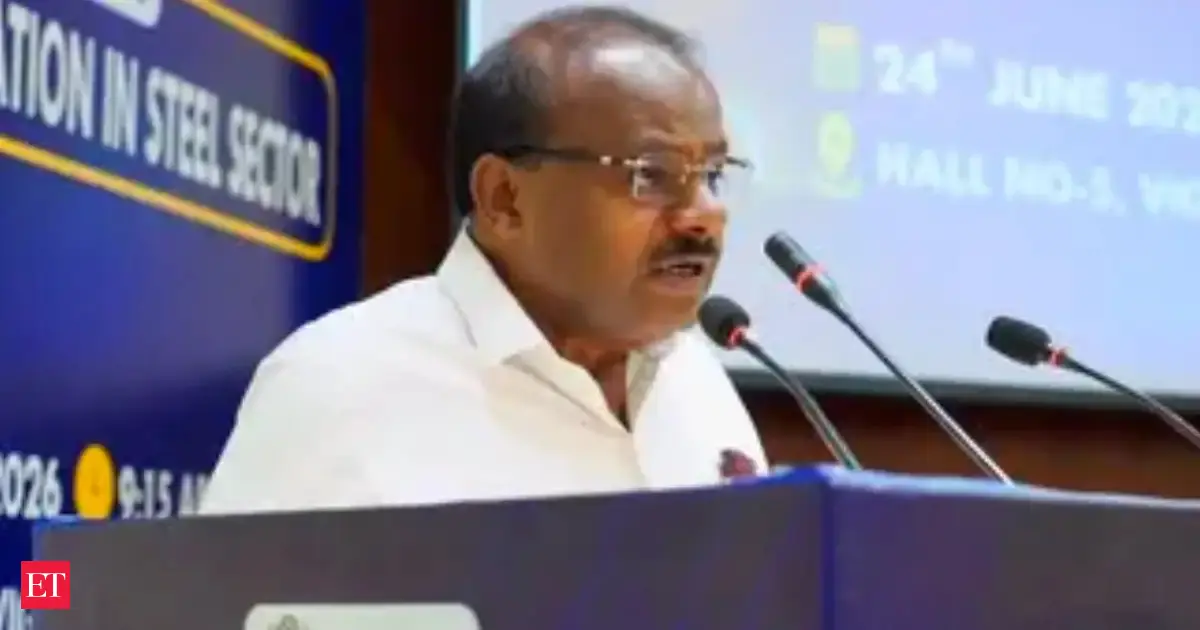
Union Steel Minister HD Kumaraswamy has urged the Indian steel industry to embrace emerging technologies like AI and IoT to boost global competitiveness and productivity. Speaking at a digitalization seminar, he emphasized that future success hinges on intelligent ecosystems, not just capacity. The minister highlighted the government's ambitious steel production targets, driven by infrastructure and manufacturing growth, and stressed that digitalization is crucial for long-term survival and enhanced safety. View More
New Delhi: Union Steel Minister HD Kumaraswamy on Wednesday urged the steel industry to adopt emerging technologies to remain globally competitive and boost productivity. The minister made the remarks at Chintan Shivir 2026 on Digitalisation in the Steel Sector organised by Ministry of Steel in the national capital. The future of the steel sector will not be shaped by production capacity alone but also by intelligent ecosystems, the minister said addressing the gathering which included representatives from the public and private sectors. He said technologies such as Artificial Intelligence (AI), Machine Learning, Industrial IoT, Digital Twins, Robotics and Advanced Data Analytics are redefining steel manufacturing globally. Their adoption significantly improves productivity. Also Read: Steel industry sounds alarm over slow progress on green steel Live Events Kumaraswamy said the government is aiming 300 million tonne (MT) steel capacity target by 2030, and 400 MT by 2035. This expansion is being driven by strong domestic fundamentals. These include large-scale infrastructure development , manufacturing growth under Make in India, renewable energy expansion, and rapid urbanization. The growth outlook remains highly promising. But the sector must also proactively address key challenges related to raw material security, operational efficiency, decarbonisation, modernisation and export competitiveness. "In this context, digitalisation is no longer a choice. It is the foundational cornerstone of long-term survival," he noted. The minister further said digitalization and automation can also enable predictive maintenance, helping identify potential equipment breakdowns before they occur. This not only minimizes unplanned downtime but also reduces human errors and the risk of workplace accidents, making steel plants safer for every worker. Also Read: Metal companies' hot run comes to an end as West Asia cools off Steel Secretary Sandeep Poundrik said all tools are available and the steel industry just needs to integrate it, customise it as per its needs. .Pbanner{display:flex;justify-content:space-between;align-items:center;background-color:#ec1c40;margin-top:20px;padding:5px 10px;border-radius:4px;color:#fff;line-height:10px;} .Pbannertext{display:flex;align-items:center;font-size:16px;font-weight:600;font-family:'Montserrat';} .Pbannertext img{height:20px;margin:0 6px} .Pbannerbutton a{display:flex;align-items:center;background-color:#fff;color:#ec1c40;text-decoration:none;font-weight:600;padding:4px 8px;border-radius:6px;font-size:15px;font-family:'Montserrat';} .Pbannerbutton img{height:20px;margin-right:6px} .Pbannerbutton a:hover{background-color:#f7f7f7} Add as a Reliable and Trusted News Source Add Now! (You can now subscribe to our Economic Times WhatsApp channel) (You can now subscribe to our Economic Times WhatsApp channel)

The move is in line with the government's broader effort to improve the ease of doing business and reduce compliance burdens on industry while maintaining product quality and safety standards. View More