Accordion with Database Data

Latest Sectors News

× Policy & Standard Operating Procedures Empanelment | Engagements | Association Valuations Terms Of References (TOR) R.K Associates Best Policies Other Company Credentials Valuers Remark's
When the U.S.-Canada trade war erupted, the market repriced metals and materials stocks and ETFs, but longer-term investors should be wary. View More

In this articleSLXSTLD.SPXXLBFollow your favorite stocksCREATE FREE ACCOUNT Trucks traverse the Ambassador Bridge, a main trade route linking Canada and the United States in Windsor, Ontario, Canada July 5, 2020.Carlos Osorio | Reuters As the U.S. and Canada stare down tens of billions of dollars in dueling tariff regimes as a result of President Trump's new trade war against the nation's second-biggest trading partner, companies, economists, and investors are back in the game of attempting to forecast the level of volatility to expect on corporate balance sheets and in stock prices. The U.S. government's 50% tariffs on a wide range of Canadian goods were met with Canada's $20 billion in retaliatory tariffs slated to go into effect on Sept. 8. They encompass more than 700 U.S. goods, meant to mirror the size of Trump's import taxes on Canadian wine, cement, hockey sticks and more. The counter-tariffs, which range from 15% to 50%, target a wide array of U.S. imports into Canada, including dairy, seafood, appliances, wood and paper products, and clothes.There were some real-time market winners as the new trade war dominated headlines last Monday. Consider the reaction in steel and materials stocks, including Nucor, Steel Dynamics, Cleveland-Cliffs and Century Aluminum, which all shot up on Monday after the U.S.-Canada trade talks broke down, and after many had fallen the week before on bets a new U.S-Canada deal would lower tariffs on steel and aluminum. The VanEck Steel ETF (SLX) rose 1.6% on Monday alone, while the State Street Materials Select Sector SPDR (XLB) hit an intraday all-time high — surpassing its previous all-time record price reached in February — as the metals stocks and other producers rallied.But the new trade war rally didn't last. XLB ended the five-day trading week in negative territory and SLX was close to flat. To be sure, these funds have already booked some hefty gains in 2026. Year-to-date, both ETFs are beating the S&P 500, with SLX up over 28% and XLB up over 18%, according to Morningstar data as of Aug. 28. Atsi Sheth, chief credit officer at Moody's Ratings, said uncertainty is the watchword now. "Expect much more of this uncertainty for some time to come," Sheth said.Which businesses win in a trade war and which lose depends on an increasingly complex supply chain. One of the most complicated is the auto sector, where parts cross back and forth over the border multiple times in the production of a vehicle."For the auto sector, our view is that the sector is so integrated that the tariffs just don't impact the country you are tariffing but your own country," Sheth said of the U.S.-Canada automobile manufacturing ecosystem.U.S. steel companies are more likely to benefit, she said, because the U.S. market is larger."The auto sector, there are no winners. Steel ... U.S. has a little edge," Sheth said. Stock Chart IconStock chart iconPerformance of the State Street Select Sector Materials ETF over the past month. "The new tariffs create a meaningful but manageable headwind," said Angelo Kourkafas, senior global investment strategist at Edward Jones, a headwind that cuts both ways, as higher steel and aluminum costs also start working through U.S. manufacturers, autos, and construction on this side of the border.Kyle Mohrbach, senior executive for North America automotive at o9 Solutions, a supply chain technology and consulting firm, said the greatest exposure sits in components and materials that are Canadian-sourced, single-sourced, hard to substitute, or required to keep an assembly line moving. In the automotive sector, that includes everything from steel, stampings, and powertrain components to braking systems, electronics and specialized subassemblies.Why short-term winners in trade wars are hard to trustScott Beaulier, dean of the College of Business and professor of economics at the University of Wyoming, draws a distinction between stocks that benefit and businesses that benefit. "A tariff can create an immediate scarcity premium for domestic steel and aluminum producers. But the durable winners will be firms that have three things: domestic capacity they can bring online, relatively secure energy and raw-material inputs, and customers unable to easily substitute away from them," Beaulier said. That's a much smaller group than "American metals companies," he said.Aluminum is a good example, according to Beaulier."The United States remains heavily import-dependent, and Canada has supplied an extraordinary share of U.S. primary aluminum. You can't tariff our dependence away overnight," Beaulier said, adding that smelters are enormously capital- and energy-intensive, and new capacity takes years rather than months to build."In the meantime, the tariff can raise the price received by U.S. producers while simultaneously raising input costs for American manufacturers using aluminum. I'd be cautious about treating an initial pop in metals stocks as evidence of a durable economy-wide gain," Beaulier said. ETF Strategist full coverage:Here's a look at other stories offering insight on ETFs for investors.Investors made easy money on oil bets during Iran war. The trade is getting trickierFor Gen X investors nearing retirement, the dotcom bubble looms largeJamie Dimon made a bearish treasuries call. Investors were all over itHow to prepare a tech-heavy portfolio with record gains for an inevitable downturnTrump Accounts are good start, but shouldn't be a child's only investment Companies are already scrambling to manage the volatile situation, said Melissa Irmen, director of advocacy for the National Association of Foreign-Trade Zones, which represents over 1,300 companies and over 500,000 employees. "We have already been seeing some supply chain shifts and sourcing decisions adjusted," Irmen said.A foreign-trade zone lets companies bring imported materials into the U.S. without paying tariffs right away, and if those goods are re-exported or reworked into a different product, the company can defer, reduce, or sometimes avoid the duty entirely.Irmen said corporate adjustments to the latest rules of origin for trade — which dictate whether supply chain relocations can result in tariff avoidance — saw a lot of warehousing move to Canada over the past few years. But now, companies may just permanently alter their supply chains to avoid the uncertainty."All of the tariff uncertainty will permanently change the landscape. Companies are not able to make the fast decisions required for the tariff changes. Supply chains don't work that way," Irmen said. "We tell our members things will not go back to the way they were pre-2025. Try to look as long term as you can," she added.The difference between a supply chain and border mattersMeanwhile, only time will tell how the market handles these shocks, and experts say one shouldn't be immediately seduced by any quick positive reaction, such as in steel."The stock pop is a headline reflex, honestly — mills reprice to replacement cost the second a 50% wall goes up, so of course Nucor and Cleveland-Cliffs jumped," said Dan Luttner, managing partner at NEOS by Argon & Company, a supply chain consulting firm. "But that's not the interesting question. The interesting question is who controls their feedstock inside the wall versus who's still exposed to it?"Luttner said the SLX and XLB moves illustrated a market repricing instantly to a 50% tariff wall, but the action said little about which companies inside those funds actually control their own fates in a trade war.  He said Nucor and Cleveland-Cliffs run electric arc furnaces and integrated capacity that never touches Canadian ore or slab, so they keep the price umbrella structurally. Still, there is no single trade on that structural element to the business: Nucor's shares are up close to 50% this year, while Cleveland-Cliffs is in negative territory in 2026 due to ongoing balance sheet stress. Century Aluminum is tricky for another reason, according to Luttner. Because U.S. primary aluminum capacity is thin, a lot of what feeds it still crosses the border as alumina or semi-finished product."So the upside is real, but it's not immune to the same friction it's supposed to be protected from," Luttner said. Then there are metals plays like Freeport-McMoRan, the third-largest holding in XLB at 6.5% of the ETF, which doesn't really belong in this basket at all, because it's a copper and critical-minerals policy story, an entirely different trade story that is also benefitting from the AI boom. Stock Chart IconStock chart iconCentury Aluminum stock performance year-to-date. Luttner said the border itself is a supply chain, not a line on a map. North American steel and aluminum have run on an integrated, multi-crossing system for three decades."Canadian primary aluminum into U.S. extruders, U.S.-melted steel going north for finishing, coming back south inside finished autos and appliances. A tariff doesn't tax that shipment once. It compounds every time the metal re-crosses," Luttner said. That is what corporate planning teams are up against right now: pulling apart bills of materials line by line to find where a part physically crosses the border more than once. "That's where this actually bites," Luttner added.That makes the new trade war between the U.S. and Canada very different from another recent trade chokepoint for the economy, the Strait of Hormuz."Hormuz is geography, the oil has nowhere else to go. This is policy — the volume can reroute, reshore, or get absorbed into price, it just takes 12 to 24 months of capital and requalification to do it," Luttner said. "It's a slow-motion reallocation. So the real story isn't which stock popped, it's which manufacturers had already de-risked their supply chain before this week, and which ones are only now finding out how many times their product crosses that border," Luttner said.Moody's Sheth said the rating agency will be watching closely the performance within heavy manufacturing, steel and aluminum. Ultimately, the larger companies can usually withstand shocks better  but the uncertainty of the situation can cause the most damage as companies reconfigure their long term options and supply chains. "Companies won't sit on their hands and wait," Sheth said.—CNBC's Kevin Breuninger contributed to this report. watch nowVIDEO7:4507:45Fmr. Canadian Deputy PM: Canadians are prepared to take the pain because our sovereignty is worth itSquawk Box Choose CNBC as your preferred source on Google and never miss a moment from the most trusted name in business news.
Jindal Stainless is set to boost its annual coin blank production by twenty percent, responding to the escalating worldwide demand for non-paper currency options. The company caters to both Indian and international mints, firmly establishing its presence. Additionally, Jindal Stainless leads in the global razor blade sector with impressive yearly outputs. Environmental sustainability remains a focus at the Hisar facility, employing water recovery techniques and green energy innovations. View More

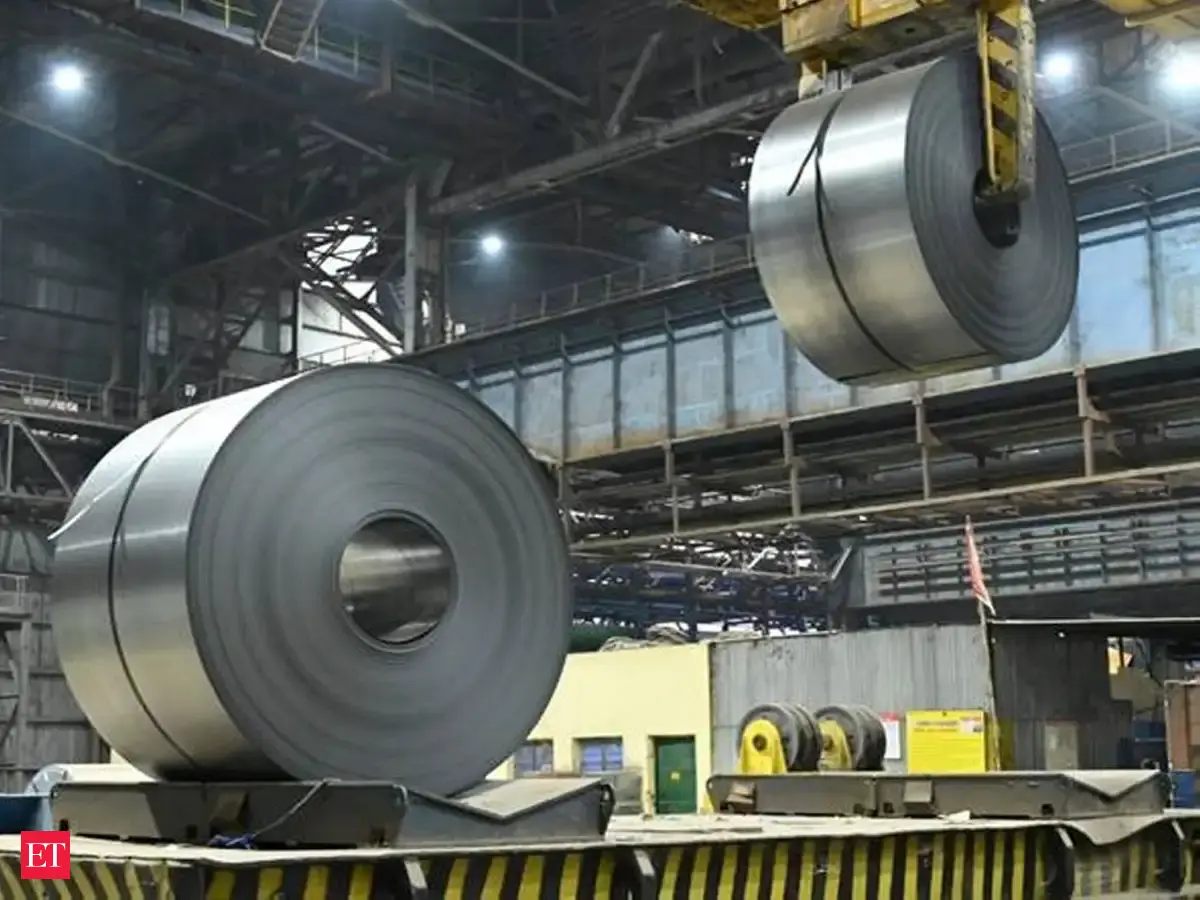
Hisar: Jindal Stainless is enhancing its annual capacity of coin blanks by 20 per cent to 12,000 tonnes as the company anticipates growth in demand for non-paper based currency across various geographies, a senior company official said. "Many would not know that we manufacture coins blanks for Indian Mint as well as various international mints," Vijay Bindlish, the Unit Head of Jindal Stainless Hisar facility said in a joint management interaction. Coin blanks are produced at the country's largest stainless steel maker's Special Products Division (SPD) in Hisar under high security arrangements, along with other high-end finished products such as razor blades and precision strips, the official told PTI. Also read: Jindal Stainless scouting Maharashtra site for Rs 40,000 crore plant Sharing details of the business, Bindlish said the company supplies unstamped coins to Indian, French, Finnish, Polish, Dutch, UK's Royal Mint, Malaysian and Slovak mints. Live Events Production is customised according to exact specifications provided by the mints, including size, diameter, thickness, shape, and alloy composition. On growth plans for this business, Bindlish said, "We are aiming for more such orders from across the world as we see demand rising due to the lower carbon footprint aspect of stainless steel manufacturing . We are expecting work orders of the denominations which we are not manufacturing for them currently. Being a major player in this field, we are also looking to enter new markets." For this, the company is increasing coin blank making capacity to 12,000 tonne from the current 10,000 tonne, he said. Saurabh Kumar, head of the SPD, added that the division dominates the global market with a 60-70 per cent share, producing 19,500 tonnes of razor blades annually after a recent increase from 13,200 tonnes. These blades are supplied to countries such as India, Poland, Vietnam, China, and South Korea, and the company intends to maintain its market leadership. The 0.8 million tonne (MT) Hisar facility of Jindal Stainless is one of the oldest industrial setups in Haryana, which started carbon steel production in 1970 and shifted to stainless steel making in 1978 to curb import dependence. Sushil Jain, head of the cold rolling division, explained that the facility operates a zero liquid discharge system where processed water and acids are recovered, treated, and reused internally with zero industrial effluent. Furthermore, the plant is increasing its green energy usage to 80 per cent this year, up from 70 per cent, supported by two captive hydrogen projects and a floating solar project, he said. .Pbanner{display:flex;justify-content:space-between;align-items:center;background-color:#ec1c40;margin-top:20px;padding:5px 10px;border-radius:4px;color:#fff;line-height:10px;width: 100%;box-sizing: border-box} .Pbannertext{display:flex;align-items:center;font-size:16px;font-weight:600;font-family:'Montserrat';} .Pbannertext img{height:20px;margin:0 6px} .Pbannerbutton a{display:flex;align-items:center;background-color:#fff;color:#ec1c40;text-decoration:none;font-weight:600;padding:4px 8px;border-radius:6px;font-size:15px;font-family:'Montserrat';} .Pbannerbutton img{height:20px;margin-right:6px} .Pbannerbutton a:hover{background-color:#f7f7f7} Add as a Reliable and Trusted News Source Add Now! (You can now subscribe to our Economic Times WhatsApp channel) (You can now subscribe to our Economic Times WhatsApp channel)

Company is also eyeing US exports View More

John Cockerill India secured an order worth approximately Rs 200 crore from A1 Iron & Steel Tanzania for steel processing equipment at its plant in Dodoma, Tanzania. View More

Domestic steel demand is projected to remain strong, exceeding capacity additions through FY2029. Robust consumption trends are supported by healthy industrial and infrastructure activity across India. Long steel prices have recovered significantly and are expected to rise further with favorable seasonality. Flat steel prices are currently at a discount to import parity, with regional prices potentially increasing. View More

New Delhi: Domestic to remain above 90 per cent over the medium term, led by robust demand, ~7 per cent CAGR over FY2026-29E, outperforming capacity additions, according to a research report by Kotak Institutional Equities . The report noted that consumption trends across the country continue to show stability, supported by healthy industrial and infrastructure activity. "Domestic demand continues to be healthy at 7.8 per cent yoy growth in YTDFY27. This follows 7.7 per cent yoy growth in FY2026 after four successive years of double-digit growth," the report stated. Also Read: Monsoon tests India's steelmakers as prices head in opposite directions On the external trade front, outbound shipments rose sharply off a lower base, while inbound shipments recorded a higher volume over the same duration. Live Events "Exports increased 35 per cent yoy on a weak base to 2.3 mn tons, but were outpaced by imports of 2.8 mn tons, +36.7 per cent yoy YTDFY27," the report added, highlighting that trade remedies remain underway. "Ongoing investigations into anti-dumping duty against imports should keep imports in check." Regarding product pricing, long steel prices show a visible rebound over recent weeks, reversing the downturn witnessed during the early part of the monsoon. "Long steel prices have recovered by 12 per cent over the past month, reversing the sharp correction during June-July 2026. Domestic market tightness and favorable seasonality with a receding monsoon should elevate prices further," the report said. The report highlighted that spot primary and secondary rebar prices gained around Rs 5,600 per ton, reaching Rs 53,900 per ton and Rs 47,900 per ton, respectively. Although these levels remain about Rs 6,000 per ton below the highs recorded in April 2026, improving seasonal conditions provide further price support. In the flat steel segment , domestic hot rolled coil (HRC) prices trade at Rs 58,800 per ton, sitting at an approximate 3 per cent discount to import parity. The report pointed out that weak Chinese steel spreads caused by cost inflation raise the probability of higher regional steel prices in the coming period. Meanwhile, input costs display divergent trends across raw material categories. Coking coal prices gained around 5 per cent over first-quarter levels due to supply constraints, including mine accidents in China and lower Russian production stemming from diesel shortages. Also Read: Indian steel mills face margin squeeze as global coking coal prices rise In contrast, domestic iron ore fines prices fell by approximately 7 per cent from June exit levels, matching the broader softness in seaborne iron ore markets. "We expect steel margins to soften sequentially in 2QFY27E; however, recent price recovery and operating leverage should help margins to recover in 2HFY27E," the report stated, adding that lower iron ore prices provide relief to non-integrated producers while companies such as JINDALST and SAIL stand to benefit from the ongoing long steel recovery. .Pbanner{display:flex;justify-content:space-between;align-items:center;background-color:#ec1c40;margin-top:20px;padding:5px 10px;border-radius:4px;color:#fff;line-height:10px;width: 100%;box-sizing: border-box} .Pbannertext{display:flex;align-items:center;font-size:16px;font-weight:600;font-family:'Montserrat';} .Pbannertext img{height:20px;margin:0 6px} .Pbannerbutton a{display:flex;align-items:center;background-color:#fff;color:#ec1c40;text-decoration:none;font-weight:600;padding:4px 8px;border-radius:6px;font-size:15px;font-family:'Montserrat';} .Pbannerbutton img{height:20px;margin-right:6px} .Pbannerbutton a:hover{background-color:#f7f7f7} Add as a Reliable and Trusted News Source Add Now! (You can now subscribe to our Economic Times WhatsApp channel) (You can now subscribe to our Economic Times WhatsApp channel)
Tempsens Instruments ended a 609-day drought in India’s mainboard IPO market, delivering a 111.3% listing gain on debut. The Rs 650 crore issue listed at Rs 634 against an issue price of Rs 300. While listing gains have improved in 2026, retail investors have become increasingly selective. View More

It has been more than 20 months, or 609 days, since the mainboard segment of India’s IPO market last saw a stock deliver a listing-day gain of more than 100%. That long dry spell is finally over. Tempsens Instruments ’ Rs 650 crore IPO made a bumper debut, listing at Rs 634, a massive premium of 111.3% over its issue price of Rs 300 per share. Official stock exchange data shows that before Tempsens Instruments, Mamatha Machinery was the last mainboard IPO to deliver a listing gain of more than 100%, making its debut at a 147% premium on December 27, 2024. That year saw six other mainboard IPOs more than double investors’ money on debut. Vibhor Steel Tubes led the pack with a 181.5% listing premium, followed by BLS E-Services at 126%, Premier Energies at 120%, KNR Heat Exchanger at 118%, Unicommerce eSolutions at 117% and Bajaj Housing Finance at 114%. The contrast with last year could hardly be starker. The previous year was one to forget for the primary market, with not a single mainboard IPO doubling investors’ money on debut. Highway Infrastructure delivered the highest listing gain, debuting at a 65% premium to its issue price. The stock is currently down 35% from its issue price. Live Events Urban Company was next, listing at a 57.5% premium, followed by Aditya Infotech, which debuted at a 50% premium and has since taken its total present gains to a staggering 435%. LG Electronics and GNG Electronics also debuted at 50%, while Meesho posted a listing-day gain of just over 46%. The IPO market has shown stronger listing gains so far in 2026, although Tempsens’ debut stands out. Coal India subsidiary Bharat Coking Coal made a stellar debut, listing at about a 96% premium to its issue price. Beharilal Engineering followed with a 64% premium, while IndoMIM and CMG Green Technologies listed at premiums of 44% and 40%, respectively. Dhoot Transmission and Advit Jewels listed at about 37% premiums. What are analysts saying about Tempsens IPO? According to a research report by Anand Rathi, Tempsens Instruments is valued at an implied P/E multiple of 35.4x and an EV/EBITDA multiple of 25.64x based on FY26 earnings at the upper end of the IPO price band. The brokerage believes the company’s strong revenue growth, diversified product portfolio and expanding international presence could support a valuation premium. However, at the upper price band, the IPO appears to be fully valued. Despite the premium valuation, Anand Rathi has initiated a “Subscribe: Long Term” rating on the IPO, suggesting that investors with a long-term investment horizon may consider the issue. Tempsens Instruments (India) delivered a strong financial performance in FY26, continuing the growth momentum seen in the previous year. The company’s total income increased to Rs 455.86 crore in FY26 from Rs 382.47 crore in FY25, representing a 19% year-on-year growth. The growth in revenue also translated into improved profitability. The company’s Profit After Tax (PAT) rose to Rs 71.07 crore in FY26 from Rs 62.56 crore in FY25, registering a 14% year-on-year increase. IPO trend in 2026 While listing gains have returned to the primary market, retail investors are becoming increasingly selective. Data compiled by ET showed that retail bidders did not even fully subscribe to the quota of stock earmarked for them in nearly a third of the 42 mainboard share listings this year, while the equity portion dedicated to this category was fully subscribed in only 30 offerings. Furthermore, only 16 of the 42 initial public offerings (IPOs) of 2026 have seen retail subscriptions exceed five times the quota. That accounts for 38% of issues, down sharply from 63% in 2025 and 68% in 2024. Retail bidders had fully subscribed to their allotted quota in all 50 IPOs of 2024 and in 44 out of 49 issues, or 90%, last year. Even the median retail subscription to IPOs until mid-August has fallen to just 2.32 times the quota across the 42 cases, compared with an astonishing 17.59 times across the 45 IPOs of 2024 and 8.35 times across the 45 issues last year. “The selective approach of retail investors is a sign of a maturing market,” said Arka Mookerji, co-head of the equity capital markets, JSA Advocates. The IPO road ahead A successful IPO listing depends on several factors, including a better business model, future growth potential, return ratios and, of course, the valuations at which the IPOs are priced, said Narendra Solanki, Head of Fundamental Research on Investment Services at Anand Rathi Shares and Stock Brokers. Also read: Tempsens Instruments shares make blockbuster debut, list at 111% premium Looking ahead, Solanki believes sentiments are much better now than they were at the start of the year. With the much-awaited IPOs of NSE and Jio lined up, he believes the positive momentum in India’s primary market is likely to continue. (Disclaimer: Recommendations, suggestions, views and opinions given by the experts are their own. These do not represent the views of The Economic Times) .Pbanner{display:flex;justify-content:space-between;align-items:center;background-color:#ec1c40;margin-top:20px;padding:5px 10px;border-radius:4px;color:#fff;line-height:10px;width: 100%;box-sizing: border-box} .Pbannertext{display:flex;align-items:center;font-size:16px;font-weight:600;font-family:'Montserrat';} .Pbannertext img{height:20px;margin:0 6px} .Pbannerbutton a{display:flex;align-items:center;background-color:#fff;color:#ec1c40;text-decoration:none;font-weight:600;padding:4px 8px;border-radius:6px;font-size:15px;font-family:'Montserrat';} .Pbannerbutton img{height:20px;margin-right:6px} .Pbannerbutton a:hover{background-color:#f7f7f7} Add as a Reliable and Trusted News Source Add Now! (You can now subscribe to our ETMarkets WhatsApp channel) (You can now subscribe to our ETMarkets WhatsApp channel)
Lloyds Metals has environmental clearance for a 4.5 mtpa steel plant at Konsari in Maharashtra but is studying a scale-up to as much as 8 mtpa as iron ore production rises. View More

China's industrial profits growth in July slowed to its weakest pace this year, as soft demand and a broader slowdown in the economy weighed on manufacturers. View More

Employees work on the assembly line of an intelligent factory of SERES Automobile Co., Ltd in Chongqing, China on July 19, 2022. Vcg | Visual China Group | Getty Images China's industrial profits growth in July slowed to its weakest pace this year, expanding 11.2% from a year earlier, as soft demand and a broader slowdown in the economy weighed on manufacturers. For the first seven months of this year, profits climbed 17.6% from a year earlier, according to National Bureau of Statistics data released Thursday, loosing momentum following the 18.7% growth in the first half-year. Industrial corporate profitability, however, has seen a notable turnaround, swinging from barely positive growth last year to double-digit gains this year. That recovery was largely helped by a global artificial intelligence boom that fueled demand for computing and electronics equipment manufacturing. The integrated circuit industry, led by computing and storage chip manufacturers, saw profits expand 18.5% in the January-July period from a year earlier, contributing over 80% of the profit gains across the electronics sector, according to the official release. A more than that fivefold increase in profits in the optical fiber manufacturing also boosted overall industrial gains in advanced manufacturing. Raw materials manufacturers also saw profits expand 55.2% this year as of end-July from a year earlier. Petroleum processing industry turned a profit over the seven months as supply disruptions in the Middle East pushed up prices for lower-stream chemical products. "Decelerating growth was primarily dragged down by falling investment in property and infrastructure, evidenced by worsening profits in steel and cement industries," said Tianchen Xu, senior economist at Economist Intelligence Unit. Raw materials and AI supply chain remained resilient while consumer-facing industries struggled, Xu added. Profit decline in furniture manufacturing steepened to 58.2% for the first seven months of the year, worse than the 52.7% recorded as of June. China's producer prices in June grew at their fastest pace in almost four years after rebounding in March from a multi-year slump that began in October 2022, according to LSEG data.But the reflation boost appears to be petering out as much of the price recovery has been driven by surging global energy costs, while domestic demand lags. The factory-gate inflation slowed to three-month low of 3.5% in July.Growth in the world's second-largest economy also weakened in the second quarter to its slowest pace in more than three years. An activity tracker compiled by the Bank of America research team indicated "broad-based loss of growth momentum" in the economy in July. Real exports growth slowed to 5.5% from 11.6% in June, and other indicators including retail sales, port throughput and electricity production weakened further. watch nowVIDEO6:0606:06UBS: Confident about China’s domestic AI compute growthThe China Connection Economists expect Chinese authorities to step up targeted support to stabilize corporate profitability, as consolidation accelerates in sectors grappling with sluggish demand, fierce competition and bruising price wars.The deployment of existing fiscal resources will likely accelerate over the coming months, with potential additional easing steps if growth continues to slow, said Sophie Altermatt, economist at Julius Baer."This should provide some near-term stabilisation and put a floor under growth," Altermatt noted, but a "strong cyclical rebound" remains unlikely as the property market slump, sluggish household confidence and subdued private investment constrain the recovery. Choose CNBC as your preferred source on Google and never miss a moment from the most trusted name in business news.
Lumino Industries plans a ?700 crore initial public offering to reduce debt and boost manufacturing capacity. The company expects to benefit from increased demand for wires and cables. However, its debt has risen significantly due to expansion and working capital needs. Raw material price volatility and customer concentration present key operational risks. The issue is suitable for long-term investors with higher risk tolerance. View More

ET Intelligence Group: Lumino Industries, a power cable manufacturer and EPC contractor , plans to raise ₹500 crore through a fresh issue to repay debt and expand capacity, and ₹200 crore through offer for sale. The promoter stake will fall to 71.9% after the IPO from 100%. The company has reported strong growth in the order book. It is expected to benefit from increasing demand for wires and cables, supported by robust investments in power infrastructure and network expansion projects. However, its debt burden has increased due to capacity expansion and elongated working capital cycle. Additionally, raw-material price volatility and customer concentration remain key operational risks. Given these factors, the issue appears to be suitable for long-term investors with a higher risk tolerance. ET BureauGrowth Equation Power-sector capex offers the firm room to grow, but raw-material price volatility and customer concentration temper outlook Business Incorporated in 2005, Lumino Industries is an integrated engineering, procurement, and construction (EPC) company. It manufactures and supplies conductors, power cables, electrical wires, and specialised components to the power transmission and distribution industry. Manufacturing contributed nearly 70% of revenue in FY26, while EPC accounted for the rest. The company operates two manufacturing facilities in Howrah, West Bengal, with a combined capacity of 40,000 MT. The company had a closing order book of ₹3,149.9 crore as of March 31, 2026, comprising ₹1,991.9 crore of EPC orders and ₹1,157.90 crore of manufacturing orders. The government entities accounted for 53% of FY26 revenue, posing concentration risk. It is also exposed to metal prices volatility as it uses aluminium, copper and steel as raw material. Financials Revenue grew 20% annually to ₹2,041.1 crore in FY26 from ₹1,407.3 crore in FY24. Operating profit before depreciation and amortisation (Ebitda) increased to ₹238.9 crore from ₹145.1 crore while the Ebitda margin improved to 11.7% from 10.3% during the period. It is within the peer range of 3.5-14%. Net profit rose 36% annually to ₹160 crore in FY26 from ₹86.6 crore in FY24. Return on equity increased to 24.6% in FY26 from 21.5% in FY24 compared with peer range of 1%-15.8%. Total debt rose sharply to ₹384 crore in FY26 from ₹40.9 crore in FY24 amid higher capital expenditure and increasing working-capital requirements. Its working capital cycle widened to 86 days in FY26 from 11 days in FY24. Read more: Tata Power loses challenge to $490 million arbitration award Valuation The company demands a price-earnings (P/E) multiple of 15.6 on post-IPO basis compared with a P/E of 18.9 for KEC International , 57.6 for KEI Industries and 73.1 for Apar Industries . .Pbanner{display:flex;justify-content:space-between;align-items:center;background-color:#ec1c40;margin-top:20px;padding:5px 10px;border-radius:4px;color:#fff;line-height:10px;width: 100%;box-sizing: border-box} .Pbannertext{display:flex;align-items:center;font-size:16px;font-weight:600;font-family:'Montserrat';} .Pbannertext img{height:20px;margin:0 6px} .Pbannerbutton a{display:flex;align-items:center;background-color:#fff;color:#ec1c40;text-decoration:none;font-weight:600;padding:4px 8px;border-radius:6px;font-size:15px;font-family:'Montserrat';} .Pbannerbutton img{height:20px;margin-right:6px} .Pbannerbutton a:hover{background-color:#f7f7f7} Add as a Reliable and Trusted News Source Add Now! (You can now subscribe to our ETMarkets WhatsApp channel) (You can now subscribe to our ETMarkets WhatsApp channel)
Tata Steel gets relief as Supreme Court quashes ?890.52 crore GST demand, equal penalty and interest in the tax dispute. View More