
Latest Sectors News

In this articleCLFFollow your favorite stocksCREATE FREE ACCOUNT watch nowVIDEO5:0605:06Options for this steel company make a compelling sale, says Mike KhouwOptions ActionFool me once, shame on you. Fool me twice, shame on me. That seems to be the refrain for Cleveland-Cliffs investors as the steel giant prepares to report earnings.Cleveland-Cliffs steps into the earnings spotlight on Oct.19, and options traders are bracing for impact. After a massive, nearly 16% one-day price jump following its July quarterly report â nearly double its long-term historical average move of slightly over 8% â short-term implied volatility (IV) has been aggressively bid up as traders fear a repeat. And who could blame them? Short interest is running close to 14%, and the CEO is famous for fighting the naysayers, noting that he likes boil them "like frogs" and that they are "messing with the wrong guy."With rhetoric like that, it's little wonder options traders are bracing for big moves. For strategic premium sellers, this inflated near-term fear creates a compelling opportunity to deploy what I call a "strangle-swap." You'll sometimes see traders or strategists refer to this as a "double-diagonal" spread. This structure allows traders to capitalize on the anticipated post-earnings decline in implied volatility (aka "vol crush") without taking on the unlimited risk of a naked short strangle.The TradeTo execute this strangle-swap, you sell a shorter-dated strangle and buy a longer-dated strangle to define your risk.Sell to Open: Sell November 11 Puts @ $0.43Sell November 17 Call @ $0.25) Buy January 10 Put for $0.49Buy January 18 Call for $0.43Total net debit = $0.24 Net Cost: $24 per spread (recall each contract represents 100 shares)The key to this trade is the differential in IV decay between the shorter-dated November expirations being sold and the longer-dated January options being purchased. Traders are heavily bidding November options on concerns that the sharp move from the last quarterly earnings release may repeat. Whether it does or doesn't, that binary uncertainty vanishes after CLF reports on the 19th, causing November implied volatility (IV) to collapse, a phenomenon commonly known as "vol crush."Stock Chart IconStock chart iconCleveland-Cliffs, YTDBecause the January options have significantly more days to expiration, they are less sensitive to this immediate IV crush and suffer much slower time decay (theta).This trade is most profitable if CLF stays between $11 and $17 after the report. In this scenario, the November short strangle rapidly bleeds value. A trader can then buy back the short legs for a fraction of the $0.80 initially collected, or let them expire worthless. This leaves the trader holding a long January 10/18 strangle for virtually nothing, providing "free" exposure to future price swings through year-end.When it falters: risk and rewardThis strategy loses money if CLF repeats or exceeds its explosive July fireworks. Because the short strikes (11/17) are narrower than the long strikes (10/18), a massive directional move will cause the short options' intrinsic value to expand faster than the long options can offset it in the short term.However, the risk/reward profile is highly asymmetrical. The long January wings strictly define catastrophic risk.Maximum Downside Risk: The width of the put spread ($1.00) plus the net debit ($0.24) = $1.24 ($124 per contract).Maximum Upside Risk: The width of the call spread ($1.00) plus the net debit ($0.24) = $1.24 ($124 per contract).By risking up to ~$124 to capture elevated front-month premium, the double-diagonal offers a cheap, defined-risk vehicle to fade the market's recent earnings trauma while maintaining long-term optionality.Disclosures: Disclosures: Tidal owns/holds all the securities mentioned in the article.All opinions expressed by CNBC Pro contributors are solely their opinions and do not reflect the opinions of CNBC, or its parent company or affiliates, and may have been previously disseminated by them on television, radio, internet or another medium. This content is provided as part of our editorial output for informational purposes only and does not constitute financial, investment, tax or legal advice or a recommendation to buy any security or other financial asset. The content is general in nature and does not reflect any individual's unique personal circumstances. The above content might not be suitable for your particular circumstances. Before making any financial decisions, you should strongly consider seeking advice from your own financial or investment advisor.THIS CONTENT IS PROVIDED FOR INFORMATIONAL PURPOSES ONLY AND DOES NOT CONSTITUTE FINANCIAL, INVESTMENT, TAX OR LEGAL ADVICE OR A RECOMMENDATION TO BUY ANY SECURITY OR OTHER FINANCIAL ASSET. THE CONTENT IS GENERAL IN NATURE AND DOES NOT REFLECT ANY INDIVIDUAL'S UNIQUE PERSONAL CIRCUMSTANCES. THE ABOVE CONTENT MIGHT NOT BE SUITABLE FOR YOUR PARTICULAR CIRCUMSTANCES. BEFORE MAKING ANY FINANCIAL DECISIONS, YOU SHOULD STRONGLY CONSIDER SEEKING ADVICE FROM YOUR OWN FINANCIAL OR INVESTMENT ADVISOR.Click here for the full disclaimer. Choose CNBC as your preferred source on Google and never miss a moment from the most trusted name in business news.

The ongoing geo-political uncertainty has pushed up cost on imported key raw materials including coking and thermal coal, ferro-alloys besides the rise in shipping cost View More
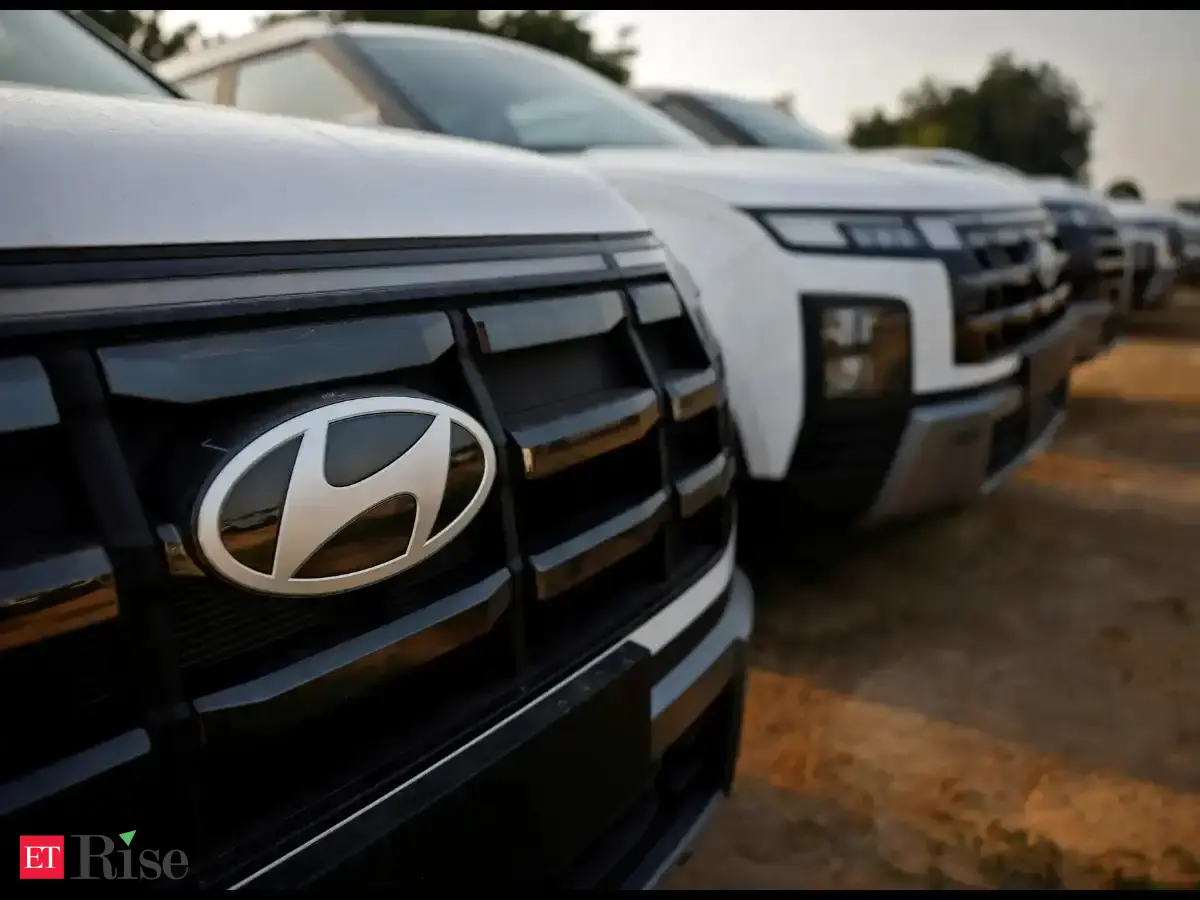
Hyundai Motor Company is expanding its investment in India as it prepares to introduce 26 new vehicles. The company plans to electrify about 50 percent of its vehicles by 2030, including various electric options. Hyundai's global CEO emphasized the importance of consistent regulation to ensure long-term investments. View More
NEW DELHI: Hyundai Motor Company is expanding its investment footprint in India, its global chief executive José Muñoz said on Tuesday, describing the country as essential to navigating global trade uncertainties and shifting automotive policies. Speaking at the Bloomberg New Economy Forum, Muñoz said India is an example of the company's long-term investment strategy, which it believes is essential to navigating geopolitical tensions, shifting trade policies and changes in the automotive industry. Hyundai plans to have about 50 per cent of its vehicles in India electrified by 2030, including CNG vehicles, electric vehicles, fuel-cell vehicles and hybrids, Muñoz, President and CEO of Hyundai Motor Co, said. "So you need to stay the course, and then that's why we have decided to make these investments in India, and then this is how we have become a kind of a global player doing the same type of thing that we learn here in India. It's a kind of blueprint, right? So becoming local in all the markets," he said. "We celebrate tomorrow our 30th anniversary in India, and we're going to make a big announcement in our new plant in Pune, our third one for the group, our second for Hyundai Motor Company," Muñoz said. Live Events The executive said the company was continuing with its electrification strategy even as some competitors had decided against pursuing it, adding that long-term planning and consistent execution were important in an environment marked by uncertainty. On managing trade and tariff uncertainties, Muñoz said Hyundai relied on a comprehensive strategy backed by an integrated business ecosystem spanning vehicle manufacturing, steel, logistics, distribution, robotics, autonomous driving, construction and data centres. The group also builds nuclear power plants, which provide energy to data centres, he said, describing the interconnected businesses as a platform that helps it respond to changing market conditions. He added that the group was developing the ability to plan ahead while remaining agile enough to respond to sudden changes. Referring to Hyundai's India plans, he said the company was preparing to introduce 26 new vehicles, including electric vehicles across different segments. "So, for example, now India is the star by having different elements of the strategy by being competitive, by launching EVs. Nobody thought that EVs would be relevant in this market just a couple of years ago. "We saw it and we invested, and then we we are going to have the entry EV. We're going to have an SUV EV. We're going to have off-road vehicles. So 26 new vehicles in India. Who saw that, right?" he said. Muñoz said the company would adapt quickly if circumstances changed, while stressing that an integrated ecosystem was crucial to managing risks across markets. He also called for consistency in regulations, particularly in industries requiring investments with long gestation periods. "We operate in 200 countries, and then we have to fulfill regulations in every single country, and we always do. What is very important is the consistency of the regulation. When it changes very, very fast in an environment where you make investments that are going to last 30, 40 years, that's that's a big harm," he said. On artificial intelligence, Muñoz described Hyundai as a "physical AI company", saying it was focused on applying the technology to practical business requirements rather than treating it as a standalone concept. He said Hyundai's Atlas humanoid robots were scheduled to begin production in the United States by 2028, with a total capacity of 30,000 units, and would be deployed on production lines to improve productivity, quality and costs. "Our Atlas robots are going to be starting to be produced by 2028 in the United States, with a total capacity of 30,000 of them, and we want to put them into our line to help us increase productivity, improve quality, and reduce costs," he said. Muñoz said AI applications needed careful management, with companies identifying useful applications and removing those that did not work. He also called for common rules to prevent countries from exploiting regulatory gaps. .Pbanner{display:flex;justify-content:space-between;align-items:center;background-color:#ec1c40;margin-top:20px;padding:5px 10px;border-radius:4px;color:#fff;line-height:10px;width: 100%;box-sizing: border-box} .Pbannertext{display:flex;align-items:center;font-size:16px;font-weight:600;font-family:'Montserrat';} .Pbannertext img{height:20px;margin:0 6px} .Pbannerbutton a{display:flex;align-items:center;background-color:#fff;color:#ec1c40;text-decoration:none;font-weight:600;padding:4px 8px;border-radius:6px;font-size:15px;font-family:'Montserrat';} .Pbannerbutton img{height:20px;margin-right:6px} .Pbannerbutton a:hover{background-color:#f7f7f7} Add as a Reliable and Trusted News Source Add Now!

Infrastructure, real estate, manufacturing and renewable energy projects to drive consumption; global demand outlook subdued by China’s slowdown View More

According to the draft, the imports of sub-standard or non-conforming steel, sudden import surges and possible circumvention of trade measures pose significant challenges for domestic producers View More
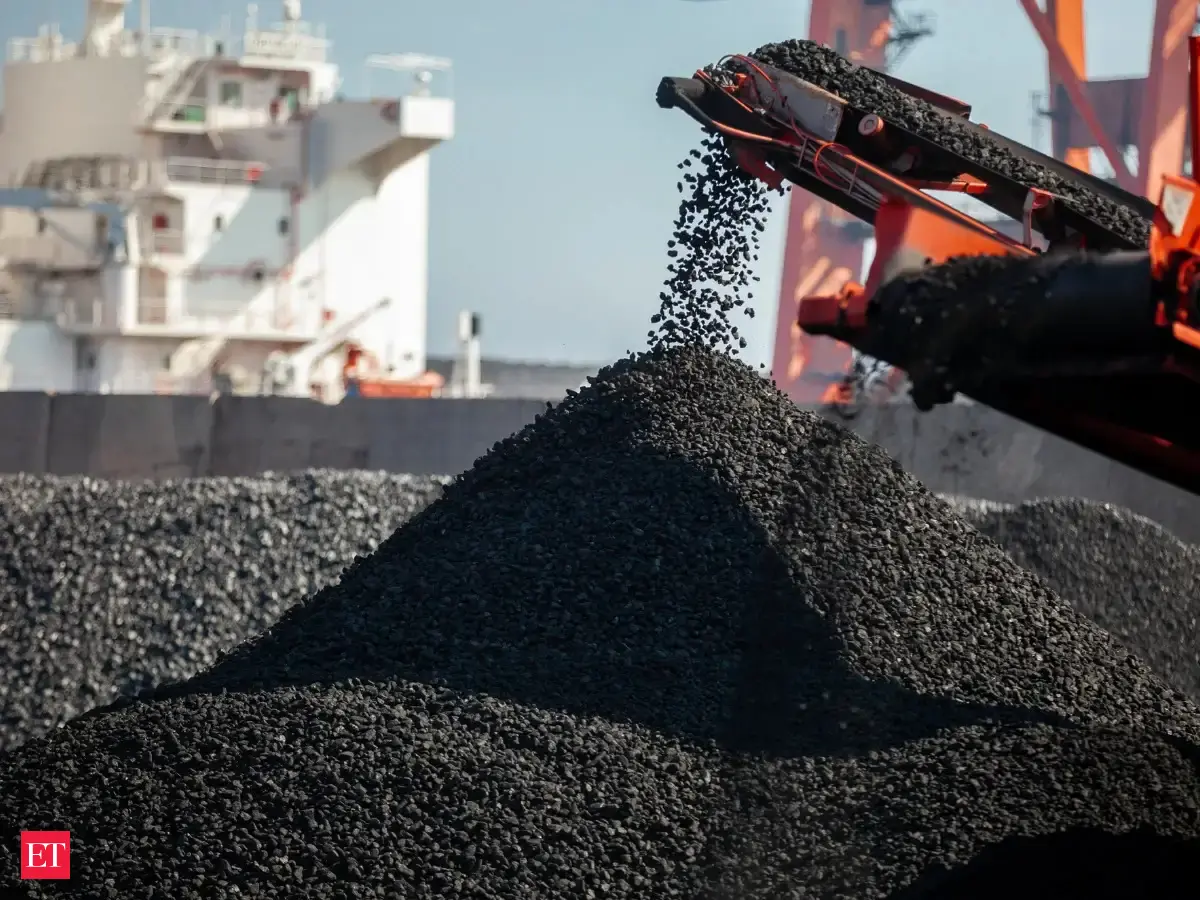
Shyam Metalics Group has secured strategic mining rights for the Phutamura coal block in Chhattisgarh. The investment in Alom Solar Private Limited aims to ensure a stable, long-term and cost-effective coal supply for its captive power generation and steel manufacturing operations. The investment also underscores the group's focus on sustainable growth and long-term value creation for stakeholders. View More
Kolkata: Shyam Metalics Group has secured strategic mining rights for the Phutamura coal block in Chhattisgarh through its investment in Alom Solar Private Limited , the successful bidder for the block, the company said on Tuesday. Located in the Mand Raigarh coalfield in Raigarh district, the block covers around 7.32 sq km and has estimated coal reserves of about 170 million tonnes, it said in a statement. Mining operations and coal production are expected to begin in July 2027, according to the company. Read more: Blackouts hit Indian factories as coal crunch feeds into economy The investment is part of the group's backward integration strategy to ensure a stable, long-term and cost-effective coal supply for its captive power generation and steel manufacturing operations , it said. Live Events Access to the reserves is expected to strengthen raw material security, improve operational self-sufficiency and reduce dependence on external coal supplies, the company said. Read more: India wastes 1.8 billion units of renewable power amid shortages and dwindling coal stocks: Report The investment also underscores the group's focus on sustainable growth and long-term value creation for stakeholders, it added. .Pbanner{display:flex;justify-content:space-between;align-items:center;background-color:#ec1c40;margin-top:20px;padding:5px 10px;border-radius:4px;color:#fff;line-height:10px;width: 100%;box-sizing: border-box} .Pbannertext{display:flex;align-items:center;font-size:16px;font-weight:600;font-family:'Montserrat';} .Pbannertext img{height:20px;margin:0 6px} .Pbannerbutton a{display:flex;align-items:center;background-color:#fff;color:#ec1c40;text-decoration:none;font-weight:600;padding:4px 8px;border-radius:6px;font-size:15px;font-family:'Montserrat';} .Pbannerbutton img{height:20px;margin-right:6px} .Pbannerbutton a:hover{background-color:#f7f7f7} Add as a Reliable and Trusted News Source Add Now! (You can now subscribe to our Economic Times WhatsApp channel) (You can now subscribe to our Economic Times WhatsApp channel)
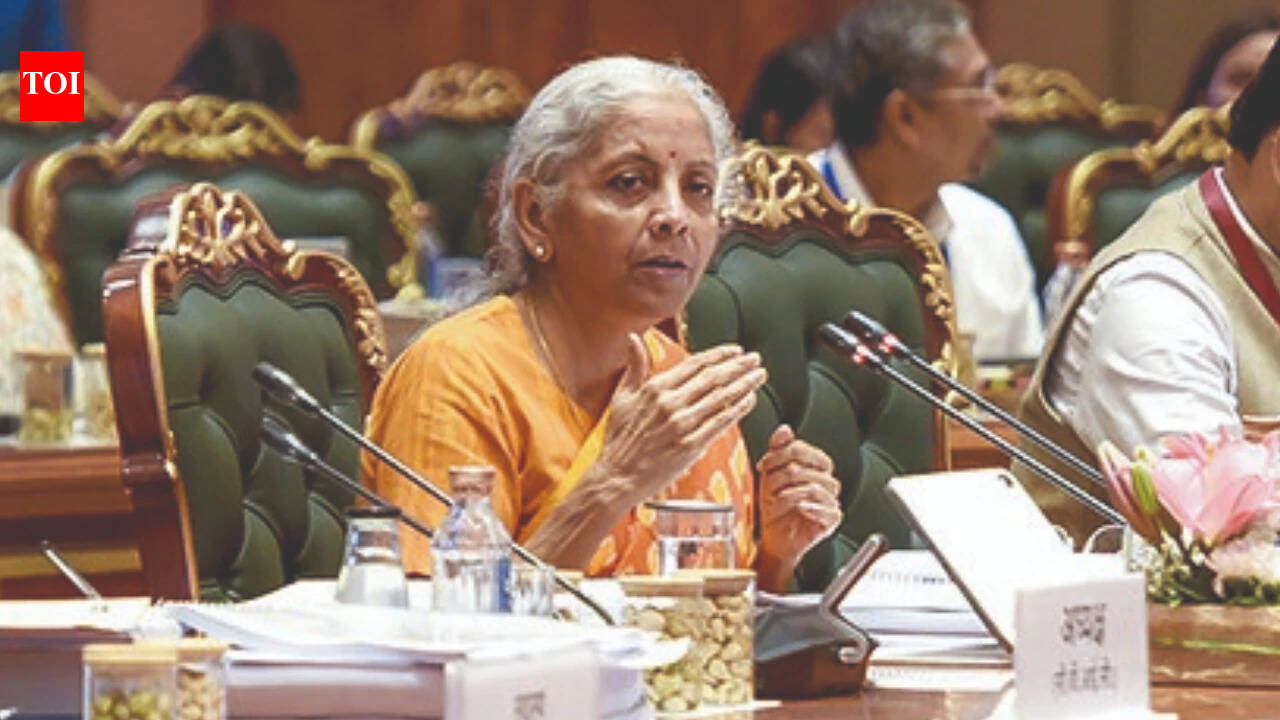
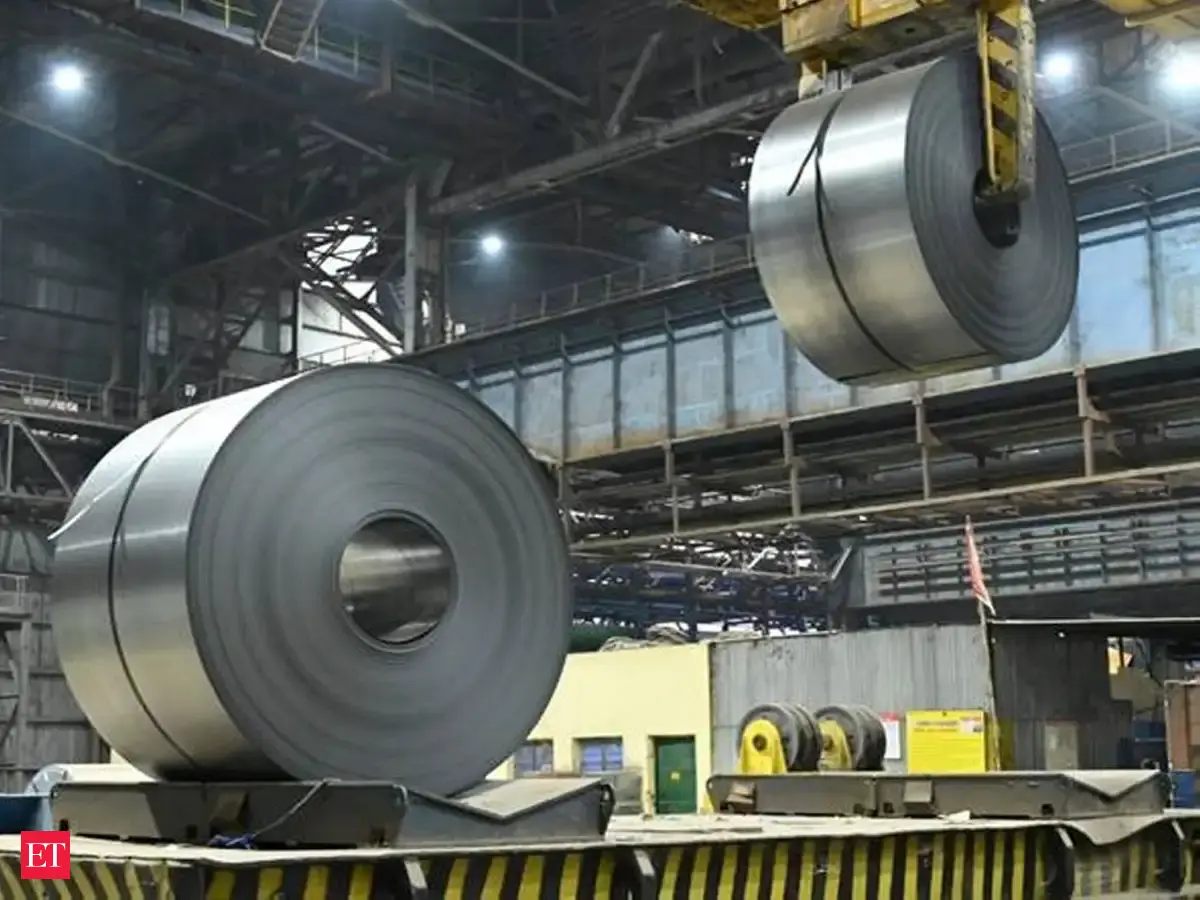
Sitharaman said India raised crude steel output by 10% in 2025 to 165 million tonnes and by 6% in January-August 2026, even as world output declined. India's share of world steel production has risen to about 9% from 5.2% in 2014, she added. View More
New Delhi: India's steel industry is expanding even as global output declines, with domestic demand supported by infrastructure spending keeping pace with production, finance minister Nirmala Sitharaman said on Monday, highlighting the country's growing role in the global steel market. Speaking at the World Steel Association 's (Worldsteel) General Assembly here, Sitharaman said India raised crude steel output by 10% in 2025 to 165 million tonnes and by 6% in January-August 2026, even as world output declined. India's share of world steel production has risen to about 9% from 5.2% in 2014, she added. Demand has expanded alongside production, making India the fastest-growing major steel market in the world, with a public investment programme and a green steel framework in place, the finance minister said. Finished steel consumption in the country more than doubled over a decade to 164 million tonnes in FY26. For two successive years, consumption has exceeded production, she added. Sitharaman invited Worldsteel to "consider establishing an office in India" to strengthen its presence in the country. Investments in infrastructure such as railway, national highways, ports and high-speed rail networks create sustained demand for steel across construction, transport, energy and industrial infrastructure, she said. The task is to ensure that the growth in steel production is matched by advances in raw-material security, specialised manufacturing, technological sophistication, and environmental performance, the finance minister said. "Small modular reactors, being developed under our Nuclear Energy Mission, also hold promise for the steel sector," she said. As these technologies mature and are deployed, they can provide reliable, round-the-clock, low-carbon electricity, complementing renewable energy and supporting the steel industry's decarbonisation, Sitharaman said. A practical priority is to expand scrap-based steelmaking and use renewable electricity to power it, she said. .Pbanner{display:flex;justify-content:space-between;align-items:center;background-color:#ec1c40;margin-top:20px;padding:5px 10px;border-radius:4px;color:#fff;line-height:10px;width: 100%;box-sizing: border-box} .Pbannertext{display:flex;align-items:center;font-size:16px;font-weight:600;font-family:'Montserrat';} .Pbannertext img{height:20px;margin:0 6px} .Pbannerbutton a{display:flex;align-items:center;background-color:#fff;color:#ec1c40;text-decoration:none;font-weight:600;padding:4px 8px;border-radius:6px;font-size:15px;font-family:'Montserrat';} .Pbannerbutton img{height:20px;margin-right:6px} .Pbannerbutton a:hover{background-color:#f7f7f7} Add as a Reliable and Trusted News Source Add Now! (You can now subscribe to our Economic Times WhatsApp channel) (You can now subscribe to our Economic Times WhatsApp channel)

Nirmala Sitharaman urged the World Steel Association to establish a local base amid rising domestic demand, warning that unilateral tools like the EU's CBAM only redirect excess global capacity without fixing overproduction. View More
