
Latest Sectors News
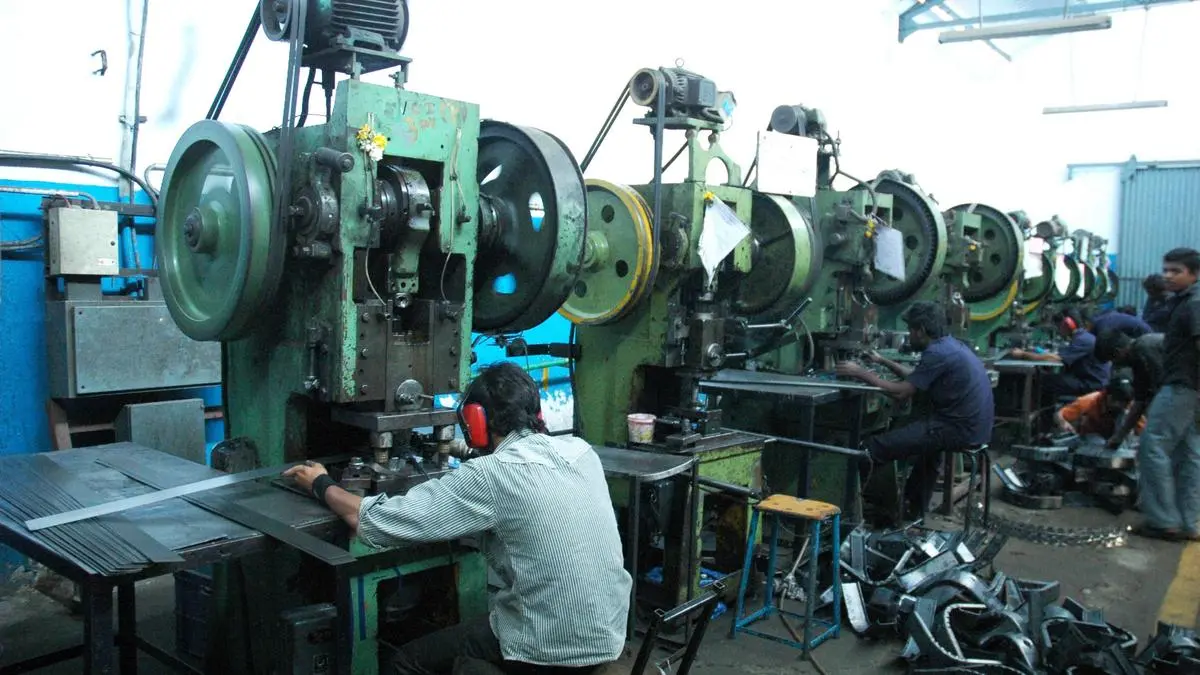
SMEs will face new demands such as emissions disclosure, cleaner energy sourcing and third-party audits. If these conditions aren’t met, they risk exclusion from higher-value markets View More

Emkay Global Financial Services said rising geopolitical tensions in West Asia have disrupted key trade routes, pushing up freight costs and reducing the competitiveness of imports View More
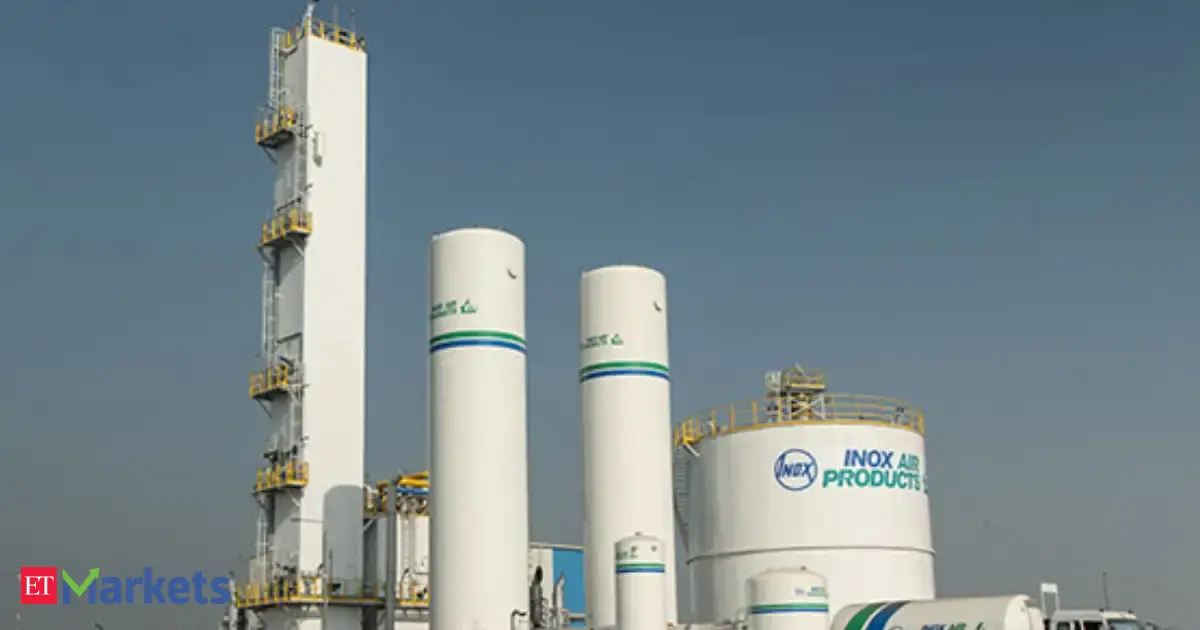
INOX Air Products, a joint venture between American Air Products and Chemicals and India's INOX Group, is gearing up for a significant $1 billion IPO in Mumbai. The industrial and medical gas maker has appointed Kotak, JPMorgan, and Citi to manage the offering. View More
Indian industrial and medical gas maker INOX Air Products is planning to launch a $1 billion initial public offering in Mumbai, and has appointed Kotak, JPMorgan and Citi to manage the IPO, three sources familiar with the matter said. The Indian company is a joint venture between American industrial gas maker Air Products and Chemicals and India's INOX Group . It plans to file its draft prospectus with the Indian securities regulator to seek approval for the IPO within a month, two of the sources said. INOX Air Products, JPMorgan, Citi declined to comment. Kotak did not respond to a Reuters request for comment. The sources declined to be named as the discussions are confidential. Reuters is first to report INOX Air Products' IPO plans in India. India was the world's second‑largest IPO market in 2025, LSEG data shows, but sentiment towards IPOs has weakened this year amid conflict in the Middle East. Live Events Still, there are big-ticket IPOs in the offing, with Indian billionaire Mukesh Ambani's Jio Platforms and India's largest exchange National Stock Exchange, expected to file for IPOs soon. INOX Air Products operates nearly 50 locations across the country, produces over 4,200 tonnes per day of liquid gases and serves more than 1,800 customers across 18 industries, according to the company's website. The company provides products, technologies and services to industries including the chemical, pharmaceutical, steel and textiles. It had revenue of $295 million for the financial year ending March 2025. India industrial gases market was worth $11 billion in 2023, but this is set to rise to $21 billion by 2030, according to market research specialist Grand View Research. .Pbanner{display:flex;justify-content:space-between;align-items:center;background-color:#ec1c40;margin-top:20px;padding:5px 10px;border-radius:4px;color:#fff;line-height:10px;} .Pbannertext{display:flex;align-items:center;font-size:16px;font-weight:600;font-family:'Montserrat';} .Pbannertext img{height:20px;margin:0 6px} .Pbannerbutton a{display:flex;align-items:center;background-color:#fff;color:#ec1c40;text-decoration:none;font-weight:600;padding:4px 8px;border-radius:6px;font-size:15px;font-family:'Montserrat';} .Pbannerbutton img{height:20px;margin-right:6px} .Pbannerbutton a:hover{background-color:#f7f7f7} Add as a Reliable and Trusted News Source Add Now! (You can now subscribe to our ETMarkets WhatsApp channel) (You can now subscribe to our ETMarkets WhatsApp channel)

Recessions are about shocks, and energy is a prime culprit, Tyler Goodspeed says View More
In this article@LCO.1Follow your favorite stocksCREATE FREE ACCOUNT In 1973, OPEC proclaimed an oil embargo on the U.S. for its decision to resupply the Israeli military during the Yom Kippur war. The embargo lasted until March 1974, and during this time oil prices quadrupled. To control supply, the federal government under Nixon rationed oil, by state, to 1972 levels. By February 1974, it was estimated by the American Automobile Association that 20% of gas stations had no fuel to sell. The decade's second energy crisis was in 1979, in the wake of the Iranian Revolution.Photo: AP The U.S. economy has been remarkably resilient lately, confounding forecasters who have insisted we're due for a bust after nearly six years of expansion since the body blow from Covid. So when will the wheels finally come off?There's no way to know, former top White House economist Tyler Goodspeed says in a new book that will likely confound the legion of professional forecasters who regularly predict impending doom."Recessions are fundamentally unforecastable," Goodspeed said in an interview about the book, "Recession: The Real Reasons Economies Shrink and What to Do About It," which comes out Tuesday. He was acting chair of the White House Council of Economic Advisers in the first Trump administration.Goodspeed's thinking is highly relevant to the war in Iran, but for now he's asking readers to draw their own conclusions about it. Since leaving government, he has gone to work as chief economist for ExxonMobil. Given the sensitive nature of the conflict, CNBC agreed to not ask Goodspeed directly about the war. Energy nonetheless features prominently in Goodspeed's analysis of when and why the U.S. has hit an economic wall over the decades. The transcript of his conversation has been edited for length and clarity. Read more CNBC politics coverageTSA funding update: Senate tees up House vote to end DHS shutdownUkraine, Saudi Arabia sign defense deal as U.S. reportedly weighs redirecting Kyiv aidSen. Warren rips Federal Reserve chair pick Warsh: 'You have learned nothing from your failures'Trump extends pause on attacking Iran energy facilities to April 6 Q: You say recessions are unforecastable. What does that mean? There are a lot of people who try to predict them. Tyler Goodspeed: In a nutshell, it means recessions are about shocks, and they are shocks we can neither fully anticipate nor effectively hedge against. We have tools to predict recessions, like the yield curve. But when you actually test these tools on the historical record, there are a lot of false positives and false negatives. I'll admit, I still look at the yield curve just to take a look. I'm not a believer in astrology, but I still take a peek at my horoscope now and then. Tyler GoodspeedCourtesy: Tyler Goodspeed Q: You're only human. So, recessions are about shocks. What does a recession-causing shock look like?Goodspeed: There are many types. One is your sort of big aggregate, macro shocks, like a pandemic, that affect all sectors of the economy roughly evenly and simultaneously. There's another category of shock that affects maybe only one or two sectors directly, but those sectors have very high linkages to the rest of the economy. If you look back over not just the past 80 years, but indeed over the last three and a half centuries, energy is one of those sectors that has generated, or has been subject to, a lot of shocks that then permeate the rest of the economy. It's not hard to see why, because energy is an input into a lot of other sectors, and it is very difficult over a 12-month or even 24-month time horizon to find substitutes for fuels, for heating, for the materials that use petroleum products.But it's not just energy. The relatively mild 1960 recession was in part a result of a large-scale steel strike at the end of 1959 that created a lot of inventory shortages in 1960. You can think about all the downstream impacts of steel shortages. The 1927 U.S. recession, the primary contributor to that was that Ford Motor Co. shut down all production for quite a few months as they retooled the factories to produce the Model A instead of the Model T. Again, you think about all the upstream and downstream linkages of automotive production, and that combined with a coal strike and a boll weevil infestation in the Carolinas, don't be surprised that you get a recession. The point is that energy is not the sole cause of shocks, but it has been involved in a number of them, and in interesting ways. Zoom In IconArrows pointing outwards Q: You write in the book that high energy prices contributed substantially to the depth of the recession around the 2008 financial crisis, even though there wasn't a war, an embargo, or some other kind of big, obvious force hitting the energy market. What happened?Goodspeed: To be honest, it was one of the most surprising things for me. We are all familiar with the standard narrative about the 2008-2009 recession. We forget that the highest price since 1945 of energy overall, and for oil and gasoline in particular, was not in 1973 during the Arab oil embargo. It wasn't during 1979 in the aftermath of the Iranian revolution. It wasn't in 1990 during the first Gulf War. It was in June 2008 [when prices for Brent crude neared $150 a barrel]. By summer 2008, the average American household was having to spend about $2,000 more per year on energy, goods and services than they had just a few years prior. Now, at the same time, their mortgage payments were resetting higher, they were paying about $800 more per year on mortgage interest payments. You tell me is that, is that an energy price shock or a mortgage shock?Q: Sounds like both. But can we stop recessions? Should we be doing things like spending on stimulus?Goodspeed: Despite the rise of a more muscular and involved state, the duration and depth of recessions have been remarkably constant over time, and statistically are no different after 1945 than before. So it doesn't seem to be the case that the state can end recessions. However, there is abundant historical evidence that contractionary fiscal and monetary policy during a recession can make things much worse. The most glaring examples of that would be the Great Depression in the U.S. and a recession in the U.K. in the 1840s that actually coincided with the Great Famine in Ireland. There's a lesson there to first do no harm.Even though I find that economies in the aggregate recover from recessions, that doesn't mean that every individual or every household does. There is at the very least a normative case for the provision of relief, and maybe probably even enhanced relief relative to your normal unemployment insurance, targeted to where that relief is needed during economic recessions. There is a tendency to think during economic expansions that we can medicate or otherwise sedate an economy to avoid recession. But the reality is that recessions will continue to happen, because history continues to happen. There has never been an immortal economic expansion.Q: What else do you want people to know about recessions? Goodspeed: Whatever happens in the next year or two, the long-run, structural trend has been toward longer-lived expansions. We have been getting better at absorbing the kinds of shocks that historically would have generated recession. Choose CNBC as your preferred source on Google and never miss a moment from the most trusted name in business news.
Indian industrial and medical gas maker ?INOX Air Products is planning ?to launch a $1 billion initial public offering in ?Mumbai, and has appointed Kotak, JPMorgan and Citi to manage the IPO, three sources familiar with the matter said. View More
Indian industrial and medical gas maker INOX Air Products is planning to launch a $1 billion initial public offering in Mumbai, and has appointed Kotak, JPMorgan and Citi to manage the IPO, three sources familiar with the matter said. The Indian company is a joint venture between American industrial gas maker Air Products and Chemicals and India's INOX Group. It plans to file its draft prospectus with the Indian securities regulator to seek approval for the IPO within a month, two of the sources said. INOX Air Products, JPMorgan, Citi declined to comment. Kotak did not respond to a Reuters request for comment. The sources declined to be named as the discussions are confidential. Reuters is first to report INOX Air Products' IPO plans in India. India was the world's second‑largest IPO market in 2025, LSEG data shows, but sentiment towards IPOs has weakened this year amid conflict in the Middle East. Live Events Still, there are big-ticket IPOs in the offing, with Indian billionaire Mukesh Ambani's Jio Platforms and India's largest exchange National Stock Exchange, expected to file for IPOs soon. INOX Air Products operates nearly 50 locations across the country, produces over 4,200 tonnes per day of liquid gases and serves more than 1,800 customers across 18 industries, according to the company's website. The company provides products, technologies and services to industries including the chemical, pharmaceutical, steel and textiles. It had revenue of $295 million for the financial year ending March 2025. India industrial gases market was worth $11 billion in 2023, but this is set to rise to $21 billion by 2030, according to market research specialist Grand View Research. .Pbanner{display:flex;justify-content:space-between;align-items:center;background-color:#ec1c40;margin-top:20px;padding:5px 10px;border-radius:4px;color:#fff;line-height:10px;} .Pbannertext{display:flex;align-items:center;font-size:16px;font-weight:600;font-family:'Montserrat';} .Pbannertext img{height:20px;margin:0 6px} .Pbannerbutton a{display:flex;align-items:center;background-color:#fff;color:#ec1c40;text-decoration:none;font-weight:600;padding:4px 8px;border-radius:6px;font-size:15px;font-family:'Montserrat';} .Pbannerbutton img{height:20px;margin-right:6px} .Pbannerbutton a:hover{background-color:#f7f7f7} Add as a Reliable and Trusted News Source Add Now! (You can now subscribe to our ETMarkets WhatsApp channel) (You can now subscribe to our ETMarkets WhatsApp channel)

JFE Steel Corporation has invested Rs 7,875 crore in JSW Kalinga Steel. This marks a 25% stake acquisition and joint control of the venture. JFE will acquire another 25% stake in the next tranche. This partnership aims to expand both companies' presence in India's steel sector. The deal involves JSW Sambalpur Steel Limited as well. View More
JSW Steel on Monday said Japan’s JFE Steel Corporation has invested Rs 7,875 crore in its subsidiary JSW Kalinga Steel , acquiring a 25% stake and triggering joint control of the venture. The investment marks the first tranche of JFE’s planned stake buy in JSW Kalinga, with 2,26,94,524 equity shares allotted to the Japanese steelmaker on March 30, 2026, the company said in a filing. Also Read: JSW Steel to develop coking coal mine in Mozambique Following the allotment and board reconstitution under the joint venture agreement signed in December 2025, JSW Steel and JFE now jointly control JSW Kalinga and its wholly owned arm, JSW Sambalpur Steel Limited . JFE is slated to acquire another 25% stake in JSW Kalinga for Rs 7,875 crore in the next tranche, in line with the agreement. Live Events Also Read: Steel Ministry flags industry concerns over LPG supplies The transaction is part of a broader partnership between the two companies to expand their footprint in India’s steel sector. JSW Steel share price was last trading 0.1% higher at Rs 1,131.7, as of 09:43 a.m. .Pbanner{display:flex;justify-content:space-between;align-items:center;background-color:#ec1c40;margin-top:20px;padding:5px 10px;border-radius:4px;color:#fff;line-height:10px;} .Pbannertext{display:flex;align-items:center;font-size:16px;font-weight:600;font-family:'Montserrat';} .Pbannertext img{height:20px;margin:0 6px} .Pbannerbutton a{display:flex;align-items:center;background-color:#fff;color:#ec1c40;text-decoration:none;font-weight:600;padding:4px 8px;border-radius:6px;font-size:15px;font-family:'Montserrat';} .Pbannerbutton img{height:20px;margin-right:6px} .Pbannerbutton a:hover{background-color:#f7f7f7} Add as a Reliable and Trusted News Source Add Now! (You can now subscribe to our Economic Times WhatsApp channel) (You can now subscribe to our Economic Times WhatsApp channel)

MCX in focus as NSE launches Dated Brent Crude Oil futures; multiple companies announce acquisitions, orders, and leadership changes View More
Vedanta Limited will split into five separate companies next month. Chairman Anil Agarwal believes this move will significantly increase the company's valuation and reduce its debt. The demerger aims to unlock shareholder value by allowing each business vertical to operate independently. This strategic restructuring is expected to double the group's market capitalization. View More
Vedanta Limited will break up into five separately listed companies early next month, Chairman Anil Agarwal said, pitching the long-delayed restructuring as a move that could significantly boost valuation and ease debt pressures, according to a report by the Financial Times . The Mumbai-listed group, with an enterprise value of about $37 billion, has been working on the demerger for several years as part of efforts to streamline operations and reduce its heavy debt burden. The plan had earlier faced resistance from the Indian government but was cleared after a legal challenge was overturned last year, the FT reported. Agarwal told the FT the split would allow each business vertical to operate independently, saying it “will create phenomenal shareholder value” and that the new entities “will have a free hand to grow”. The five businesses will span aluminium, zinc, oil and gas, steel, and power. A privately held parent company controlled by Agarwal will retain roughly half the shareholding in each of the demerged entities, he added. Vedanta’s total debt stands at around $11 billion, according to S&P Capital IQ, while the newly carved-out firms are expected to collectively carry about $7 billion in debt. Live Events Bet on doubling valuation post-split Agarwal expressed confidence that the restructuring could sharply re-rate the group’s market value, which currently stands near $27 billion. “The combined market capitalisation of the five companies would be much higher,” he told the Financial Times , adding: “People are saying that, comfortably, it should double.” The company’s shares have remained close to record highs touched in January, supported by strong global commodity prices. The demerger is expected to sharpen investor focus on individual verticals, potentially unlocking higher valuations for each segment. The restructuring plan, first proposed in 2023, is also aimed at simplifying the group’s complex corporate structure and improving access to capital for each business independently. India’s oil import dependence risks vulnerability: Anil Agarwal Amid ongoing geopolitical tensions, particularly the Iran-Israel conflict, Agarwal also flagged India’s dependence on imported energy as a strategic risk. He said that India should ramp up domestic oil and gas production, warning that heavy reliance on imports—over 80 per cent of crude requirements, leaves the country exposed to global disruptions. Vedanta’s oil and gas arm, Cairn Oil and Gas, is targeting a sharp increase in output, aiming to double production to 1 million barrels of oil equivalent per day within six years. Other players, including state-run Oil and Natural Gas Corporation, have also signalled plans to step up domestic exploration in response to elevated energy prices triggered by global conflicts. Separately, Vedanta recently lost out to Adani Enterprises in the race to acquire debt-laden Jaiprakash Associates, despite submitting a higher bid, highlighting intensifying competition in India’s infrastructure and energy space. .Pbanner{display:flex;justify-content:space-between;align-items:center;background-color:#ec1c40;margin-top:20px;padding:5px 10px;border-radius:4px;color:#fff;line-height:10px;} .Pbannertext{display:flex;align-items:center;font-size:16px;font-weight:600;font-family:'Montserrat';} .Pbannertext img{height:20px;margin:0 6px} .Pbannerbutton a{display:flex;align-items:center;background-color:#fff;color:#ec1c40;text-decoration:none;font-weight:600;padding:4px 8px;border-radius:6px;font-size:15px;font-family:'Montserrat';} .Pbannerbutton img{height:20px;margin-right:6px} .Pbannerbutton a:hover{background-color:#f7f7f7} Add as a Reliable and Trusted News Source Add Now! (You can now subscribe to our Economic Times WhatsApp channel) (You can now subscribe to our Economic Times WhatsApp channel)
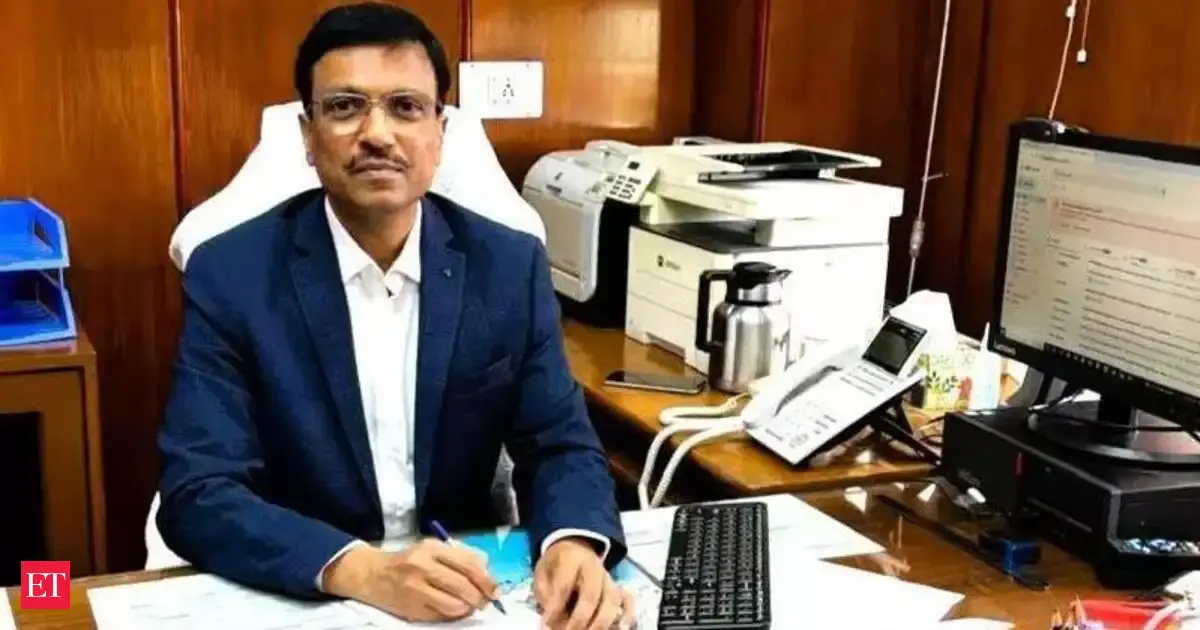
Ashok Kumar Panda, currently Director (Finance) at Steel Authority of India Limited, has been recommended for the Chairman and Managing Director post. Panda brings three decades of experience to the role. He previously held additional charge of Director (Commercial). His achievements include reducing borrowings by Rs 20,000 crore and implementing cost reduction initiatives. View More
The Public Enterprises Selection Board has recommended Ashok Kumar Panda , the current Director (Finance) of Steel Authority of India Limited (SAIL) to the post of Chairman and Managing Director (CMD). Panda also held the additional charge of Director (Commercial) at the public sector undertaking before T N Natarajan joined at the post. Panda has three decades experience in different plants and units of SAIL. He started his career with SAIL as a Management Trainee after completing his B.E. in Electrical Engineering. He holds a specialisation in Finance from XIM, Bhubaneshwar, and later acquired Ph.D. in Business Finance . Also Read: SAIL Q3 profit at Rs 374 crore on higher volumes, leverage He is credited with reduction of borrowings by Rs 20,000 crore through deleveraging efforts. The Cost Reduction initiatives include identification of shop-wise technical levers and implementing action plans to resolve inefficiencies towards improving bottom line. Panda also played a key role in determining the fair price of rails supplied to Indian Railways , SAIL said, noting he was instrumental in revising the Fixed Asset Sales Accounting Policy in the public sector undertaking which contributed towards improvement in the bottom line. .Pbanner{display:flex;justify-content:space-between;align-items:center;background-color:#ec1c40;margin-top:20px;padding:5px 10px;border-radius:4px;color:#fff;line-height:10px;} .Pbannertext{display:flex;align-items:center;font-size:16px;font-weight:600;font-family:'Montserrat';} .Pbannertext img{height:20px;margin:0 6px} .Pbannerbutton a{display:flex;align-items:center;background-color:#fff;color:#ec1c40;text-decoration:none;font-weight:600;padding:4px 8px;border-radius:6px;font-size:15px;font-family:'Montserrat';} .Pbannerbutton img{height:20px;margin-right:6px} .Pbannerbutton a:hover{background-color:#f7f7f7} Add as a Reliable and Trusted News Source Add Now! (You can now subscribe to our Economic Times WhatsApp channel) (You can now subscribe to our Economic Times WhatsApp channel)